Pyramid Mound is a five-acre loess hill on the southern edge of Vincennes, Indiana, and despite the name it was never a pyramid at all. For more than a century, antiquarians treated it as an artificial earthwork, comparing it to the pyramids of the Aztec civilization and tying it to the great Mississippian city of Cahokia. Modern geology tells a quieter, stranger story: the hill is a natural cone of wind-blown silt that Woodland-period people, more than a thousand years ago, chose as a place to bury their dead. Catalogued by archaeologists as site 12k14 and added to the National Register of Historic Places in 1975, it is today the centrepiece of a Knox County park — and one of the clearest cases of a landform mistaken for a monument.
Pyramid Mound is one of many sites where the word “pyramid” proves misleading — much like the 1905 Dorn Pyramid, a granite Masonic tomb in San Luis Obispo that is frequently mistaken for something far more ancient.
A Loess Hill on the Edge of Vincennes
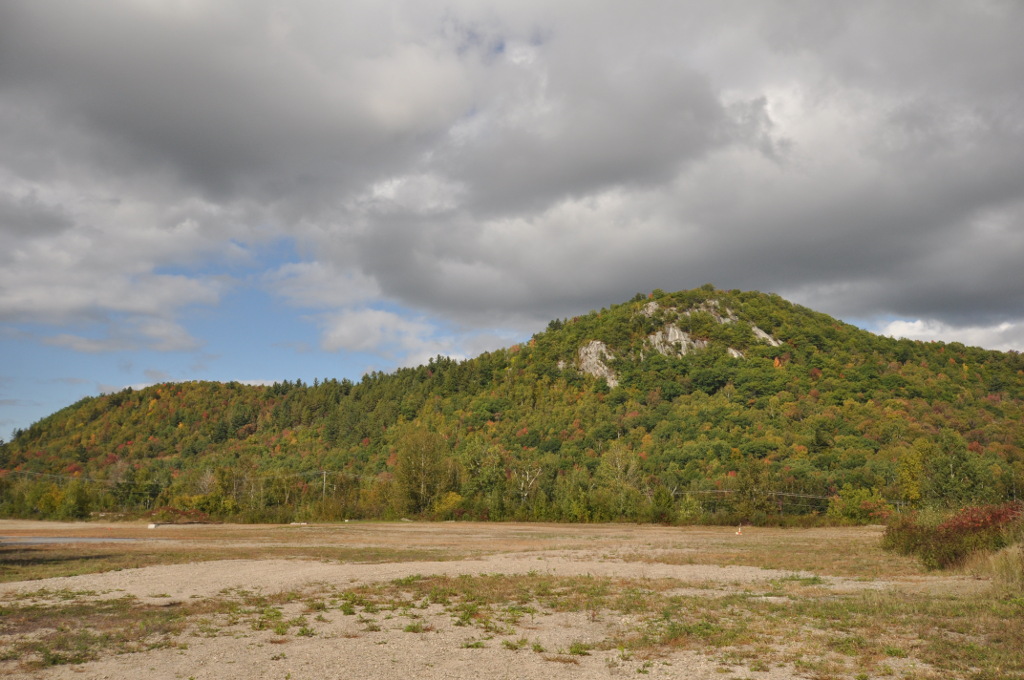
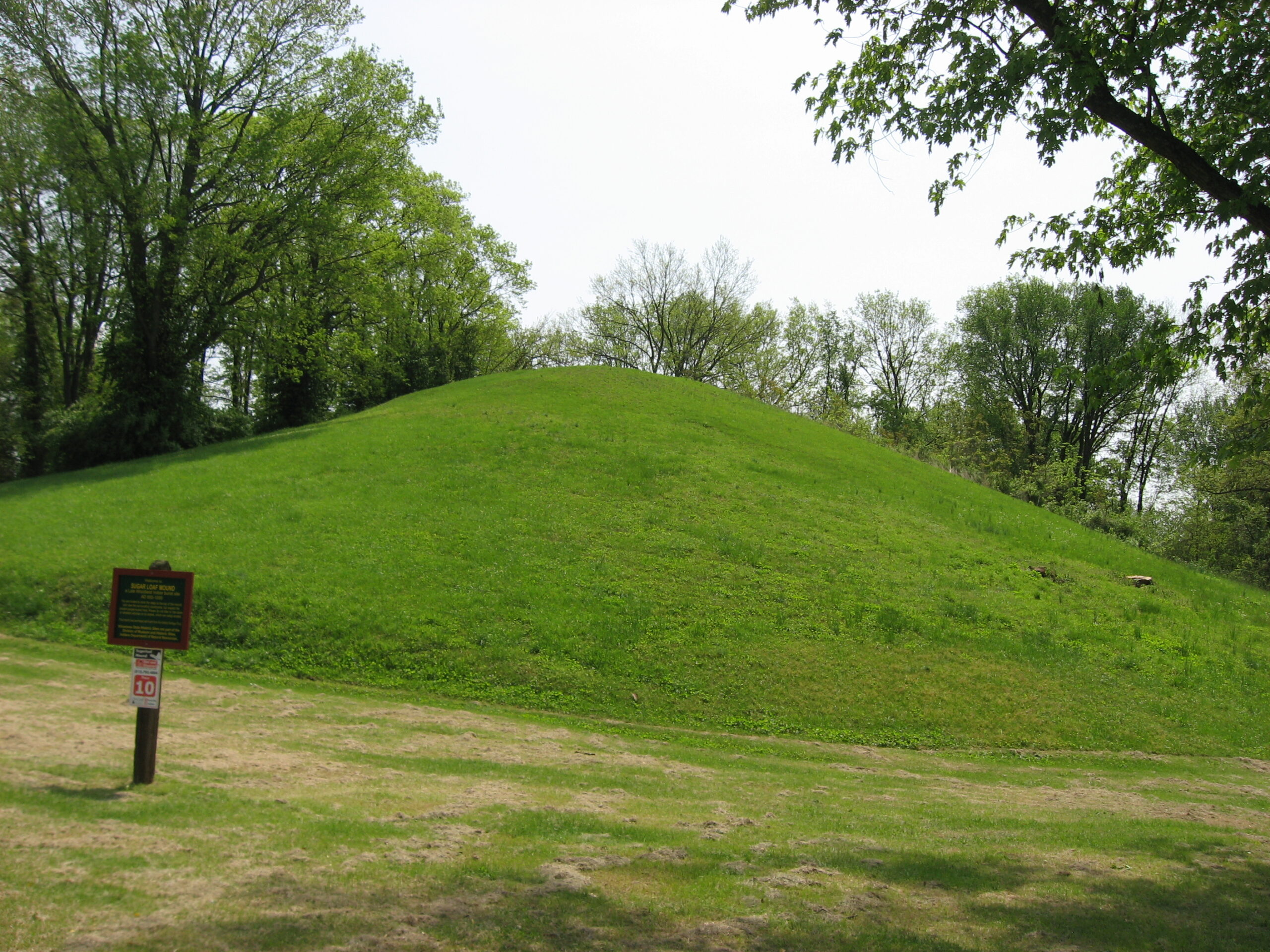
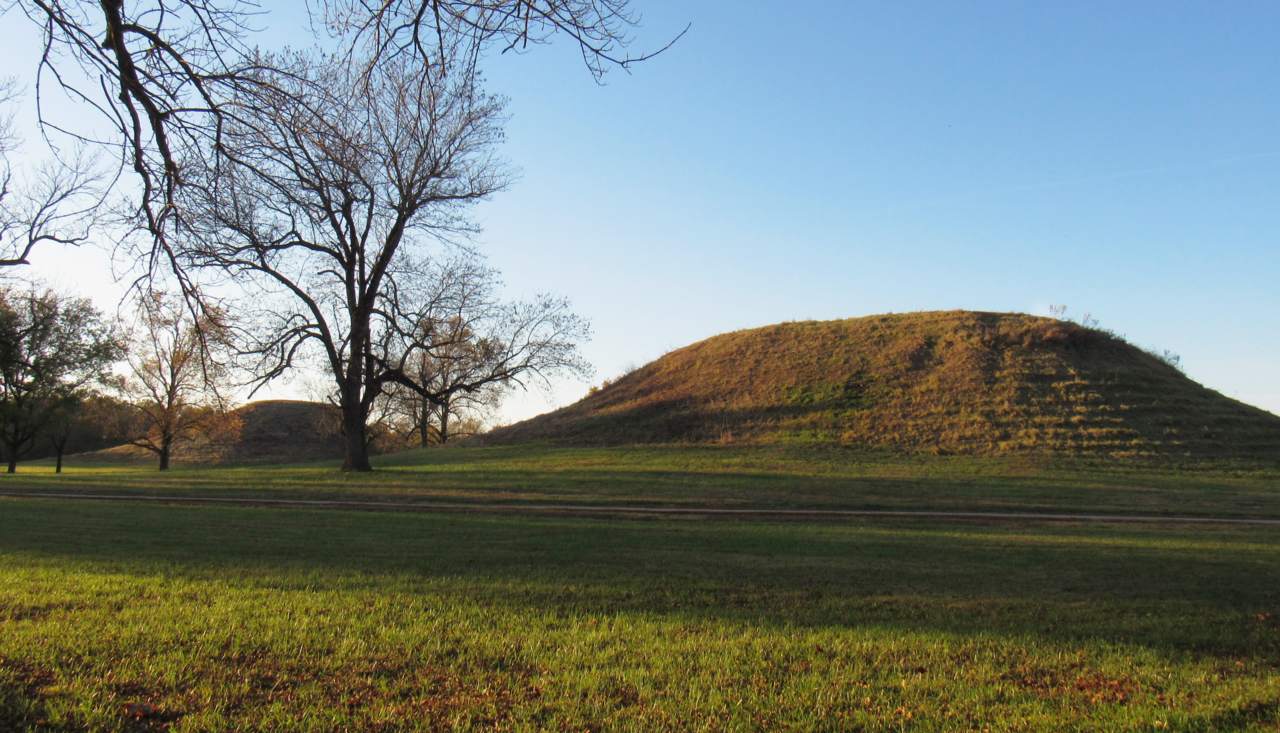
Pyramid Mound stands just south of Wabash Avenue, southeast of central Vincennes in Knox County, Indiana, at roughly 38.67°N, 87.51°W. It rises as a steep, flat-topped knoll covering about five acres (two hectares) on the eastern edge of the loess-mantled bluffs above the Wabash River valley. To anyone standing at its base, the resemblance to a built Mississippian platform mound is obvious — which is exactly why generations of residents and writers assumed human hands had raised it.
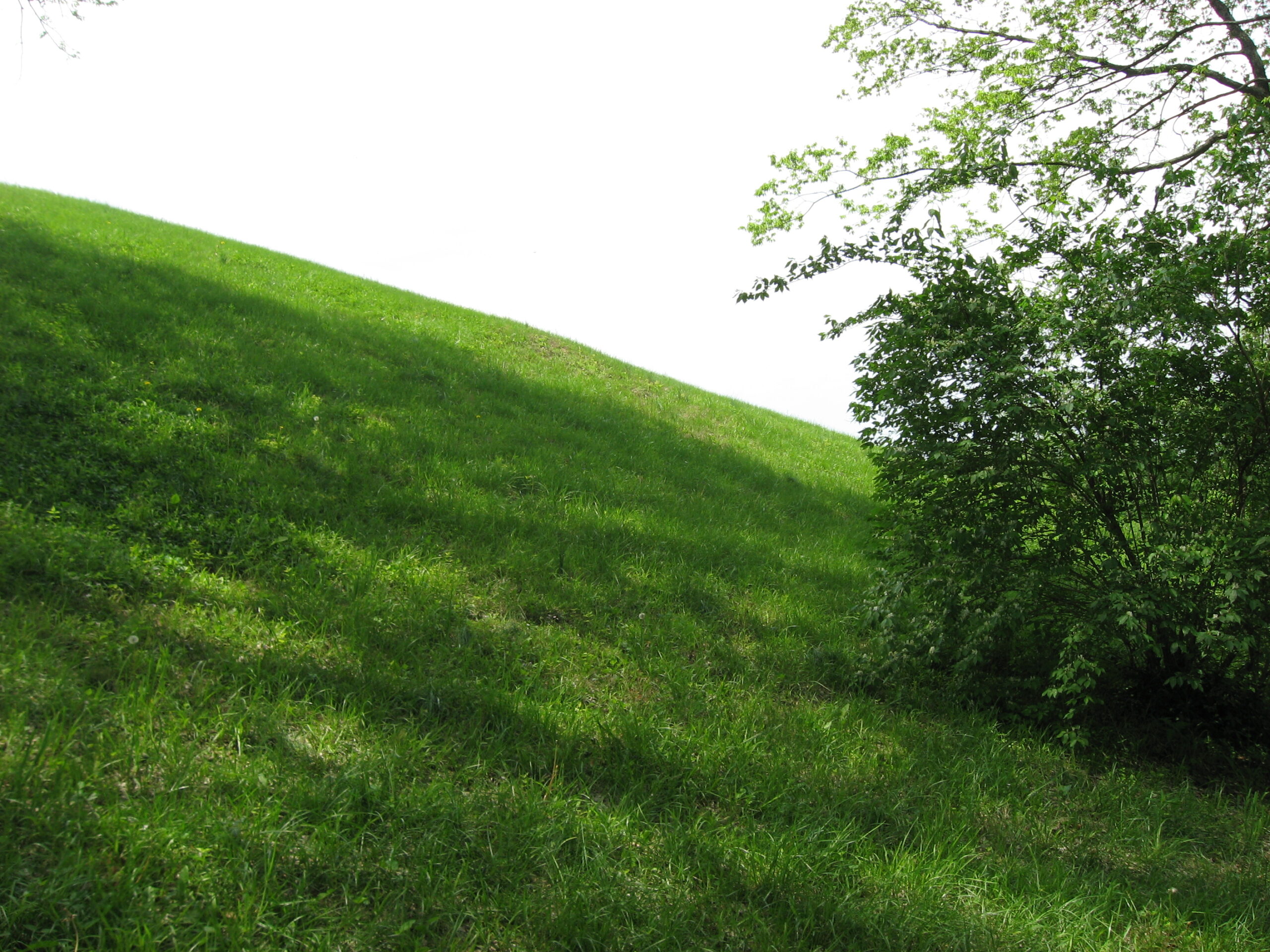
How a loess cone forms
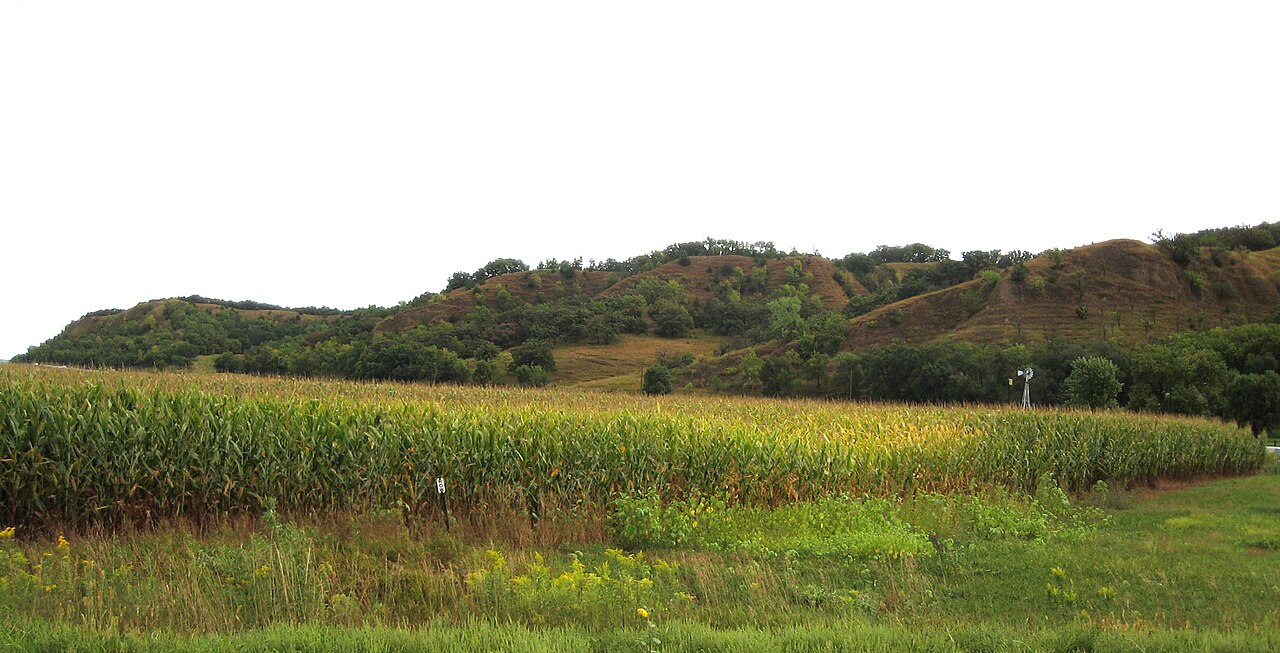
Loess is fine, wind-blown silt, swept up from glacial outwash plains at the close of the last Ice Age and dropped in deep blankets across the mid-continent. Where the wind funnels along a river valley, it can pile that silt into surprisingly regular, steep-sided cones. The hills around Vincennes are consistent in size, made of the same soil, lined up along the eastern rim of the valley, and shaped in line with the prevailing winds — the signature of a natural process rather than a human plan.
Is Pyramid Mound Actually a Mound?
Strictly speaking, no. Professional fieldwork in the late twentieth century overturned the older view that Pyramid Mound was artificial. Studies published in the 1970s, and most thoroughly by the geoarchaeologist C. Russell Stafford in 1998, concluded that Pyramid Mound and comparable hills nearby — including the well-studied Sugar Loaf Mound — are natural loess cones, not earthworks. As Stafford put it, although these hills are “definitely shaped like artificial burial mounds and consistently called ‘mounds,’ they are not truly mounds of any sort.”
The evidence is geological rather than archaeological: the internal layering, particle size and distribution of the silt match wind deposition, and the cluster of hills is too uniform to be the work of separate building projects. What makes Pyramid Mound an important site is not how it was built, but how it was used — and on that question the archaeology is unambiguous.
A Burial Ground of the Woodland Period
Long before European settlers arrived, Indigenous people of the Woodland period singled out these prominent loess hills and used them as cemeteries. Choosing a striking natural rise as a place for the dead is a pattern seen across the ancient world, from the chambered cairns of Orkney at the Tomb of the Eagles to the hillside graves of the Caucasus at Samtavro Necropolis. At Vincennes the hill itself was the monument; the people simply recognised what the wind had already built.
Because the burials are intrusive into a natural formation rather than sealed inside a constructed mound, the site has never been excavated on the scale of a true platform mound. Surface finds and limited investigation, together with the regional survey record, place its mortuary use firmly in the pre-Columbian past while leaving the finer chronology open.
The Vincennes Culture and the Mississippian World
A survey of the Wabash Valley conducted by the Illinois State Museum in the early 1960s, led by archaeologist Howard D. Winters, showed that the country around Vincennes was the heartland of a distinct Mississippian society now called the Vincennes culture, or Vincennes phase. Flourishing roughly between 1100 and 1450 CE, these were maize farmers who made shell-tempered pottery and blended traditions drawn from Middle Mississippian, Upper Mississippian, Fort Ancient and local Woodland peoples.
Their genuine towns sat on the floodplains of Wabash tributaries, arranged around central plazas with real platform mounds — the kind of engineered earthwork that Pyramid Mound only resembles. The best surviving example in Indiana is Angel Mounds near Evansville, while comparable centres such as Etowah in Georgia and the frontier town of Aztalan in Wisconsin show how far the Mississippian world extended — one chapter in the long story of North America’s ancient civilizations.

Why Was a Natural Hill Mistaken for a Pyramid?
The confusion has a long pedigree. Drawing on the published results of an 1874 Smithsonian survey, the amateur antiquarian Stephen Denison Peet argued in the 1890s that Pyramid Mound was related to the geometric Hopewell earthworks of Ohio, and that it marked the north-eastern boundary of a confederacy centred on Cahokia — even though, as later scholars noted, he glossed over the deep cultural differences between those peoples. Two local histories, published in 1886 and 1911, went further still, describing Pyramid Mound and its neighbours as religious sites comparable to the pyramids of the Aztecs in Mexico City.
These readings belonged to the wider “Mound Builder” myth of nineteenth-century America, which credited everything impressive to a lost vanished race rather than to the ancestors of living Native nations. The natural origin of the Vincennes hills, established only in the twentieth century, quietly dismantles that romance — and replaces it with something more remarkable: people who read the landscape so well that we still cannot tell their chosen hills from engineered ones at a glance.
Pyramid Mound Today
Recognised for its archaeological importance, Pyramid Mound was added to the National Register of Historic Places on 12 May 1975, under reference number 75000023. It now forms the centre of a small park operated by the Knox County Parks and Recreation Department, where a flight of steps climbs to the flat summit. Standing on top, with the Wabash valley spread out to the west, it is easy to understand why both the Woodland dead and later storytellers were drawn to the place — and why, for two centuries, almost everyone assumed it had been built.
- Site designation: 12k14 (Smithsonian trinomial)
- Location: Vincennes, Knox County, Indiana, USA
- Type: Natural loess hill used as a Woodland-period cemetery
- Area: about 5 acres (2.0 ha)
- Regional culture: Mississippian Vincennes phase, c. 1100–1450 CE
- NRHP listing: 12 May 1975 (ref. 75000023)
Sources and Further Reading
- Wikipedia — Pyramid Mound (12k14)
- Wikipedia — Vincennes phase
- Encyclopaedia Britannica — Mississippian culture
- World History Encyclopedia — Mississippian Culture
- National Park Service — National Register of Historic Places
- C. Russell Stafford, “The Geomorphology of Sugar Loaf Mound: Prehistoric Cemeteries and the Formation of Loess Cones in the Lower Wabash Valley,” Geoarchaeology 13.7 (1998): 649–672.
- Howard D. Winters, An Archaeological Survey of the Wabash Valley in Illinois (Illinois State Museum Society, 1963).
For a far larger Mississippian-era platform, see Emerald Mound in Mississippi.

Neural Pathways is a collective of seasoned experts and researchers with a profound passion for unraveling the enigmas of ancient history and artifacts. With a wealth of combined experience spanning decades, Neural Pathways has established itself as a leading voice in the realm of archaeological exploration and interpretation.