Introduction
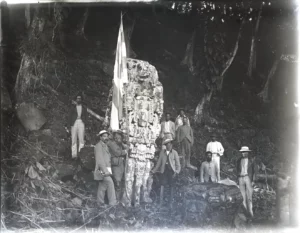
Alfred Percival Maudslay’s expedition to Copán in 1890-1891 was a groundbreaking venture in the field of Mesoamerican archaeology. His meticulous work at the ancient Maya site of Copán, located in present-day Honduras, provided some of the earliest and most comprehensive documentation of the ruins, setting the stage for future archaeological research.
Background
Alfred Percival Maudslay, born in 1850, was a British colonial administrator, explorer, and archaeologist. He developed a profound interest in the ancient civilizations of Mesoamerica and dedicated much of his life to the exploration and study of Maya ruins. Maudslay’s methodical approach to archaeology, emphasizing detailed recording and preservation, marked a significant advancement in the field.
Preparation and Journey
Maudslay’s interest in Copán was piqued by earlier accounts of the site, including those by John Lloyd Stephens and Frederick Catherwood. He prepared extensively, gathering photographic equipment, plaster for making casts, and a team skilled in various aspects of fieldwork. The expedition set off in late 1889, traveling through Central America to reach the remote site of Copán in early 1890.
Activities at Copán
Upon arrival, Maudslay and his team faced the daunting task of documenting the overgrown and partially buried ruins. Their activities included:
- Mapping and Surveying: Maudslay meticulously mapped the site, documenting the layout of structures, plazas, and stelae. His detailed maps were among the first comprehensive records of Copán’s complex layout.
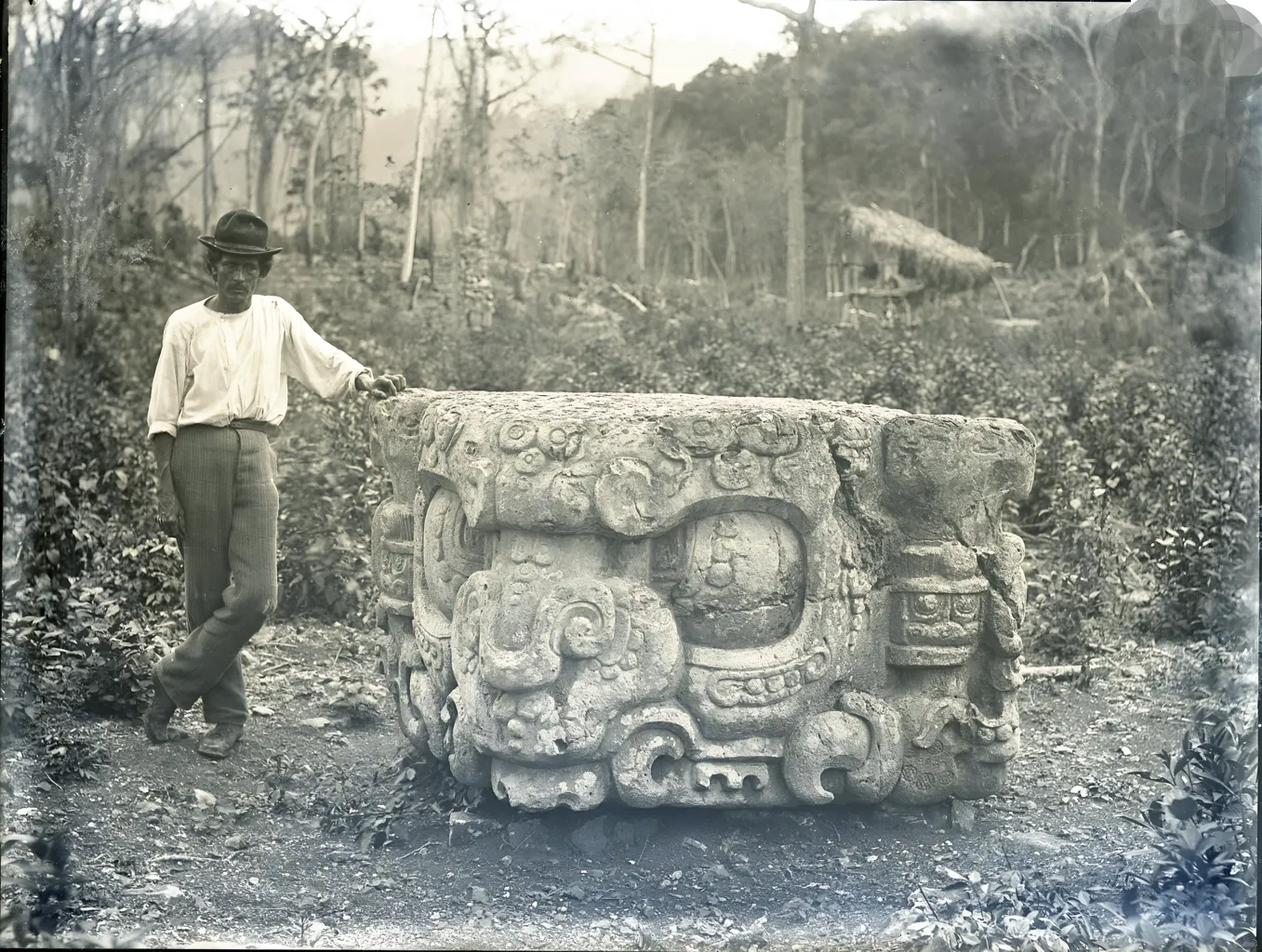
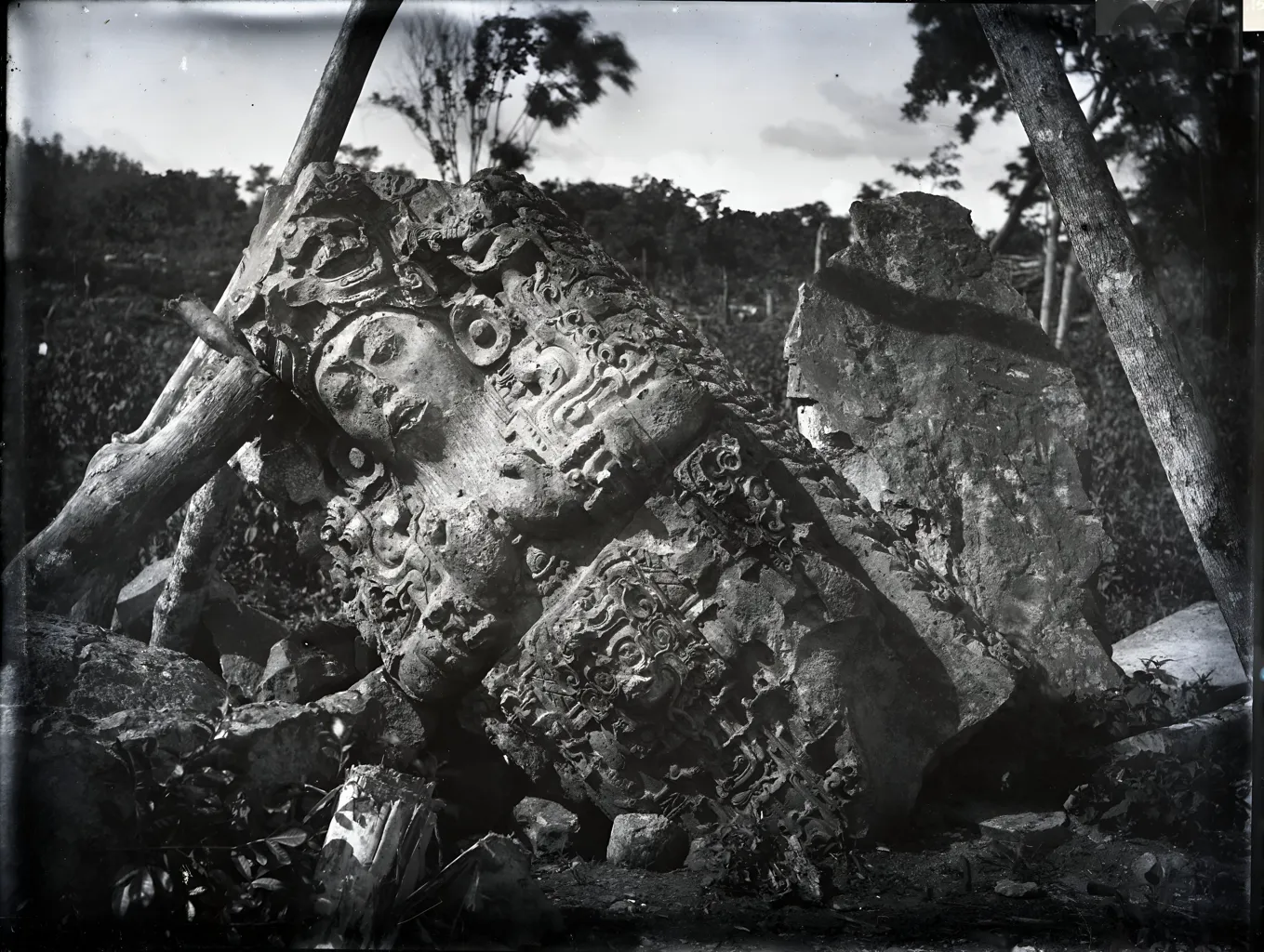
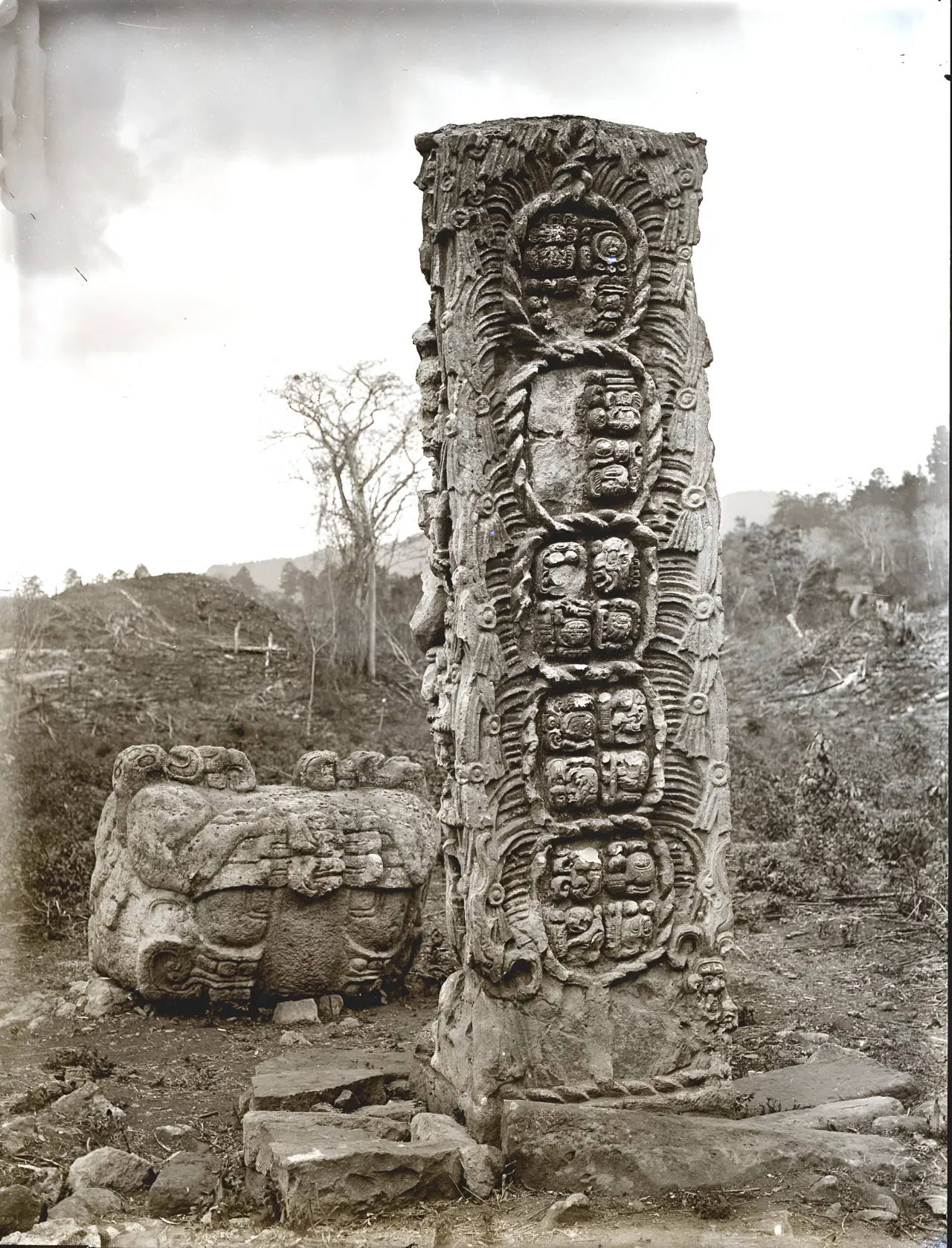
- Photography and Casting: He employed innovative photographic techniques for the time, capturing detailed images of the site’s monuments and inscriptions. Maudslay also made plaster casts of the stelae and hieroglyphic staircases, preserving their intricate details for further study and display.
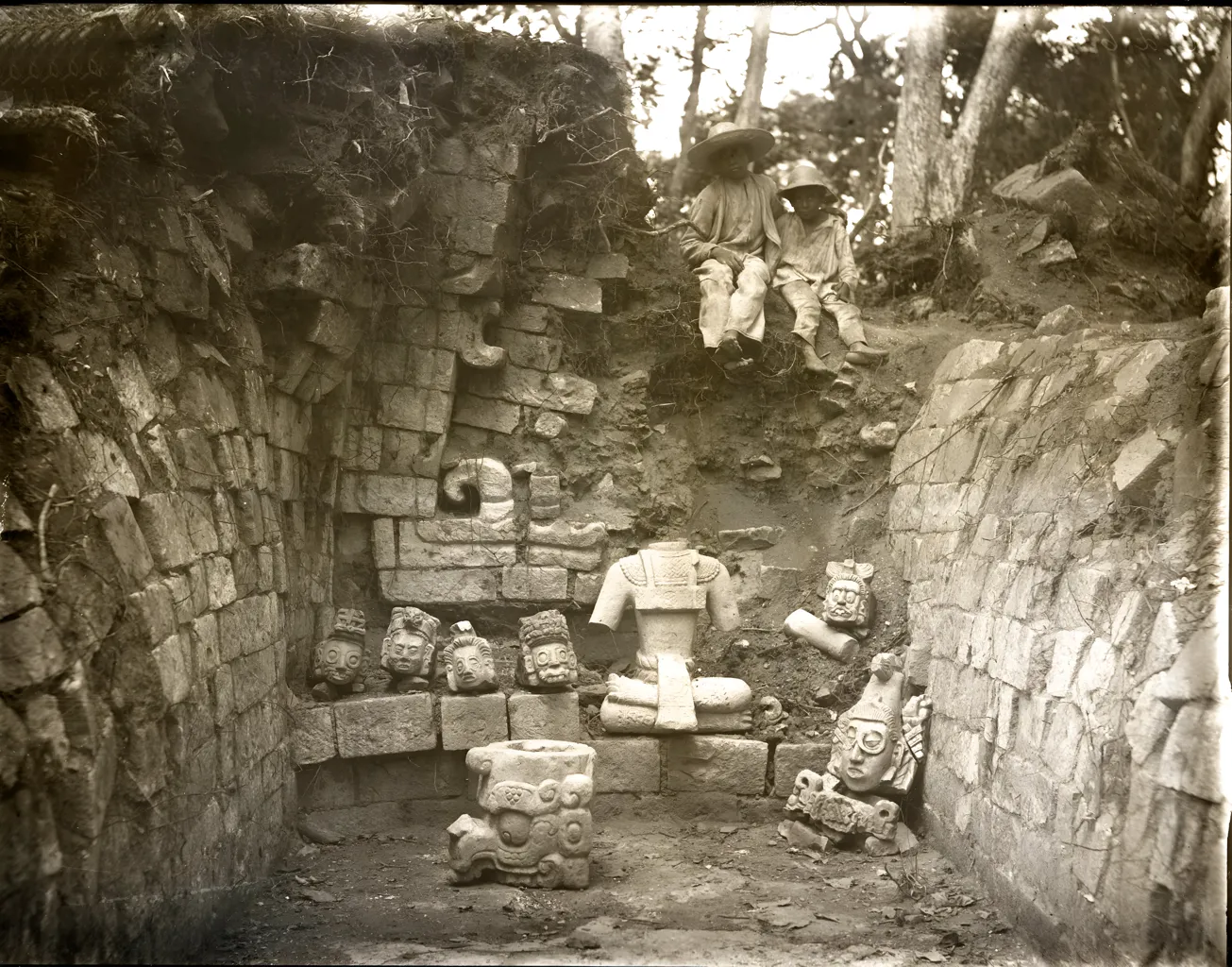
- Excavation and Conservation: The team conducted careful excavations, unearthing key structures and artifacts while taking measures to conserve and protect the delicate stone carvings.
Key Findings and Contributions
Maudslay’s work at Copán resulted in several significant contributions to the understanding of Maya civilization:
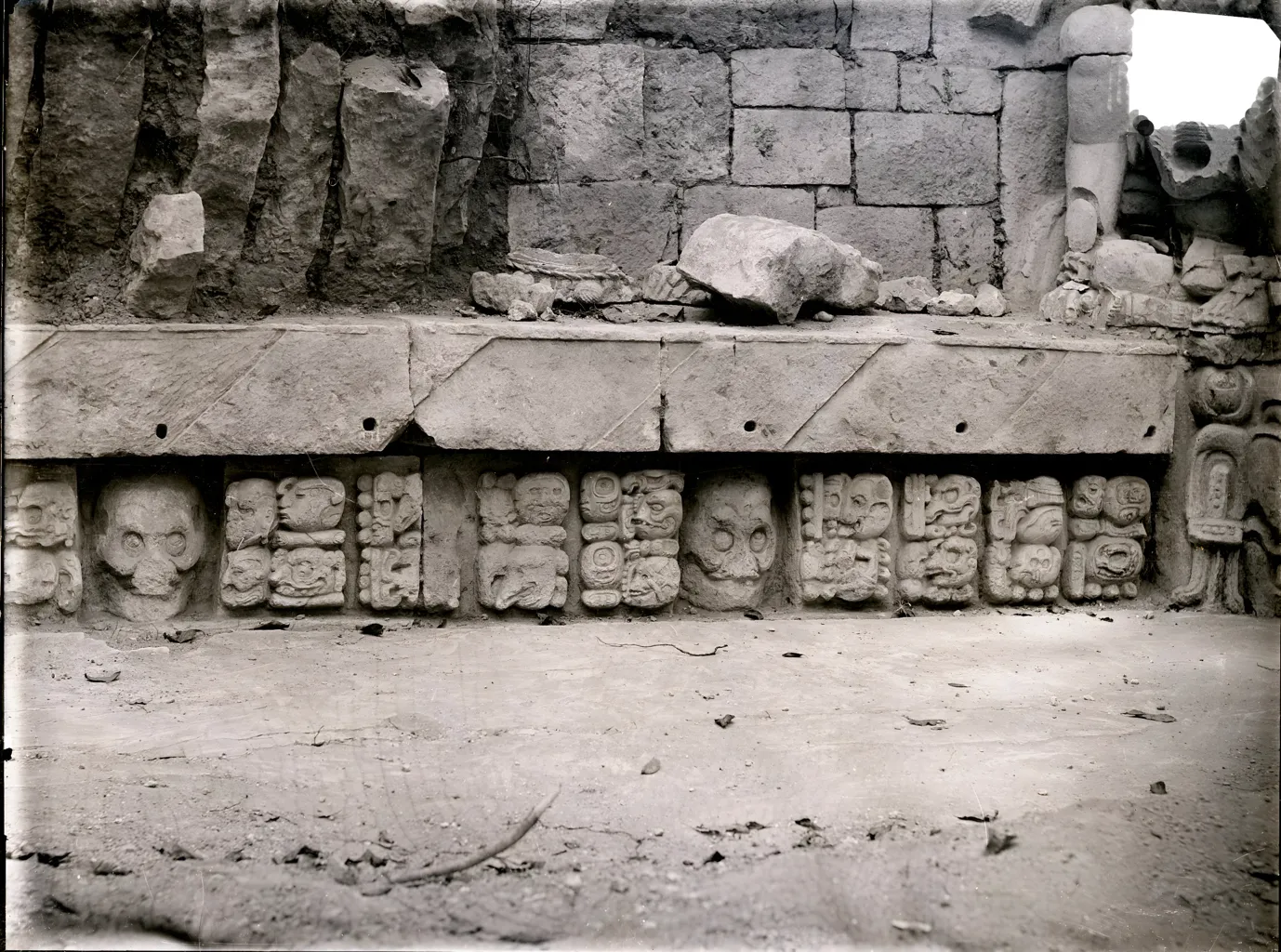
- Hieroglyphic Documentation: His detailed photographs and casts of hieroglyphic inscriptions provided valuable data for the decipherment of the Maya script. These records remain crucial references for epigraphers and historians.
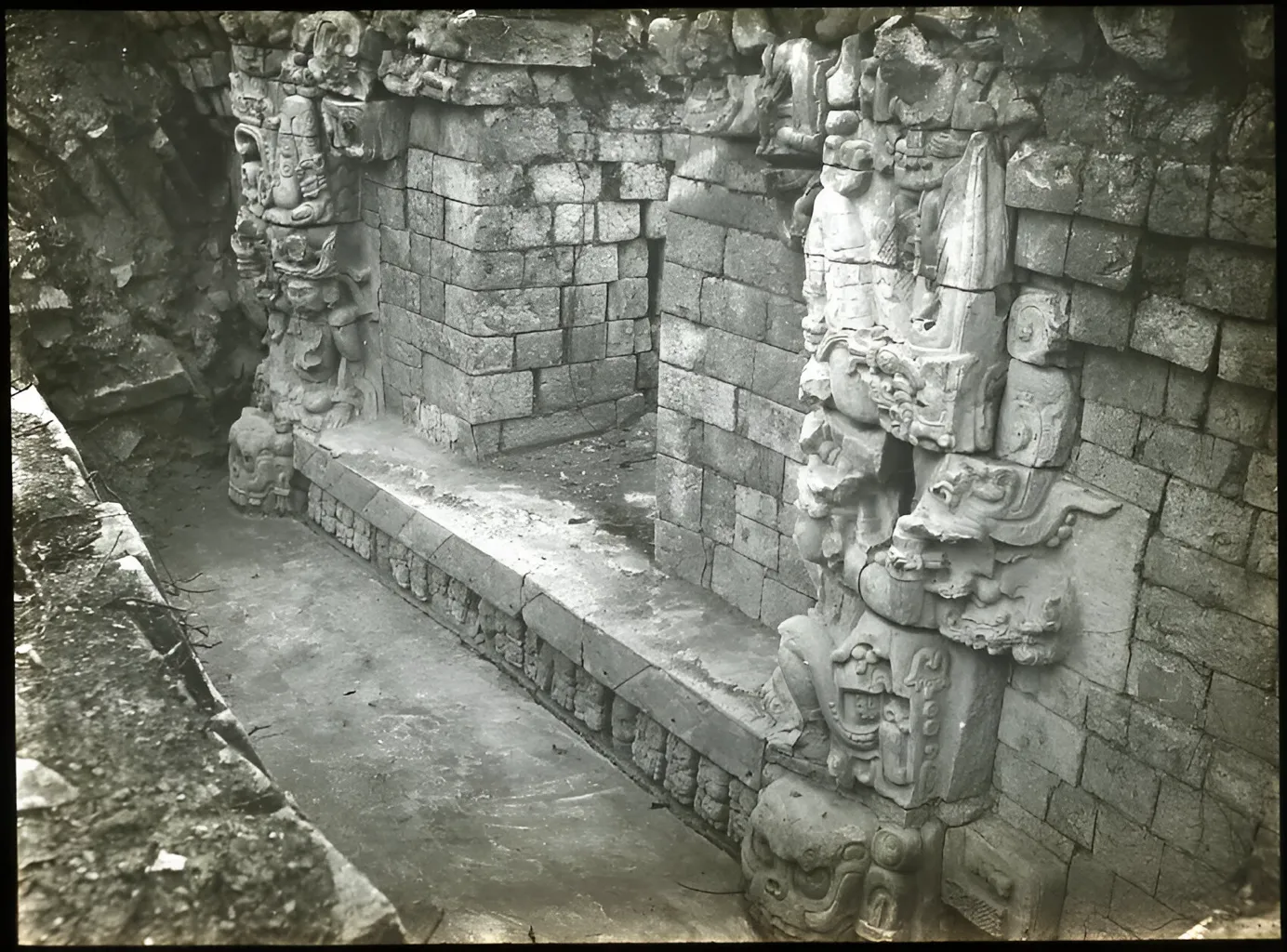
- Architectural Analysis: Maudslay’s documentation of the architectural features of Copán, including temples, altars, and the hieroglyphic stairway, offered insights into the construction techniques and ceremonial functions of these structures.
- Cultural Context: By studying the artifacts and spatial organization of the site, Maudslay contributed to a better understanding of the social, political, and religious life of the ancient Maya at Copán.
Challenges Faced
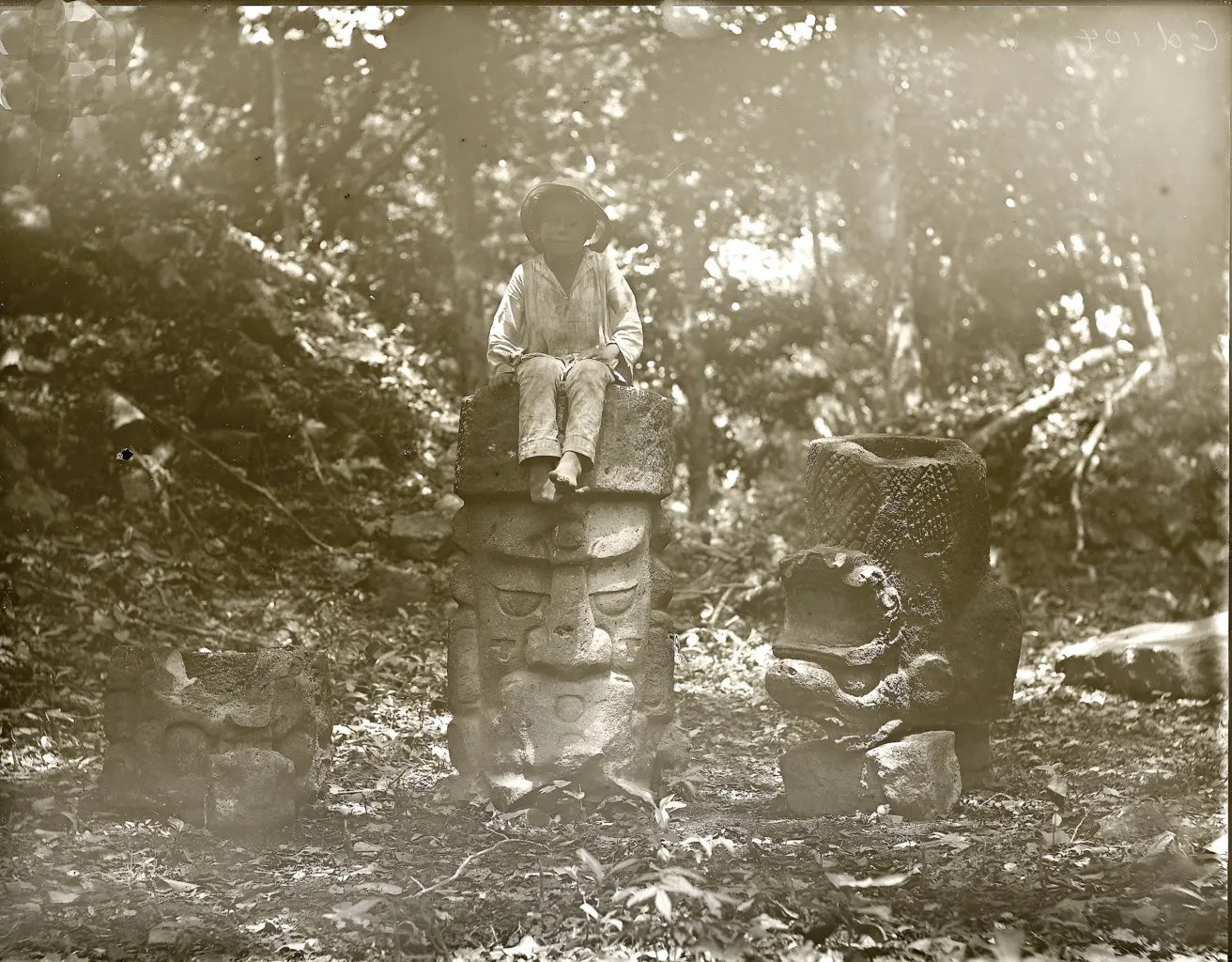
The expedition encountered numerous challenges, including dense jungle vegetation, tropical diseases, and logistical difficulties in transporting equipment and supplies. Despite these obstacles, Maudslay’s perseverance and attention to detail ensured the success of the mission.
Legacy
Alfred Percival Maudslay’s expedition to Copán laid the groundwork for modern Mesoamerican archaeology. His meticulous methods set new standards for the field, emphasizing the importance of accurate documentation and preservation. The records he created, including photographs, casts, and maps, continue to be invaluable resources for researchers.
Maudslay’s work was published in several volumes, notably in “Biologia Centrali-Americana: Archaeology,” which remains a foundational reference for Maya studies. His contributions extended beyond Copán, influencing archaeological practices and inspiring future explorations of Mesoamerican sites.
Conclusion
Alfred Percival Maudslay’s 1890-1891 expedition to Copán was a landmark achievement in the study of ancient Maya civilization. His pioneering work provided a detailed and accurate record of one of the most important archaeological sites in the Americas. Maudslay’s dedication to documentation and preservation has left a lasting legacy, ensuring that the wonders of Copán continue to be studied and appreciated by generations of scholars and enthusiasts.
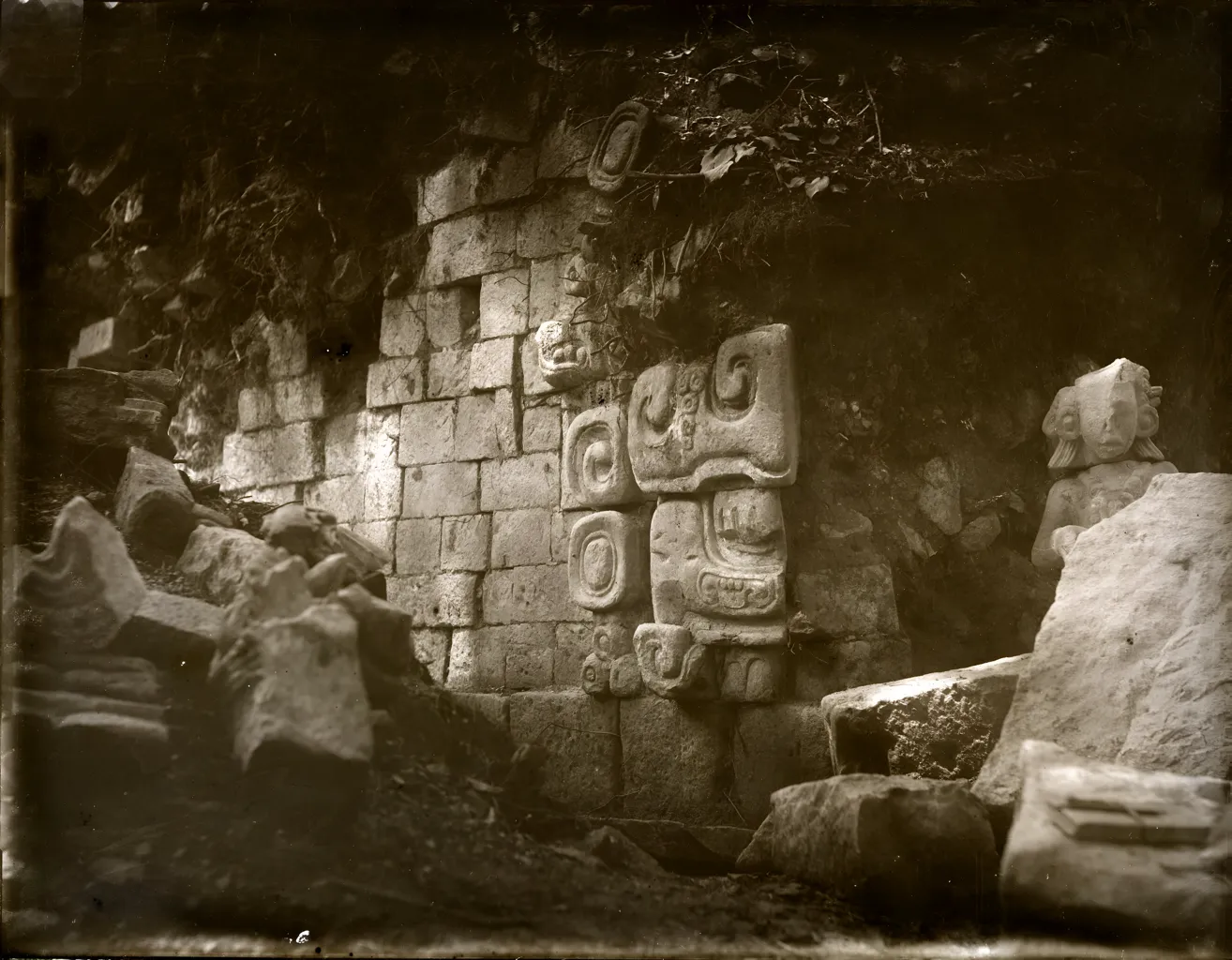
This article celebrates Maudslay’s contributions and highlights the significance of his expedition in advancing our understanding of the rich cultural heritage of the Maya civilization.
Sources:


Neural Pathways is a collective of seasoned experts and researchers with a profound passion for unraveling the enigmas of ancient history and artifacts. With a wealth of combined experience spanning decades, Neural Pathways has established itself as a leading voice in the realm of archaeological exploration and interpretation.