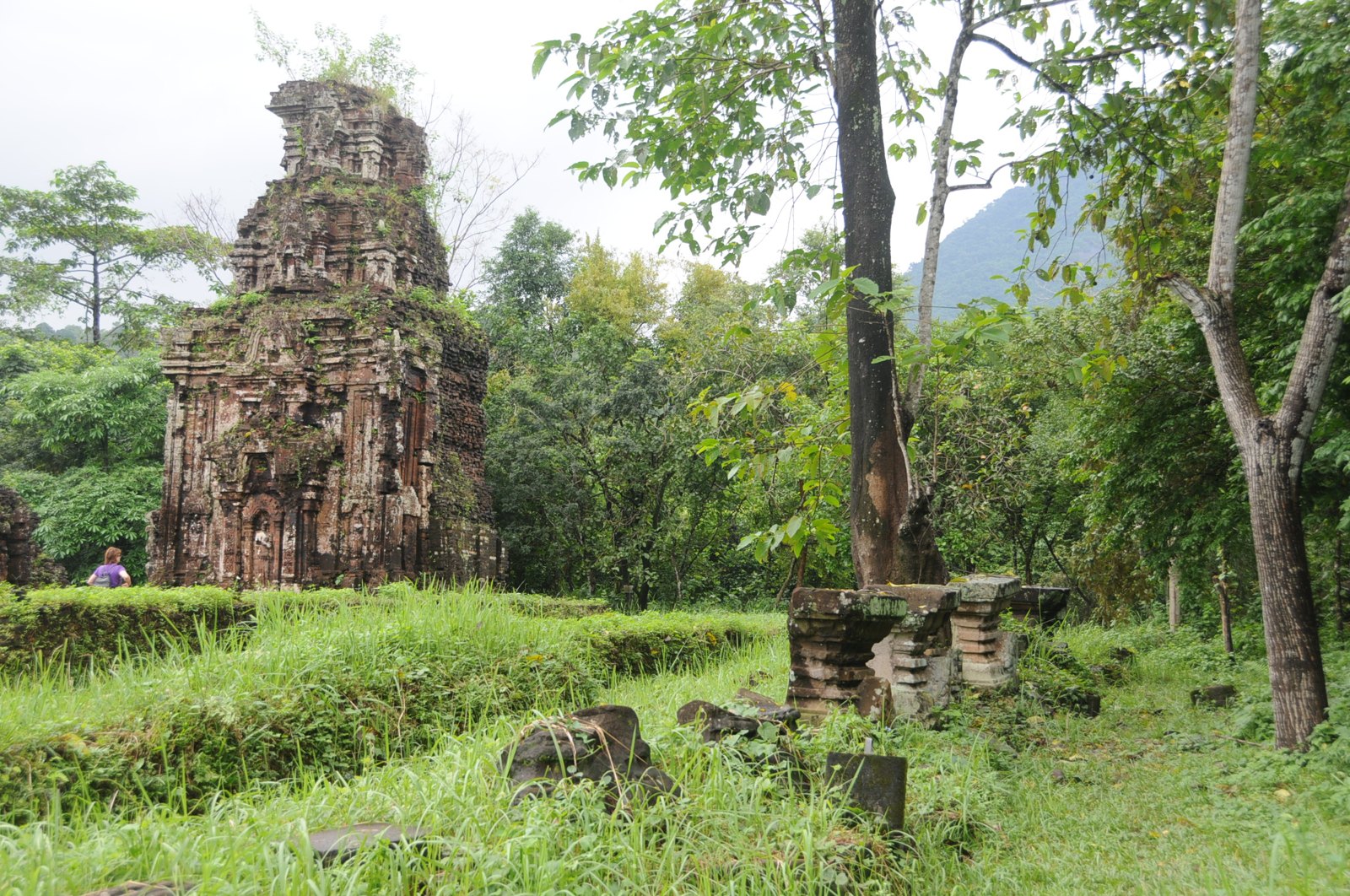
My Son Sanctuary is a cluster of ruined Shaiva Hindu brick temples set in a mountain-ringed valley of central Vietnam, built and rebuilt by the kings of Champa between the 4th and 13th centuries AD. For most of that thousand-year span it was the spiritual capital of the Champa kingdom, the place where Cham rulers were consecrated and worshipped the god Shiva under the local name Bhadreshvara. Today only around twenty brick towers survive of the more than seventy that once stood here, and since 1999 the whole complex has been a UNESCO World Heritage Site.
Champa’s Holy Valley in Central Vietnam
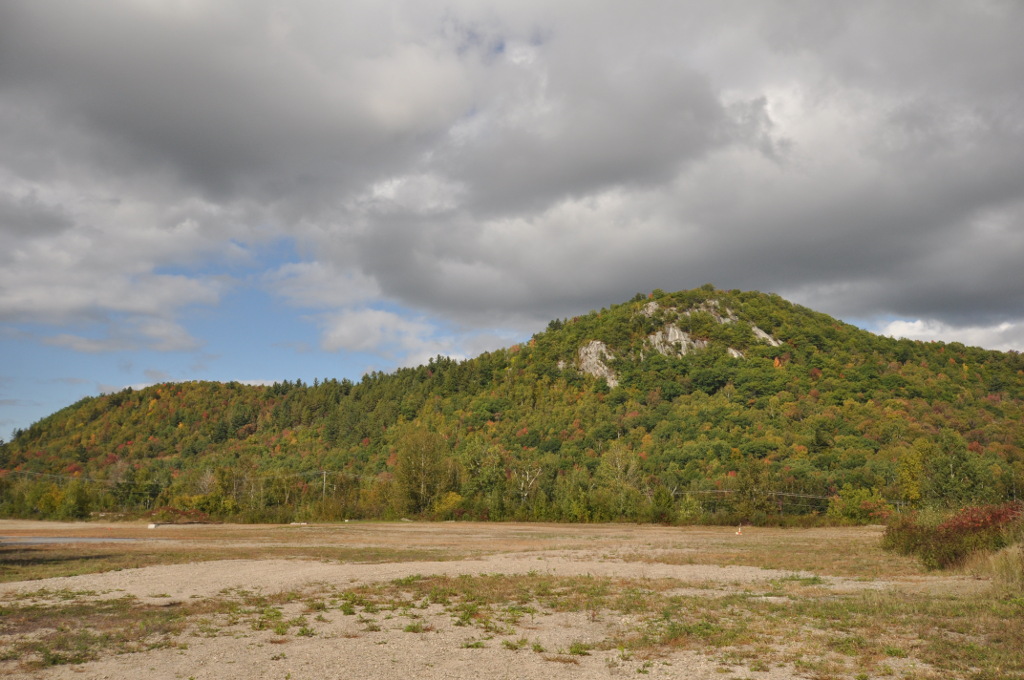
My Son lies in a valley roughly two kilometres wide, enclosed by two mountain ranges in the Duy Xuyen area of Quang Nam, central Vietnam, about 36 km south of the old port of Hoi An and some 10 km from Tra Kieu, the Cham capital the inscriptions call Simhapura, the “Lion City”. The setting was chosen for its sanctity: a stream threads the valley toward the Thu Bon river, and a single steep peak rises to the south, identified by the Cham with the sacred mountain of the gods.
From the 4th to the 13th century the valley served as the religious heart of Champa, an Indianized kingdom of the Malayo-Polynesian Cham people whose ports along the central-Vietnamese coast grew wealthy on the maritime trade between China and the Indian Ocean. While the royal cities of Simhapura (Tra Kieu) and later Indrapura (Dong Duong) housed the government, My Son was where kingship met the divine. Like the great Shaiva complex of Prambanan in Java, it shows how thoroughly Hindu ideas of temple, kingship and cosmology were absorbed and reshaped across maritime Southeast Asia.
Who Built My Son Sanctuary?
The earliest ruler documented at My Son is King Bhadravarman I, who reigned from about 380 to 413 AD. He raised a hall housing a lingam and dedicated it to Shiva under the composite name Bhadreshvara, “Blessed Lord”, fusing his own name with the Sanskrit word ishvara commonly used for the god. His successors heard him, and My Son remained Champa’s dynastic sanctuary for generations.
The Foundation Stele of Bhadravarman I
Bhadravarman had a stele erected recording that he had dedicated the entire valley of My Son to the god, and its inscription carries a warning to those who came after him: “Out of compassion for me do not destroy what I have given.” Drawing on the doctrines of karma and rebirth, the king added that anyone who preserved the endowment would keep its merit, while anyone who destroyed it would inherit his sins. It is one of the earliest royal foundation texts of the Cham world.
Bhadravarman’s first temples were built of timber and were consumed by a great fire in 535 or 536 AD, during the reign of Rudravarman I. In the 7th century King Sambhuvarman (reigned 572 to 629) rebuilt the shrine in brick and reinstalled the deity as Sambhu-Bhadresvara; the temple he raised, known to scholars as A1, would become the acknowledged masterpiece of Cham architecture. Later kings added to the valley for centuries: Prakasadharma set up an important stele in 657 AD, while Harivarman II (reigned 989 to 997) and Harivarman IV (reigned 1074 to 1080) built most of the towers that still stand. The last dated Cham record at My Son is a pillar inscription of King Jaya Indravarman V from 1243 AD; within two centuries the Cham had lost the region to the Vietnamese and the valley slipped into obscurity.
Brick Towers Without Mortar: How the Cham Built My Son
Almost every structure at My Son was raised in fired red brick; only one temple, labelled B1, was built of stone. Scholars recognise four building types on the site: the kalan, a tower-sanctuary whose soaring form evoked Mount Meru, the cosmic mountain of the gods and home of the enshrined deity; the mandapa, an entry hall joined to the sanctuary; the kosagrha or “fire-house”, with its distinctive saddle-shaped roof, used to store the god’s valuables; and the gopura, the gate-tower piercing the enclosure wall.
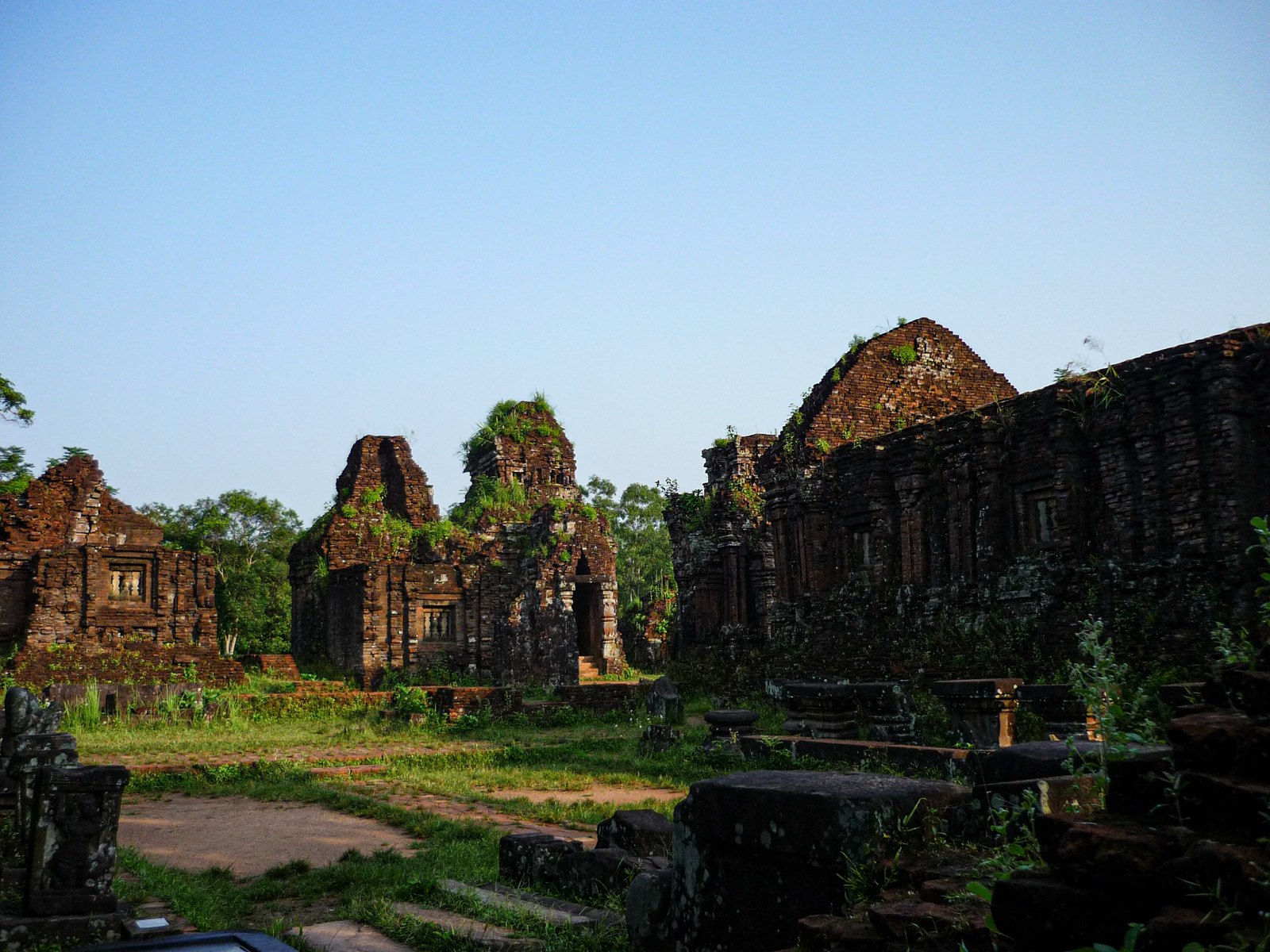
The most remarkable feature of Cham craftsmanship is that the decorative carving was cut directly into the finished brick walls rather than onto sandstone panels set into them, as at contemporary Khmer temples. Just how the bricks were bonded is still debated: one theory holds that the builders glued them with a resin from local trees, another that they used a sticky mortar made from the same clay as the bricks themselves. Chemical tests have found no organic residue between the courses, only mineral matter resembling the core of the bricks, and today, with that ancient bond largely decayed, even a strong wind can dislodge loose bricks. The same techniques survive in other Cham monuments, such as the Banh It Towers near Quy Nhon.
How Was My Son Rediscovered?
After the valley was abandoned, My Son lay swallowed by jungle for centuries. It was rediscovered in 1898 by the Frenchman Camille Michel Paris. A year later, in 1899, scholars of the Ecole francaise d’Extreme-Orient (EFEO) began to study the site: Henri Parmentier described and mapped the ruins, counting 71 monuments and sorting them into principal groups he labelled A, A’, B, C, D, E, F, G, H and K, while Louis Finot published the Sanskrit and Cham inscriptions. Both appeared in the society’s Bulletin in 1904, and the alphabetical group codes Parmentier assigned are still how archaeologists refer to the towers today.

French teams went on to restore tower A1 and the shrines around it in 1937 and 1938, and other major groups between 1939 and 1943. Their surveys recorded roughly 32 inscribed steles at My Son, dated between the 5th and the 12th centuries, which remain the backbone of any reconstruction of the Champa kings and their gifts to the valley.
Why Was My Son Bombed in the Vietnam War?
During the Vietnam War the ruins lay inside a base area held by the People’s Army of Vietnam and the Viet Cong. In a single week of August 1969, US aircraft bombed the valley, and tower A1, praised by French scholars for “its majestic proportions, the antiquity of its style, and the richness of its decoration”, was reduced to little more than a formless mound of brick ringed by rubble. The surrounding ground is still made dangerous by unexploded landmines. The loss put My Son in the company of other war-scarred temple landscapes of the region, from the Khmer Shaiva mountain-temple of Preah Vihear to the brick temple-city of Bagan and its Ananda Temple.

From Ruin to World Heritage
Rescue came slowly. In 1981 a team of Polish conservators from Lublin, led by the architect Kazimierz Kwiatkowski, whom the Vietnamese affectionately called “Kazik”, began the first sustained modern conservation of the towers. In 1999, at its 23rd session, UNESCO inscribed My Son on the World Heritage List under cultural criteria (ii) and (iii) as reference 949, protecting a core zone of 142 hectares as evidence of an Asian civilisation that is now extinct.

Conservation has since become an international effort: the Vietnamese Ministry of Culture funded upkeep in the early 2000s, UNESCO drew on support from Italy, Japan and the World Monuments Fund, and the Archaeological Survey of India restored the A, H and K groups between 2017 and 2022. Many of the finest carvings pulled from the valley now stand in the Museum of Cham Sculpture in Da Nang, while My Son itself remains one of the most significant ancient historical places in Southeast Asia, ranked with Borobudur, Angkor and Bagan among the region’s Indianized temple masterpieces.
Frequently Asked Questions
Who built My Son Sanctuary?
My Son was built by the kings of Champa, an Indianized Hindu kingdom of the Cham people in central Vietnam. The earliest ruler recorded there is Bhadravarman I (reigned about 380 to 413 AD), who dedicated the valley to Shiva as Bhadreshvara. After a fire destroyed the wooden shrines, King Sambhuvarman rebuilt them in brick in the 7th century, and later kings such as Harivarman II and Harivarman IV added most of the surviving towers between the 10th and 12th centuries.
Why was My Son Sanctuary destroyed?
Much of My Son was destroyed during the Vietnam War. In August 1969, US aircraft bombed the valley over the course of a single week because it lay inside a base area used by the People’s Army of Vietnam and the Viet Cong. The bombing shattered tower A1, long regarded as the masterpiece of Cham architecture, and left craters and unexploded landmines across the site. Of more than seventy monuments recorded around 1900, only about twenty survive today.
Why is My Son Sanctuary a UNESCO World Heritage Site?
UNESCO inscribed My Son in 1999 under cultural criteria (ii) and (iii). It was recognised as an outstanding example of cultural exchange, introducing Indian Hindu architecture into Southeast Asia, and as unique evidence of the Champa civilisation, which is now extinct. For nearly a thousand years the valley was the religious and political centre of the Cham kingdom, and its brick tower-temples record the complete sequence of Champa art from the 4th to the 13th century.
Sources and Further Reading
- UNESCO World Heritage Centre, “My Son Sanctuary”
- World History Encyclopedia, “Champa”
- World History Encyclopedia, “Cham”
- Wikipedia, “My Son”
- Wikipedia, “Museum of Cham Sculpture”