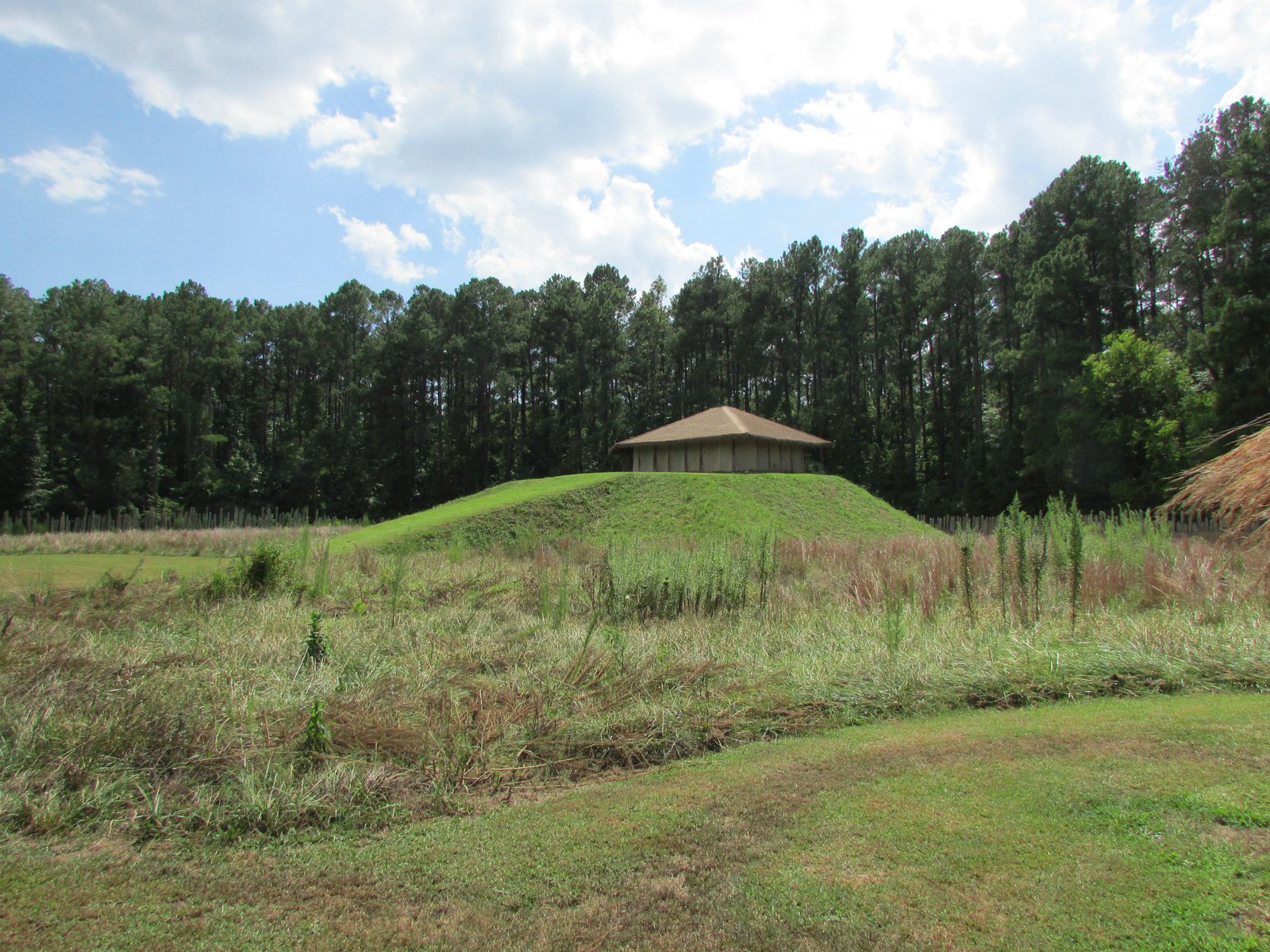
On a low bluff where Town Creek joins the Little River in Montgomery County, North Carolina, the Pee Dee people raised a flat-topped earthen mound and ringed their town with a timber palisade in the twelfth century AD. Town Creek Indian Mound is the only ceremonial mound and village center of the Pee Dee culture found anywhere in North Carolina, and the only National Historic Landmark in the state that commemorates American Indian culture. Occupied from about AD 1150 to 1400 and later excavated across five decades, it offers the clearest surviving window into South Appalachian Mississippian life east of the mountains.
Who built Town Creek Indian Mound?
Town Creek was built by the Pee Dee, a people of the South Appalachian Mississippian culture — a regional variation of the wider Mississippian tradition that spread across the American Southeast from around AD 1000. The Pee Dee emerged in the region as early as 980 CE and took their name from the Pee Dee River, along which they lived and farmed across what is now North and South Carolina. They cleared bottomland for maize, beans and squash, and organized themselves into a chiefdom whose leaders held both political and religious authority.
The Pee Dee and the Mississippian world
The Mississippian world was bound together by trade and shared belief rather than by any single empire. The Pee Dee at Town Creek sat within a network that reached from Georgia through South Carolina, eastern Tennessee and the mountain and Piedmont regions of North Carolina, moving marine shell, copper, and fine pottery between communities. That same web of exchange linked Town Creek in spirit to much larger centers such as Cahokia in Illinois and Moundville in Alabama, even though Town Creek itself was, by Mississippian standards, a modest town.
A ceremonial center on the Little River
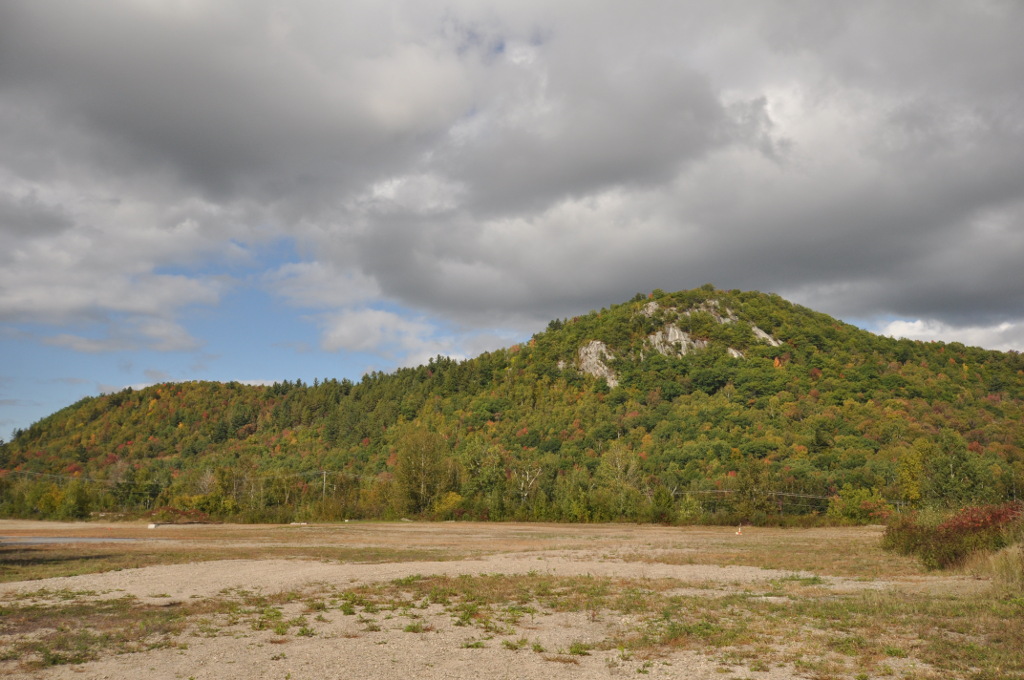
The Pee Dee chose a defensible spot: a low bluff overlooking the confluence of Town Creek and the Little River. At the heart of the town stood the platform mound, an earthwork about fifteen feet high, raised basket-load by basket-load over the collapsed remains of an earlier rectangular earth lodge. Excavation showed the mound had carried three successive structures — the buried earth lodge, then a temple that burned, and finally a second ceremonial building reached by an eastward-facing ramp that led down to the plaza.
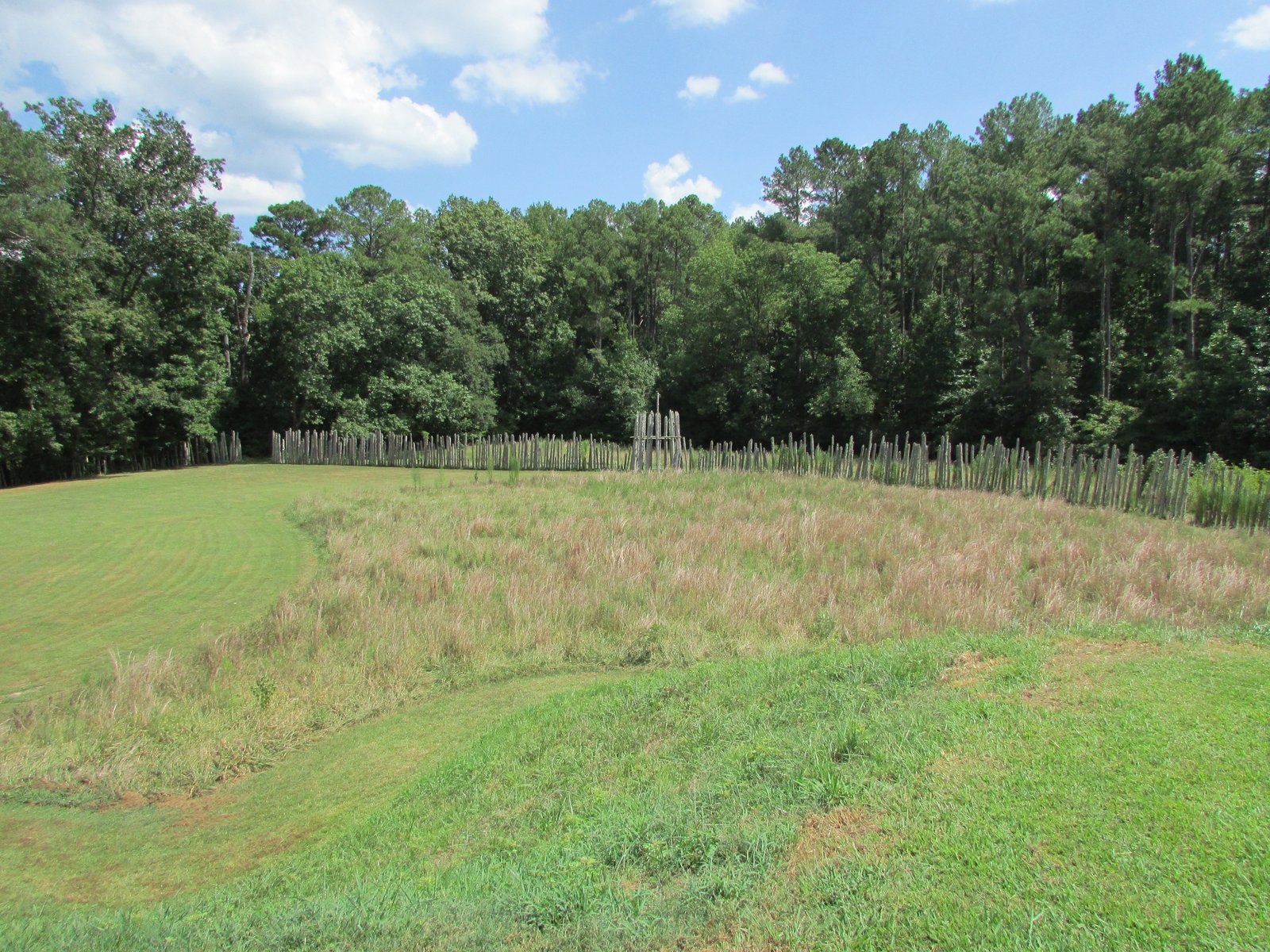
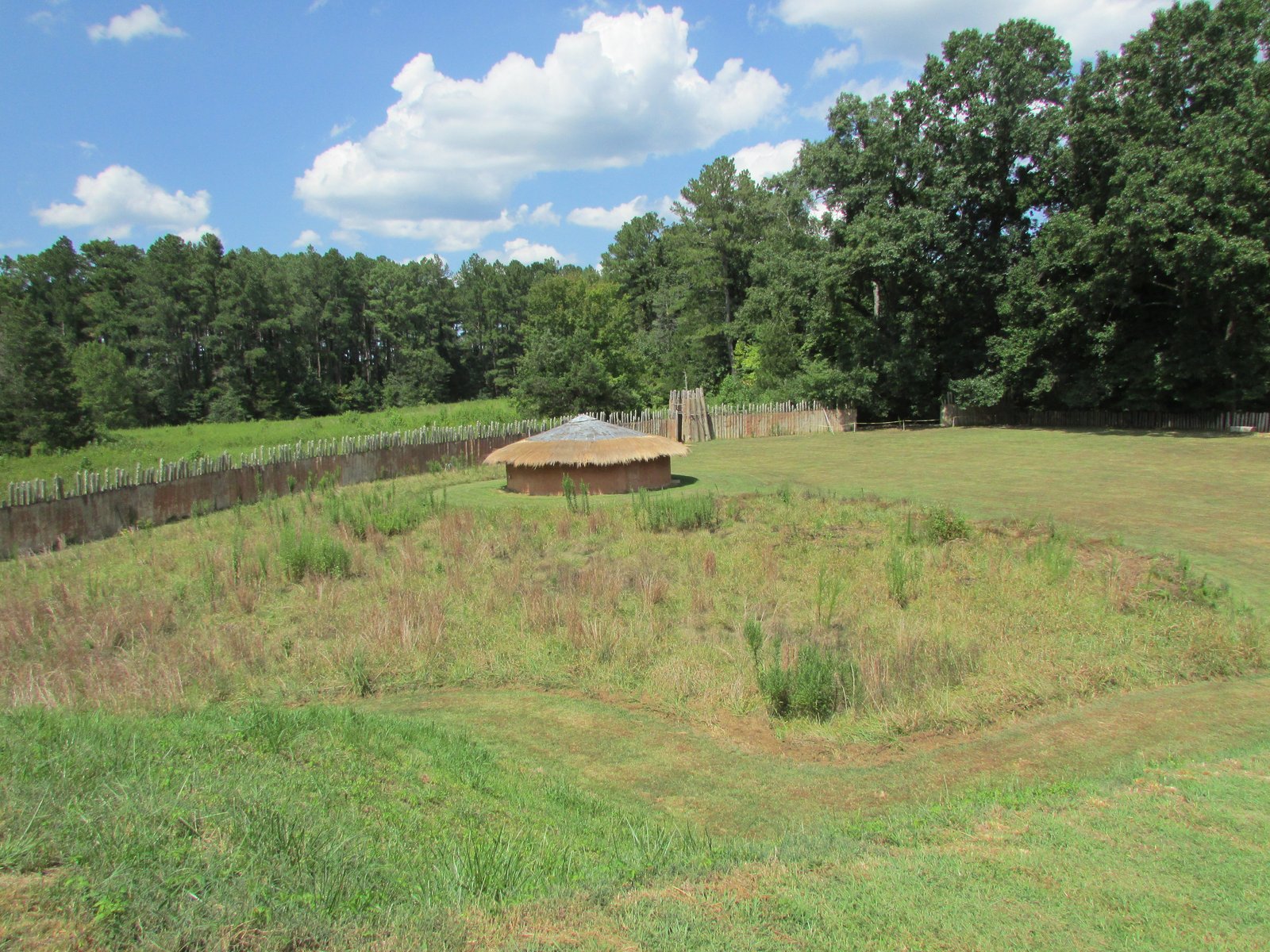
In front of the mound lay a flat, graded plaza used for ceremonies and public gatherings. The whole complex — mound, plaza, mortuary house and family dwellings — was enclosed by a wooden palisade with two gates and guard towers on its northern and southern ends. Archaeologists found that this defensive wall had been torn down and rebuilt at least five times, a pattern of repeated fortification also seen at Mississippian centers like Etowah in Georgia.
Busks, burials and the Green Corn Ceremony
Town Creek was above all a gathering place. The surrounding clans came together for periodic festivals known as busks, during which the temple and grounds were cleaned and repaired, debts and grievances were settled, and the community renewed itself. Rituals of purification included fasting, bathing, the taking of cathartic medicine, and the scratching of the skin with the teeth of the garfish. The busk closed with a feast on the new corn — the celebration widely known today as the Green Corn Ceremony, or poskito — after which families carried embers from the sacred fire back to their own hearths as a token of unity.
The dead were also brought to Town Creek. Archaeologists have recorded 563 burials at the site, believed to be Pee Dee people. Some were laid out fully extended, while others were re-interred as bundles of bones; infants and young children were wrapped tightly in deerskin and placed inside large pottery vessels that researchers call burial urns. A dedicated burial and mortuary house near the plaza appears to have served a particular clan, underscoring how closely kinship, ritual and place were woven together.
Fifty years of excavation: Joffre Coe and the WPA
The Pee Dee left no written record, so almost everything known about Town Creek comes from the ground. Amateur digging began in 1927, when a local group used a mule-drawn scraper to turn up bone and potsherds — and, inevitably, did some damage in the process. Systematic work started in 1937, funded by the Works Progress Administration during the Great Depression and directed by Joffre L. Coe of the University of North Carolina at Chapel Hill.
Coe made Town Creek his life’s work, leading research there for more than fifty years, until scholarly excavation wound down in 1987. Because he kept his base of operations on the site rather than shipping finds off to a distant laboratory, he was able to build an unusually deep, continuous picture of a single Mississippian town. The land itself had been owned in the 1930s by L. D. Frutchey, who donated the mound and about an acre around it to the state; the property was briefly known as Frutchey State Park before being renamed Town Creek in the 1940s, and it became the first North Carolina state historic site developed for public interpretation.
The reconstructed town you can visit today
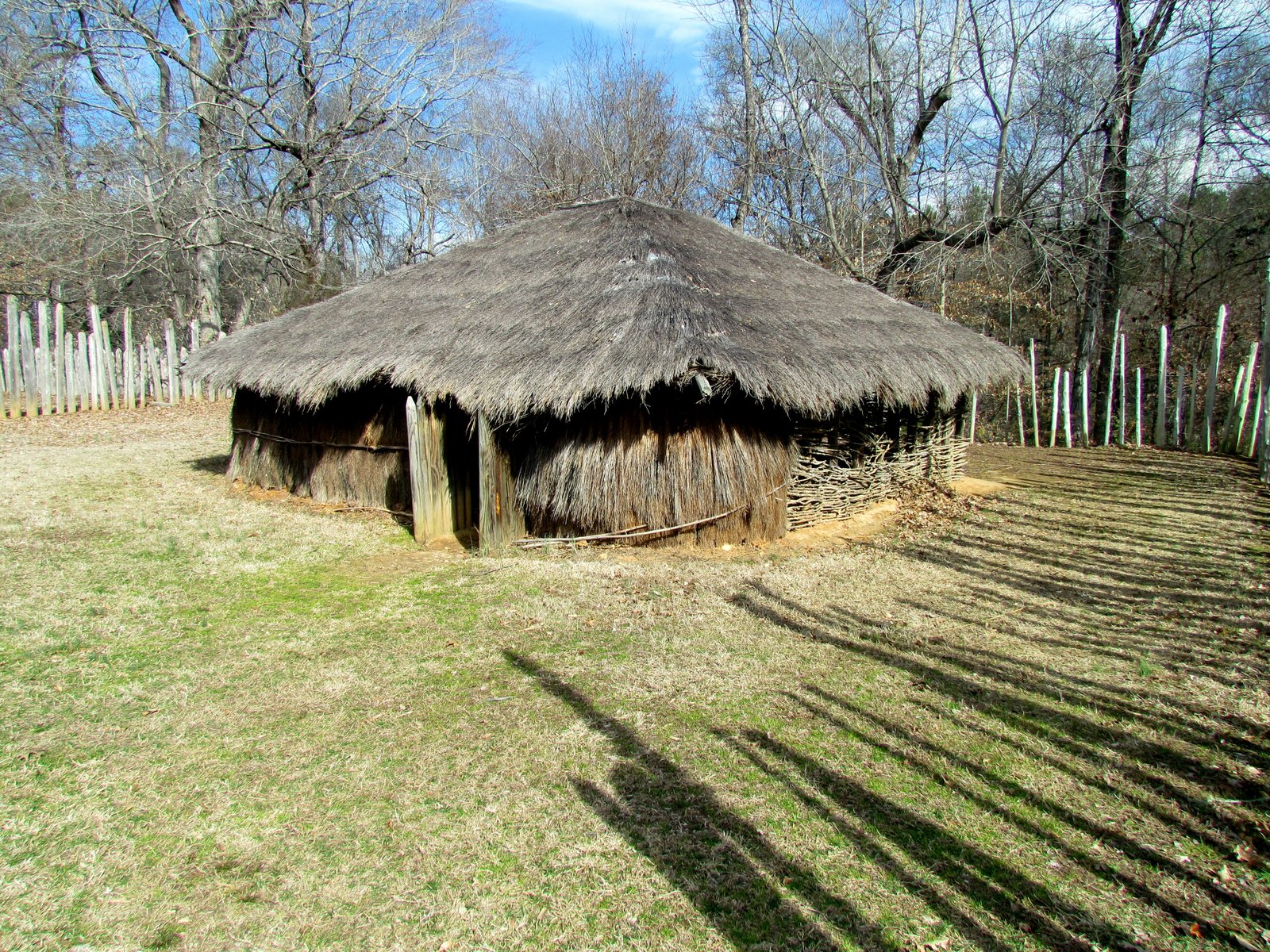
Town Creek passed to the Department of Archives and History’s Division of Historic Sites in 1955, by which time the mound had been restored and the stockade rebuilt. On the footprints revealed by Coe’s excavations the state reconstructed a ceremonial center: the platform mound and its temple, a minor temple, the mortuary house, and structures such as the east lodge and town house, all raised using the building methods the Pee Dee themselves would have used. A Learning Center added in 1991 hosts demonstrations of Indian skills and crafts.
The site was designated a National Historic Landmark in 1964 and listed on the National Register of Historic Places at its creation on 15 October 1966 (reference number 66000594). Owned by the North Carolina Department of Natural and Cultural Resources and operated by the Division of State Historic Sites, it remains free to visit, with a visitor center, interpretive exhibits and self-guided trails near the town of Mount Gilead. The Pee Dee themselves are today based mainly in South Carolina, where the state recognizes several bands and one group. For readers exploring the wider story of the mound builders, Town Creek sits naturally alongside other ancient and historical places such as Emerald Mound in Mississippi.
Frequently asked questions
How old is Town Creek Indian Mound?
Town Creek Indian Mound was an active ceremonial center from about AD 1150 to 1400, though the Pee Dee culture that built it emerged in the region as early as 980 CE. Decades of excavation and radiocarbon dating place the mound’s construction and use firmly within the South Appalachian Mississippian period. The town was abandoned around 1400 for reasons that remain unknown, several centuries before European contact reached the North Carolina Piedmont.
Who were the Pee Dee people who built it?
The Pee Dee were a South Appalachian Mississippian people, a regional variation of the wider Mississippian culture that flourished across the American Southeast. They lived in the Pee Dee River region of North and South Carolina and raised earthen mounds for religious and political purposes. Town Creek was their principal ceremonial and trade center in North Carolina. Today the Pee Dee are based mainly in South Carolina, which recognizes several bands and one group.
Can you visit Town Creek Indian Mound today?
Yes. Town Creek Indian Mound is a free North Carolina state historic site near Mount Gilead in Montgomery County. Visitors can walk through a reconstructed town — the restored platform mound and temple, a minor temple, a mortuary house and a section of the timber palisade — all rebuilt on the original footprints from Joffre Coe’s excavations. A visitor center offers exhibits and audiovisual programs, and self-guided tours are available during normal operating hours.
Sources and further reading
- Wikipedia — Town Creek Indian Mound
- North Carolina Historic Sites — Town Creek Indian Mound
- NCpedia — Town Creek Indian Mound
- Wikipedia — Pee Dee people
- Wikipedia — South Appalachian Mississippian culture
- World History Encyclopedia — Cahokia and the Mississippian world
- World History Encyclopedia — Map of the Mississippian and related cultures

Neural Pathways is a collective of seasoned experts and researchers with a profound passion for unraveling the enigmas of ancient history and artifacts. With a wealth of combined experience spanning decades, Neural Pathways has established itself as a leading voice in the realm of archaeological exploration and interpretation.