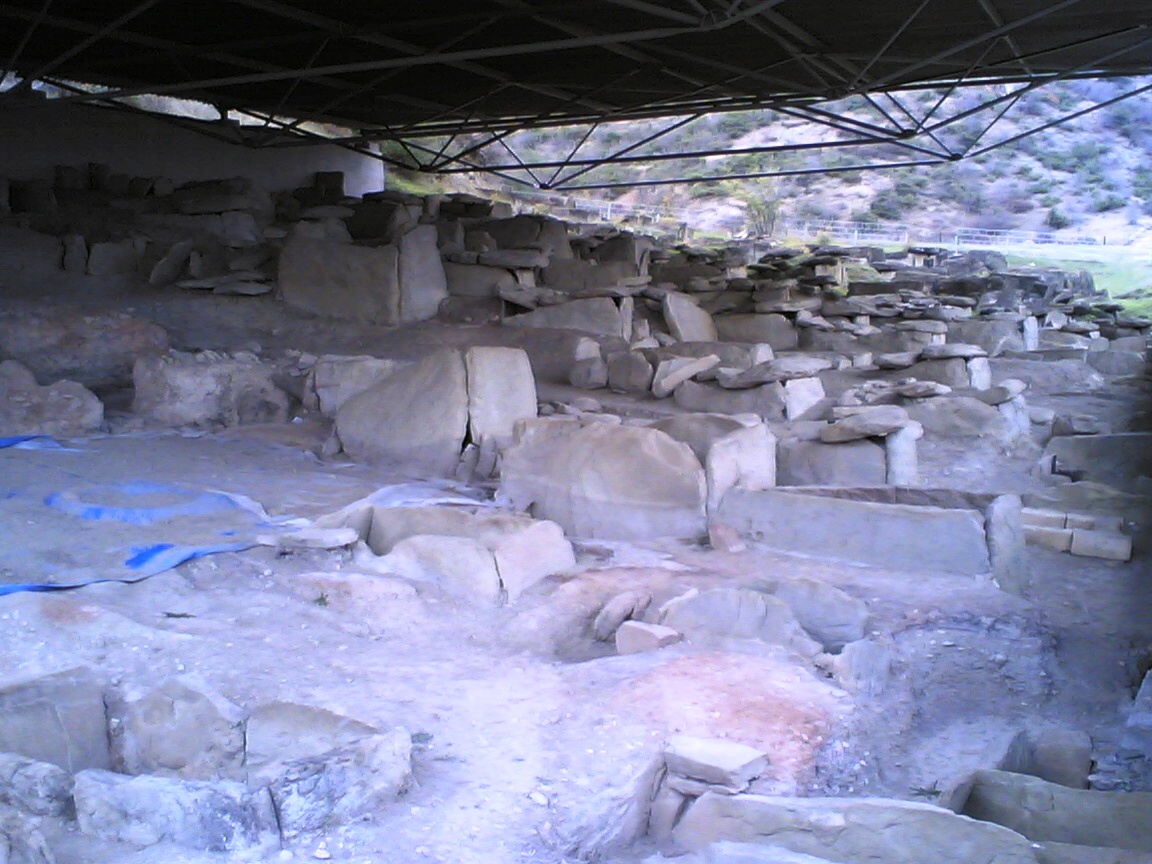
The Samtavro Necropolis is the largest excavated cemetery in the Caucasus, a vast burial ground on the northern edge of Mtskheta in eastern Georgia. Archaeologists have opened close to 3,000 graves here, ranging from the Early Bronze Age in the middle of the third millennium BC down to the tenth century AD. The site sits within the historical monuments of Mtskheta — the ancient capital of the kingdom of Iberia and a UNESCO World Heritage Site — and its stratified tombs preserve more than three thousand years of changing burial customs, metalwork and belief.
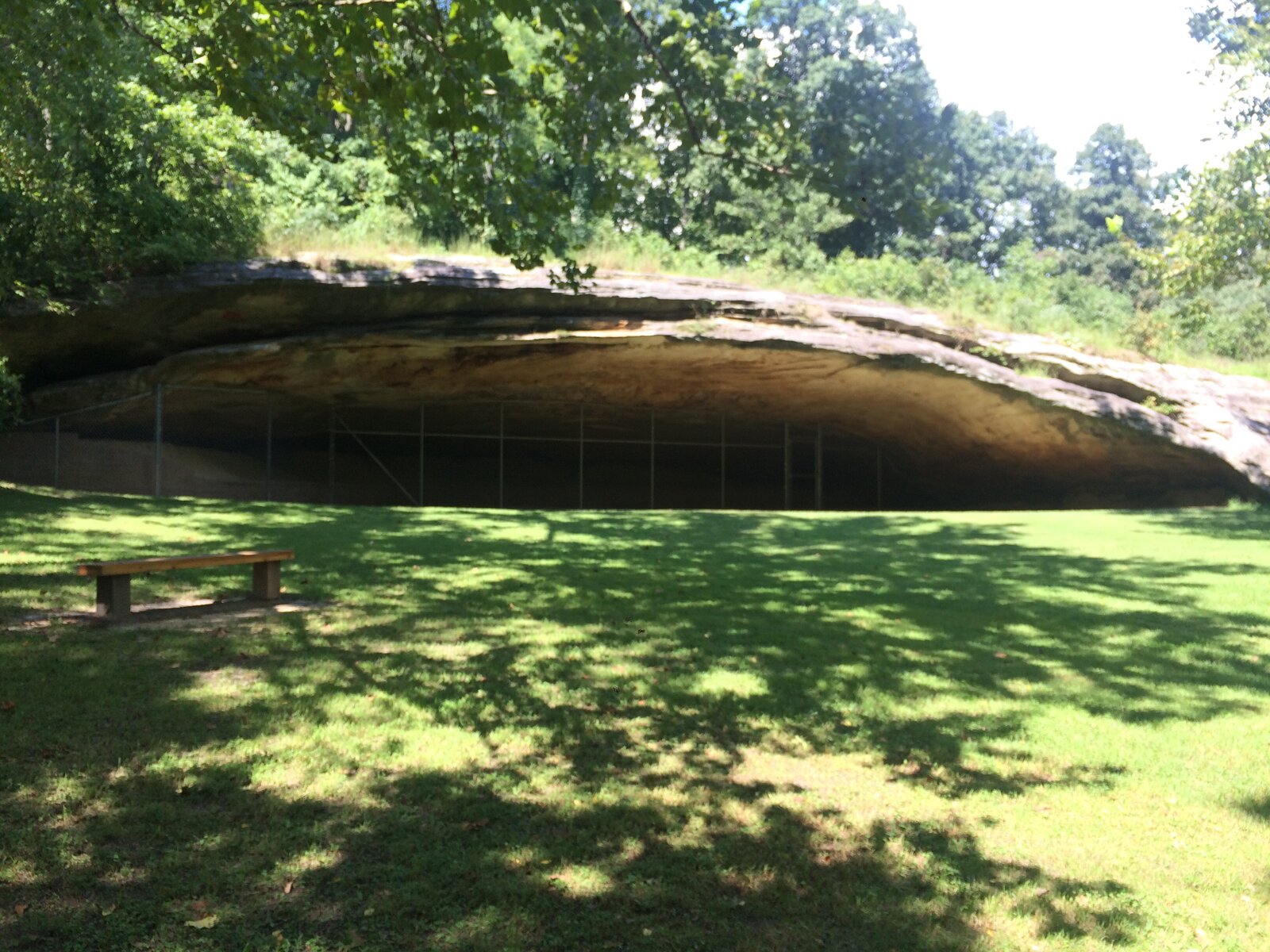
Burial monuments take strikingly different forms across cultures — compare this ancient Georgian necropolis with the 1905 Dorn Pyramid, a granite Masonic tomb in San Luis Obispo, California.
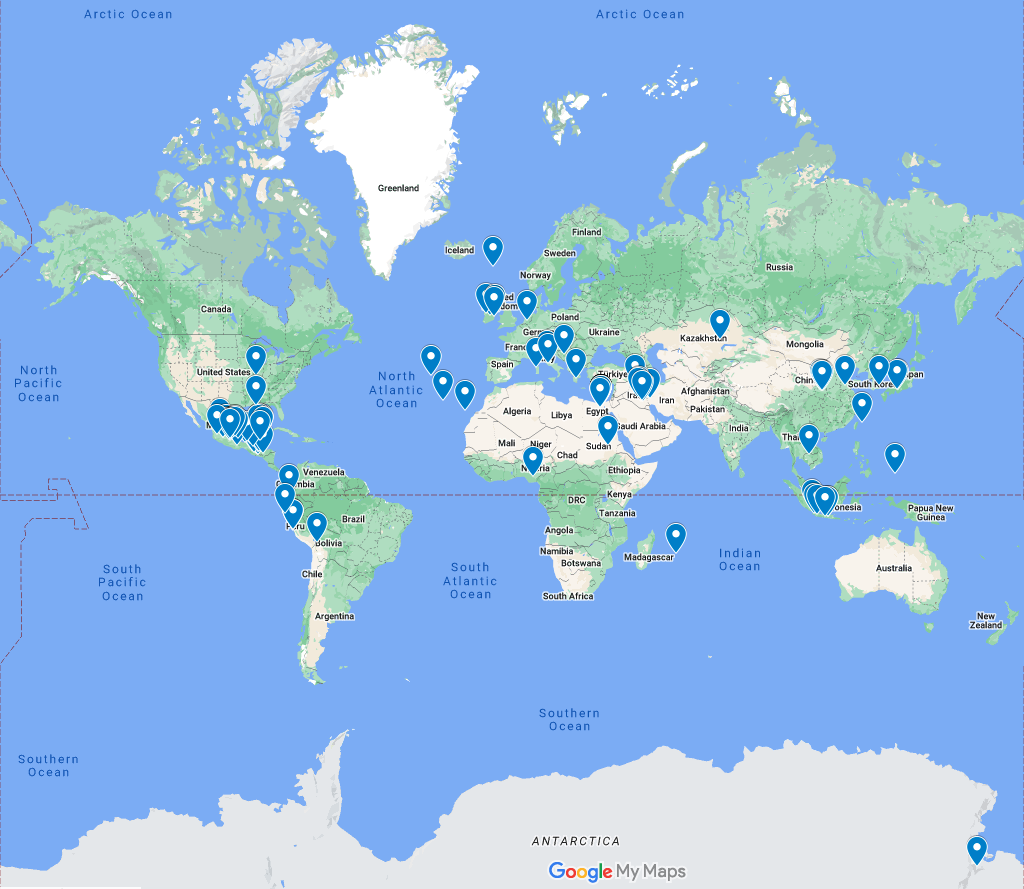
- Location: northern Mtskheta, eastern Georgia, at the confluence of the Mtkvari (Kura) and Aragvi rivers
- Civilization: Bronze Age and Iron Age Caucasian cultures; kingdom of Iberia (Kartli)
- In use: c. mid-3rd millennium BC (Early Bronze Age) to the 10th century AD
- Graves excavated: close to 3,000, across roughly 20 hectares
- Status: part of the UNESCO World Heritage Site “Historical Monuments of Mtskheta” (1994)
Where Is the Samtavro Necropolis?
The necropolis lies on the northern outskirts of Mtskheta, the old royal town set where the Aragvi river joins the Mtkvari (Kura) just north-west of Tbilisi. Mtskheta is one of the oldest settlements of Transcaucasia, and the cemetery spreads across roughly 20 hectares around the later Samtavro church, from which it takes its name. Because the burials accumulated over millennia rather than in a single phase, the ground is densely layered: thousands of graves overlap and intercut across the slope, which is why excavators have been able to recover an almost unbroken sequence of Caucasian burial practice in one place.
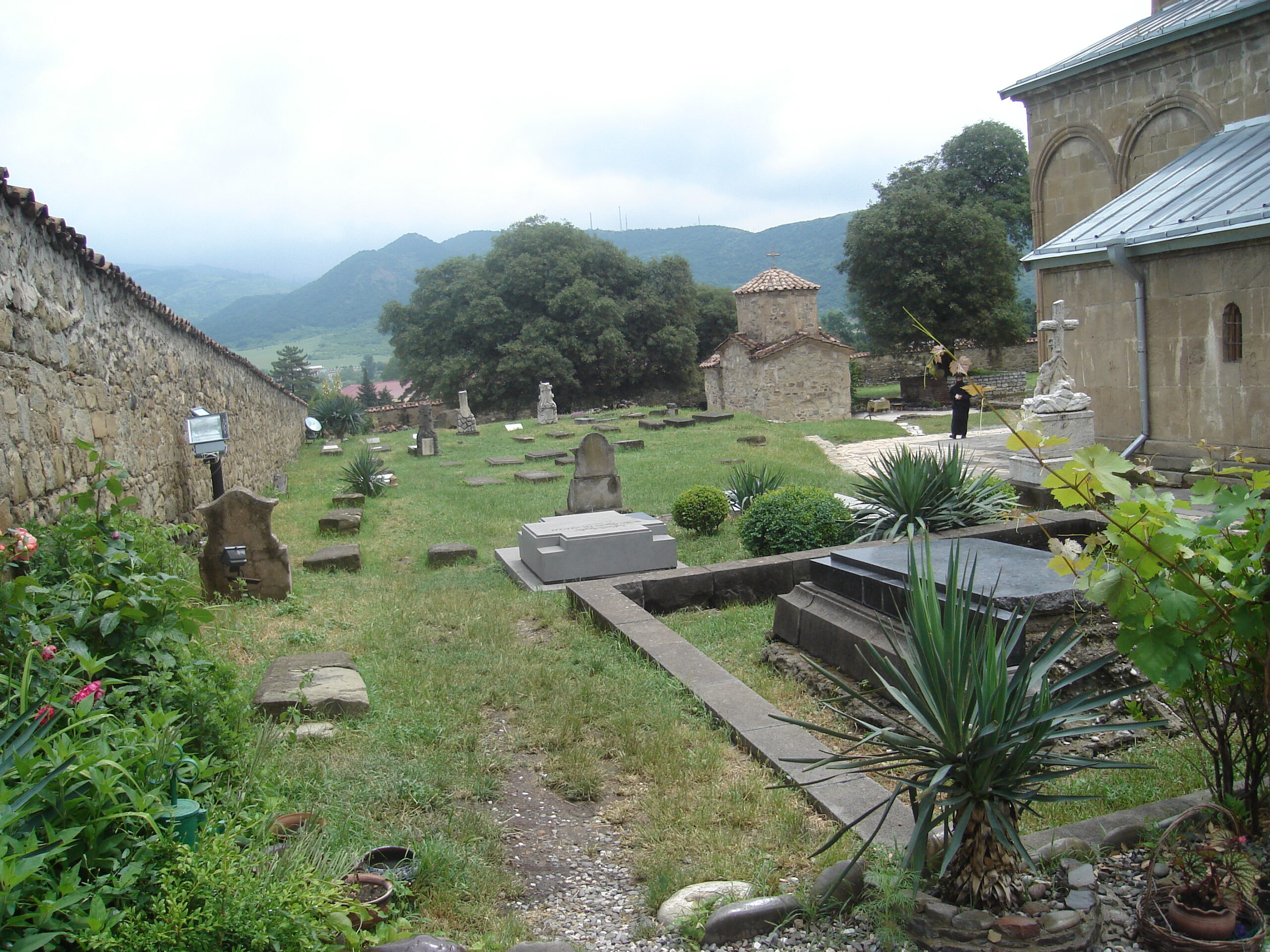
The site belongs to the same sacred landscape as the Svetitskhoveli Cathedral and the hilltop Jvari Church, and the ruined Armaztsikhe citadel — the seat of the Iberian kings — stands nearby. Travellers who want more Caucasian context can compare Samtavro with the dolmens of the North Caucasus and the fortified Black Sea site of Gonio Fortress, both of which sit within the same broad cultural world.
Discovery and Excavation: From Bayern to Kalandadze
The Samtavro cemetery was first investigated by the German-Russian engineer and antiquarian Friedrich Bayern, who dug here in the 1870s and 1880s and published the earliest record of its grave goods. Systematic Georgian excavation resumed in 1938 under Aleksandre Kalandadze and has continued, in various campaigns, ever since. Generations of fieldwork have examined up to 3,000 graves and established the detailed stratigraphy that allows each burial to be placed in sequence.
Renewed investigations
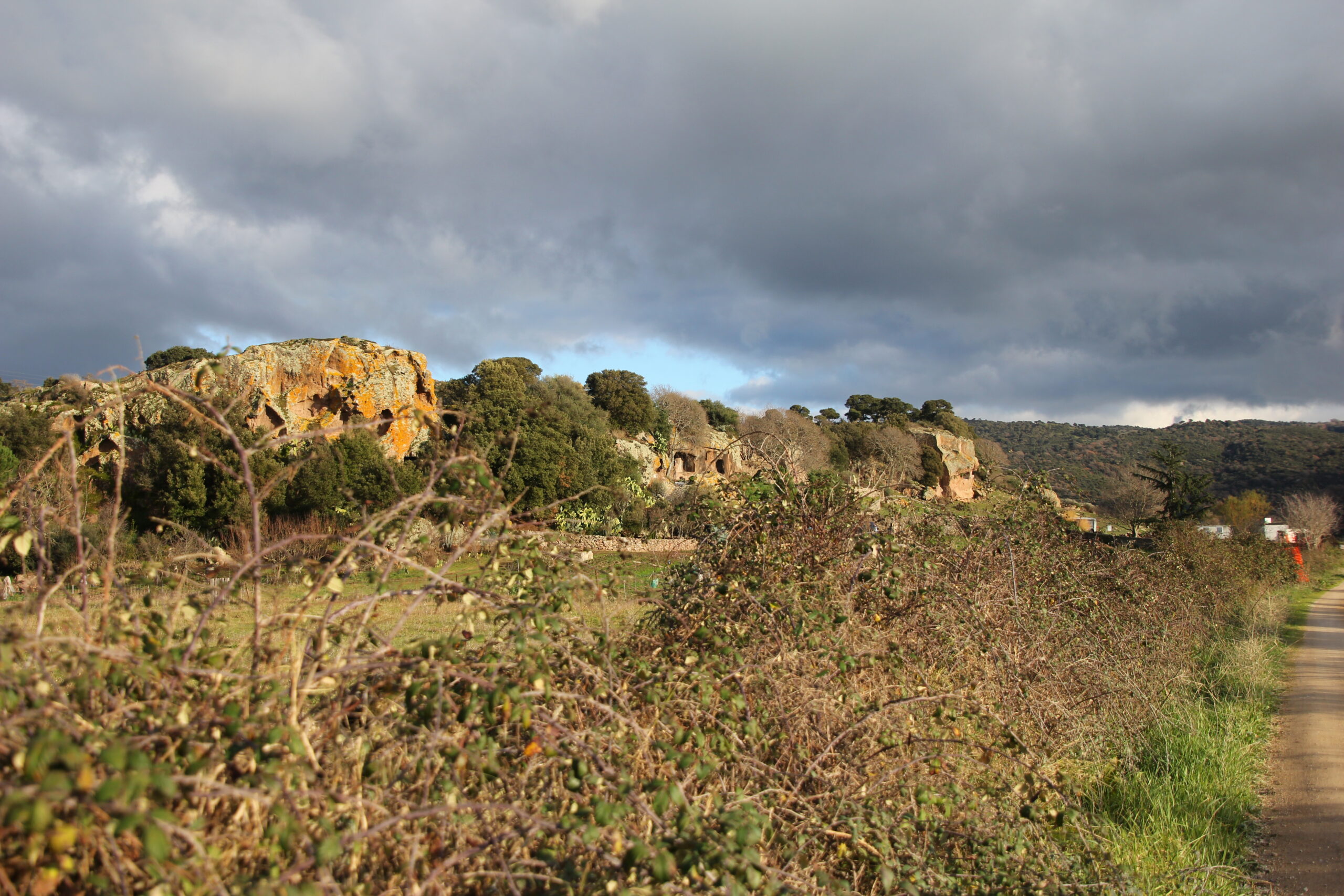
Between 2008 and 2009 a renewed Georgian-Australian project, led by researchers from the University of Melbourne working with Georgian colleagues, returned to Samtavro to re-examine its chronology with modern recording and scientific dating. Their work helped tie the older excavated material to a firmer timeline and confirmed Samtavro’s status as a reference site for the prehistory of the southern Caucasus. The same prehistoric instinct to mark the dead with monuments runs through sites as far away as Orkney’s Tomb of the Eagles.
How Old Is the Samtavro Necropolis?
The cemetery’s oldest cultural layer dates to the Early Bronze Age, in the middle of the third millennium BC, and the latest burials reach the tenth century AD. The earliest deposits contain archaic pottery, stone tools and the burned remains of structures. A Middle Bronze Age burial mound yielded bronze tools, gold jewelry and pearls, and the richest material of all comes from the Late Bronze Age and Early Iron Age graves. The cemetery flourished again in the late Roman and late antique periods, so that a single hillside preserves a near-continuous chronicle of more than three thousand years.
What Did Archaeologists Find at Samtavro?
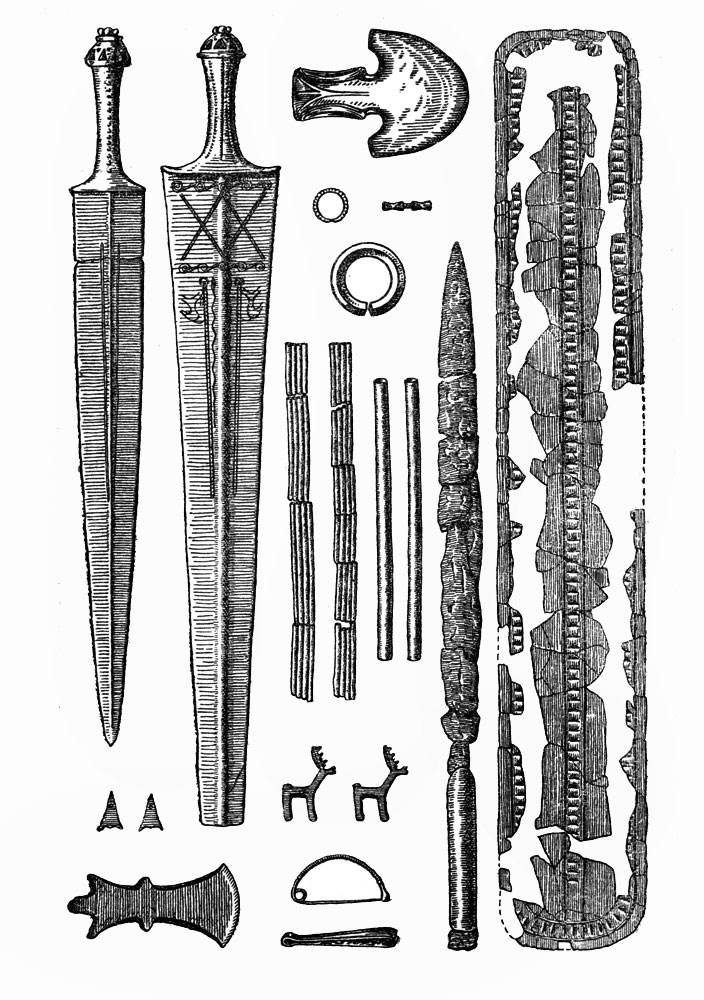
The finds from Samtavro are remarkably varied. From the Late Bronze and Early Iron Age burials came polished ceramics decorated with geometric patterns, enamelled wares, bronze and iron tools, engraved bronze belts, zoomorphic bronze figurines, and beads of agate and other semi-precious stone. The upper, later layer of the cemetery produced stone tombs, cists, stone sarcophagi, ashlar-built crypts and slab or brick graves. Many of the dead were laid out in a contracted, fetal position, and a number of burials contained a coin placed in or near the mouth — the “Charon’s obol” thought to pay the ferryman of the dead, a custom that reached Iberia through its contact with the Graeco-Roman world.
Taken together, these objects make Samtavro a type-site for Caucasian material culture: the sheer quantity and continuity of its grave goods let archaeologists trace how metalworking, pottery and personal ornament evolved in the region across millennia. Much of the assemblage is now studied and displayed through the Georgian National Museum.
Samtavro and the Kingdom of Iberia
Mtskheta was the capital of the kingdom of Iberia, or Kartli, from roughly the third century BC until the fifth century AD. World History Encyclopedia notes that Kartli was a significant power in the Caucasus from the Bronze Age, prospering on agriculture and trade and even minting its own coinage; according to tradition the Northern and Southern parts of Kartli were united under Pharnavaz, who ruled from Mtskheta as the first of the Pharnavazid kings. The Samtavro burials span this whole arc, from prehistoric clans to the pagan Iberian aristocracy who worshipped deities such as Armazi.
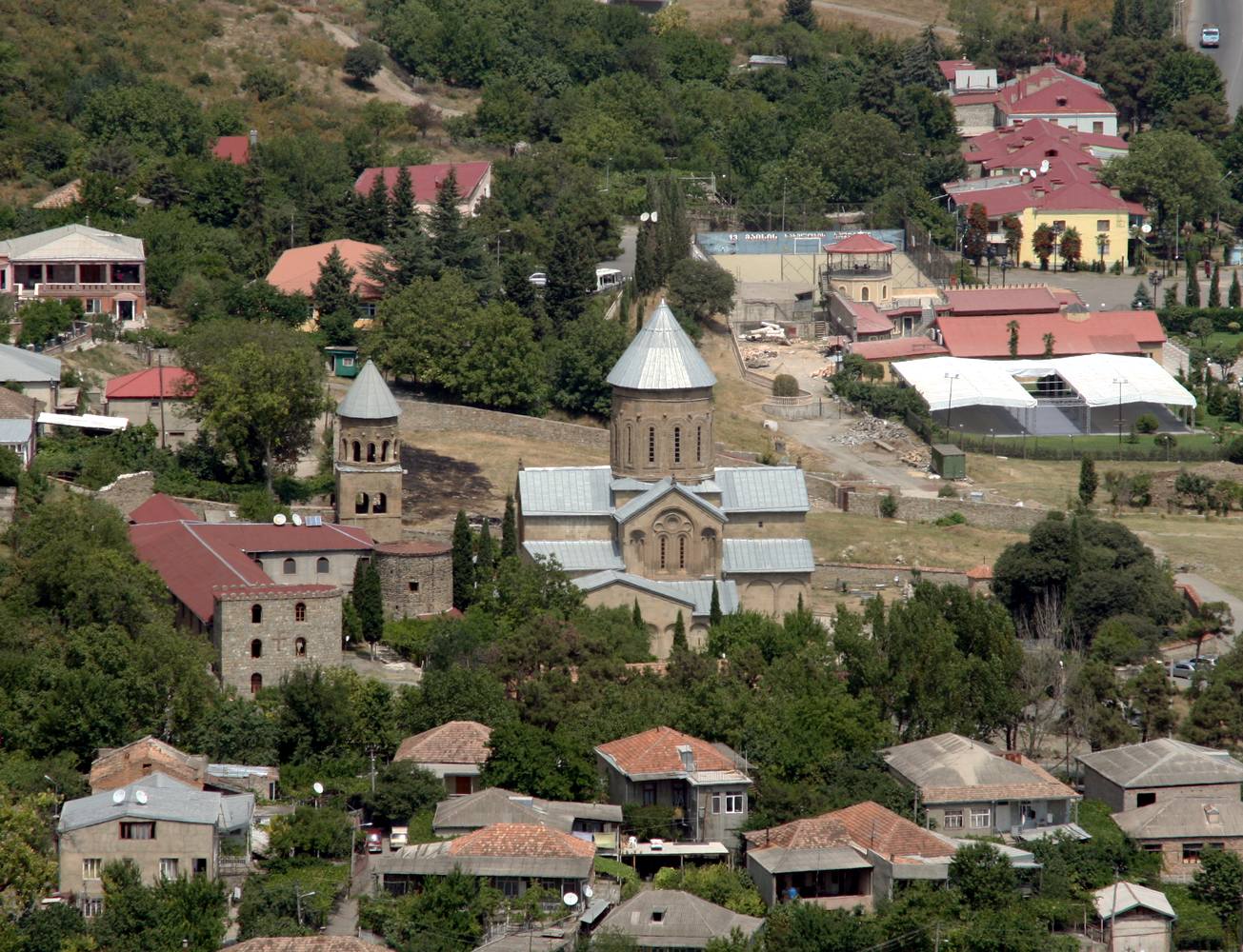
The cemetery also captures one of the great turning points in Georgian history. In the early fourth century AD, Saint Nino is said to have converted King Mirian III and Queen Nana, and Iberia adopted Christianity as a state religion around 337. Burials at Samtavro shift across this transition, from pagan grave customs to early Christian interments clustered near the church, making the site a rare physical record of religious change. For more on the wider region, see our overview of Dvin, another great city of the medieval Caucasus, and the broader Ancient Civilizations collection.
Visiting Mtskheta and the Samtavro Site Today
Mtskheta’s religious buildings were inscribed as a UNESCO World Heritage Site in 1994, and the town remains the spiritual heart of the Georgian Orthodox Church. The Samtavro Transfiguration Church and its working convent stand on the edge of the ancient cemetery, a short walk from the towering Svetitskhoveli Cathedral. While the archaeological necropolis itself is not a ticketed attraction in the way the churches are, the finds that came out of its graves — bronze belts, jewelry and pottery — are central to the story told in Georgia’s national collections, and they reward a visit before or after seeing the monuments above ground.
Frequently Asked Questions
How old is the Samtavro Necropolis?
The Samtavro Necropolis was in use from the middle of the third millennium BC, in the Early Bronze Age, until about the tenth century AD. Its oldest cultural layer holds archaic pottery, stone tools and the remains of burned structures, while later graves belong to the Middle and Late Bronze Age, the Early Iron Age, and the late Roman and late antique periods. That span of more than three thousand years makes it one of the most continuously used cemeteries in the Caucasus.
How many graves have been found at Samtavro?
Archaeologists have examined close to 3,000 graves at Samtavro since excavations began in the 1870s, making it the largest investigated burial ground in the Caucasus. The cemetery covers roughly 20 hectares on the northern edge of Mtskheta. Burials range from simple pits and stone-lined cists to stone sarcophagi, ashlar crypts and slab or brick tombs, and many of the dead were laid to rest in a contracted, fetal position.
Who discovered the Samtavro Necropolis?
The Samtavro Necropolis was first excavated by Friedrich Bayern in the 1870s and 1880s. Systematic Georgian excavations resumed in 1938 under Aleksandre Kalandadze and have continued ever since, joined by a renewed Georgian-Australian project in 2008-2009. Together these campaigns reconstructed the site’s stratigraphy and recovered bronze tools, gold jewelry, engraved belts, zoomorphic figurines and thousands of ceramic vessels.
Sources and Further Reading
- Samtavro necropolis — Wikipedia (dating, excavation history and grave-goods summary).
- Mtskheta — Encyclopaedia Britannica (the ancient capital, its setting and UNESCO status).
- Colchis & Iberia in Antiquity — World History Encyclopedia (the kingdom of Iberia, trade and religion).

Neural Pathways is a collective of seasoned experts and researchers with a profound passion for unraveling the enigmas of ancient history and artifacts. With a wealth of combined experience spanning decades, Neural Pathways has established itself as a leading voice in the realm of archaeological exploration and interpretation.