Angel Mounds is a Middle Mississippian town and ceremonial center on the Ohio River in southern Indiana, built around AD 1100 and home to as many as 1,000 people at its height. For roughly three and a half centuries it was the political, economic, and spiritual capital of the Angel chiefdom, a maize-farming society that raised at least eleven earthen mounds behind a bastioned wooden wall. Today its 600-acre site near Evansville ranks among the best-preserved Mississippian towns in North America — and it has yielded more than 2.5 million artifacts to archaeologists.
Set on a low terrace about eight miles southeast of Evansville, in Vanderburgh and Warrick counties, the town looked out over the Ohio River that formed its southern edge and its highway to the wider Mississippian world. This guide traces who built Angel Mounds, how the town was laid out, why it was abandoned around 1450, and how one determined archaeologist turned a farm field into a landmark of American prehistory.
Who Built Angel Mounds?
Angel Mounds was built by people of the Middle Mississippian culture, the mound-building tradition that spread through the river valleys of the American Midwest and Southeast after about AD 900. Named for its origins along the Mississippi River and its tributaries, this culture is defined by planned towns, flat-topped platform mounds, maize agriculture, and a ranked, chiefly society. Angel Mounds served as the capital of a regional polity that archaeologists call the Angel chiefdom, which controlled a stretch of the Ohio and lower Wabash valleys.
A Maize-Farming Town on the Ohio
The town was occupied from roughly AD 1100 to 1450. What made a permanent community of this size possible was corn: the cultivation and storage of maize, supplemented by beans, squash, wild game, fish, and river mussels, allowed hundreds of people to live in one place year-round. At its peak the walled town held perhaps 1,000 residents, with more living in satellite farmsteads across the surrounding countryside. Angel Mounds sits within a broader Mississippian network that stretched from Cahokia near modern St. Louis to Moundville in Alabama and Etowah in Georgia.
A City Laid Out on the Ohio River
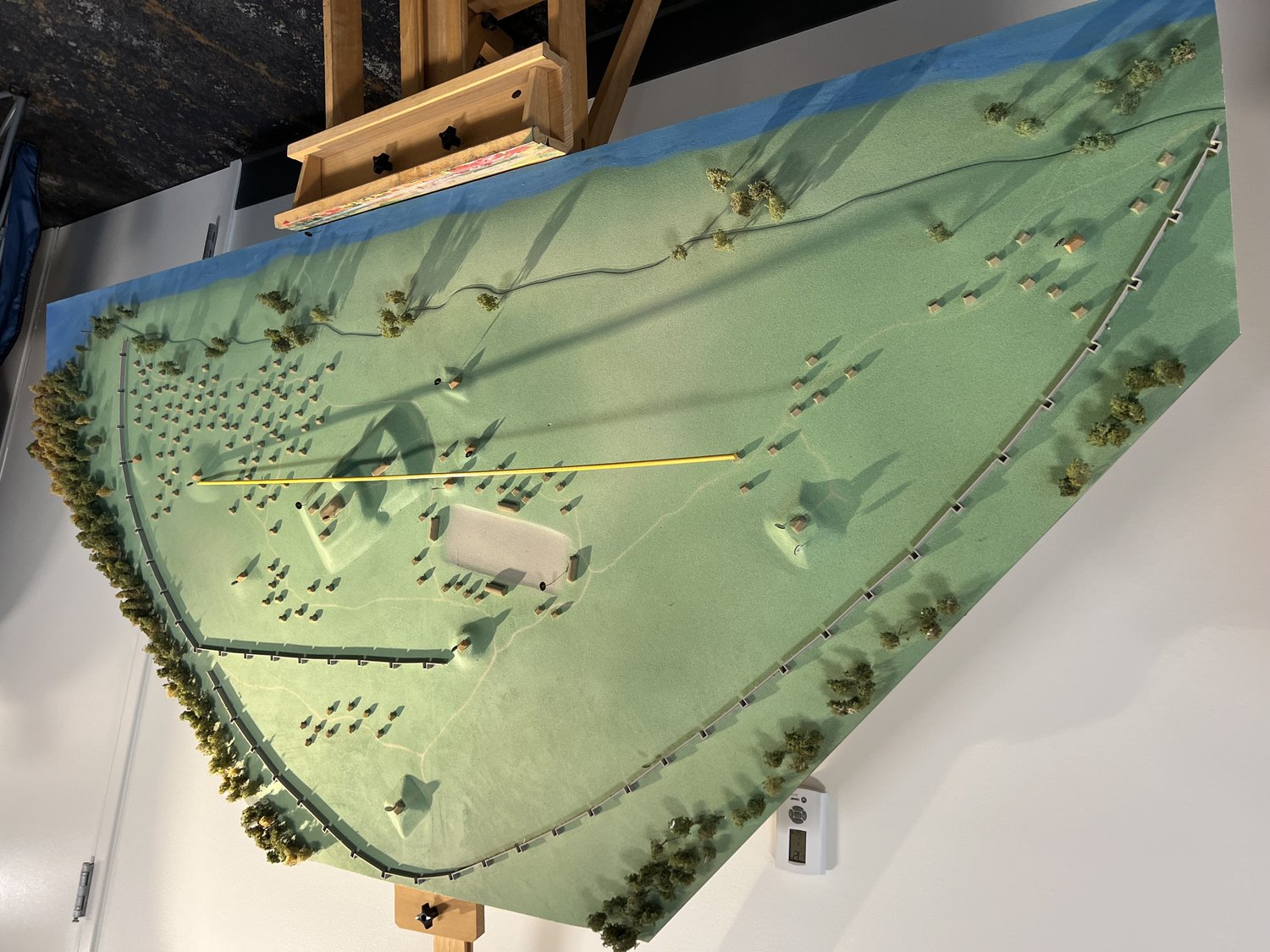
The modern historic site covers about 600 acres, but the Mississippian town itself occupied roughly 100 acres of that ground. Its plan followed a template repeated across the Mississippian world: a large open plaza ringed by earthen mounds, with clustered residential areas and a defensive wall enclosing the whole. The plaza was the town’s civic heart — a swept, communal space for markets, games such as chunkey, ceremonies, and the gatherings that bound the chiefdom together.
Houses were built of wattle and daub — walls of woven cane and saplings packed with clay — set in wall-trench foundations and roofed with thatch. The Ohio River supplied water, fish, and a canoe route for trade in copper, marine shell, and fine pottery, while also serving as a natural barrier protecting the town’s southern flank.
The Mounds of Angel Mounds
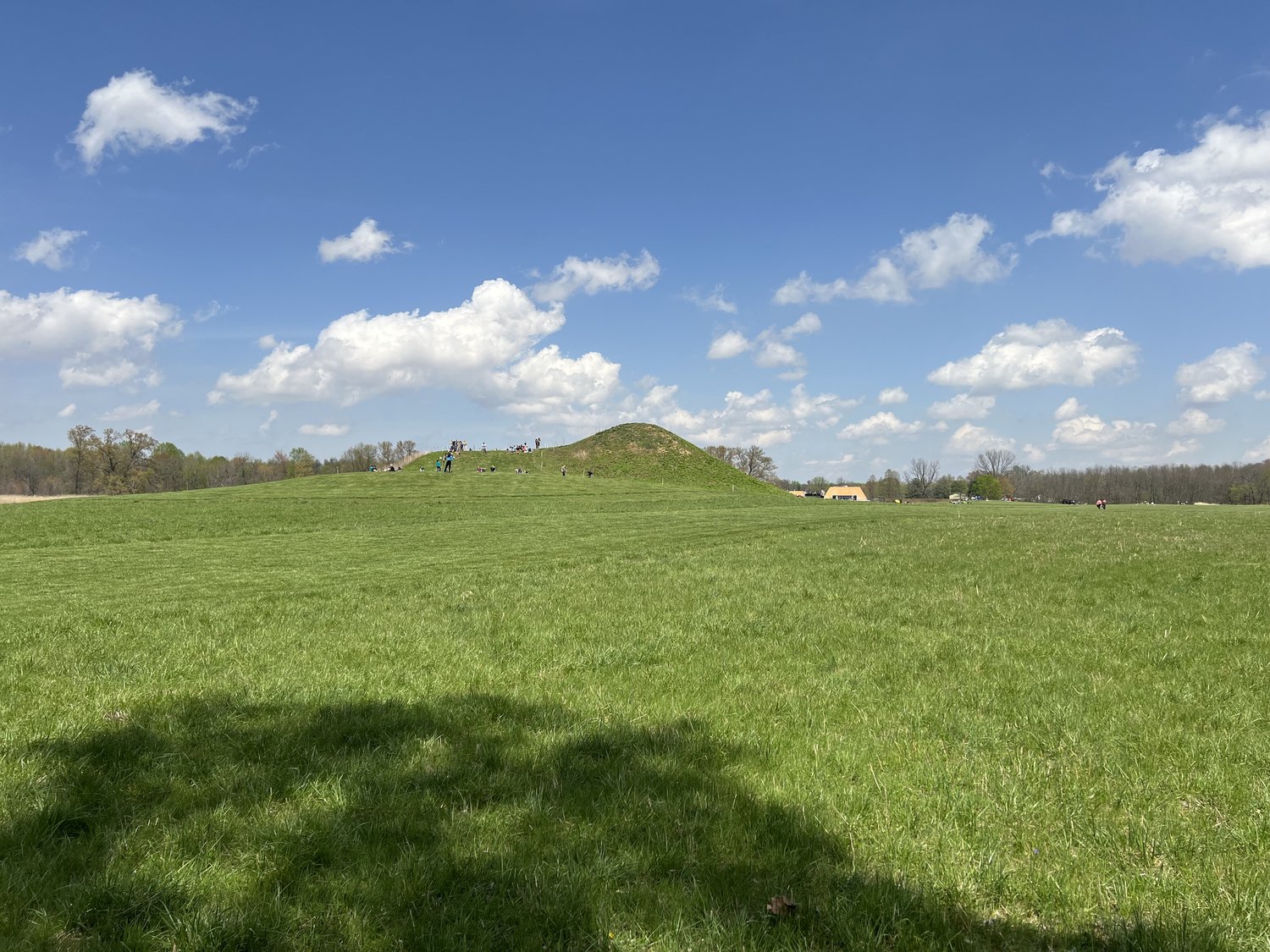
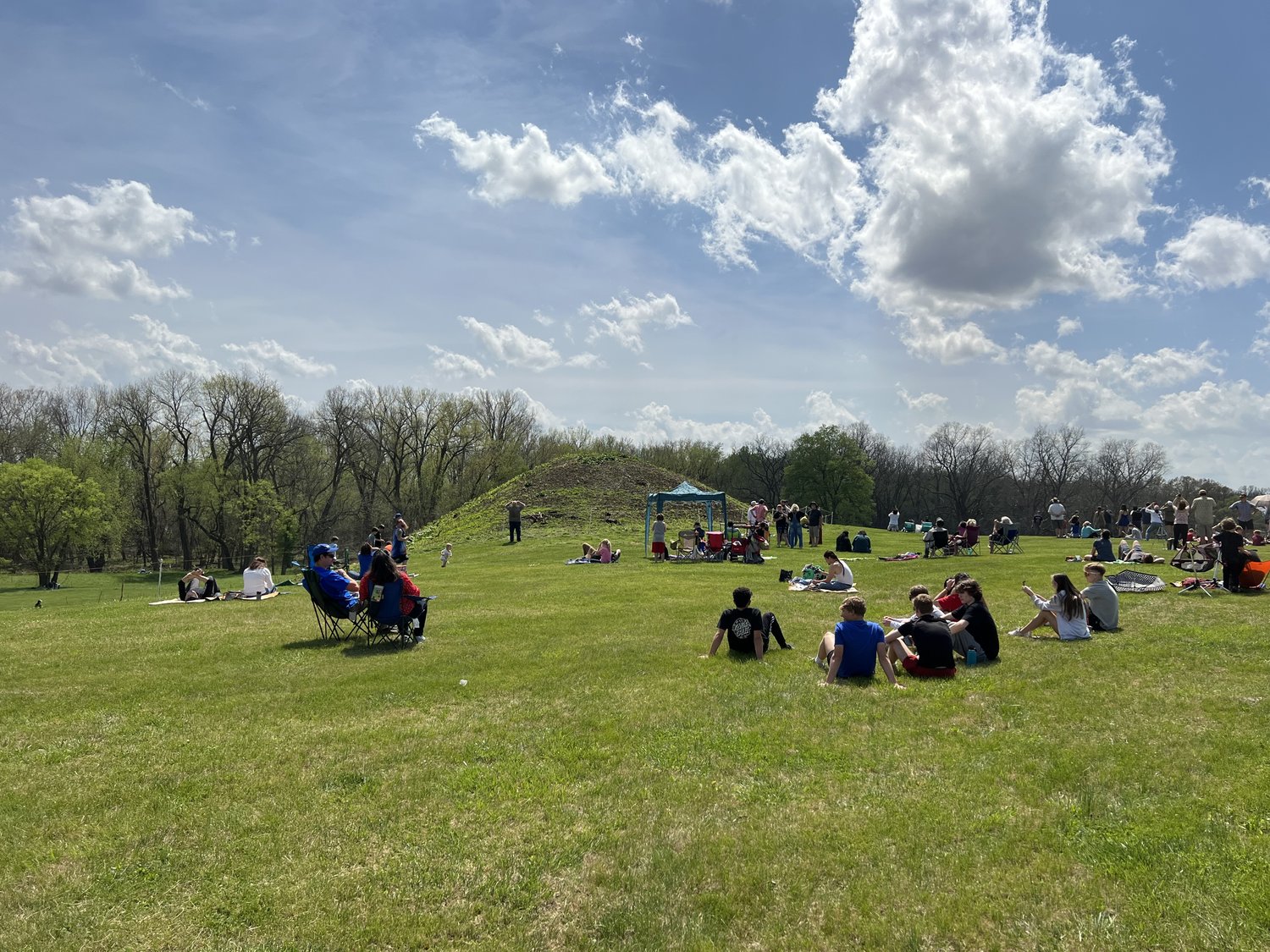
The site is best known for its earthen mounds. Archaeologists count eleven — six large platform mounds designated A through F and five smaller mounds labeled H through L — arranged around the central plaza; some visitor accounts give a slightly higher figure of twelve or thirteen when low or eroded rises are included. Unlike burial mounds, these were flat-topped platforms raised to elevate the town’s most important buildings: temples, charnel houses, and the residences of the elite. Each was built up in stages, basket-load by basket-load, over generations.
Mound A, the Great Platform
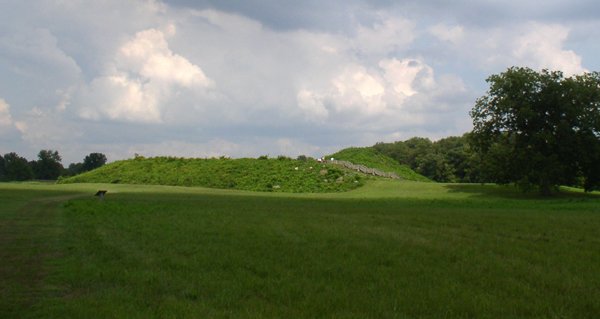
The largest is Mound A, an enormous platform mound roughly 600 feet long and 400 feet wide that rises about 44 feet above the plaza — the tallest prehistoric earthwork in Indiana. A smaller conical mound sits on its broad summit, and a large building, most likely a temple or the paramount chief’s residence, once crowned the platform. From its top, leaders could survey the plaza, the town, and the river beyond, a physical expression of the chiefdom’s social hierarchy.
The Palisade, the Bastions, and Daily Life
One of the site’s most striking features was its defensive wall. The Mississippians ringed the town with a palisade, or stockade, of wattle and daub standing roughly twelve feet (3.7 metres) high and studded at intervals with projecting bastions — towers from which defenders could shoot along the wall. Excavation revealed not one but two palisade lines: an outer wall following the town’s perimeter, with the Ohio River guarding the south side, and an inner wall that bisected the settlement. The palisade was rebuilt several times, a sign of both a long occupation and a real concern for defense.
Inside the walls, life revolved around farming, craft, and ceremony. The 2.5 million-plus artifacts recovered from the site — pottery, stone tools, bone implements, shell ornaments, and food remains — paint a detailed picture of a busy agricultural town. Comparable fortified centers survive at Emerald Mound in Mississippi and Town Creek in North Carolina.
Why Was Angel Mounds Abandoned Around 1450?
Sometime around AD 1450, the people of Angel Mounds left, and the reasons remain one of the site’s enduring questions. No single catastrophe is recorded in the archaeology. Instead, researchers point to a combination of pressures that weighed on many Mississippian towns in the fifteenth century: soils exhausted by generations of intensive maize farming, dwindling supplies of firewood and wild game around a large permanent population, and the social and political strains that could fracture a chiefdom. Shifts in climate during this period may have made harvests less reliable as well.
Whatever the mix of causes, the town was not violently destroyed so much as gradually emptied. Its inhabitants dispersed into smaller communities, and the great mounds were left to the grass. By the time European explorers reached the Ohio Valley, the builders were long gone and their descendants’ connection to the site had been obscured — part of the wider pre-contact decline that also emptied centers such as other Indiana mound sites along the river.
Rediscovery: From the Angel Farm to a National Landmark
The site takes its name not from the Mississippians but from the Mathias Angel family, nineteenth-century settlers who farmed the land and whose name stuck to the mounds. Antiquarians noted the earthworks for decades, but the modern story begins in 1931, when the pioneering archaeologist Warren K. Moorehead and the Indianapolis businessman and amateur archaeologist Eli Lilly visited the property and recognized its importance.
In 1938, with financial backing from Lilly, the Indiana Historical Society purchased the roughly 600-acre farm to save it from development. The following year a Works Progress Administration project brought a large crew to the site, and the excavations that followed would define a career.

Glenn A. Black and 2.5 Million Artifacts
From 1939 until his death in 1964, the self-taught Indiana archaeologist Glenn A. Black directed work at Angel Mounds, uncovering more than 2.5 million artifacts and turning the site into a training ground for a generation of American archaeologists. Angel Mounds was designated a National Historic Landmark in 1964, the same year the Indiana Historical Society transferred its excavation rights to Indiana University. In 1965 the university founded the Glenn A. Black Laboratory of Archaeology in Bloomington in his honour, and it still runs an archaeological field school at the site each summer.
Visiting Angel Mounds Today
Angel Mounds is now managed by the Indiana State Museum and Historic Sites and open to the public. An interpretive center displays artifacts from Black’s excavations and explains Mississippian life, while reconstructed wattle-and-daub structures — houses, a temple, and a stretch of the palisade — let visitors picture the living town. A four-mile loop trail winds among the mounds and along the old river channel. The Indiana State Museum notes that several of the mounds appear to align with solstice sunrises and sunsets, an interpretation that reflects the Mississippians’ close attention to the sky, though the precise intent behind each alignment is still studied and debated. For anyone interested in the ancient civilizations of North America, the site is a rare chance to stand inside a Mississippian capital. Explore more historical places across the ancient world.
Frequently Asked Questions
Who built Angel Mounds?
Angel Mounds was built by Native Americans of the Middle Mississippian culture, the mound-building society that flourished across the Midwest and Southeast after about AD 900. They occupied the town from roughly AD 1100 to 1450 as the capital of the Angel chiefdom, a maize-farming polity along the Ohio River. These were skilled farmers, builders, and traders who raised the mounds and palisade, not a lost or mythical people — their descendants are among today’s Native American nations.
How big is Mound A at Angel Mounds?
Mound A is the largest earthwork at the site and the tallest prehistoric mound in Indiana. This flat-topped platform mound measures roughly 600 feet long and 400 feet wide and rises about 44 feet above the surrounding plaza. A smaller conical mound stands on its summit, which once supported a large building — most likely a temple or the residence of the paramount chief. It was raised in stages over generations, one basket-load of earth at a time.
Why was Angel Mounds abandoned?
The town was abandoned around AD 1450, and no single cause is certain. Archaeologists point to a combination of factors common to late Mississippian towns: soils exhausted by intensive maize farming, shrinking supplies of firewood and game near a large population, possible climate shifts, and social or political stress within the chiefdom. Rather than being destroyed, the town was gradually emptied as its people dispersed into smaller communities, leaving the mounds behind.
Sources and Further Reading
- Angel Mounds — Wikipedia
- Mississippian culture — Wikipedia
- Cahokia — World History Encyclopedia
- Map of Mississippian and Related Cultures — World History Encyclopedia
- Angel Mounds State Historic Site — U.S. National Park Service
- Angel Mounds — Indiana State Museum and Historic Sites

Neural Pathways is a collective of seasoned experts and researchers with a profound passion for unraveling the enigmas of ancient history and artifacts. With a wealth of combined experience spanning decades, Neural Pathways has established itself as a leading voice in the realm of archaeological exploration and interpretation.