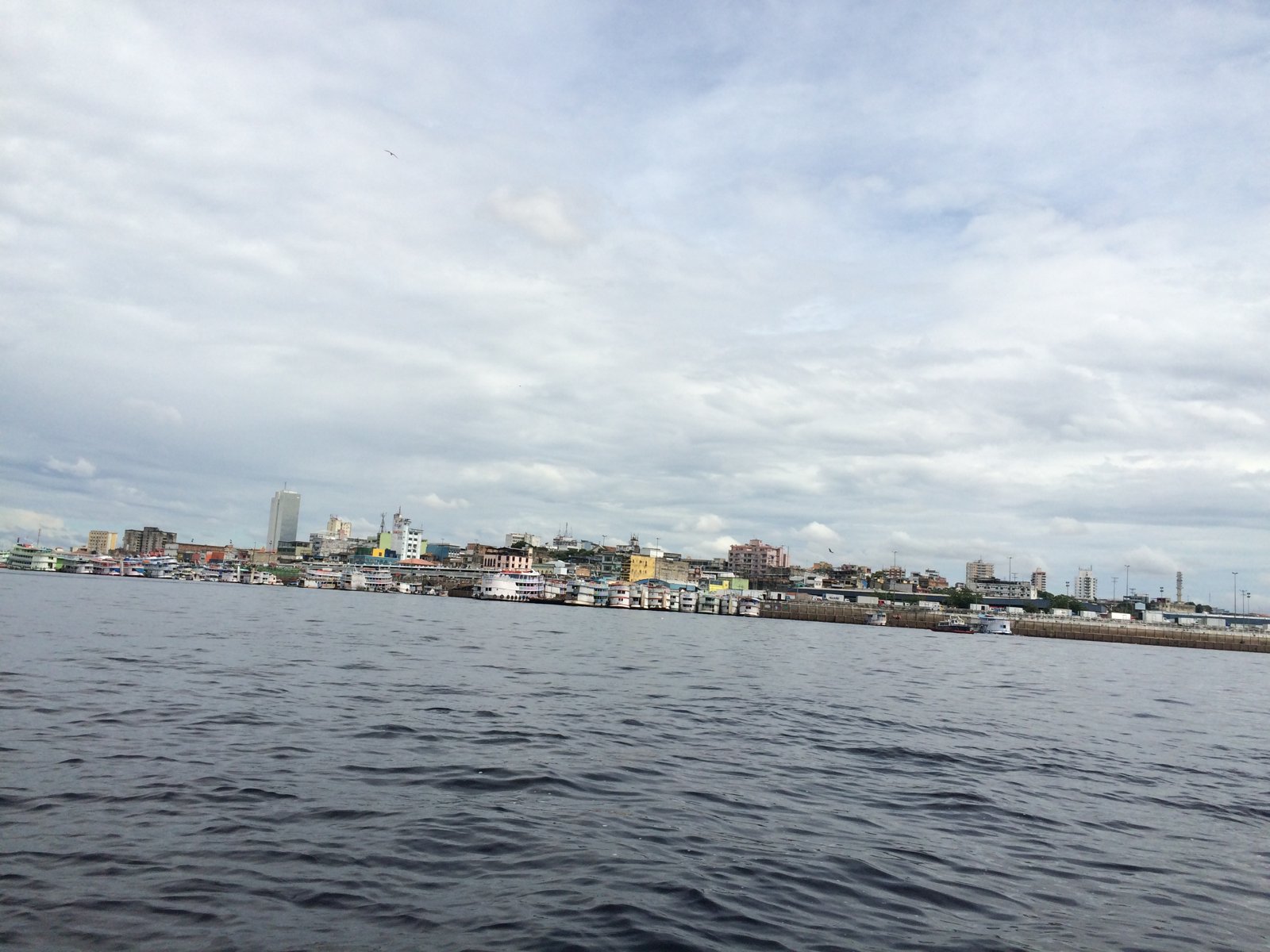
When the worst Amazon drought in more than a century pulled the Rio Negro back from its banks in October 2023, it uncovered something the river had kept hidden for generations: dozens of human faces carved into black rock outside Manaus, Brazil. The Amazon rock carvings at a site called Ponta das Lajes are pre-colonial engravings, made by Indigenous peoples of the middle Amazon perhaps 1,000 to 2,000 years ago. For most of the past century they have lain submerged, surfacing only when catastrophic drought lays the riverbed bare.
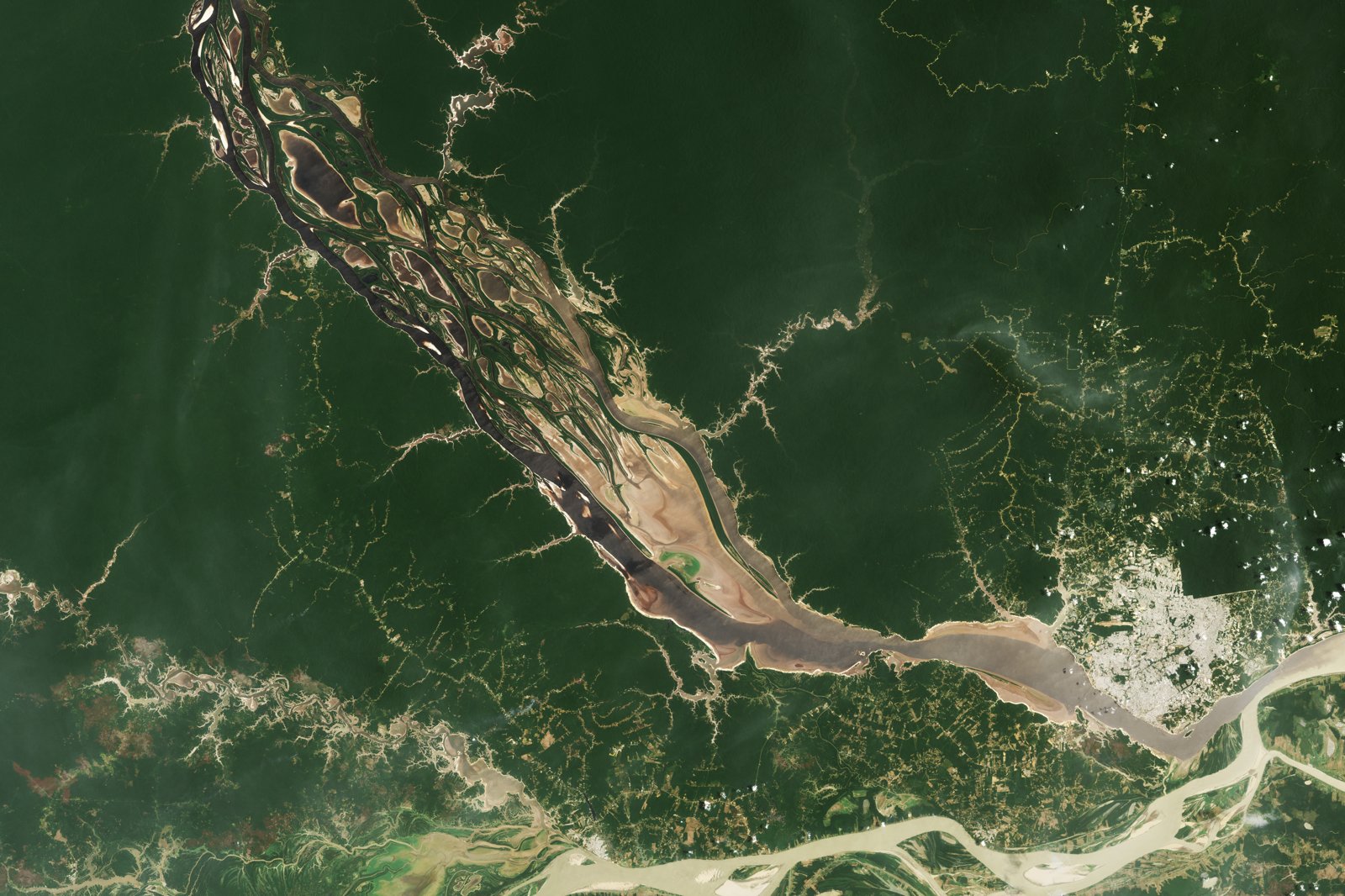
A Record Drought That Emptied the River
The 2023 dry season in the Amazon was not an ordinary one. An acute lack of rain, driven by the El Nino climate pattern and unusually warm water in the North Atlantic, produced the worst drought the region had seen in over a century. On 16 October 2023 the Rio Negro at the port of Manaus fell to 13.59 metres (44.6 feet) – its lowest level since measurements began in 1902, breaking the previous record set during the 2010 drought. The river kept falling through the month, eventually dropping below 13 metres for the first time on record.
The human cost was severe. Communities lost easy access to drinking water, stranded boats littered dry riverbeds, and the Santo Antonio hydroelectric plant – Brazil’s fourth-largest – halted operations as its reservoir shrank. Yet the same retreating waters that stranded a region also handed archaeologists a rare window. Along a stretch of newly exposed rock on the Rio Negro bank, the carvings emerged into daylight.
What the Carvings at Ponta das Lajes Show
The site sits at Ponta das Lajes, also recorded as Praia das Lajes, near the point where the Rio Negro meets the Solimoes – the confluence famous as the Meeting of Waters. When the 2023 drought exposed the rocks, researchers documented more than 100 individual engravings, a far richer haul than the handful glimpsed in earlier dry spells.
Most of the images are faces. Some are rectangular, others oval; some carry noses, and their expressions range from broad smiles to grim, downturned mouths. Alongside the faces are animal forms and motifs that appear to represent water. The variety itself is valuable: a larger sample lets researchers compare styles and begin to reconstruct how the carvers thought and what they wanted to record.
The Faces Called “Caretas”
Locally the little faces are known as caretas. They are not the only marks on the stone. Some rocks are scored with smooth grooves – the kind left when a person repeatedly sharpens a stone or bone tool. Carlos Augusto da Silva of the Federal University of Amazonas counted 25 separate groups of these grooves on a single rock, evidence that people shaped arrow points and blades here as well as carving imagery. Fragments of ceramics found at the site reinforce the picture of a place used and revisited by its makers.
How Old Are the Amazon Rock Carvings?
No one can give an exact date. The engravings carry no inscription and cannot be radiocarbon-dated directly, because carving stone leaves no organic material to measure. Instead archaeologists reason from the surrounding evidence of human occupation. “The engravings are prehistoric, or pre-colonial,” Jaime de Santana Oliveira, an archaeologist with Brazil’s National Historic and Artistic Heritage Institute (IPHAN), told reporters at the site. “We cannot date them exactly, but based on evidence of human occupation of the area, we believe they are about 1,000 to 2,000 years old.” That places their makers firmly among the Indigenous societies of the middle Amazon, centuries before any European reached the river.
Who Carved Them, and Why It Matters
The setting is telling. Near Manaus the dark, sediment-free Rio Negro runs alongside the pale, Andes-fed Solimoes for kilometres before the two finally mix – a natural landmark that would have drawn people to its banks for fishing, travel and trade. To carve here was to mark a crossroads. For Oliveira, the emotional pull of the faces is part of their importance. “The site expresses emotions, feelings,” he said. “It is an engraved rock record, but it has something in common with current works of art.”
Beatriz Carneiro, a historian with IPHAN, called the value of Ponta das Lajes “inestimable” for understanding the first peoples of the region, a field still only lightly studied. She also pointed out the paradox at the heart of the discovery: the carvings are only visible because the river is dangerously low. “Having our rivers back and keeping the engravings submerged will help preserve them, even more than our work,” she said. Submersion, in other words, is the site’s best conservation – and its reappearance is a warning as much as a wonder. The same tension between water and heritage haunts other rock-art sites, from the Pakistani Diamer-Basha petroglyphs threatened by a rising dam reservoir to reinterpreted panels like those at Black Dragon Canyon.
The Wider Story of Amazonian Rock Art
Ponta das Lajes belongs to a much larger and still poorly mapped tradition of image-making in the Amazon basin. The most spectacular example lies far upriver in the Colombian Amazon, at Serrania de la Lindosa, where tens of thousands of ochre paintings run for nearly eight miles along cliff faces. Dated to between about 12,600 and 11,800 years ago and dubbed “the Sistine Chapel of the ancients,” those images are painted rather than carved, and they are many times older than the Manaus faces – a reminder that “Amazon rock art” spans very different techniques, ages and peoples.
The Manaus engravings sit at the younger, carved end of that spectrum, closer in spirit to petroglyph traditions elsewhere in the Americas and beyond – from the desert markings of the Nazca Lines in Peru to the deep-time cave art of El Castillo in Spain and the world’s oldest figurative painting at Leang Tedongnge in Indonesia. Set against those famous sites, Ponta das Lajes is a reminder that the Amazon – long imagined as untouched wilderness – was in fact a peopled, storied landscape, and that some of its records survive only for as long as a river is willing to reveal them. For more river-and-stone heritage, browse the site’s historical places archive.
Frequently Asked Questions
How old are the Amazon rock carvings at Ponta das Lajes?
They cannot be dated directly, but archaeologists at Brazil’s National Historic and Artistic Heritage Institute (IPHAN) estimate the engravings are roughly 1,000 to 2,000 years old, based on evidence of human occupation nearby. Archaeologist Jaime de Santana Oliveira describes them as “prehistoric, or pre-colonial,” meaning they were made by Indigenous peoples of the middle Amazon long before European contact. Fragments of pottery found at the site support a pre-Columbian age rather than an exact calendar year.
Why did the 2023 drought reveal the carvings?
The engravings sit on rocks along the Rio Negro that normally lie underwater. In 2023 an extreme Amazon drought – driven by El Nino and unusual North Atlantic warming – dropped the river at Manaus to 13.59 metres on 16 October, its lowest since records began in 1902. As the water fell away it uncovered more than 100 carvings, far more than were visible during the previous exposure in the 2010 drought.
What do the Ponta das Lajes carvings depict?
Most are human faces, locally called “caretas” (little faces) – some rectangular, some oval, with mouths and occasional noses, wearing smiles or grim expressions. Alongside them are animal figures and symbols linked to water. Some rocks also carry grooves used to sharpen tools: on a single rock, a University of Amazonas researcher counted 25 groups of these polishing marks, suggesting the site was also a workshop.
Sources and Further Reading
- Phys.org / AFP – “Drought in Brazil’s Amazon reveals ancient engravings”
- Live Science – “Severe drought reveals more than 100 rock carvings…”
- Archaeology Magazine – “Amazon’s extreme drought exposes petroglyphs”
- Wikipedia – “Meeting of Waters” (Rio Negro and Solimoes confluence)
- Ancient Origins – “Brazilian Drought Unveils Rare Ancient Petroglyphs on Manaus Riverbed”

Neural Pathways is a collective of seasoned experts and researchers with a profound passion for unraveling the enigmas of ancient history and artifacts. With a wealth of combined experience spanning decades, Neural Pathways has established itself as a leading voice in the realm of archaeological exploration and interpretation.