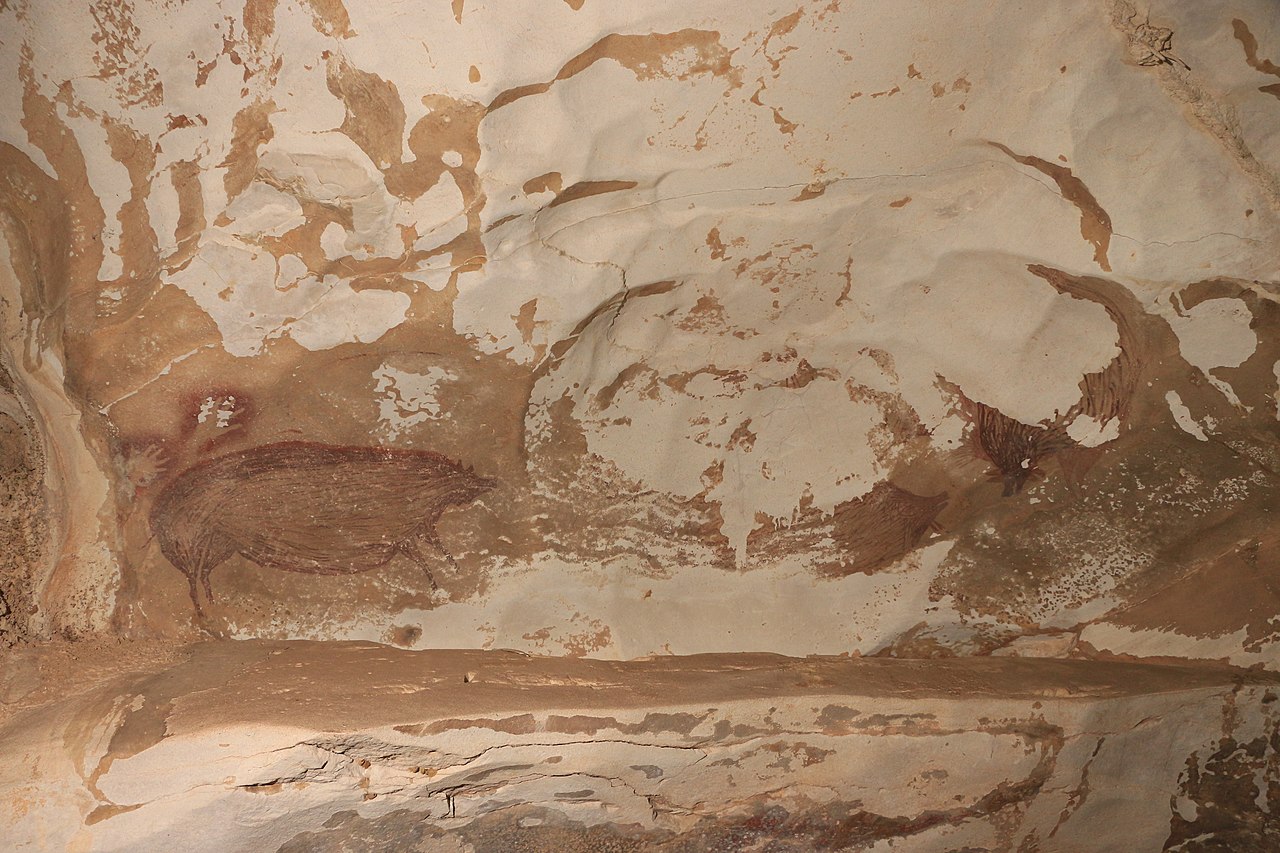
Leang Tedongnge is a small cave in the limestone karst of South Sulawesi, Indonesia, that holds the current record for the oldest figurative artwork in the world: a life-sized painting of a Sulawesi warty pig (Sus celebensis) dated to at least 45,500 years ago. The painting was published in Science Advances in January 2021 by a team of Indonesian and Australian researchers led by Maxime Aubert and Adam Brumm of Griffith University, with the local Indonesian National Research Centre for Archaeology (ARKENAS). It is one of several figurative paintings discovered in the wider Maros-Pangkep karst, and it pushes the documented start of figurative art back well before any European cave art.

Where and What It Is
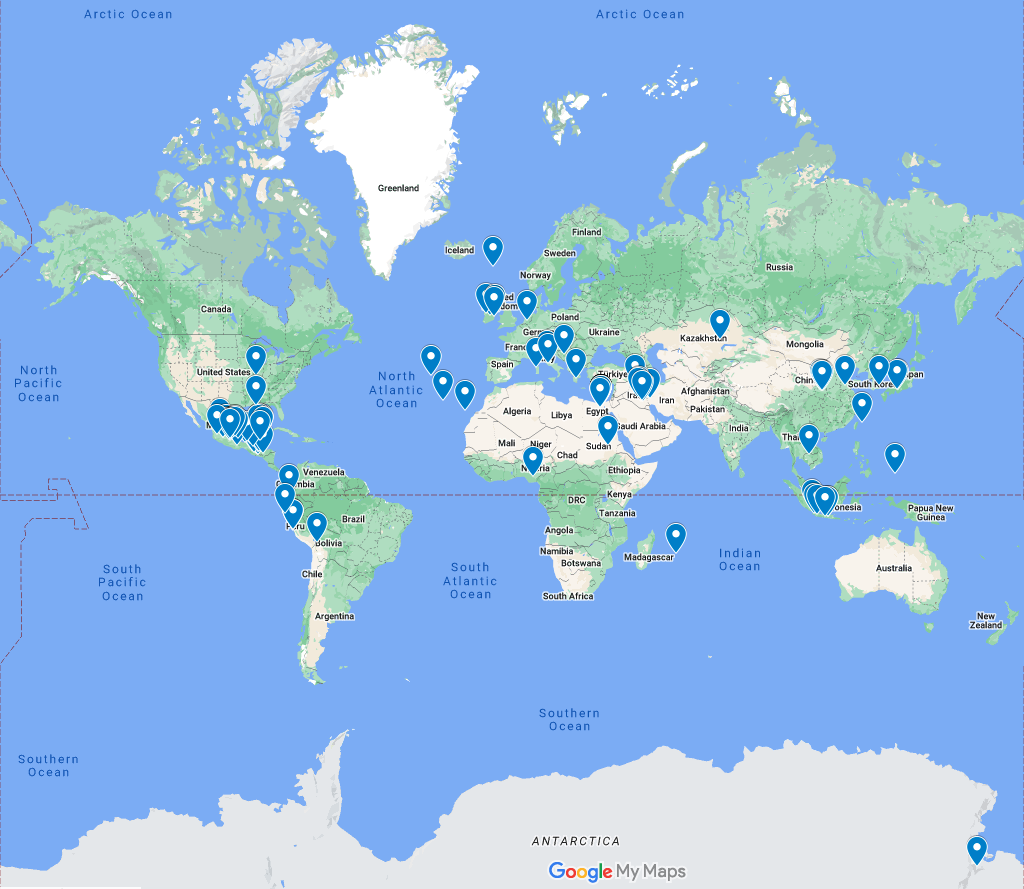
Leang Tedongnge lies hidden in a small valley in the Maros-Pangkep karst, a landscape of dramatic limestone towers and caves north of Makassar on the southern Indonesian island of Sulawesi. The valley is reached only by a narrow footpath through dense secondary forest, and access has long been restricted by both terrain and the wishes of the local Bugis community whose ancestral lands include the cave. The wider karst contains hundreds of decorated caves and rock shelters and was inscribed on the UNESCO World Heritage tentative list as the “Maros-Pangkep Karst Area” in 2009; the Indonesian government designated the area a national geopark in 2017.
How old is the Leang Tedongnge painting?
The painting was dated using uranium-thorium series dating on a small calcite deposit — sometimes called “cave popcorn” — that had formed on top of one of the pig figures. Because the calcite must be younger than the paint it sits on, dating the calcite produces a minimum age for the painting itself. The U-Th measurements returned an age of 45,500 years, meaning the warty pig must have been painted by at least 43,500 BCE. The figure may well be older — uranium-thorium gives a floor, not a ceiling — but 45,500 years is the conservative minimum that holds up under the published method.
The Sulawesi Warty Pig
The animal in the painting is unambiguously identifiable as a Sulawesi warty pig (Sus celebensis) — a small, short-legged species endemic to Sulawesi, weighing between 40 and 85 kilograms in adult form and notable for the distinctive facial warts in males. The painted pig is shown in profile, life-sized at about 136 by 54 centimetres, and rendered in deep red-purple ochre. The figure has a heavy crest of head hair, four short legs visible, and a curling tail. Most strikingly, the painter rendered the small warty growths above and below the eye — the species-diagnostic feature — clearly enough that modern zoologists can identify the animal at a glance. Two further partial pig figures are painted on the same panel, suggesting a small scene or composition.

What Makes This Find Important
Two things make the Leang Tedongnge dating important. First, at 45,500 years it pushes the start of figurative art back well beyond the European tradition. The Chauvet Cave horses in France are roughly 36,000 years old; the Sulawesi babirusa scene at the nearby Leang Bulu’ Sipong 4 cave was dated by the same team in 2019 to about 43,900 years. Together these South Sulawesi finds show that figurative cave art was being practised in Wallacea — the chain of islands east of Borneo — at least as early as, and probably earlier than, anywhere else on Earth.
Second, the find reframes the standard story of early human dispersal. For the warty pig to have been painted 45,500 years ago, Homo sapiens must have arrived on Sulawesi well before that — almost certainly via a maritime route across Wallacea from mainland Sundaland. The painting is the earliest secure evidence of behaviourally modern humans east of the Wallace Line, and predates the earliest reliable dates for human arrival in Australia (about 65,000 years ago by some estimates, with the strongest evidence around 50,000).
The Wider Maros-Pangkep Tradition
Leang Tedongnge is one of many decorated caves in the Maros-Pangkep karst, and the painting tradition extends across the wider landscape. Hand stencils — a person placing their hand against the rock and blowing pigment around it — appear in dozens of caves and have been independently dated to roughly the same horizon. The 2019 Leang Bulu’ Sipong 4 panel shows a hunting scene of figures with weapons and several therianthropic (animal-headed) human-like figures, also dated to around 44,000 years ago. The cumulative evidence places South Sulawesi at the heart of one of the earliest sustained traditions of figurative rock-art making anywhere in the world.

Conservation Concerns
The cave art across Maros-Pangkep is deteriorating rapidly. Researchers including Jillian Huntley have documented accelerated salt-weathering of the painted surfaces, in which subsurface salt crystallisation pushes off flakes of the pigment-bearing rock. The rate of loss has reportedly accelerated in recent decades and is linked by some researchers to climate change — specifically the increasing frequency of severe wet-dry cycling that drives the salt-crystallisation process. The Indonesian heritage authorities, working with international teams, are now racing to record and dating the surviving panels before the salt damage progresses further.
Visiting and Access
Leang Tedongnge itself is not open to general tourism. Access is restricted by the Indonesian heritage authorities to limit damage to the fragile painted surface, and even researchers visit only with permission from the local Bugis community and government archaeological permits. Visitors interested in the Sulawesi cave-art tradition can visit other decorated caves in the Maros-Pangkep karst — including the well-known Pettakere and Leang-Leang sites with their hand stencils — and several panels are reproduced in the small museum at the Maros-Pangkep Geopark interpretation centre. The wider archaeological landscape of South Sulawesi is increasingly recognised as one of the most important early-human regions in the world.
Sources and Further Reading
- Brumm, A. et al. (2021) — “Oldest cave art found in Sulawesi”, Science Advances
- Smithsonian Magazine — 45,000-year-old pig painting in Indonesia
- Smarthistory — Warty pig cave painting in Sulawesi, Indonesia
- The Conversation — Maxime Aubert & Adam Brumm on the find
- Sci-News — 45,500-Year-Old Sulawesi Warty Pig Painting Found in Indonesian Cave