The Cave of El Castillo is a Paleolithic painted cave on the slopes of Monte Castillo, near the village of Puente Viesgo in Cantabria, northern Spain. Active as an art-making site between roughly 41,000 and 11,500 years before present, it contains some of the oldest dated cave art in the world. It contains over 500 individual prehistoric representations — animals, abstract signs, hand stencils and red ochre disks — produced over a span of more than 30,000 years across the entire Upper Paleolithic. In 2012, researchers led by Alistair Pike of the University of Bristol dated one of its red disks to at least 40,800 years before present, making it the oldest reliably dated cave art in Europe — and raising the possibility that the artists were not anatomically modern humans but Neanderthals. For comparison, the Greek site of Theopetra Cave preserves an even longer continuous record of human occupation, stretching back roughly 130,000 years. For the oldest known figurative example, see Leang Tedongnge on Sulawesi, whose warty-pig painting is dated to at least 45,500 years ago.

Discovery and Location
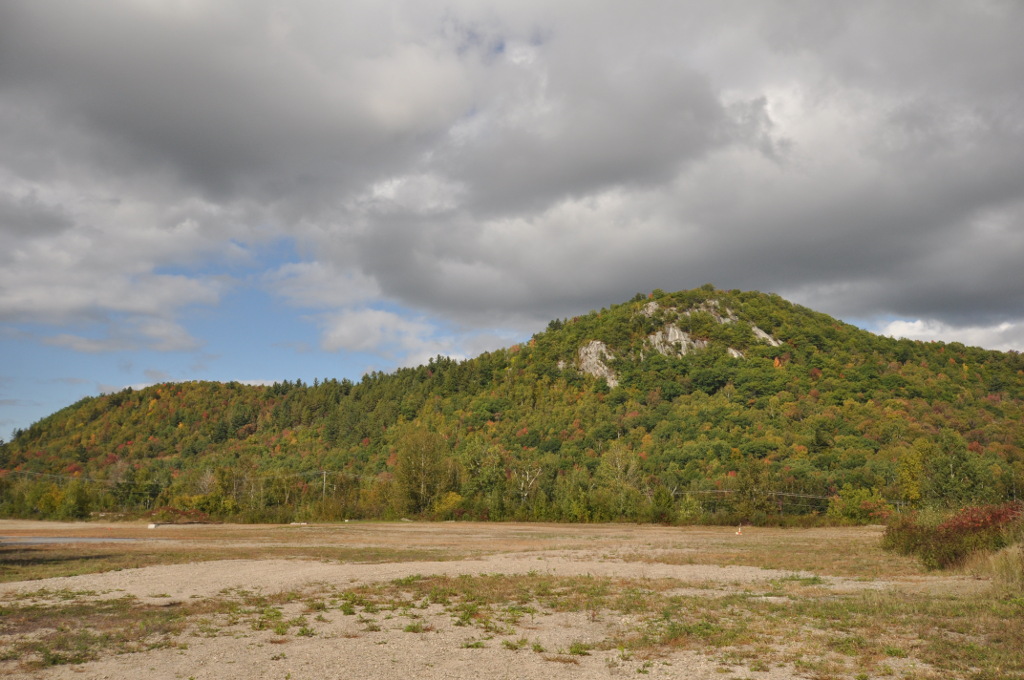
El Castillo was discovered in 1903 by the Spanish archaeologist Hermilio Alcalde del Río, a pioneer of Cantabrian prehistory who would go on to publish the earliest systematic surveys of the region’s painted caves. The site forms part of the broader Caves of Monte Castillo complex, four interconnected caves (El Castillo, La Pasiega, Las Monedas and Las Chimeneas) that together hold one of the most concentrated bodies of Paleolithic rock art anywhere on Earth. The complex was inscribed as part of the UNESCO World Heritage Site Cave of Altamira and Paleolithic Cave Art of Northern Spain in 2008.
What is inside the Cave of El Castillo?
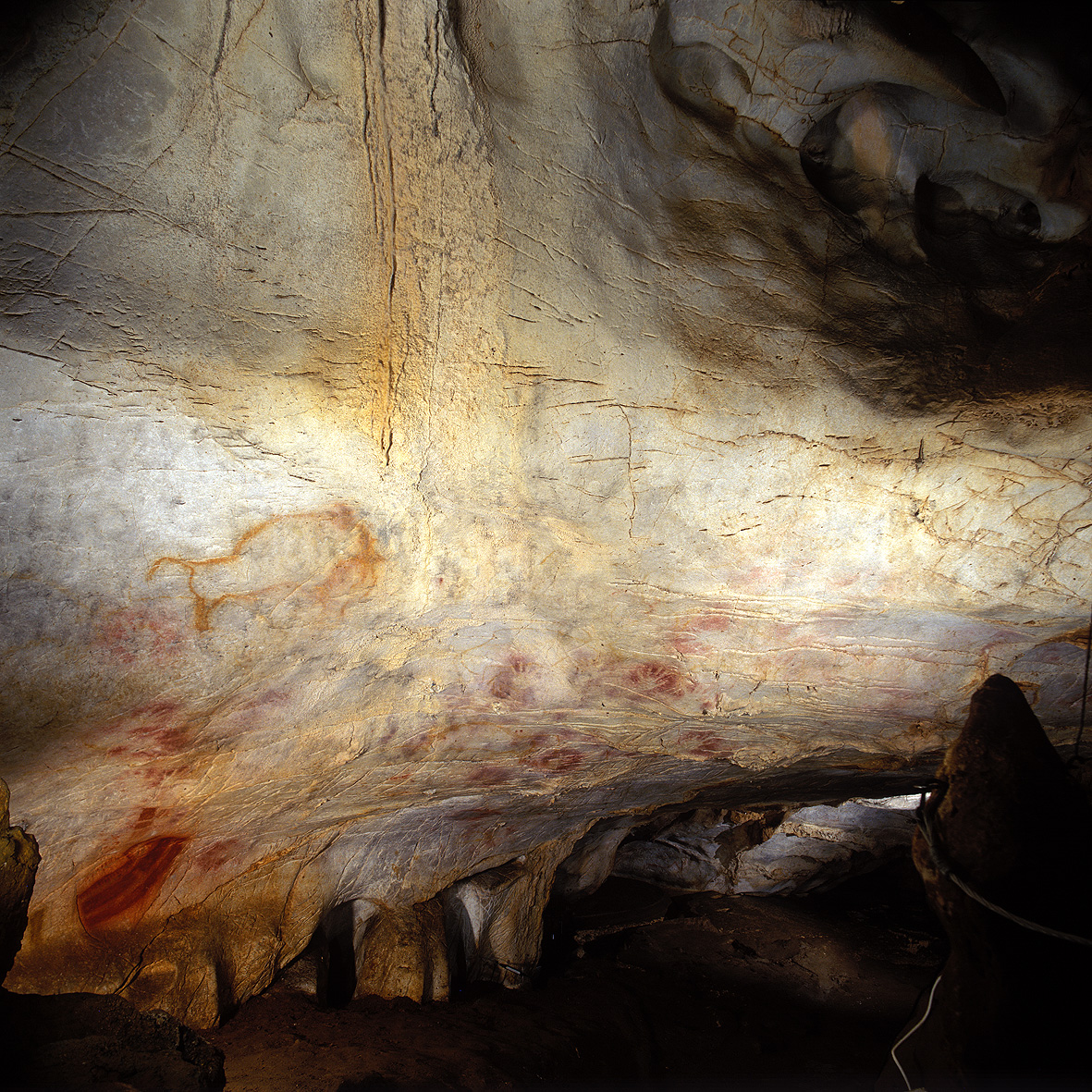
The cave’s art runs through nearly its entire 750 metres of accessible passage. The catalogue includes painted and engraved figures of horses, bison, ibex, aurochs, hinds (red deer), goats, mammoths and stags — a bestiary of the cold-climate fauna that lived alongside Upper Paleolithic humans on the northern Iberian peninsula. Alongside the animals are abstract symbols, dots, lines, club-shaped signs (called claviforms) and the famous Panel of the Hands, which alone contains some 60 hand stencils. Hand stencils were produced by placing a hand flat against the wall and blowing or spitting pigment around it, leaving a negative imprint — the earliest known form of human “signature”.
How old is the Cave of El Castillo?
El Castillo’s age was definitively established in 2012, when a team led by archaeologist Alistair Pike of the University of Bristol applied uranium-thorium dating to thin calcite crusts that had formed over individual paintings since their creation. Because calcite grows on top of a painted surface, dating it gives a minimum age for the art beneath. The technique returned a date of 40,800 years before present for one of the red disks in the cave — pushing back the earliest dated cave art in Europe by some 4,000 years. Two adjacent hand stencils returned minimum dates of around 37,300 years, suggesting they were among the very first pieces of parietal art made at the site.
Were the artists Neanderthals?
The 40,800-year date is significant because it pushes the earliest art in the cave back to a period before anatomically modern humans (Homo sapiens) are reliably known to have reached this part of Iberia. Neanderthals were certainly present in Cantabria at that time, and a current scholarly debate considers whether some of the simplest abstract motifs at El Castillo — the dots and red disks — may have been Neanderthal work. The hypothesis remains contested: the dates record the minimum age of the overlying calcite, not the painting itself, and the figurative animal paintings at the site come from later periods when modern humans were present. The site is now one of the central data points in the wider argument over Neanderthal cognitive and symbolic capacity.
Four Phases of Upper Paleolithic Art
The art at El Castillo spans every phase of the European Upper Paleolithic, making it one of the few cave sites where the full chronology of Ice Age art can be traced in a single location:
- Aurignacian (c. 43,000–28,000 BP) — earliest red disks and hand stencils.
- Gravettian (c. 33,000–22,000 BP) — early animal figures, including bison and hinds.
- Solutrean (c. 22,000–17,000 BP) — refined engravings and the introduction of detailed shading techniques.
- Magdalenian (c. 17,000–11,500 BP) — the great majority of the figurative animal paintings, including the famous polychrome bison and stags.
Visiting El Castillo Today
El Castillo is open to the public, with guided tours running daily except Mondays. Access is strictly limited to small groups (typically no more than 12 visitors at a time) to protect the delicate microclimate of the cave from changes in temperature and CO₂. Tours are managed by the Cantabrian regional government’s Ministry of Culture. Photography is not permitted inside. The neighbouring caves of La Pasiega and Las Monedas are sometimes accessible by separate tours; bookings should be made well in advance, especially during the summer.
Sources and Further Reading
- Wikipedia — Cave of El Castillo
- Ministerio de Cultura — El Castillo Cave (official)
- Cuevas de Cantabria — El Castillo (official)
- National Geographic — World’s oldest cave art (Pike 2012 study)