Syria holds six UNESCO World Heritage properties — and since June 2013 every single one of them has sat on the List of World Heritage in Danger. No other country on the list has had its entire inscribed heritage flagged at once. Behind those six entries stand thousands of years of layered occupation: Bronze Age palace archives, Roman colonnades, Byzantine hill villages and Crusader fortresses, most of them within a day’s drive of one another. This guide sits alongside our wider coverage of Ancient Civilizations and Historical Places.
Why All Six of Syria’s UNESCO Sites Sit on the In Danger List
At its 37th session in Phnom Penh in June 2013, the World Heritage Committee placed all six Syrian properties on the List of World Heritage in Danger at once. The Committee’s reasoning was procedural rather than site-by-site: the armed conflict meant the conditions no longer existed to guarantee the conservation and protection of the properties’ Outstanding Universal Value.
The six inscribed properties
The six are the Ancient City of Damascus, the Ancient City of Bosra, the Ancient City of Aleppo, the Site of Palmyra, Crac des Chevaliers and Qal’at Salah El-Din (inscribed jointly as one property), and the Ancient Villages of Northern Syria. Damage since 2011 has been documented largely through high-resolution satellite imagery, including an AAAS assessment of all six properties that found the Old City of Aleppo the most worrying case, both for the scale of destruction and for the fragmented private ownership that complicates any repair.
Palmyra: The Caravan City and the Loss of the Temple of Bel
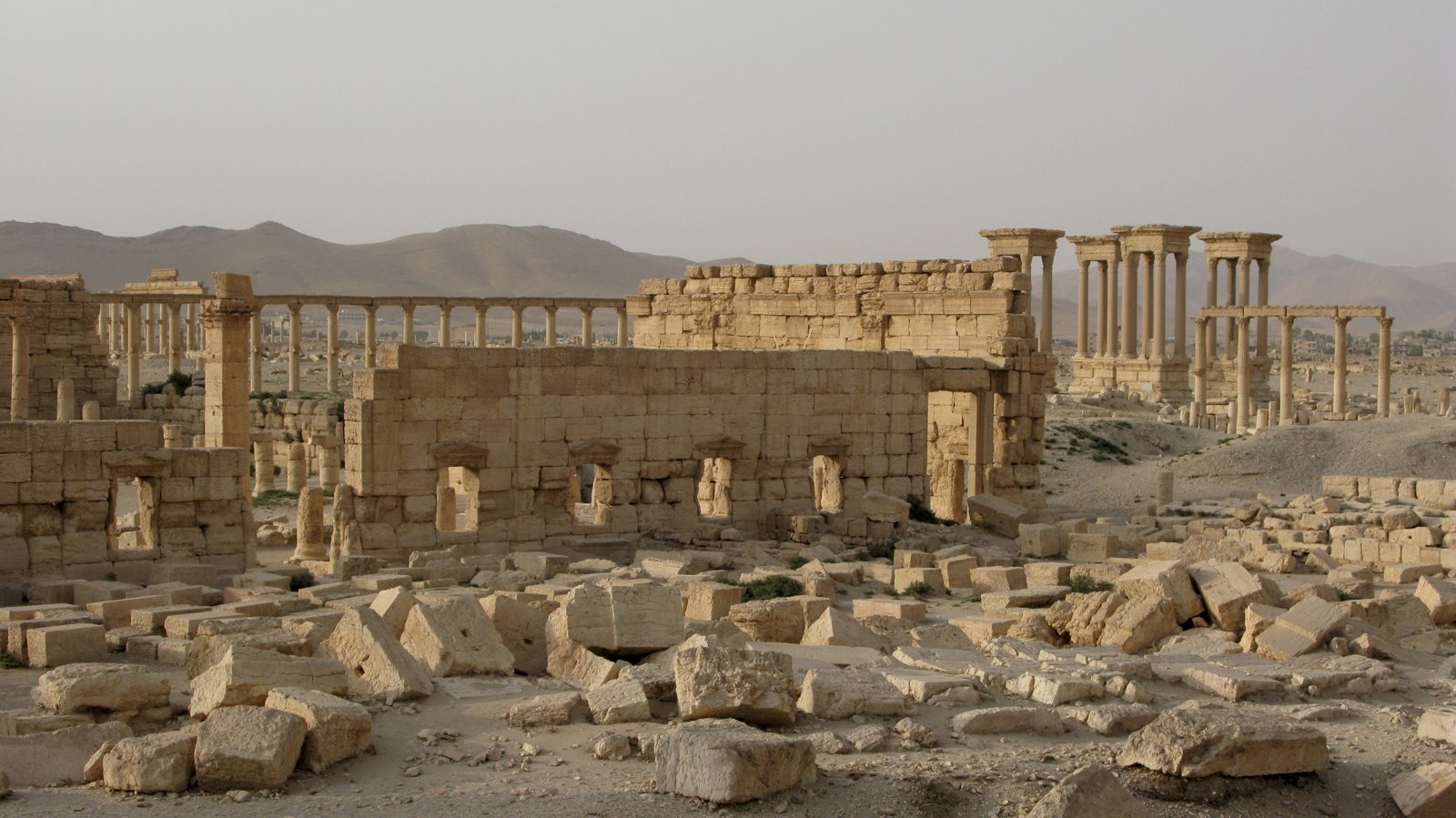
Palmyra grew rich as an oasis waypoint on the desert routes linking the Mediterranean to Mesopotamia and beyond, and its monumental core fuses Greco-Roman planning with Near Eastern and Persian ornament. The Great Colonnade, the tetrapylon and the funerary tower tombs made it one of the ancient world’s most distinctive urban landscapes; Palmyra’s rise and its brief empire under Zenobia in the 3rd century CE remain the site’s defining historical episode.
The Temple of Bel, the best preserved of Palmyra’s sanctuaries, was destroyed with explosives on 30 August 2015. Eyewitness reports were confirmed by UNOSAT satellite imagery. Our separate article on the Palmyra Temple of Bel covers the building’s construction and what survives of it.
Aleppo and Damascus: Two Cities That Never Stopped Being Lived In
Damascus is among the oldest continuously inhabited cities on earth, with occupation traced to the 3rd millennium BC and roughly 125 recognised monuments from successive periods inside the walled old city. The most spectacular is the 8th-century Great Mosque of the Umayyads, raised on ground that had already served as an Assyrian sanctuary and later a Roman temple precinct and a Christian basilica — read more in our piece on the Umayyad Mosque.
Aleppo’s inscription rests on the survival of a dense medieval fabric — souks, khans, madrasas and the citadel — shaped in turn by Byzantine, Ayyubid, Mamluk and Ottoman rulers. The citadel mound itself has produced evidence of use reaching back into the 3rd millennium BC, making it one of the longest-occupied fortified hilltops anywhere.
Bosra: A 15,000-Seat Theatre of Black Basalt
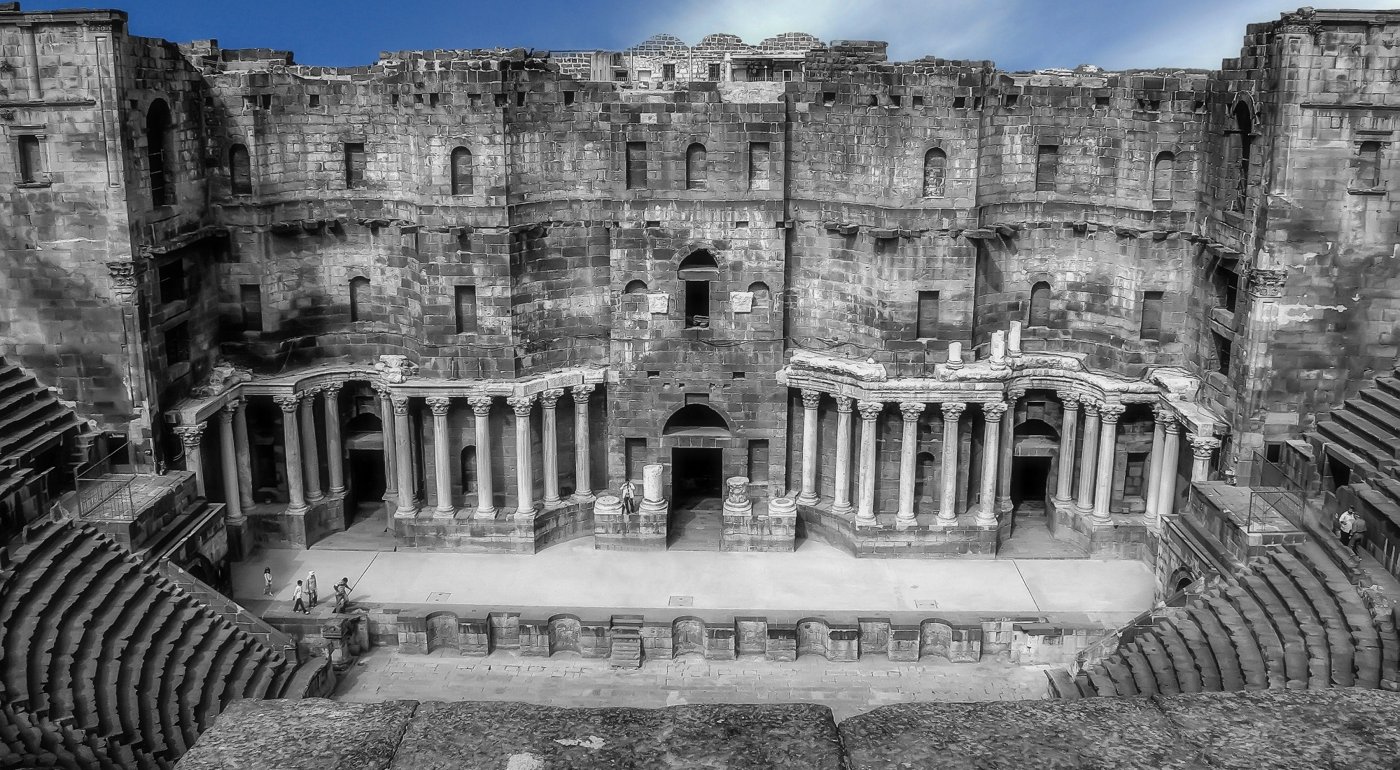
Bosra became the capital of the Roman province of Arabia Petraea after 106 CE, sitting on the caravan road toward the Red Sea. Its early 3rd-century Roman theatre is built almost entirely from the region’s black volcanic basalt: it seated around 15,000 spectators, and its stage building runs roughly 45 metres long and 8 metres deep.
The theatre survived unusually intact because later Ayyubid rulers encased it in a fortress, burying the seating inside defensive walls and effectively sealing it for centuries. Our article on the Ancient City of Bosra follows the site through its Nabataean, Roman and Islamic phases.
Crac des Chevaliers and Qal’at Salah El-Din: One Inscription, Two Castles
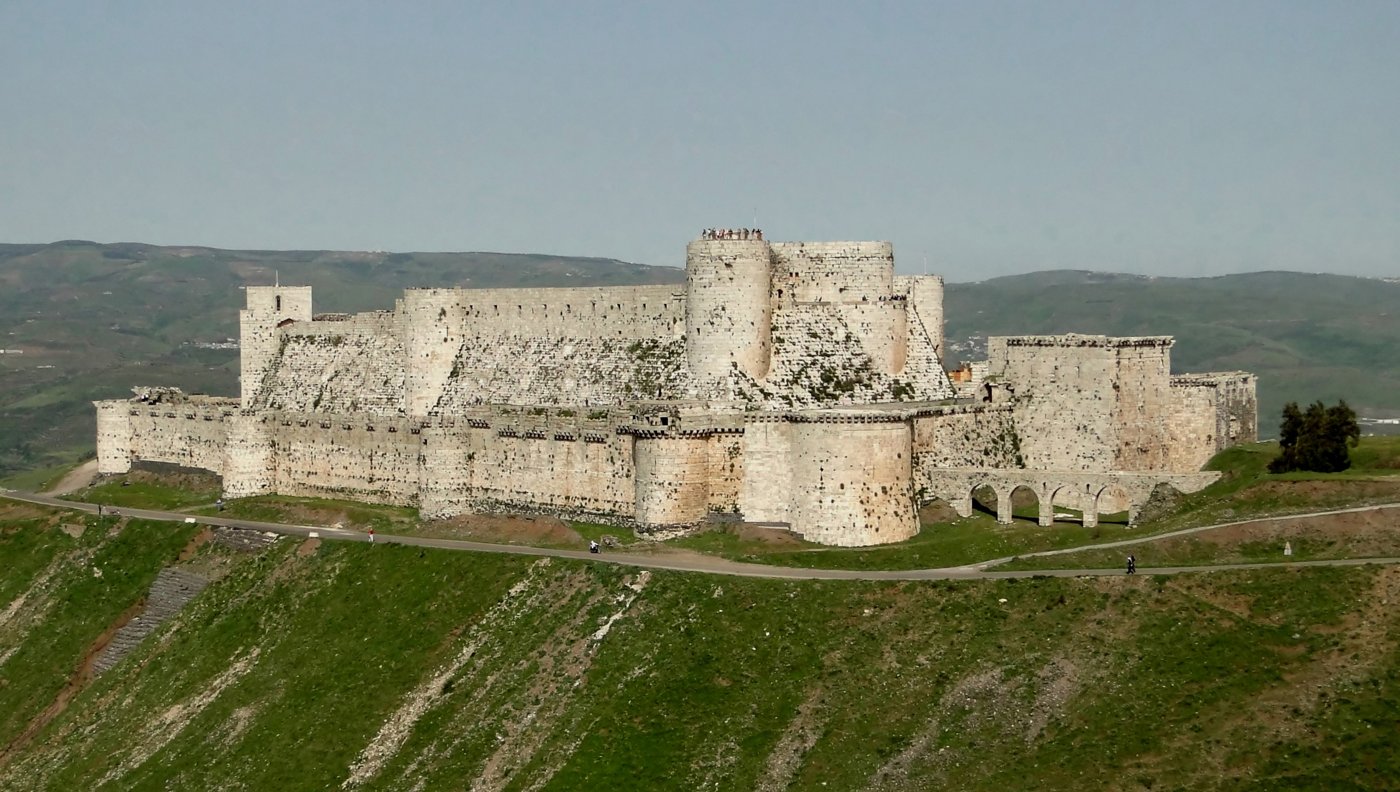
UNESCO inscribed these two fortresses together as a single property in 2006 as the clearest surviving demonstration of how military architecture was exchanged between Crusader, Byzantine and Islamic builders. Crac des Chevaliers, held by the Knights Hospitaller from 1142, is the textbook example of concentric castle design — two rings of curtain wall, a sloping talus at the base, and a vaulted inner gallery.
Both castles were caught up in the conflict. Crac was occupied by armed groups from 2012 and subsequently shelled, with airstrikes reported through 2013 and into 2014; its south-eastern tower was hit and a vault in the Hall of the Knights collapsed. Qal’at Salah El-Din escaped direct combat damage, but structural collapse from weathering has been recorded during years without maintenance.
The Dead Cities: 700 Settlements Left Standing in Limestone
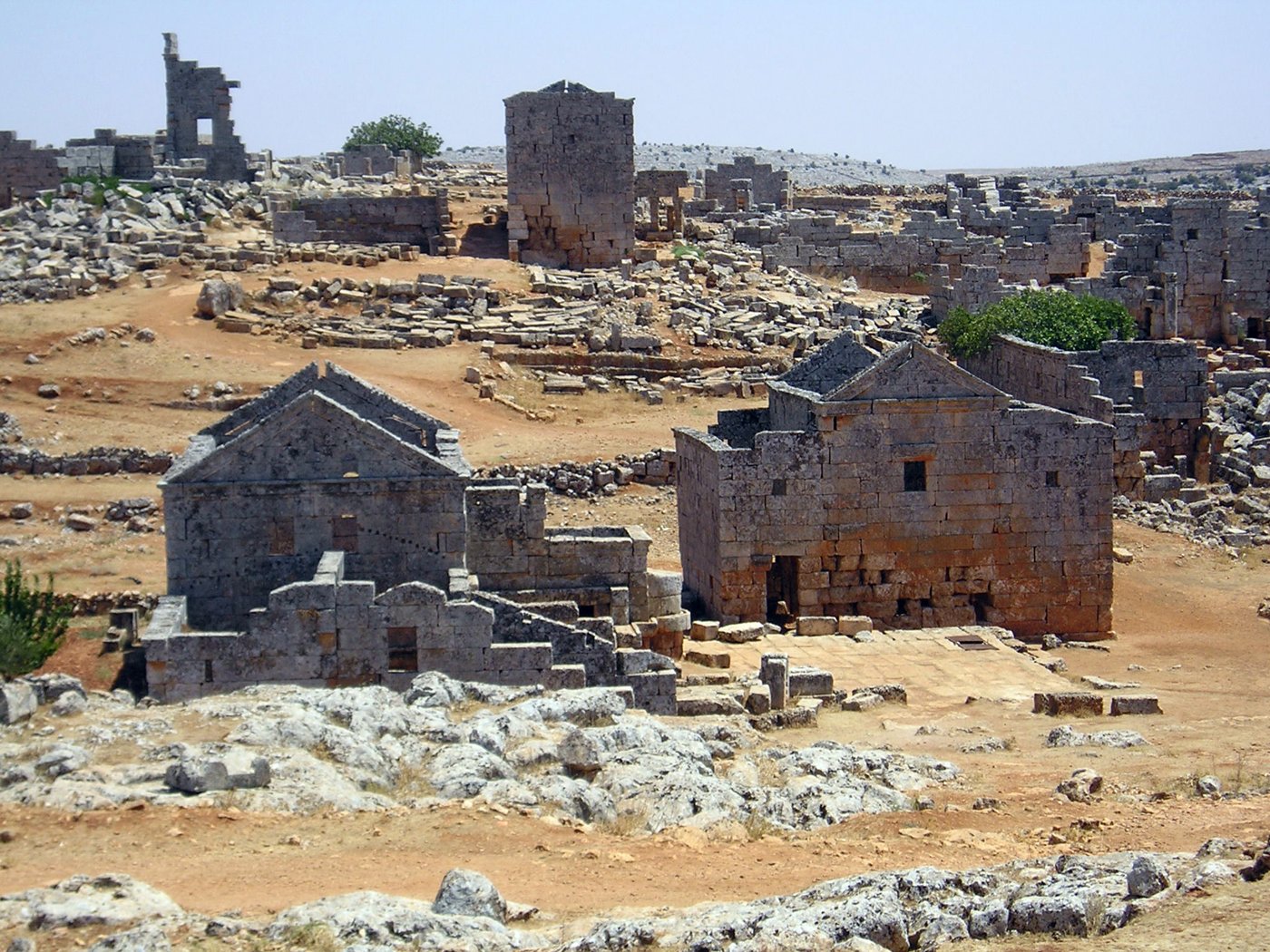
Northwest of Aleppo, across the limestone massif between Aleppo and Idlib, lie the abandoned settlements known as the Dead Cities. More than 700 have been recorded, spread across the highlands of Jebel Sem’an, Jebel Barisha, Jebel al-A’la, Jebel Wastani and Jebel Zawiye. Around sixty survive in excellent architectural condition — some façades still standing to roof height — largely because the local limestone weathers so slowly.
UNESCO’s 2011 inscription, formally the Ancient Villages of Northern Syria, covers a curated selection: eight archaeological parks containing forty individual village sites. These are not ruined cities in the usual sense but ordinary rural communities of the 1st to 7th centuries CE, complete with churches, olive presses, bathhouses and farmhouses, abandoned gradually rather than destroyed — a rare window onto everyday late antique country life.
What Did Ugarit and Ebla Contribute to the Written Word?
Two Syrian tells outside the UNESCO six changed what scholars know about early writing. At Ras Shamra on the Mediterranean coast, French archaeologists working from 1928 uncovered the Bronze Age port of Ugarit and, with it, tablets bearing a cuneiform script of just 30 signs — an alphabetic system, not the several hundred syllabic signs of Mesopotamian cuneiform. Ugaritic texts also preserve a body of Canaanite myth that reshaped the study of Levantine religion.
Ebla and the palace archive at Tell Mardikh
Inland at Tell Mardikh, Italian excavations identified Ebla, a 3rd-millennium BC kingdom whose palace archive yielded somewhere between 12,000 and 15,000 clay tablets and fragments — administrative records, treaties, lexical lists and bilingual Sumerian-Eblaite vocabularies that remain among the largest early archives ever recovered.
Beyond the UNESCO Six: Dura-Europos, Apamea and Amrit
Dura-Europos, the Hellenistic then Parthian then Roman garrison town above the Euphrates, is sometimes called the Pompeii of the Syrian desert because a defensive earth rampart sealed a whole quarter of buildings. Among them was a private house converted for Christian worship between roughly 240 and 250 CE — the earliest securely identified Christian house church, its baptistery frescoes dated to around 235 CE — standing a short distance from a richly painted synagogue.
Apamea and Amrit
Apamea, founded by Seleucus I in the 3rd century BC, is defined by a Great Colonnade running close to two kilometres, one of the longest known from the Roman world; see our article on Apamea. On the coast near Tartus, Amrit preserves the Ma’abed — a Phoenician sanctuary of the Persian period, with a rock-cut central shrine standing in a basin still fed by a spring — alongside distinctive tower tombs locally called the meghazil.
For a comparable survey of the region’s other great archaeological landscape, see our guide to the ancient sites of Iraq.
Sources and Further Reading
- UNESCO — Syria’s Six World Heritage Sites Placed on the List of World Heritage in Danger
- AAAS — Ancient History, Modern Destruction: Assessing Syria’s World Heritage Sites
- World History Encyclopedia — Palmyra
- World History Encyclopedia — Ugarit
- World History Encyclopedia — Ebla
- Roman Theatre at Bosra
- Dead Cities of Northern Syria