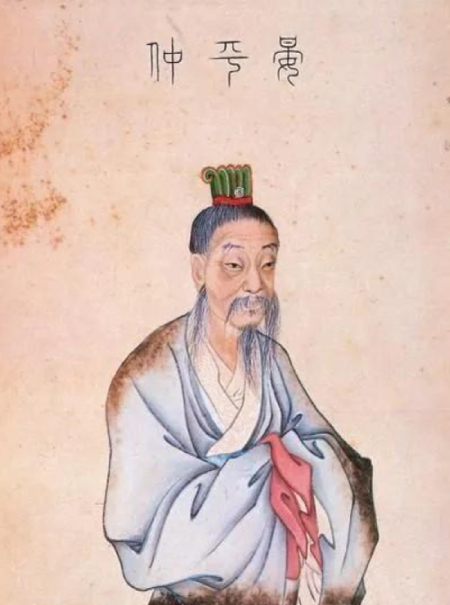
Yanzi’s Tomb is the memorial associated with Yan Ying (c. 578–500 BC), courtesy name Pingzhong, the famously frugal chancellor of the State of Qi during China’s Spring and Autumn period. Honorifically called Yanzi — “Master Yan” — he served three dukes of Qi across some fifty years and became a byword for wit, thrift and shrewd statecraft. Curiously, the statesman is commemorated at two separate sites in Shandong: a stele-marked memorial at Gaomi, his birthplace, and his actual burial mound near the old Qi capital at Linzi.
Who Was Yanzi, the Minister Behind the Tomb?
Yan Ying was a native of Yiwei, in present-day Gaomi City, Shandong Province. He rose to serve as qing — chief minister — of Qi, advising the rulers posthumously known as Dukes Ling, Zhuang and Jing. His most influential decades came under Duke Jing (r. 547–490 BC), whom he steered away from extravagance and towards merit-based government.
He is remembered above all for personal austerity. According to tradition, Duke Jing repeatedly offered to rebuild Yan Ying’s modest home and once had a new mansion constructed while the minister was away on a diplomatic mission; Yan Ying declined the gift and had the house dismantled. That reputation for thrift, paired with a sharp tongue in debate, made him one of the most quoted officials of the era — a contrast to grander memorials such as the nearby Tomb of Min Ziqian.
Two Tombs, One Statesman: Gaomi and Linzi
The confusion over Yanzi’s Tomb springs from the fact that two places lay claim to him. The better-known memorial stands about 50 metres north-west of Yanwangmiao Village at Gaomi, his native district, and is recorded in the Comprehensive Gazetteer of Shandong. His genuine burial, however, lies near the ancient Qi capital of Linzi — roughly 350 metres south-east of Yongshun Village in Qidu Town, in modern Zibo, where the tomb mound still survives today.
This split between a home-town shrine and a capital-city grave is a common pattern for revered figures in early China, echoed at other Shandong sites such as the Tomb of Bian Que near Jinan, where local communities raised commemorative markers to honour a famous son even when the body rested elsewhere.
What Do the 1598 Stele and the Han-Dynasty Puzzle Reveal?
In front of the Gaomi memorial stands a stone stele erected in the fifth month of the 26th year of the Wanli era of the Ming dynasty — that is, 1598 — inscribed “Tomb of Yan Pingzhong, Chancellor of the State of Qi.” Two further steles, cut in the 52nd and 53rd years of the Kangxi era of the Qing dynasty (1713 and 1714), record later renovations of the site.
Yet archaeological exploration has complicated the picture. Investigation of the Gaomi mound suggests it is not, in fact, a burial at all, but more likely a commemorative structure raised during the Han dynasty — centuries after Yan Ying’s death. If correct, the Gaomi “tomb” is a cenotaph: a monument to the man rather than his resting place, with the Ming and Qing steles marking generations of continued veneration.
The Two Peaches That Killed Three Warriors
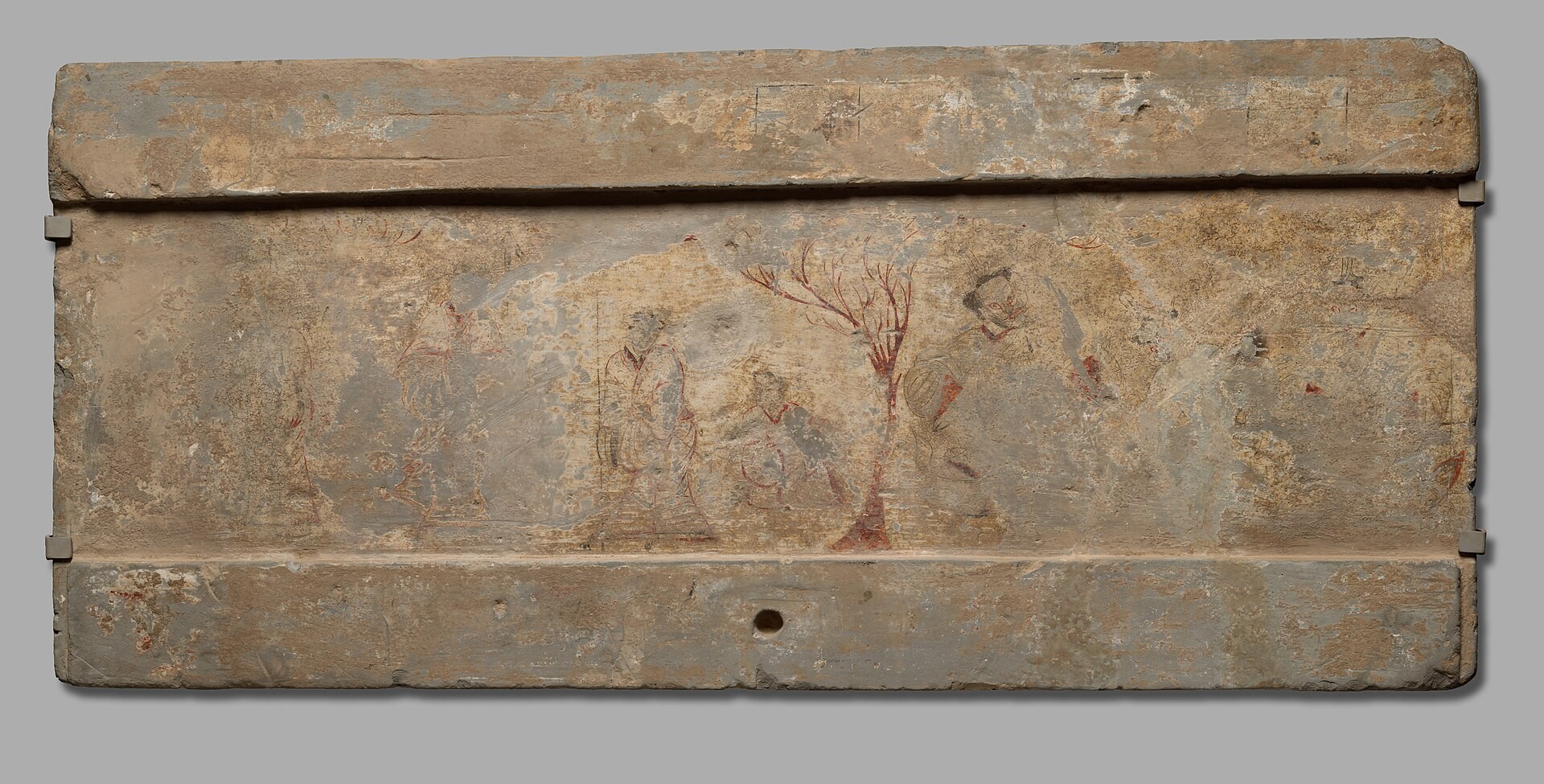
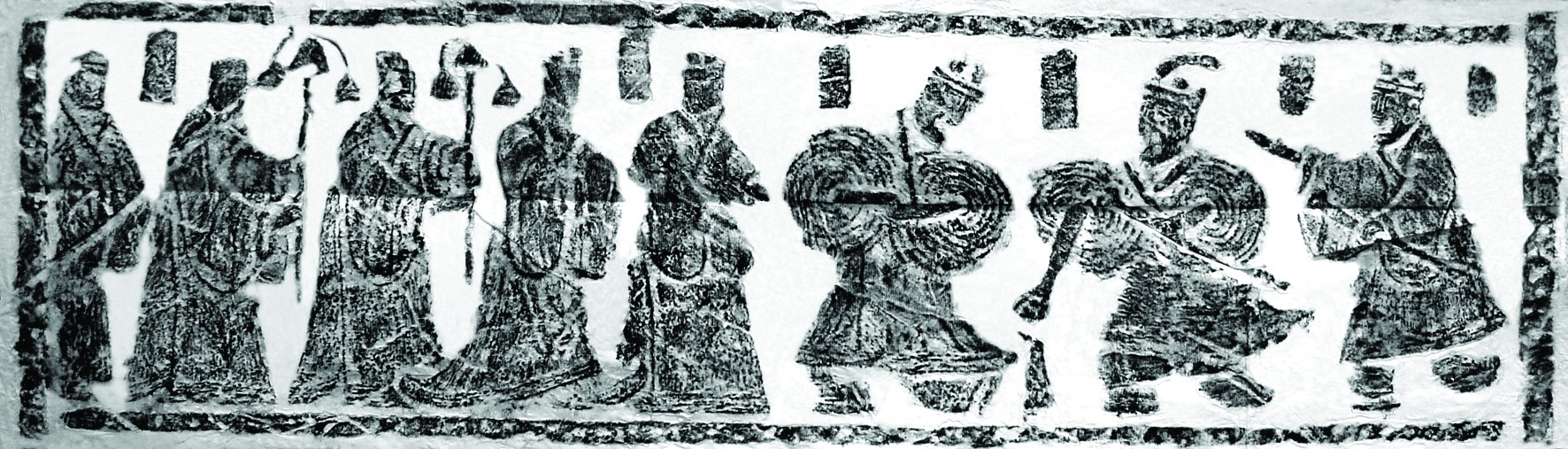
No story is more closely bound to Yan Ying than the affair of “two peaches killing three warriors” (er tao sha san shi), preserved in the Yanzi Chunqiu — the text of which survives in full at the Chinese Text Project. Duke Jing employed three proud generals — Gongsun Jie, Tian Kaijiang and Gu Yezi — whose arrogance Yan Ying judged a danger to the court.
He arranged for two peaches to be offered as a reward, to be claimed by the two men of greatest merit. Gongsun Jie and Tian Kaijiang each seized a peach after listing their deeds, only for Gu Yezi to rebuke them and recount still greater achievements. Shamed at having taken honours they had not earned, the first two returned the fruit and took their own lives; Gu Yezi, unwilling to live on after his comrades, followed them. With two peaches and no army, Yan Ying had removed three threats at once.
Frugality, Wit and the Yanzi Chunqiu
The Yanzi Chunqiu, or “Annals of Master Yan,” is a collection of stories, speeches and remonstrances attributed to Yan Ying, compiled after his lifetime during the Warring States period. It preserves both his political counsel and his diplomatic sparring, and it sits alongside the wider Chinese funerary tradition seen in tombs like the Sogdian Tomb of An Bei.
The most famous of these is his embassy to the state of Chu. Knowing Yan Ying was short, the Chu court had a small door cut beside the main gate and invited him to enter through it. He refused, replying that only an envoy to a “state of dogs” would use a dog door — and since he had come to Chu, he would use the proper gate. The retort forced his hosts to receive him with full honours, and it survives as a model of quick-witted diplomacy.
At a Glance
- Honouree: Yan Ying (Yanzi / Yan Pingzhong), chancellor of Qi, c. 578–500 BC
- Memorial site: Gaomi, Shandong (native place) — likely a Han-era cenotaph, marked by a 1598 Ming stele
- Actual tomb: near Linzi (ancient Qi capital), Qidu Town, Zibo, Shandong
- Era: Spring and Autumn period, State of Qi
- Best known for: frugality, the Yanzi Chunqiu, and the “two peaches kill three warriors” stratagem
Explore more in our Ancient Civilizations archive.
Frequently Asked Questions
Where is Yanzi’s Tomb located?
There are two associated sites in Shandong Province. A commemorative “tomb” stands about 50 metres north-west of Yanwangmiao Village at Gaomi, Yan Ying’s birthplace, marked by a Ming-era stele of 1598. His actual burial mound lies near the ancient Qi capital of Linzi, roughly 350 metres south-east of Yongshun Village in Qidu Town, in modern Zibo.
Is the Gaomi site really Yan Ying’s grave?
Probably not. Although a 1598 Ming stele there names it the “Tomb of Yan Pingzhong, Chancellor of Qi,” archaeological investigation indicates the Gaomi mound is more likely a commemorative structure built during the Han dynasty, long after his death. It is best understood as a cenotaph honouring the statesman rather than his resting place.
Why is Yan Ying so famous in Chinese history?
Yan Ying served the State of Qi as chief minister for around fifty years and became a symbol of frugal, principled governance. His counsel and repartee were collected in the Yanzi Chunqiu, and stories such as the “two peaches kill three warriors” stratagem and his “dog door” retort at the Chu court have kept his reputation for wit and integrity alive for over two millennia.

Neural Pathways is a collective of seasoned experts and researchers with a profound passion for unraveling the enigmas of ancient history and artifacts. With a wealth of combined experience spanning decades, Neural Pathways has established itself as a leading voice in the realm of archaeological exploration and interpretation.