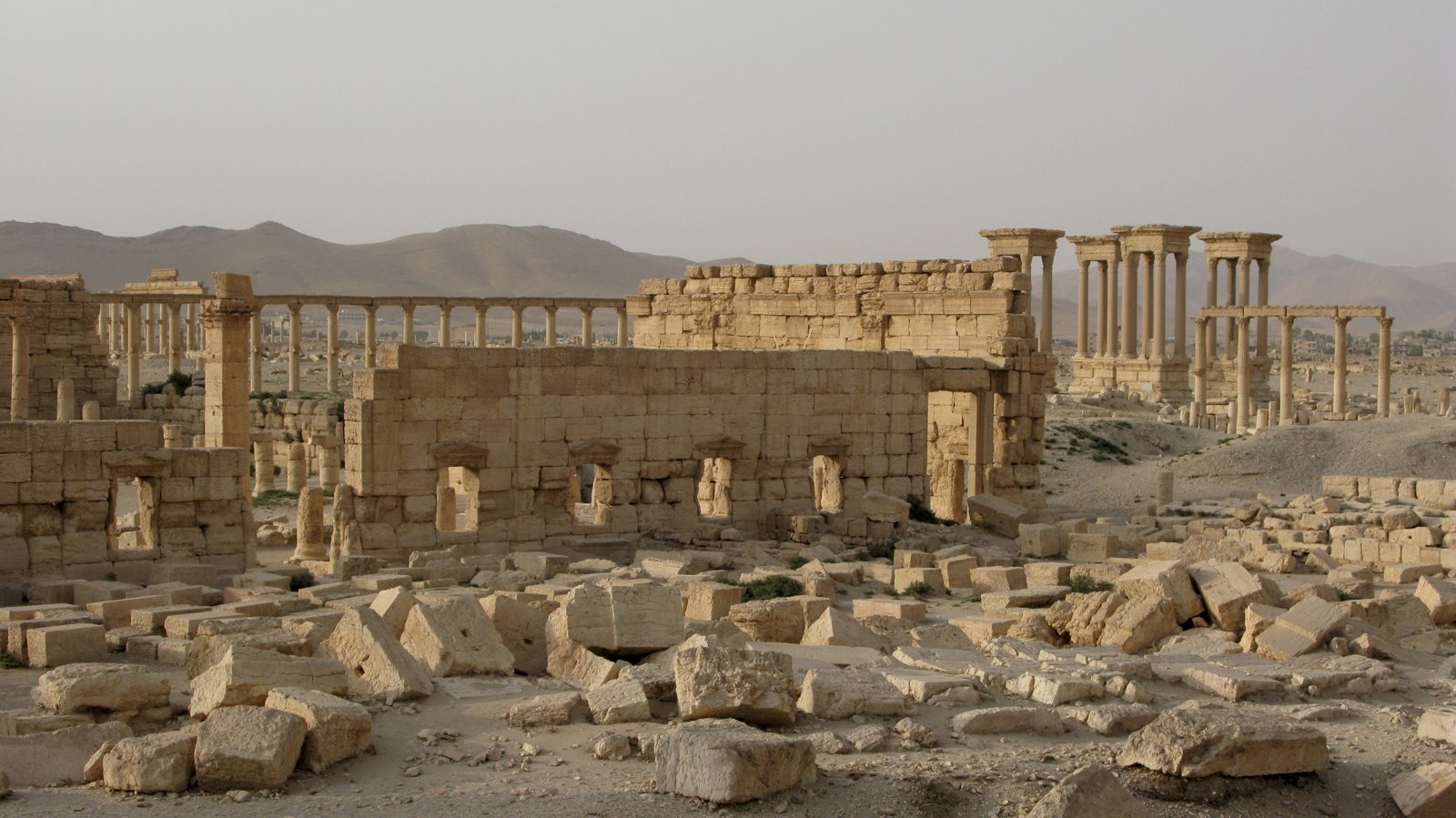
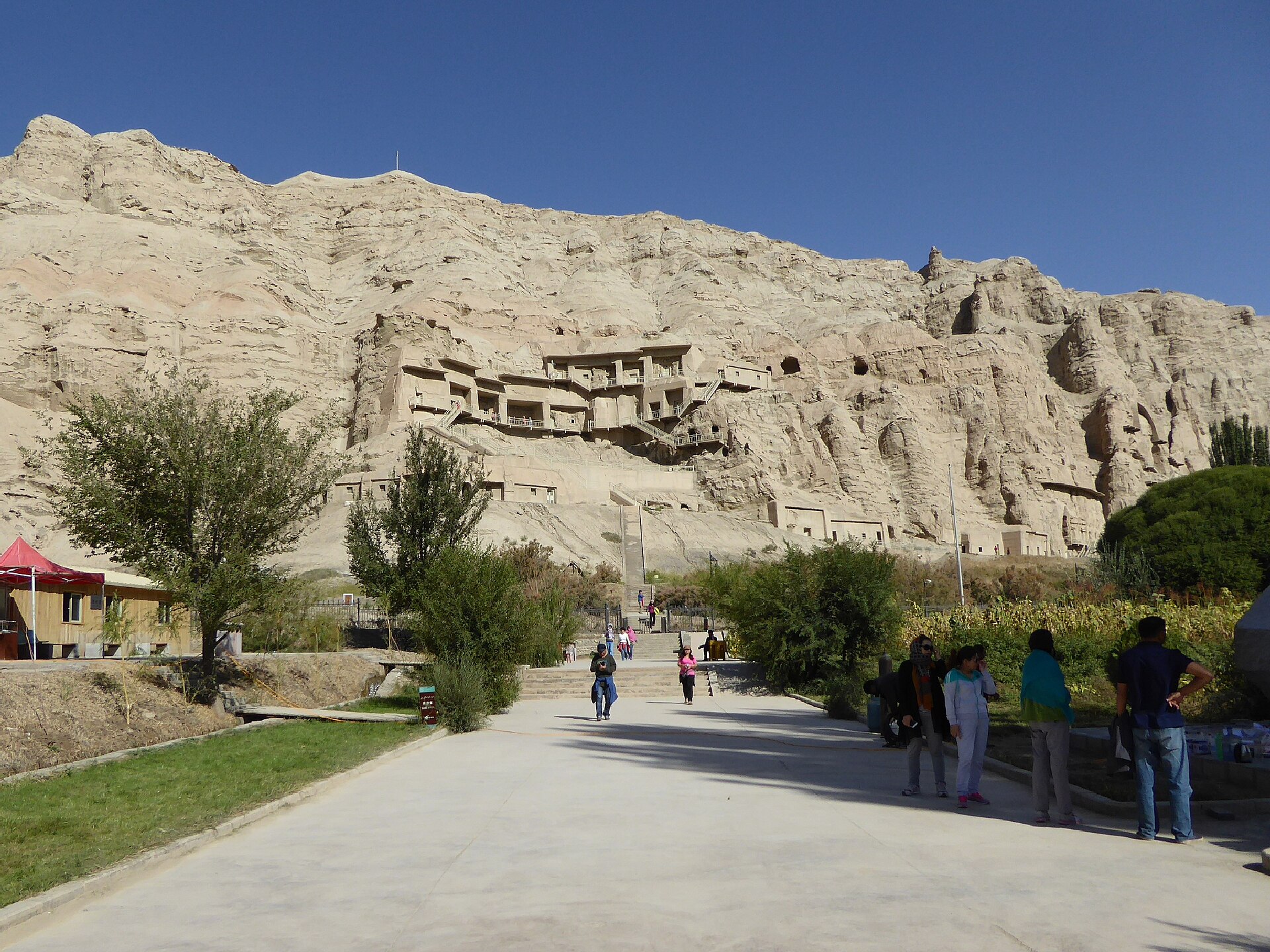
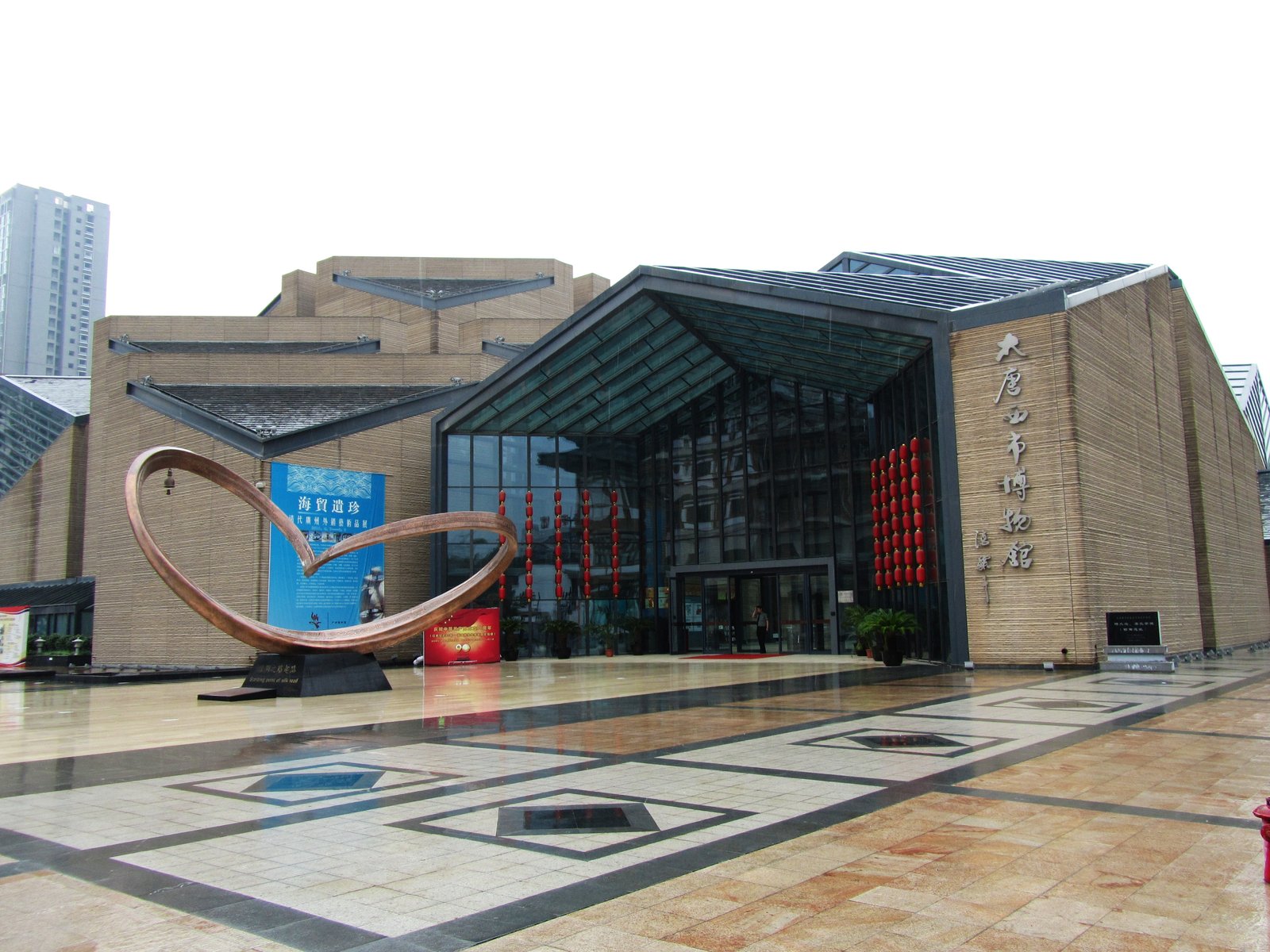
The Tomb of An Bei is a Sogdian funerary couch of the sixth century AD, one that reached scholars not through a careful excavation but through the antiquities trade. Its owner, An Bei, was a third-generation immigrant from Sogdian Bukhara who lived and died in Luoyang, passing away in 589 CE at the age of just 34. What survives of his monument — a section of its carved stone base and the inscribed epitaph that names him — now sits in the Tang West Market Museum in Xi’an, recovered from the market after looters emptied the tomb in 2006 and 2007.
Most of the celebrated Sogdian tombs of early medieval China belonged to wealthy community leaders. An Bei’s did not. His epitaph describes an ordinary man, a junior clerk, whose family had lived in China so long that, in its own words, there was “no difference between him and the Chinese.” That single line makes his looted couch one of the most human documents to survive from the Sogdian diaspora on the Silk Road.
Who was An Bei?
An Bei (Chinese: 安備) was a Sogdian man who took the Chinese courtesy name Wuxiang and made his home in Luoyang, the great eastern capital of northern China. He was not, by the standards of the other Sogdians whose tombs have been found, an important person. His father, An Zhishi, had done rather better: the epitaph credits him with the honorific rank of General of Chariots-and-Cavalry and a post in the palace guard of the Northern Qi court. An Bei himself never rose so high, and his monument is unusual precisely because it commemorates a life that was, in its own society, entirely unremarkable.
The family’s roots lay far to the west. An Bei was probably a third-generation immigrant, descended from Sogdian merchants who had come east along the trade routes and settled among the cities of the North China Plain. By his own generation the family was thoroughly at home in China, and the epitaph goes out of its way to say so.
The “An” surname and the nine Sogdian families of Bukhara
An Bei’s surname is itself a clue to his origins. The Sogdians who settled in China were given Chinese surnames drawn from the names of their home cities, a set collectively known as the Nine Surnames of Zhaowu (昭武九姓). Kang stood for Samarkand, Shi for Chach (modern Tashkent), Cao for Kabudhan, He for Kushaniya, Mi for Maymurgh — and An for Bukhara. To carry the surname An in sixth-century China was to announce a family that had, at some point, set out from Bukhara.
Those families were the connective tissue of the Silk Road. Sogdian merchants dominated the overland trade between China and Central Asia for centuries, moving silk, silver, horses, glass and ideas across the deserts, and building colonies in the Chinese capitals where they kept their own language, dress and religion.
Sabao — the caravan leaders
Those colonies had their own officials. The most senior was the sabao (薩保), a title derived from the Sogdian word s’rtp’w, meaning “caravan leader.” A sabao was a government-appointed head of a Sogdian immigrant-merchant community, and the great Sogdian tombs of China — those of An Jia, of Wirkak (Shi Jun), and of Kang Ye — belonged to men of that rank. An Bei was not one of them. He was, as his epitaph frankly admits, a quite ordinary person, and that is what makes his couch such a rare and valuable survival.
A career across three dynasties
An Bei lived through one of the most turbulent stretches of Chinese history, when the north was carved between short-lived dynasties. Around the end of the Wuping era, in the mid-570s, he took a junior clerk’s post — a canjun, an administrative aide — in the office of the Prince of Xuchang under the Northern Qi. It was a modest appointment, and it did not last. In 577 the Northern Zhou conquered the Northern Qi and swept its princes aside.
With his patron out of favour, An Bei severed his official ties and went home. The epitaph describes him retiring to farm two qing of land near Luoyang, turning his back on office to live quietly. He died there of illness in 589 CE — the very year the Sui dynasty completed its reunification of China — at just 34 years old.
What did An Bei’s funerary couch look like?
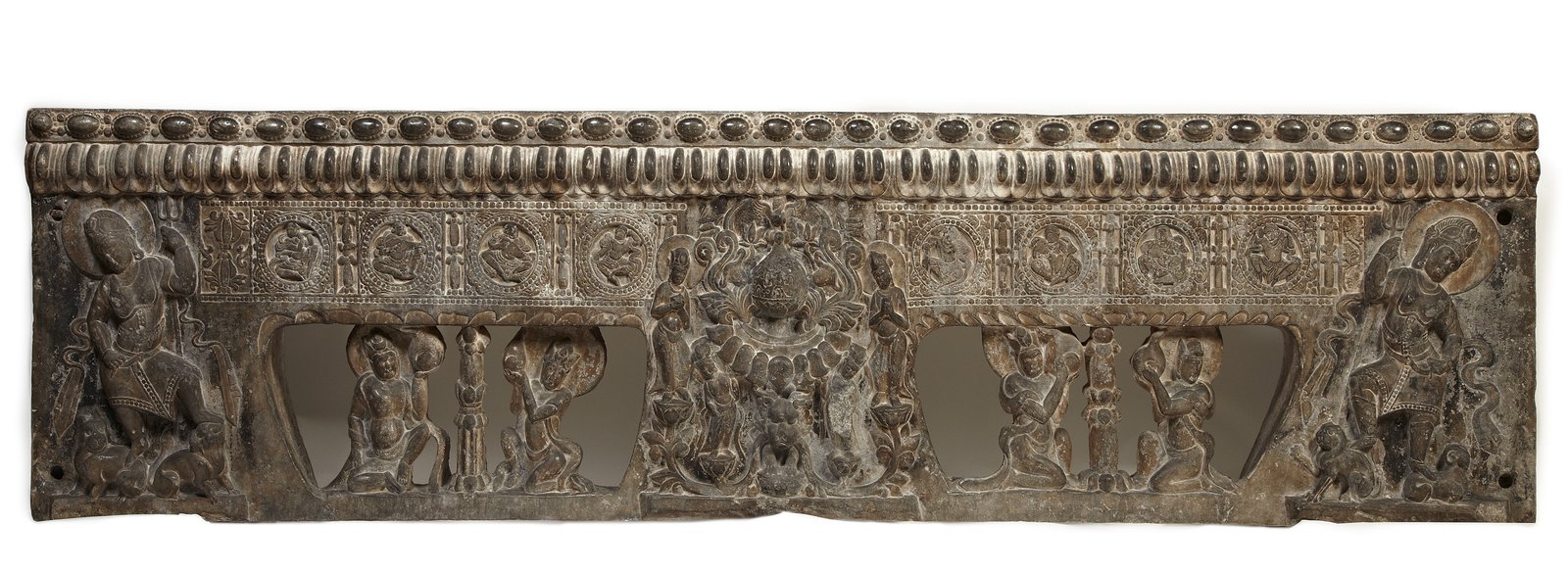
An Bei was not buried in a great chambered tomb. His monument was a stone funerary couch — a low, bed-like platform of carved and painted panels — a form typical of the Sino-Sogdian burials of the period. The couch was both a place for the body and a stage on which the life and beliefs of the dead man were set out in relief.
The carved panels
The surviving descriptions of the panels read like a portrait of the Sogdian world. One shows a caravan of non-Chinese travellers, with the deceased leading it; another shows him at the head of a procession of nimbate (haloed) men, many wearing pseudo-Sasanian crowns, in what may be a scene of the afterlife. There is a banquet with Sogdian music and dance, and a scene of drinking in a garden. The final panel seems to belong to the world beyond death, showing Bacchic revellers — figures likened by scholars to the Indian wealth-god Kubera — drinking wine. Taken together, the imagery blends Central Asian, Persian, Indian and Chinese motifs into the distinctive visual language of the Sogdian diaspora.
Zoroastrian faith and Confucian duty
An Bei stood between two worlds of belief. Like most Sogdians, his family practised Zoroastrianism, the fire-honouring religion of their Central Asian homeland, and the afterlife imagery of the couch fits that inheritance. Yet the epitaph that frames his life is thoroughly Chinese and thoroughly Confucian, praising above all his filial devotion to his parents. The document even insists that, foreign though his ancestry was, “after a long life in China there is no difference between him and the Chinese.” An Bei’s couch therefore records not a clash of cultures but a quiet fusion of them — a man who could honour Chinese moral ideals while his community kept the rites of Bukhara.
How do we know about a looted tomb?
Almost everything about the Tomb of An Bei carries a caveat, because the tomb was not excavated by archaeologists. It was plundered between 2006 and 2007, and its carved panels were broken up and sold on the international art market, scattering the monument before it could be properly recorded. Part of the stone base and, crucially, the inscribed epitaph were later recovered and are now in the Tang West Market Museum in Xi’an. It is that epitaph, studied and published by Chinese scholars from 2011 onward, that lets us name An Bei and reconstruct his story at all.
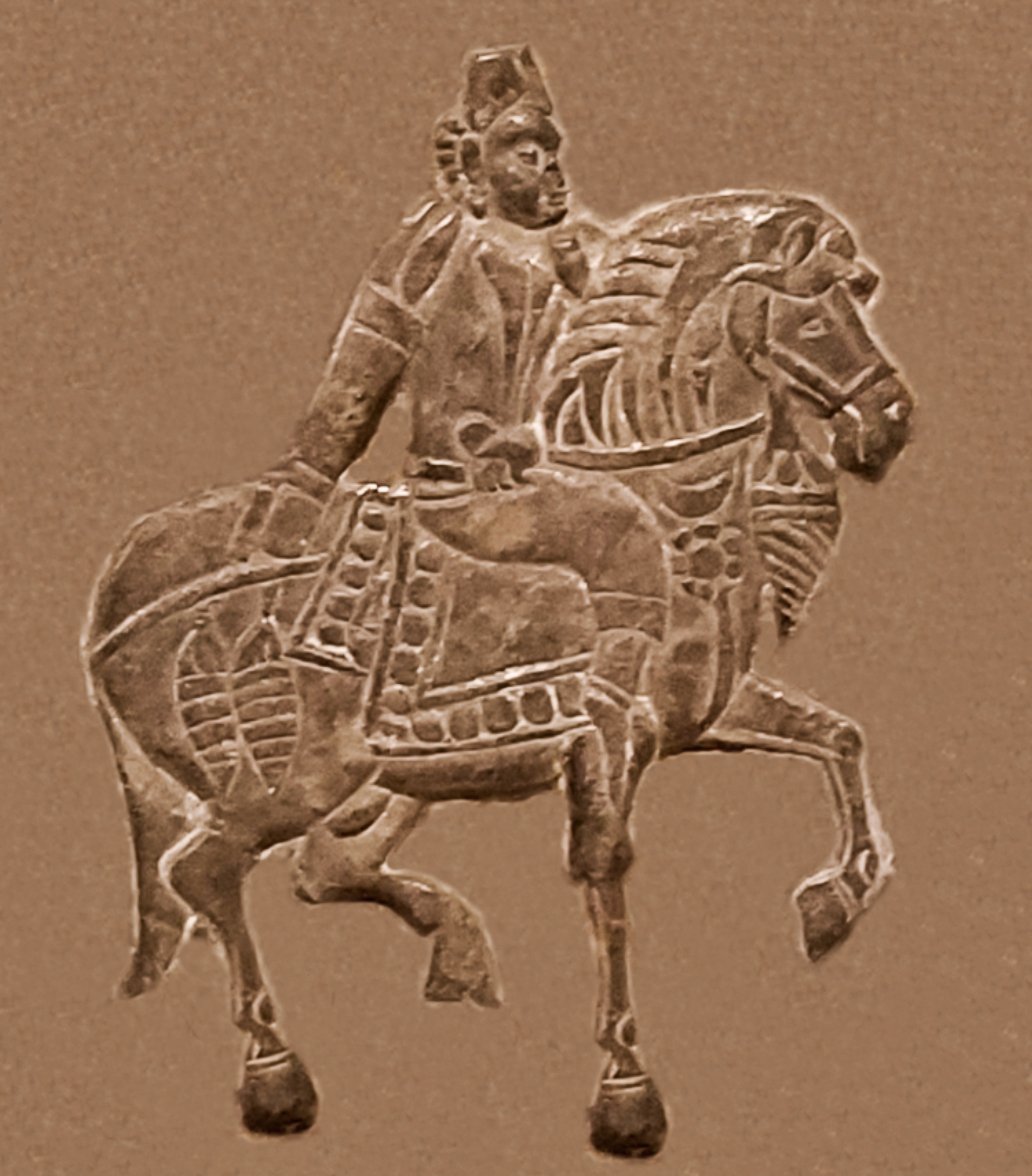
For the rest, historians rely on comparison. An Bei’s couch belongs to a small, closely related family of Sino-Sogdian funerary monuments — the couches of An Jia (579 CE) and Wirkak (580 CE) at Xi’an, the sarcophagus of Yu Hong at Taiyuan (592 CE), and the scattered panels of the Anyang funerary bed now divided between museums in Boston, Paris and elsewhere. Read alongside those better-preserved examples, the fragments of An Bei’s couch fall into place. A comparable outsider’s grave from the same Xi’an milieu is the Tomb of Li Dan, the 564 CE burial of a Gandharan Brahmin whose coffin mixes Chinese, Zoroastrian and Mediterranean motifs.
Why the Tomb of An Bei matters
The aristocratic sabao tombs tell us how the leaders of the Sogdian community wanted to be remembered — as powerful intermediaries between empires. An Bei’s couch tells us something rarer and, in its way, more moving: how an ordinary Sogdian family, a few generations removed from Bukhara, actually lived and died in China. Here was a man who held only a junior post, retired to farm a small plot of land, honoured his parents in the Confucian manner, kept the imagery of his ancestral faith on his tomb, and was buried under a monument that his neighbours would have recognised as thoroughly Sogdian and thoroughly Chinese at once. For the wider story of Sogdian settlement — the same diaspora that reached back to homeland cities like Panjakent — that combination is precisely the point. To place it in the longer sweep of the ancient civilizations of Central Asia and China, An Bei’s looted couch is a small monument with an outsized human voice.
Frequently asked questions
Who was An Bei?
An Bei (安備) was a Sogdian man of the sixth century AD whose family came from Bukhara in Central Asia and settled in China. Unlike most Sogdians honoured with carved tombs, he was not a wealthy community leader but a junior clerk who lived in Luoyang. He died in 589 CE, aged 34. His Chinese epitaph stresses how completely his family had assimilated, saying there was “no difference between him and the Chinese.”
Where is the Tomb of An Bei now?
The tomb was looted between 2006 and 2007, and its carved panels were sold on the international art market and scattered. Part of the stone base of the funerary couch, together with the inscribed epitaph that identifies An Bei, was recovered and is now held by the Tang West Market Museum in Xi’an, China. Scholars reconstruct the rest of the monument by comparing it with intact Sogdian couches of the same era.
What makes An Bei’s funerary couch important?
Most excavated Sogdian tombs in China belonged to a sabao — a government-appointed leader of the immigrant merchant community, such as An Jia or Wirkak. An Bei was an ordinary man, which makes his couch a rare record of everyday Sogdian life on the Silk Road. Its panels show caravans, Sogdian music and dance, garden banquets and Zoroastrian-tinged afterlife scenes, while its epitaph documents a family fully woven into Chinese society.

Neural Pathways is a collective of seasoned experts and researchers with a profound passion for unraveling the enigmas of ancient history and artifacts. With a wealth of combined experience spanning decades, Neural Pathways has established itself as a leading voice in the realm of archaeological exploration and interpretation.