The Valley of the Thracian Kings is a dense cluster of ancient burial mounds in the Kazanlak Valley of central Bulgaria, where more than 1,500 tumuli mark the graves of Odrysian nobles and rulers. Raised mainly between the 5th and 3rd centuries BC, these grass-covered mounds conceal stone tombs, painted chambers and hoards of gold that rank among the finest survivals of European antiquity. The name was popularised by the Bulgarian archaeologist Georgi Kitov, whose excavations turned a quiet farming valley into one of the richest funerary landscapes of the ancient world.
- Location: Kazanlak Valley (the Rose Valley), central Bulgaria
- Civilization: Odrysian Thracians
- Burial mounds: 1,500+ tumuli, of which about 300 are excavated
- Main period: 5th–3rd centuries BC
- Signature sites: Thracian Tomb of Kazanlak (UNESCO) and Golyama Kosmatka
A Royal Necropolis in Bulgaria’s Rose Valley
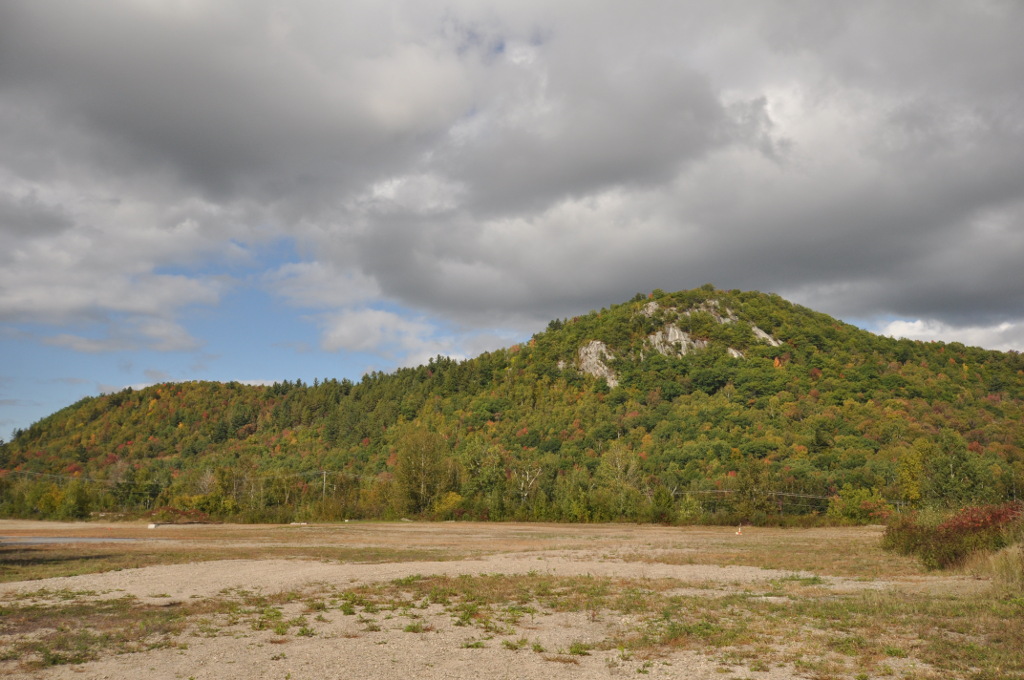
The Kazanlak Valley opens between two mountain walls — the Balkan range, or Stara Planina, to the north and the lower Sredna Gora to the south. Famous today for the damask roses grown for their oil, the same sheltered plain was, more than two thousand years ago, the heartland of the ancient Odrysian kingdom. Its soil is studded with tumuli, the earthen mounds the Thracians heaped over the tombs of their elite.
It was Georgi Kitov who gave the region its evocative name. Between 1992 and 2005 his TEMP expedition — the Thracian Expedition for Mound Research — investigated more than 200 mounds, uncovering monumental tombs, masonry graves and lavish burials at a pace that made international headlines. Even so, the work has barely begun: of the estimated 1,500 tumuli in the valley, only around 300 have been studied. Each season the ploughed fields around Kazanlak and Shipka give up more.
Who Were the Odrysian Thracians?
The Thracians were a family of Indo-European tribes who lived across the eastern Balkans before the Roman conquest. In the 5th century BC the Odrysian kingdom united many of them into the most powerful Thracian state, wealthy on gold, horses and trade with the Greek world. The Thracians left almost no writing of their own, so we know them mainly through Greek and Roman authors and through their spectacular metalwork. Their aristocracy prized fine armour, ornamented drinking vessels and the mystical beliefs later Greeks linked to Orpheus, himself remembered as a Thracian.
The Thracian Tomb of Kazanlak
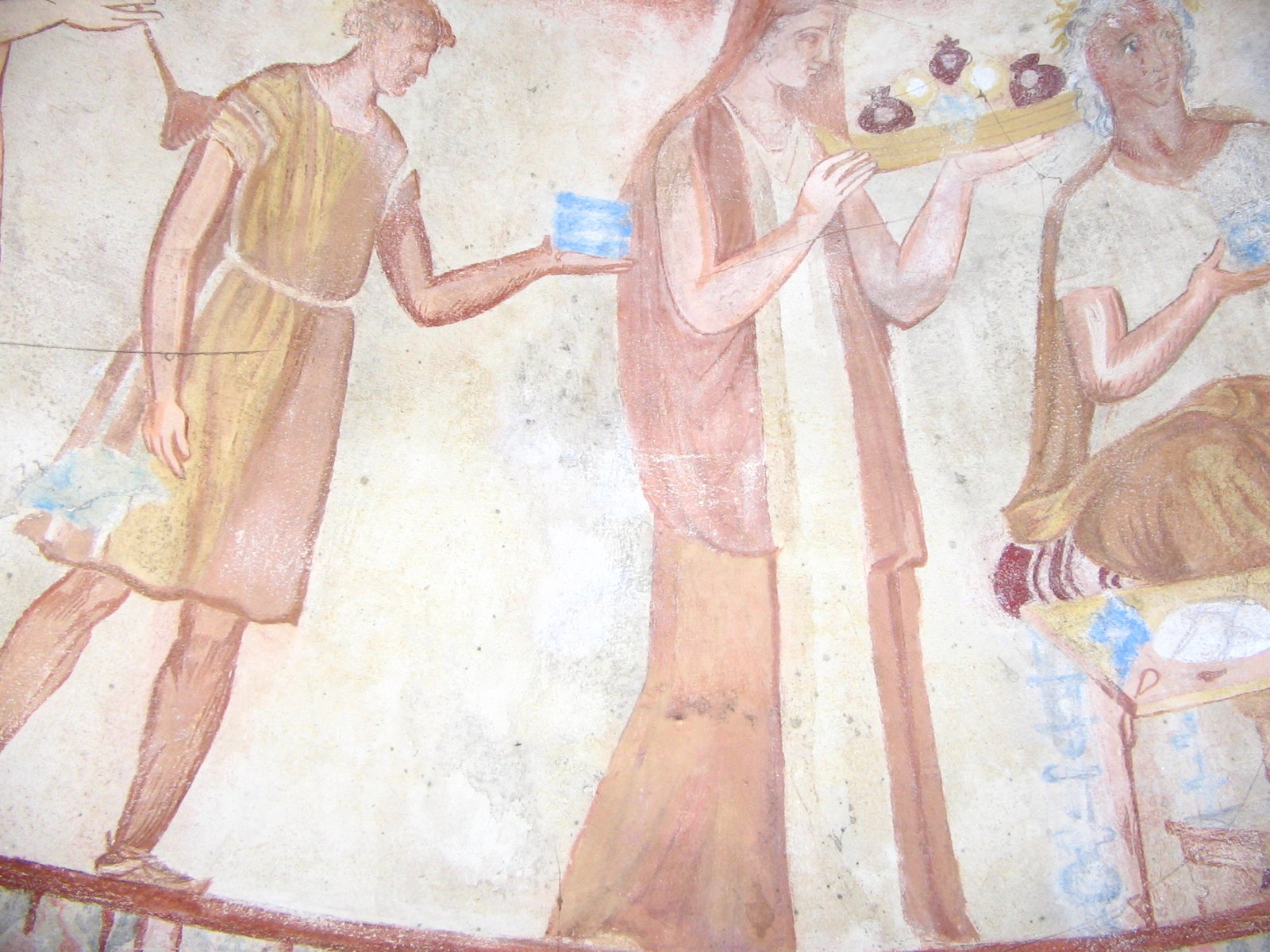
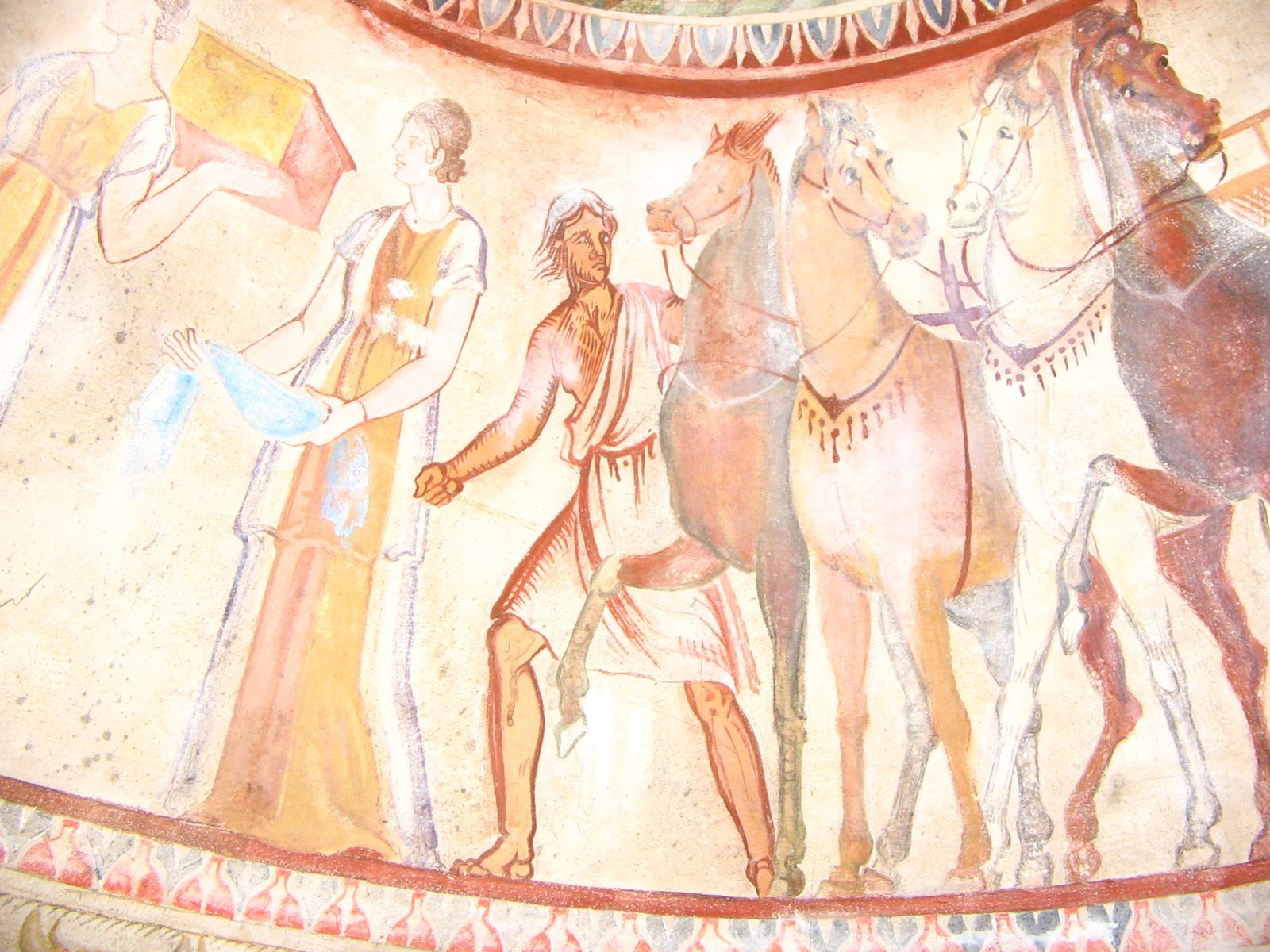
The valley’s most celebrated monument is the Thracian Tomb of Kazanlak, found by accident in April 1944 when soldiers digging an air-raid shelter broke through into its painted chamber. Built of brick around the end of the 4th century BC, it is a small beehive, or tholos, tomb: a narrow corridor leads to a round, domed burial room barely two metres across. Both are covered in murals showing a seated Thracian couple at a funerary banquet and a frieze of racing chariots — the best-preserved Hellenistic paintings in Bulgaria.
The tomb was inscribed on the UNESCO World Heritage list in 1979. Because the plaster is so fragile, the original is now permanently sealed and climate-controlled; visitors instead walk through an exact painted replica built a few steps away, faithful down to the last brushstroke.
Golyama Kosmatka: The Tomb of Seuthes III
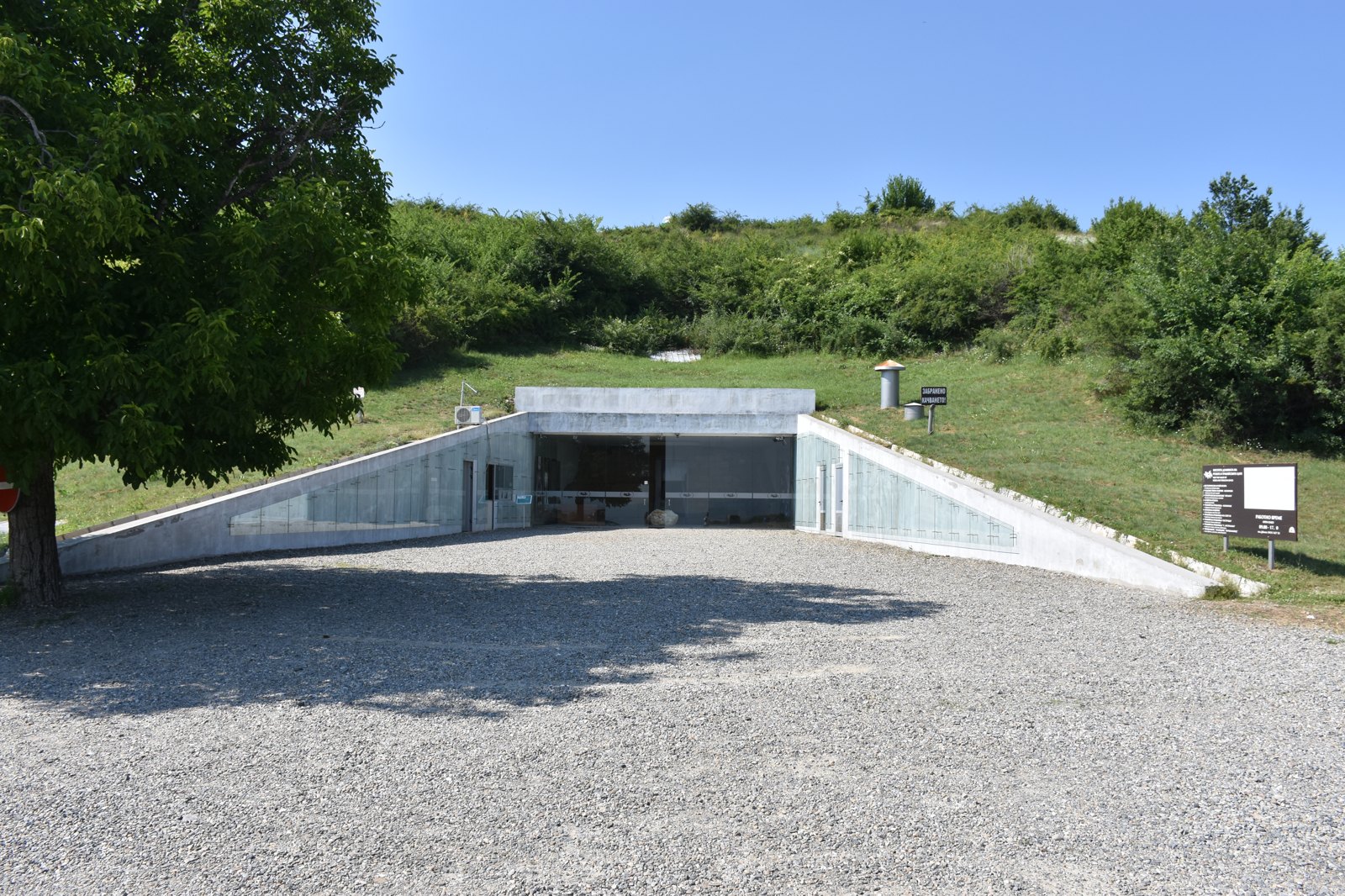
In the autumn of 2004 Kitov’s team opened the Golyama Kosmatka mound, about a kilometre south of Shipka, and found one of the largest and best-preserved aristocratic tombs in Bulgaria. An unusually long 13-metre corridor runs to three consecutive rooms: a rectangular antechamber with a double-pitched roof, where a horse had been sacrificed; a circular domed chamber; and a final room hollowed from a single colossal block of stone. The monument is widely identified as the tomb of Seuthes III, the Odrysian king who ruled in the late 4th century BC.
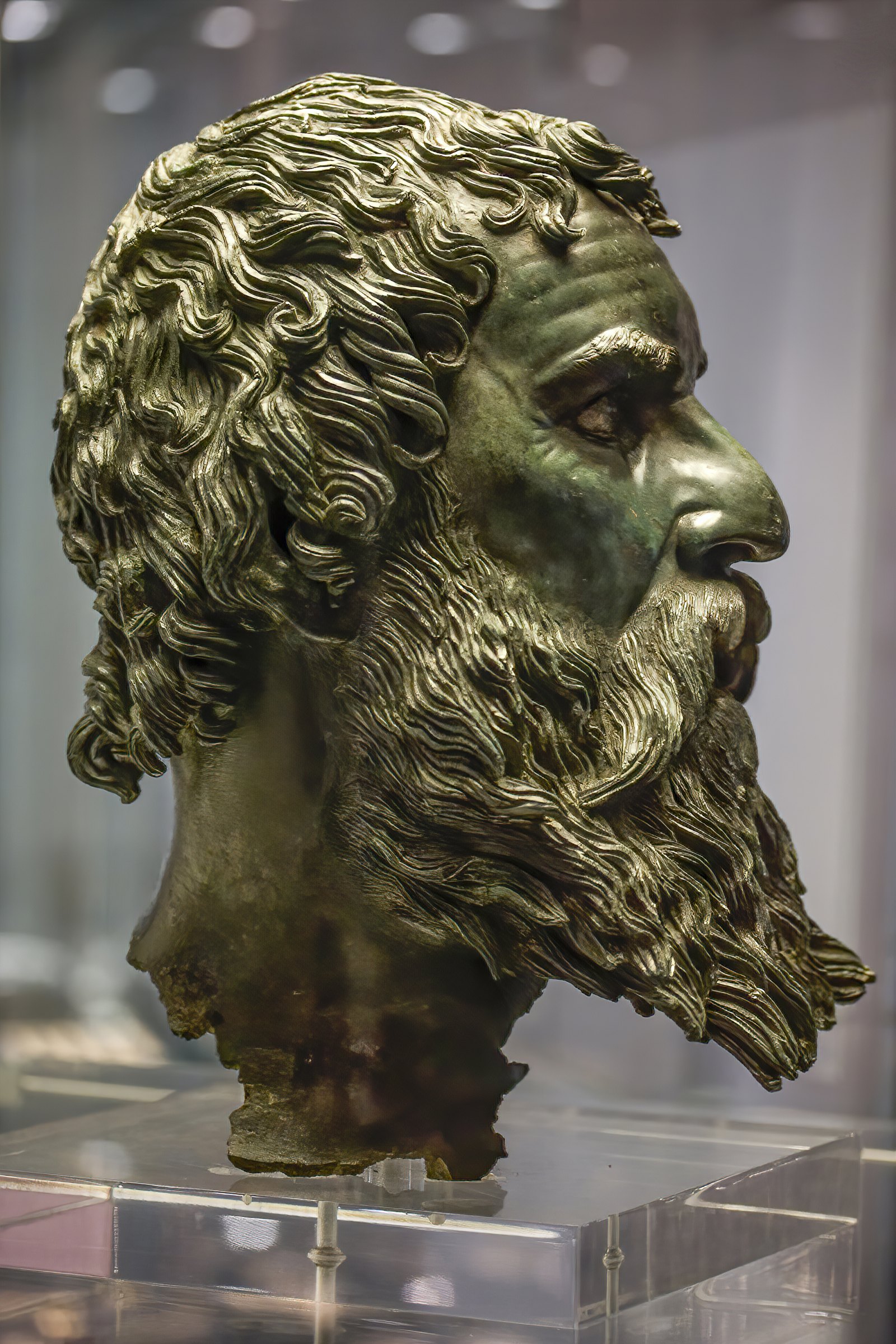
Its most startling find lay outside the door: a lifelike bronze head from a statue of the king, ritually buried before the façade, with eyes of alabaster and glass paste and eyelashes cut from copper. Inside were more than seventy objects — a golden wreath, a gold kylix, bronze greaves and a helmet, and gilded fittings for a horse’s harness. The whole treasure is now the centrepiece of the Iskra Museum in Kazanlak.
Seuthopolis: The Drowned Thracian Capital
Seuthes III did not only build tombs in the valley; he founded a city here. Seuthopolis, laid out on a Greek-style grid with a royal palace and sanctuary, was his residence and the capital of his kingdom. Excavated in the 1940s and 1950s by Dimitar Dimitrov, the whole site was then flooded by the new Koprinka Reservoir and now lies beneath its waters near Kazanlak. Its royal necropolis stands on Bulgaria’s UNESCO tentative list, and architects have proposed exposing the sunken city inside a protective ring wall so it can be visited again.
What Treasures Have the Mounds Revealed?
The valley has produced some of the richest Thracian finds ever recorded. In 2004, in the Svetitsa mound near Shipka, Kitov uncovered the burial of a 5th-century-BC aristocrat wearing a solid gold funerary mask of a bearded man weighing 673 grams — one of the heaviest gold objects to survive from antiquity. Other excavated mounds each add their own signature: the columned tomb of Shushmanets, the elegant Golyama Arsenalka, and Ostrusha, whose burial chamber is a single hollowed block roofed with a stone coffered ceiling still bearing a delicate painted portrait of a woman.
Across the necropolis the grave goods tell a consistent story — gold wreaths and cups, silver and bronze vessels, weapons and horse harness — of a warrior aristocracy that believed in equipping its dead for the afterlife. It is this combination of monumental architecture and portable wealth that sets the valley apart from almost any other funerary landscape in Europe.
Visiting the Valley of the Thracian Kings
Kazanlak makes the natural base for exploring the valley, with the Iskra Museum holding the Golyama Kosmatka treasure and several restored tombs open to the public within a short drive — among them the Kazanlak replica, Golyama Kosmatka, Ostrusha, Shushmanets and the tomb of the Griffins. The nearby town of Shipka, with its gold-domed Russian memorial church, marks the northern edge of the necropolis. For a related Thracian ritual site elsewhere in Bulgaria, see the royal complex at Starosel. Early June, when the Rose Festival fills Kazanlak, is the classic time to come.
Frequently Asked Questions
Where is the Valley of the Thracian Kings?
The Valley of the Thracian Kings is the Kazanlak Valley in central Bulgaria, also called the Rose Valley, lying between the Balkan Mountains to the north and the Sredna Gora to the south. Archaeologist Georgi Kitov popularised the name to describe the extraordinary concentration of Thracian burial mounds around the towns of Kazanlak and Shipka. More than 1,500 tumuli dot the plain, though only about 300 have so far been excavated.
Why is the Thracian Tomb of Kazanlak famous?
The Thracian Tomb of Kazanlak is a brick-built beehive tomb from the end of the 4th century BC, celebrated for the best-preserved Hellenistic-era wall paintings in Bulgaria. Its domed chamber shows a Thracian couple at a funerary banquet and a chariot race. Discovered by accident in 1944, it was inscribed as a UNESCO World Heritage Site in 1979. To protect the fragile frescoes the original is sealed, and visitors tour an exact replica built beside it.
Whose tomb is Golyama Kosmatka?
Golyama Kosmatka, a mound near Shipka, is identified as the tomb of Seuthes III, the Odrysian king who ruled in the late 4th century BC. Georgi Kitov excavated it in 2004, finding a 13-metre corridor leading to three chambers, the last carved from a single stone block. A lifelike bronze portrait head of the king had been buried before the façade, and the tomb held a gold wreath, a gold cup and the ruler’s armour, now displayed in the Iskra Museum in Kazanlak.
Sources and Further Reading
- Valley of the Thracian Rulers — Wikipedia
- Thracian Tomb of Kazanlak — Wikipedia
- Tomb of Seuthes III — Wikipedia
- Thracian Tomb of Kazanlak — UNESCO World Heritage Centre
- The Valley of the Thracian Rulers — Ancient Origins
- Thrace — World History Encyclopedia
- How a Thracian royal tomb was found by accident in WWII — National Geographic