A Glimpse into Bronze Age Nordic Art
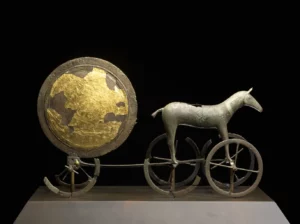
The Trundholm sun chariot is a fascinating artifact from the Nordic Bronze Age. Discovered in Denmark, this bronze statue of a horse and a large disk represents a sun chariot. Let’s explore its discovery, description, and significance in various mythologies.
Discovery of the Trundholm Sun Chariot
In 1902, the Trundholm sun chariot emerged from a peat bog on Trundholm moor in Odsherred, northwestern Zealand. This remarkable find now resides in the National Museum of Denmark in Copenhagen. It even features prominently on Denmark’s 1000-krone banknote from the 2009 series.
Detailed Description
The Structure
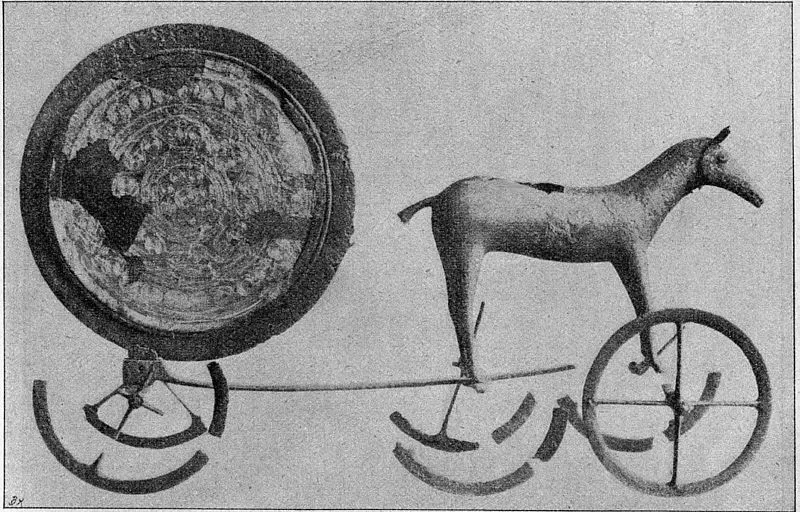
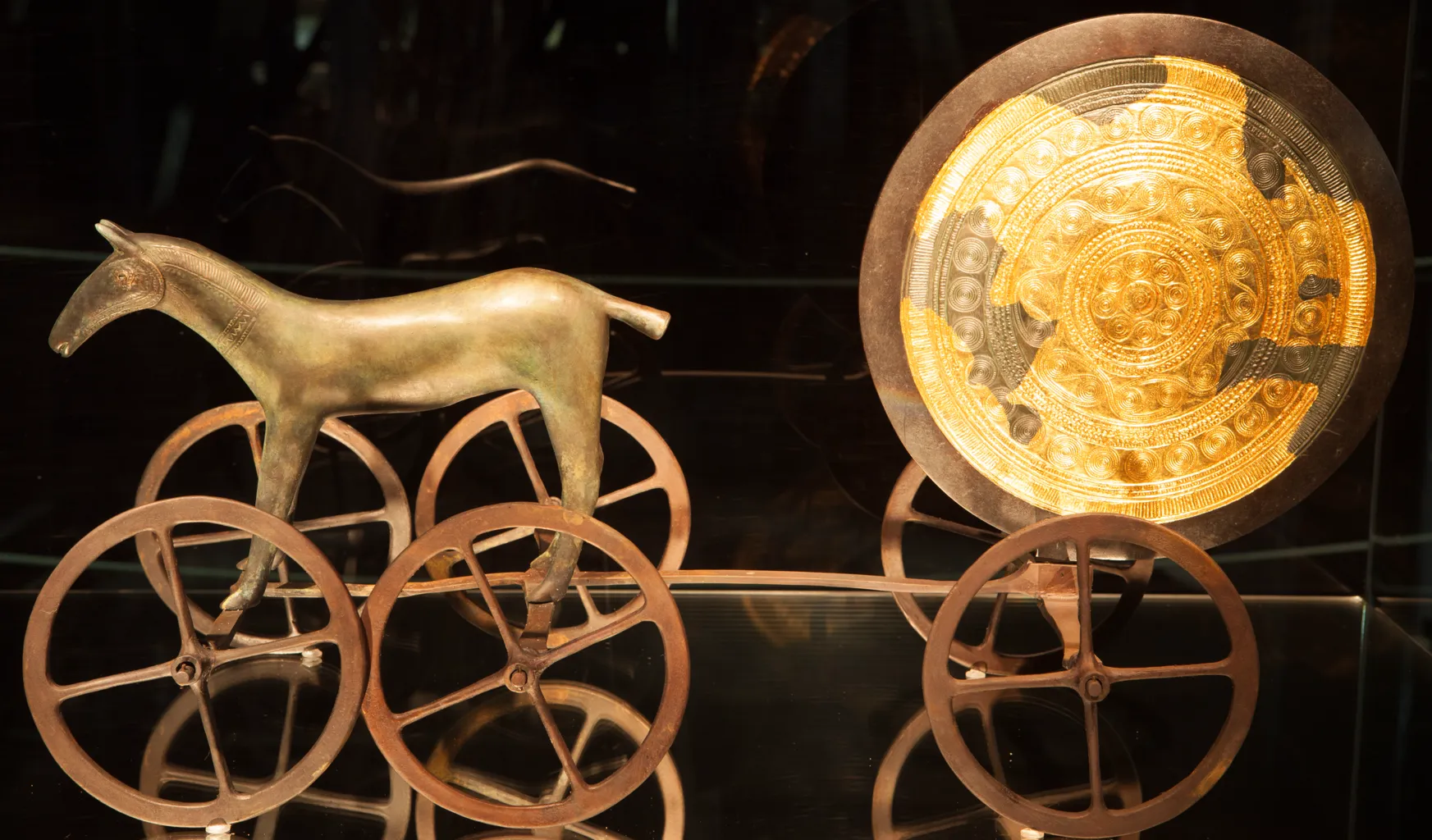
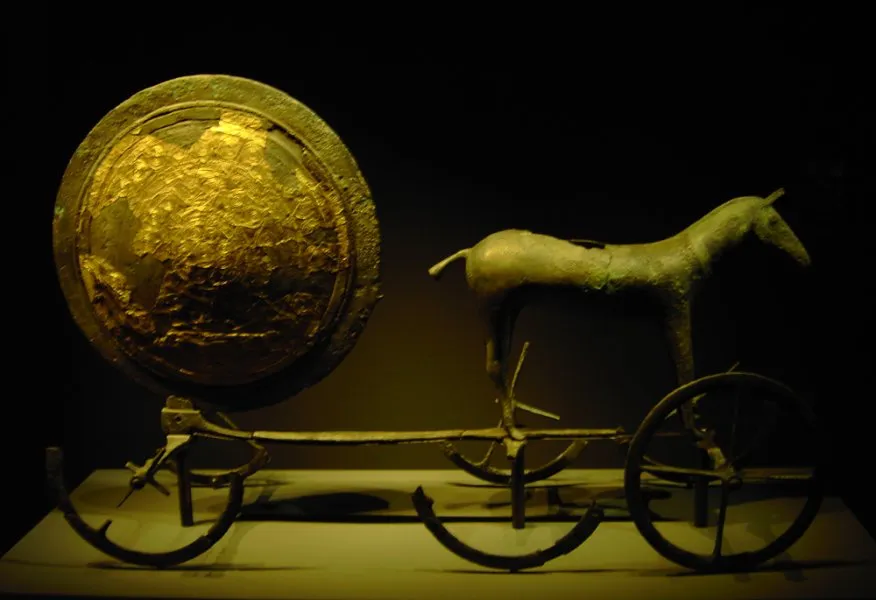
The chariot consists of a bronze horse standing on a rod supported by four wheels. This rod connects to a large bronze disk, itself supported by two wheels. All the wheels have four spokes. Crafted using the lost wax method, the entire object measures about 54 cm by 35 cm by 29 cm.
The Disk
The disk has a diameter of approximately 25 cm. One side is gilded with gold, while the other side remains plain. It consists of two bronze disks joined by an outer bronze ring, with a thin sheet of gold applied to one face. The gilded side features intricate decorations, including concentric circles and zig-zag bands. The patterns suggest a Danubian influence, though the artifact was produced locally.
Symbolism and Interpretation
The Sun’s Journey
The two sides of the disk may symbolize the sun’s journey across the heavens. The bright, gilded side represents daylight, while the dark side represents night. This belief aligns with the idea that the sun travels from east to west during the day and returns from west to east at night. It is thought that the chariot was used in religious rituals to demonstrate this celestial motion.
Similar Artifacts
Two similar disks have been found in Ireland: the Lattoon gold disk and the bronze Cooke disk, dated to around 1500–1300 BC. The Cooke disk, like the Trundholm chariot, suggests it was part of a sun horse chariot mounted on wheels.
Dating the Sculpture
The Trundholm sun chariot dates to about 1400 BC, corresponding to Montellius period II (1500–1300 BC). Evidence of horse-drawn chariots first appeared in Scandinavia around 1700 BC, including petroglyphs, chariot bits, and whip handles.
Calendrical Interpretations
Some scholars suggest the disk’s decorations encode a calendar. Archaeologist Christoph Sommerfeld argues that both sides of the disk represent the 19-year lunisolar Metonic cycle. This cycle is also thought to be encoded on the Berlin Gold Hat, dating from around 1000 BC.
Sun Chariots in Mythology
Norse Mythology
In Norse mythology, the Trundholm sun chariot is considered a possible predecessor to Skinfaxi. Skinfaxi, the horse, pulls Dagr, the personification of day, across the sky.
Celtic Pantheon
The Celtic sky god Taranis is often depicted with a spoked wheel, drawing parallels to the sun chariot.
Hindu Scriptures
In Hindu scriptures, the Rigveda mentions the sun chariot. RV 10.85 describes the sun god’s bride on a chariot pulled by two steeds.
Greek Mythology
Greek mythology features the solar deity Helios, who races across the sky in a horse-drawn chariot, bringing daylight.
Conclusion
The Trundholm sun chariot offers a captivating glimpse into Bronze Age Nordic art and beliefs. Its intricate design and rich symbolism connect it to various mythologies, highlighting the shared human fascination with the sun’s journey across the sky.
Sources:

Neural Pathways is a collective of seasoned experts and researchers with a profound passion for unraveling the enigmas of ancient history and artifacts. With a wealth of combined experience spanning decades, Neural Pathways has established itself as a leading voice in the realm of archaeological exploration and interpretation.