Kafir Kot: A Glimpse into Khyber Pakhtunkhwa’s Hindu Legacy
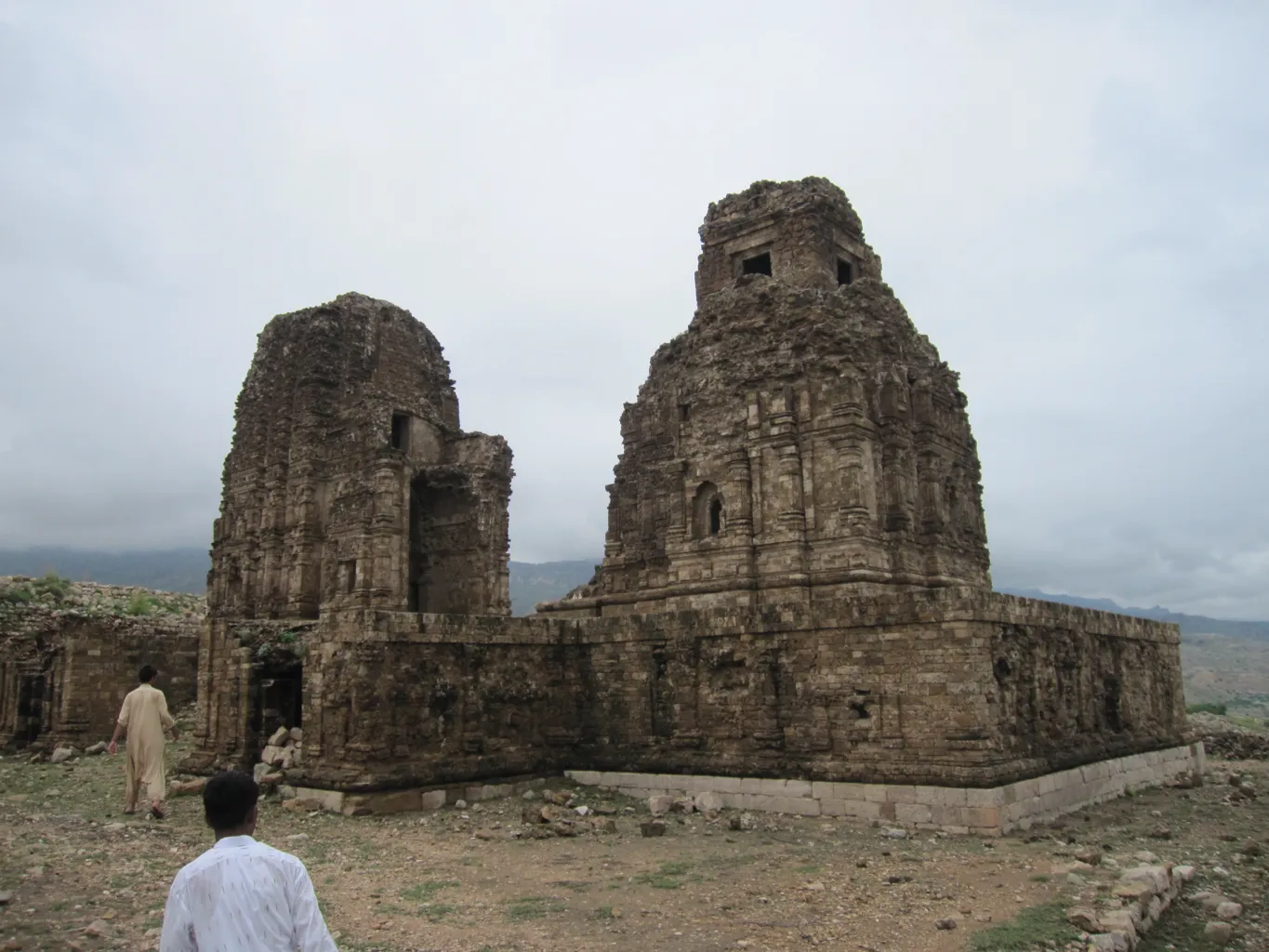
Kafir Kot, a name that translates to “Fort of the Infidels,” stands as a captivating reminder of the region’s rich Hindu heritage. Located in Dera Ismail Khan, Khyber Pakhtunkhwa, Pakistan, this ancient temple complex unveils a fascinating chapter in the area’s history.
Unveiling the Past: Historical Significance of Kafir Kot
Kafir Kot boasts a history dating back to the 7th century AD. It served as a vital center for the Hindu Shahi culture, a powerful Hindu kingdom that flourished in the region. Its presence alongside nearby ruins like the Sindhu temple and the remnants of Mari city further solidify the significance of a prominent Hindu civilization in this area.
The 1915 District Gazetteer of Mianwali documented Kafir Kot’s importance and its incredible age, highlighting its role in shaping the cultural landscape of Khyber Pakhtunkhwa.
A Walk Through Time: Description of the Ruins
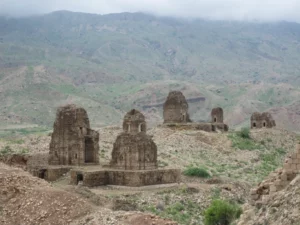
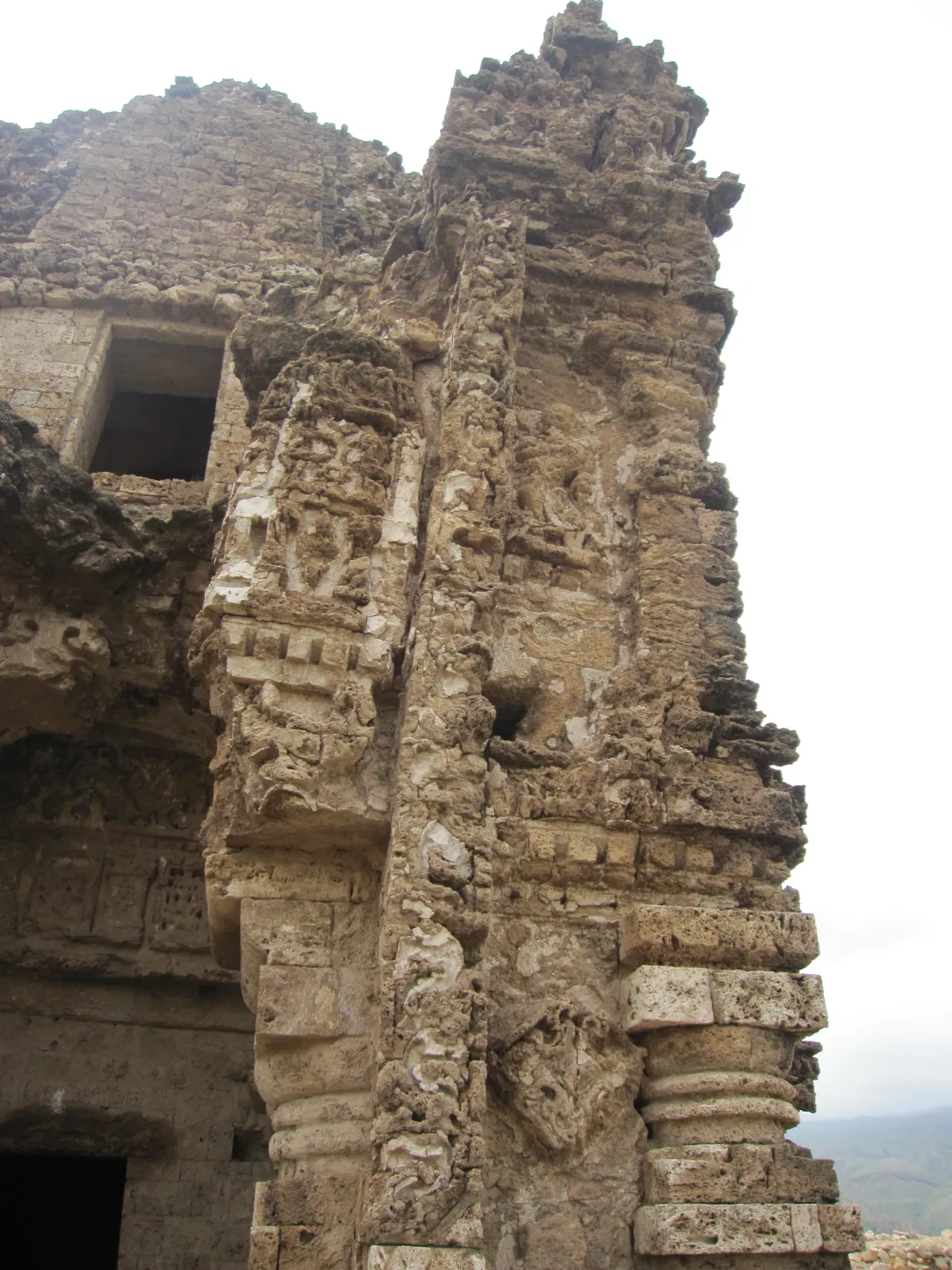
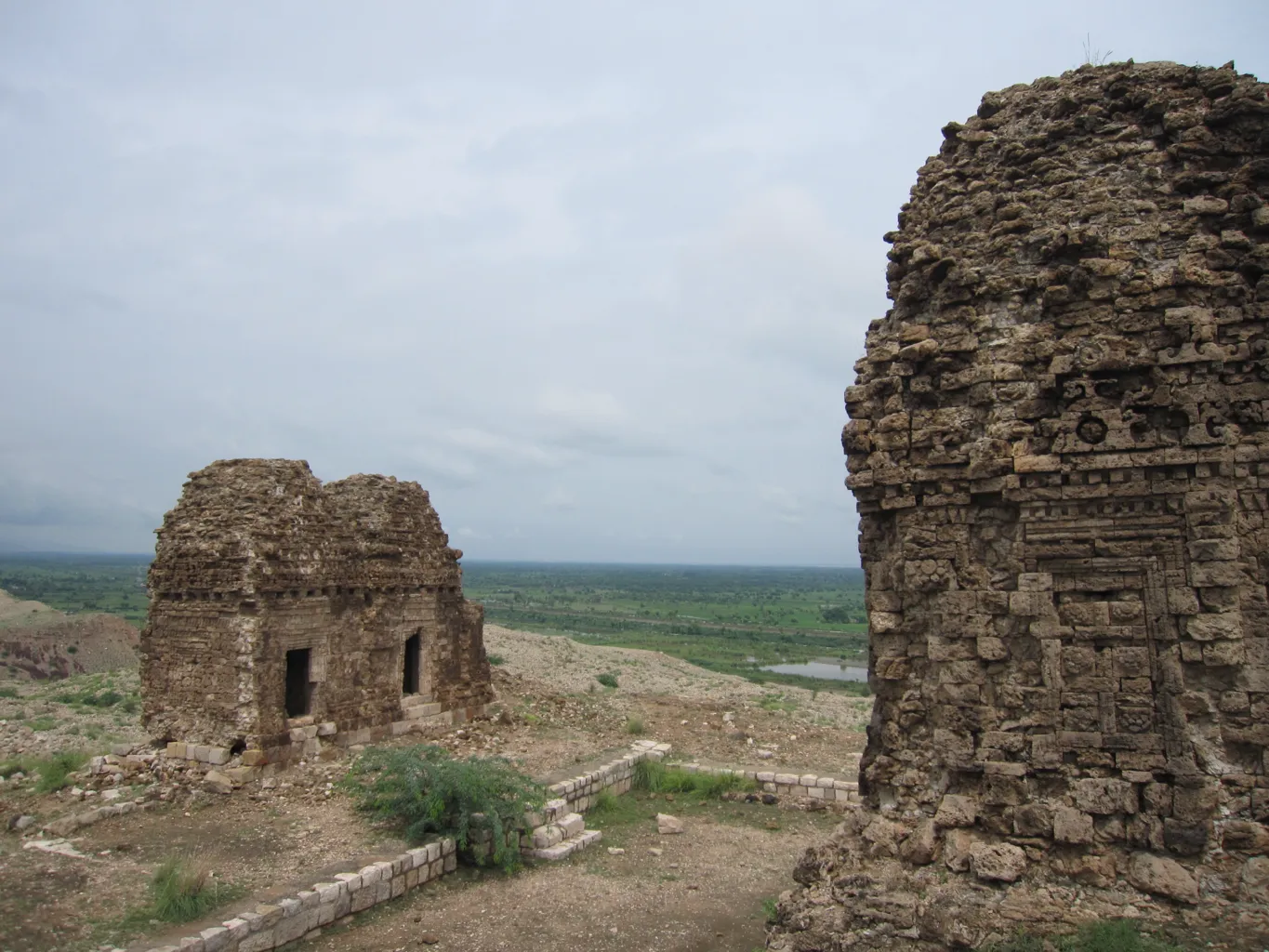
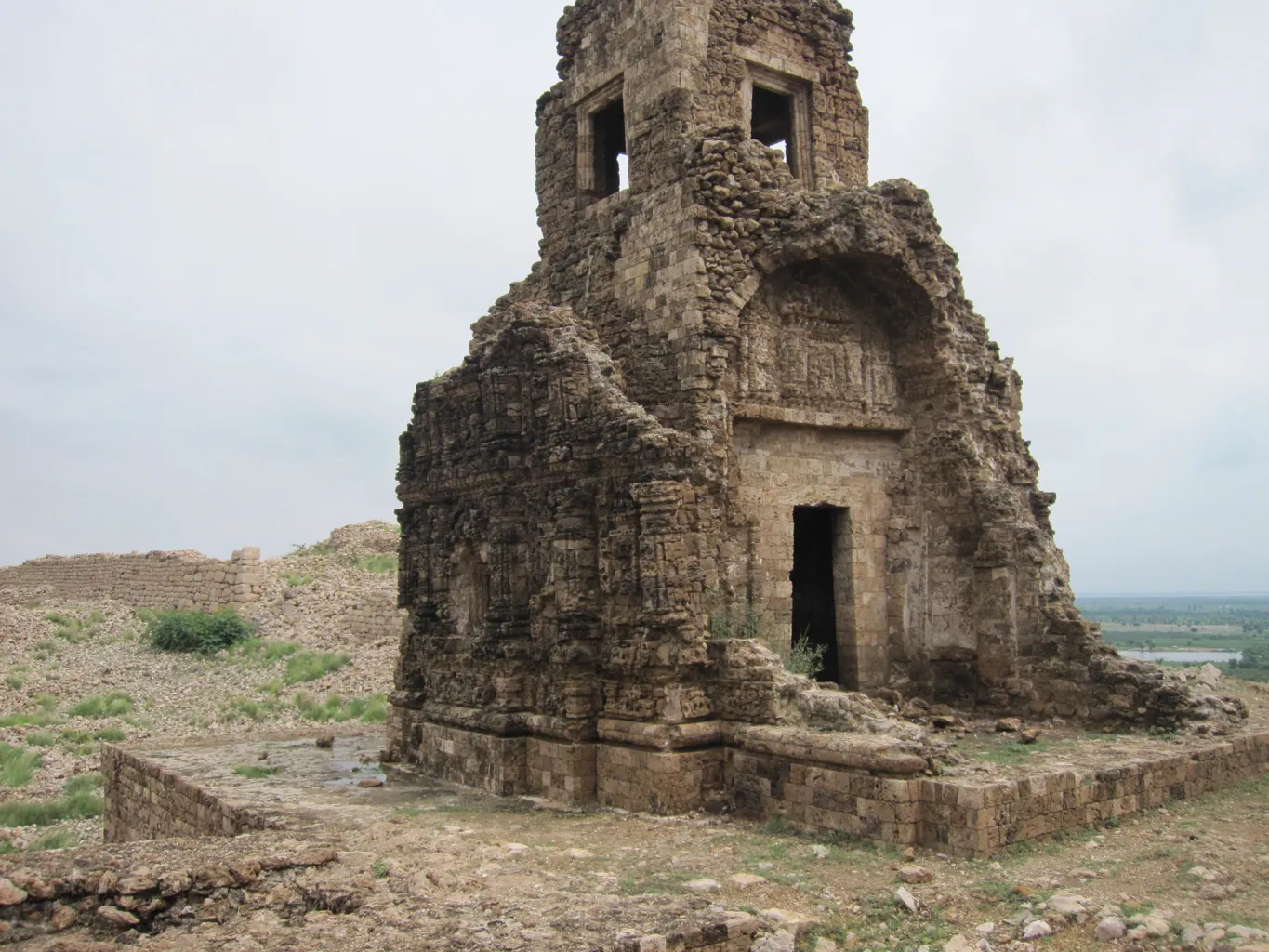
Standing tall on two small hills in the district’s northwest, Kafir Kot comprises two forts overlooking the majestic Indus River, near the Chashma barrage. The initial layer of defense for these forts is an imposing outer wall built with massive stone blocks. Within the forts, one can find clusters of structures that bear a striking resemblance to small Hindu temples.
Architectural Marvels: Construction Details
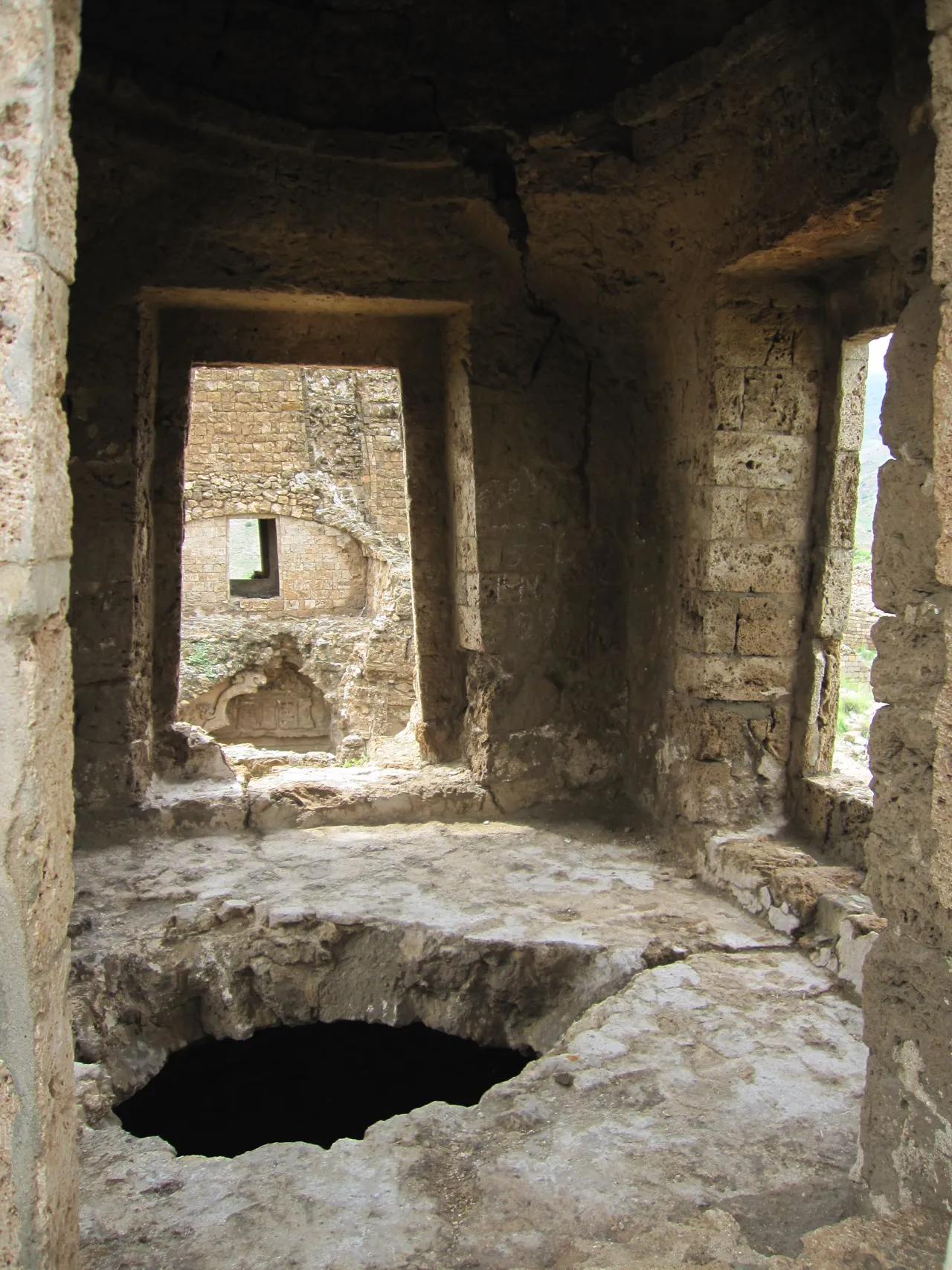
These temples stand out due to their unique building material: a distinctive honey-combed, dull-colored stone. Interestingly, this particular stone isn’t native to the area; it was meticulously transported via river from a distant location called Khushalgarh. The sheer size of the forts suggests they were capable of housing a substantial garrison, possibly a testament to the strategic importance of the location. Legends even speak of these forts as the final bastions of Hindu Rajas Til and Bil.
The Wheels of Time: Decline and Destruction
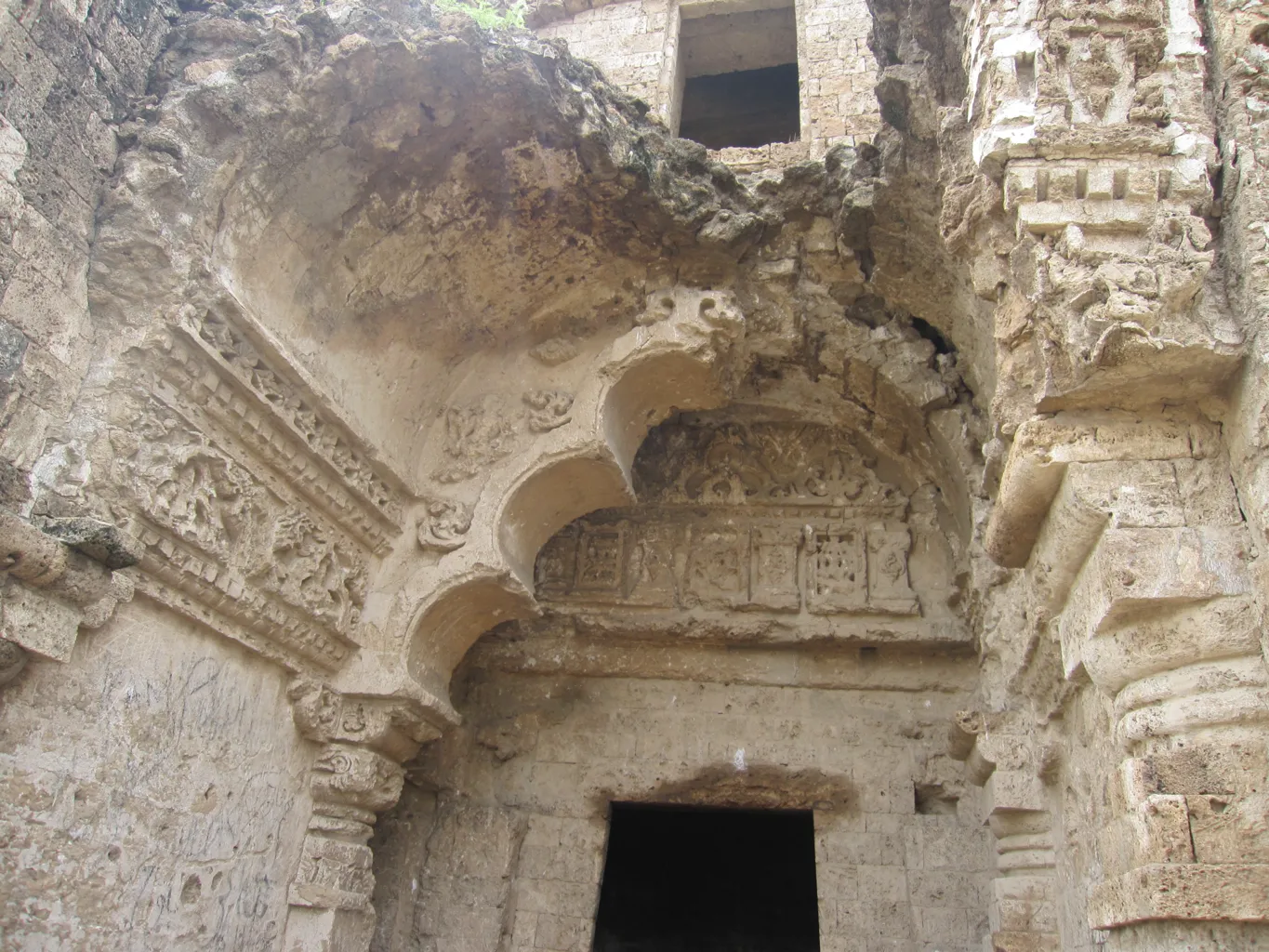
The 11th century AD marked a turning point for Kafir Kot. The Ghaznavids, a powerful Muslim dynasty, launched a devastating attack that left the fort in ruins. Following this event, much of the site’s history has been shrouded in mystery, leaving us with fragmented glimpses into its past.
Echoes of the Past: Current State and Museum Collections
Despite the ravages of time, Kafir Kot has undergone some restoration efforts, allowing glimpses of its former grandeur. Sculptures and architectural fragments unearthed from the site are now scattered across museums globally. The British Museum, for instance, houses one of the most extensive collections of artifacts from Kafir Kot.
A Legacy Enduring: Conclusion
While Kafir Kot stands in a state of ruin, its presence serves as a powerful reminder of the region’s rich Hindu heritage. This once-vibrant complex offers invaluable insights into the historical and cultural tapestry of Khyber Pakhtunkhwa, beckoning us to delve deeper into the fascinating story it tells.
Sources


Neural Pathways is a collective of seasoned experts and researchers with a profound passion for unraveling the enigmas of ancient history and artifacts. With a wealth of combined experience spanning decades, Neural Pathways has established itself as a leading voice in the realm of archaeological exploration and interpretation.