
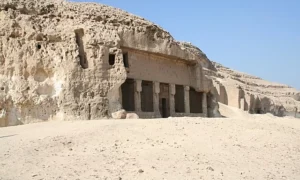
The Speos Artemidos is an ancient Egyptian temple located in Middle Egypt. It stands as a testament to the architectural prowess and religious fervor of the ancient Egyptians. The temple is dedicated to the lioness goddess Pakhet, often associated with Bast and Sekhmet, deities with similar attributes. Carved out of the rock cliffs, Speos Artemidos is a monument that Queen Hatshepsut, one of Egypt’s most formidable pharaohs, commissioned. It serves not only as a place of worship but also as a symbol of royal authority and divine power.
Neural Pathways
Neural Pathways is a collective of seasoned experts and researchers with a profound passion for unraveling the enigmas of ancient history and artifacts. With a wealth of combined experience spanning decades, Neural Pathways has established itself as a leading voice in the realm of archaeological exploration and interpretation.
Our team of researchers and scholars provide unparalleled depth of knowledge in deciphering the intricate narratives embedded within ancient artifacts and deciphering the cultural nuances that shaped civilizations of the past. Through meticulous research, rigorous analysis, and a collaborative spirit, Neural Pathways has made and continues to make significant contributions to our understanding of the human past.
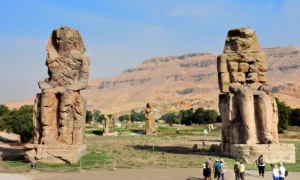
Colossi of Memnon
The Colossi of Memnon are two massive stone statues in Egypt. They depict Pharaoh Amenhotep III and have stood for nearly 3,400 years. These towering figures are all that remains of a once extensive mortuary temple. The statues have become famous not only for their size and history but also for the ‘singing’ phenomenon reported in antiquity. They are named after Memnon, a hero of the Trojan War, due to a later association with the sounds they once made at dawn.
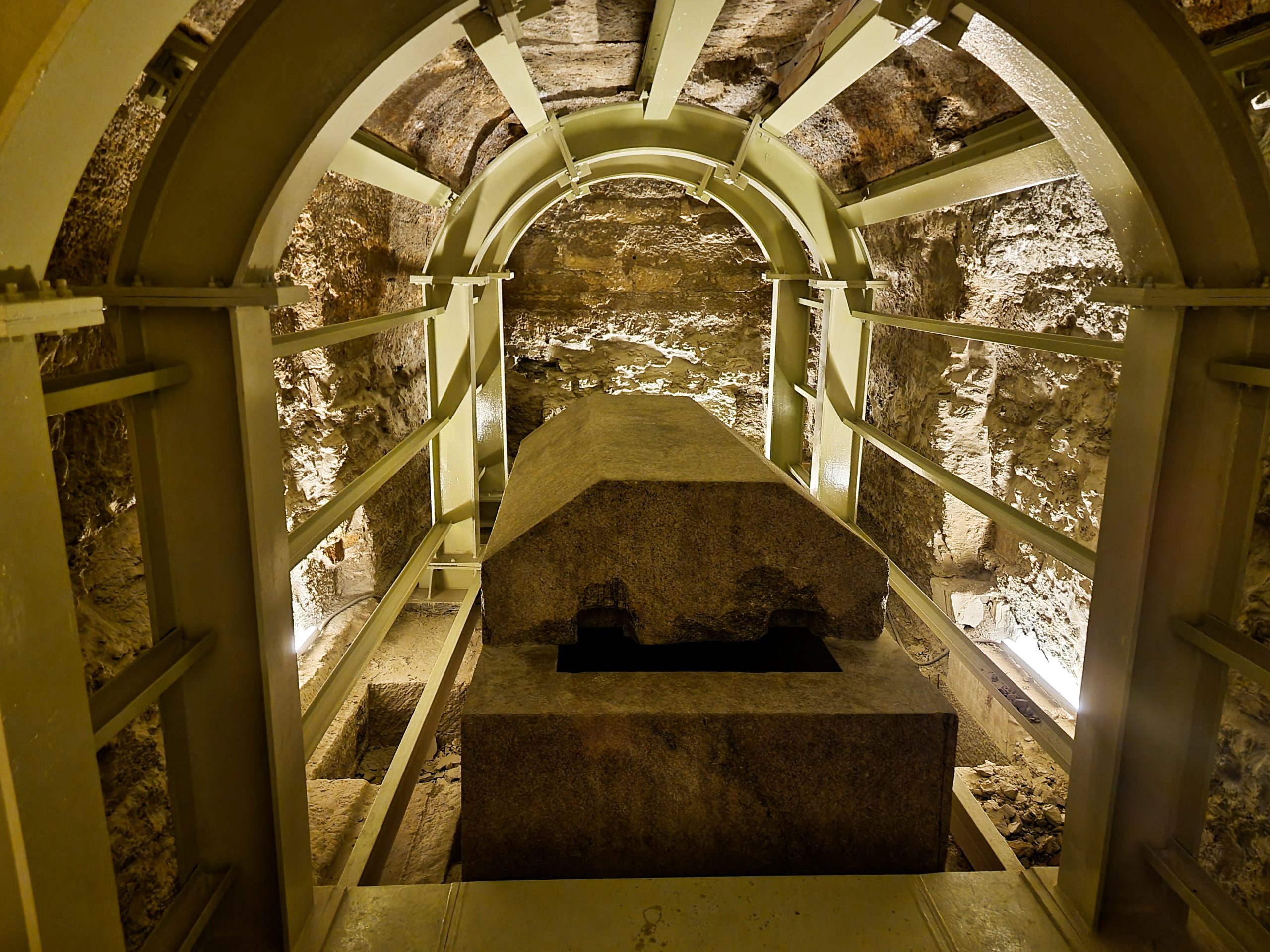
The Serapeum of Saqqara
The Serapeum of Saqqara is an ancient Egyptian burial site for sacred bulls, located northwest of the famous Step Pyramid of Djoser. It is part of the larger necropolis of Saqqara, near Memphis. The site features large sarcophagi made from granite and basalt, believed to have housed the mummified remains of the Apis bulls, which were worshipped as manifestations of the god Ptah. The Serapeum is a testament to the religious significance of these animals in ancient Egyptian culture and provides insight into their burial rituals.
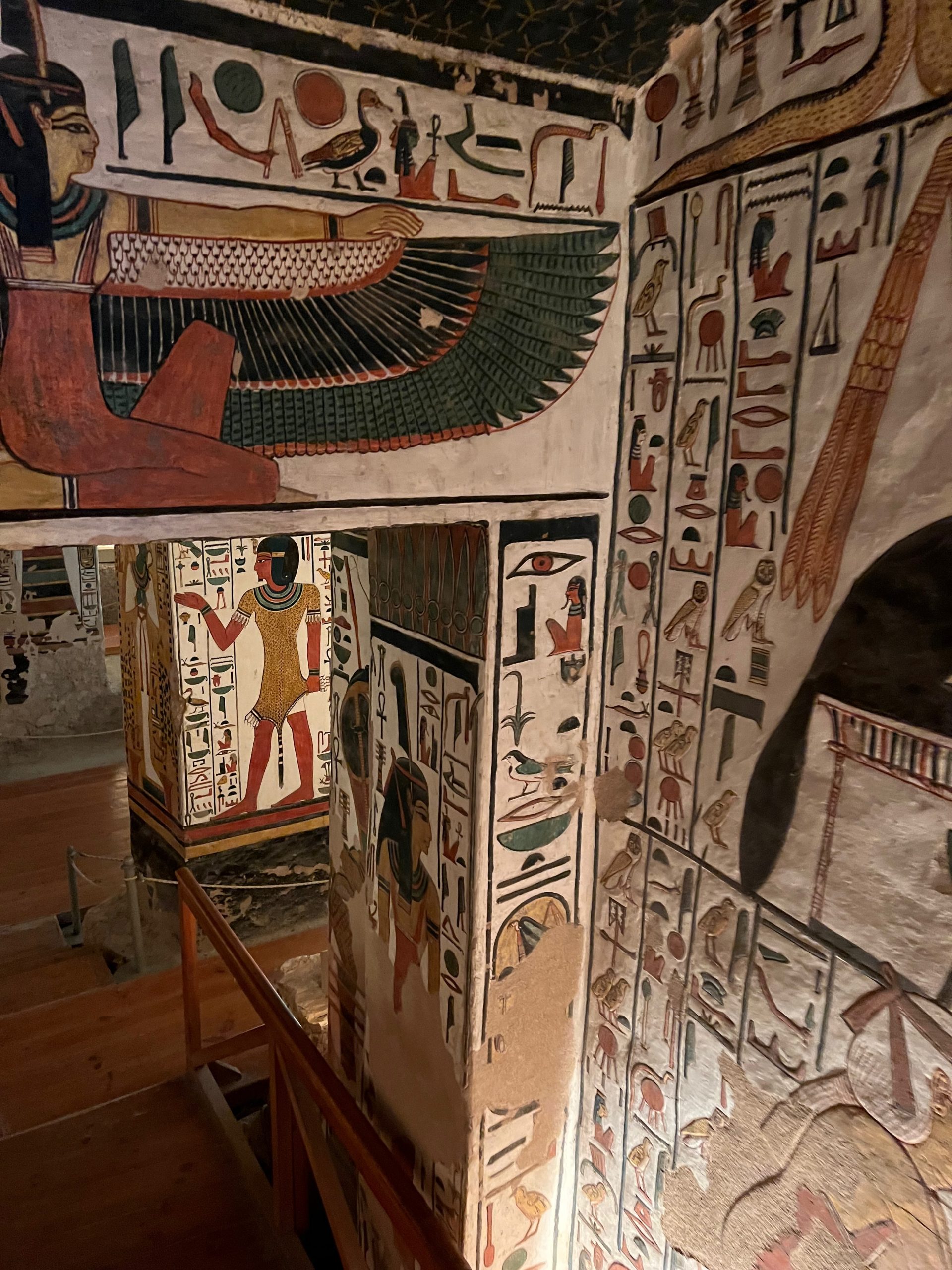
The Tomb of Nefertari
The Tomb of Nefertari, located in the Valley of the Queens in Egypt, is an ancient burial site of one of the most celebrated queens of ancient Egypt, Nefertari, the first of the Great Royal Wives of Ramesses the Great. Known for its stunning wall paintings and intricate artistry, the tomb is considered one of the most beautiful in all of Egypt. Discovered in 1904, it has since provided immense insight into Egyptian art and culture during the 19th Dynasty.
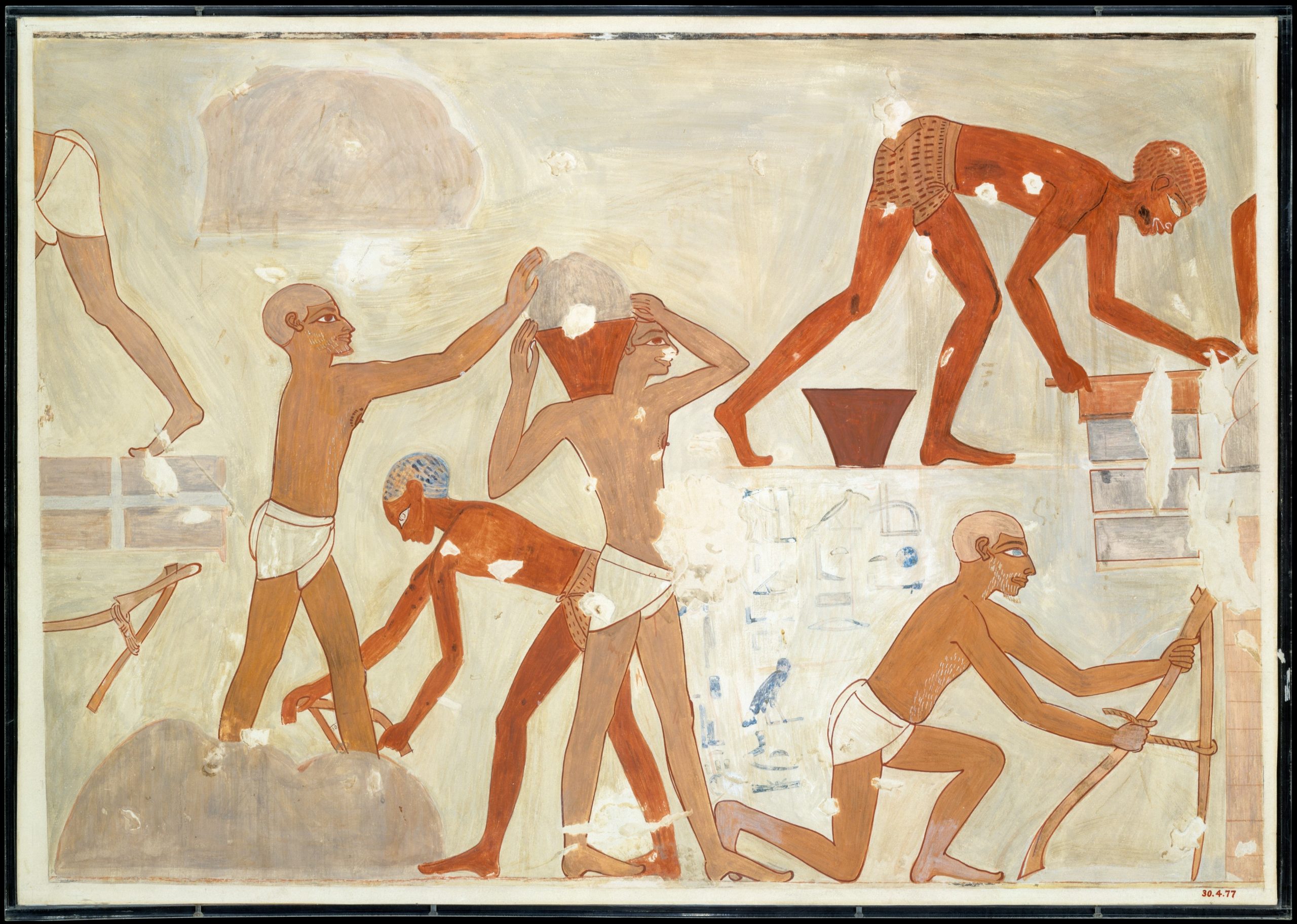
The Tomb of Rekhmire Depictions
The tomb of Rekhmire, TT100, located at Thebes, offers an unparalleled window into the life and responsibilities of a Vizier (a high-ranking political advisor or minister) in ancient Egypt. Rekhmire, serving under Thutmose III and Amenhotep II, hailed from a lineage of influential officials. His tomb, while never intended as a burial site, serves as a chapel showcasing the extensive duties of a Vizier and the intricate details of ancient Egyptian craftsmanship, particularly through its vivid depictions of artisans at work, using a variety of tools and technology, some of which advanced for the time.
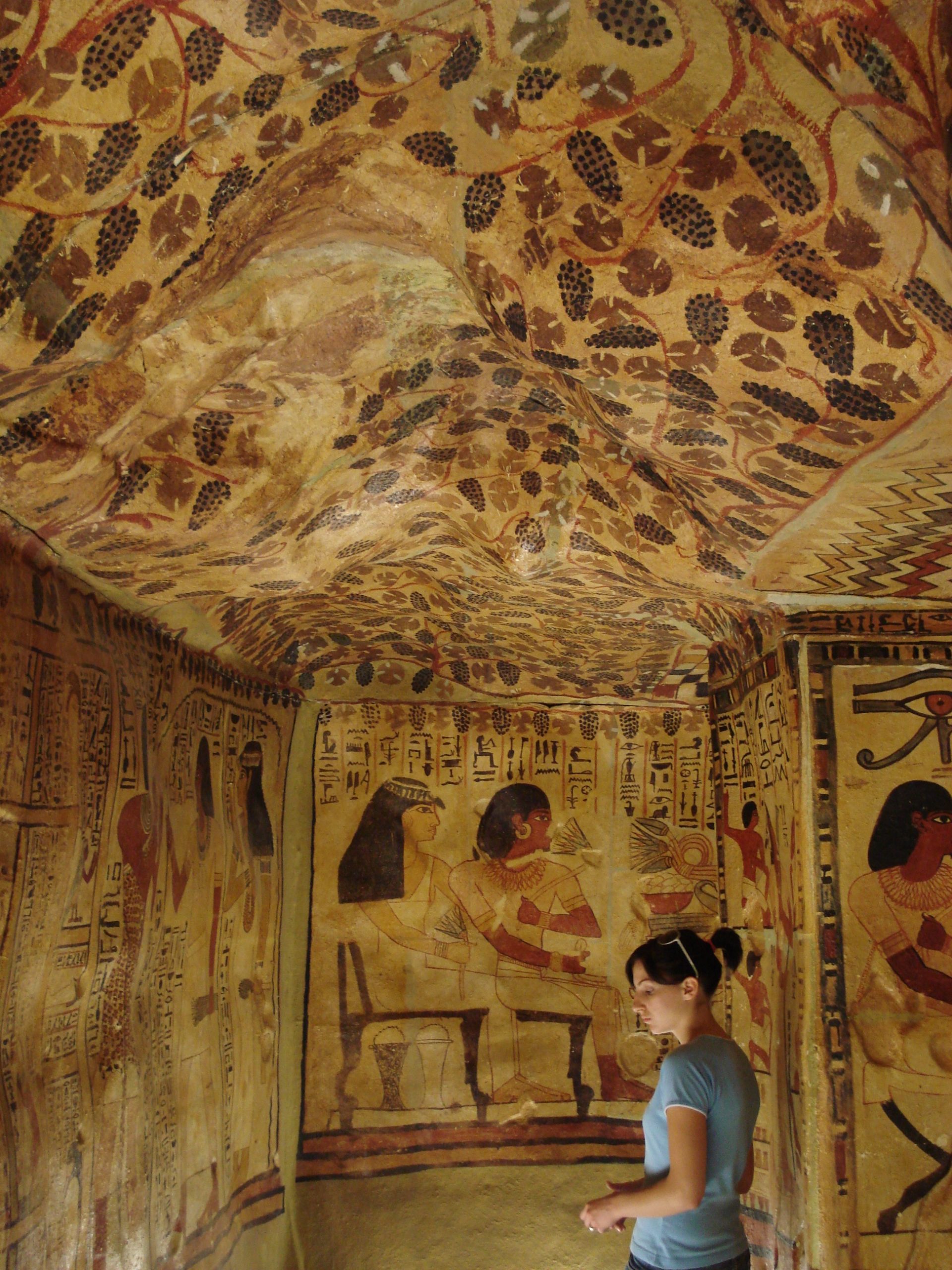
The Tomb of Sennefer (Tomb of the Vineyards)
The funerary complex of Sennefer, known as TT96, offers a fascinating window into the life and afterlife beliefs of the ancient Egyptian elite during the 18th Dynasty, specifically around the reign of Amenhotep II (approximately 1439 – 1413 BC). Sennefer, who held the prestigious title of Mayor of Thebes, was a prominent figure in the southern city, and his tomb, located on the south face of the hill of Sheikh abd el-Gournah, is a testament to his status and the artistic achievements of the period.