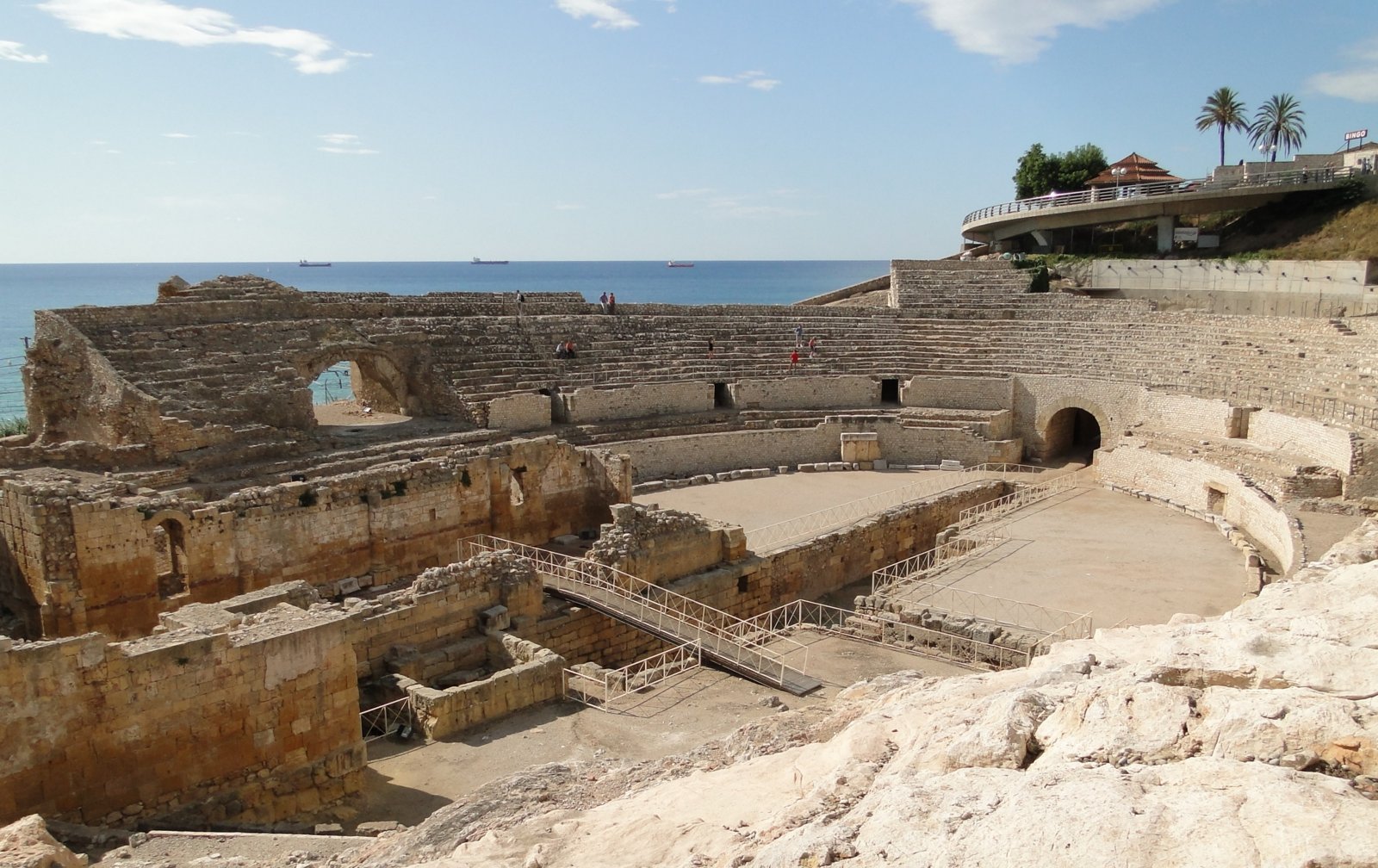
Tarraco was the oldest Roman settlement on the Iberian Peninsula and, for nearly six centuries, the capital of Rome’s largest Spanish province. Founded as a military base in 218 BC during the Second Punic War, the city on the Catalan coast grew into the administrative heart of Hispania Citerior and later Hispania Tarraconensis. Today its amphitheatre, walls, circus and aqueduct survive as one of the most complete Roman townscapes in Spain, protected since 2000 as the UNESCO Archaeological Ensemble of Tarraco. The same provincial-Roman grandeur survives in Thrace at the Roman theatre of Philippopolis in modern Plovdiv.
From a Punic War Camp to the Capital of Roman Hispania
In 218 BC the Roman general Gnaeus Cornelius Scipio Calvus landed near the native Iberian settlement of Kese and established a fortified camp. It was Rome’s first foothold in Iberia and a forward base against Carthage in the Second Punic War. The camp became a permanent town, was made capital of the province of Hispania Citerior, and after the Augustan reorganisation served as capital of Hispania Tarraconensis, by far the largest of the three provinces of Roman Spain. The town plan was unusual: rather than a flat grid, Tarraco was laid out on a series of artificial terraces stepping down the hillside toward the sea.
Roman Tarraco was a busy administrative and mercantile city, and a natural point of comparison with other provincial capitals such as the Roman theatre of Merida in western Hispania and Augusta Raurica on the Rhine. Its harbour, fertile hinterland and position on the Via Augusta kept it wealthy well into late antiquity.
Augustus and the Imperial Cult
The emperor Augustus wintered at Tarraco in 26-25 BC while directing the Cantabrian Wars, effectively running the empire from the city. Tarraco was granted colonial rank and became the centre of the imperial cult for all the Iberian provinces. According to Tacitus, its citizens were given permission to raise a temple to the deified Augustus, among the first such temples in the Roman world, and the provincial assembly met here each year. The cult enclosure and provincial forum crowned the upper terrace, where the medieval cathedral now stands.
What Can You Still See at Tarraco Today?
Tarragona wears its Roman past on the surface. The monuments are scattered through and beneath the modern city, and several are among the best-preserved of their kind in the western Mediterranean.
The Amphitheatre by the Sea
The amphitheatre stands on the slope between the walls and the shore, measuring about 130 by 102 metres and seating up to 15,000 spectators. It was built at the end of the 1st and the start of the 2nd century AD for gladiatorial combats and beast hunts. In the centre of the arena are the foundations of a 6th-century Visigothic basilica and a 12th-century Romanesque church, both raised over a spot the early Church held sacred, for reasons explained below.
The Roman Walls
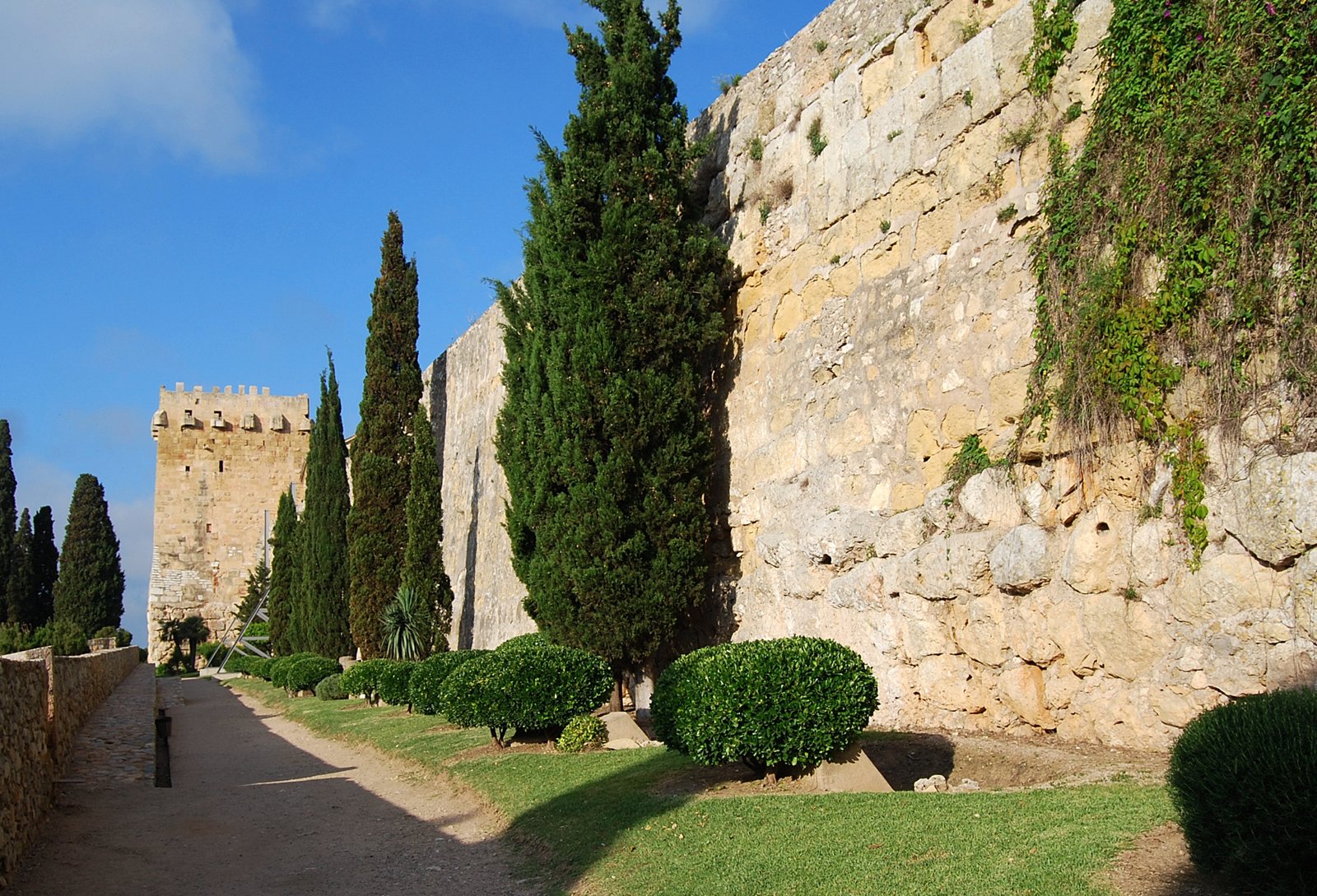
The walls are the oldest standing structures in the city, begun in 218 BC. Their lower courses are cyclopean, huge unworked megalithic blocks carrying later ashlar masonry above. Around a kilometre of the original circuit survives along the Passeig Arqueologic promenade, punctuated by towers. The Tower of Minerva preserves a carved relief of the goddess that is the oldest Roman sculpture still in its original position anywhere outside Italy.
The Les Ferreres Aqueduct
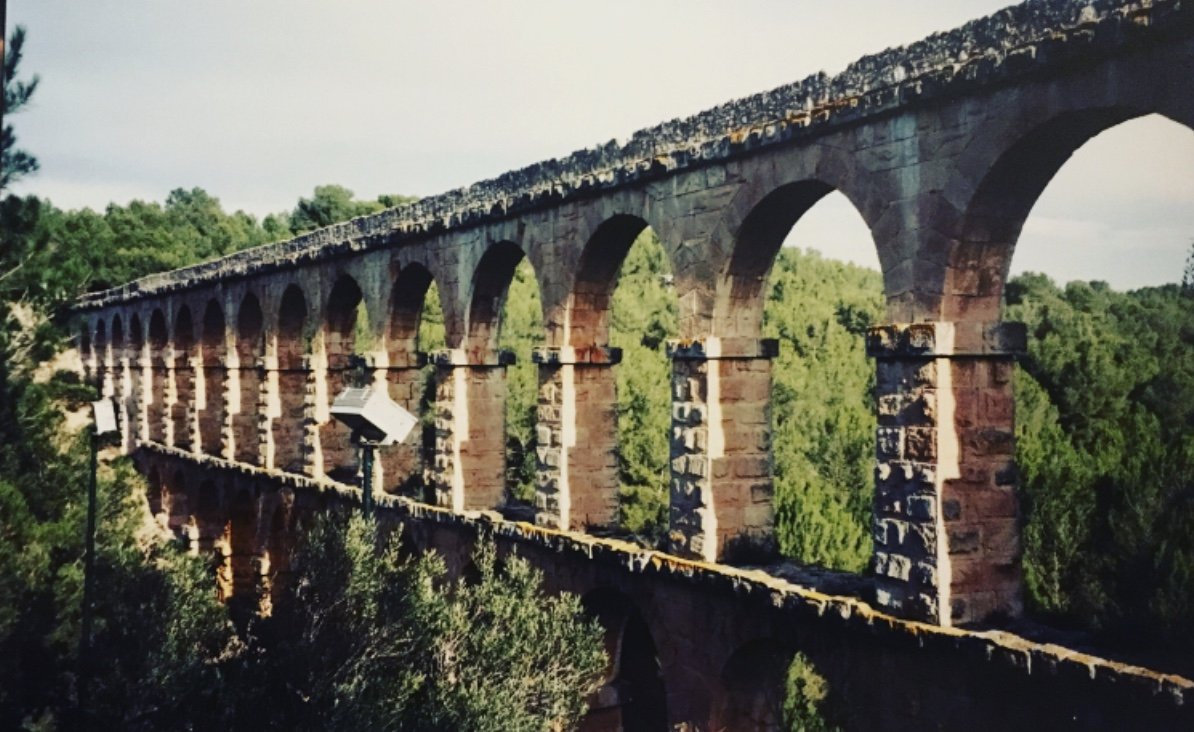
Two kilometres north of the city, the Aqueduct of Segovia has a celebrated cousin: the Les Ferreres Aqueduct, known locally as the Pont del Diable, or Devil’s Bridge. Dating to the reign of Augustus, it carried water across a valley on two tiers of arches, 25 above and 11 below, and stands 217 metres long and 27 metres high. It is one of the finest surviving Roman aqueduct bridges in Spain.
The Circus and Provincial Forum
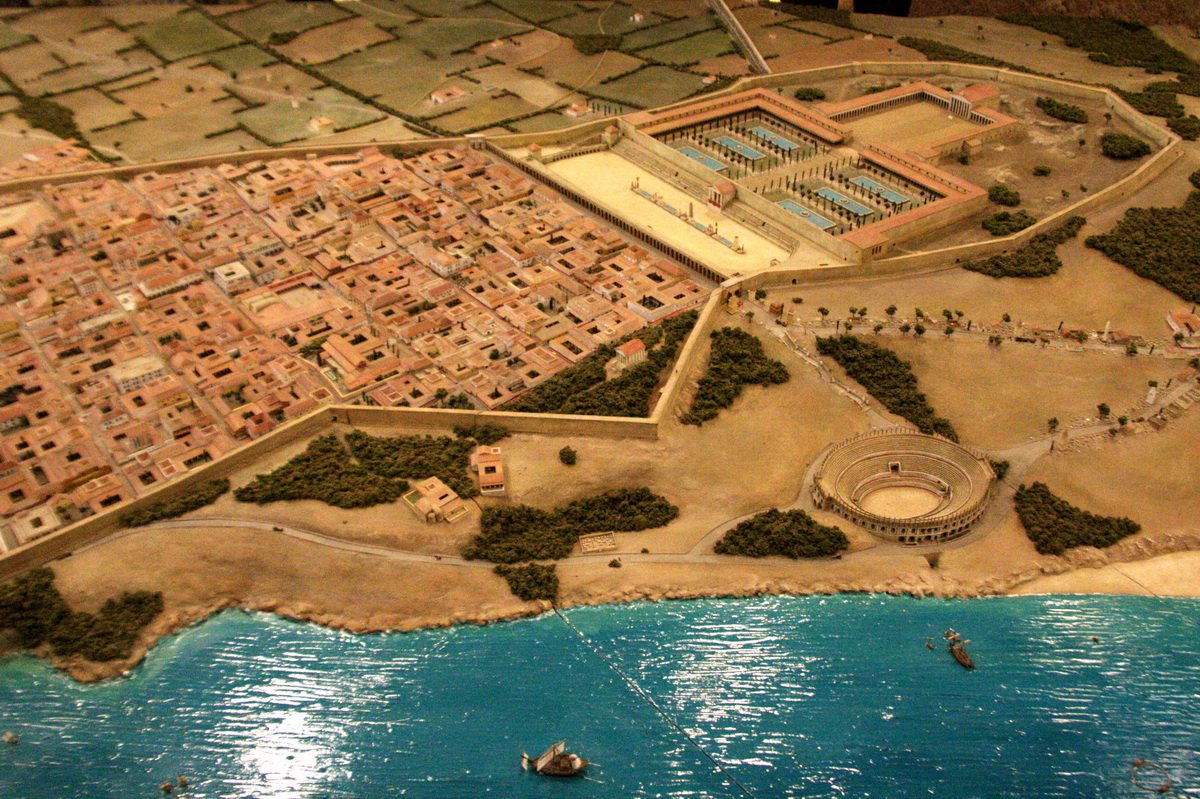
Tarraco’s circus, built at the end of the 1st century AD, hosted chariot races on a track over 300 metres long. Much of it lies buried under the streets and houses of the old town, but its vaulted substructures and one end survive and can be walked through. Above it spread the provincial forum, the political and religious hub of Hispania Tarraconensis, while a separate colonial forum served the day-to-day business of the town below.
How Did Bishop Fructuosus Die in the Amphitheatre?
The amphitheatre’s most consequential day came in AD 259. During the persecution under the emperor Valerian, the bishop of Tarraco, Fructuosus, was arrested together with his deacons Augurius and Eulogius. Questioned by the provincial governor Aemilianus and refusing to sacrifice to the Roman gods, the three were burned alive in the arena before a crowd. The account of their deaths, the Acta of Fructuosus, is the earliest surviving martyr narrative from Roman Spain. The basilica and church later built in the arena mark the place of the execution, tying the Roman arena tradition to the rise of Christian Tarraco.
The UNESCO Archaeological Ensemble of Tarraco
In 2000 UNESCO inscribed the Archaeological Ensemble of Tarraco on the World Heritage List (site 875), a serial property of about 32.83 hectares. Beyond the walls, amphitheatre, circus and forums, it gathers the hydraulic conduits and the Les Ferreres aqueduct, the early Christian necropolis, and several monuments scattered across the surrounding territory. These include the Tower of the Scipios, a Roman funerary tower on the Via Augusta; the Bera Arch (Arc de Bera), an honorific archway spanning the same road; the Medol quarry, which supplied the city’s stone and still holds a tall rock pinnacle left by the quarrymen; and the country villas of Centcelles, with its 4th-century domed mosaics, and Els Munts. Together they show how a Roman provincial capital organised not just its centre but its whole landscape.
Tarraco’s Decline and Rediscovery
Tarraco remained important in late antiquity, serving as a Visigothic centre after the fall of Roman rule in the west. It was disrupted during the early medieval period and largely depopulated after the Muslim conquest of the 8th century, only to be resettled when the Christian counts repopulated the area in the 12th century and built the new cathedral on the old provincial forum. Systematic archaeology began in the 19th and 20th centuries and continues today, with finds displayed in the city’s archaeological museum. The site sits among the wider ancient sites and historical places in Spain and the broader story of the ancient civilizations of the Mediterranean.
At a Glance
- Location: Tarragona, Catalonia, Spain
- Ancient name: Tarraco (colonia of Hispania Citerior / Hispania Tarraconensis)
- Civilization: Roman Republic and Empire
- Founded: 218 BC, during the Second Punic War
- Status: UNESCO World Heritage Site since 2000 (ref. 875)
Sources and Further Reading
- Tarraco – overview and history
- Tarragona Amphitheatre
- Les Ferreres Aqueduct
- World History Encyclopedia – Second Punic War
- World History Encyclopedia – Augustus
- Further institutional references: UNESCO World Heritage Centre (Archaeological Ensemble of Tarraco, site 875) and Encyclopaedia Britannica (Tarragona, Spain).