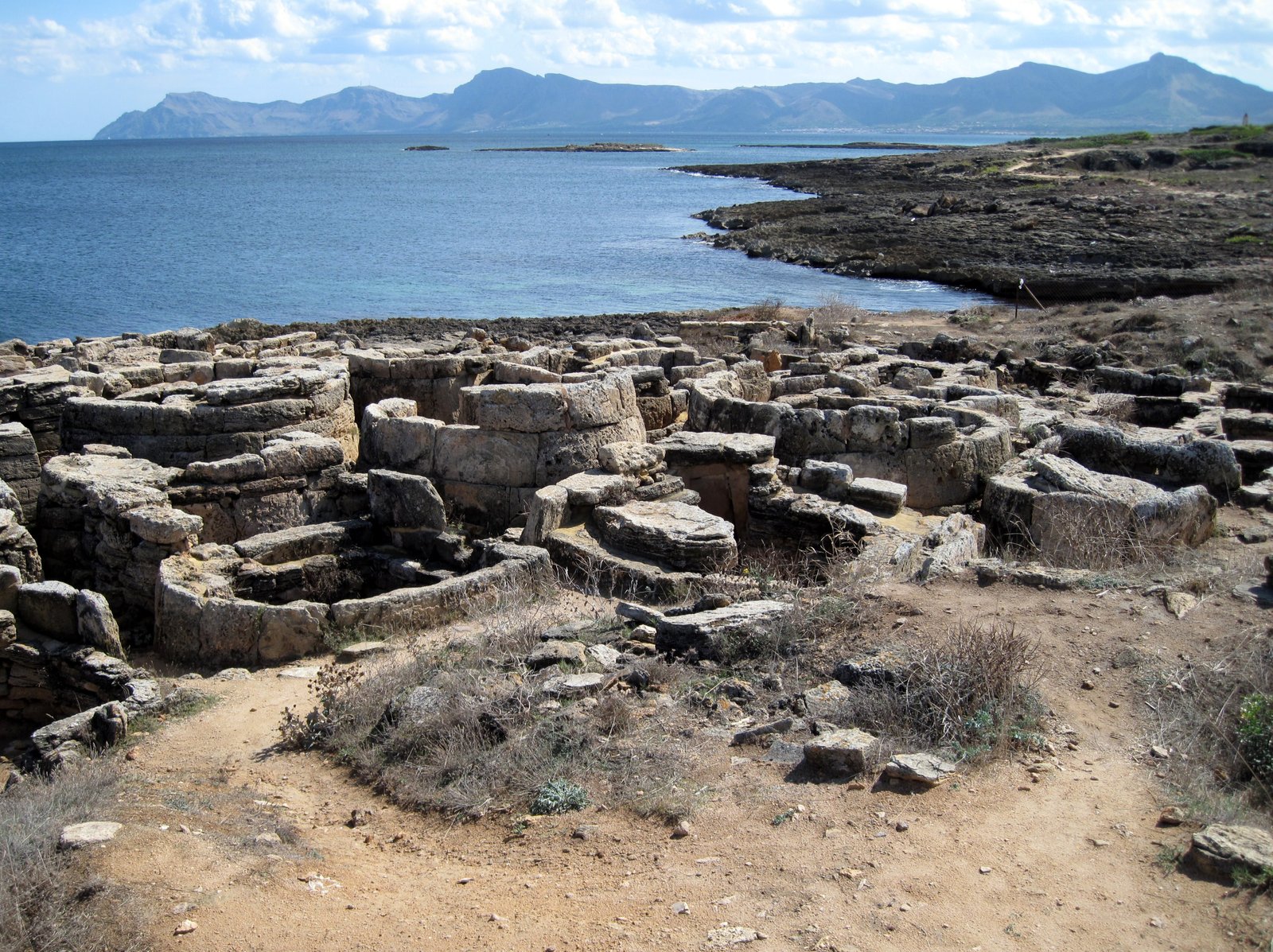
The Necropolis of Son Real is an Iron Age cemetery built directly on the shore of northeast Mallorca, on a low headland known as the Punta dels Fenicis near Can Picafort, in the municipality of Santa Margalida. In use from about the 7th century BC until the Roman conquest of the Balearic Islands in 123 BC, it holds 143 stone tombs shaped like miniature versions of the island’s prehistoric monuments. Archaeologists have recovered the remains of roughly 425 people from it, making Son Real one of the richest and best-preserved windows onto how the indigenous Talayotic society of Mallorca treated its dead.
A Balearic cemetery misnamed “the Phoenician Point”
Son Real sits on a spit of rock the locals call the Punta dels Fenicis, the “Point of the Phoenicians,” and the necropolis is sometimes signposted as the Cementiri dels Fenicis. The name is a historical guess that has not survived scrutiny. Nothing about the graves is Phoenician. They were raised by the native islanders of Mallorca, the people of the Talayotic and post-Talayotic Balearic Iron Age, and the misattribution says more about how nineteenth- and twentieth-century observers reached for a famous Mediterranean seafaring culture to explain a coastal cemetery than it does about who is actually buried here.
The setting is part of the appeal. The tombs are laid out only a few metres from the water on the edge of the Bay of Alcúdia, within what is now the publicly owned Son Real estate and its coastal nature park. Waves have eroded part of the site over the centuries, and a handful of graves have been lost to the sea, which is one reason the cemetery has been repeatedly re-excavated and consolidated rather than dug once and closed.
Who were the Talayotic people who built Son Real?
The Talayotic culture takes its name from the talayot, the drystone tower that dominates settlements across Mallorca and Menorca from the late second millennium BC onward. These communities never left written records of their own, so almost everything known about them comes from their architecture and their graves. They lived in villages of cyclopean stone, herded and farmed, and by the Iron Age were trading with Phoenician, Punic and later Roman merchants who worked the western Mediterranean. Balearic slingers from these islands became famous enough that Carthage and Rome both recruited them as mercenaries.
Son Real belongs to the later end of this world, the centuries when Talayotic society was already in contact with — and under pressure from — the great trading powers. Its graves reproduce, in miniature, the same monumental forms the living used: the boat-shaped naveta and the round and square talayot. To see those full-size structures elsewhere on the islands, compare the towers and dwellings of Torre d’en Galmés on Menorca and the great burial Naveta des Tudons, the finest surviving naveta of all.
Tombs that copy monuments in miniature
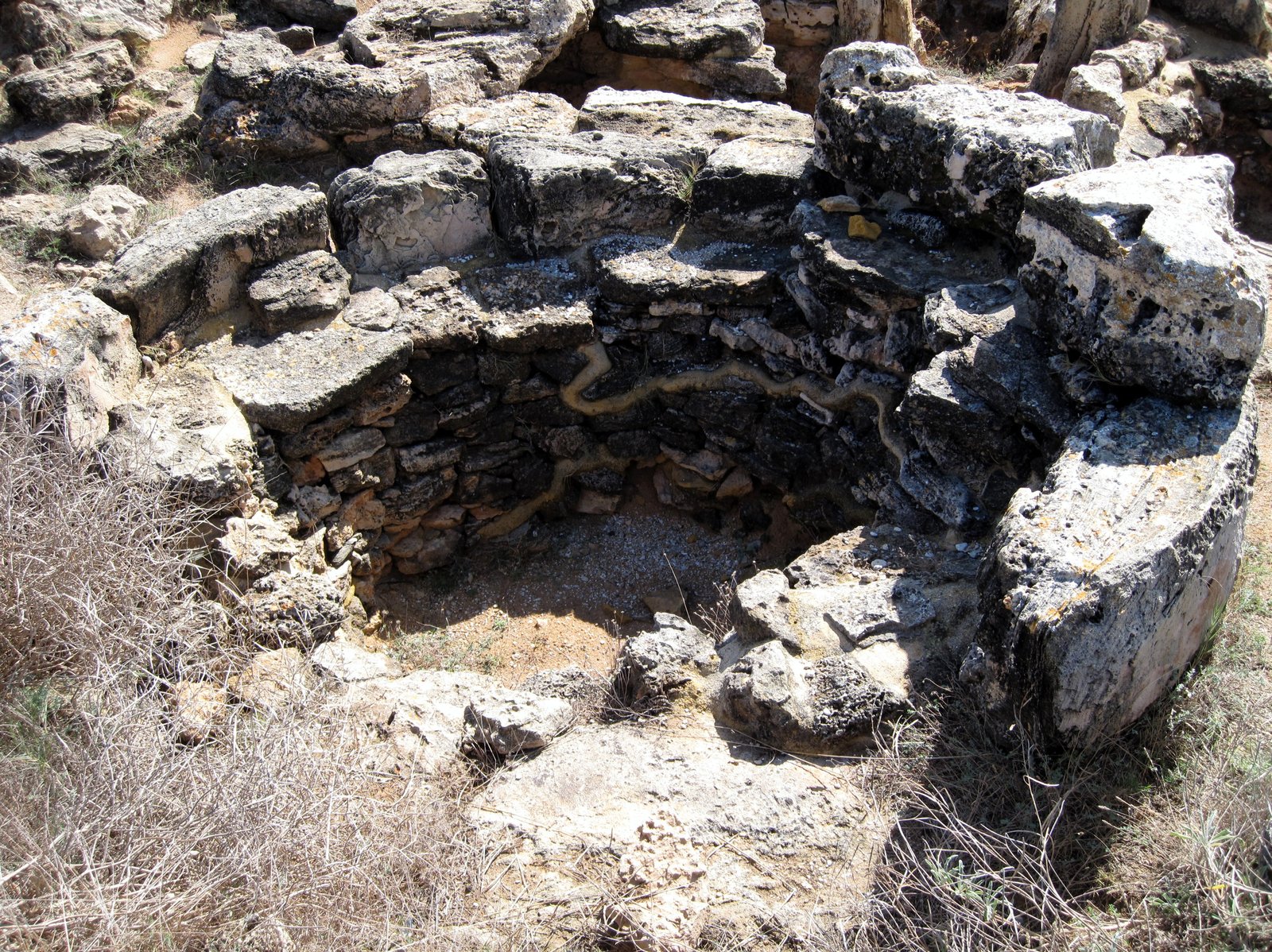
What makes Son Real unusual is that its builders did not carve graves into the rock or dig simple pits. Instead they constructed each tomb above ground out of dressed blocks of marés, the soft local sandstone, stacking the ashlars without mortar in the same drystone tradition as the island’s towers. Each small structure is effectively a scale model of a monument: some are shaped like navetes, with rounded boat-like ends; others are circular or square like talayots. The result is a cemetery that looks like a shrunken Talayotic village, with the architecture of the living rebuilt for the dead.
Bodies, cremation and grave goods
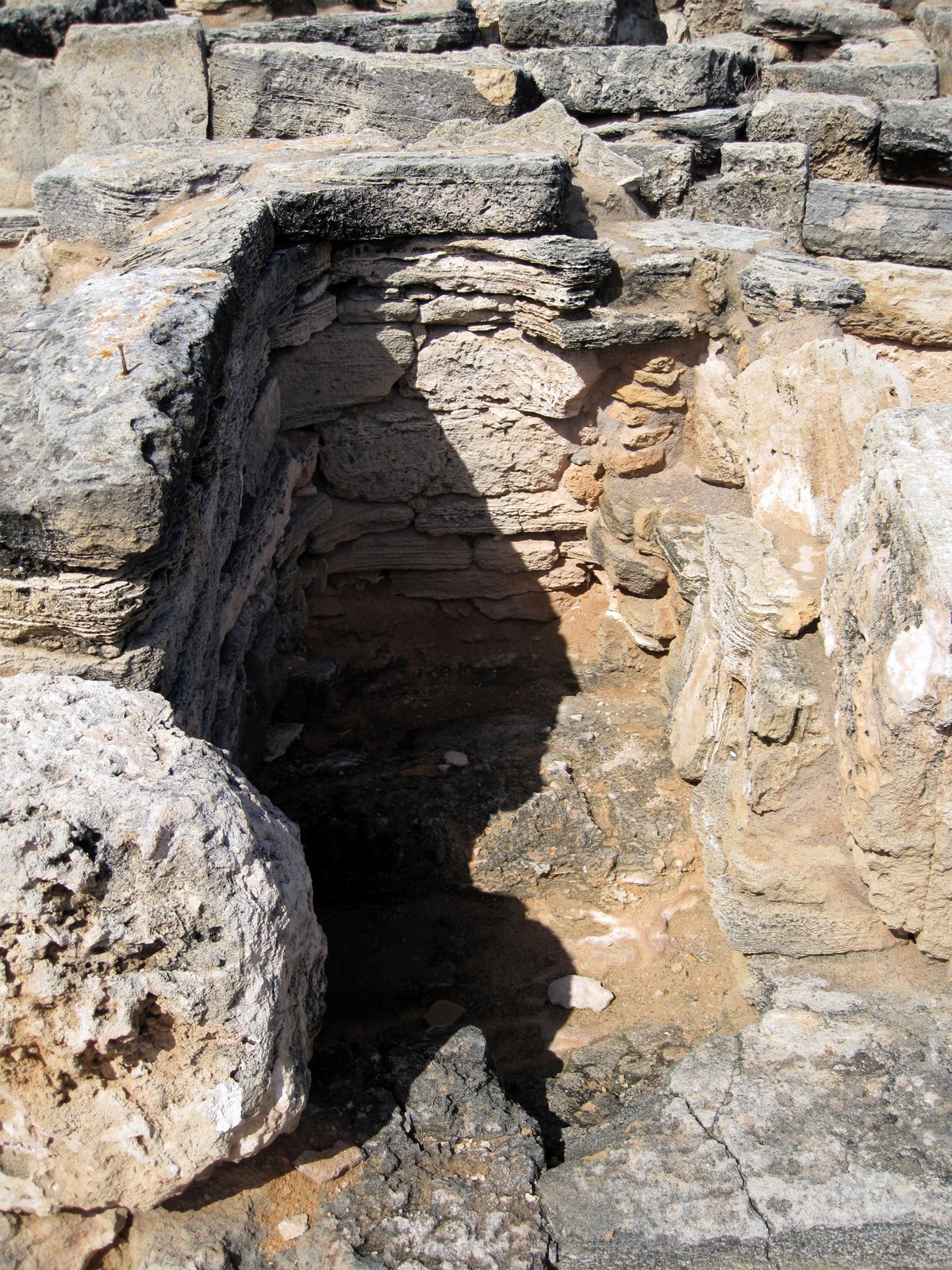
Inside these chambers the dead were usually placed in a contracted, foetal position and then sealed under stone slabs. Some tombs contain two niches. From around the 4th century BC a change appears in the record: alongside inhumation, cremation was increasingly practised, a shift that hints at new ideas about death arriving with Mediterranean contact. The graves were furnished with pottery, iron and bronze objects, glass, worked bone, and personal ornaments, and excavators have logged well over 300 items classed as weapons, jewellery and everyday goods, together with animal bones and seashells left as offerings.
How was Son Real discovered and excavated?
The modern investigation of Son Real began in 1957, not — as older summaries claim — with a vague “1960s” dig. The first campaigns, authorised across 1957, 1958, 1959 and again in 1962, were directed by the Catalan archaeologist Miquel Tarradell and funded by the American William L. Bryant Foundation. That first phase of fieldwork ran until about 1969. A second major phase followed much later, from 1998 into the 2010s, when the site was re-studied and consolidated with modern methods and the offshore graves were re-examined.
Across those campaigns 143 tombs were recorded over an area of roughly 935 square metres, yielding the skeletal remains of about 425 individuals — although erosion and disturbance mean the original number buried was almost certainly higher. Dating rests on the grave goods, on radiocarbon results and on the stratigraphy of the superimposed tombs, which together place the cemetery’s use between roughly the 7th and 2nd centuries BC. It is worth being honest about the limits here: with no texts from the Talayotic islanders themselves, the finer chronology and the meaning of the burial rites are still reconstructed from material evidence alone.
s’Illa des Porros and an elite cemetery by the sea
Son Real does not stand alone. A short way offshore lies the islet of s’Illa des Porros (also written s’Illot des Porros), which carries a second, closely related Iron Age necropolis excavated in the same tradition. The two cemeteries are studied together as a single funerary landscape on this stretch of the Santa Margalida coast, and much of what is understood about Balearic death ritual in this period comes from comparing them.
One striking pattern has fed a long-running interpretation. Studies of the Son Real skeletons found that many show comparatively few signs of heavy physical labour, which has led some researchers to argue that the cemetery was reserved for a ruling or warrior elite rather than the whole community. If so, the “town of the dead” on the Punta dels Fenicis may record not an ordinary population but the select few who were entitled to be buried in these little stone monuments beside the sea. The idea remains a hypothesis, but it fits the care and the imitation-architecture lavished on the graves. For a comparable island cemetery of the same broad world, see the rock-cut tombs of the Necròpolis de Cala Morell on Menorca, and for the ceremonial monuments of the culture, the taulas of Menorca.
Visiting Son Real today
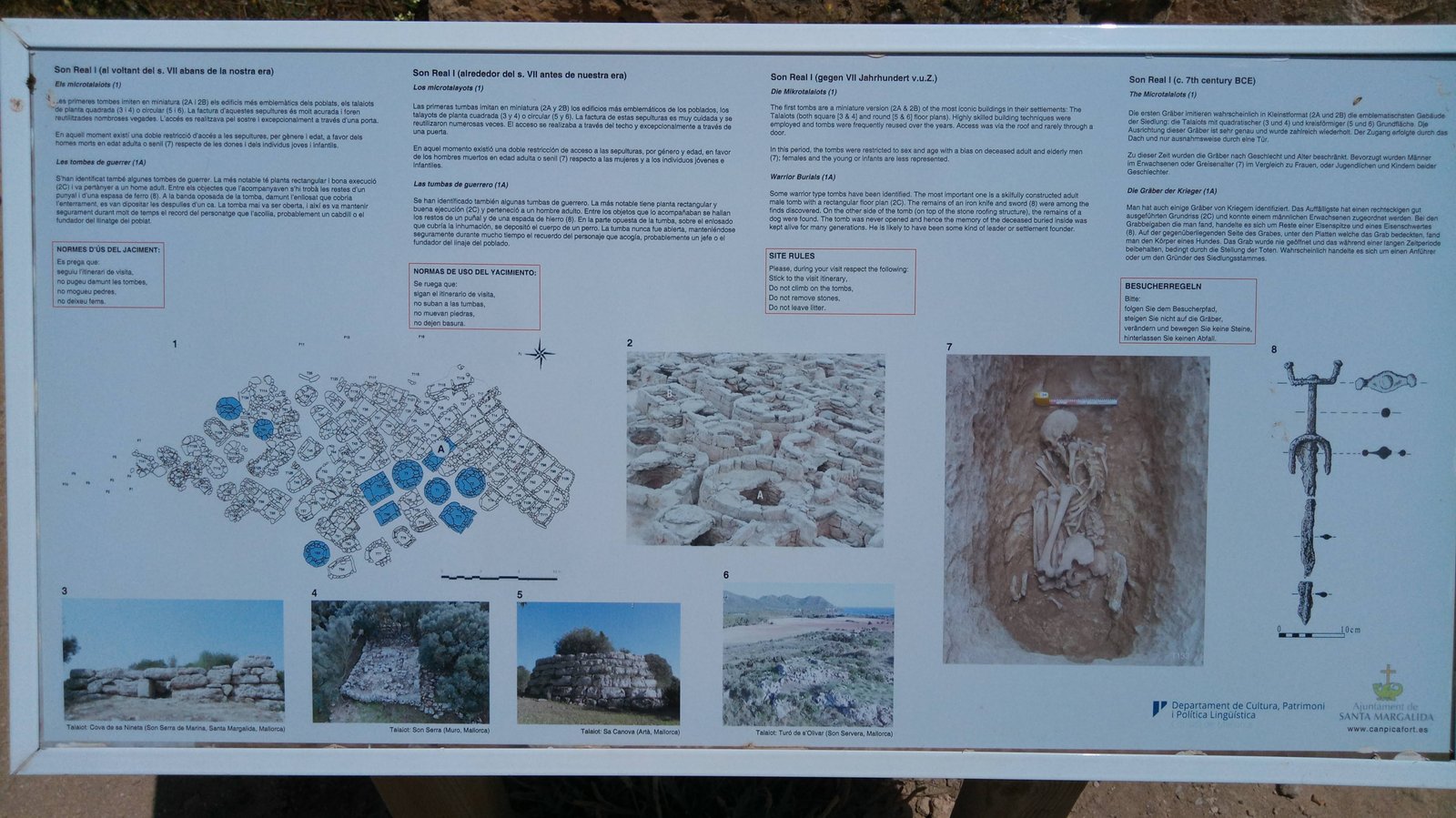
The necropolis is open and free to visit as part of the Son Real public estate, reached by a coastal path from Can Picafort. There is an interpretation centre on the finca, and the graves sit in the open air within the surrounding nature park, so the site functions as an open-air museum where you can walk among the tombs. Because the stone is soft and the setting exposed, visitors are asked to keep to the paths and not climb on the structures. The site is one of several prehistoric places gathered on the wider map of historical places worth seeking out on the island.
Frequently asked questions about Son Real
Is the Necropolis of Son Real really Phoenician?
No. Despite the local name Punta dels Fenicis, or “Point of the Phoenicians,” the cemetery was built and used by the indigenous Talayotic and post-Talayotic people of Mallorca, not by Phoenician colonists. The Phoenician label is a historical misattribution. The graves, the drystone building technique and the miniature Talayotic architecture all belong to the native Balearic Iron Age, roughly the 7th to 2nd centuries BC.
How many people are buried at Son Real?
Excavations have recorded 143 tombs across about 935 square metres and recovered the remains of some 425 individuals. Because coastal erosion has destroyed part of the site and some graves held multiple burials, the original number of people interred was probably higher. The dead were mostly laid out in a foetal position, and from about the 4th century BC cremation was also practised alongside inhumation.
Who excavated Son Real and when?
The first scientific excavations began in 1957 under the Catalan archaeologist Miquel Tarradell, financed by the William L. Bryant Foundation, and continued through campaigns into 1969. A second phase of fieldwork and consolidation followed from 1998 onward, extending the study to the related necropolis on the nearby islet of s’Illa des Porros.
Sources and further reading
- World History Encyclopedia — The Balearic Islands in Antiquity
- World History Encyclopedia — The Iron Age
- Wikipedia — Talaiotic culture
- Wikipedia — Naveta (Balearic tomb form)
- Illes Balears (official tourism) — Necròpolis Punta dels Fenicis, Son Real