The Shamsi Valley is a mountain gorge in the Chuy Region of northern Kyrgyzstan, on the north flank of the Kyrgyz Ala-Too range, and it is the site of one of Central Asia’s richest fourth-to-fifth-century CE burials. In 1958, archaeologists working there opened a catacomb grave and lifted out a mask of hammered gold foil, 20.4 by 15.3 centimetres and weighing just 61.49 grams. It had been laid over the face of a woman buried some fifteen centuries earlier. Around her lay more than 150 objects in gold, silver and bronze: a skull-cap diadem hung with rustling tubes, jade bracelets, an amber-and-garnet medallion of Mediterranean workmanship, and the gilded fittings of a horse harness. The Shamsi Valley is often described in travel writing as a place of forests, waterfalls and legends. Its real claim on history is this burial — a direct physical link between the steppe, the Silk Road and the late Roman world, and one of the most important finds in our Ancient Artifacts archive.

Where the Shamsi Valley Is and Why It Mattered
Shamsi — also transliterated Shamshy — is a gorge on the northern flank of the Kyrgyz Ala-Too range, in the Chuy Region of northern Kyrgyzstan, at roughly 42.64° N, 75.39° E. The mouth of the gorge sits at about 1,700 metres. Reaching it means driving east from Bishkek and turning south at Tokmok towards the village of Kalinovka, a run of roughly 85 to 120 kilometres depending on the route taken.
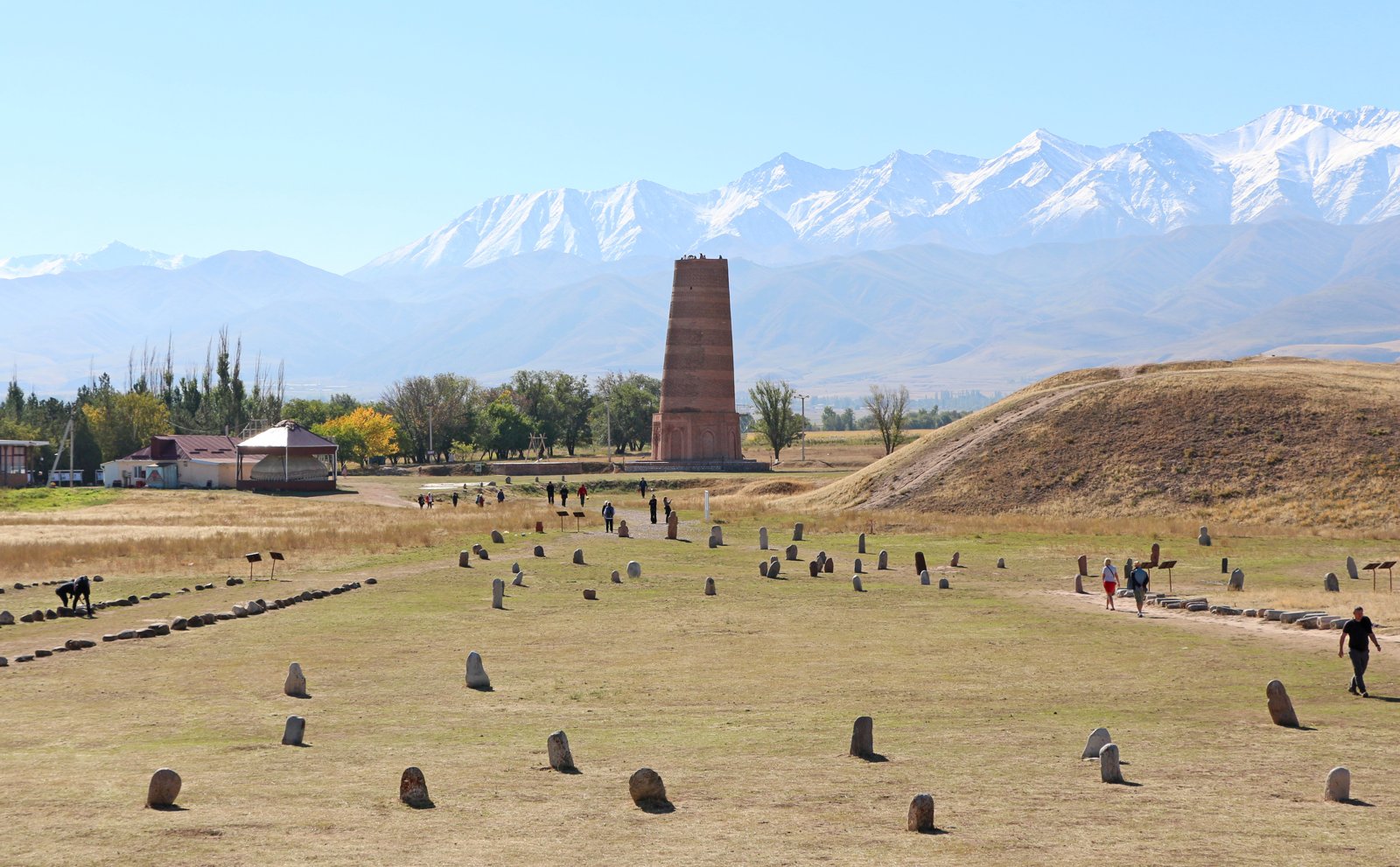
The gorge is not a dead end. It climbs past the mountain lake of Tuyuk-Kel-Tor at 2,725 metres to the Shamsi Pass, above 3,500 metres, which drops over the range into the Kochkor valley. That is the whole point of the place. Shamsi was one of the passages by which caravans crossed the Kyrgyz Ala-Too, tying the lowland Chuy Valley — and the medieval city of Balasagun, whose ruins are marked today by the Burana Tower — to the pastures and routes south of the mountains.
A valley on a pass is a valley where wealth moves through, and occasionally stops. The Shamsi grave is what stopping looks like.
The 1958 Discovery and the So-Called Shamsi Queen
The gold came to light in 1958 during excavations in the gorge. A second expedition, mounted by the Academy of Sciences in 1960, recovered further gold and jade ornaments along with ceramic vessels. The catacomb burials of the Shamsi gorge were documented by the Kyrgyz archaeologists P. N. Kozhemyako and I. K. Kozhomberdiev, whose field report was eventually published in 2015 in volume two of Archaeology of Central Asia: Archival Materials (Samarkand), pages 130–157.
The assemblage — the mask, the diadem, the imported medallion, the horse gear — indicates a woman of very high rank, and she has become known informally as the “Shamsi queen.” That title is a modern convenience, not a recovered fact. No inscription names her, and nothing in the grave states her office. What the objects do establish is that she was buried with the full apparatus of steppe aristocracy at a moment when the Hunnic confederations were breaking apart and new elites were forming across Eurasia. The French archaeologist Michel Kazanski has placed Shamsi in exactly that frame, grouping it with the Morskoy Chulek and Arzhan-Buguzun burials as evidence of post-Hunnic nomadic migration and a shared “princely” material culture (Kazanski 2020, Stratum plus).
What the Gold Mask Actually Looks Like
Foil, solder and carnelian eyes
The mask is the find that carries the site. It is made from the thinnest gold foil, measures 20.4 × 15.3 cm, and weighs 61.49 grams — lighter than a chicken egg. The nose is a separate sheet of gold soldered onto the face. Each eye is built from gold tape soldered on edge to form a rim, with an oval carnelian set in the centre as the pupil; some accounts describe the stones as garnet, and the two identifications appear in different published descriptions of the same object.
The tree-of-life tattoo
The most striking feature is not the metal but the marking. Across the cheeks and down the nose runs a design of stylised trees, punched into the foil from the reverse with a pointed tool and picked out on the front with white pigment. Two trees cover the cheeks; a third runs over the nose and up the centre of the forehead. Published descriptions read this as an imitation tattoo — the gold face wearing, permanently, the pattern the living face may have worn in ink. The motif is usually interpreted as a tree of life.
Face coverings of gold foil are a recurring habit across a startling span of the ancient world, from the shaft graves of Bronze Age Greece to the high Himalaya, and readers who know the death masks of Mycenae will recognise the impulse. Shamsi sits inside a Central Asian and Himalayan cluster of such masks rather than in the Aegean tradition.
The Medallion That Came from the Mediterranean
The single most informative object in the grave may be the smallest. A gold medallion 3.7 × 3.2 cm and weighing 65.52 grams holds a female bust carved in amber, framed by a setting inlaid with garnets, with hinged side elements terminating in loops and decorated with carved leaf-shaped garnet cells. Whether it was worn as a pectoral, part of a necklace or an element of a headdress is not settled.
Its style is. Specialists assign the piece to the Late Roman garnet-inlay tradition classified as Style B by Noel Adams, and attribute it to a Mediterranean or Near Eastern workshop. Anna Mastykova has placed it in a comparative series alongside inlaid objects from Hatra in Iraq, Armaziskhevi in Georgia and Șimleu Silvaniei in Romania (Mastykova 2020, Slovenská archeológia). An ornament made two or three thousand kilometres to the west ended up on the body of a woman buried at the foot of a Tien Shan pass. The Silk Road is often discussed in the abstract; this is what it looks like in a grave.
The rest of the assemblage keeps the same company. The diadem is shaped like a skull-cap, made of gold with silver and amber inlay, hung with tubes that rattled as the wearer moved; it is 15–17 cm across and weighs only 60 grams. On-braid pendants ended in gold spheres 2.3 and 2.5 cm in diameter. Temporal pendants and harness fittings were inlaid with glass, amber and carnelian, though many of the inlays are now lost. Jade bracelets and gold rings complete the set. Most of the material is held by the State Historical Museum of Kyrgyzstan in Bishkek.
Are There Really Petroglyphs in the Shamsi Valley?
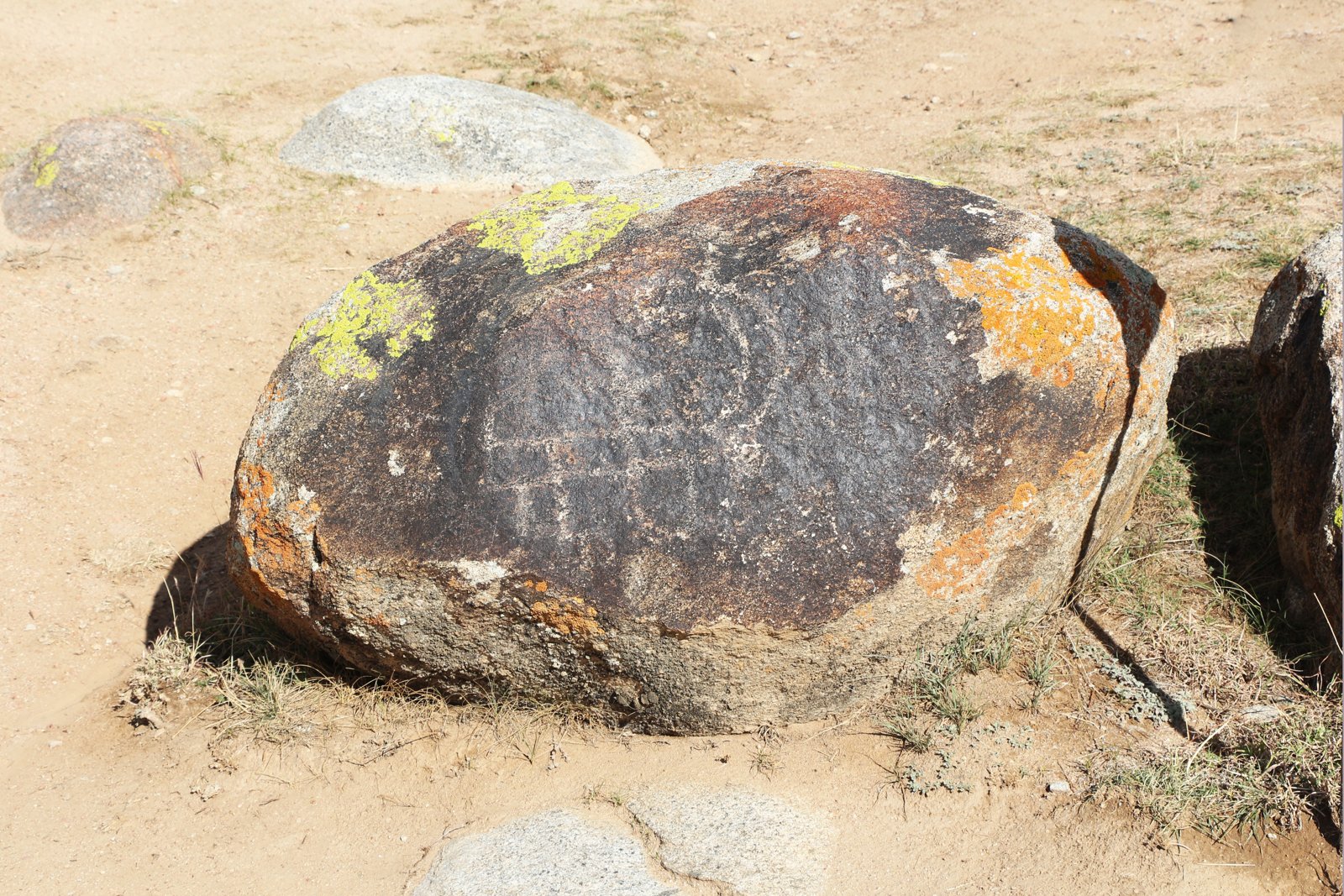
This question deserves a direct answer, because the Shamsi Valley is frequently listed online among Kyrgyzstan’s rock-art localities and the claim is difficult to source. There is no well-documented, published petroglyph corpus at Shamsi comparable to the recorded sites elsewhere in the country. Casual carvings on rock faces are common throughout the Tien Shan and may well exist in the gorge, but no scholarly survey establishing a dated Shamsi rock-art assemblage appears in the accessible literature. Claims that the gorge holds Bronze Age solar or lunar symbols should be treated as unverified.
Kyrgyzstan’s genuinely documented rock art lies elsewhere: at Saimaluu-Tash in Jalal-Abad province, with a corpus running into the tens of thousands of images; on the northern shore of Lake Issyk-Kul at Cholpon-Ata; in the Talas valley; and across the border at Tamgaly Tas. Those sites carry the Bronze Age, Saka and Turkic sequences that are sometimes loosely attributed to Shamsi. Shamsi’s own contribution to the record is a burial, not a rock face — and the burial is the more remarkable find.
The Legend of Princess Shamshi
Local tradition holds that the mask belonged to a princess or queen named Shamshi, and that the gorge carries her name. It is a tidy story and an old one, repeated in Kyrgyz guidebooks and by residents of the valley. It is also a story, and worth separating from the archaeology.
What is documented is a high-status female burial with imported goods. What is folklore is the name, the title and the biography. The two have grown together because the find is spectacular and because a place with a name invites an explanation for it. The honest position is that a wealthy woman was buried at Shamsi in the fourth or fifth century, that we do not know who she was, and that the legend postdates the grave by a very long time.
Visiting the Shamsi Gorge Today
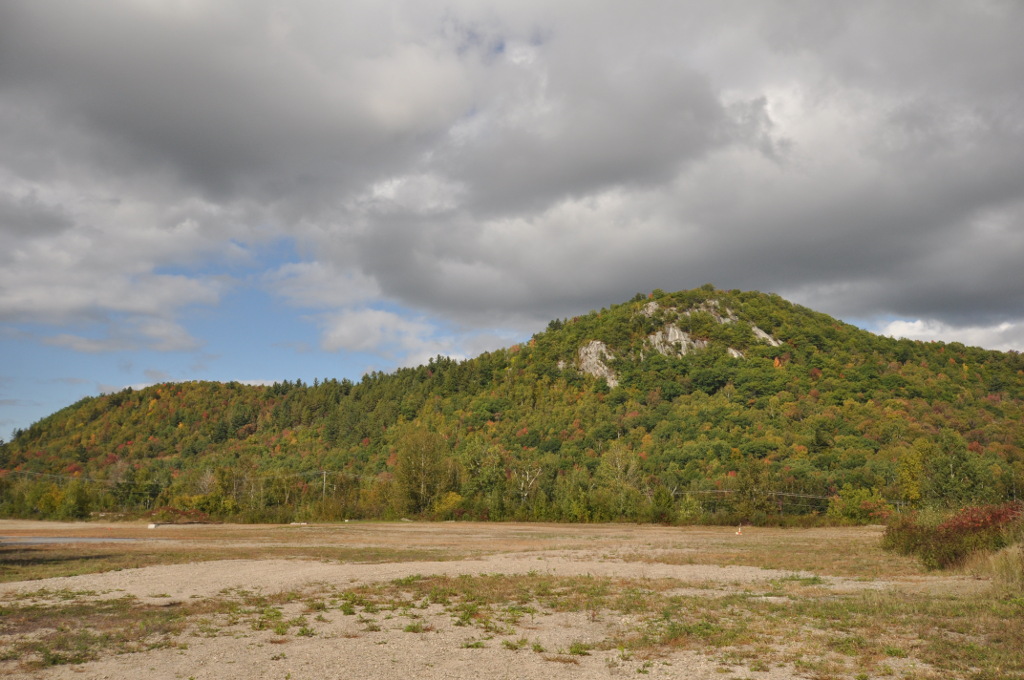
The gorge is a nature reserve and a walking destination rather than an excavated site with visitor infrastructure. Entry is free, and there is no public transport into the valley; visitors typically reach Kalinovka by marshrutka or shared taxi from Bishkek via Tokmok and continue by arranged vehicle. The slopes carry fir and pine forest and support snow leopard, Turkestan lynx, wolf, ibex and argali, and the valley’s herb-rich meadows produce a locally prized honey.
One curiosity survives from a very different era: a house built in the gorge in 1968 to accommodate the Shah of Iran, now repurposed as a wildlife protection and ranger training centre. The gold, however, is not in the valley. To see the mask, the diadem and the medallion, you go to the State Historical Museum in Bishkek — an hour and a half away, and several centuries removed from the pass that made the burial possible.
Why the Shamsi Burial Still Matters
Central Asia in the fourth and fifth centuries CE is a thinly documented period reconstructed largely from graves. Shamsi is one of the best of those graves. It shows a mountain valley that was not peripheral but connected — to Mediterranean workshops, to steppe elites reorganising after the Hunnic collapse, to a route running from the Chuy plain to Kochkor and onward. It shows a burial rite in which a face was covered in gold and marked with trees, a practice with parallels stretching to Mustang in Nepal. And it shows how quickly a real discovery can be overwritten by a convenient legend, and by second-hand claims about carvings that nobody has published.
The mask weighs sixty-one grams. Almost everything we know about who wore it, we know from that.
Frequently Asked Questions
When was the Shamsi gold mask discovered?
It was found in 1958 during excavations in the Shamsi gorge in the Chuy region of Kyrgyzstan, with a further Academy of Sciences expedition in 1960 recovering additional gold and jade ornaments and ceramic vessels. The mask and the associated grave goods date to the fourth to fifth centuries CE.
What was found alongside the mask?
More than 150 objects in gold, silver and bronze, including a gold skull-cap diadem weighing about 60 grams, an amber-and-garnet medallion of Late Roman workmanship, on-braid and temporal pendants, gold rings, jade bracelets and decorated horse-harness fittings.
Where can the Shamsi treasure be seen?
The principal objects are held by the State Historical Museum of Kyrgyzstan in Bishkek, which has displayed them in exhibitions of the country’s archaeological gold.
Sources and Further Reading
- M. Kazanski, “Morskoy Chulek – Shamsi – Arzhan Buguzun,” Stratum plus (2020), 55–72
- A. Mastykova, Slovenská archeológia LXVIII/1 (2020), 69–81 — Style B garnet inlay comparanda
- Chuy Region, Kyrgyzstan — geographic and administrative overview
- Balasagun — the medieval Chuy Valley city linked by the Shamsi route
- World History Encyclopedia: the Silk Road

Neural Pathways is a collective of seasoned experts and researchers with a profound passion for unraveling the enigmas of ancient history and artifacts. With a wealth of combined experience spanning decades, Neural Pathways has established itself as a leading voice in the realm of archaeological exploration and interpretation.
.jpg)

