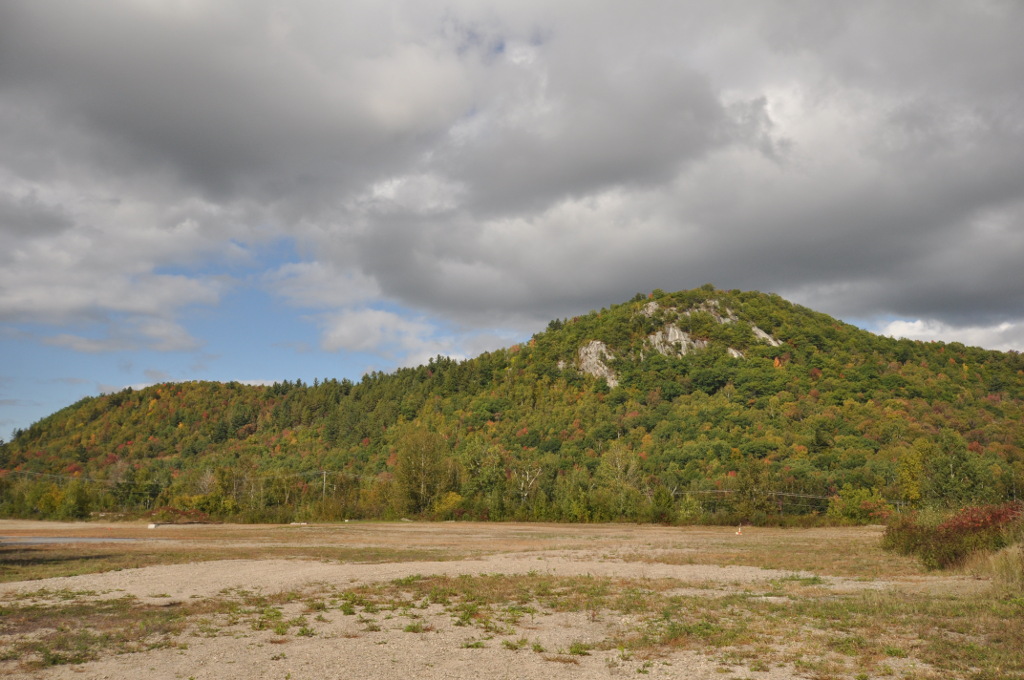
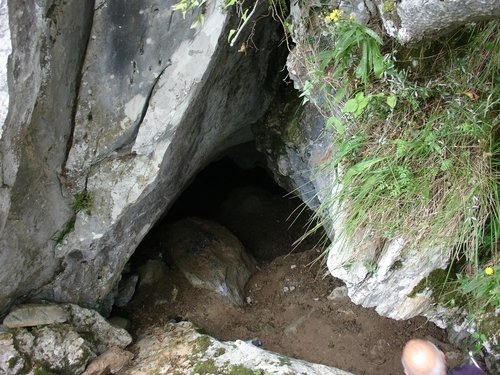
Praileaitz Cave is a small Upper Paleolithic cave in Sakoneta, Deba, in the Basque province of Gipuzkoa, northern Spain. About 15,500 years ago, in the Lower Magdalenian, hunter-gatherers left inside it 29 perforated pendants — including a necklace of fourteen matched pieces — that rank among the finest personal ornaments known from Ice Age Europe. Discovered only in 1983 and excavated from the turn of the 21st century, the cave has since been read as a Magdalenian sanctuary rather than an ordinary living site.
Why does Praileaitz Cave matter?
Most Paleolithic caves are read as shelters — places where people slept, cooked and knapped flint. Praileaitz I is different. Its Magdalenian layers are thin and the everyday debris is sparse, yet the cave produced a dense concentration of decorated stone and bone ornaments, blocks of red ochre and other objects that point to symbolic rather than domestic use. The excavators, from the Deba-based Aranzadi Science Society, concluded that around 15,500 years ago the cave functioned as a ritual space — a rare glimpse of Ice Age belief on the Cantabrian coast, and the reason the site sits alongside better-known caves such as the cave of Altamira in the story of Magdalenian Iberia.
Discovery and Excavation
Praileaitz — Basque for “rock of the monk” — was found in 1983 by two local cavers, Mikel Sasieta and Juan Arruabarrena, on the flank of the Sasiola gorge near the mouth of the Deba river. It sat largely unstudied for more than fifteen years. Systematic excavation began in 2000 under the direction of the archaeologist Xabier Peñalver, working with Sonia San José and José Antonio Mujika-Alustiza for the Aranzadi Science Society. That campaign, running through the 2000s, established the cave’s full sequence and recovered the ornaments that made it famous.
Correcting the record on who dug the cave
Earlier summaries of Praileaitz sometimes credit the discovery to the year 2000 and place the excavation under José Miguel de Barandiarán, the pioneering Basque prehistorian. Both claims are wrong: the cave was located in 1983, and Barandiarán — who died in 1991 — had no part in the modern dig. The excavation that revealed the pendants was led by Peñalver’s Aranzadi team from 2000 onward. The distinction matters, because it is that team’s stratigraphy and dating that underpin the sanctuary interpretation.
The deposits show short, repeated visits across several periods — Gravettian, Solutrean, Magdalenian and Epipaleolithic — rather than one long occupation. The cave was never densely lived in. Instead people came, left ornaments and ochre, and moved on, which is part of why the Magdalenian material reads as deliberate deposition rather than everyday loss.

What made Praileaitz a Magdalenian sanctuary?
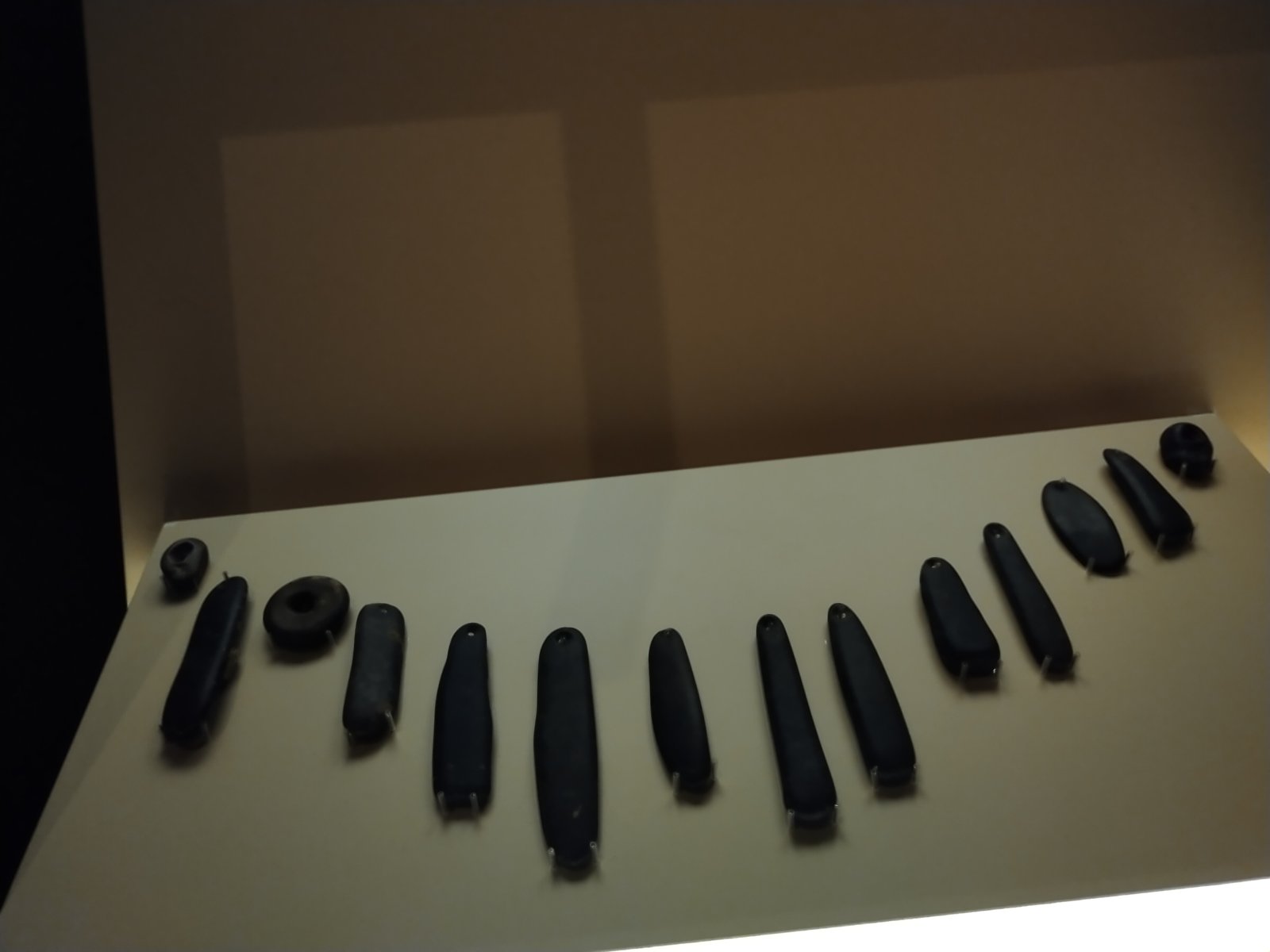
The heart of the find is a collection of 29 perforated pendants — worked mostly from stone, with some in bone — many of them engraved with fine incised lines. They were not scattered at random. The excavators recovered them in discrete sets in the vestibule and the first inner chamber, as if placed or hung deliberately. Alongside the pendants lay pieces of red ochre used as crayons, a decorated antler baton and small engraved plaques, including one abstract pebble that the researchers compared to the schematic Magdalenian tradition of Venus imagery found elsewhere in Paleolithic Europe.
Taken together — the concentration of ornaments, the ochre, the sparse domestic waste and the cave’s own dramatic, narrow form — the assemblage led Aranzadi to describe Praileaitz as a “rock sanctuary.” It is one of the clearest cases in the Franco-Cantabrian region of a cave used primarily for ritual rather than shelter, comparable in significance, if not in scale, to the painted galleries of the cave of El Castillo.
The necklace of fourteen pendants
The single most striking object is a necklace made of fourteen pendants found arranged in order, as if the string had decayed and left the beads in sequence. Each element was shaped and perforated to hang, and the set forms one of the most complete pieces of Magdalenian portable art known anywhere. The largest pendants and the necklace pieces are now conserved and displayed at the San Telmo Museum in Donostia-San Sebastián, where visitors can see the ornaments that turned a small Basque cave into a landmark of Ice Age archaeology.
The red-dot cave paintings
In early August 2006, during the Aranzadi excavation, researchers identified something the earlier surveys had missed: Paleolithic paintings on the cave walls. They are non-figurative — groups of red dots, some isolated and some strung into short series — rather than the animals seen at Altamira or Tito Bustillo. Dated on stylistic and stratigraphic grounds to around 15,500 years ago, the same horizon as the pendants, the dots reinforced the reading of the whole cave as a marked, meaningful place. Abstract red-dot panels of this kind are known from other Cantabrian caves, including Tito Bustillo cave, but their pairing with such a rich ornament deposit is what makes Praileaitz unusual.
The fight to save the cave from the quarry
Praileaitz sits directly beside the Sasiola quarry, and quarrying vibration and dust posed a real threat to both the deposits and the fragile paintings. The 2006 discovery of the wall art sharpened a conservation battle already under way. On 24 May 2007 the Aranzadi Science Society formally proposed a wide protective zone around the cave. On 17 July 2007 the Basque Government adopted a decree establishing a 50-metre protective area around the “rock sanctuary” — a measure Aranzadi publicly judged insufficient given the scale of nearby extraction. The campaign drew in local residents, environmental groups and scientists, and quarrying near the cave was ultimately curtailed, though the episode remains a textbook case of heritage weighed against industry.

Praileaitz in the Franco-Cantabrian world
Praileaitz belongs to a dense band of Upper Paleolithic sites along the Bay of Biscay, the Franco-Cantabrian region that produced Europe’s greatest concentration of Ice Age art. Its Magdalenian occupants shared tools, ornaments and symbolic habits with the people who painted the cave of Altxerri nearby and who left the engraved plaquettes and rich bone industry of Las Caldas cave in Asturias. Seen against that background, Praileaitz is not an isolated curiosity but a specialised node in a wider network — a place set apart, it seems, for ritual rather than daily life. You can explore more sites like it through our historical places archive.
Frequently asked questions
Where is Praileaitz Cave?
Praileaitz I is in Sakoneta, in the municipality of Deba, Gipuzkoa, in the Basque Country of northern Spain, on the flank of the Sasiola gorge near the Deba river and the Bay of Biscay. The name is Basque for “rock of the monk.” Because of its fragility and its status as a protected rock sanctuary, the cave itself is closed to general visitors, but its most important finds are displayed at the San Telmo Museum in Donostia-San Sebastián.
What was found inside Praileaitz Cave?
The cave produced 29 perforated Magdalenian pendants of stone and bone, many engraved, recovered in deliberate sets — including a necklace of fourteen pieces found still in sequence. Excavators also found blocks of red ochre, a decorated antler baton, engraved plaques and, from August 2006, non-figurative wall paintings made of red dots. The combination of ornaments, ochre and art with very little domestic debris is why the cave is interpreted as a ritual sanctuary.
How old is Praileaitz Cave?
The key finds date to the Lower Magdalenian, around 15,500 years ago, near the end of the last Ice Age. The cave was visited more briefly in several other periods too — the Gravettian, Solutrean and Epipaleolithic — but it was during the Magdalenian that the pendants were deposited and the red-dot paintings were made.
Sources and further reading
- Praileaitz Cave — Wikipedia
- Prehistoric Art — World History Encyclopedia
- The Paleolithic Age — World History Encyclopedia
- The Magdalenian culture — Wikipedia
- Prehistory of the Basque Coast Geopark — Geoparkea