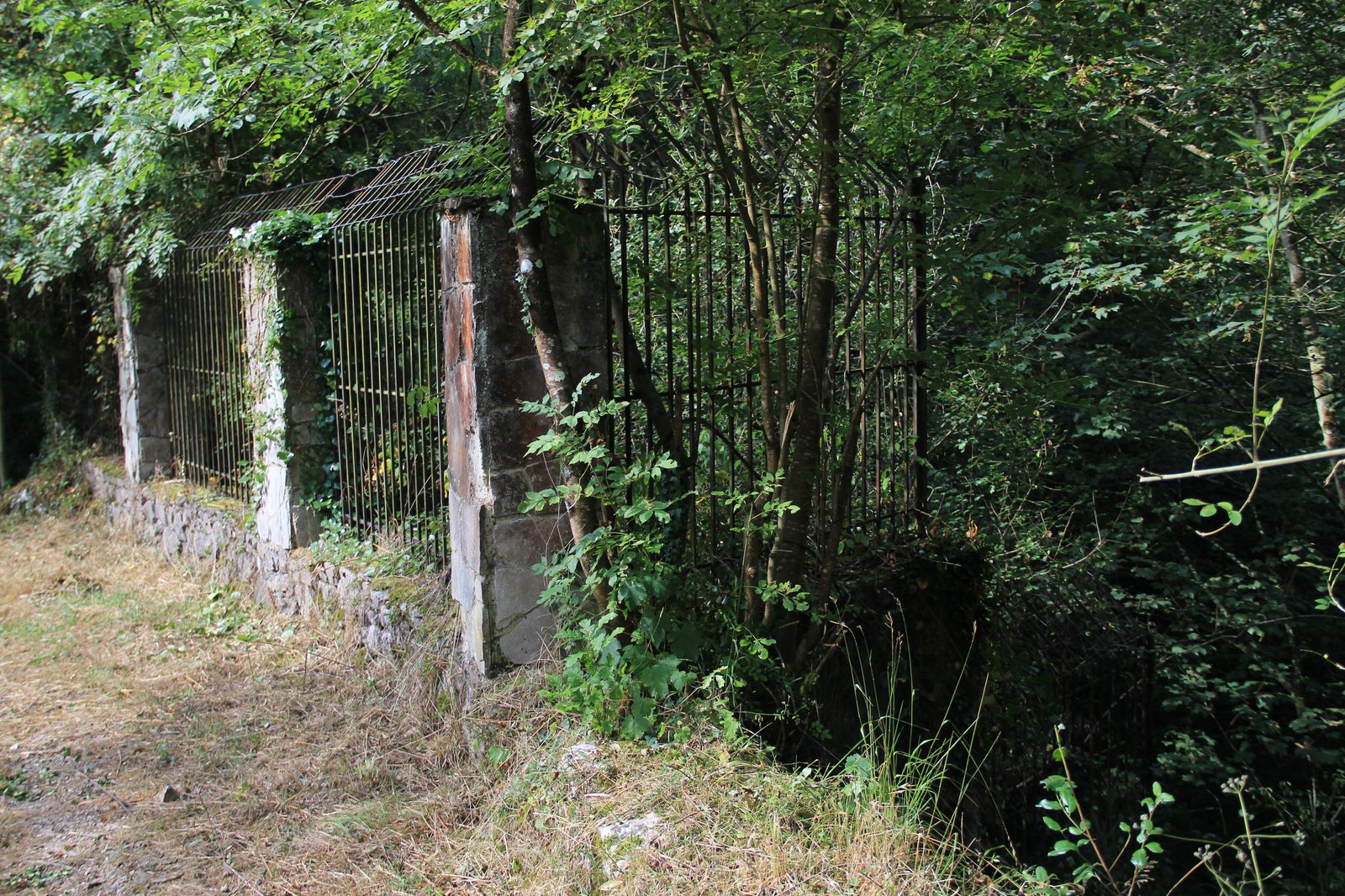
Las Caldas is an Upper Paleolithic cave in the Nalón valley at Priorio, on the western edge of Oviedo in Asturias, northern Spain. First excavated scientifically in the late 20th century by the prehistorian María Soledad Corchón, it preserves one of Western Europe’s richest Solutrean and Magdalenian sequences. Its fame rests on an exceptional body of portable art — above all the Venus of Las Caldas, an antler carving that joins the head of an ibex to the legs and genitals of a woman.
Where Is Las Caldas Cave?
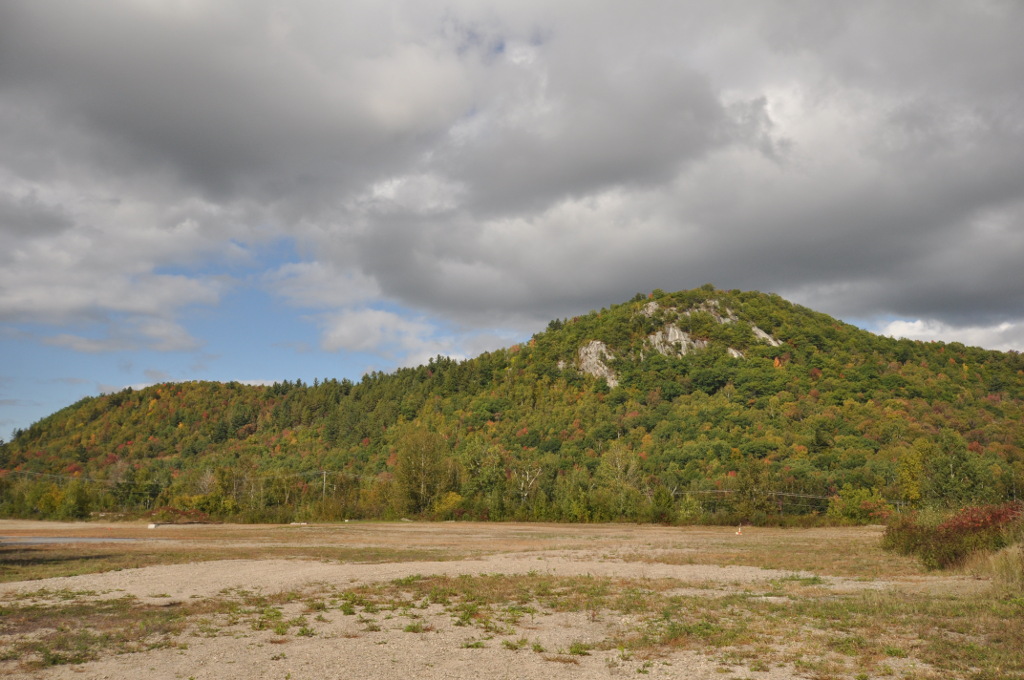
The cave opens in limestone in the Nalón valley near the spa hamlet of Las Caldas, a few kilometres south-west of Oviedo. It is about 600 metres long, has three entrances, and its main gallery stands roughly five metres high above a subterranean river. The cavity has little geological drama, but it more than compensates archaeologically: the excavations here rank among the most important Upper Paleolithic sites in Asturias.
Las Caldas is protected as the Reserva Natural Parcial de la Cueva de las Caldas, a 45-hectare reserve, and shelters colonies of mouse-eared, greater and lesser horseshoe, and Natterer’s bats. To safeguard both the bats and the deposits, the cave is gated and closed to visitors.
A valley of Ice Age caves
Las Caldas does not stand alone. It anchors a cluster of decorated and inhabited caves at the western end of the Cantabrian Paleolithic region, in and around the Nalón corridor. Its finds sit comfortably beside those of nearby Asturian Tito Bustillo cave and the great Cantabrian sanctuaries of El Castillo and Altamira, whose Solutrean and Magdalenian layers tell a parallel story.
A Long Ice Age Sequence: Solutrean and Magdalenian
Hunter-gatherers returned to Las Caldas again and again across two great Upper Paleolithic cultures. The Solutrean occupations fall roughly between 26,100 and 20,300 years ago (calibrated), while the Magdalenian layers span roughly 18,500 to 14,300 years ago. The Solutrean part of the sequence is one of the most complete in western Europe, and Las Caldas level 15 records one of the earliest Solutrean occupations known in the Cantabrian region.
What makes the site so valuable is preservation: Corchón’s team recovered intact occupation floors, with tools, art and food debris lying much as they were left, rather than the churned deposits common on older digs.
The origin-of-the-Magdalenian debate
Because Las Caldas captures the moment when one culture gave way to the next, it sits at the centre of a long argument about how the Magdalenian began. Leaf-shaped, Solutrean-style points persist into levels dated around 20,000 to 19,000 years ago, hinting at local continuity rather than a sudden replacement. Corchón’s work on Las Caldas and the neighbouring Nalón sites is regularly cited in that unresolved debate.
Who Excavated Las Caldas?
The scientific study of the cave is the life’s work of María Soledad Corchón Rodríguez of the University of Salamanca, who began systematic excavations in 1980 and published the first campaign in the Ministry of Culture’s Excavaciones Arqueológicas en España series in 1981. Multi-volume monographs on the Solutrean and Magdalenian occupations followed over the next four decades.
One point is worth correcting: popular write-ups sometimes credit an early-twentieth-century “discovery” or a 1916–1922 survey of the cave, but the documented, published excavation record is Corchón’s. Where a claim cannot be traced to that record, we have left it out.
The Venus of Las Caldas
The cave’s signature object is a carved antler rod about 198 millimetres long, recovered from the basal Magdalenian (level VII) and dated to roughly 13,400 years ago. It is a deliberate hybrid: the head is that of an ibex, while the trunk, hips and engraved genitalia are unmistakably those of a human woman. The torso takes up about half the total height, with marked shoulders and carefully modelled proportions.
Scholars disagree about what it was for. Some read it as a Venus figurine — a portable image of the female body of the kind found across Ice Age Europe. Others argue the rod is a decorated spear-thrower (atlatl), the hook lost, in which case the “Venus” is really a weapon’s ornament. It may have been designed to be both. The same Magdalenian artists left two stylised, overlapping female profiles on a second engraved rod and a stone plaque bearing a woman’s profile — a small but insistent interest in the human figure.
Portable Art, Amber and Ornaments
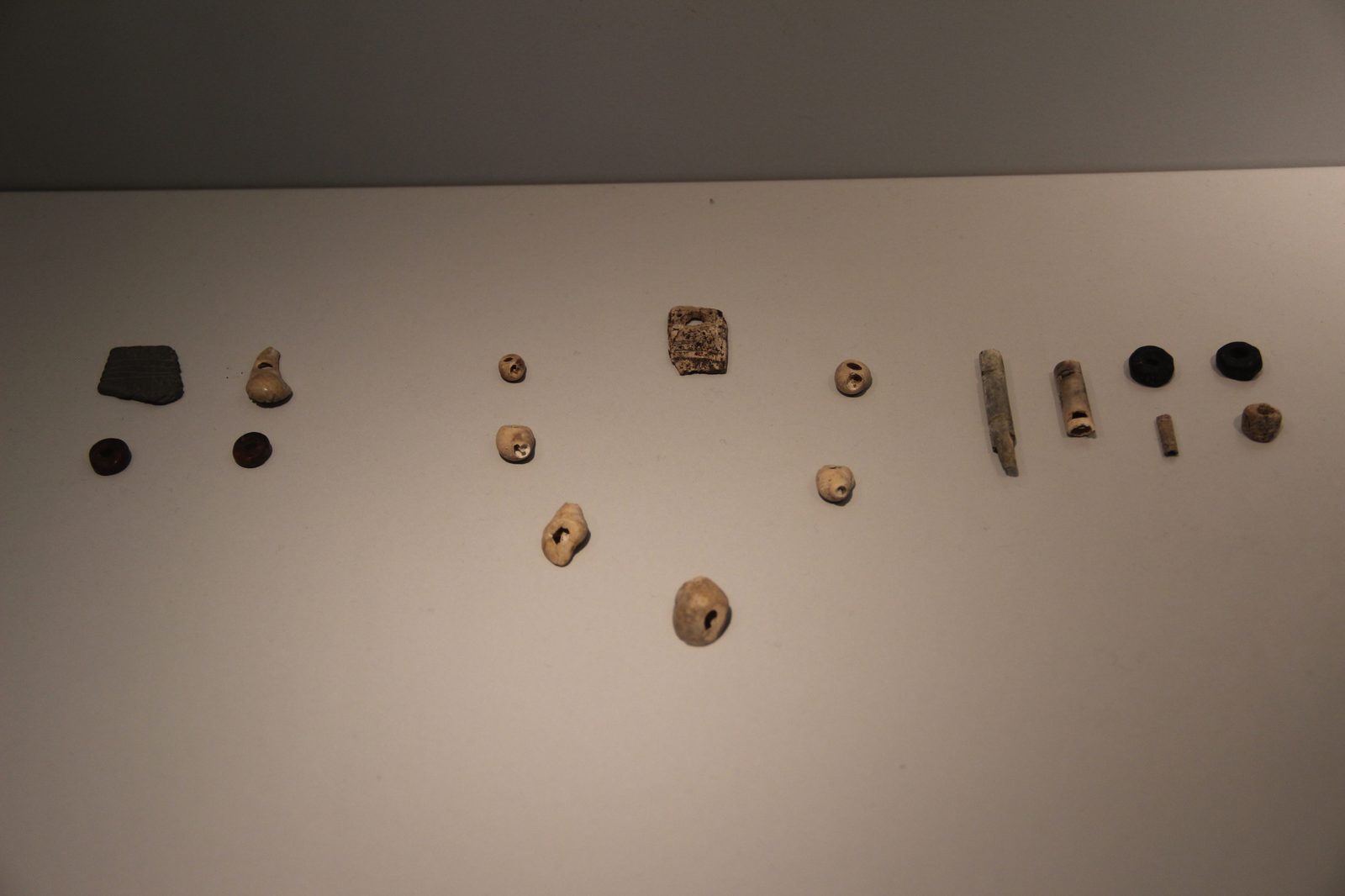
Beyond the Venus, Las Caldas produced one of the great collections of Magdalenian portable art in Iberia. More than 400 engraved sandstone plaquettes carry figurative and linear motifs, some washed in red ochre, depicting anthropomorphs, bison, mammoth, reindeer, woolly rhinoceros and chamois. Standout pieces include a whale and two bison engraved on a sperm-whale tooth, a horse bone carved with bison heads, engraved horse teeth, and — a Solutrean showpiece — a pristine, unused laurel-leaf point knapped from rock crystal.
The cave also rewrote a small chapter of Ice Age trade. Amber ornaments from its Magdalenian layers were long assumed to be Baltic imports carried the length of Europe, as at some other Cantabrian and Basque caves. Geochemical analysis showed the Las Caldas amber was instead local, gathered from Asturian sources — a reminder that not every exotic-looking material travelled far. Beads and pendants of pierced teeth and shell round out a rich record of personal adornment.
Tools, Hunting and a Cold Steppe Landscape
The everyday toolkit is just as informative. The bone and antler industry includes eyed sewing needles, shaft-straighteners and projectile points, alongside abundant worked flint. Together with the tailored clothing implied by the needles, these tools describe communities well equipped for a hard climate.
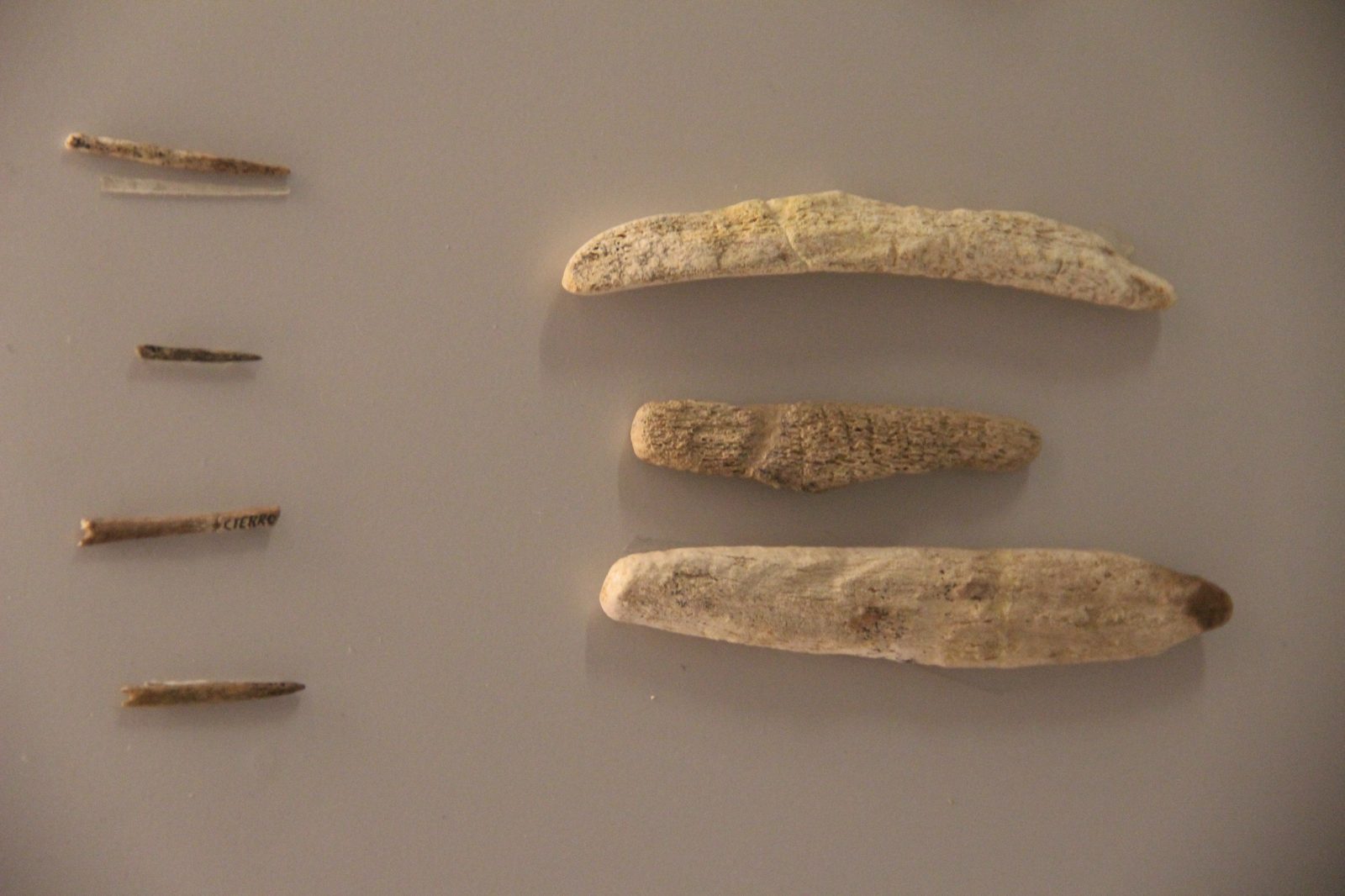
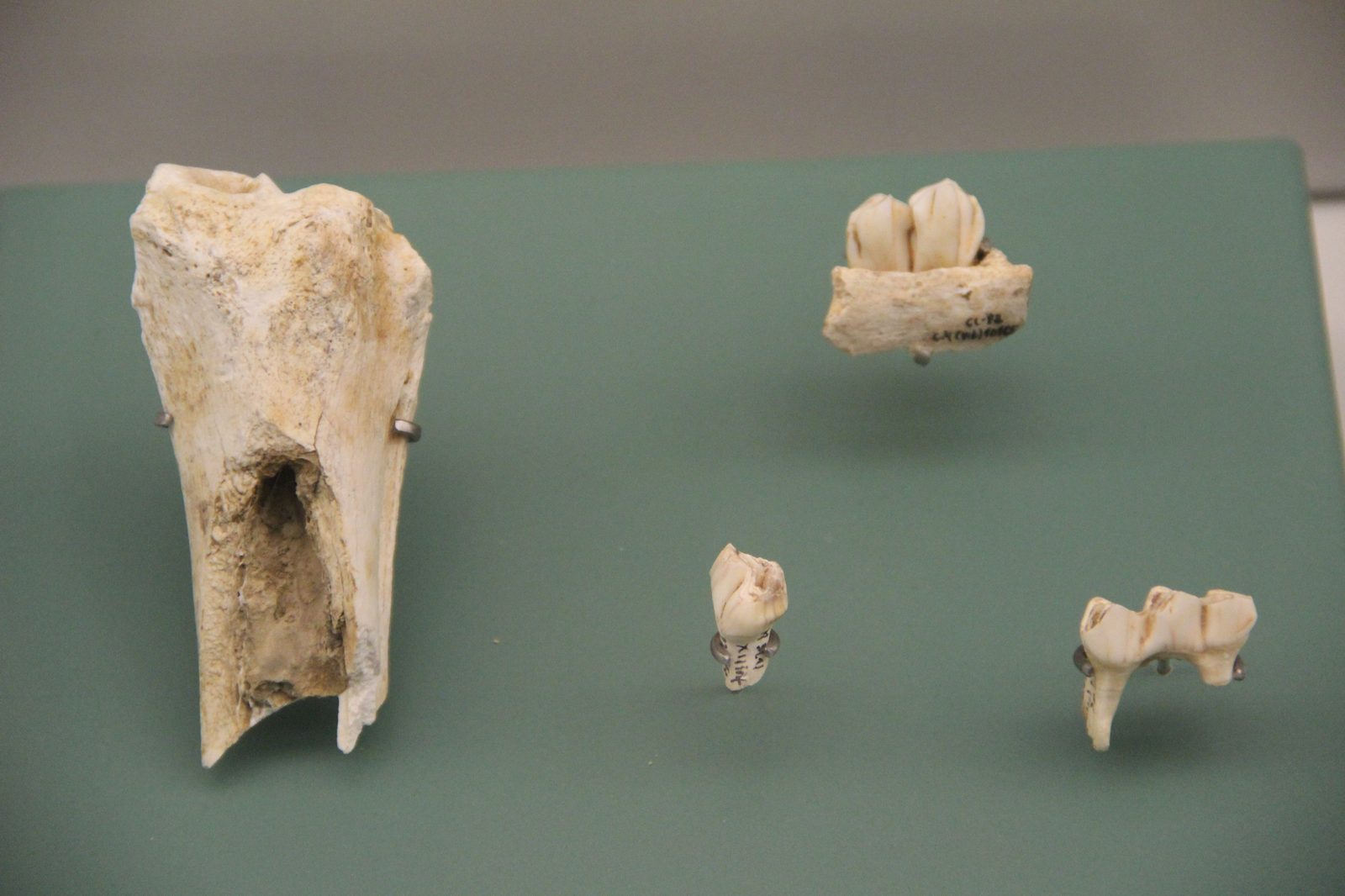
The animal bones tell of hunting focused on red deer, ibex and chamois, but the lower and middle Magdalenian levels also contain reindeer, and the art depicts mammoth and rhinoceros. That combination points to a cold, open park-steppe with only sparse tree cover — an Ice Age Asturias very different from today’s green hills.
Protecting Las Caldas
Spain declared Las Caldas a Bien de Interés Cultural — a cultural asset of national interest — on 7 August 1997, and the surrounding reserve gives the cave and its wildlife a further layer of legal protection. Access is restricted, so the way to meet the cave is through its finds, most of which are held and displayed by the Archaeological Museum of Asturias in Oviedo, and through the wider story of Paleolithic life in the Nalón valley.
Frequently Asked Questions
What is the Venus of Las Caldas?
The Venus of Las Caldas is a carved antler rod about 198 millimetres long, found in the basal Magdalenian layer (level VII) of the cave and dated to roughly 13,400 years ago. It combines the head of an ibex with the legs, hips and engraved genitals of a human female. Because the figure is modelled in relief on a rod, archaeologists debate whether it is a Venus figurine or a decorated spear-thrower (atlatl) — or deliberately both.
Where is Las Caldas cave and can you visit it?
Las Caldas lies in the Nalón valley at Priorio, on the south-western edge of Oviedo in Asturias, northern Spain, beside the Las Caldas thermal spa. The cave runs about 600 metres, has three entrances and a subterranean river, and sits inside a 45-hectare nature reserve. It is gated and closed to the public to protect its fragile deposits and bat colonies; the excavated finds are displayed at the Archaeological Museum of Asturias in Oviedo.
How old is Las Caldas and who excavated it?
People used the cave across the Solutrean, roughly 26,100 to 20,300 years ago, and the Magdalenian, roughly 18,500 to 14,300 years ago (calibrated). Its long, layered sequence is one of the most complete in western Europe. The modern scientific excavations were directed by the prehistorian Maria Soledad Corchon of the University of Salamanca, beginning in 1980, with the first results published in 1981 and detailed monographs following over the next decades.
Sources and Further Reading
- Las Caldas cave — Wikipedia
- The Solutrean — Wikipedia
- The Magdalenian — Wikipedia
- Paleolithic — World History Encyclopedia
- Prehistoric Art — World History Encyclopedia
- Chronostratigraphy of the La Viña rock shelter, Asturias — Radiocarbon (Cambridge)
- Cueva de las Caldas — Turismo Asturias