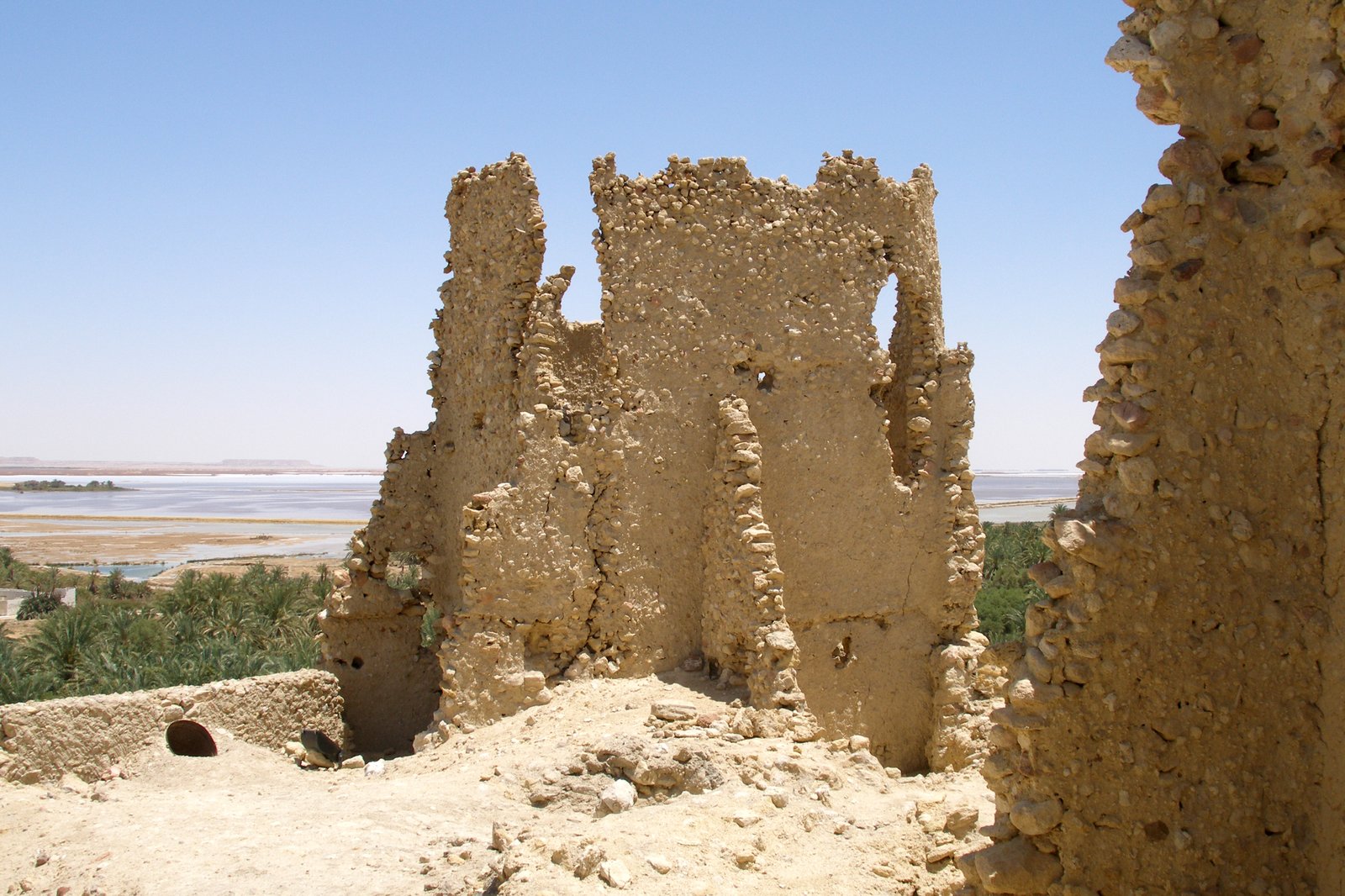
On a wind-scoured rock above the Siwa Oasis, roughly 560 kilometres west of Cairo and barely 50 kilometres from the Libyan frontier, stand the limestone ruins of the Temple of the Oracle — the seat of the Oracle of Amun and one of the most courted voices of the ancient world. It was raised in the 6th century BC by the Egyptian pharaoh Amasis II, and its prophecies drew kings, generals and Greek pilgrims across a lethal sea of sand. In 331 BC it received its most famous visitor, Alexander the Great, who left the desert convinced he was the son of a god.
Where is the Temple of the Oracle?
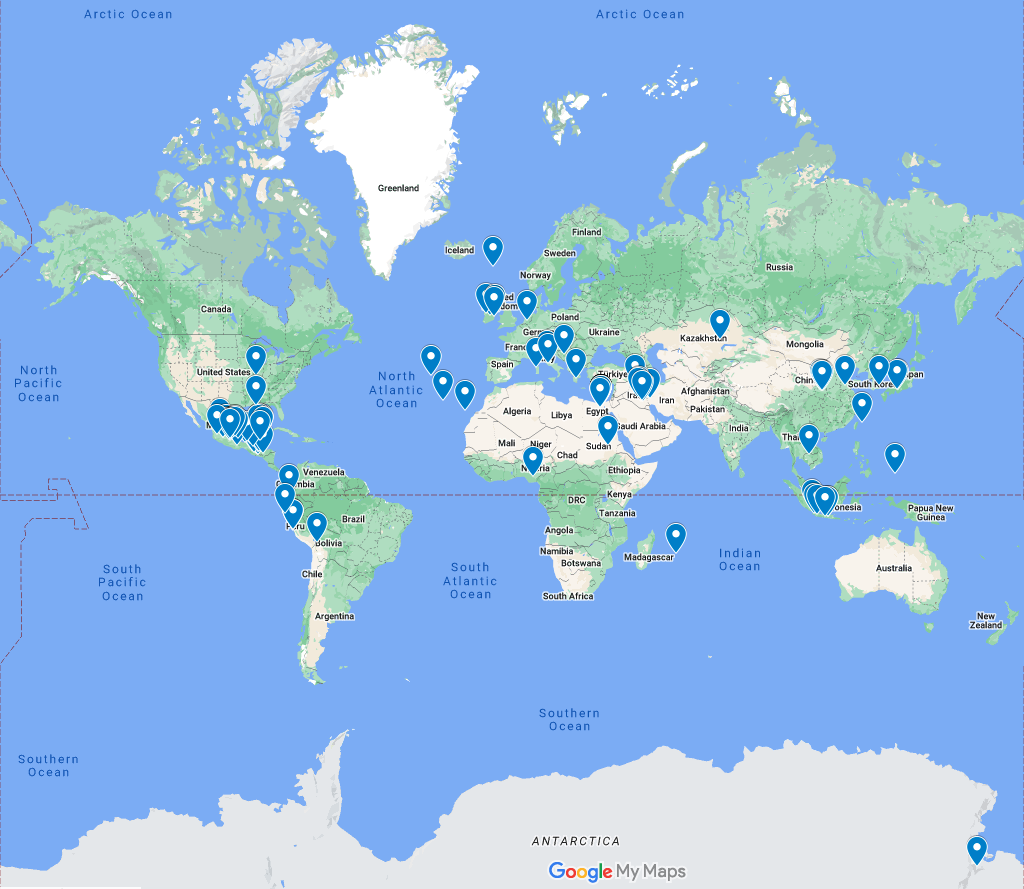
The temple stands on the fortified hill of Aghurmi, about four kilometres east of the modern town of Siwa, in the Western Desert of Egypt’s Matrouh Governorate. Siwa is a deep, spring-fed depression lying below sea level, some 300 kilometres south-west of the Mediterranean port of Marsa Matruh and close to the border with Libya. That isolation was the whole point: the oracle sat far beyond the reach of any single city or army, and reaching it demanded a serious desert crossing. You can trace the wider setting through our guide to other ancient historical places across the region.
By about 700 BC the fame of the oracle had spread through the eastern Mediterranean along the caravan routes from Cyrenaica. The first Greek visitors arrived from the Greek colony of Cyrene in the late 6th century BC, and it was very likely Greek craftsmen from that city who gave the sanctuary its unusual, un-Egyptian look.
Who built the Temple of the Oracle?
The builder was the pharaoh Amasis II (Ahmose II, reigned 570–526 BC), one of the last great rulers of the 26th, or Saite, Dynasty. He raised the temple in the 6th century BC, probably on top of an earlier shrine, both to project Egyptian influence over the oasis and to win the loyalty of the local Libyan tribes. Set on a north–south axis with a simple, Grecising plan, the building was made from local limestone and sandstone blocks bedded in mud mortar. Some of its inscriptions date from the 4th century BC.
The layout of the sanctuary
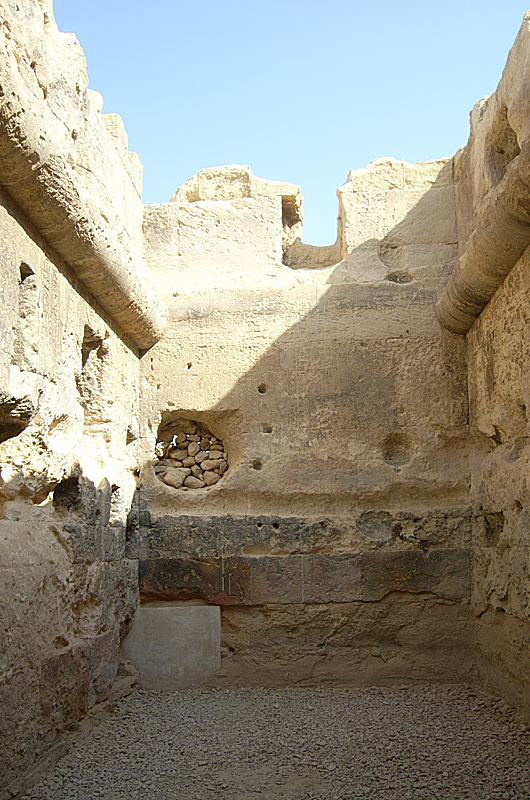
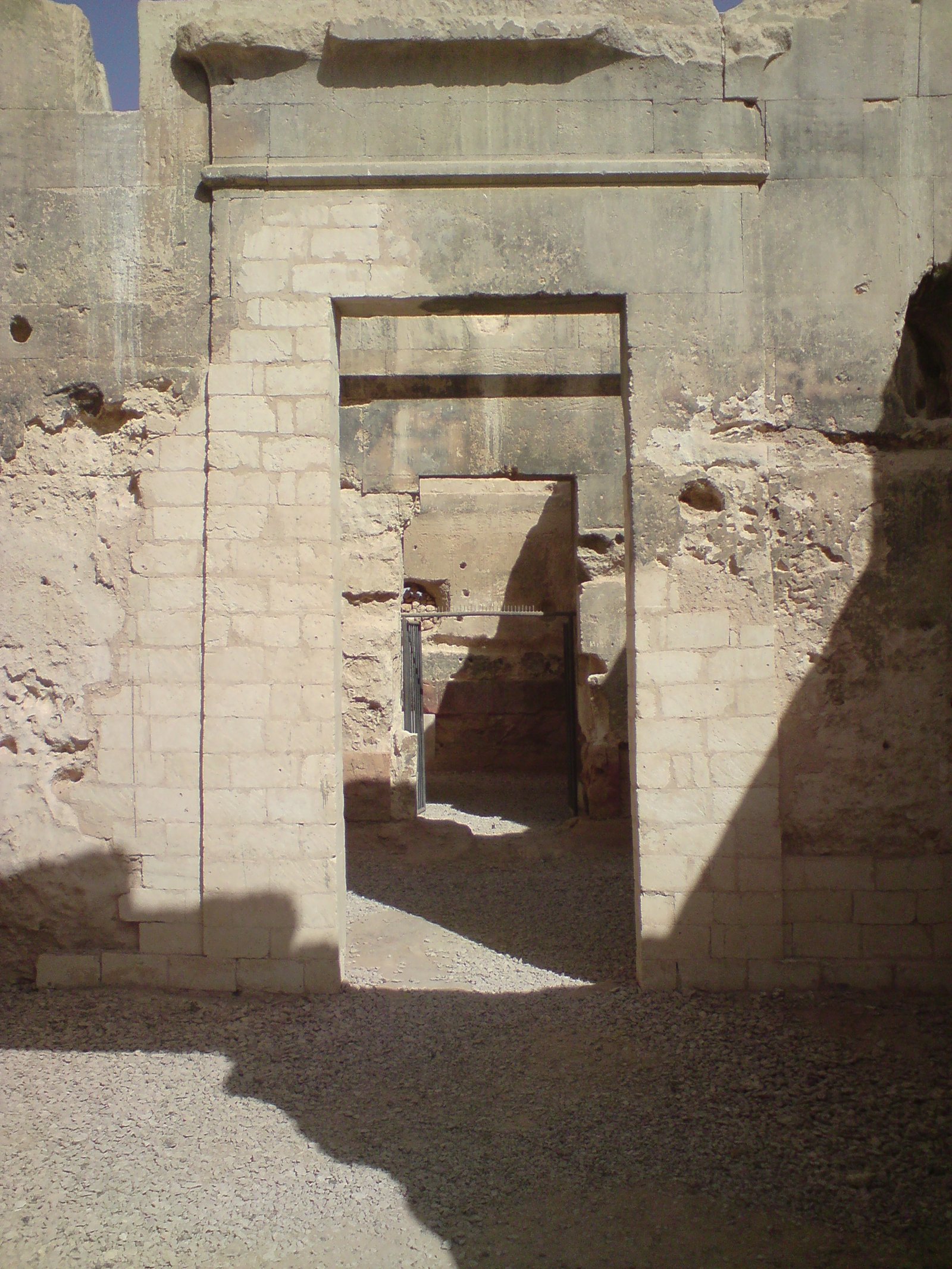
A forecourt leads into two hypostyle halls, which give onto the sanctuary itself — the seat of the Oracle and, most likely, the place where the sacred barque of Amun was kept. Narrow cavities run within the thickness of the sanctuary walls; these are usually read as spaces from which priests could manage the ritual or lend the god a voice. The cult here was a branch of the great worship of Amun-Ra centred on Thebes, whose vast home you can explore in our piece on the Precinct of Amun-Re at Karnak.
The Oracle of Amun and Zeus-Ammon
The god of Siwa was Amun-Ra, but to the Greeks who flocked there he was Zeus — and the fused deity they worshipped became known as Zeus-Ammon. The oracle was widely counted among the greatest of antiquity, and the only one of the first rank that lay outside the Greek world. Petitioners are thought to have received their answers not in spoken riddles, as at Delphi, but through the movements of the god’s sacred barque as it was carried on the shoulders of the priests: a tilt or a turn signalling assent or refusal. Its verdicts could sway wars, colonies and the reputations of kings.
What happened to Cambyses’ lost army?
The temple’s most enduring legend is a disappearance. According to Herodotus, the Persian king Cambyses II — son of Cyrus the Great and conqueror of Egypt — held a grudge against the oracle, reportedly because it had spoken against him. Around 524 BC he sent an army said to be 50,000 strong from Thebes to destroy the sanctuary. Somewhere in the sands between the oases the entire force was caught in a sandstorm and vanished without trace, and no confirmed remains of it have ever been found. For centuries scholars doubted the tale, until excavation in 1938 confirmed that Amasis had built the temple just before Cambyses’ invasion — a chronological detail that squared neatly with Herodotus’ account.
Why did Alexander the Great cross the desert to Siwa?
In 331 BC, fresh from founding the city of Alexandria and two years after breaking Darius III at the Battle of Issus, Alexander the Great made one of the most consequential detours in ancient history. He marched west along the coast to Paraetonium (modern Marsa Matruh), then struck south into the desert — a journey later wrapped in stories of guiding ravens and a life-saving rainstorm — to put a single question to the oracle. Each pharaoh who wished to rule Egypt in full had been acknowledged at Siwa as the son of Amun; Alexander sought the same declaration. The oracle, his court historians reported, hailed him as the son of the god, and from then on he was depicted wearing the ram’s horns of Amun. The claim of divine sonship became a cornerstone of how he presented his rule.
Decline, destruction and rediscovery
When the geographer Strabo passed through Egypt in 23 BC, he found the oracle already stripped of nearly all its importance; under Rome, oracles fell out of fashion altogether. The first European to reach Siwa since antiquity was the English traveller William George Browne in 1792, and between 1819 and 1821 Cailliaud, Drovetti and Von Minutoli recorded much of the ancient fabric still standing. A nearby second temple of Amun at Umm Ubayda — built for the pharaoh Nectanebo II (360–343 BC) and linked to Aghurmi by a processional way — fared far worse: in 1896–97 a local official, Mahmud Azmi, dynamited its sanctuary for building stone, and an earthquake in 1811 had already shaken the district. The Egyptian archaeologist Ahmed Fakhry surveyed Siwa in 1938 and 1941, cleared the Temple of the Oracle of its medieval accretions in 1970, and published the definitive study, Siwa Oasis, in 1973.
Frequently asked questions
Who built the Temple of the Oracle at Siwa?
The temple was built by the Egyptian pharaoh Amasis II (Ahmose II), who reigned from 570 to 526 BC during the 26th, or Saite, Dynasty. He raised it in the 6th century BC, probably over an earlier shrine, to strengthen Egyptian influence in the oasis and secure the loyalty of the Libyan tribes. Its architecture is notably Grecising, and it was very likely built by Greek craftsmen from the nearby colony of Cyrene.
Why did Alexander the Great visit the Oracle of Siwa?
Alexander travelled to Siwa in 331 BC to have the Oracle of Amun confirm his divine and royal legitimacy. Egyptian pharaohs had traditionally been acknowledged at Siwa as sons of Amun, and Alexander wanted the same recognition to underpin his rule over Egypt. His court historians reported that the oracle hailed him as the son of the god, after which he was often portrayed wearing the ram’s horns of Amun, the emblem of Zeus-Ammon.
What happened to the lost army of Cambyses?
The Greek historian Herodotus records that around 524 BC the Persian king Cambyses II sent an army of some 50,000 men from Thebes to destroy the oracle at Siwa. According to the account, the force was engulfed by a sandstorm in the Western Desert and disappeared completely. No confirmed trace of the army has ever been recovered, and its fate remains one of the most debated mysteries of the ancient world, though the story’s core chronology fits the archaeology of the site.
Sources and further reading
- Siwa Oasis — Wikipedia
- Amasis II — Wikipedia
- Siwa — World History Encyclopedia
- Alexander the Great & the Oracle of Siwa — World History Encyclopedia
- Temple of the Oracle, Siwa Oasis — Lonely Planet

Neural Pathways is a collective of seasoned experts and researchers with a profound passion for unraveling the enigmas of ancient history and artifacts. With a wealth of combined experience spanning decades, Neural Pathways has established itself as a leading voice in the realm of archaeological exploration and interpretation.