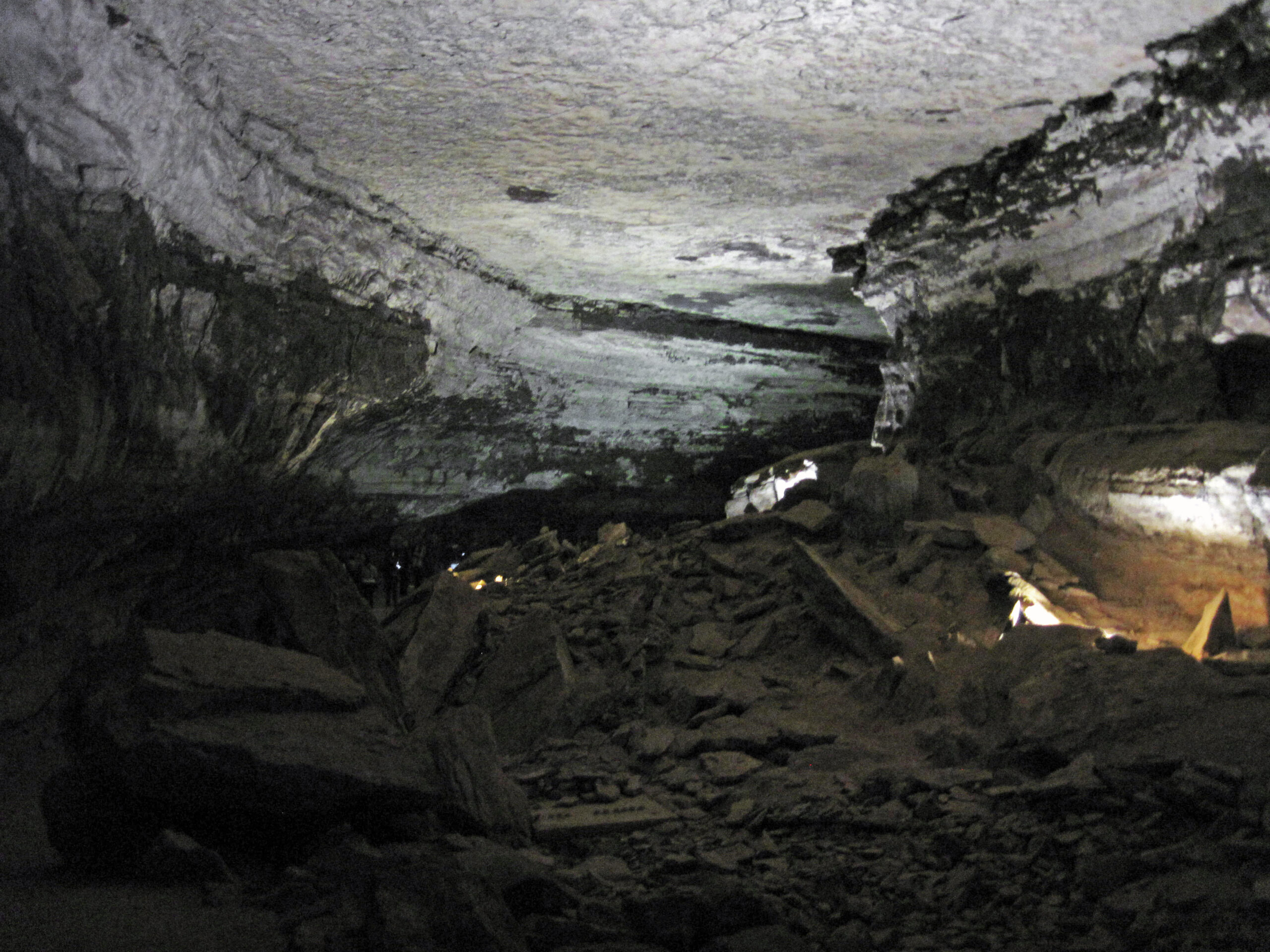
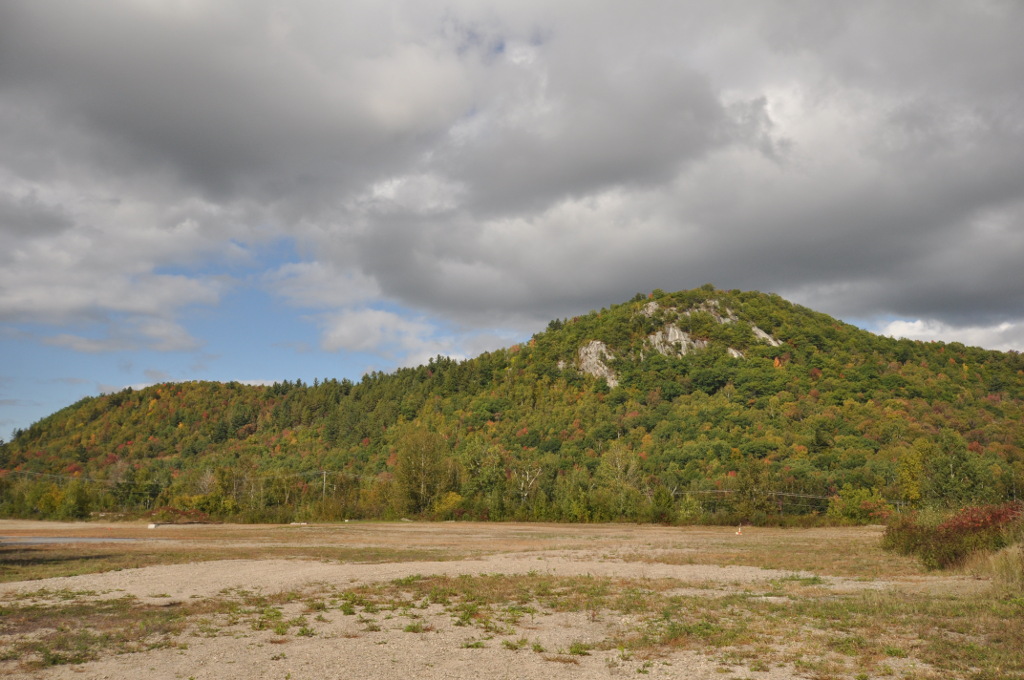
Mammoth Cave, in the karst hills of south-central Kentucky, is the longest cave system known on Earth: more than 426 miles (686 km) of passage had been surveyed by 2025, over one and a half times the length of the world’s next-longest cave. Yet its most remarkable feature is not its size but its depth in time. People were walking, mining and dying in these passages around 3000 BC, five thousand years ago, and by the first millennium BC they had pushed mining operations miles into the dark, which the cave preserved along with their torches, tools and even their bodies. Mammoth Cave National Park protects both the geological wonder and one of the richest records of ancient cave use anywhere in North America.
How Long Have People Known About Mammoth Cave?
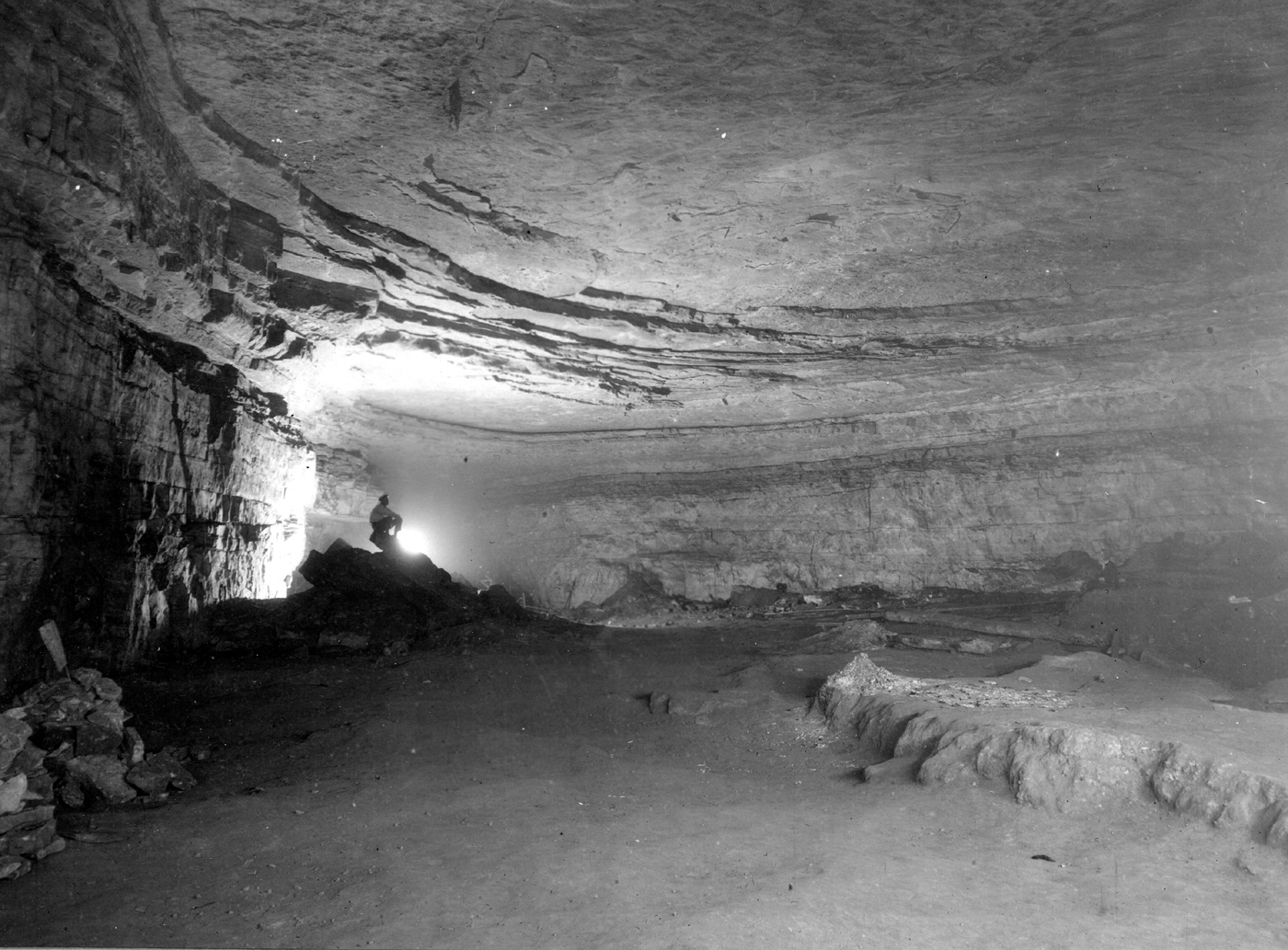
Long before any European set foot inside, Indigenous people had explored Mammoth Cave more thoroughly than the nineteenth-century pioneers who claimed to have discovered it. Archaeological evidence shows that pre-Columbian peoples entered the cave around 5,000 years ago and kept returning for roughly three millennia. Carrying bundles of dried cane reeds lit as torches, they pushed more than sixteen miles into the upper three levels of the system, navigating passages that modern explorers would not re-trace until the twentieth century.
What they left behind is astonishing in its everyday ordinariness: burnt cane torch fragments dropped along the route, woven slippers made from rattlesnake-master plant fibre, gourd bowls, and fragments of a wooden dish. These were not ceremonial deposits but the litter of working expeditions, preserved for thousands of years by the cave’s stable temperature and humidity.
The Minerals the First Miners Came For
From about 1000 BC, Native peoples began systematically mining the minerals that crystallise on the cave walls underground: gypsum, mirabilite, selenite and epsomite. They battered the crystals loose with limestone hammerstones, scraped them up with mussel-shell spoons, and climbed notched wooden poles to reach deposits high on the walls. The reasons remain debated — the minerals may have been used as medicine, pigment or trade goods — but the scale of the work is not in doubt. Whole stretches of passage still carry the battering marks of this 3,000-year mining tradition, making Mammoth Cave one of the oldest known underground mines in the Americas. Visitors today can compare it with other deep-time Native American sites such as the Cahokia Mounds and the Hopewell mound builders, whose societies overlapped with the cave’s last miners.

The Mummies of Mammoth Cave
The cave’s dry air did not only preserve artifacts; it preserved people. Early in the War of 1812, miners working the saltpeter operation found the desiccated body of an ancient Native American woman in nearby Short Cave. Charles Wilkins, then a co-owner of the cave, described her burial in a letter: she lay “at a depth of 10 feet from the surface of the cave in a sitting posture, encased in broadstones,” wrapped in coarse cloth and deer skins inside a stone coffin, surrounded by beads, feathers and the working tools of her life. Her remains were carried into Mammoth Cave’s Rotunda, then moved to a ledge in Gothic Avenue when the enslaved saltpeter workers objected to her presence at the mine.
A businessman named Nahum Ward acquired her and toured the country exhibiting her as the “Mammoth Cave Mummy”; she appeared at the World’s Fairs of 1876 and 1893 before eventually passing to the Smithsonian Institution, much the worse for decades of travel. A second famous body emerged in 1935, when Civilian Conservation Corps workers climbing a ledge about 2.5 miles from the Historic Entrance found a prehistoric gypsum miner — later nicknamed “Lost John” — who had been crushed when a six-ton boulder he was undermining shifted and pinned him. Radiocarbon studies placed his death at least 2,000 years ago. He was displayed on the tourist route for decades until, in the 1970s, changing attitudes led the park to remove him from public view and return him to a protected resting place inside the cave. Such remains are now handled under the Native American Graves Protection and Repatriation Act, in consultation with the park’s tribal partners.
A Bear Hunt, Saltpeter and a Growing Legend
The European “discovery” of Mammoth Cave is wrapped in frontier legend. The traditional story holds that in 1797 a hunter named John Houchin (some accounts credit his brother Francis) chased a wounded bear to the gaping Historic Entrance near the Green River and stumbled into the underworld. Whatever the truth, settlers soon grasped the cave’s commercial value. Its sediments were rich in calcium nitrate, the raw material of saltpeter, and saltpeter meant gunpowder.
During the War of 1812, when imported gunpowder was cut off, Hyman Gratz and Charles Wilkins built a commercial saltpeter-leaching works inside the cave. The brutal labour of hauling cave earth, leaching it in wooden vats and pumping water through pipes was performed largely by enslaved African Americans. When peace returned and saltpeter prices collapsed, the works were abandoned — but the wooden pipes and leaching vats survive in the dry air to this day, an industrial-archaeology time capsule sitting beside far older Native American mining marks.
Stephen Bishop and the Mapping of the Underworld
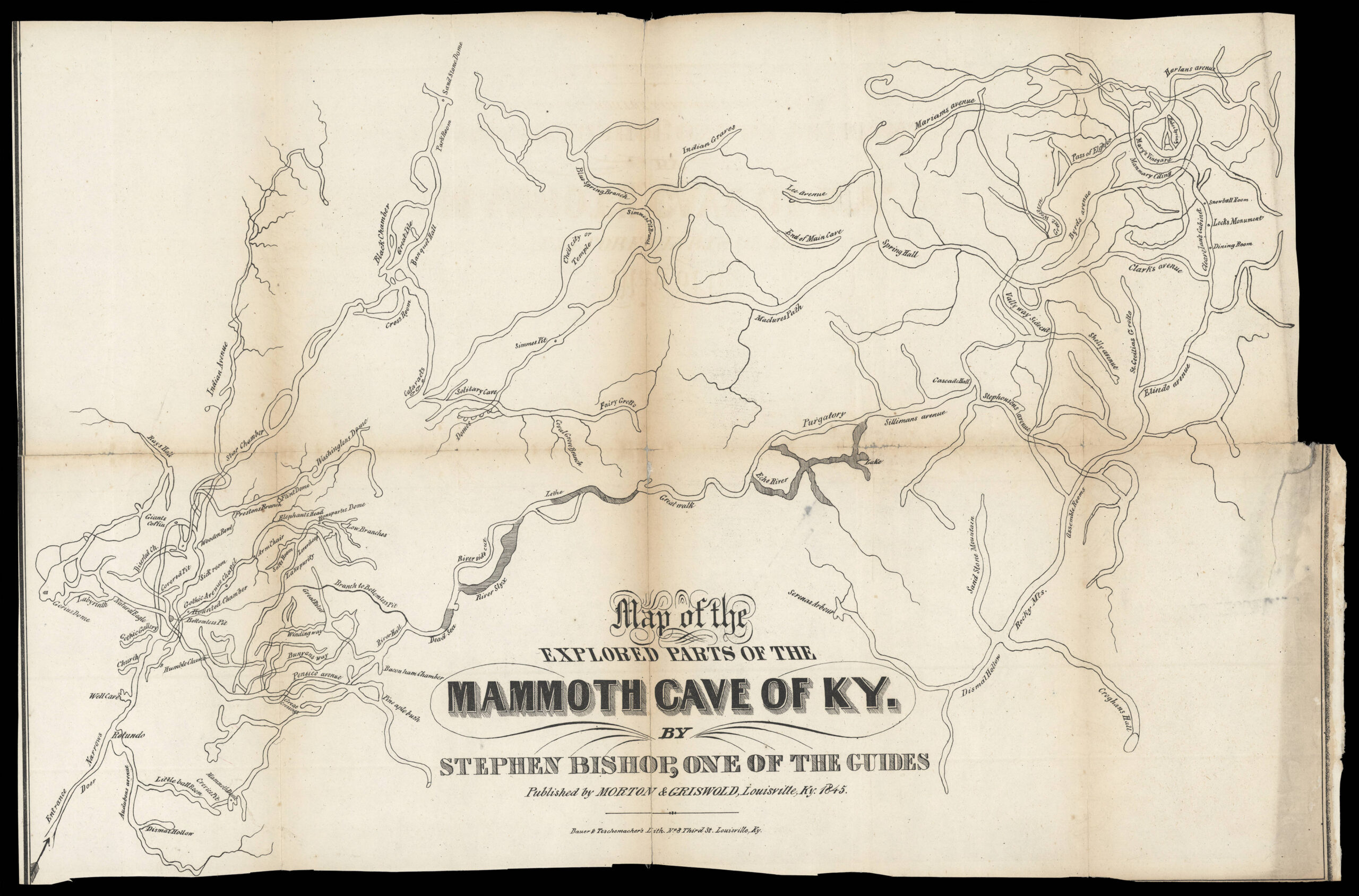
In 1838 the Gratz brothers sold Mammoth Cave to Franklin Gorin, who ran it purely as a tourist attraction and used enslaved people as his guides. The most celebrated was Stephen Bishop, introduced to the cave that same year as a seventeen-year-old. Bishop became its greatest explorer: he was the first person to cross the notorious chasm known as the Bottomless Pit, opening up miles of passage beyond, and he guided scientists, writers and tourists through chambers he himself had named.
In 1842 Bishop drew an extraordinarily accurate map of the cave entirely from memory, recording routes, domes and rivers that would anchor exploration for a generation. An enslaved man became, in effect, the cave’s chief cartographer, his authority in the dark standing in sharp contrast to his bondage in the daylight above. His map remains one of the most important early documents of the system.
Dr. Croghan’s Underground Tuberculosis Hospital
In 1839 the physician Dr. John Croghan bought Mammoth Cave for $10,000, convinced that its constant temperature and pure, still air could cure tuberculosis. In 1842 he installed consumptive patients in a cluster of stone-and-wood huts deep inside the cave, creating one of the strangest medical experiments in American history. The experiment failed badly: deprived of sunlight and breathing air thick with the smoke of their own fires, the patients grew worse, and several died. The huts were abandoned within a couple of years, though their stone walls still stand along the tour route. Croghan himself died of tuberculosis in 1849, the disease he had hoped his cave would conquer.
From Private Show-Cave to World Heritage Site
For most of the nineteenth and early twentieth centuries Mammoth Cave was a competitive, sometimes cut-throat private tourist business, surrounded by rival “show caves” in what became known as the Kentucky Cave Wars. A movement to protect the area gathered force in the 1920s, and after often-contentious eminent-domain proceedings the area was dedicated as Mammoth Cave National Park on July 1, 1941. The cave earned a cascade of honours: a UNESCO World Heritage Site on October 27, 1981, the core of an International Biosphere Reserve on September 26, 1990, and an International Dark Sky Park in 2021.
The record-breaking length came later still. In 1972, a Cave Research Foundation team led by chief cartographer John Wilcox finally pushed a connection between the separate Flint Ridge cave system and Mammoth Cave, fusing them into a single network that has been growing on the survey books ever since. The park’s dark rivers shelter eyeless, colourless animals found almost nowhere else, including the endangered Kentucky cave shrimp — living evidence of how completely this underworld is sealed off from the sunlit one above.
Why Is Mammoth Cave the Longest Cave on Earth?
Mammoth Cave’s record is a product of almost perfect geology. It formed roughly 330 million years ago in thick beds of Mississippian-age limestone, which slightly acidic groundwater dissolves with ease. Crucially, those soluble layers are capped by a hard, resistant sandstone that acts like a roof, sheltering the passages below from collapse and letting them survive across geological time. As the Green River and its tributaries cut down through the landscape, water carved level after level of horizontal passage, stacking corridors like the floors of a building. The result is a labyrinth that already exceeds 426 miles and keeps lengthening with every survey expedition. For more underground and ancient-world stories, browse our historical places and ancient civilizations archives, or read how Ice Age people used the deep cave of El Castillo in Spain and the monumental Etowah Indian Mounds of the American South.
Frequently Asked Questions
How old is the human history of Mammoth Cave?
Indigenous people first explored Mammoth Cave around 5,000 years ago and used it for roughly 3,000 years, until about 2,000 years ago. From around 1000 BC they systematically mined gypsum, mirabilite and other wall minerals, pushing more than sixteen miles underground by torchlight. The cave’s dry air preserved their cane torches, mussel-shell tools and woven sandals, along with human remains such as the prehistoric miner “Lost John,” who died at least 2,000 years ago.
Who was Stephen Bishop?
Stephen Bishop was an enslaved African American guide who became Mammoth Cave’s most important early explorer. Brought to the cave in 1838 at the age of seventeen, he was the first person to cross the Bottomless Pit, opening miles of new passage. In 1842 he drew a remarkably accurate map of the cave from memory. Bishop named many of its features and guided scientists and tourists alike, effectively serving as the cave’s chief cartographer until his death in 1857.
Why is Mammoth Cave the longest cave in the world?
Mammoth Cave holds the record because of its geology and a famous 1972 discovery. Its passages formed in thick Mississippian limestone capped by protective sandstone, which kept the corridors from collapsing over millions of years. In 1972 explorers connected the neighbouring Flint Ridge system to Mammoth Cave, merging them into one network. By 2025 more than 426 miles had been surveyed — over one and a half times the length of the world’s second-longest cave, in Mexico — and the total still grows.
Sources and Further Reading
- National Park Service — Mammoth Cave National Park
- National Park Service — Cave Discoveries From the Past (prehistoric artifacts and human remains)
- National Park Service — Tuberculosis in Mammoth Cave
- Encyclopaedia Britannica — Mammoth Cave National Park
- UNESCO World Heritage Centre — Mammoth Cave National Park
- Smithsonian Magazine — When Tuberculosis Patients Quarantined Inside Mammoth Cave
- Wikipedia — Mammoth Cave National Park