Beneath the northern town of Icod de los Vinos on the Spanish island of Tenerife lies the Cueva del Viento — the “Cave of the Wind,” long known locally as the Cave of the Guanches. It is the largest lava tube in Europe and the sixth largest on Earth, winding for more than 17 kilometres across three superimposed levels. The cave holds two entirely different stories. One is volcanic and roughly 27,000 years old, written in basalt by the eruptions of Mount Teide; the other is human, written in the burials of the Guanches, the Berber people who reached the Canary Islands around 2,000 years ago.
Where is the Cueva del Viento?
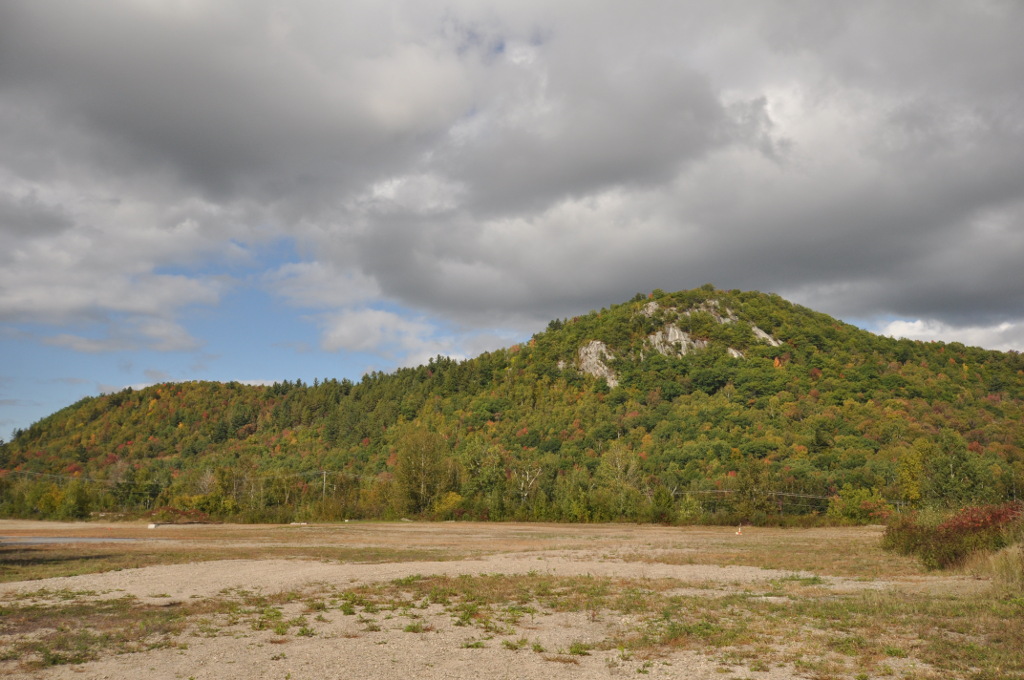
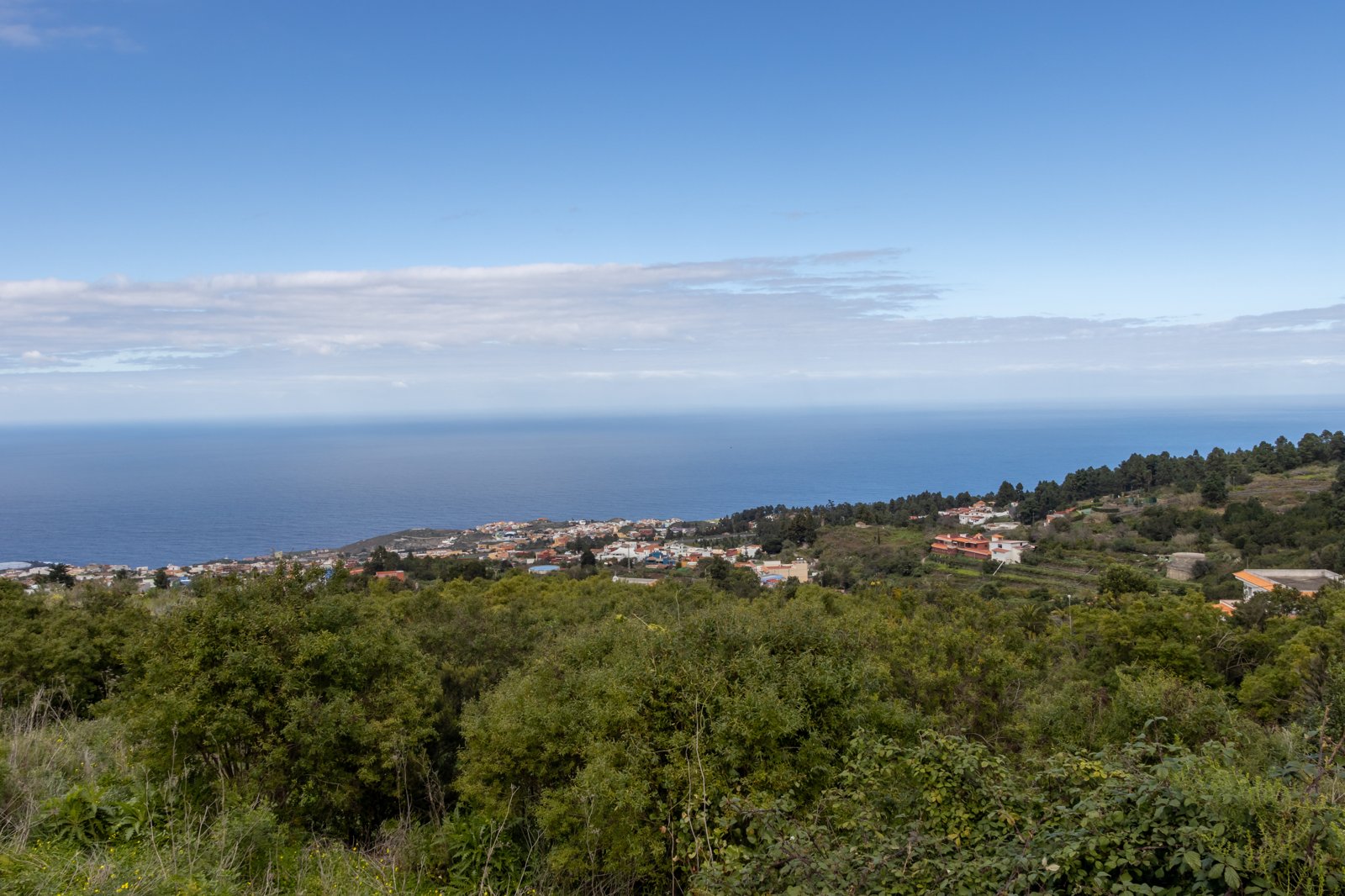
The cave lies within the municipality of Icod de los Vinos, on the green northern side of Tenerife in Spain’s Canary Islands, only a few kilometres from the town famous for its ancient dragon tree. It sits on the lower slopes of the Teide volcanic complex, and its galleries run out toward the coast beneath farmland and pine forest. Because the passages are stacked on three levels rather than following a single line, the network packs an enormous length — surveyed at roughly 18,500 metres — into a comparatively small footprint, making it one of the most morphologically complex volcanic caves in the world.
Its name comes from the persistent air currents that move through the tubes: enter almost any opening and you feel the “wind” for which the Guanches and later Canarian islanders named it.
How did the Cueva del Viento form?
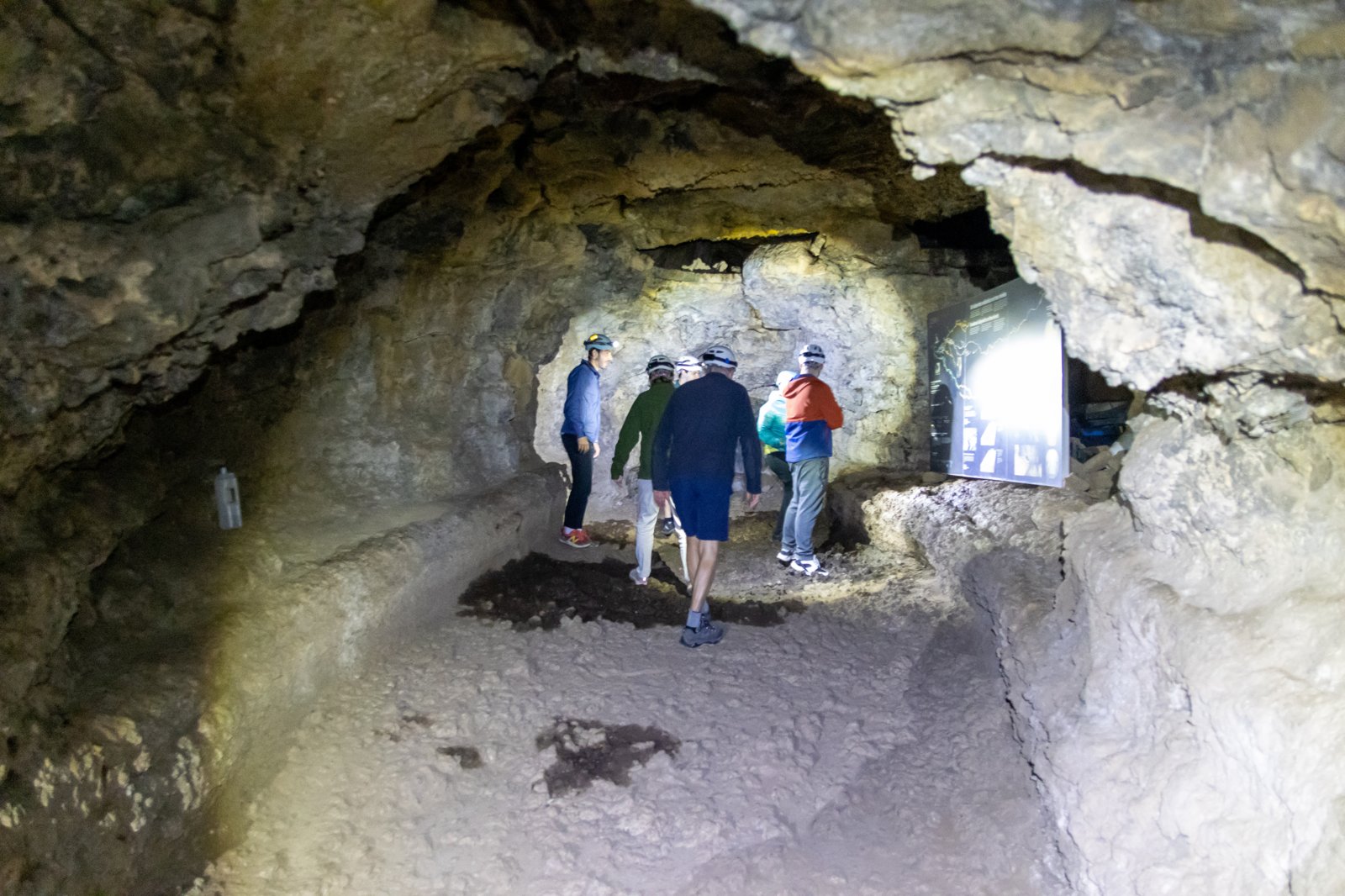
The Cueva del Viento is a lava tube, created about 27,000 years ago by basaltic lava flows erupted from Pico Viejo, the volcano immediately beside the towering peak of Mount Teide. As a river of fluid pahoehoe lava travelled downslope, its outer surface cooled and hardened into a crust while the still-molten interior kept flowing. When the eruption waned, the last of the lava drained away and left a hollow conduit behind — the tube.
What makes this system exceptional is that repeated flows built galleries on three overlapping levels, connected by pits, jumps and collapses. Inside, geologists document a textbook catalogue of volcanic features: lava stalactites, lateral terraces marking former lava levels, side channels, lava cascades and secondary mineral crusts. It is this three-dimensional tangle, not merely its length, that earns the Cueva del Viento its reputation as the most complex lava tube known.
The Guanches and their cave burials
The human story gives the cave its older name. The Guanches were the indigenous inhabitants of Tenerife — a Berber (Amazigh) population who settled the Canary Islands from North Africa around 2,000 years ago and lived in relative isolation until the Castilian conquest of the fifteenth century. They knew and used the Cueva del Viento long before any European recorded it; the first written reference to the cave dates only to 1776.
Archaeologists have recovered Guanche skeletal remains from the cave complex, with burials identified at both the Breveritas and Sobrado entrances. Alongside the human bones, excavators found Guanche pottery and other artefacts, confirming that the community used these openings as funerary spaces rather than merely as shelter. For a culture that also mummified its dead and interred them in more accessible sea-cliff caves, the dark stability of a lava tube offered a fitting resting place. The Cave of the Guanches thus preserves, in the same rock, both the deep geological past of Tenerife and the memory of its first people. For related island sites, see our features on the Cueva Pintada and the fortified granary of Cenobio de Valerón.
A cave full of life: biodiversity and extinct giants
Few caves anywhere are as biologically rich. The Cueva del Viento and the neighbouring Cueva de Felipe Reventón together host what researchers describe as the greatest community of cave-adapted animals of any volcanic cave on Earth. A peer-reviewed study of the system’s microbiology and biodiversity records around 36 troglobionts — species so adapted to darkness they can live nowhere else — of which nine are found only in this single lava-tube network. Blind beetles, cave-dwelling spiders and pale crustaceans populate a food web sustained by tree roots and organic matter washing in from above.
An underground refuge for endemic species
The cave has also served as a natural trap and archive of Tenerife’s lost megafauna. Among the fossil bones recovered are those of the Tenerife giant lizard (Gallotia goliath), which could exceed a metre in length, and the Tenerife giant rat (Canariomys bravoi) — both now extinct. These finds make the tube as valuable to palaeontologists and biologists as it is to volcanologists.
Exploration, mapping and rediscovery
Systematic scientific study began in the twentieth century. In 1968 a team of Canarian speleologists from the Vulcano-Speleological Exploration Section of La Guancha, part of the Grupo Montañero de Tenerife, began mapping the cavity, and over roughly two years they surveyed some 6,135 metres of passage. Subsequent campaigns extended the known network to its present length of more than 17 kilometres, with exploration still ongoing — the true extent of the deepest galleries has not been fully established.
The recognition of the cave’s fragile ecosystem and its archaeological deposits led the Canary Islands Government to protect it as a Site of Scientific Interest, restricting access to the most sensitive galleries while allowing controlled, guided visits to a short section.
Visiting the Cueva del Viento today
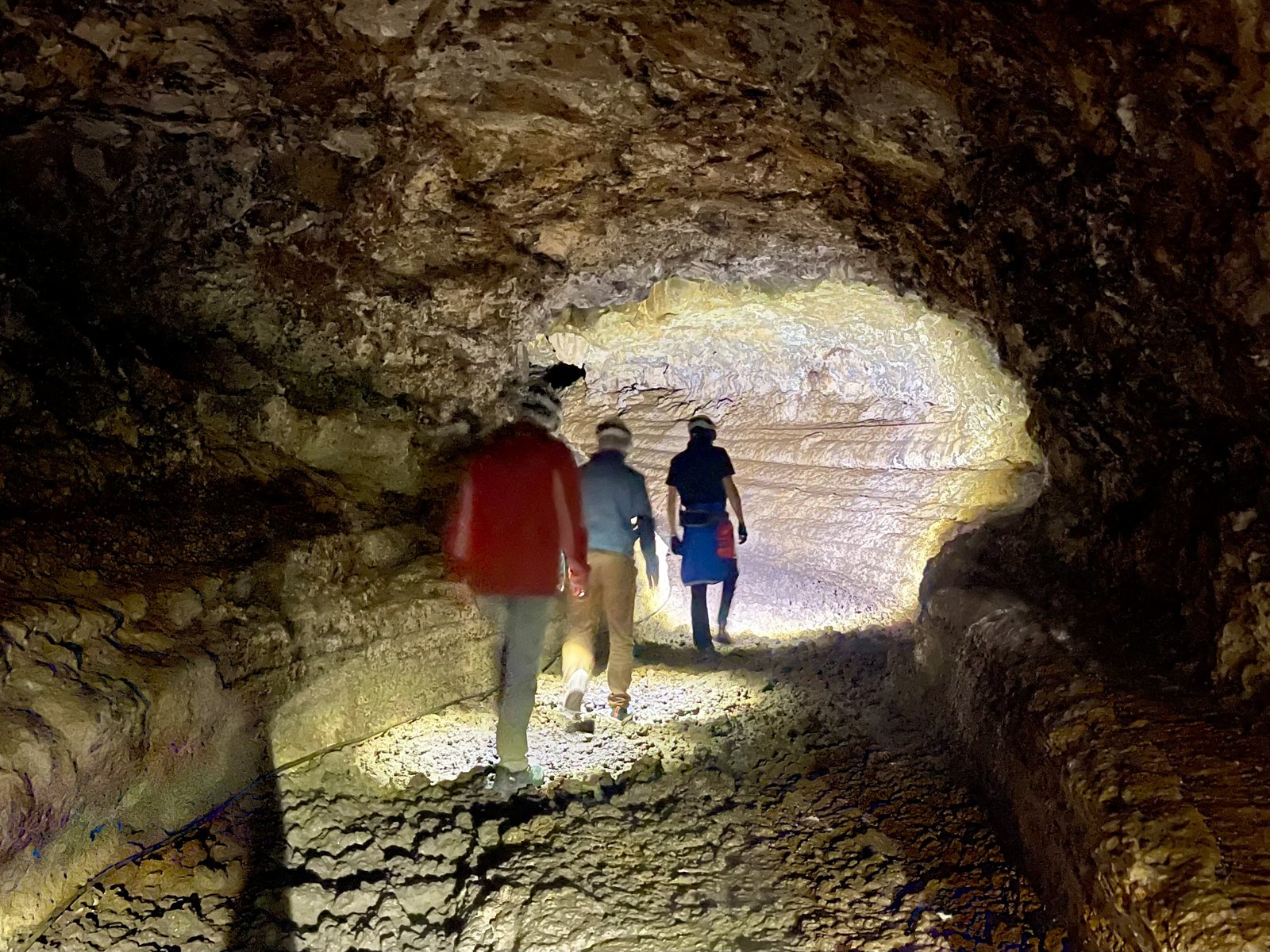
Visitors do not wander the tubes alone. The cave is managed by the Tenerife Island Council through its network of museums and centres, and the experience begins at a dedicated visitor centre in Icod de los Vinos, followed by a short transfer and a guided walk through a representative stretch of gallery. Guides explain the tube’s formation, its rare wildlife and its ethnographic history, so that a modern tour doubles as a lesson in volcanology, ecology and Guanche heritage. Practical details — opening times, safety requirements and booking — are published through the official Spanish show-caves network, Cuevas Turísticas. For more of the archipelago’s pre-Hispanic monuments, explore the terraced Pyramids of Güímar.
At a glance
Country: Spain (Canary Islands, Tenerife)
Location: Icod de los Vinos, northern Tenerife
Type: Basaltic lava tube (Cueva del Viento / Cave of the Guanches)
Formed: Approximately 27,000 years ago, from Pico Viejo lava flows
Length: More than 17 km across three levels (largest lava tube in Europe)
Cultural use: Guanche burials, known locally for at least 2,000 years
Conclusion and sources
The Cueva del Viento is that rare place where three sciences meet in one dark corridor: the volcanology of a 27,000-year-old lava tube, the biology of a world-class cave ecosystem, and the archaeology of Tenerife’s first people. It is at once a geological record of Mount Teide’s eruptions, a refuge for creatures that exist nowhere else, and a Guanche resting place — a reminder that beneath a sunlit Atlantic island lies a hidden landscape shaped by fire and inhabited by memory.
Reputable sources used in creating this article include:
- Wikipedia — Cueva del Viento: https://en.wikipedia.org/wiki/Cueva_del_Viento
- Wikipedia — Guanches: https://en.wikipedia.org/wiki/Guanches
- Wikipedia — Gallotia goliath: https://en.wikipedia.org/wiki/Gallotia_goliath
- Cueva del Viento official visitor site: https://cuevadelviento.net/en/the-visit/
- Cuevas Turísticas de España — Cueva del Viento: https://www.cuevasturisticas.es/cueva-del-viento
- González-Pimentel et al., peer-reviewed study of the Cueva del Viento lava-tube system (PMC): https://pmc.ncbi.nlm.nih.gov/articles/PMC11033209/
More sites from this era are collected in our Ancient Civilizations archive.