
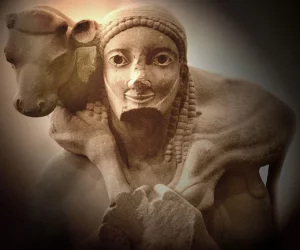
The Moschophoros, or “Calf-Bearer,” is a renowned ancient Greek sculpture. It was discovered on the Acropolis of Athens in 1864. The statue dates back to around 570 BC, during the Archaic period of Greek art. This period was known for its distinctive style, featuring figures with rigid postures and the famous “Archaic smile.” Description of…
Neural Pathways
Neural Pathways is a collective of seasoned experts and researchers with a profound passion for unraveling the enigmas of ancient history and artifacts. With a wealth of combined experience spanning decades, Neural Pathways has established itself as a leading voice in the realm of archaeological exploration and interpretation.
Our team of researchers and scholars provide unparalleled depth of knowledge in deciphering the intricate narratives embedded within ancient artifacts and deciphering the cultural nuances that shaped civilizations of the past. Through meticulous research, rigorous analysis, and a collaborative spirit, Neural Pathways has made and continues to make significant contributions to our understanding of the human past.
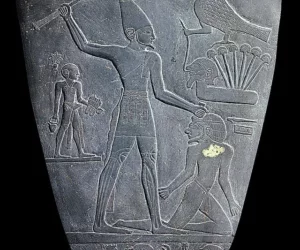
Narmer Palette
The Narmer Palette is an ancient Egyptian ceremonial artifact from around 3100 BC. This significant archaeological find is believed to depict the unification of Upper and Lower Egypt under King Narmer. Discovered in 1898 by British archaeologist James Quibell in the temple of Horus at Hierakonpolis, the palette is one of the oldest known historical…
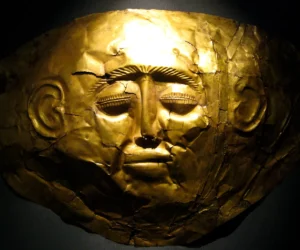
The Death Masks of Mycenae
The Golden Death Masks of Mycenae: A Glimpse into Ancient Elite Burials In the ancient city of Mycenae, a series of golden funerary masks was discovered, offering a unique window into the burial customs of the elite. These masks, unearthed within Grave Circle A, date back to the late Bronze Age and have intrigued historians…
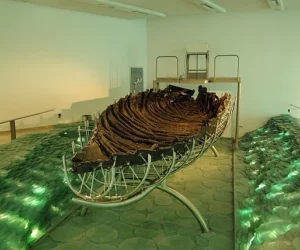
The Sea Of Galilee Boat
The Sea of Galilee Boat, also known as the “Jesus Boat,” is a remarkable archaeological discovery from the 1st century AD. Unearthed in 1986, this ancient fishing vessel provides valuable insights into the construction techniques, lifestyle, and culture of people in the region during the time of Jesus. Its well-preserved structure has made it one…
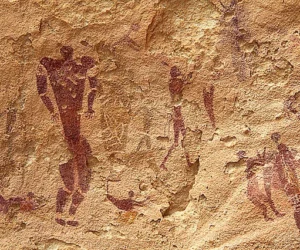
Cave of Swimmers
The Cave of Swimmers is a significant archaeological site located in Egypt. It features ancient rock art on the Gilf Kebir plateau. This site lies in the New Valley Governorate, near the Libyan border. Discovery and Historical Significance In October 1933, Hungarian explorer László Almásy discovered the cave. It contains Neolithic pictographs depicting humans and…
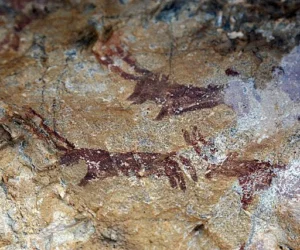
Zarautsoy Rock Paintings
The Zarautsoy Rock Paintings, located in Uzbekistan, offer a fascinating glimpse into prehistoric life. These ancient artworks, dating back to the Bronze Age around 2000 to 1000 BC, are not just artistic expressions but also historical documents. They provide insights into the daily lives, cultural practices, and spiritual beliefs of early Central Asian societies. Geographical…