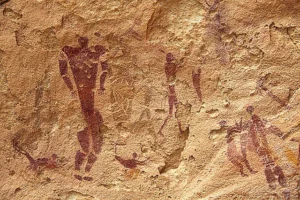
The Cave of Swimmers is a significant archaeological site located in Egypt. It features ancient rock art on the Gilf Kebir plateau. This site lies in the New Valley Governorate, near the Libyan border.
Discovery and Historical Significance
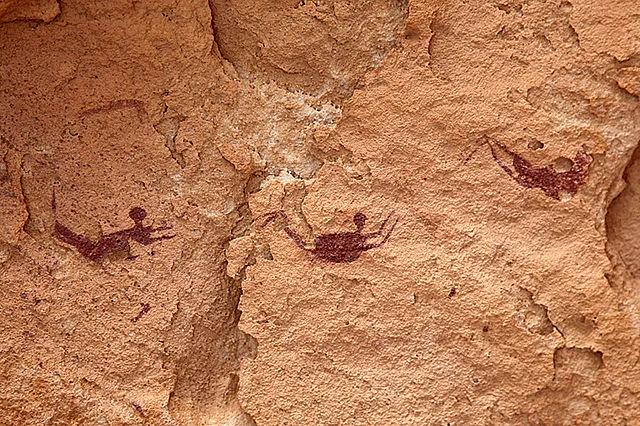
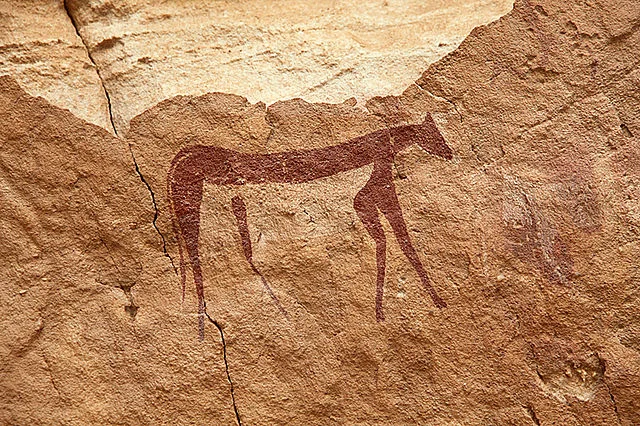
In October 1933, Hungarian explorer László Almásy discovered the cave. It contains Neolithic pictographs depicting humans and animals. Notably, some figures appear to be swimming, hence the cave’s name.
Environmental Context and Art Interpretation
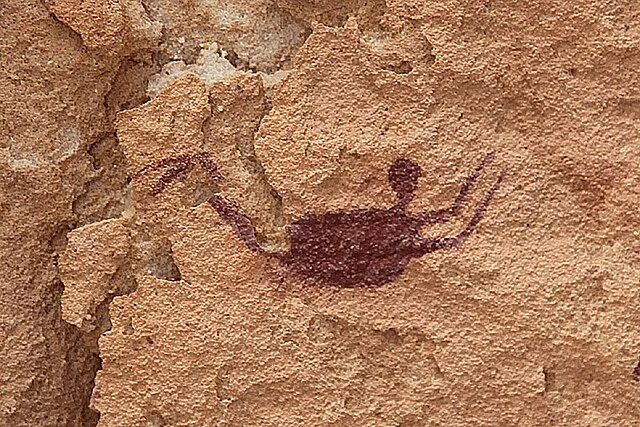
The art dates back to around 10,000 years ago, during the African Humid Period. At that time, the Sahara was lush and wet. The art likely reflects the environment and lifestyle of that era.
Almásy’s Theories and Later Discoveries
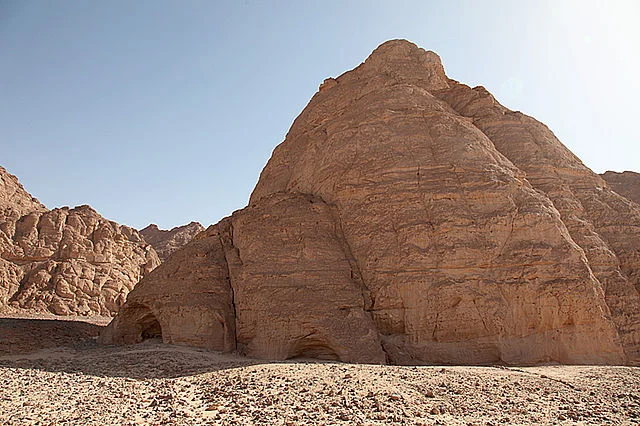
Almásy discussed the cave in his 1934 book, “The Unknown Sahara”. He suggested the swimming scenes depicted real life at the time. In 2007, Eman Ghoneim discovered an ancient mega-lake in Sudan, supporting the theory of a greener Sahara.
Cultural Impact
The cave gained wider recognition through Michael Ondaatje’s novel “The English Patient” and its film adaptation. However, the film used a set replica, not the actual cave.
Current Research and Interpretations
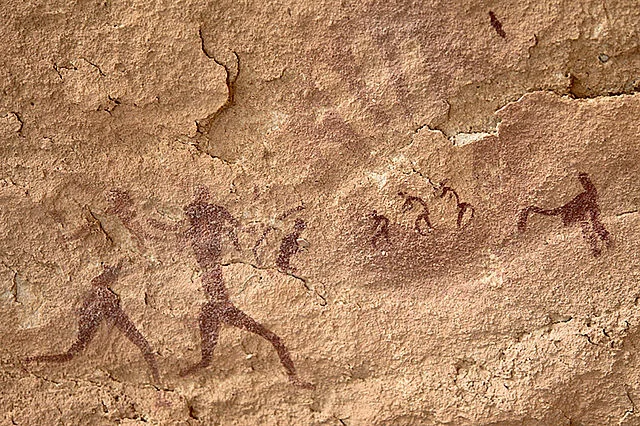
Researchers continue to study the cave’s art. Some, like Hans Rhotert and Jean-Loïc Le Quellec, interpret the figures as symbolic representations of deceased souls.
Conservation Challenges
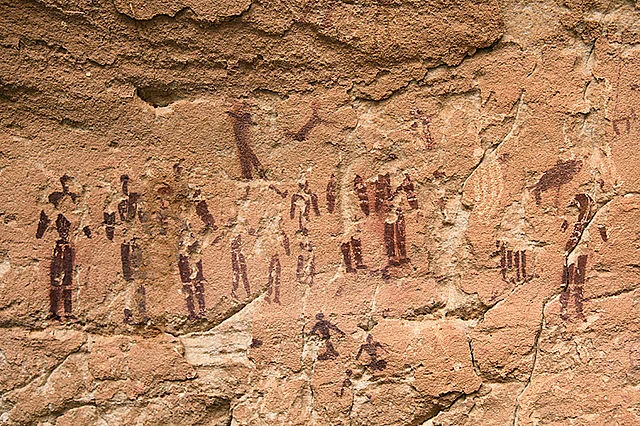
Since the film’s release in 1996, the cave has suffered damage. Tourists have removed parts of the paintings and inscribed graffiti. Efforts are underway to mitigate further damage.
Conclusion
The Cave of Swimmers remains a fragile yet invaluable window into the past. It offers insights into the region’s history and prehistoric climate changes.
Sources

Neural Pathways is a collective of seasoned experts and researchers with a profound passion for unraveling the enigmas of ancient history and artifacts. With a wealth of combined experience spanning decades, Neural Pathways has established itself as a leading voice in the realm of archaeological exploration and interpretation.