
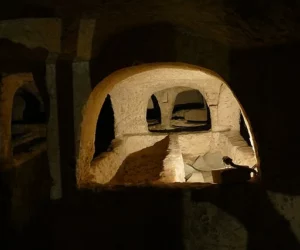
St Paul’s Catacombs represent a remarkable archaeological area in Malta. They are a typical complex of interconnected, underground Roman cemeteries that were in use up to the 7th century AD. These catacombs were named after the nearby St Paul’s Church and Grotto, where the apostle Paul is believed to have taken refuge. With over 30…
Neural Pathways
Neural Pathways is a collective of seasoned experts and researchers with a profound passion for unraveling the enigmas of ancient history and artifacts. With a wealth of combined experience spanning decades, Neural Pathways has established itself as a leading voice in the realm of archaeological exploration and interpretation.
Our team of researchers and scholars provide unparalleled depth of knowledge in deciphering the intricate narratives embedded within ancient artifacts and deciphering the cultural nuances that shaped civilizations of the past. Through meticulous research, rigorous analysis, and a collaborative spirit, Neural Pathways has made and continues to make significant contributions to our understanding of the human past.
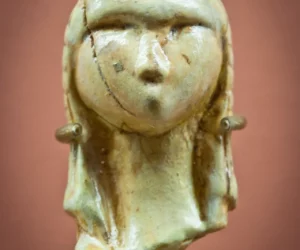
Venus of Brassempouy
The Venus of Brassempouy: A Glimpse into Prehistoric Art The Venus of Brassempouy, also called the “Lady with the Hood,” is one of the earliest known realistic representations of a human face. Carved from mammoth ivory over 25,000 years ago, this tiny fragment gives us a rare look into the artistic skill of our Upper…
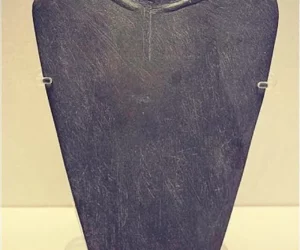
The Min Palette
The Min Palette is an ancient artifact from early Egypt, dating to the late Pre-Dynastic period (circa 3000 BC). It was named after the god Min, an important deity associated with fertility and reproduction. This palette provides valuable insight into the development of Egyptian art and religious symbolism before the unification of Egypt. Material and…
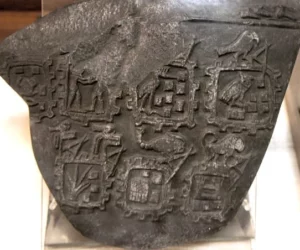
The Libyan Palette
The Libyan Palette is an ancient Egyptian cosmetic palette dating back to the late Predynastic Period, around 3100 BC. Found at Abydos, this artifact provides significant insight into Egypt’s early political and artistic development. Like other palettes from the same era, it was likely used to grind and mix cosmetics, but its intricate carvings suggest…
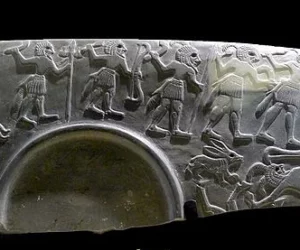
The Hunters Palette
The Hunters Palette, also known as the Lion Hunt Palette, is an ancient Egyptian artifact from the late Predynastic Period, around 3100 BC. It provides significant insights into Egypt’s early art, symbolism, and society before the unification under a single pharaoh. Discovery and Material The Hunters Palette was discovered in the late 19th century in…
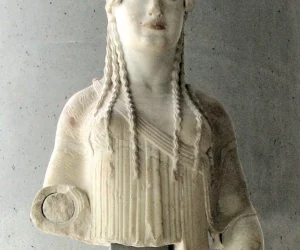
The Euthydikos Kore
The Euthydikos Kore is an ancient Greek sculpture from the late Archaic period, dating to around 490 BC. This marble statue represents a young woman, or kore, a common type of sculpture in Greek art depicting maidens in a standing pose. The statue is named after Euthydikos, the donor mentioned in its inscription. Historical Context…