
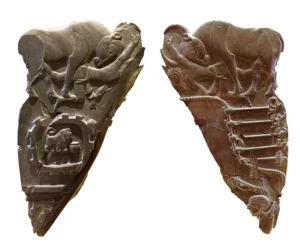
The Bull Palette is an important artifact from ancient Egypt, dating to the late Predynastic Period, around 3200 BC. It is one of several cosmetic palettes used for grinding and mixing pigments, likely for ceremonial purposes. Scholars have long studied these palettes for insights into early Egyptian art, culture, and religious beliefs. Discovery and Material…
Neural Pathways
Neural Pathways is a collective of seasoned experts and researchers with a profound passion for unraveling the enigmas of ancient history and artifacts. With a wealth of combined experience spanning decades, Neural Pathways has established itself as a leading voice in the realm of archaeological exploration and interpretation.
Our team of researchers and scholars provide unparalleled depth of knowledge in deciphering the intricate narratives embedded within ancient artifacts and deciphering the cultural nuances that shaped civilizations of the past. Through meticulous research, rigorous analysis, and a collaborative spirit, Neural Pathways has made and continues to make significant contributions to our understanding of the human past.
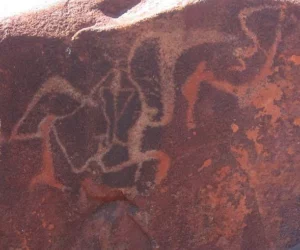
The Burrup Peninsula Rock Art
The Burrup Peninsula, located in Western Australia’s Pilbara region, is home to one of the most significant and extensive collections of petroglyphs in the world. This ancient art, etched into the hard rock surfaces of the peninsula, offers a unique window into the cultural and spiritual lives of Indigenous Australians. While estimates vary, researchers believe…
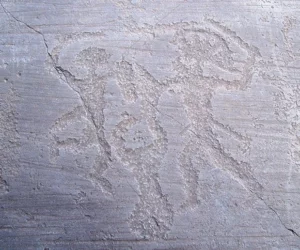
The Val Camonica Rock Drawings
Val Camonica, located in the Lombardy region of northern Italy, is home to one of the largest collections of prehistoric rock art in Europe. This valley, stretching over 80 kilometers, holds thousands of carvings created by ancient inhabitants over millennia. These rock drawings, which have been preserved and documented in extensive detail, offer valuable insights…
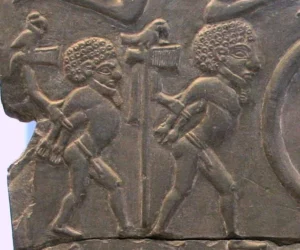
The Battlefield Palette
The Battlefield Palette is an ancient Egyptian cosmetic palette dating to the Naqada III period (around 3100 BC). This significant artifact is part of a group of ceremonial palettes, which were used for grinding and mixing cosmetics in early Egyptian culture. However, over time, these palettes became more symbolic, reflecting important historical events and cultural…
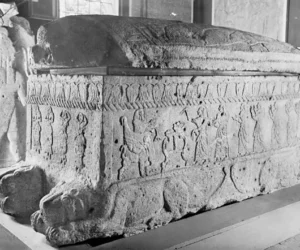
Sarcophagus of Ahiram
The Sarcophagus of Ahiram, discovered in 1923 in Byblos, Lebanon, stands as a significant artifact in Near Eastern archaeology. Its importance stems from its ancient Phoenician inscriptions, which many scholars consider among the earliest examples of the Phoenician alphabet. This artifact, dating back to approximately the 10th century BC, offers valuable insights into early Phoenician…
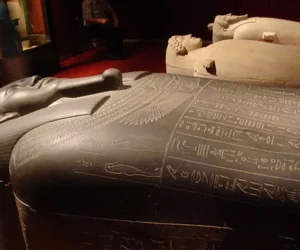
Tabnit Sarcophagus
The Tabnit Sarcophagus is a remarkable artifact from the Phoenician city-state of Sidon, located in modern-day Lebanon. Dated to around 500 BC, the sarcophagus holds the remains of Tabnit, a prominent Sidonian ruler and high priest. Today, this unique piece is displayed in the Istanbul Archaeology Museum, preserving its inscriptions, intricate carvings, and well-preserved body….