
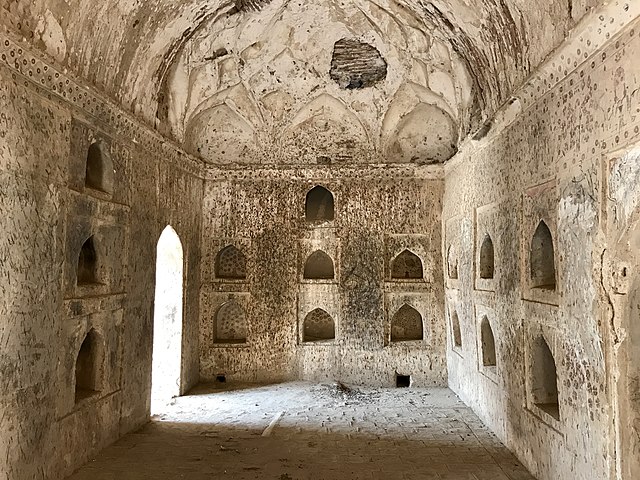
Kot Diji Fort, also known as Fort Ahmadabad, is a prehistoric site located in the province of Sindh, Pakistan. The fort sits on a high hill and is part of a series of forts that can be found along the Kirthar range. It represents a significant development in the defense systems of early forts in South Asia. The fortification was built during the Kot Diji phase, which is considered to be the precursor to the Indus Valley Civilization. The site offers a glimpse into the early history of the region and showcases the ingenuity of its inhabitants in architecture and urban planning.
Neural Pathways
Neural Pathways is a collective of seasoned experts and researchers with a profound passion for unraveling the enigmas of ancient history and artifacts. With a wealth of combined experience spanning decades, Neural Pathways has established itself as a leading voice in the realm of archaeological exploration and interpretation.
Our team of researchers and scholars provide unparalleled depth of knowledge in deciphering the intricate narratives embedded within ancient artifacts and deciphering the cultural nuances that shaped civilizations of the past. Through meticulous research, rigorous analysis, and a collaborative spirit, Neural Pathways has made and continues to make significant contributions to our understanding of the human past.
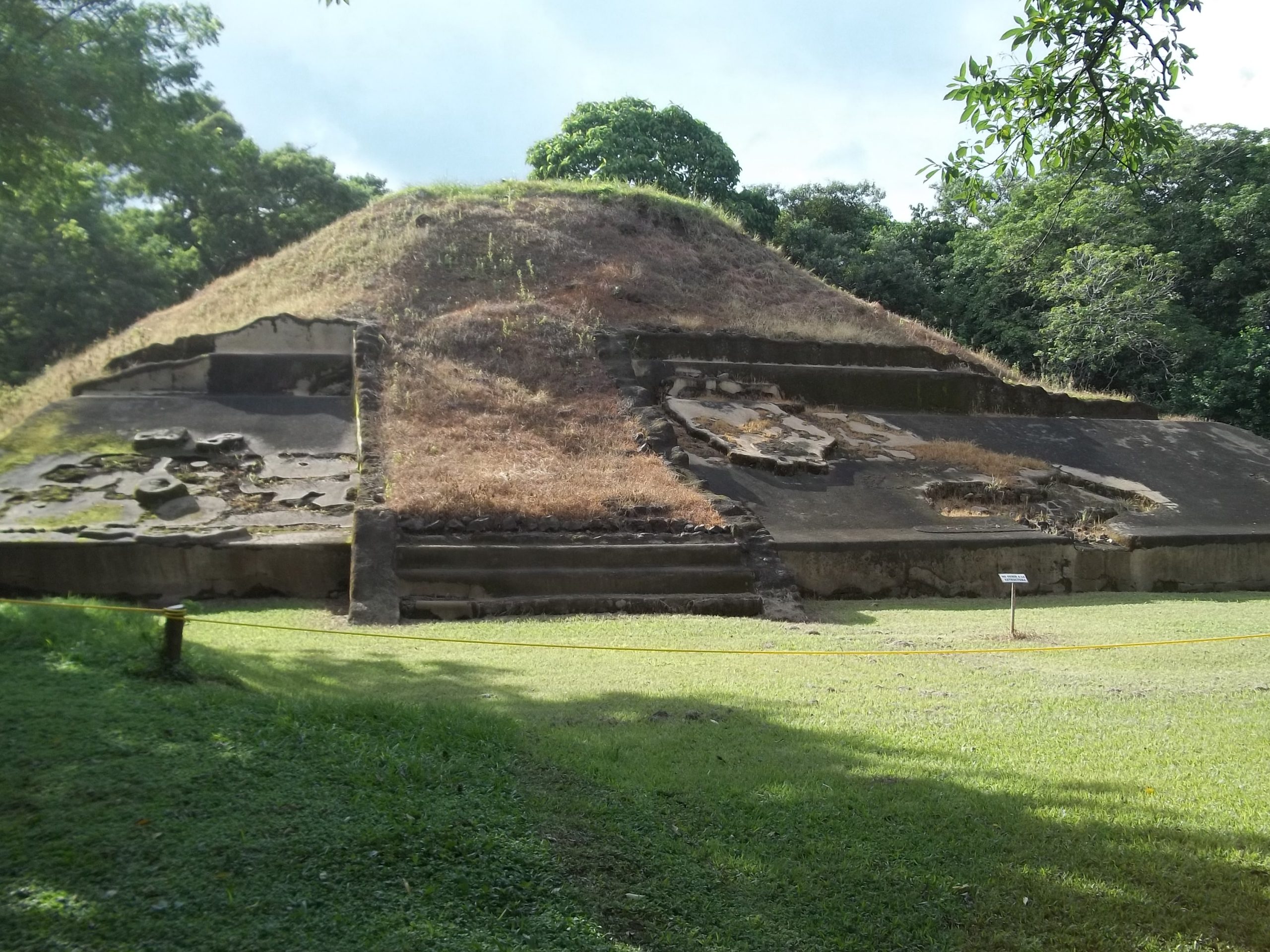
Casa Blanca
The Casa Blanca archaeological site, situated in the Chalchuapa archaeological zone within the municipality of Santa Ana, El Salvador, offers a profound glimpse into the pre-Columbian history of the region. This site, once a coffee plantation, now serves as an archaeological park, revealing the layers of history that have shaped this area of western El Salvador.
Larthia Seianti Sarcophagus
The Larthia Seianti sarcophagus is a renowned artifact from ancient Etruria, a region in central Italy. It is a stone sarcophagus that dates back to the 2nd century BC. The sarcophagus is famous for its beautifully sculpted figure of a woman, Larthia Seianti, who is believed to have been a noblewoman from Chiusi. The sarcophagus was discovered in the 19th century and has since been a subject of interest for historians and archaeologists. It provides valuable insights into Etruscan art, society, and burial practices.
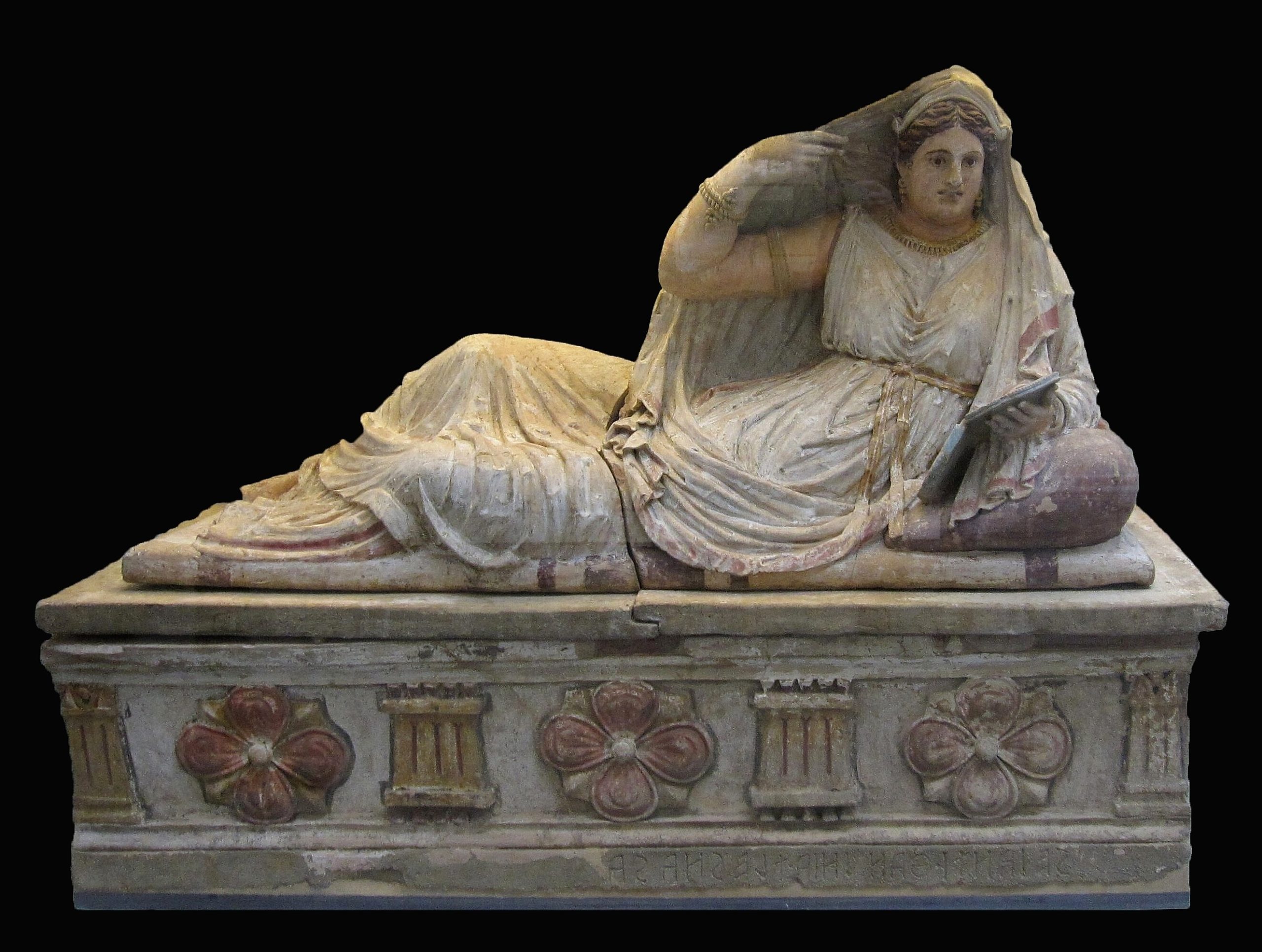
Sarcophagus of Seianti Hanunia Tlesnasa
The Sarcophagus of Seianti Hanunia Tlesnasa is a richly decorated Etruscan sarcophagus. It dates back to the 2nd century BC. The sarcophagus holds the remains of Seianti Hanunia Tlesnasa, a wealthy Etruscan woman. It was discovered in 1886 near Chiusi, in Tuscany, Italy. The sarcophagus is renowned for its detailed representation of the deceased. It provides valuable insights into Etruscan society, art, and burial practices.
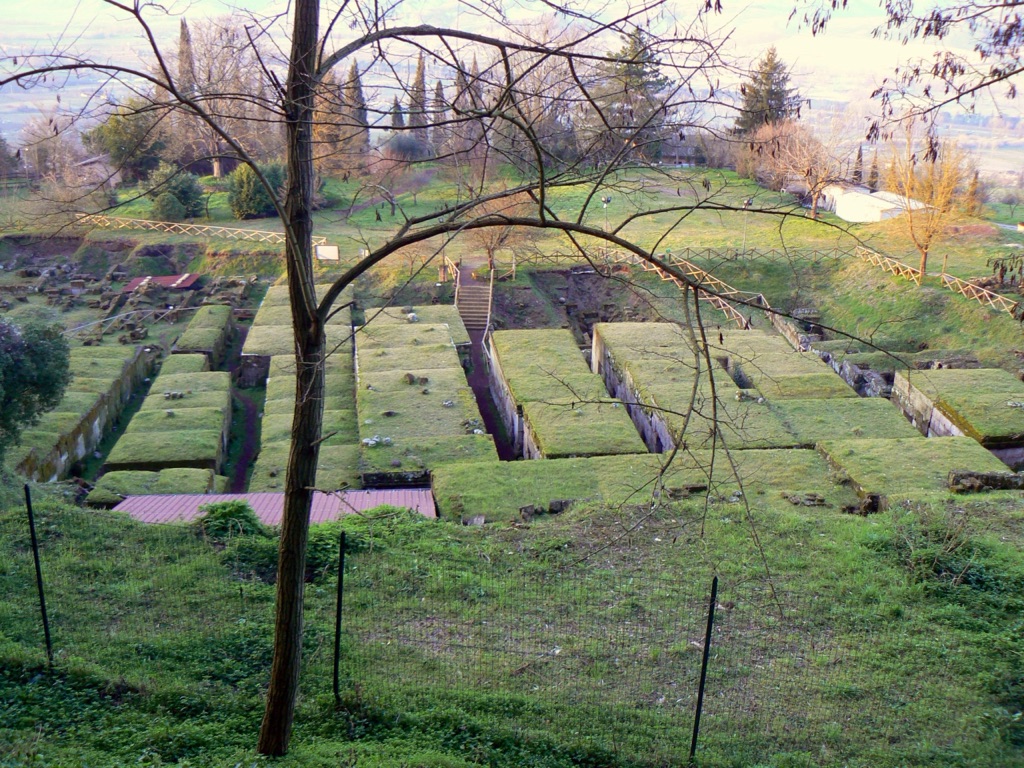
Necropolis of Crocifisso del Tufo
The Necropolis of Crocifisso del Tufo is an ancient Etruscan burial site located near Orvieto, Italy. Dating back to the 6th century BC, it is a testament to the Etruscan civilization’s funerary practices. The site comprises a series of tombs carved into tuff rock, each marked with inscriptions bearing the names of the deceased. This necropolis provides valuable insights into the social structure, culture, and daily life of the Etruscans, a people renowned for their artistry and complex society.
Marzabotto (Kainua)
Marzabotto, also known as Kainua, is an ancient Etruscan city in Italy. It’s renowned for its well-preserved urban layout and sacred area. The site offers invaluable insights into Etruscan culture and urban planning. Archaeologists discovered it in the late 19th century. It has since become a critical site for understanding pre-Roman Italy. The city’s ruins include residential areas, workshops, and public buildings. These elements provide a snapshot of Etruscan civilization. Marzabotto is also significant for its necropolis, which reveals burial customs of the time.