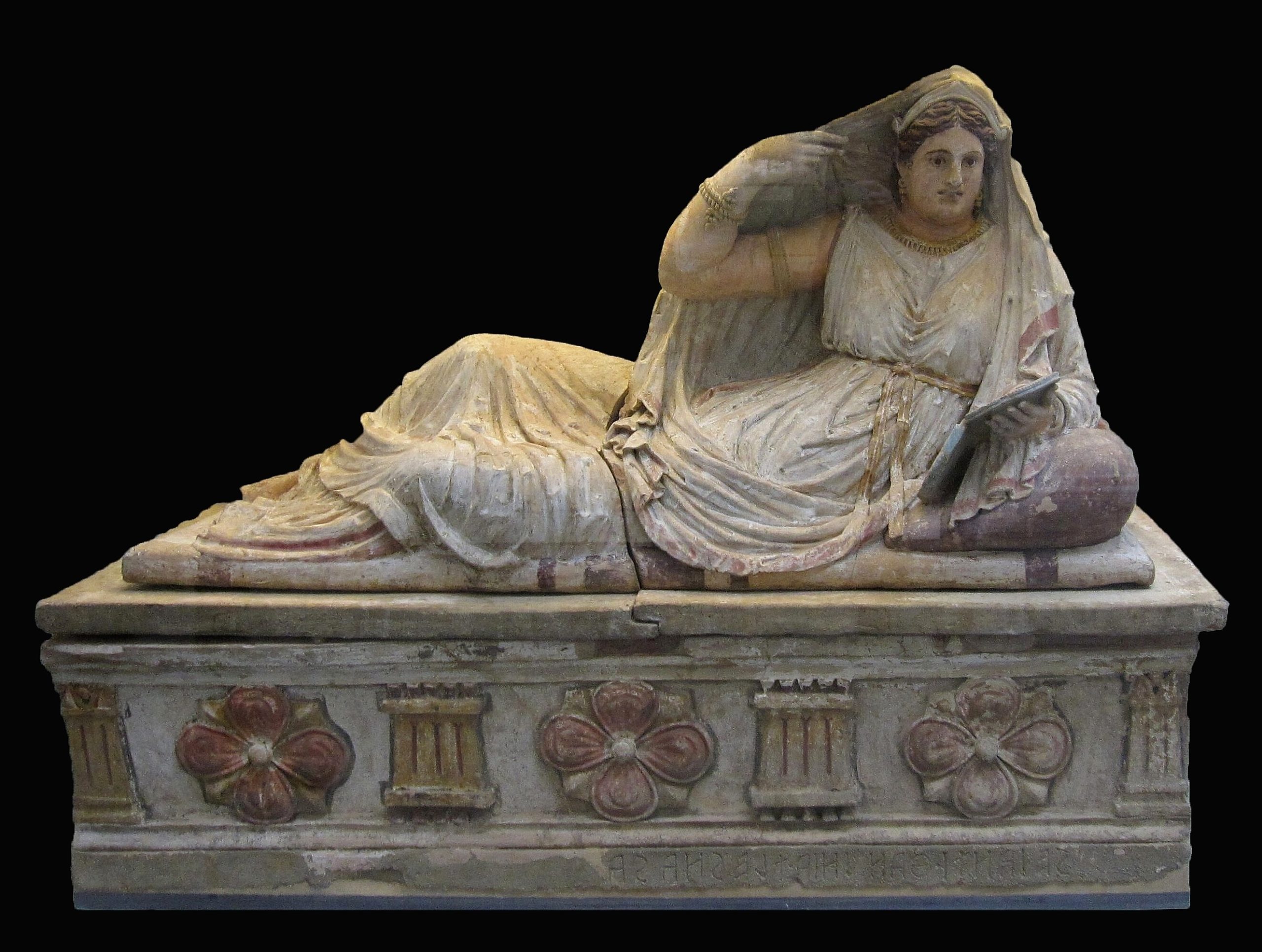
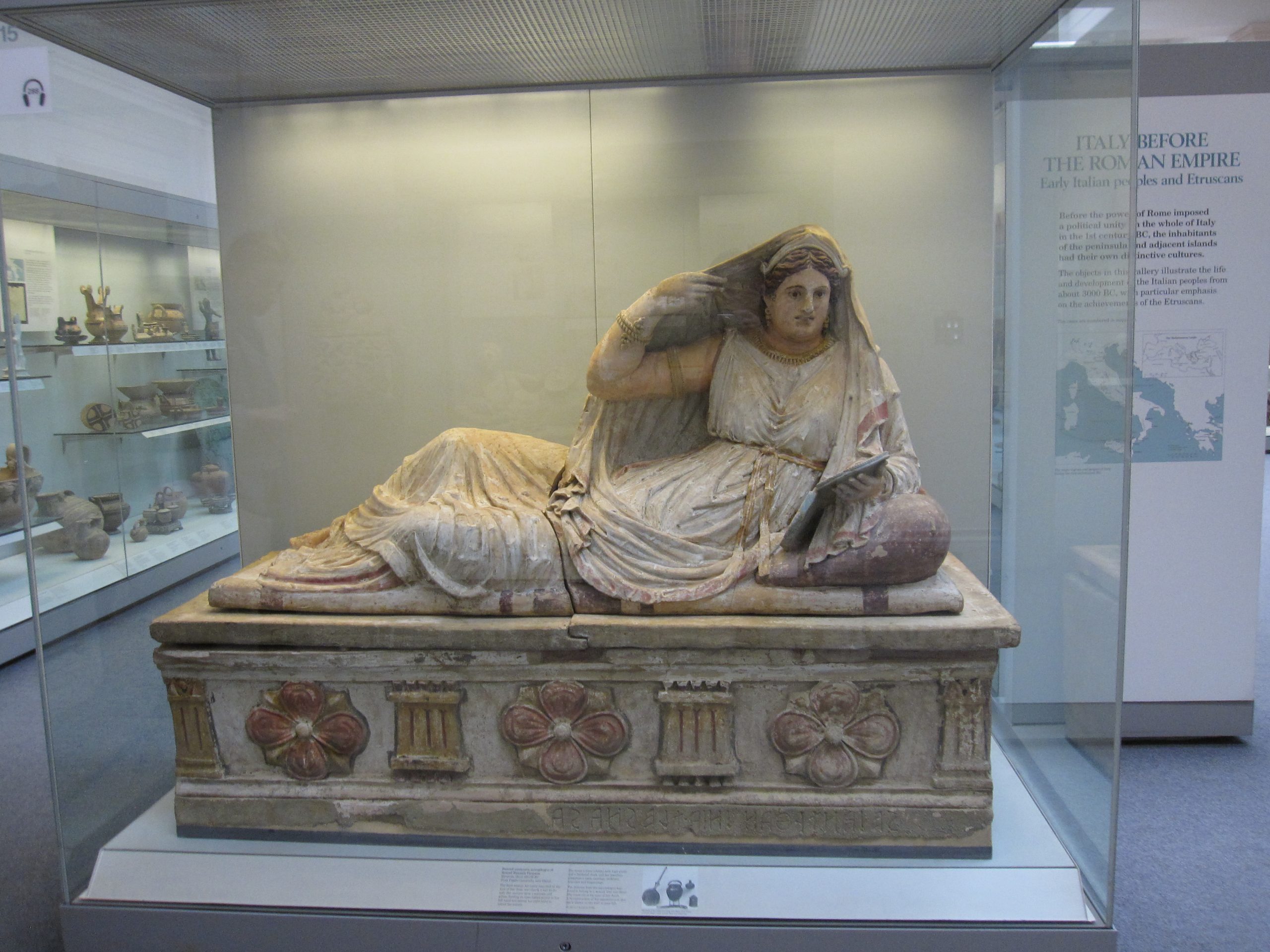
The Sarcophagus of Seianti Hanunia Tlesnasa is a richly decorated Etruscan sarcophagus. It dates back to the 2nd century BC. The sarcophagus holds the remains of Seianti Hanunia Tlesnasa, a wealthy Etruscan woman. It was discovered in 1886 near Chiusi, in Tuscany, Italy. The sarcophagus is renowned for its detailed representation of the deceased. It provides valuable insights into Etruscan society, art, and burial practices.
The Sarcophagus of Seianti Hanunia Tlesnasa: A Window into Etruscan Nobility
The Sarcophagus of Seianti Hanunia Tlesnasa, dating from between 150–140 BC, represents a significant artifact in the study of Etruscan culture and art. Acquired by the British Museum in 1887, this life-size sarcophagus offers a vivid glimpse into the life and afterlife beliefs of the Etruscan nobility.
Discovery and Context
Unearthed in 1886 near Chiusi, Tuscany, at Poggio Cantarello, the sarcophagus was found alongside a skeleton and grave belongings, indicating the high status of Seianti. A similar sarcophagus, belonging to Larthia Seianti, suggests a dynastic connection between the two women, highlighting the importance of familial lineage in Etruscan society.
Artistic and Cultural Significance
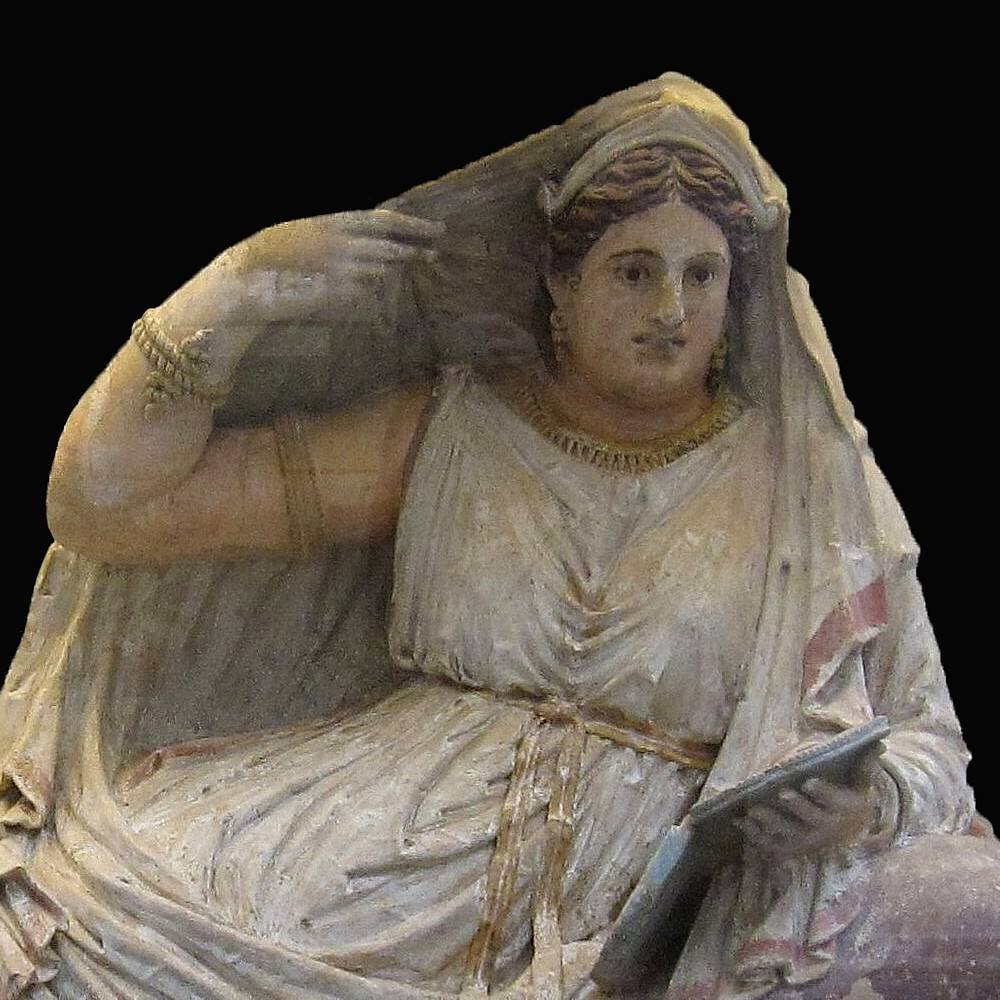
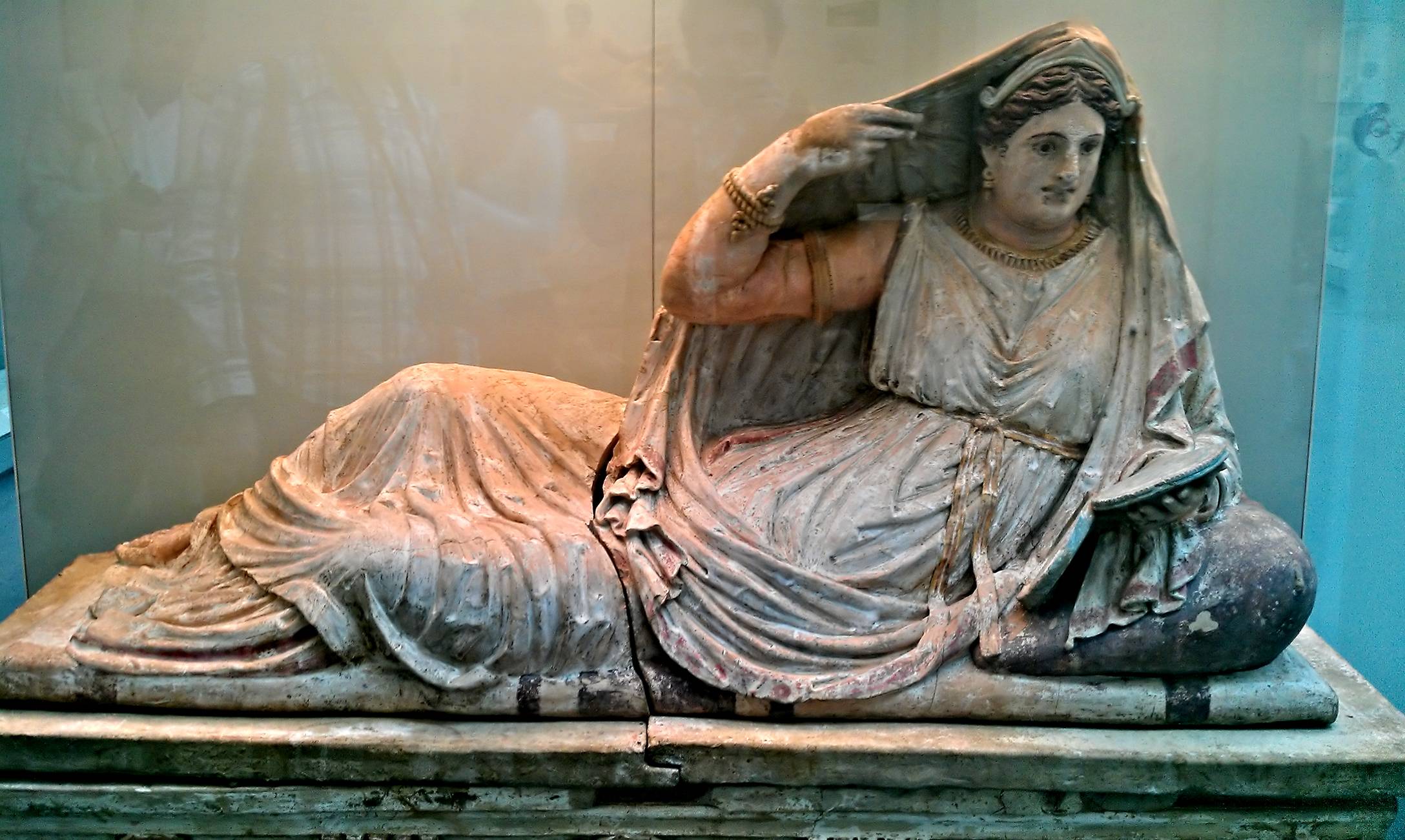
The sarcophagus stands as a masterpiece of Etruscan art, with Seianti’s name inscribed in Etruscan along its base. The detailed depiction of Seianti, adorned in a richly ornamented gown and jewelry, reflects the wealth and status of her family. The realistic portrayal, including the gesture of adjusting her veil and the presence of a mirror, suggests a blend of personal identity and cultural symbolism.
The attire and jewelry, influenced by Hellenistic styles, underscore the cosmopolitan nature of Etruscan society, which was open to external influences while maintaining its unique identity. The possible interpretation of Seianti’s attire as bridal gear, intended for a reunion with her husband in the afterlife, offers insight into Etruscan beliefs regarding death and the afterlife.
Scientific Insights
Analysis of the skeletal remains indicates that Seianti was around 50–55 years old at the time of her death. The youthful depiction on the sarcophagus, contrasted with a reconstruction of her more mature face, reflects the Etruscan practice of idealizing the deceased. This discrepancy also highlights the role of artistic convention and societal ideals in shaping representations of individuals.
Personal and Societal Reflections
The sarcophagus not only serves as a memorial for Seianti but also as a reflection of Etruscan societal norms, including the status of women, dietary habits, and health conditions. The depiction of Seianti reclining, a posture associated with banquets and possibly marriage, emphasizes the social and familial roles of Etruscan women.
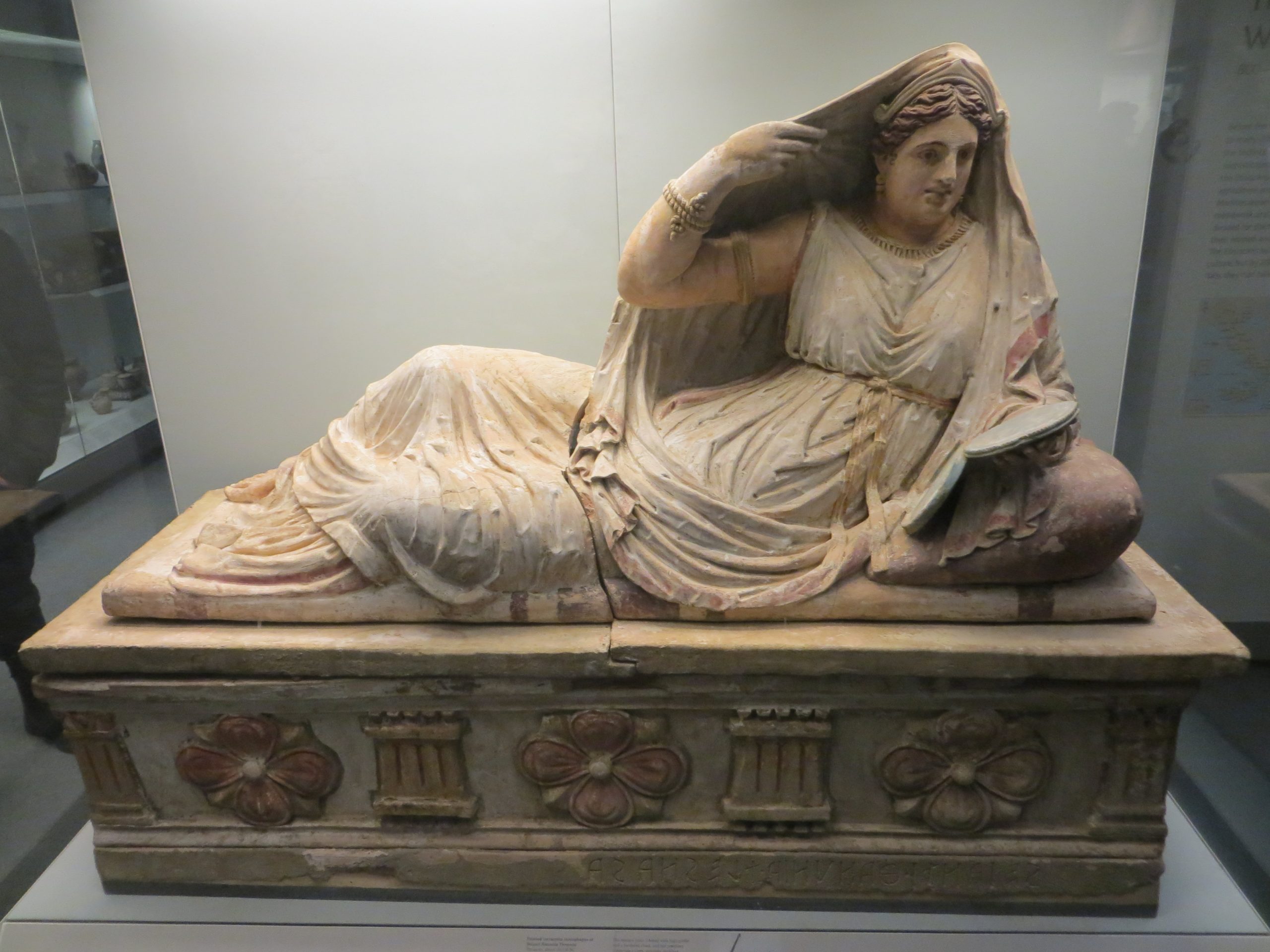
The inclusion of a mirror, a symbol of vanity and self-awareness, further enriches our understanding of Etruscan attitudes towards the self and the afterlife. The portrayal of Seianti as robust, a sign of prosperity in antiquity, juxtaposed with the slender nature of her actual skeleton, suggests artistic license in conveying societal ideals.
Conclusion
The Sarcophagus of Seianti Hanunia Tlesnasa offers a multifaceted view of Etruscan life, art, and beliefs. Through its detailed depiction of Seianti, the sarcophagus provides insights into the complexities of Etruscan society, the role of women, and the interplay between personal identity and cultural expression. As such, it remains a valuable artifact for understanding the Etruscan civilization and its place within the broader tapestry of ancient Mediterranean cultures.
At a glance
Country: Italy
Civilization: Etruscan
Age: 2nd century BC
Sources:

Neural Pathways is a collective of seasoned experts and researchers with a profound passion for unraveling the enigmas of ancient history and artifacts. With a wealth of combined experience spanning decades, Neural Pathways has established itself as a leading voice in the realm of archaeological exploration and interpretation.