Nepal holds two UNESCO World Heritage cultural properties, and between them they span more than two millennia of building. The older is Lumbini, where the Mauryan emperor Ashoka raised a sandstone pillar in 249 BCE to mark the birthplace of the Buddha. The other is the Kathmandu Valley, inscribed in 1979 as seven separate monument zones and shaped above all by the Malla dynasty and the Newar craftsmen who served it. Between the two lies the country’s oldest dated inscription, carved at Changu Narayan in 464 CE — and all three are still standing.
What are the seven monument zones of the Kathmandu Valley?
UNESCO does not treat the Kathmandu Valley as a single site. The 1979 inscription — later refined by a minor boundary modification in 2006 — covers seven discrete ensembles: the Durbar Squares of Hanuman Dhoka (Kathmandu), Patan and Bhaktapur; the Buddhist stupas of Swayambhu and Bauddhanath; and the Hindu temple precincts of Pashupati and Changu Narayan. The property totals 167.37 hectares with a 70.29-hectare buffer zone, and was listed under cultural criteria (iii), (iv) and (vi).
The valley was placed on the List of World Heritage in Danger in 2003 and removed in 2007, after Nepal adopted the Integrated Management Plan that still governs the property. The underlying legal protection is older: the Ancient Monument Preservation Act of 1956.
UNESCO dates the artistic apogee of these monuments to the three centuries between 1500 and 1800 CE — the Malla period, when Newar craftsmen refined the tiered temple in fired brick, mud mortar, timber and gilded bronze into the form the valley is now known for.
Lumbini and the Ashoka pillar of 249 BCE
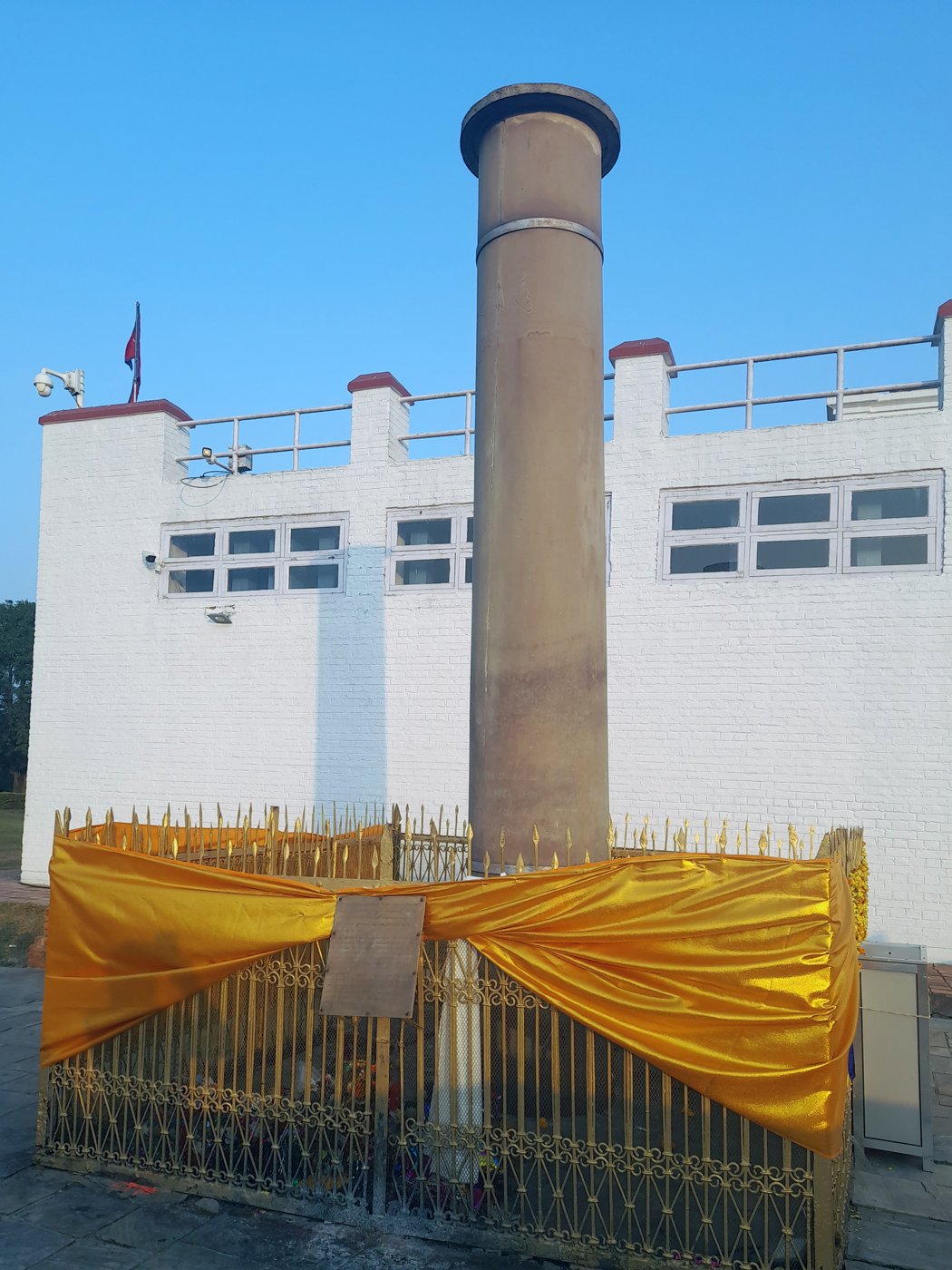
Lumbini in Rupandehi District is where the Mauryan emperor Ashoka placed a pink sandstone pillar, roughly six metres tall, in 249 BCE to mark the birthplace of Siddhartha Gautama. The Brahmi-script, Pali-language text records that Ashoka visited in the twentieth year of his reign, that the Buddha was born on the spot, and that the village’s tax was consequently reduced to one-eighth. It is the oldest inscription known in Nepal.
The pillar had been swallowed by scrub for centuries. It was uncovered on 1 December 1896 by the archaeologist Alois Anton Führer working with General Khadga Shumsher Rana, who found the inscription about a metre below ground level. A second discovery came a century later: excavation inside the ruins of the Maya Devi Temple in 1996 exposed the Marker Stone, the conglomerate slab that Ashoka’s brick platform had been built to protect.
Tilaurakot and the Shakya heartland
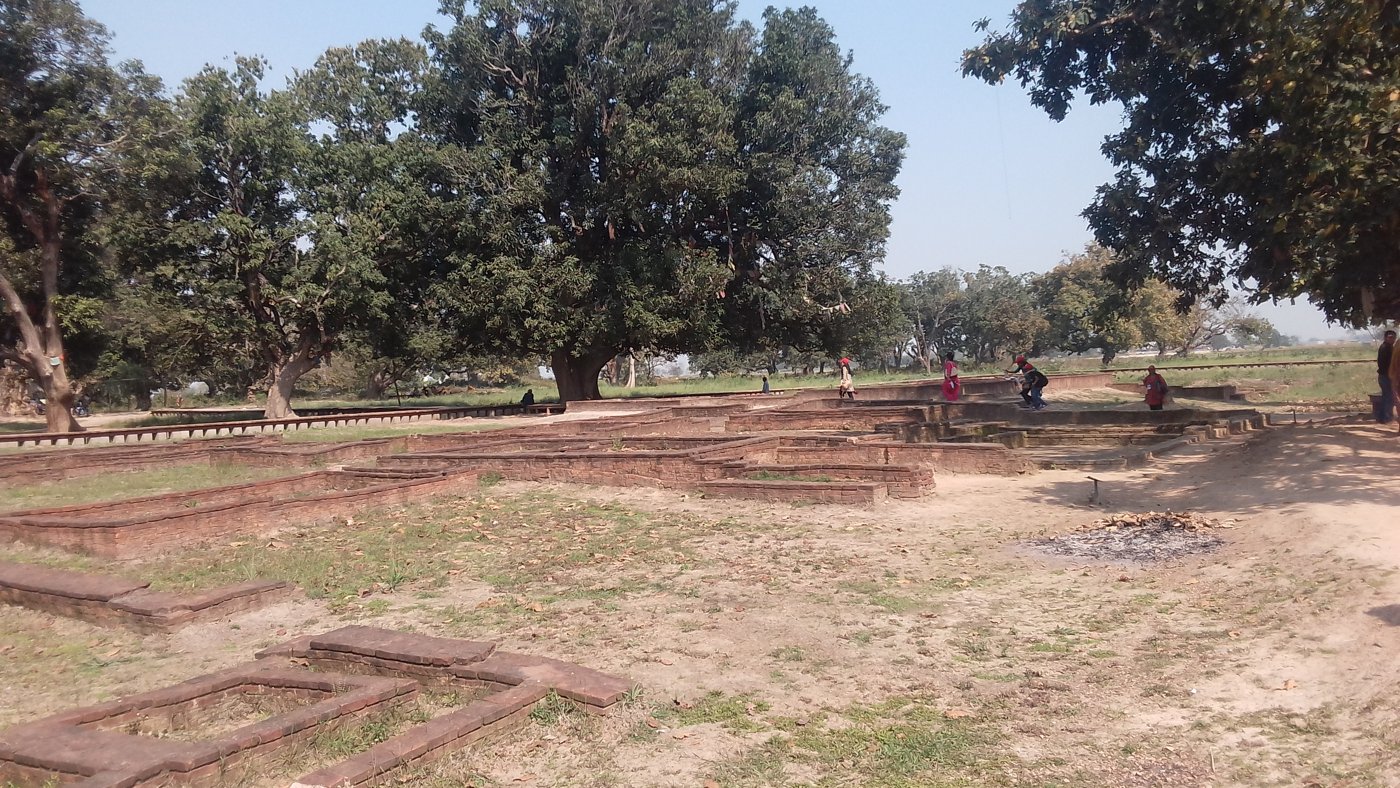
West of Lumbini, in Kapilvastu District, lies Tilaurakot — widely identified as Kapilavastu, the Shakya capital where Siddhartha spent his first twenty-nine years. It has sat on Nepal’s World Heritage Tentative List since 1996. Geophysical survey and excavation led by Durham University between 2014 and 2016 recovered what its directors describe as the most complete plan of an Early Historic city yet mapped in South Asia: a cardinal street grid, a walled palatial complex at the centre, a monastic complex at the Eastern Stupa, and a fortification wall with an external moat. Among the finds were 498 punch-marked Mauryan silver coins.
Nearby Ramagrama, also on the Tentative List, holds a distinction no other stupa can claim: it is the one relic stupa of the original eight that Ashoka is said to have left unopened in the third century BCE.
Changu Narayan and Nepal’s oldest dated inscription
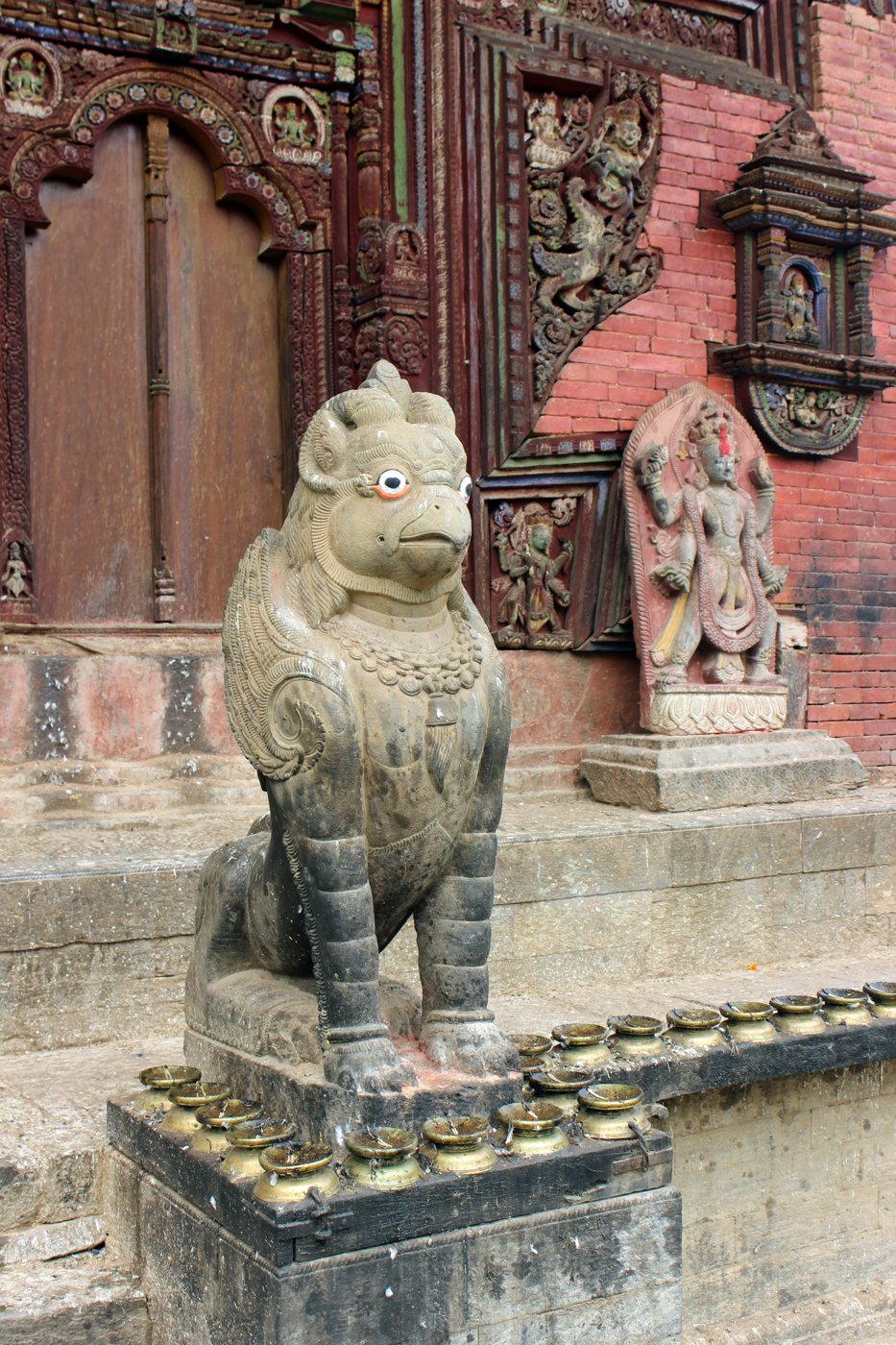
On a ridge above the Manohara river northeast of Bhaktapur, Changu Narayan is the oldest continuously worshipped Hindu temple in the Kathmandu Valley, dedicated to Vishnu as Narayana. The stone pillar near its western entrance carries a Sanskrit inscription in Gupta script dated to 464 CE and commissioned by the Licchavi king Manadeva I. It records his military campaigns and is the earliest securely dated written document in Nepal — the point at which the country’s recorded history begins.
The surrounding compound holds Licchavi-period stone sculpture that is arguably more important than the timber temple itself, including the Garuda Narayana and Vishvarupa reliefs.
Swayambhu, Bauddhanath and the valley’s stupas
UNESCO identifies Swayambhu as the oldest Buddhist monument in the valley. Its foundation is credited to King Vrishadeva in the early to mid-fifth century CE, with a renovation under Manadeva — the same king behind the Changu Narayan inscription. Scholarship by Alexander von Rospatt notes that the chronicles’ “construction” accounts most likely describe renovations of an earlier structure, of which eleven are documented between 1370 and 1817. The stupa was damaged in a raid in 1349 and repaired afterwards.
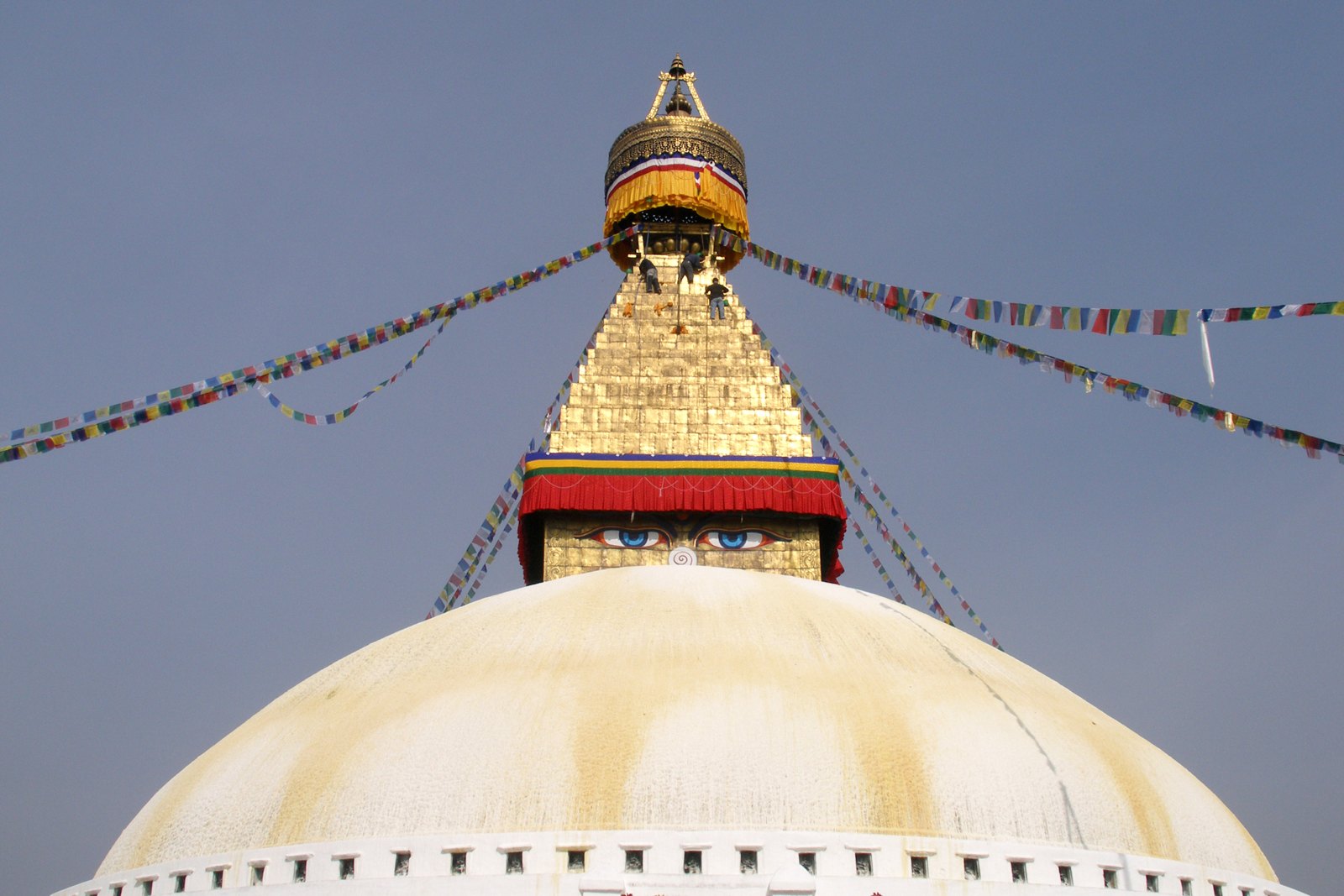
Bauddhanath, in eastern Kathmandu, is the largest stupa in Nepal at 36 metres. Its plan is a mandala, and its whitewashed hemisphere carries the painted Buddha eyes on all four faces of the gilded harmika above.
The three Durbar Squares
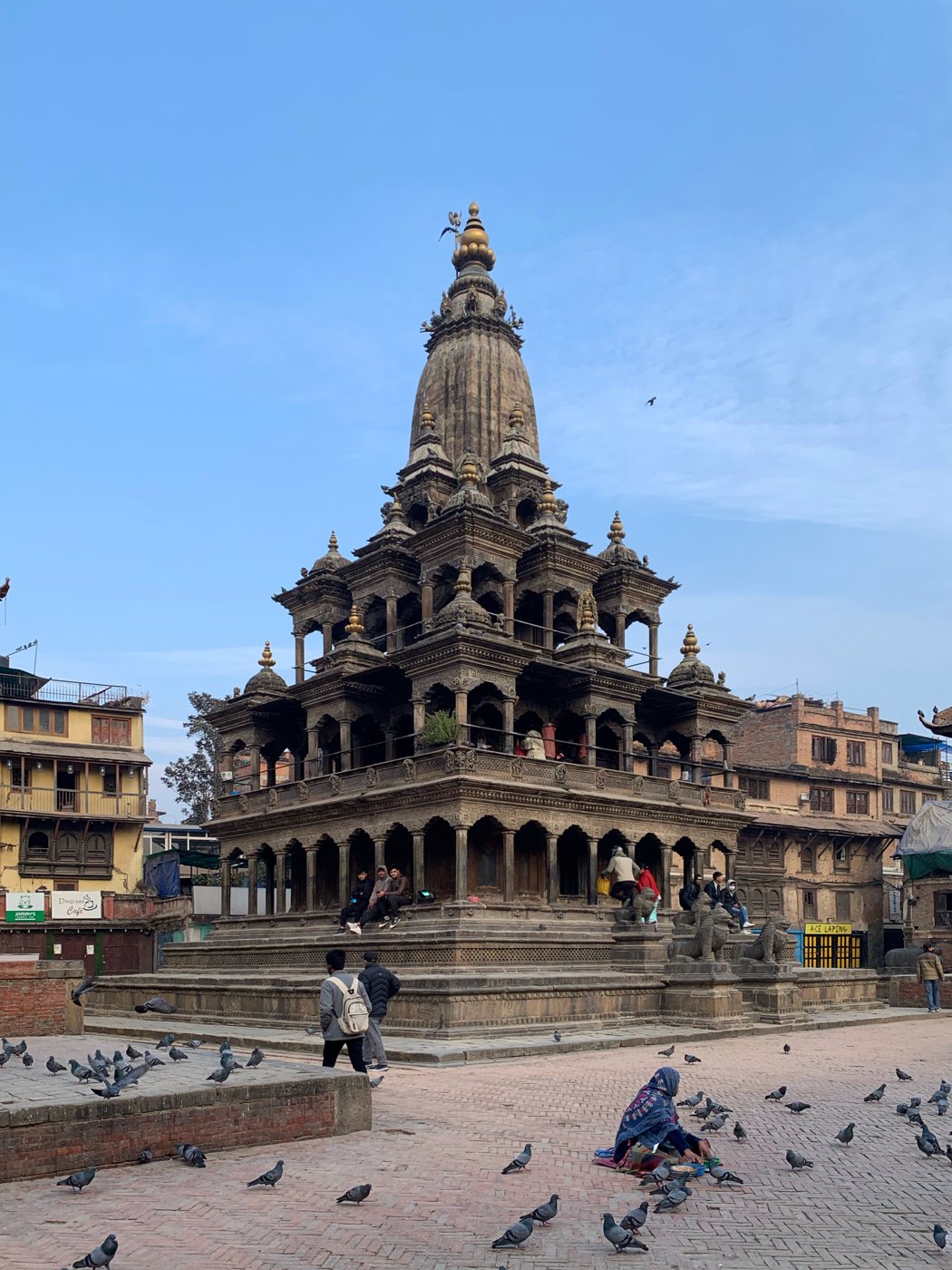
Each of the valley’s three historic cities kept its own royal square, and the rivalry between the Malla courts of Kathmandu, Patan and Bhaktapur is the reason all three are extraordinary rather than one. Hanuman Dhoka in Kathmandu takes its name from the Hanuman statue installed at the palace gate; Patan Durbar Square in Lalitpur concentrates the finest Newar stone and metalwork in the valley, including the Krishna Mandir; and Bhaktapur’s square, with the adjacent Taumadhi Square and its five-tiered Nyatapola temple, preserves the most intact medieval urban fabric of the three.
For more sites across the region, see our Historical Places archive.
How much did the 2015 earthquake destroy?
The Gorkha earthquake of 25 April 2015 struck the valley’s monuments hard. Nepal’s Department of Archaeology counted 920 damaged or destroyed heritage sites nationwide, of which 815 have since been reconstructed. Kasthamandap — the timber pavilion that gave Kathmandu its name — collapsed completely; its rebuild was finished in December 2021. Dharahara, the nine-storey tower of 1832, also fell and was rebuilt by 2021.
Bauddhanath’s spire cracked so badly that it had to be dismantled down to the dome. The restoration cost roughly Rs 230 million (about US$2.1 million) and consumed some 30 kilograms of gold for the pinnacle — funded entirely by Buddhist communities in Nepal and abroad, with no state money. The stupa was re-consecrated in November 2016.
Beyond the valley
Nepal’s older landscape is not confined to Kathmandu or the Terai. Muktinath, at 3,710 metres below the Thorong La pass in Mustang district, is one of the rare shrines venerated by Hindus and Buddhists alike — a Vishnu temple to one tradition, Chumig Gyatsa, the “Hundred Waters”, to the other. The Annapurna and Mustang corridors also hold cave shrines associated with the eleventh-century yogi Milarepa, including the cave at Manang. Further east, Pashupatinath’s riverside precinct on the Bagmati remains the largest Hindu temple complex in the country and an active cremation ground rather than a monument.
Sources and further reading
- UNESCO World Heritage Centre — Kathmandu Valley (inscription data, Outstanding Universal Value)
- Durham University Department of Archaeology — Tilaurakot excavation project
- Lumbini pillar inscription — text, translation and rediscovery
- Changu Narayan Temple and the 464 CE Manadeva inscription
- The April 2015 Gorkha earthquake and its heritage damage
- World History Encyclopedia — Lumbini