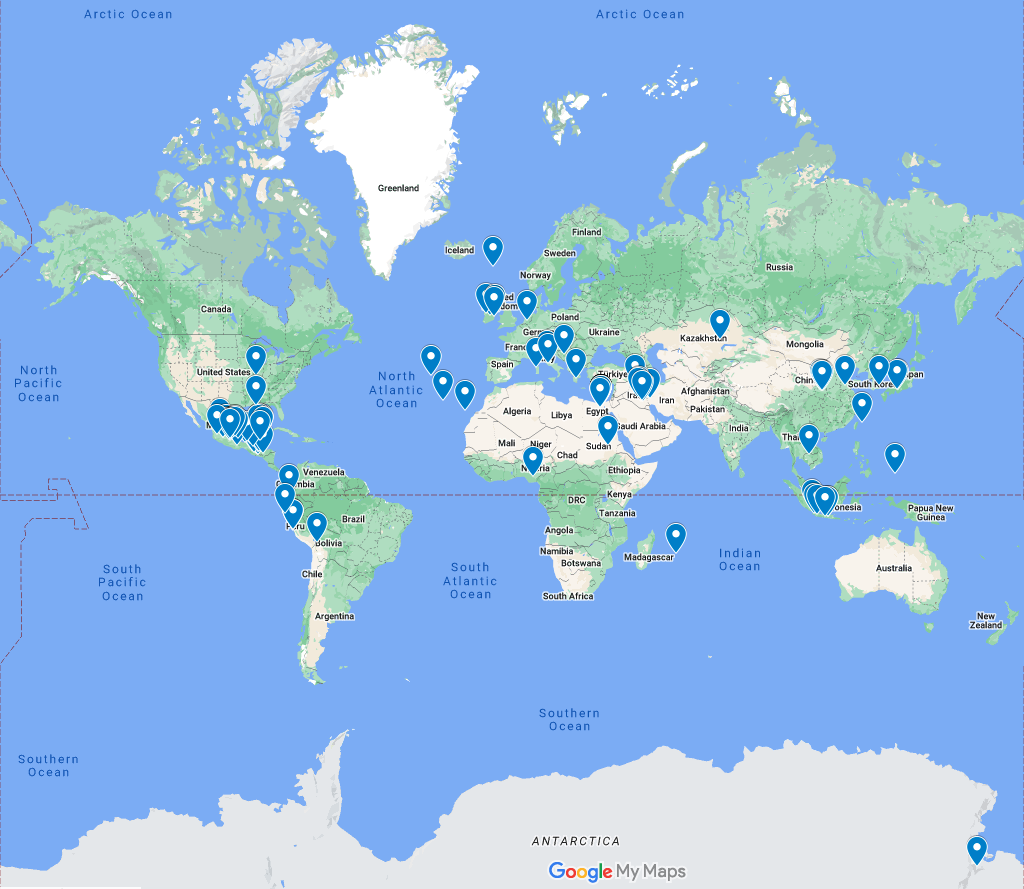
The ancient sites in Iraq hold the deepest archaeological sequence anywhere on earth: Sumerian Eridu was already a temple town in the sixth millennium BC, and Abbasid Samarra was still an imperial capital in the ninth century AD. Six properties across the Tigris and Euphrates basin carry UNESCO World Heritage status — Hatra, Ashur, Samarra, Erbil Citadel, Babylon and the Ahwar of Southern Iraq — and a further fifteen sit on the country’s tentative list, including Nimrud, Nineveh and the Old City of Mosul. Iraq accepted the World Heritage Convention on 5 March 1974, but the listings arrived slowly and unevenly, and three of the six are currently on the List of World Heritage in Danger. What follows is a working guide to the major sites, their dates and their present condition. For comparable places elsewhere, see our Ancient Civilizations and Historical Places archives.
Why Do Only Six Iraqi Sites Hold World Heritage Status?
The shortfall is political and logistical rather than archaeological. A World Heritage nomination requires a stable state party able to produce boundary maps, conservation plans and long-term management commitments, and Iraq has spent much of the last four decades unable to guarantee any of those. Hatra was inscribed in 1985 and then nothing followed for eighteen years. Ashur came in 2003, the year of the invasion, and was placed on the List of World Heritage in Danger in the same session — the only Iraqi property to be inscribed and endangered simultaneously.
The picture since has been mixed. Samarra was inscribed in 2007, also in danger. Erbil Citadel followed on 21 June 2014, in the more stable Kurdistan Region. The Ahwar marshlands were inscribed in 2016, and Babylon — the site most of the world associates with Iraq — only on 5 July 2019, at the Committee’s 43rd session in Baku. Hatra joined the danger list in June 2015 after Islamic State occupation. Nimrud, Nineveh and Mosul, all severely damaged in the same period, remain tentative-list candidates rather than inscribed properties.
Babylon: The 2019 Inscription of a Neo-Babylonian Capital
Babylon lies about 85 kilometres south of Baghdad, near Hillah. It was capital of the Neo-Babylonian Empire between 626 and 539 BCE, the period that produced the outer and inner city walls, the processional way, the palaces and the Ishtar Gate, whose glazed blue bricks carry reliefs of dragons and bulls. The gate’s principal reconstruction stands in the Pergamon Museum in Berlin, assembled from material excavated by Robert Koldewey’s German expedition from 1899.
The Hanging Gardens, counted among the Seven Wonders, have never been securely located at Babylon and are the subject of a genuine scholarly argument about whether they stood at Nineveh instead. The city itself is far older than its famous phase: an Amorite dynasty established itself here around 1894 BC, and Hammurabi made it the dominant power in Mesopotamia in the eighteenth century BC. Reconstruction work under Saddam Hussein in the 1980s, laid directly on ancient courses and stamped with the ruler’s own inscriptions, and the use of the site as a military base after 2003, were the two obstacles that delayed inscription for decades. Our separate account of Babylon City covers the excavation history in more detail, and the Babylonian Map of the World shows how the city’s own scribes imagined its place in the cosmos.
Ur, Uruk and Eridu: Three Sumerian Cities Inside the Ahwar
The Ahwar of Southern Iraq, inscribed in 2016, is a mixed property — cultural and natural together — and one of the more unusual entries on the list. It has seven components: three archaeological cities and four wetland areas. The marsh components are the West Hammar Marshes (38 per cent of the natural area), the Central Marshes (29 per cent), the Hawizeh Marshes (23 per cent) and the East Hammar Marshes (9 per cent). The cultural components are Uruk, Ur and Tell Eridu, cities that grew on the margins of those freshwater marshes between the fourth and third millennia BC.
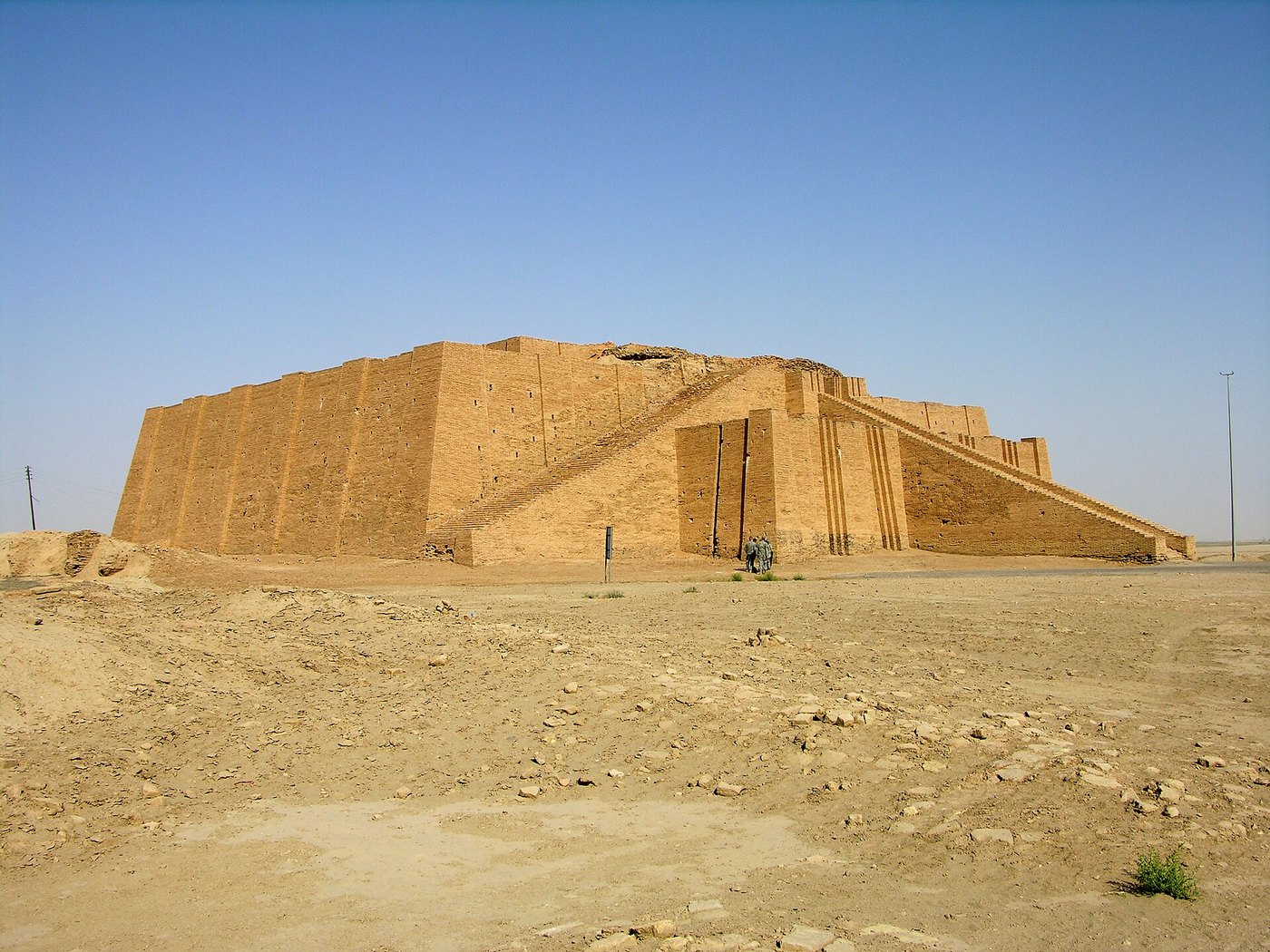
Ur
Ur sits near Nasiriyah in Dhi Qar Governorate and is traditionally associated with the biblical Abraham. Its Great Ziggurat was built for the moon god Nanna by Ur-Nammu, founder of the Third Dynasty of Ur, in the twenty-first century BC; the lower stage and triple staircase were substantially rebuilt in the 1980s, which is why the monument photographs so much more crisply than its neighbours. Leonard Woolley’s excavations between 1922 and 1934 opened the cemetery that produced the gold, lapis and carnelian objects now split between the British Museum, the Penn Museum and Baghdad — see our account of the Royal Tombs of Ur.
Uruk
Uruk, modern Warka, is where the case for the world’s first city is usually made. Its Eanna precinct was dedicated to Inanna, its walls were credited by tradition to Gilgamesh, and the earliest known writing — proto-cuneiform administrative tablets — appears here around 3300 BC. The Warka Vase, looted from the Iraq Museum in 2003 and returned months later in pieces, came from the same precinct, and the Weld-Blundell Prism preserves the king list in which Uruk’s rulers appear. The city’s legendary king remains the subject of one of the oldest surviving works of literature, and of a persistent modern claim about the tomb of Gilgamesh.
Eridu
Tell Eridu, south-west of Ur, was regarded by the Sumerians themselves as the first city, the seat of the god Enki and the place where kingship first descended from heaven. Archaeologically it is a sequence of temples built one on top of another from the Ubaid period onward, and it was never overbuilt by a later town, which is precisely what makes it valuable.
Ashur and Nimrud: The Assyrian Capitals
Ashur, or Qal’at Sherqat, stands on a bluff above the Tigris in Salah ad-Din Governorate. It was the first capital of the Assyrian Empire and the religious centre of the state god Ashur, a place where kings were anointed and buried. Occupation reaches into the third millennium BC, and UNESCO’s inscription highlights its role as capital from roughly the fourteenth to the ninth century BC. Our fuller entry on Assur covers the temple and ziggurat sequence.
The threat to Ashur is now hydrological rather than military. The proposed Makhoul Dam on the Tigris, roughly 30 kilometres north-west of Baiji and designed for a reservoir of about three billion cubic metres, would flood the site along with, by one civil-society count, at least 184 other archaeological sites in the valley. It is the reason Ashur has stayed on the danger list continuously since 2003.
Nimrud, ancient Kalhu, lies south of Mosul and was Ashurnasirpal II’s capital from the ninth century BC. Its Northwest Palace produced the carved orthostat reliefs and the colossal lamassu — human-headed winged bulls — that fill the Assyrian galleries of the British Museum and the Metropolitan. Islamic State bulldozed large parts of the site in March 2015; UNESCO condemned the destruction on 6 March and again on 13 April that year, and sent an assessment mission after the site was retaken in November 2016. Nimrud has been on Iraq’s tentative list since 2000 and has never been inscribed.
Hatra: Iraq’s First World Heritage Site, 1985
Hatra was a fortified caravan city in what is now Nineveh Governorate, probably founded in the third or second century BC and at its height under the Parthians in the first and second centuries AD. Its circular double walls, reinforced with towers, twice turned back Roman sieges — under Trajan in 117 and Septimius Severus in 198 — before it fell to the Sasanians around 241. The great temple precinct mixes Hellenistic columns and pediments with Parthian iwans and Eastern iconography, and its sculpture shows Greek, Roman, Mesopotamian and Arab deities sharing the same sanctuary.
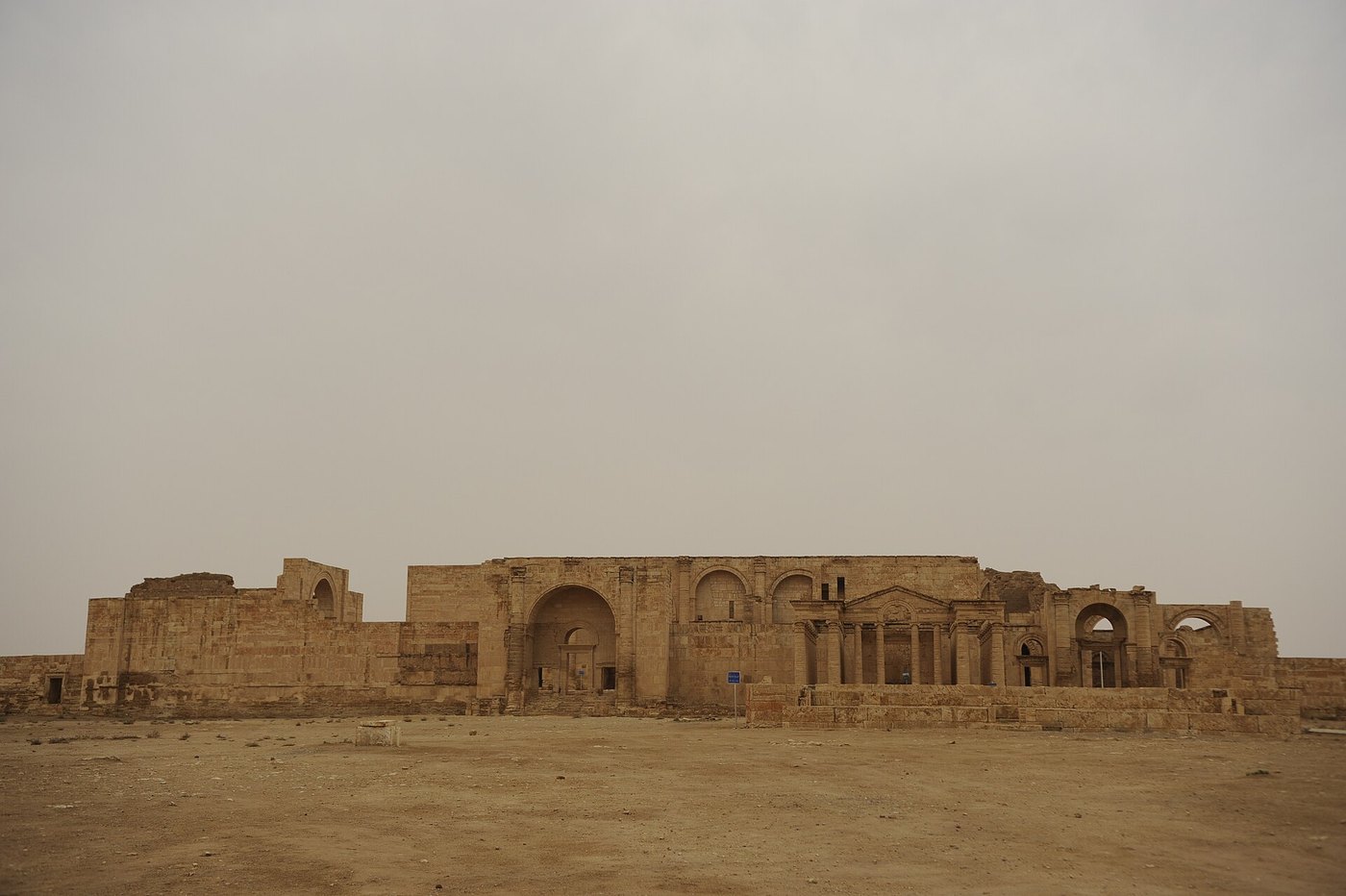
Islamic State seized Hatra in 2014 and released footage of statuary being destroyed in March 2015; UNESCO’s Director-General called it “a turning point in the cultural cleansing under way in Iraq” and the site was added to the danger list that June. Hatra was liberated in April 2017 and assessment missions found the damage extensive but the architecture largely standing. It remains remote desert country and access is dependent on current security guidance.
Samarra and the 52-Metre Malwiya Minaret
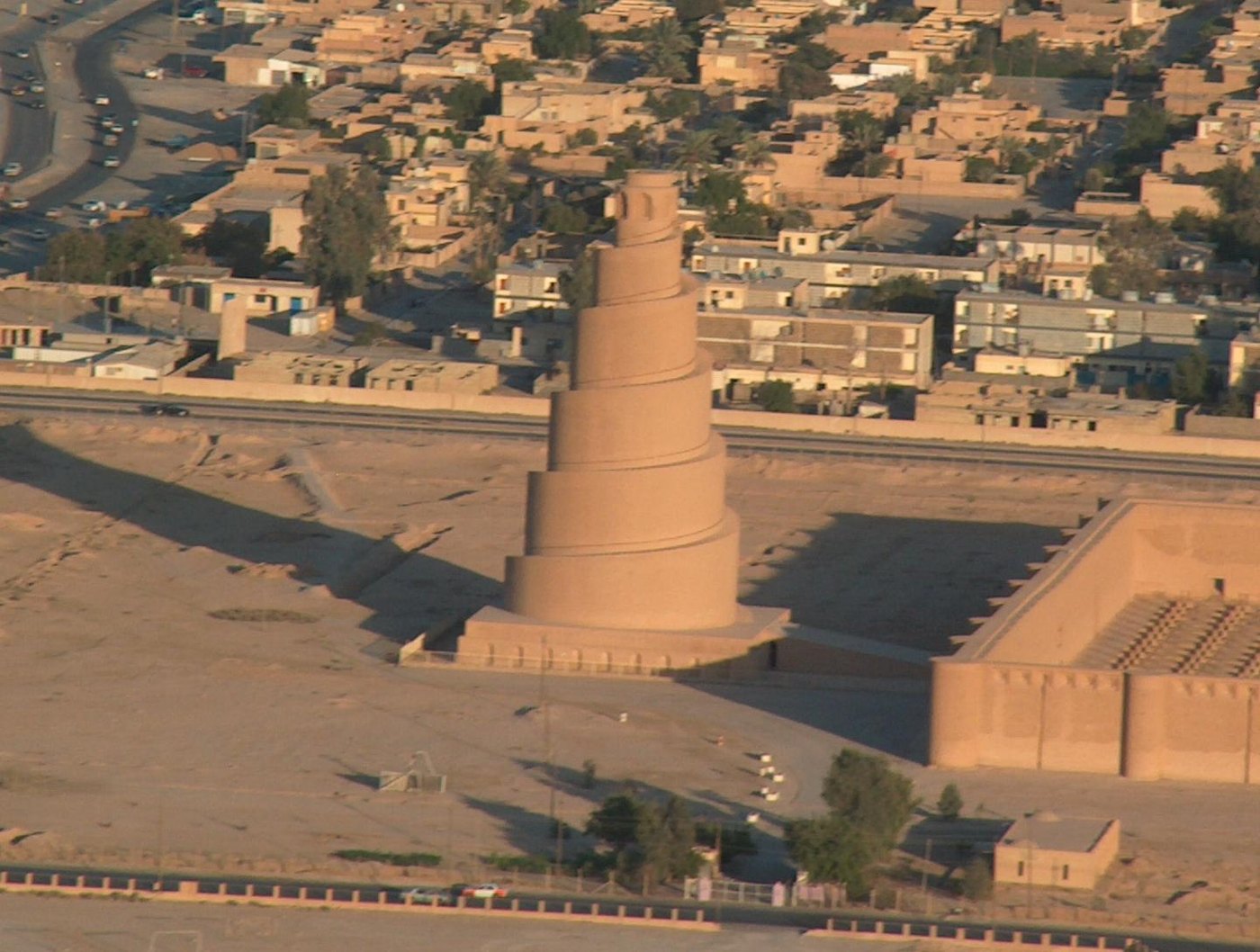
Samarra stands on the east bank of the Tigris about 125 kilometres north of Baghdad and was the Abbasid capital for a little over half a century from 836. What survives is the largest and best-preserved plan of an early Islamic capital anywhere: some 80 per cent of the ancient city is still unexcavated beneath the desert surface, which is the main reason UNESCO inscribed it in 2007.
The Great Mosque, built for the caliph al-Mutawakkil, was among the largest in the world when it was completed. Its minaret, the Malwiya, was constructed between 848 and 852 in brick and sandstone, rises 52 metres and is 33 metres wide at the base, with an external spiral ramp that ascends anticlockwise — the design that made it the standard modern illustration of the Tower of Babel. It was damaged by an explosion in 2005. The nearby Abu Dulaf mosque repeats the spiral form on a smaller scale. Samarra was inscribed on the danger list at the moment of inscription and remains there.
Erbil Citadel: A Tell Occupied for Six Millennia
Erbil Citadel is an oval tell rising above the modern city in the Kurdistan Region, its perimeter formed by a continuous facade of nineteenth-century house fronts that reads from below as a defensive wall. Continuous occupation of the mound has been claimed for around 6,000 years, which supports the frequent description of Erbil as one of the oldest continuously inhabited settlements on earth. Ancient Arbela was a significant Assyrian centre and the seat of a major temple of Ishtar.
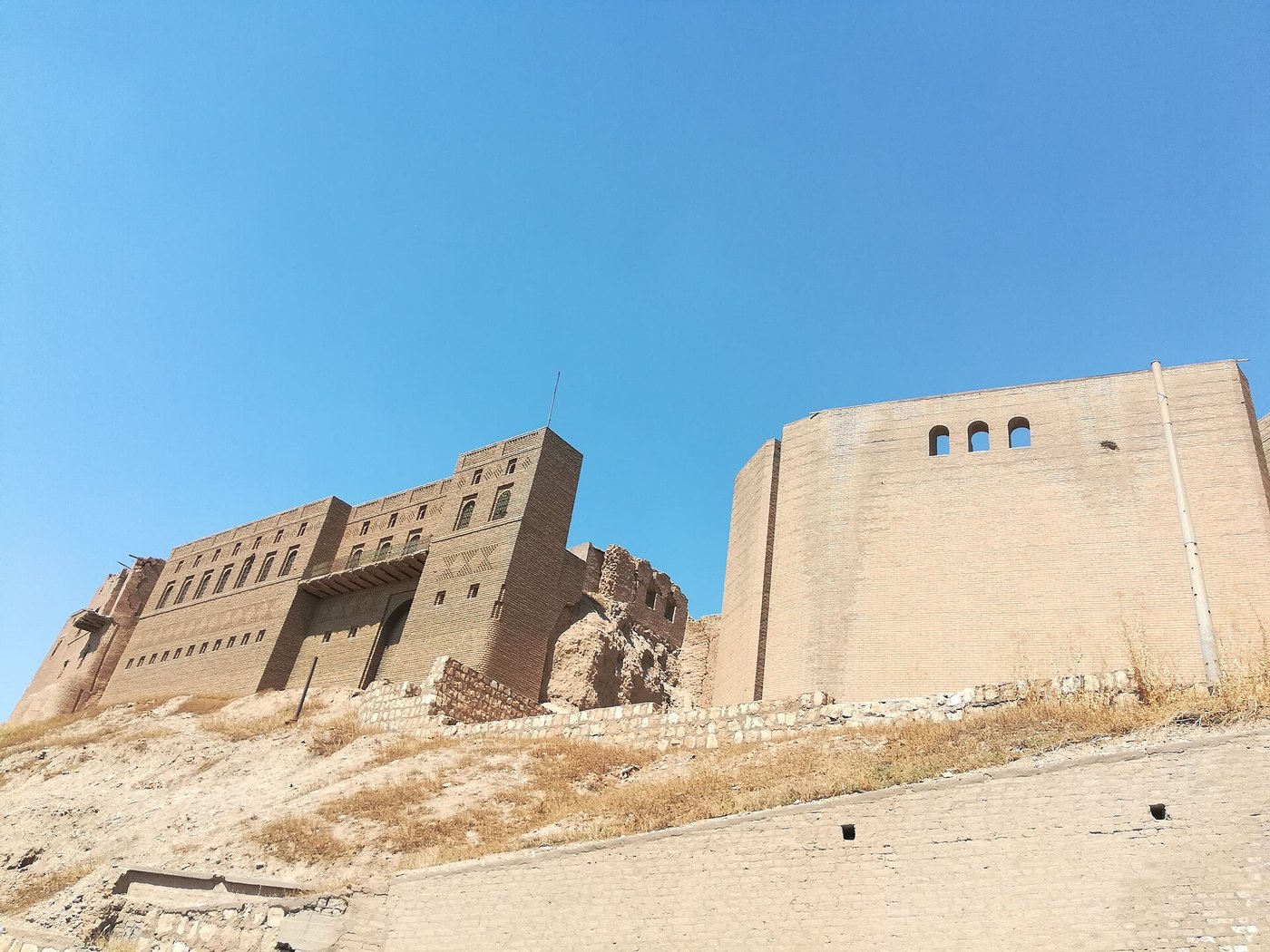
In 2007 the resident population was moved out for conservation work, with a single family kept in residence so that the claim of unbroken habitation would not be broken on a technicality. UNESCO inscribed the citadel on 21 June 2014, and rehabilitation of the houses, the hammam and the Textile Museum has continued in phases since. It is the most straightforward of Iraq’s World Heritage sites to visit, and the Kurdistan Region’s separate visa arrangements are part of the reason.
Planning a Visit
The practical constraints matter more here than at most heritage destinations. Southern and central Iraq are hot enough between May and September to make daytime fieldwork unpleasant; October to April is the working season for both archaeologists and visitors. Site fees are generally modest, but several major sites are managed through the State Board of Antiquities and Heritage and require permits or an accredited guide, and a few — Nimrud and Nineveh in particular — are still under conservation and clearance work following the 2014–2017 occupation. Security guidance changes; check current advice for each governorate rather than for the country as a whole. For a sense of how far back human occupation runs here, Shanidar Cave in the Zagros foothills holds Neanderthal burials tens of thousands of years older than anything in this list.
At a Glance
- Country: Iraq — accepted the World Heritage Convention on 5 March 1974
- Date range: Ubaid-period Eridu, 6th–5th millennium BC, to the Abbasid capital at Samarra, 9th century AD
- UNESCO World Heritage properties: 6 — Hatra (1985), Ashur (2003), Samarra (2007), Erbil Citadel (2014), Ahwar of Southern Iraq (2016), Babylon (2019)
- On the List of World Heritage in Danger: Ashur, Samarra and Hatra
- Tentative list: 15 sites, including Nimrud, Nineveh, Nippur, the Old City of Mosul and Aqar Quf (Dur-Kurigalzu), added in 2025
- Tallest surviving monument: the Malwiya minaret at Samarra — 52 metres high, 33 metres wide at the base, built 848–852
- Civilizations represented: Ubaid, Sumerian, Akkadian, Babylonian, Assyrian, Parthian, Sasanian, Abbasid
Sources and Further Reading
- UNESCO World Heritage Centre — Iraq: inscribed properties, tentative list and state of conservation reports
- UNESCO — The Ahwar of Southern Iraq: components and inscription criteria
- UNESCO — Erbil Citadel
- UNESCO — Babylon
- UNESCO — The Iraqi site of Hatra added to the List of World Heritage in Danger (2015)
- World History Encyclopedia — Assur
- Great Mosque of Samarra — construction dates and Malwiya dimensions