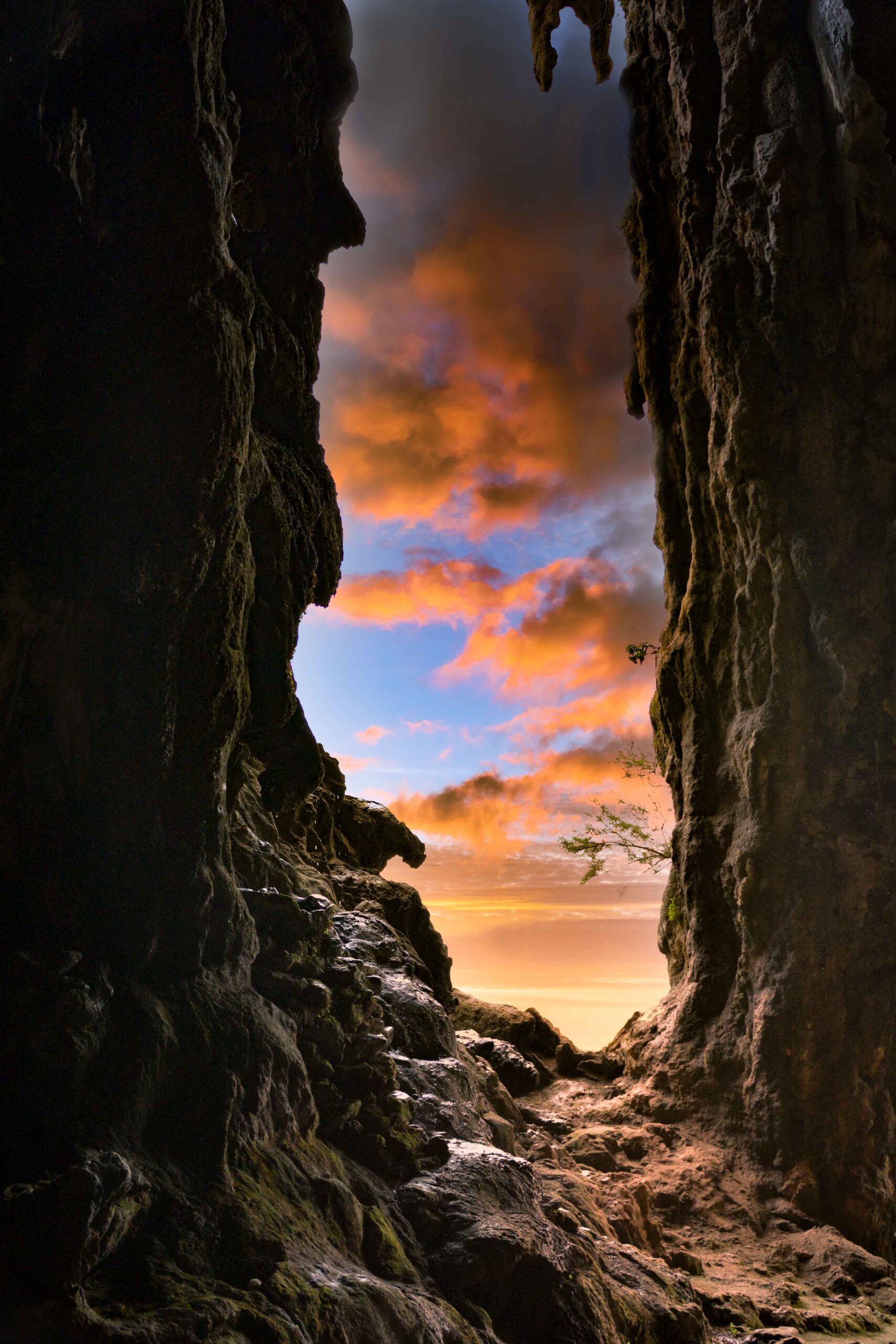
Hoq Cave is a limestone cavern on the island of Socotra, Yemen, that runs roughly two kilometres into a coastal mountain above the Arabian Sea. For most of its length it is an ordinary, spectacular cave of stalactites and endemic wildlife — but in its dark inner galleries it holds something far rarer: at least 193 legible inscriptions scratched, drawn and daubed by sailors who came ashore here between the first century BC and the sixth century AD. Together with the offerings they left behind, those graffiti make Hoq one of the single richest records of ancient Indian Ocean trade anywhere in the world.
Where Is Hoq Cave, and How Was It Explored?
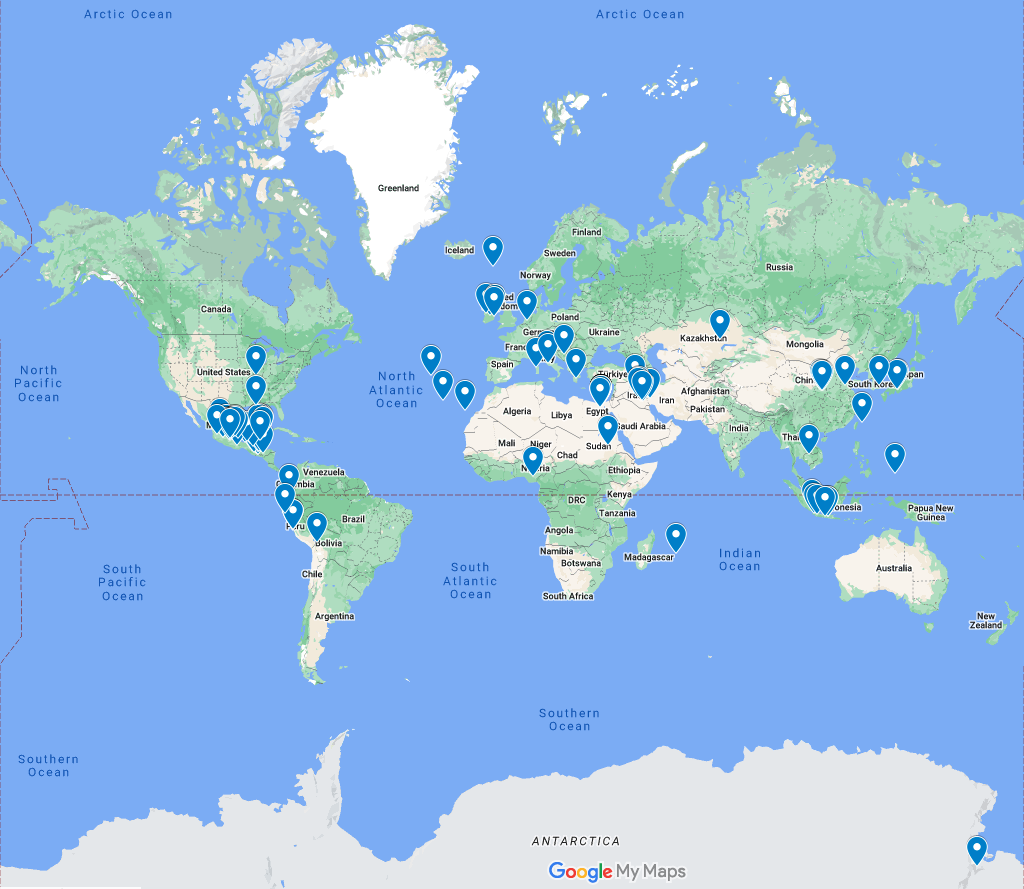
The cave opens high on Socotra’s north-eastern coast, in the area local people call Hala, about 1.5 kilometres inland from the sea and some 350 metres up the mountainside. Its mouth is clearly visible from passing ships yet awkward to reach on foot — a combination that mattered a great deal to the ancient mariners who climbed up to it. Inside, the main passage averages around 50 metres wide and 20 metres high, with daylight reaching only about 200 metres from the entrance before the galleries fall into total darkness. The temperature holds steady between 25 and 27 °C year round and humidity sits above 95 per cent, so the air feels thick and unchanging the moment you step inside.
Although Socotrans had always known the cave, its scientific exploration is recent. In the winter of 2000–2001 a team of Belgian speleologists working under the Socotra Karst Project, initiated by the geologist Peter De Geest, mapped Hoq for the first time and recorded the writing on its walls and floors. What began as a survey of the island’s karst geology turned, almost by accident, into one of the more important epigraphic discoveries of the decade.
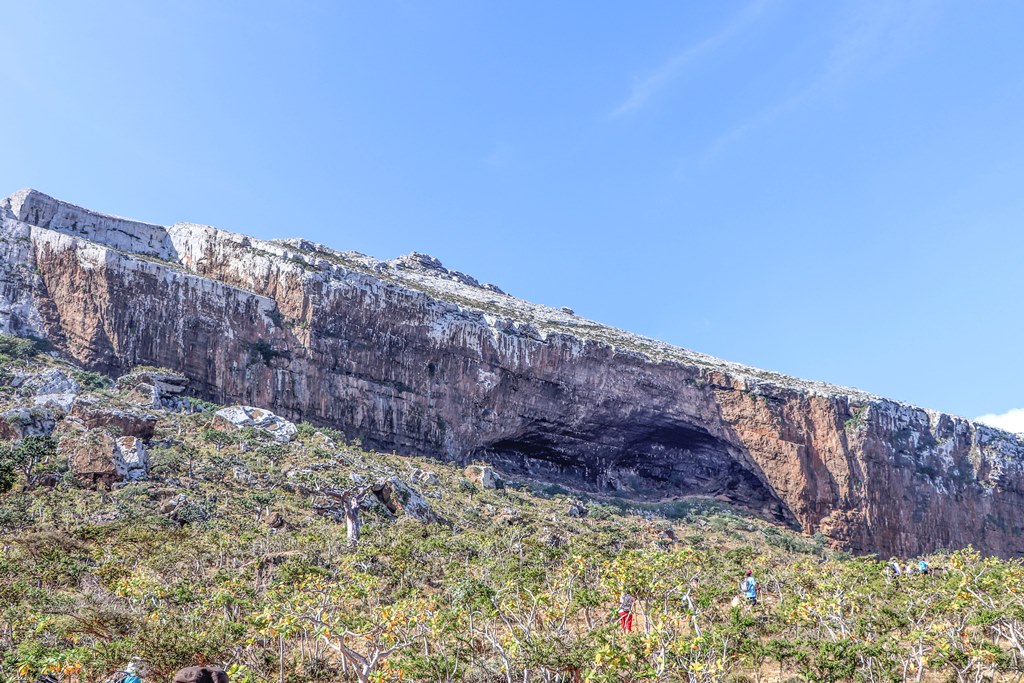
The entrance to Hoq Cave, difficult to reach yet visible from the sea. Photo: Clemens Schmillen via Wikimedia Commons (CC BY-SA 4.0).
A Limestone Cathedral of Speleothems
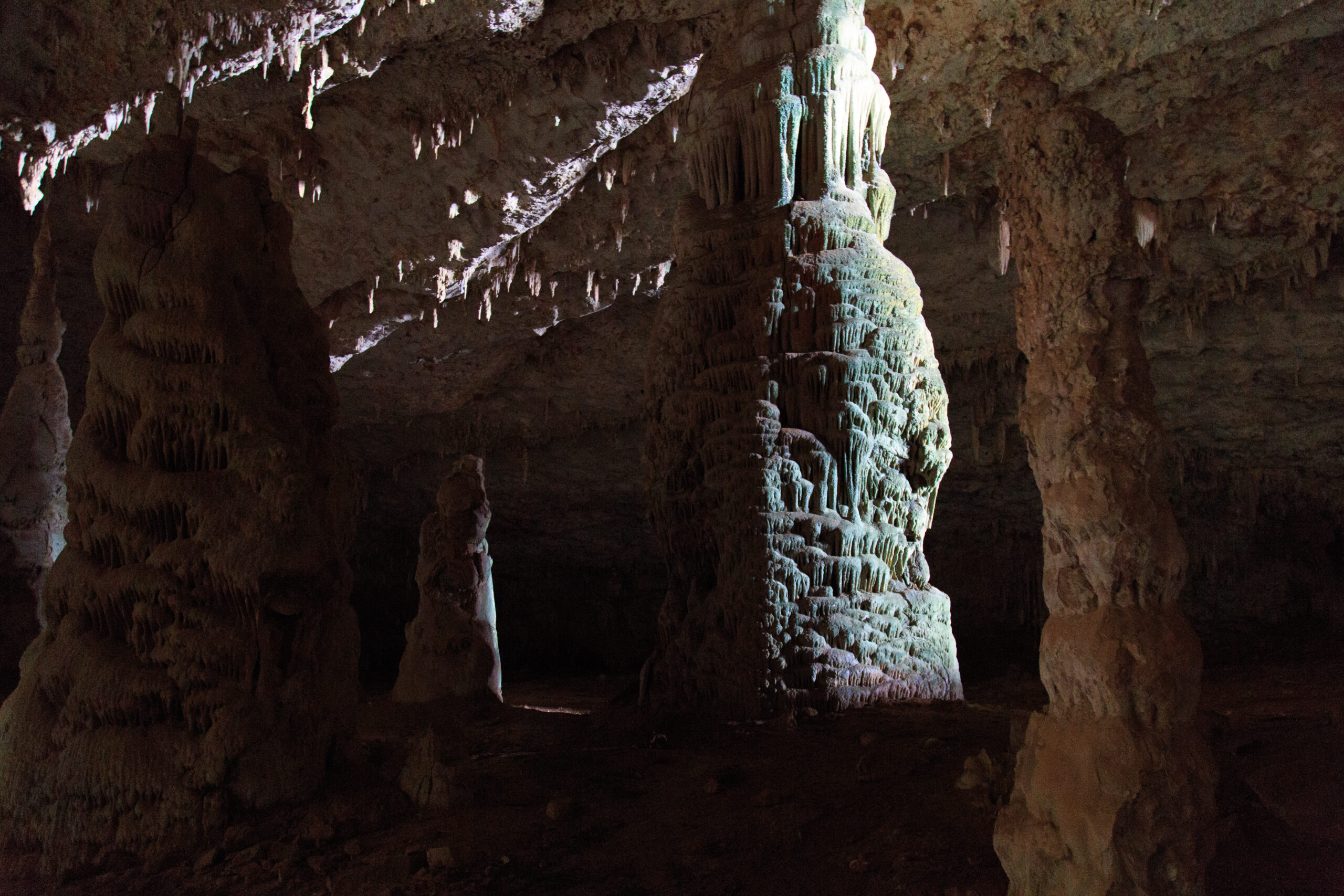
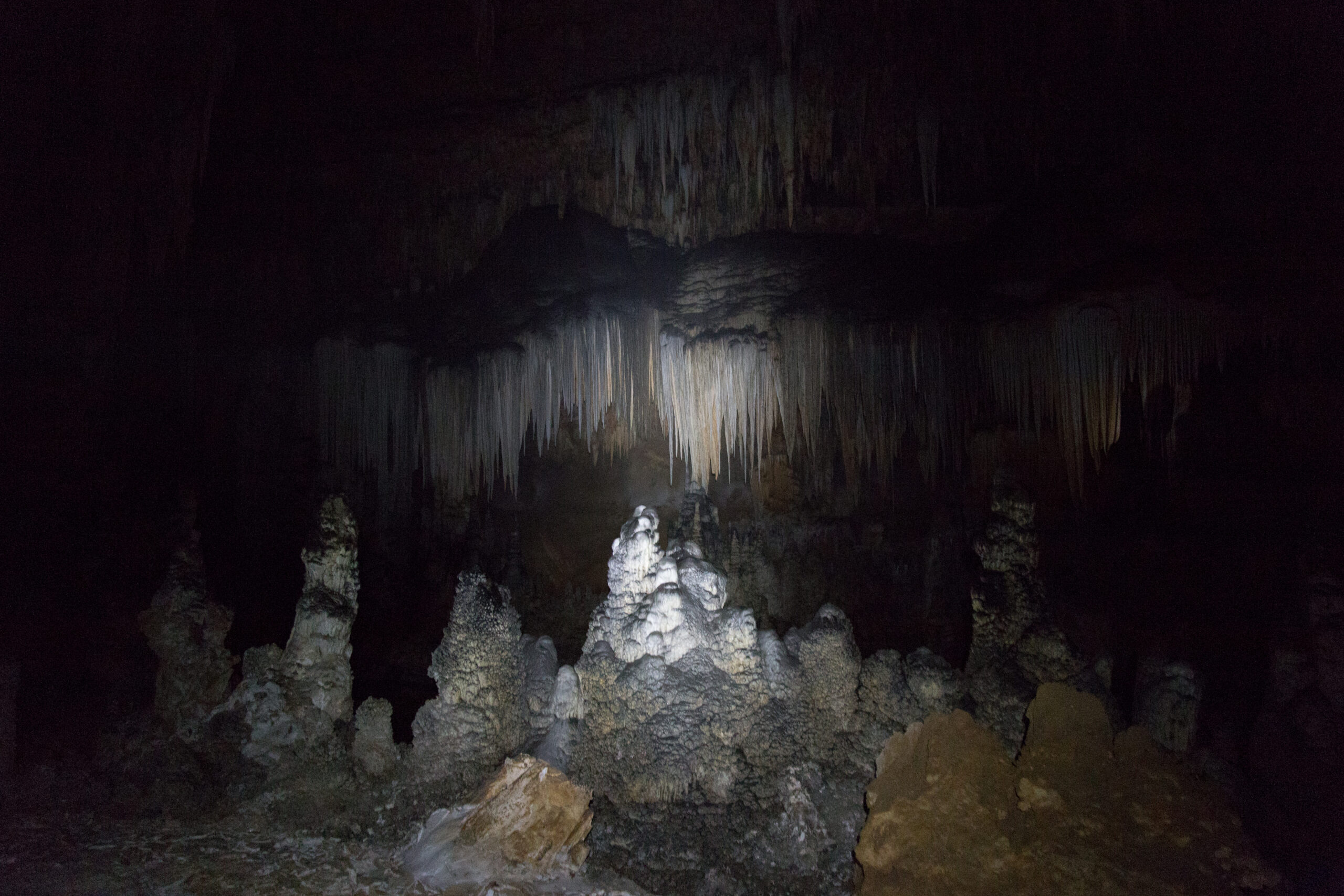
Before it was an archive, Hoq was — and remains — a geological wonder. Water seeping through the island’s limestone over hundreds of thousands of years has raised forests of stalactites, stalagmites, columns and sheets of flowstone, some of them enormous. These formations, known collectively as speleothems, are what first drew the Belgian cavers, and they are still the reason most visitors make the steep climb.
A Living Cave
The darkness is not empty. Hoq shelters a community of troglobionts — animals so adapted to cave life that they live nowhere else, including blind invertebrates and bats found only on Socotra. The island as a whole is famous for its endemic species, from the dragon’s blood tree to hundreds of unique plants and reptiles, and the cave fauna is a hidden part of that story. Because the formations and the wildlife are both fragile, a marked pathway now guides visitors through the outer galleries while the deepest chambers remain off-limits and under study.
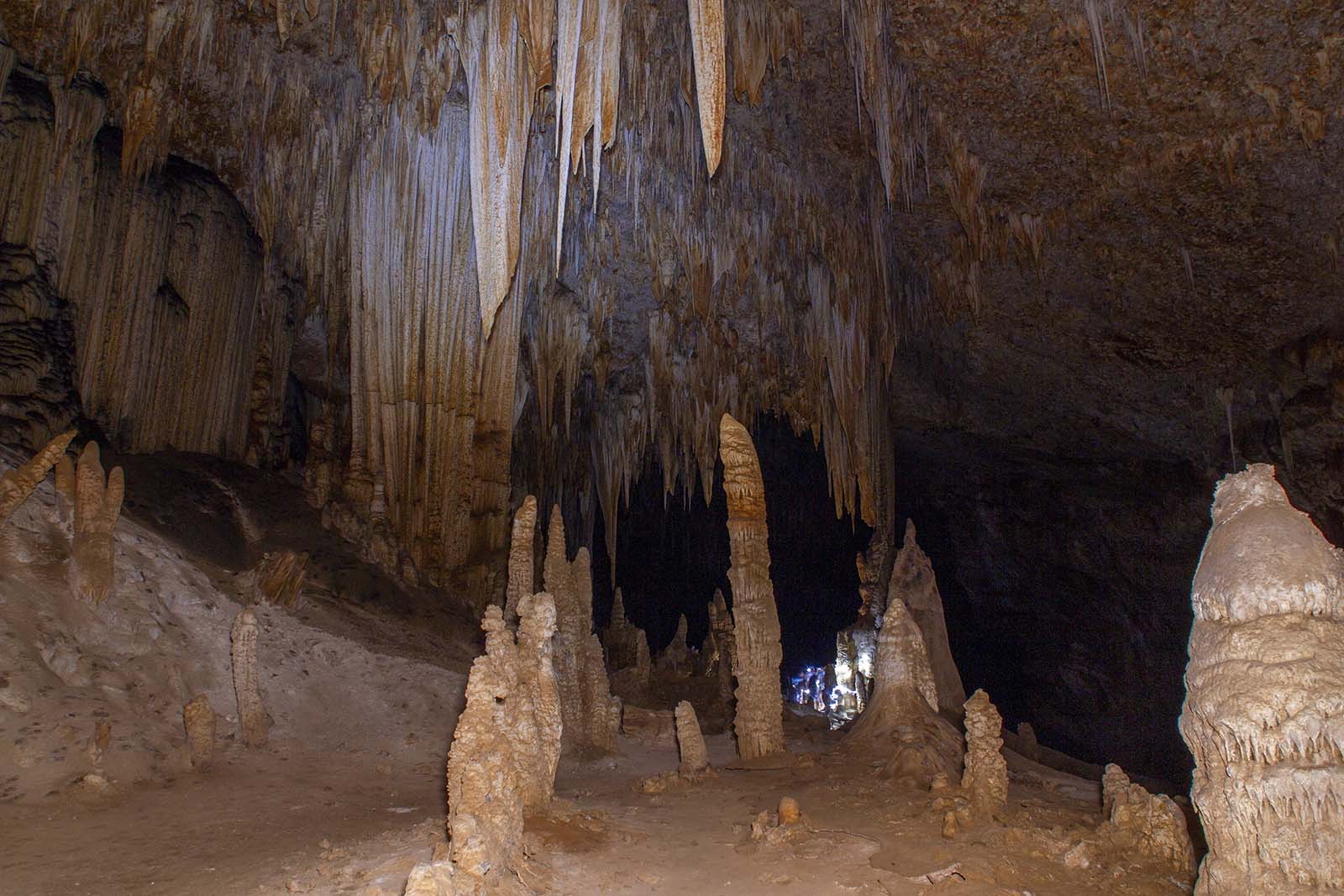
Speleothems deep inside Hoq Cave, Socotra. Photo: 2socotra via Wikimedia Commons (CC BY-SA 4.0).
193 Inscriptions in Six Ancient Scripts
Deep in the back of the cave, well beyond the reach of daylight, the walls and speleothems carry a corpus of nearly 250 texts and drawings, of which 193 inscriptions are legible enough to read. They were made in charcoal, chalk and mud, and sometimes scratched with a sharp point. What makes them extraordinary is their range: the writing appears in six different scripts. The largest group is in Indian Brahmi, but there are also texts in Ancient South Arabian, Ethiopian Ge’ez, Ancient Greek, Palmyrene and Bactrian.
The messages themselves are short and strikingly human. Rather than royal proclamations, they record personal names, home towns, professions, and ethnic or religious affiliations — the ancient equivalent of a sailor carving “I was here” and adding where he came from. Read together, they turn an anonymous cave into a guest-book of the early Indian Ocean, signed by Indians, South Arabians, Ethiopians, Greeks and men from as far away as Palmyra in the Syrian desert and Bactria in Central Asia.
Ancient sailor inscriptions in Brahmi, Greek and other scripts inside Hoq Cave. Photo: Valerian Guillot via Wikimedia Commons (CC BY 2.0).
The Palmyrene Tablet of 258 CE
The most precisely dated find is not scratched on stone at all. It is a small wooden tablet left as a votive offering by a Palmyrene ship’s captain named Abgar, son of Abshammay, who inscribed a prayer asking his god for a blessing and dated it to July 258 CE. That a merchant from Palmyra — a desert caravan city more than 2,000 kilometres away — sailed to a cave off the Horn of Africa and left a dated dedication there is a vivid illustration of just how wide these networks stretched. Alongside the tablet, excavators recorded pottery, small offerings and traces of the incense and ritual that made Hoq a kind of sanctuary for men who had survived the crossing.
Socotra on the Indian Ocean Trade Routes
None of this was accidental. Socotra sat astride the monsoon sea lanes that linked India, southern Arabia, the Red Sea and the Mediterranean world. The first-century Greek merchant’s handbook known as the Periplus of the Erythraean Sea already knew the island as Dioscurides and noted that its inhabitants included foreigners — Arabs, Indians and Greeks — trading in tortoiseshell and the island’s prized aromatics. The Hoq graffiti are the physical proof of exactly those people. The Palmyrene tablet ties the cave to the caravan trade of Palmyra; the Ge’ez inscriptions connect it to the Aksumite Red Sea port of Adulis; and the South Arabian texts belong to the same incense-and-myrrh world as the caravan city of Qaryat al-Faw and the maritime trade that once reached the fabled Land of Punt. Many of the Indian visitors, scholars have argued, were Buddhists, carrying their faith along the same routes as their cargo.
More of the sailors’ inscriptions on the flowstone of Hoq Cave. Photo: Valerian Guillot via Wikimedia Commons (CC BY 2.0).
Why Do a Few Sailors’ Names Matter?
Ancient trade is usually studied from the top down — through customs lists, coins, and the writings of geographers who never went to sea. Hoq is different. Here the traders speak for themselves, and they are ordinary men: ship’s captains, merchants and crew, naming themselves and their home ports in their own scripts. The definitive study of the corpus, Foreign Sailors on Socotra: The Inscriptions and Drawings from the Cave Hoq (2012), edited by Ingo Strauch, treats the cave as a single dossier on Indian Ocean mobility, and it remains one of the main sources historians have for reconstructing who actually moved goods and ideas across this sea in the early centuries CE. A cluster of names on a cave wall, dated by a single wooden tablet, does more to map that world than almost any monument. These are the kinds of overlooked sites explored across our ancient civilizations archive.
Visiting Hoq Cave Today
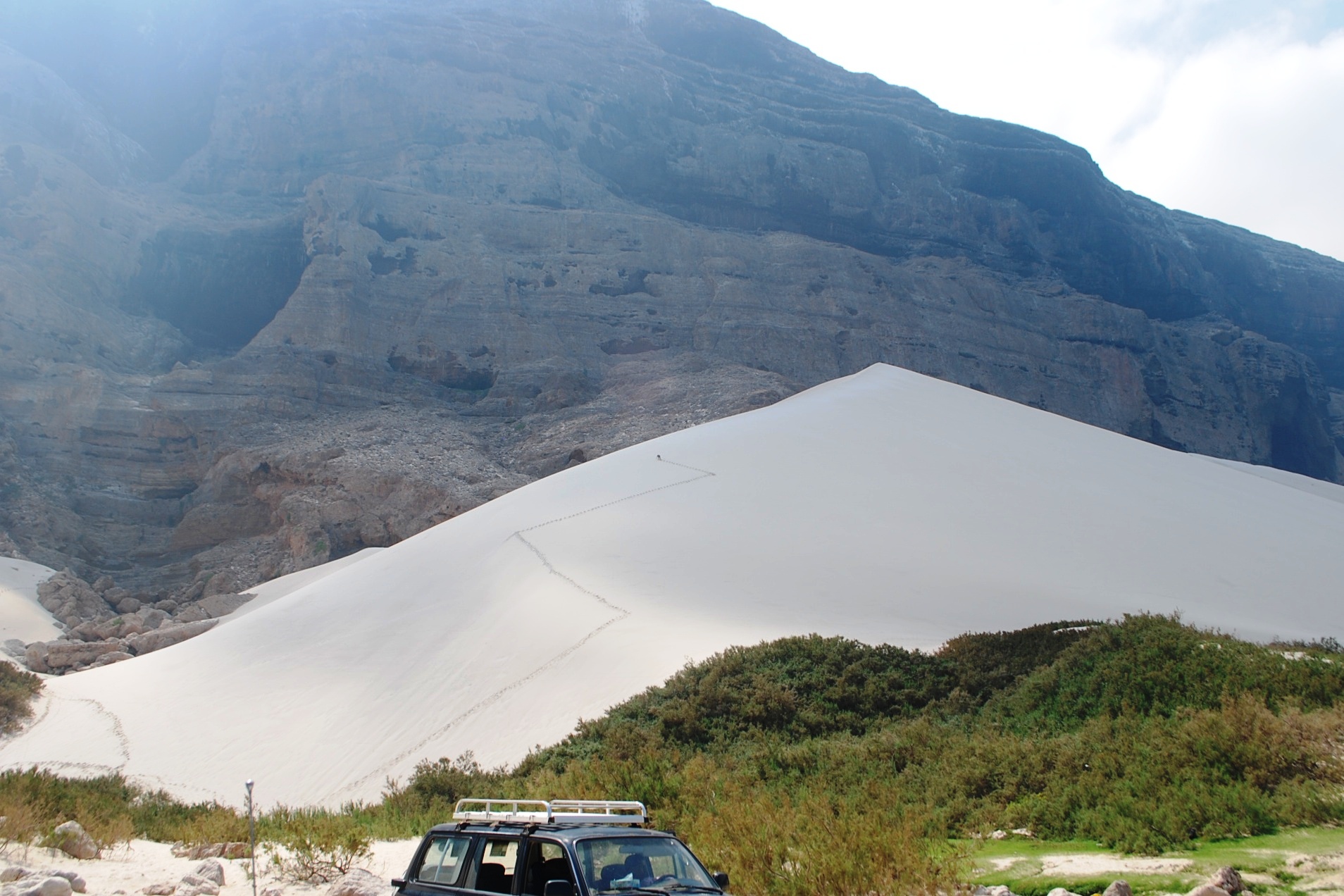
The north-east coast of Socotra below Hoq Cave, where ancient ships made landfall. Photo: Gerry & Bonni via Wikimedia Commons (CC BY 2.0).
Hoq lies within the Socotra Archipelago, inscribed as a UNESCO World Heritage Site in 2008 for its extraordinary biodiversity, and the cave itself is protected under Yemeni law. Reaching it means a hot, steep hike from the coast, usually with a local guide, and the inner galleries with the inscriptions are restricted to protect both the fragile speleothems and the writing. That tension — between a growing trickle of adventurous visitors and the need to preserve a 1,800-year-old guest-book — is the central challenge for the site’s future.
Frequently Asked Questions
Where is Hoq Cave?
Hoq Cave is on the island of Socotra, Yemen, in the area called Hala on the north-eastern coast. It sits about 1.5 kilometres inland and 350 metres above the sea, and the limestone cave runs roughly two kilometres into the mountain, with a main passage about 50 metres wide and 20 metres high.
What are the inscriptions in Hoq Cave?
The cave holds a corpus of nearly 250 texts and drawings, of which 193 inscriptions are legible. They were left by sailors between the 1st century BC and the 6th century AD in six scripts — predominantly Indian Brahmi, plus Ancient South Arabian, Ethiopian Ge’ez, Ancient Greek, Palmyrene and Bactrian — and mostly record personal names, home towns and professions.
Why is Hoq Cave important?
It is one of the main sources for the history of Indian Ocean trade in the early centuries CE. The sailors’ graffiti and a Palmyrene wooden tablet dated to July 258 CE show that Socotra was a shared stopover linking India, southern Arabia, the Horn of Africa and even the Mediterranean world.
Sources and Further Reading
- Hoq Cave — Wikipedia
- Socotra — Wikipedia
- Periplus of the Erythraean Sea — Wikipedia
- James Hancock, “Periplus of the Erythraean Sea” — World History Encyclopedia
- Robin & Gorea (2002), “Les vestiges antiques de la grotte de Hôq (Suqutra, Yémen)”, CRAI (Persée)