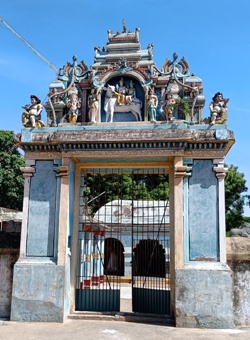
Udayalur is a small village in the Kumbakonam taluk of Tamil Nadu’s Thanjavur district, a few kilometres from Pazhayarai, the medieval capital of the Chola dynasty. Its Kailasanathar Temple is a modest 11th-century Shiva shrine carrying inscriptions from at least seven Chola and Pandya rulers. The village’s real fame, though, rests on an unproven but persistent claim: that Udayalur is the pallipadai, or burial site, of Rajaraja Chola I (Arulmozhi Varman, reigned 985–1014 CE), the emperor who commissioned the great temple at Thanjavur.
Where is the Kailasanathar Temple at Udayalur?
The temple stands in Udaiyalur (also spelled Udayalur), about eight kilometres from Kumbakonam, in the heart of the old Chola country of the Kaveri delta. The village — historically called SriKangeyapuram, and later Sivapada Sekara Mangalam — sits close to the imperial complexes the Cholas raised across the delta. Four temples serve the community today: the popular Selva Maha Kali Amman temple, a Vishnu shrine, the Palkulatthi Amman temple, and the Kailasanathar temple dedicated to Shiva, whose presiding deity is worshipped as Kailasanathar with his consort Sankaraparvathi Ambal.
It is a working village temple rather than a monument on the tourist trail, which is part of why the layered history packed into its walls is so easily overlooked.
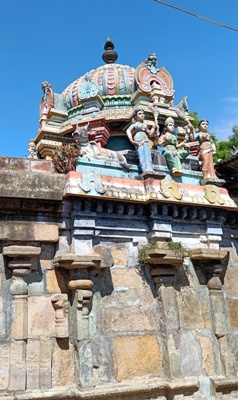
A Chola Shiva temple, not the Thanjavur Rajarajesvaram
The name “Rajarajesvaram temple, Udayalur” causes constant confusion, because Rajarajesvaram — “the temple of Rajaraja” — is the original name of the colossal Brihadisvara temple at Thanjavur, the UNESCO-listed Great Living Chola Temple. That building, with its roughly 66-metre vimana, was endowed in 1003 and completed around 1010 CE. The Udayalur shrine is a far smaller, conventional Dravidian village temple; it is not a scaled-down Brihadisvara and never carried a towering vimana of its own.
For the genuine architecture Rajaraja commissioned, the comparison is the Brihadeeswarar Temple at Thanjavur and, a generation later, the Airavatesvara Temple at Darasuram near Kumbakonam. Udayalur belongs to a humbler tradition — the modest neighbourhood Shiva temple, like other small Chola-era shrines of the Kaveri delta — and its importance is historical and epigraphic rather than monumental.
Inscriptions and royal patronage
The temple’s walls record patronage across nearly two centuries. Inscriptions name Kulottunga I, Vikrama Chola, Rajaraja II, Rajadhiraja II, Kulothunga Chola III and Rajaraja III, as well as the Pandya king Jatavarman (Sadayavarman) Sundara Pandyan. That spread of donors shows the shrine remained a live centre of worship and endowment well after Rajaraja I’s own era.
A sculpture found in no other temple
The Kailasanathar temple has one feature that genuinely sets it apart: at the entrance to the sanctum, a small sculpture of a devotee is carved beneath the feet of the dvarapala (door-guardian), and a second devotee appears in a worshipping pose. Scholars note this detail is found in no other temple. Around the sanctum’s kosta niches stand the usual delta repertoire — Dakshinamurthy, Bhikshatana, a rare Rajayoga Agastya, Lingodbhava, Brahma, Rishabarudar and Sulini Durga — while the prakara holds five Bhairavas alongside shrines to Vinayaka, Shanmuga, Chandikeshvara and the Navagraha.
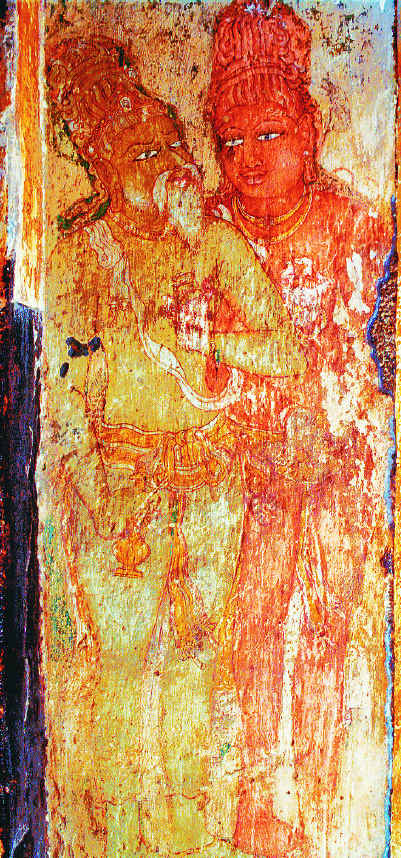
Was Udayalur Raja Raja Chola’s final resting place?
This is the question that draws visitors. The details of Rajaraja I’s death around 1014 CE are sparse, and no securely identified tomb survives. Local tradition holds that a partially buried Shiva lingam unearthed in a plantation at Udayalur marks his pallipadai. By Chola custom, a ruler’s ashes were buried and a lingam consecrated over them, so a freestanding lingam could in principle signal a royal burial. The caretaker family — the priest Jayaraman, whose father Pakirisamy first found the lingam — maintains the small shrine, today a modest concrete shelter built only in recent years.
Two circumstantial points fuel the claim. Udayalur lies close to Pazhayarai, the Chola capital, and the pallipadai of Rajaraja’s queen Panchavan Madevi lies about five kilometres away at Pateeswaram. The historian Professor G. Deivanayagam has argued for the Udayalur identification. Even so, the case is far from settled.
The pallipadai tradition itself is well attested in Chola epigraphy: memorial temples were raised over the consecrated ashes of rulers and their consorts, often named for the deceased and endowed with land. Several such sites survive across the Kaveri delta, which makes the idea of a royal pallipadai at Udayalur entirely plausible in principle. The difficulty is specific rather than general — tradition and a suggestive title in one inscription point towards Rajaraja, but no excavated burial, dedicatory record, or named pallipadai temple has yet been found at the site to convert plausibility into proof.
The 1112 CE inscription at the Palkulatthi Amman Temple
The strongest documentary thread is a single inscription on a pillar at the Palkulatthi Amman Temple, about half a kilometre south of the lingam. Dated to the 42nd regnal year of Kulottunga Chola I — 1112 CE — and published in the Annual Report on Indian Epigraphy (1926–1929, published 1986), it records the reconstruction of a mandapam in front of a temple of “Rajarajadevar” alias “Sivapada Sekaradeva” in the village of Sivapada Sekaramangalam. Sivapada Sekaran was a known title of the devout Shaivite Rajaraja Chola, and the work was carried out by one Velan Arikesan, also called Kachchirayar of Pidavur. The inscription confirms a Rajaraja-linked shrine existed at the village — but it attests a mandapam, not a burial.
The 2019 Madras High Court probe
In 2019, responding to a public-interest petition seeking a memorial for the king, the Madras High Court ordered an investigation. A committee surveyed Udayalur using Geographic Information System mapping and Ground-Penetrating Radar to detect any buried structures or artefacts. The survey returned nothing that could conclusively tie the site to Rajaraja Chola’s burial. Officials from the Archaeological Survey’s Trichy circle have stressed that the lone 1112 CE inscription remains the only real evidence, and that it falls short of proof. The quest, in their words, continues.
Visiting Udayalur today
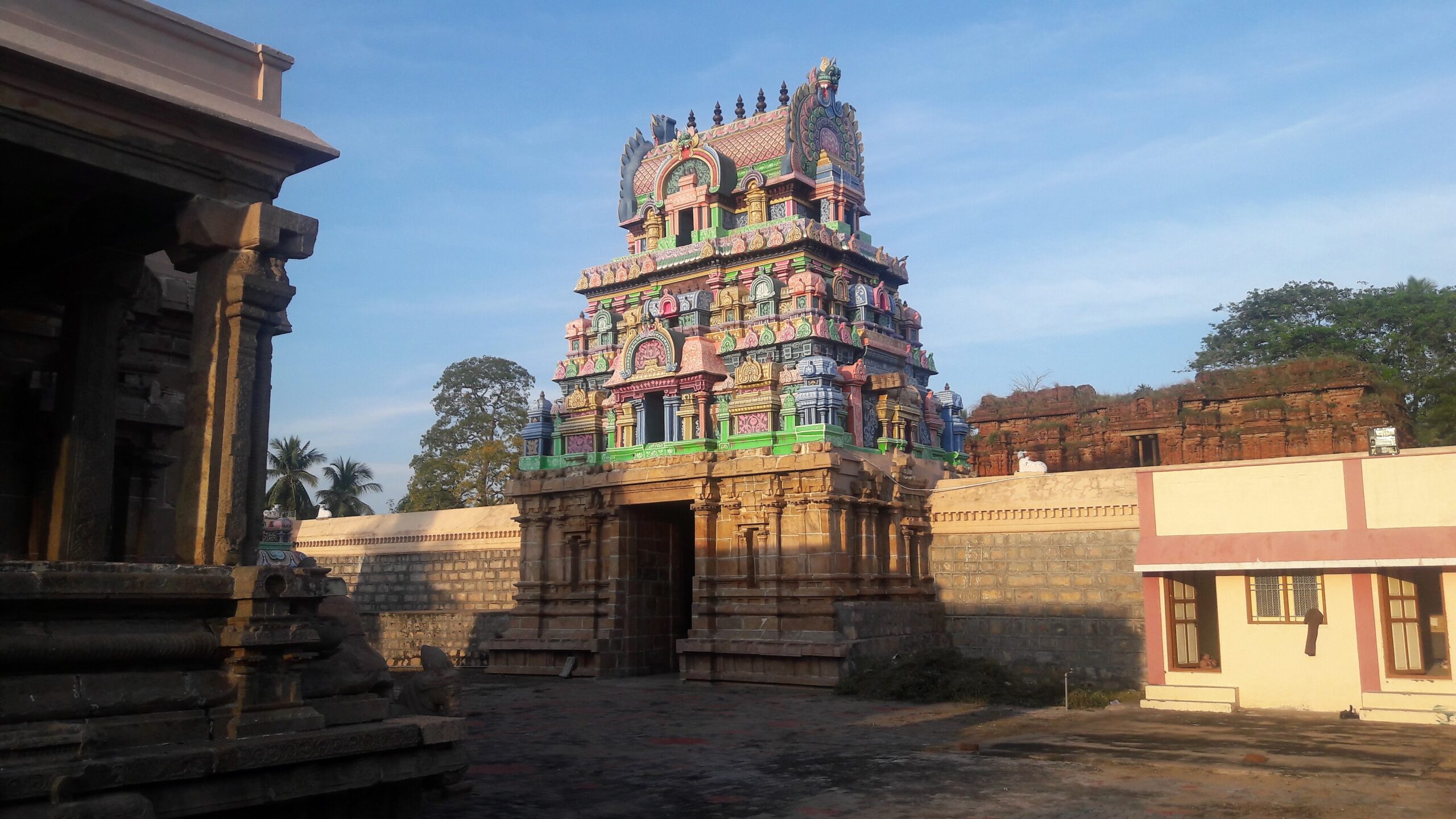
Udayalur rewards the historically curious rather than the monument-hunter. The Kailasanathar temple’s inscriptions and its unique dvarapala sculpture repay a slow look, and the village’s annual Thiruvizha festival, held at the turn of March into April, brings street plays and crowds from the surrounding delta. The claimed resting place is a short walk away — an unassuming lane, a signboard reading “Raja Raja Chola Mamannan Ninaividam,” and a lingam under a simple shelter on family-leased land. Whether or not the great king’s ashes truly lie there, the site keeps alive a thousand-year-old thread connecting a quiet Kaveri village to the height of Chola power. To place it in context, browse more of our coverage of ancient civilizations.
Sources and further reading

Neural Pathways is a collective of seasoned experts and researchers with a profound passion for unraveling the enigmas of ancient history and artifacts. With a wealth of combined experience spanning decades, Neural Pathways has established itself as a leading voice in the realm of archaeological exploration and interpretation.