Overview of the Dolmen of Guadalperal
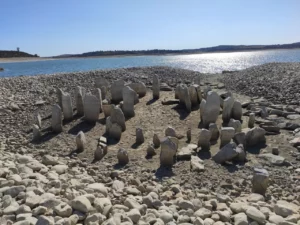
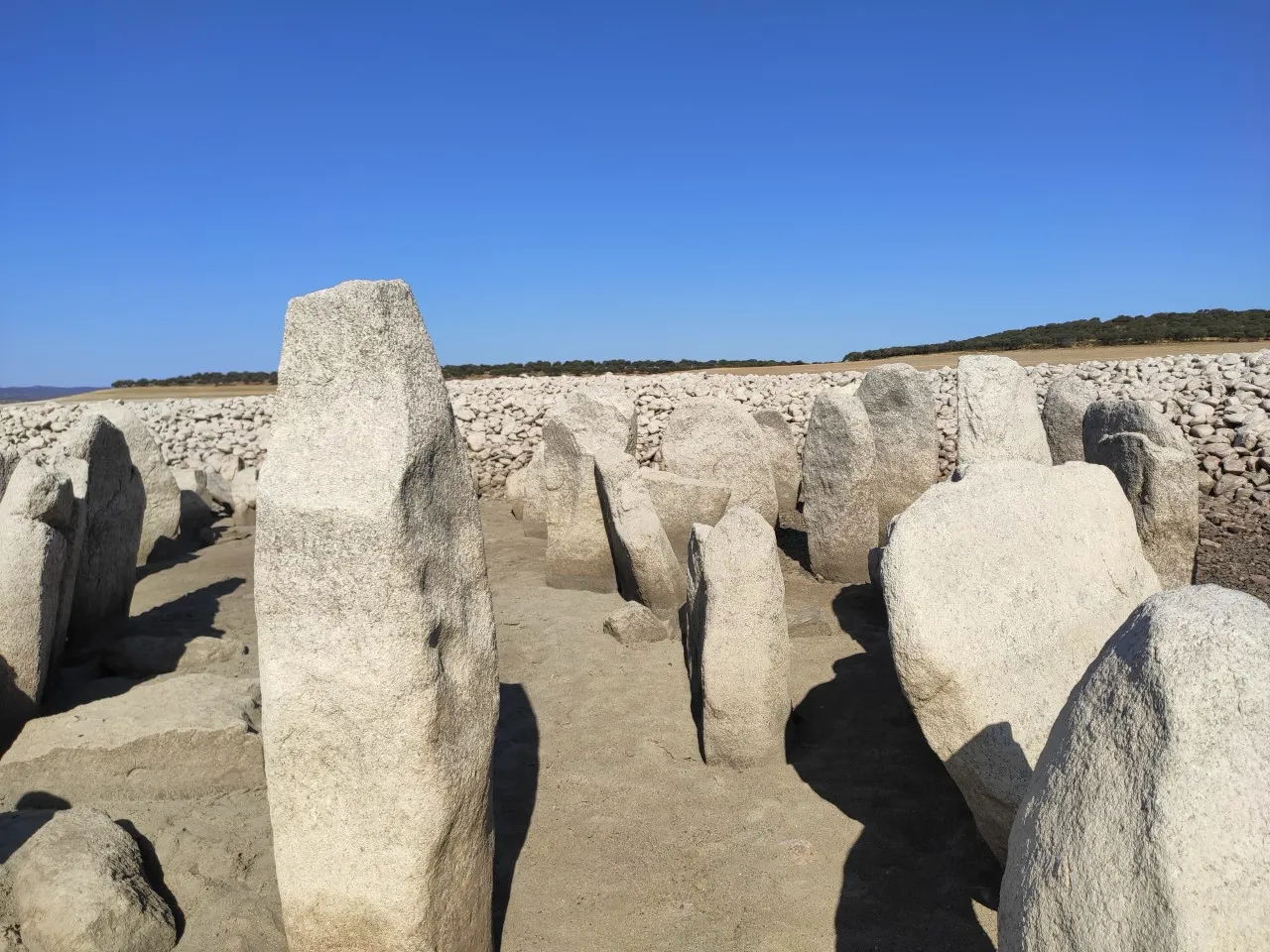
The Dolmen of Guadalperal, often called the Spanish Stonehenge, dates from between 2000 and 3000 BC. It is located in Peraleda de la Mata, within the Campo Arañuelo region in Extremadura, Spain. This megalithic monument sits within the Valdecañas reservoir on the Tagus River. It becomes visible only when the reservoir’s water level drops.
Description and Historical Significance
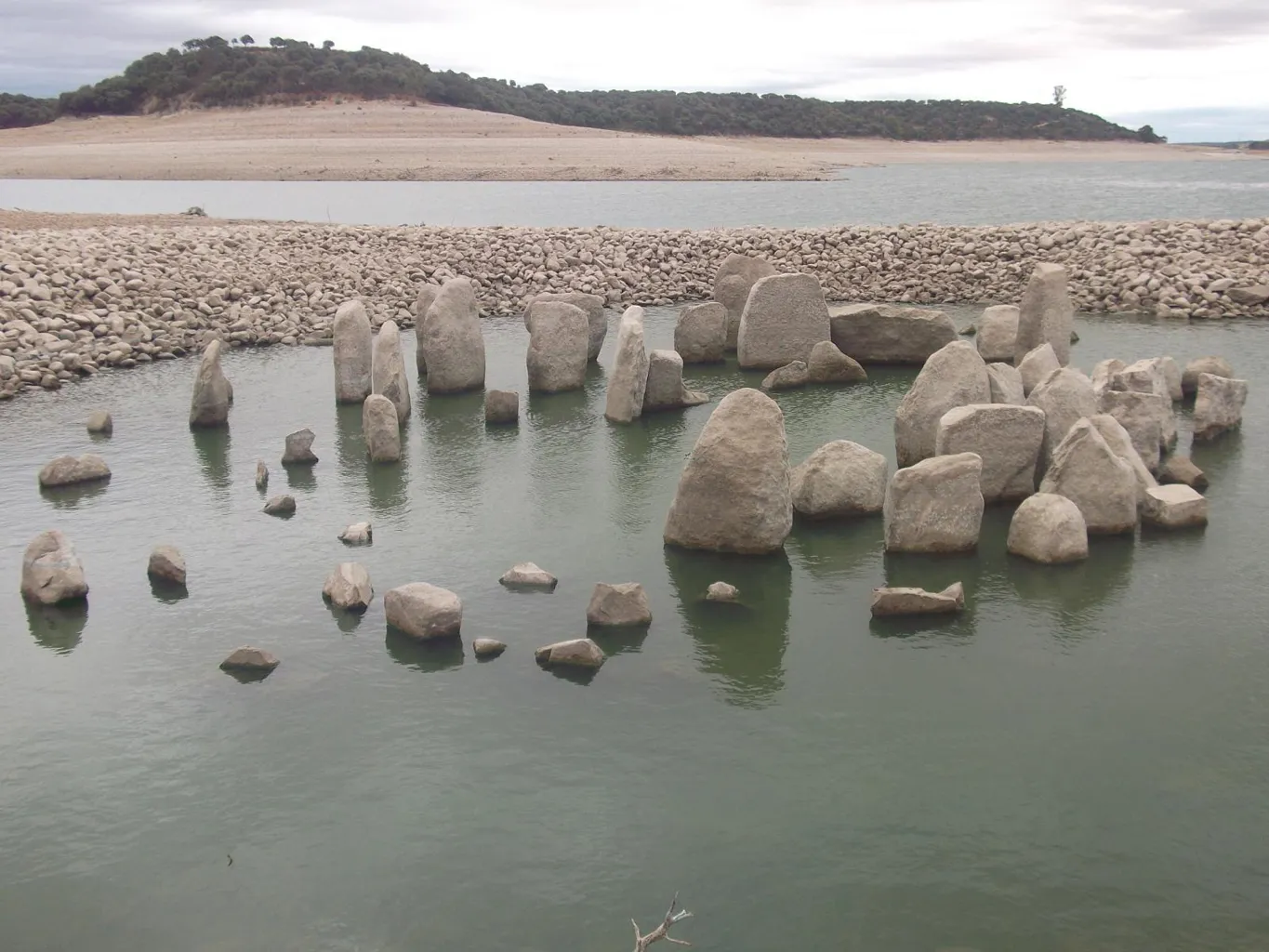
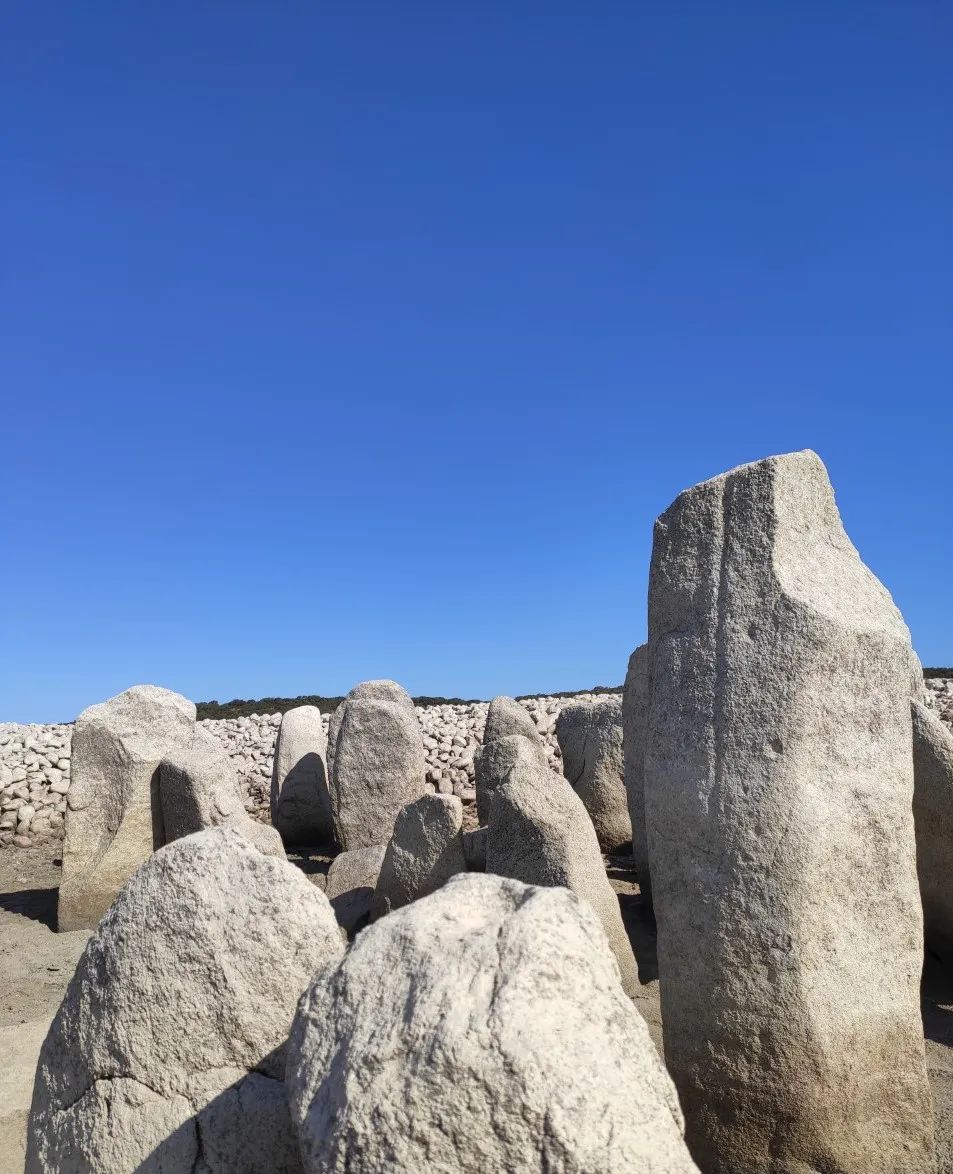
The structure comprises 150 granite stones arranged vertically to form an ovoid chamber. This chamber measures 5 meters in diameter. An access corridor, about 21 meters long and 1.4 meters wide, leads to it. At the corridor’s end stands a two-meter-high menhir with carvings possibly depicting a snake and several cups. Researchers believe these carvings might symbolize the river and protect the site.
Archaeological Discoveries and Research
German archaeologist Hugo Obermaier discovered the monument in 1926. His team suggested the site might have served as a solar temple and burial site. They found Roman artifacts there, including a coin, ceramic fragments, and a grinding stone, indicating the site was undisturbed by looters at that time. Nearby, they uncovered a settlement presumably housing the monument’s builders, complete with houses and various domestic artifacts.
Impact of the Valdecañas Reservoir
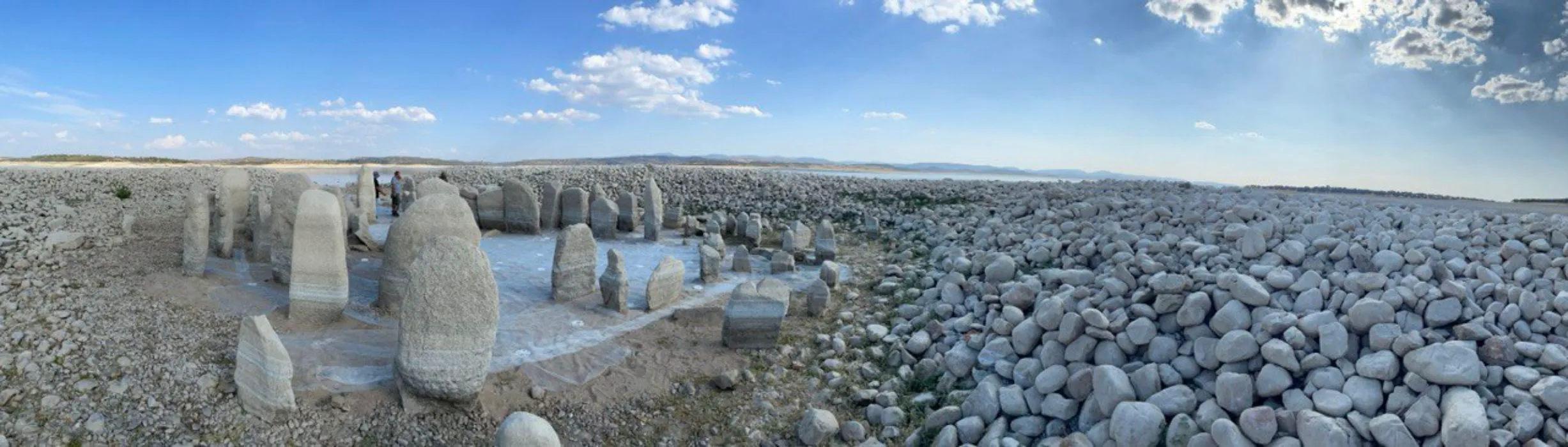
In 1963, the construction of the Valdecañas reservoir submerged the monument. Only during periods of drought in the past decade has the monument been visible. These conditions have exposed the Dolmen of Guadalperal several times, revealing its structure and the extent of erosion damage to the stones and carvings. In response, Hugo Obermaier’s team created reproductions of the carvings, which were published in 1960.
Recent Visibility and Preservation Efforts
The entire structure was visible for the first time in 50 years in July 2019, thanks to a NASA satellite photograph during a drought. This exposure highlighted the monument’s 150 stones. The Raices de Peraleda association has since been advocating for the monument’s recovery due to the observed deterioration.
Sources: Wikipedia


Neural Pathways is a collective of seasoned experts and researchers with a profound passion for unraveling the enigmas of ancient history and artifacts. With a wealth of combined experience spanning decades, Neural Pathways has established itself as a leading voice in the realm of archaeological exploration and interpretation.