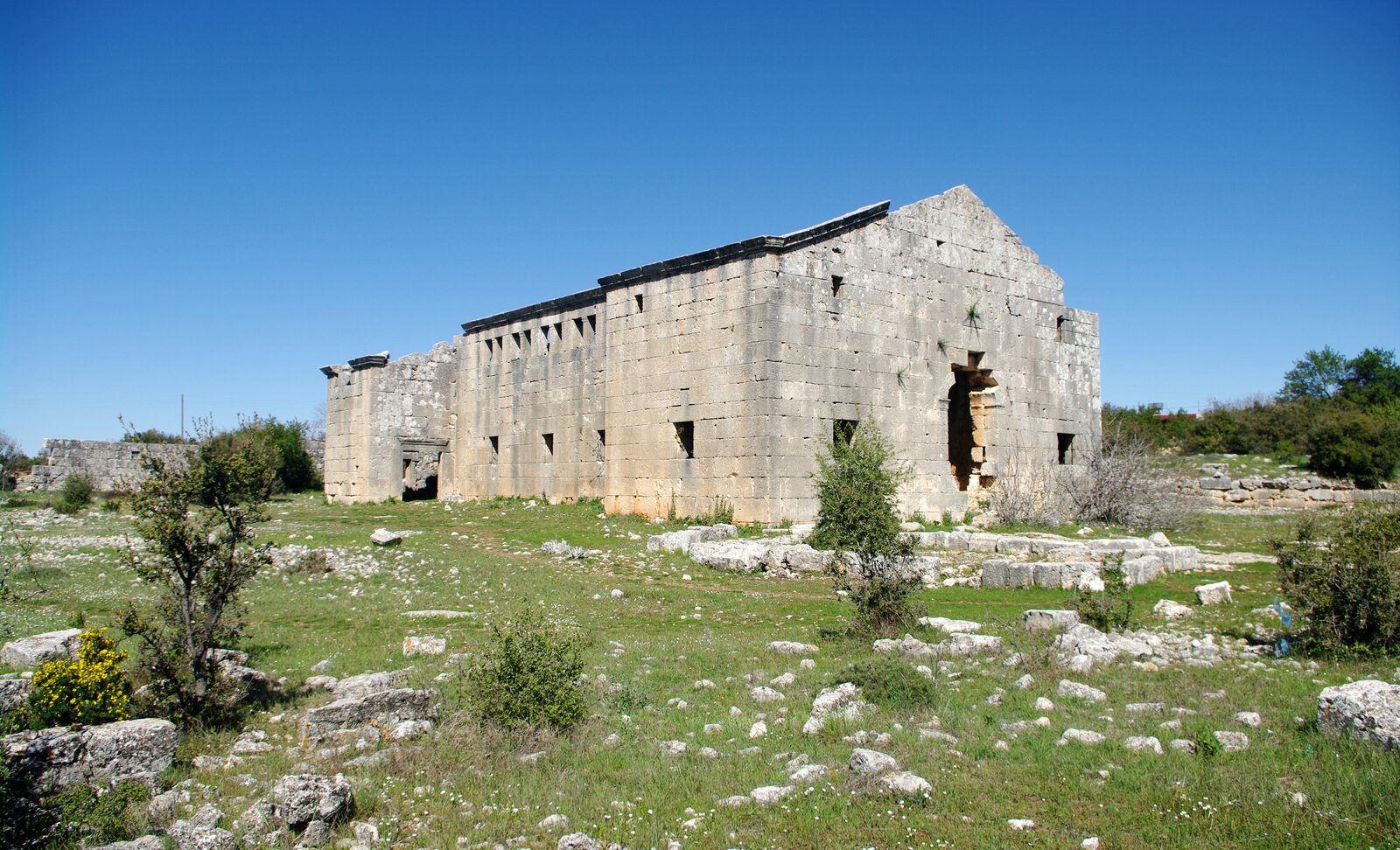
High on a limestone plateau in the Taurus foothills of southern Turkey, in the rugged country the ancients called Cilicia Trachaea, the village of Cambazlı guards the ruins of one of the best-preserved early Byzantine churches in the region. Its three-aisled basilica was raised in the second half of the 5th century AD, and although the timber roof fell centuries ago, the walls still rise two storeys high and a colonnade of Corinthian columns stands upright along the southern flank. Around it lie the tombs, cisterns and temple-like mausoleums of a Roman and Late Antique settlement whose original name has been lost.
Where is Cambazlı?
Cambazlı lies on the plateau south of the Taurus (Toros) Mountains in Mersin Province, part of the broken upland that classical geographers knew as Cilicia Trachaea, or “Rough Cilicia.” The village sits more than 900 metres above sea level, roughly 20 kilometres inland from the Mediterranean coast. Administratively it belongs to the district of Silifke, about 30 kilometres away, while the provincial capital of Mersin is some 85 kilometres to the east. The settlement is sometimes also called Yeğenli, and the easiest approach today is the signposted road that climbs inland from the coastal resort of Kızkalesi, ancient Corycus. The ruins stand near Olba, the priestly city that once dominated this stretch of the Cilician hills. For the wider setting, our guide to other ancient historical places maps the sites nearby.
A settlement from the Hellenistic to the Byzantine age
The original name of the town is unknown, but it was clearly no backwater. Roman roads tied it to important neighbours — the harbour city of Corycus on the coast and the great temple-state of Diocaesarea (modern Uzuncaburç) in the hills. Building remains and pottery show the site was occupied from the late Hellenistic period, through the Roman centuries, and into the Byzantine era, when Rough Cilicia filled with prosperous villages that grew rich on olives and wine. It was during that Late Antique boom, in the 5th century, that Cambazlı acquired its most ambitious building.
The Cambazlı basilica
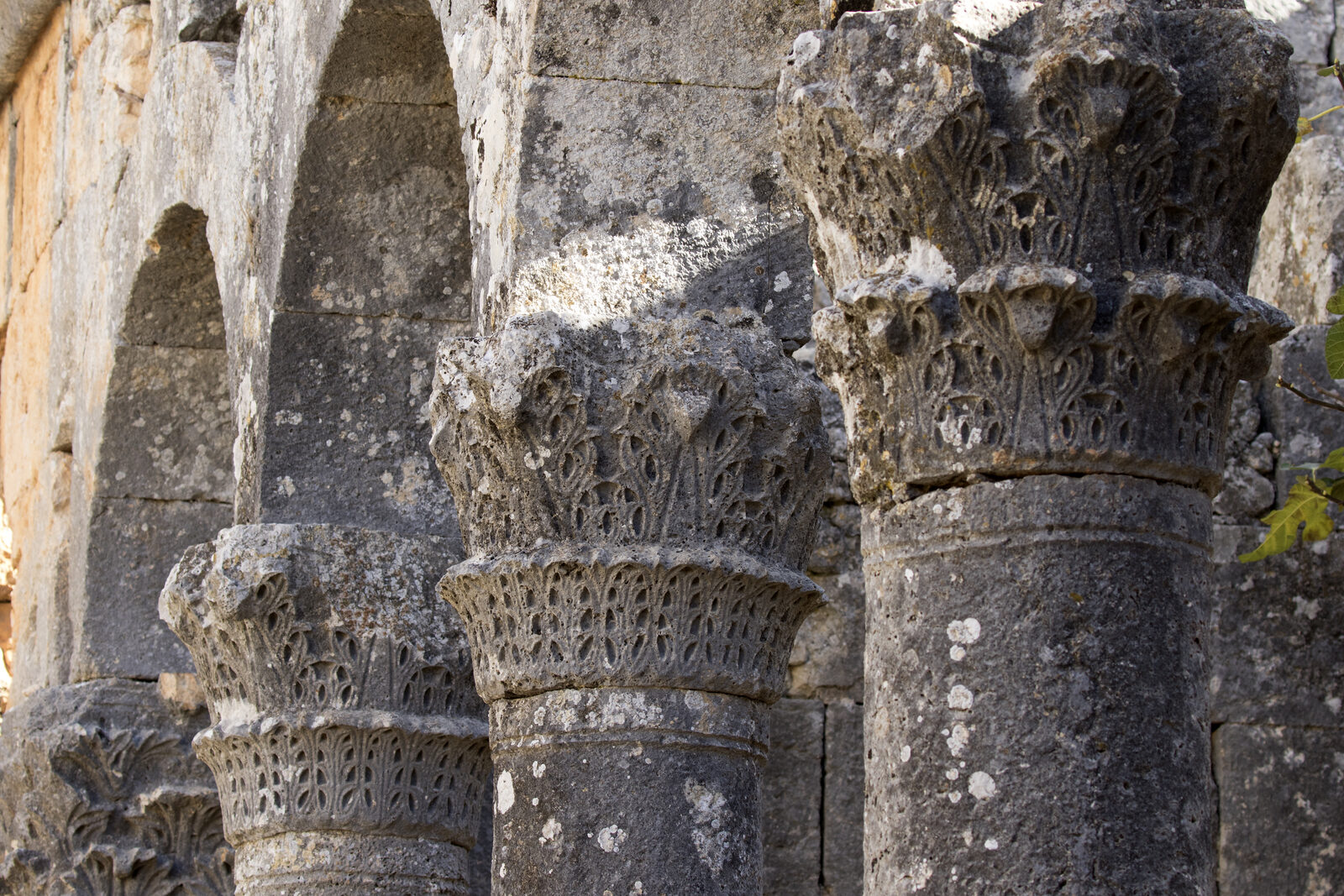
The church that dominates the village is a three-aisled basilica built in the second half of the 5th century AD from finely squared ashlar stone. Its published measurements vary with what is counted: the central hall is roughly 20 metres long, while the building measures about 29 by 22 metres overall once the side aisles are included, with a nave some 14.5 metres wide. The roof collapsed long ago, but a great deal survives. The apse at the east end still carries its hemispherical semi-dome, and the outer walls rise to the height of two storeys — a rare degree of preservation for a rural church of this age.
The colonnade and galleries
A two-level colonnade once separated the central nave from the side aisles. On the southern side the columns still stand, crowned with Corinthian capitals, and the gallery that ran above the south aisle is partly preserved; on the northern side the columns have collapsed. A carved cross above the eastern doorway marks the building unmistakably as a church. The basilica has drawn the attention of architectural historians: Robert Ousterhout discusses it in his survey of eastern medieval architecture, and Robert W. Edwards gave it an entry in the Eerdmans Encyclopedia of Early Christian Art and Archaeology.
What else can you see at Cambazlı?
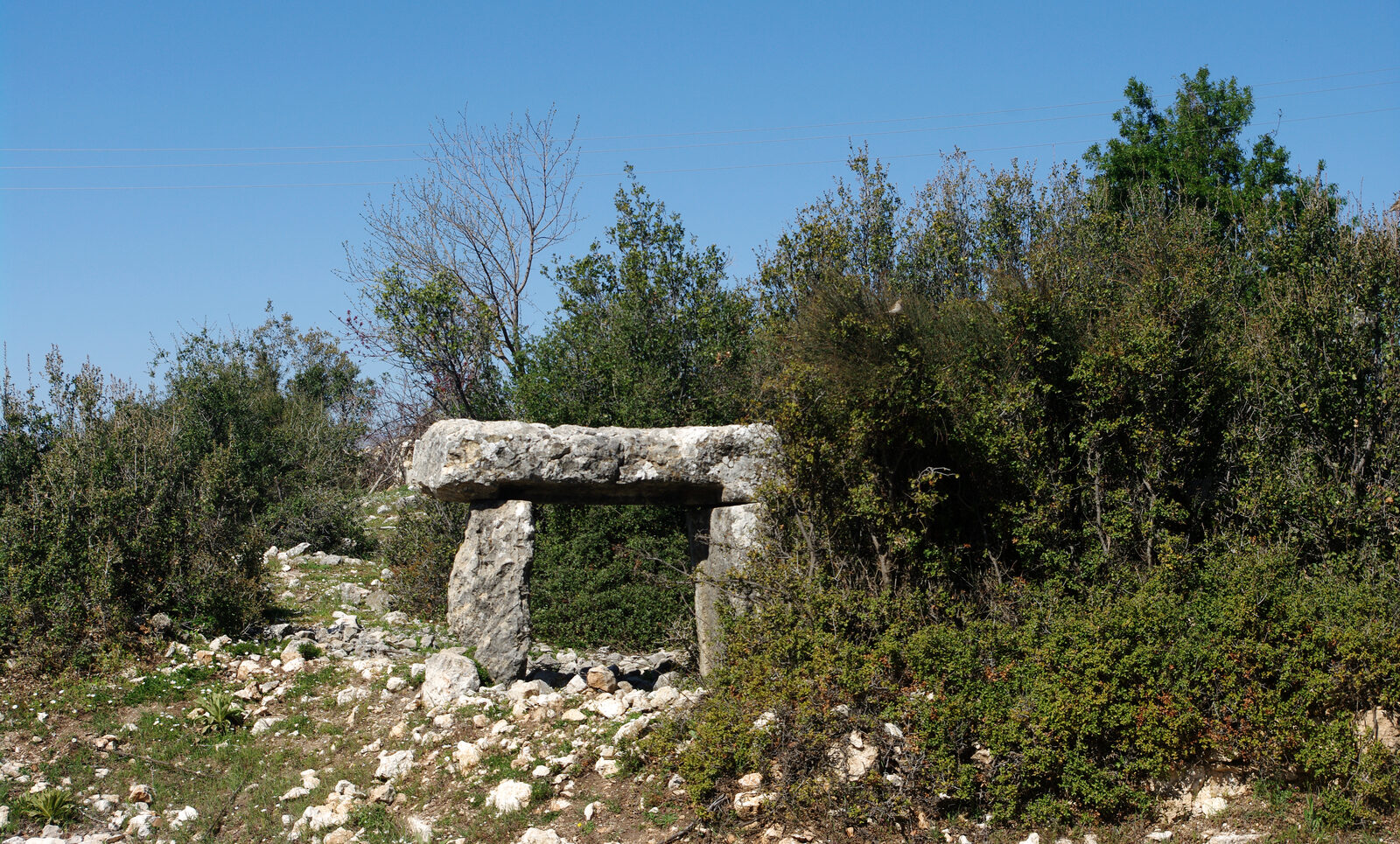
The basilica is the showpiece, but it is far from the only ancient structure here. Scattered in and around the village are mausoleums and rock-cut tombs, along with free-standing funerary monuments built to resemble small temples — a distinctive Rough Cilician habit also seen at neighbouring sites such as Kanlıdivane and the coastal city of Elaiussa Sebaste. Ancient cisterns, cut to hold the plateau’s scarce water, and stone sarcophagi complete the picture of a substantial rural community.
Why has the restoration been controversial?
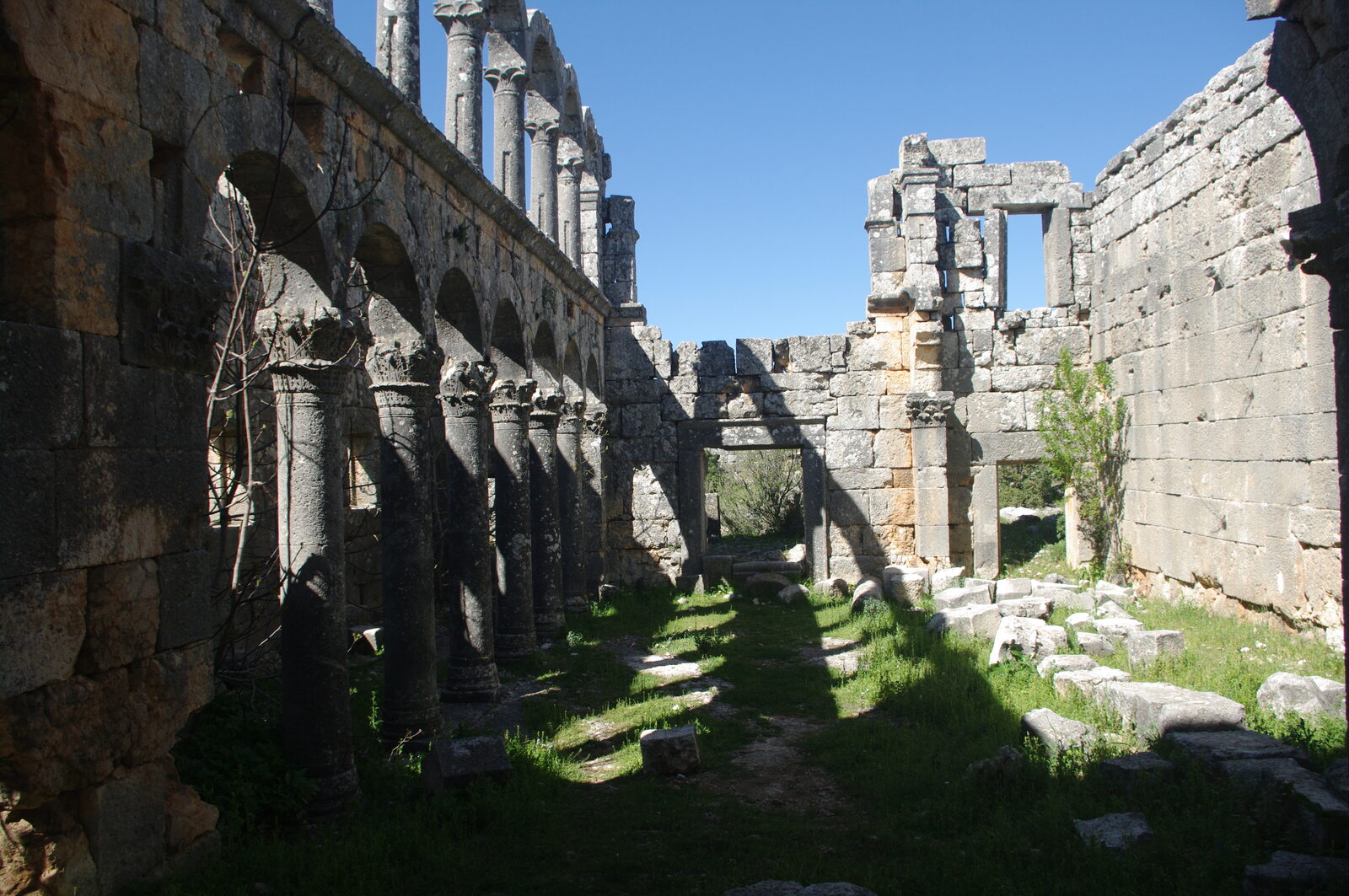
In recent years the Cambazlı basilica has been the subject of a sweeping restoration, part of a wider wave of heritage “renovation” across Turkey. The work has been widely criticised: rebuilt with fresh stone and sharpened lines, the church has lost much of its weathered, authentic character and, to some visitors, now looks almost newly built. The episode is a reminder of how fine the line can be between conserving a ruin and effacing the very history that makes it worth visiting.
Cambazlı among the ruins of Rough Cilicia
Cambazlı is one node in a remarkable concentration of Late Antique remains across the Cilician uplands. Within a short drive lie the temple-state capital of Diocaesarea, the priestly city of Olba, the terraced tombs of Kanlıdivane and the coastal ruins of Elaiussa Sebaste, while the great pilgrimage basilica of Aya Tekla rises further west near Silifke. Together they form one of the densest clusters of Roman and Byzantine sites anywhere in Anatolia. Seen as a group, they show how a rugged, thinly-populated frontier became, in its Christian centuries, a landscape crowded with churches, tombs and towns.
Frequently asked questions
Where is the Cambazlı church?
The Cambazlı church stands in the village of the same name on a plateau in Mersin Province, southern Turkey, in the region antiquity knew as Rough Cilicia (Cilicia Trachaea). It lies more than 900 metres above sea level, about 20 kilometres inland from the Mediterranean, and belongs to the district of Silifke, roughly 30 kilometres away. The site is sometimes called Yeğenli and is most easily reached by the signposted road inland from Kızkalesi, ancient Corycus.
When was the Cambazlı basilica built?
The basilica was built in the second half of the 5th century AD, during the early Byzantine period, when Rough Cilicia was dotted with prosperous villages. It is a three-aisled basilica of finely squared stone, roughly 29 by 22 metres overall. Although the roof has long since collapsed, the apse still keeps its semi-dome, the walls rise two storeys, and a colonnade of Corinthian columns survives along the southern side.
What else survives at Cambazlı besides the church?
Beyond the basilica, Cambazlı preserves a scatter of ancient tombs and structures: rock-cut graves, mausoleums and free-standing funerary monuments shaped like miniature temples — a form typical of Rough Cilicia — together with ancient cisterns cut to store water and stone sarcophagi. These remains show that Cambazlı was a substantial settlement occupied from the late Hellenistic period through the Roman and Byzantine eras, linked by road to Corycus and Diocaesarea.
Sources and further reading
- Cambazlı ruins — Wikipedia
- Byzantine Architecture — World History Encyclopedia
- Byzantine Art — World History Encyclopedia
- Cambazlı — Turkish Archaeological News
- Cambazlı Church — The Byzantine Legacy