Understanding Chinese Pyramids
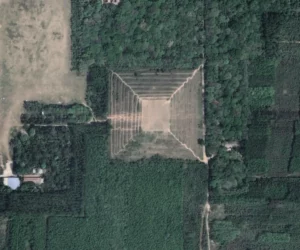
The Chinese pyramids are over 40 ancient burial mounds in the form of truncated, flat-topped pyramids, built between the Qin (third century BCE) and Tang (seventh century CE) dynasties as the imperial mausolea of China’s emperors and their highest officials. They are built of rammed earth rather than dressed stone, are heavily eroded today, and cluster in the Wei River valley of Shaanxi-Shanxi region around the modern city of Xi’an. The most famous is the Mausoleum of Qin Shi Huang, beneath which the Terracotta Army stands guard.
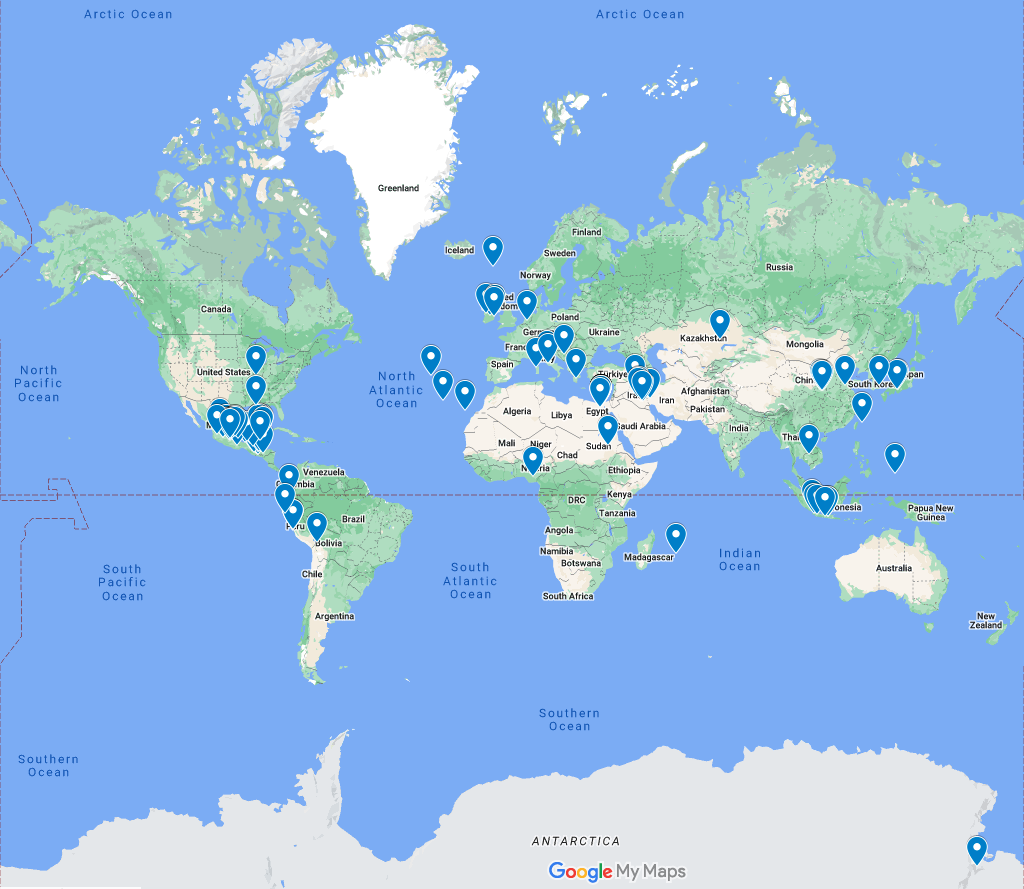
If you would like to see a map of the Chinese Pyramids you can find that here or follow the article to find the Google Earth Coordinate’s for each.
Origins of the Earliest Tombs
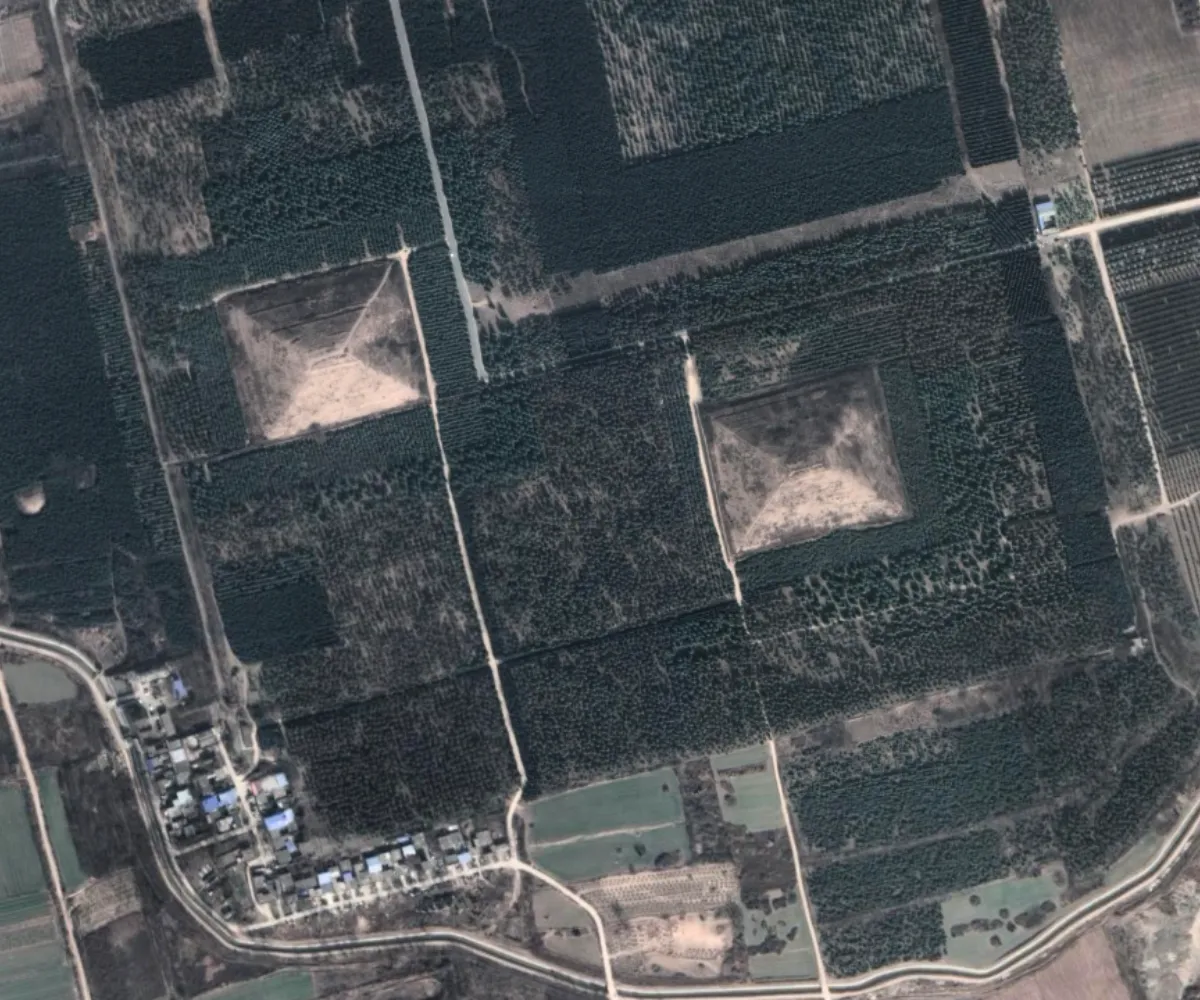
The earliest Ancient Chinese Pyramid tombs emerged north of Beijing in the Inner Mongolia Autonomous Region and Liaoning. These belong to the Neolithic Hongshan culture, dating back to 4700 to 2900 BC. Notably, the site of Niuheliang in Liaoning features a pyramidal structure.
Western Discovery and Documentation
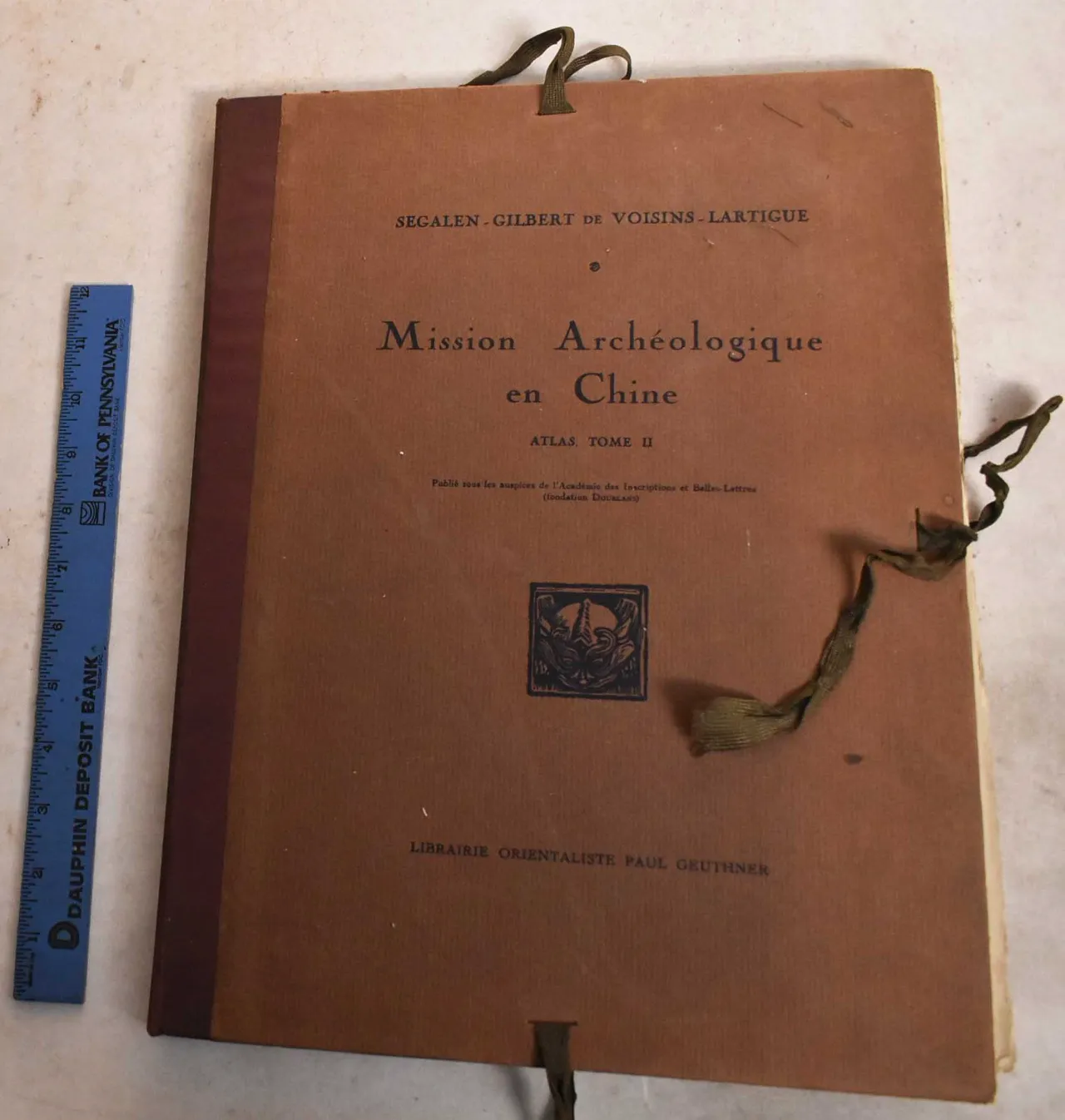
In 1667, Jesuit Father Athanasius Kircher first mentioned Pyramids in China in his book “China monumentis Illustrata.” However, these structures remained relatively unknown in the West until the 1910s. Western traders Fred Meyer Schroder and Oscar Mamen documented them around Xi’an in 1912. The following year, Victor Segalen’s expedition further explored these tombs, detailing them in his 1914 publication “Mission archéologique en Chine.”
Sensational Western Encounters
Post-World War II, the Western world’s interest in Chinese pyramids peaked with tales of the “Great White Pyramid” of Maoling, the tomb of Emperor Wu of Han (156–87 BC), located in Xingping, Shaanxi Province. During a World War II flight between India and China, U.S. Army Air Corps pilot James Gaussman reported seeing a white, jewel-topped pyramid. Later, in 1947, Colonel Maurice Sheahan published an eyewitness account in The New York Times, which included a photograph later attributed to Gaussman. Chris Maier later identified the pyramid in the photo as the Maoling Mausoleum of Emperor Wu.
Archaeological Significance and Tourism
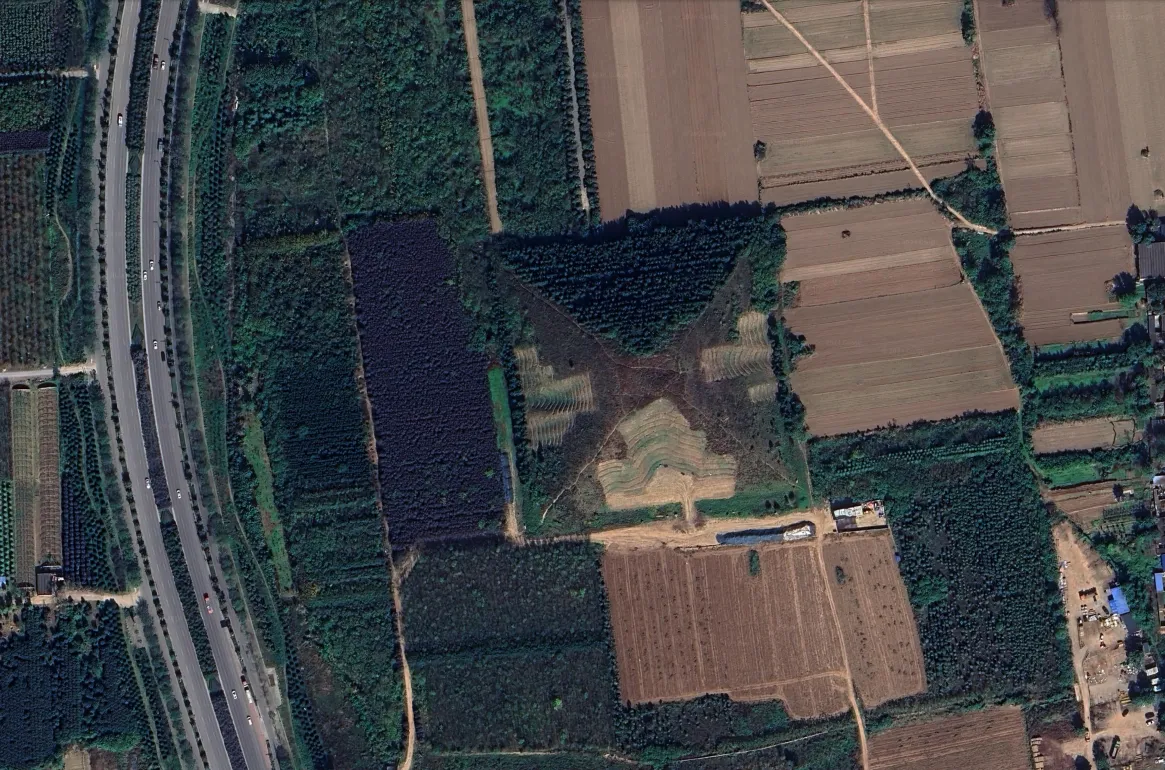
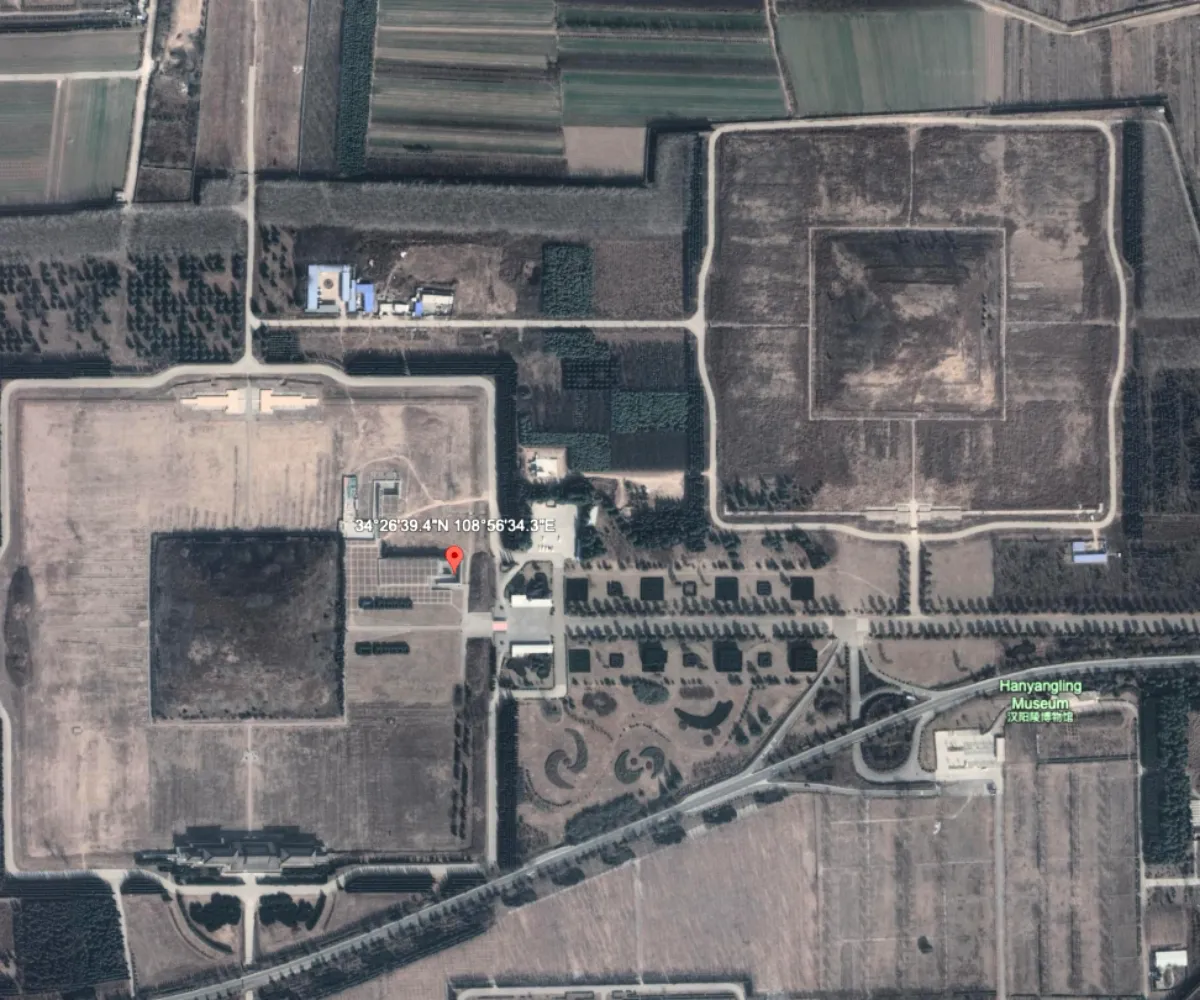
Despite earlier sensational claims of hidden pyramids, these pyramid-shaped tomb mounds were not a secret and were known to Western scientists before the 1947 publicity and newspaper articles. Reports suggest that these structures, made of mud and dirt, resemble pyramid shaped mounds more than the stone pyramids of Egypt, with a different type of construction. It should be noted however, that most of the Pyramids in China have not been excavated so we do not know for sure. Some of these sites, like the Han Yang Ling Mausoleum of the Western Han dynasty, now serve as tourist attractions and host attached museums, there are others too as China begins to show the world its fantastic history!
All known locations of Chinese Pyramids
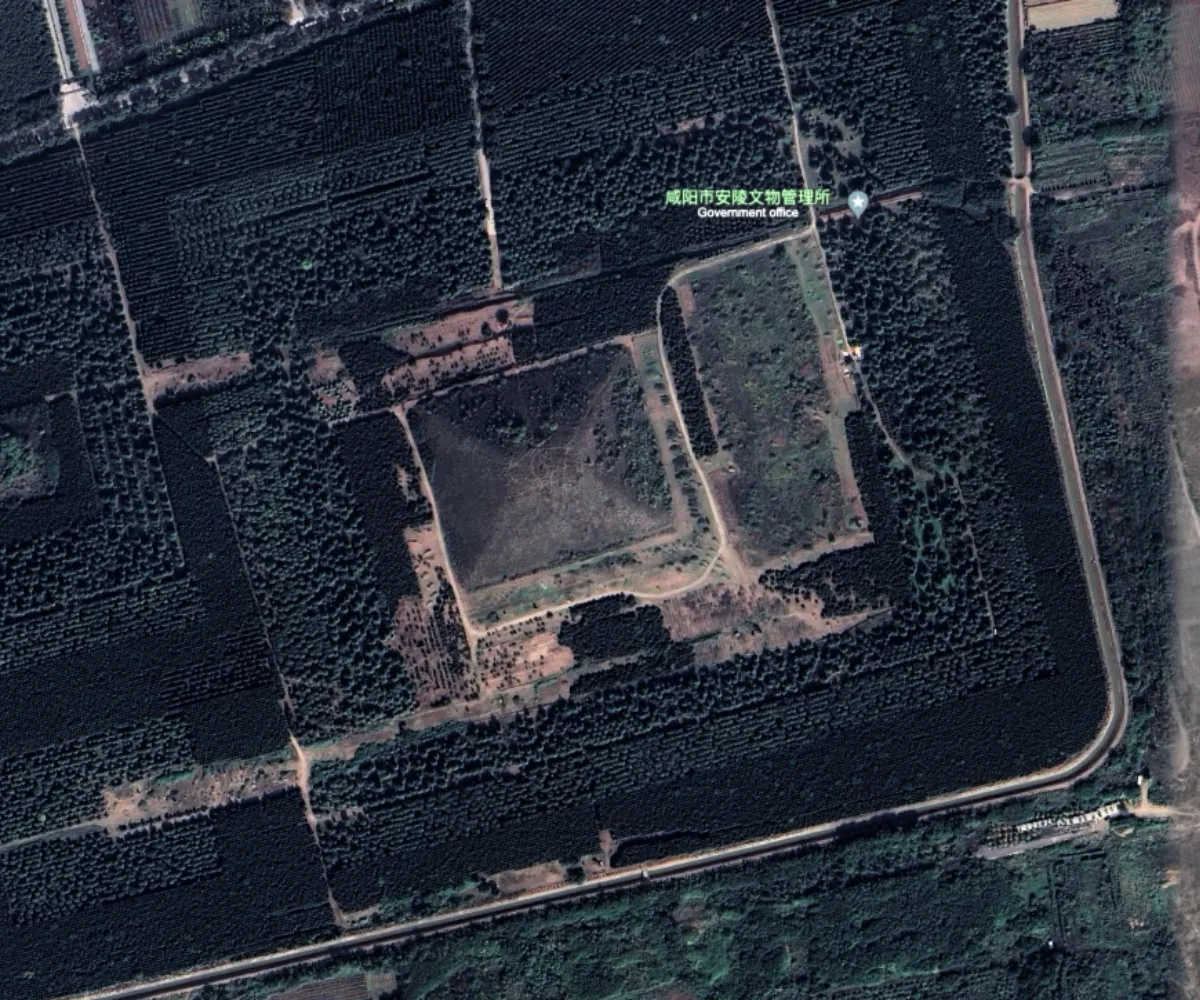
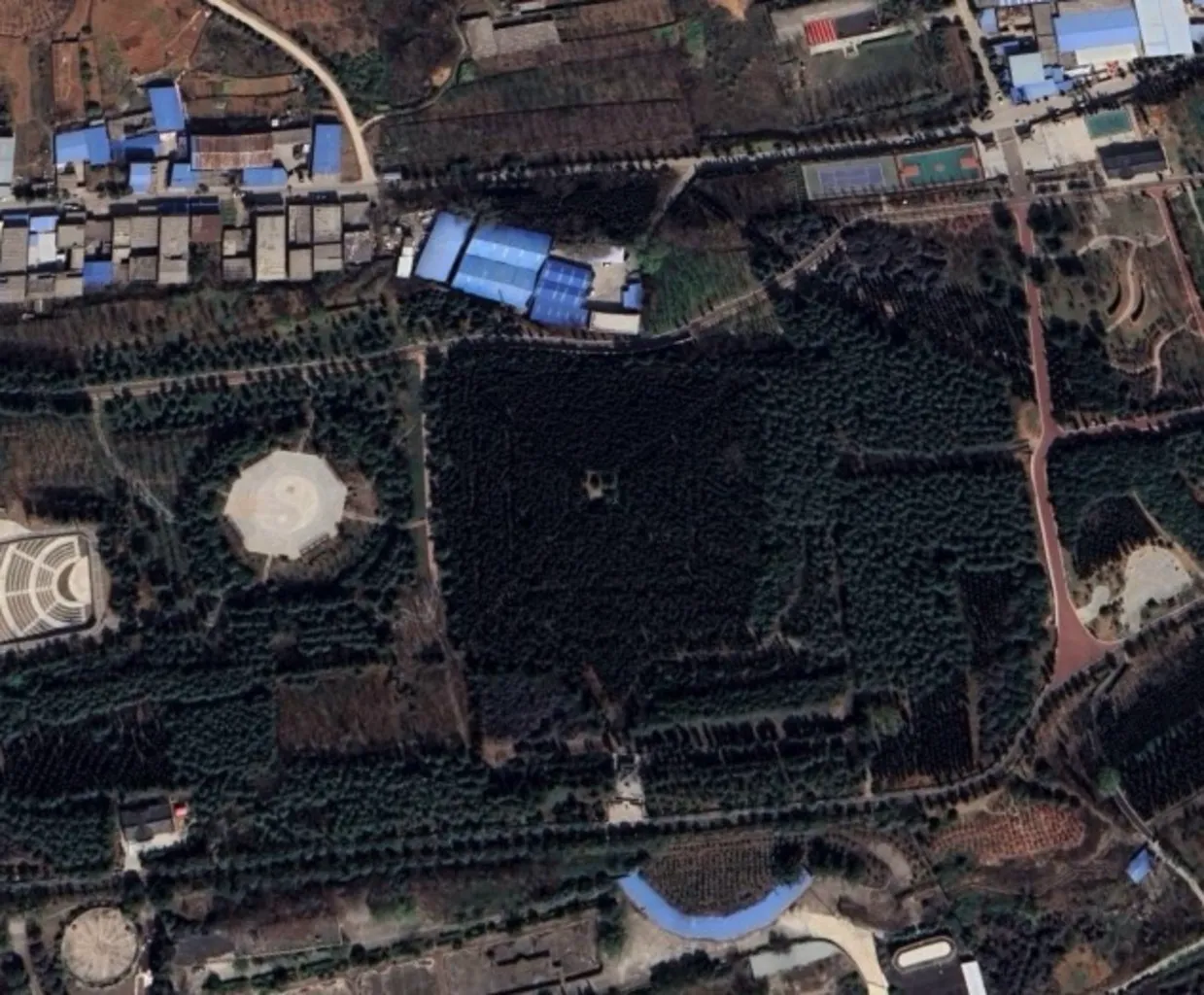
Despite what many people think, the Pyramids in China are not hidden from you or are a big secret. They may however be hidden with trees/shrubs and vegetation. Unfortunately I do not know why, perhaps it’s to keep them private or stop tomb raiders from easily locating them, or even us looking at them through satellites (I honestly do not know). Click on the name of each of the Tombs and a link will open up to Google Earth. You can then view the Pyramids for yourself. The coordinate’s should take you right to the site. You may need to zoom out to see them in full.
Zhou dynasty tombs complex near Luoyang, Henan
King Ling of Zhou, born Ji Xiexin, was the twenty-third king of the Zhou dynasty. He reigned as the eleventh king of Eastern Zhou. His reign ended with his death in 545 BC.
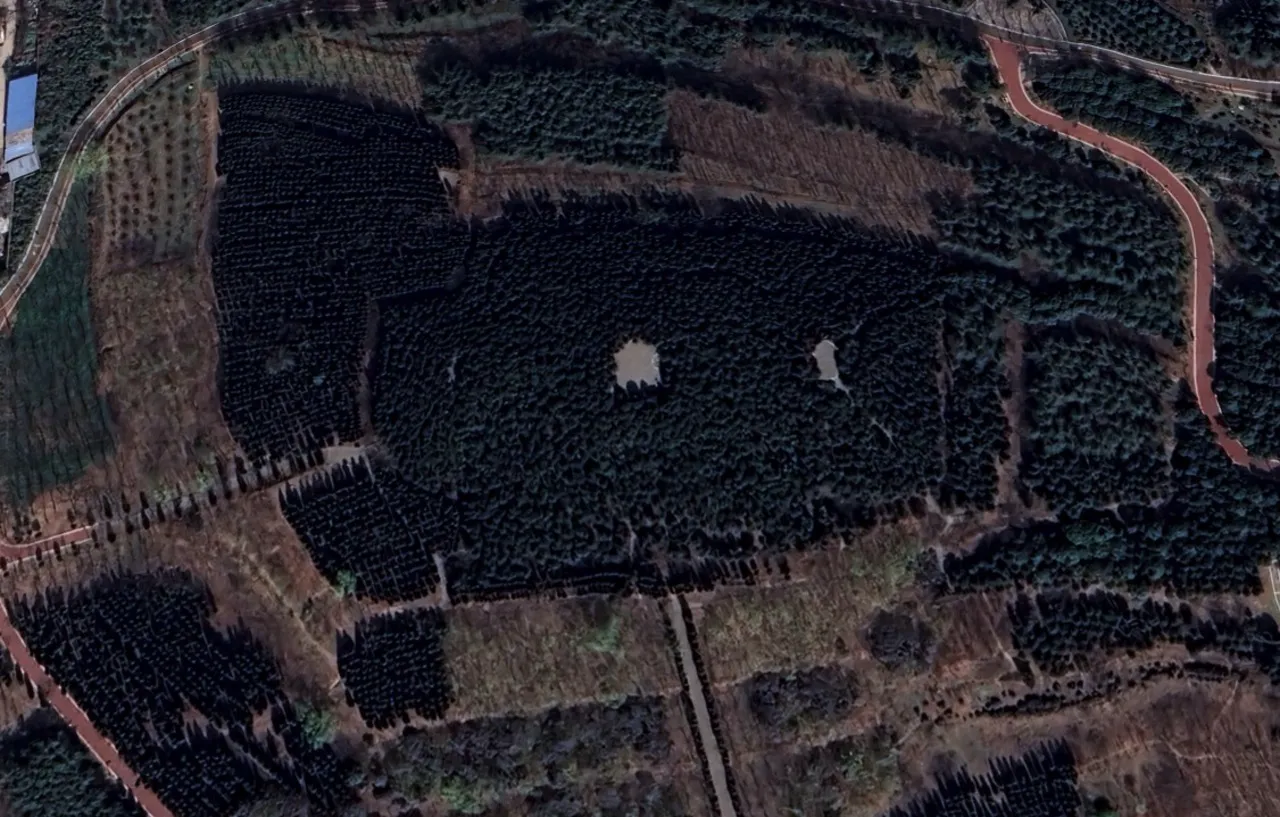
Zhao Kings’ tombs complex near Handan, Hebei
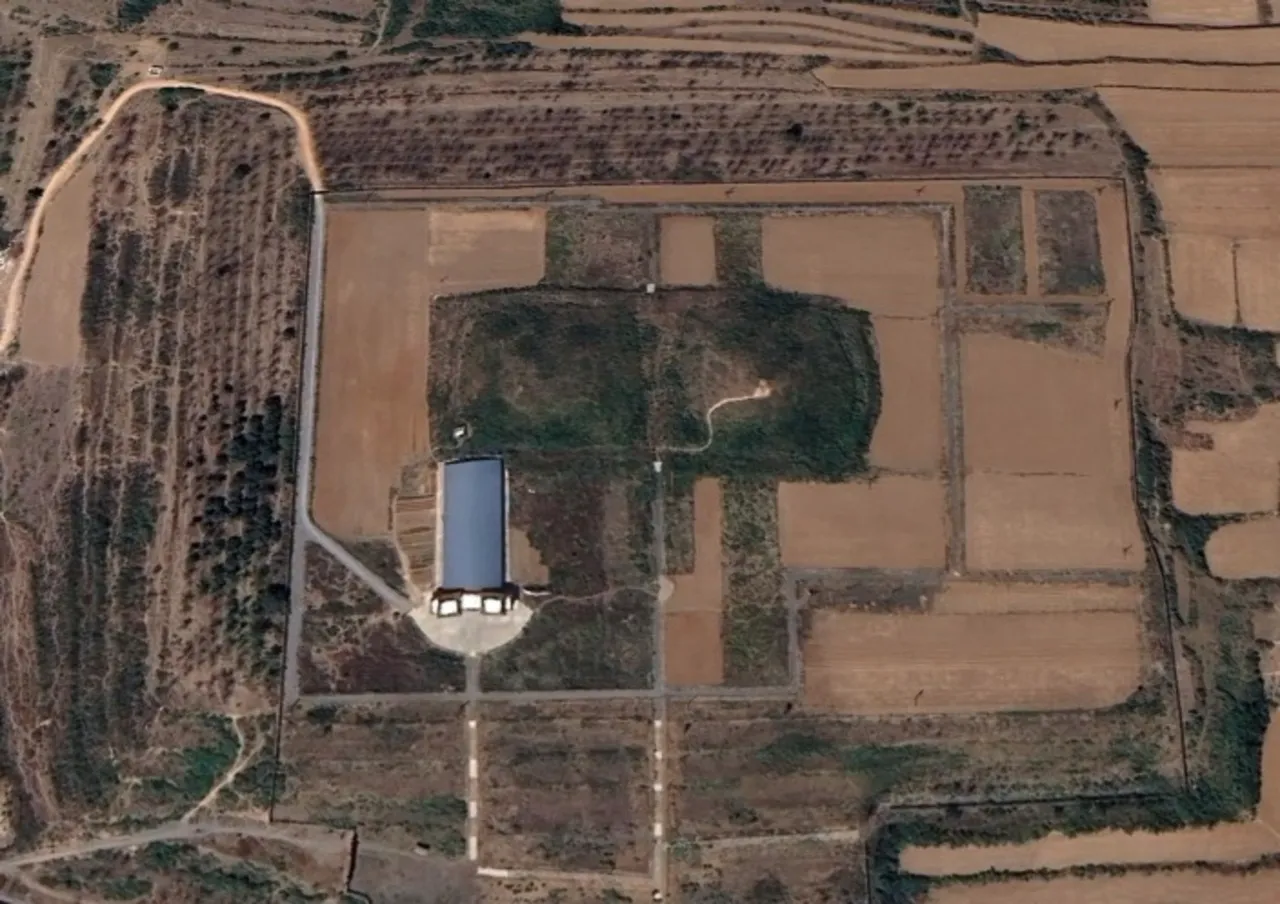
Yan King’s burial mounds in Yixian, Hebei
Xiadu, known as the Lower Capital of Yan, served as a capital during the Warring States period in ancient China. From 400 to 300 BC, it possibly ranked as the world’s largest city. Researchers estimate its peak population exceeded 300,000. Today, the remnants of Xiadu lie in Yi County, Baoding, Hebei Province. Covering 30 km², it stands as the largest excavated city from that historical era.
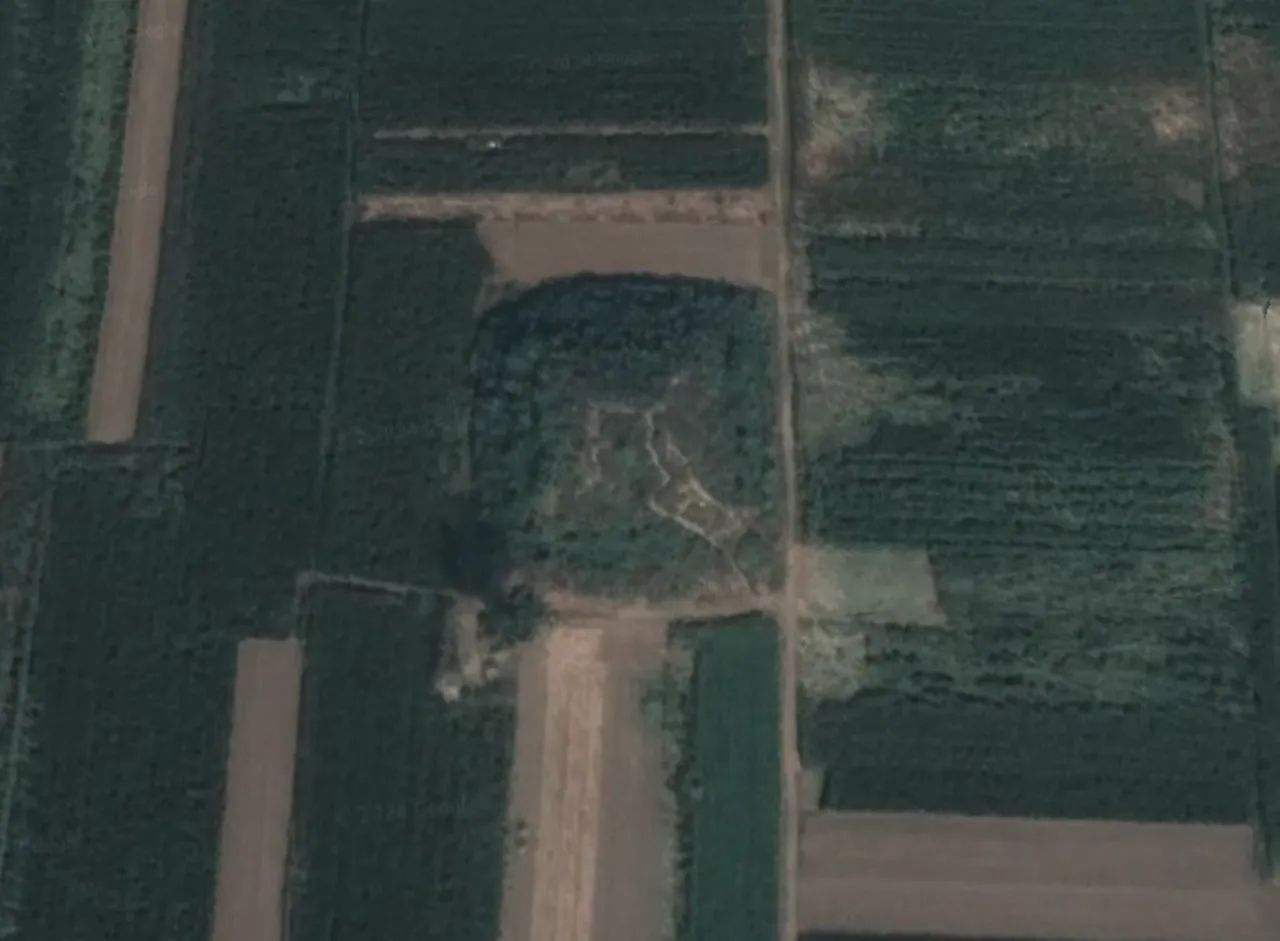
Qin dynasty mausoleums near Xi’an, Shaanxi
Qin Shi Huang was born in February 259 BC in Handan, the capital of Zhao. His birth name was Ying Zheng or Zhao Zheng. His father, King Zhuangxiang of Qin, and his mother, Lady Zhao, played pivotal roles in his early life. The influential merchant Lü Buwei helped him ascend to the throne of Qin in 247 BC, following his father’s death. By 221 BC, he had unified China, conquering all the Warring States, and declared himself the first Emperor of China, abandoning the traditional title of “king” used by his predecessors.
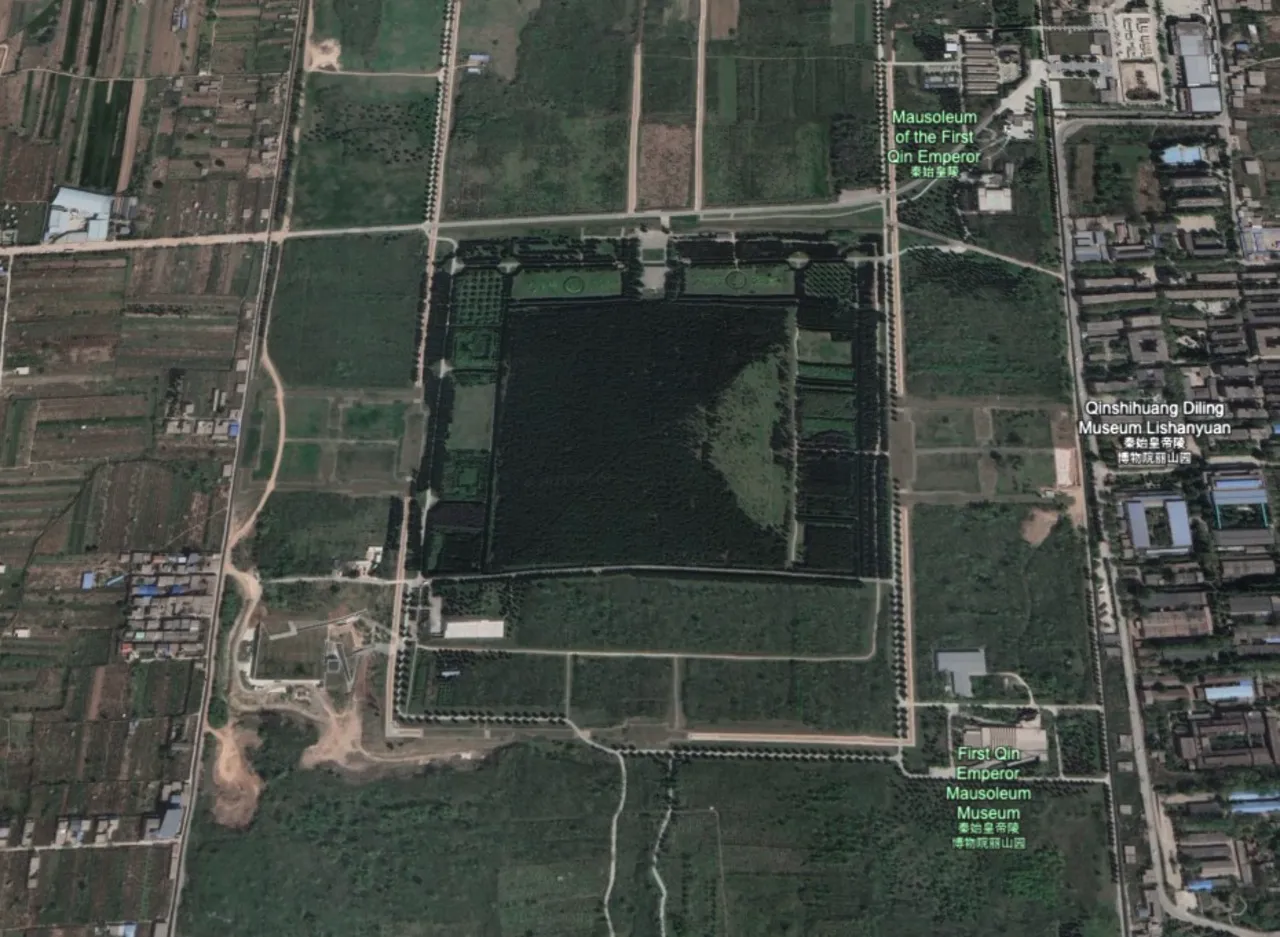
- Tomb of Emperor Qin Ershi in Xi’an (no coordinates)
Maoling Mausoleum group
Emperor Wu of Han, born Liu Che on March 29, 156 BC, ascended as the seventh emperor of the Han dynasty from 141 to 87 BC. His 54-year reign marked the longest until the Kangxi Emperor over 1,800 years later. Emperor Wu’s era saw significant expansions in Chinese geopolitical influence and the strengthening of a centralized state. He promoted a blend of Legalist-Confucian doctrines, reorganized the economy, and innovated in religious and cultural spheres.
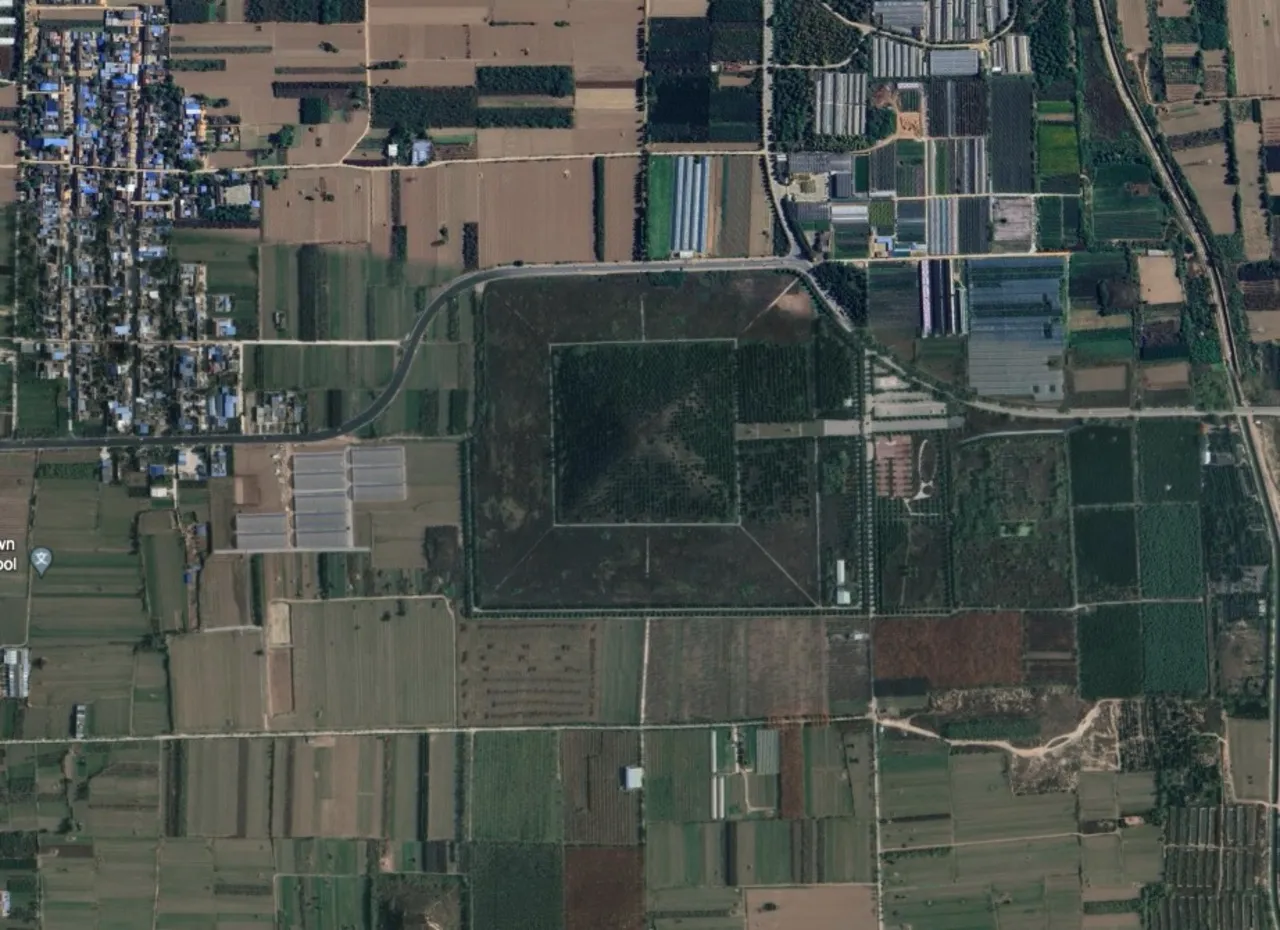
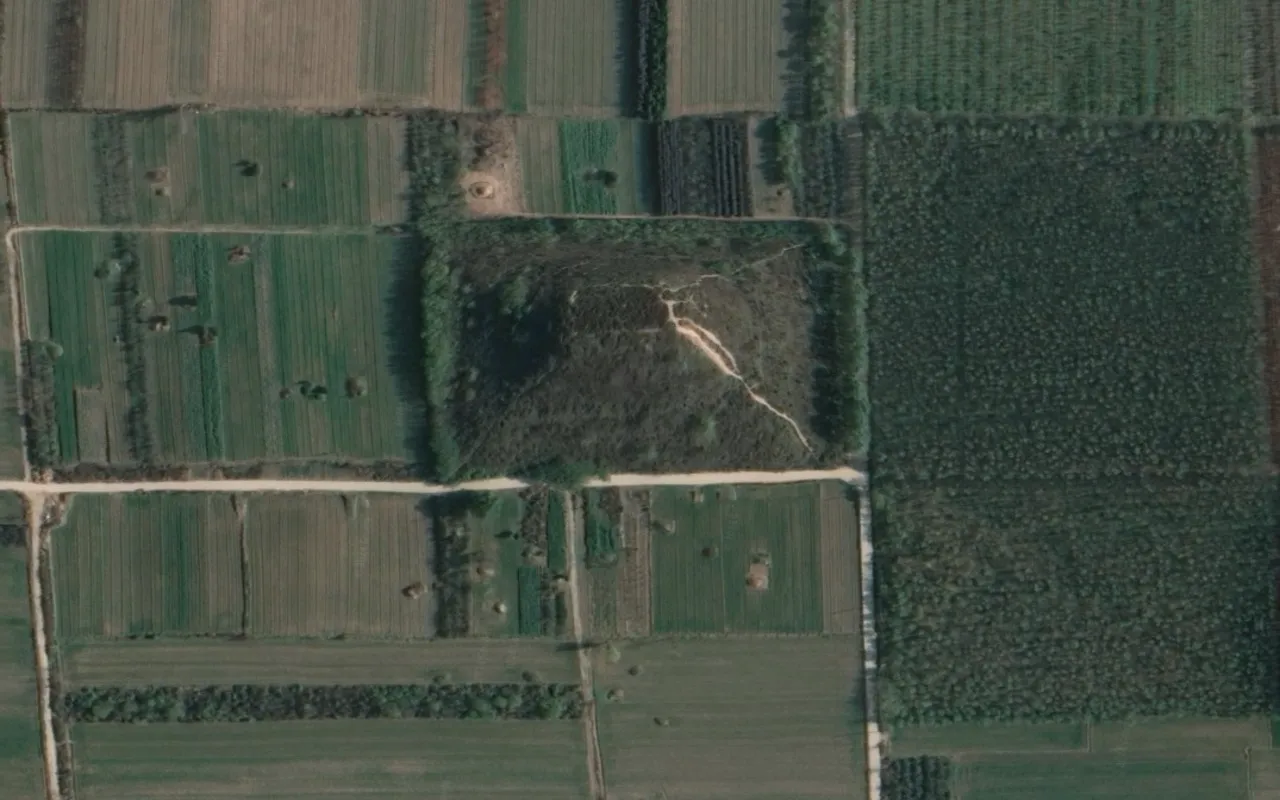
- Tomb of Princess Yang Xin (missing coordinates)
Pingling Mausoleum group
Emperor Zhao of Han, originally named Liu Fuling, was born in 94 BC. He was the youngest son of Emperor Wu and his favorite concubine, Lady Gouyi. Emperor Wu, aged 62 at the time of Zhao’s birth, was overjoyed, especially since Lady Gouyi’s pregnancy lasted an unusual 14 months. This duration matched the mythical Emperor Yao’s mother’s pregnancy, leading Emperor Wu to favor Zhao for succession. This preference sparked tensions and conspiracies within the palace, ultimately leading to the tragic demise of Crown Prince Liu Ju and his mother, Empress Wei Zifu, in 91 BC.
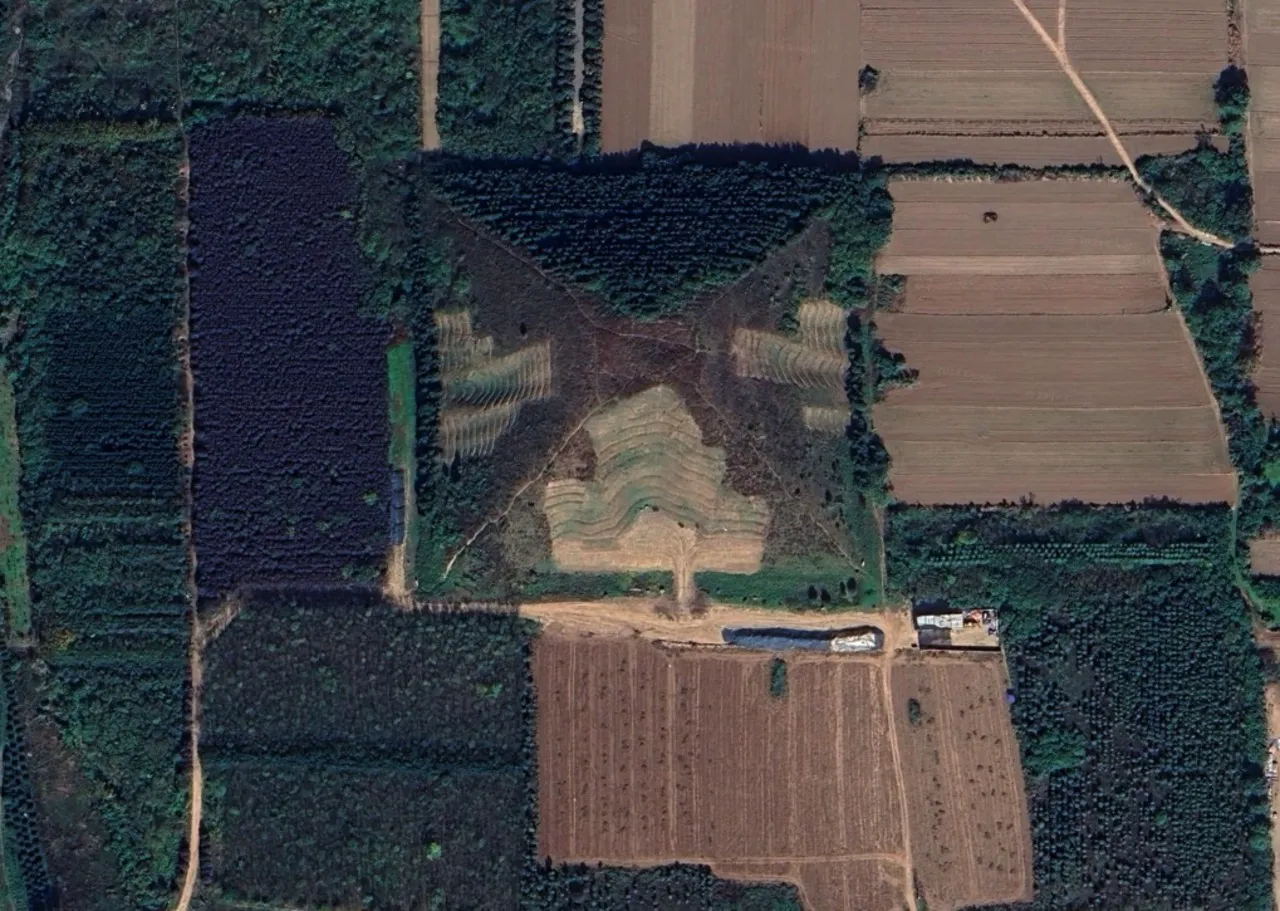
Grand Empress Dowager Shangguan, born in 88 BC, ascended to prominence during the Han dynasty. She married Emperor Zhao and became Empress at a young age. Her familial background was notable, with her father, Shangguan An, and grandfathers, Huo Guang and Shangguan Jie, being influential figures. Despite her youth, she found herself at the heart of political power.
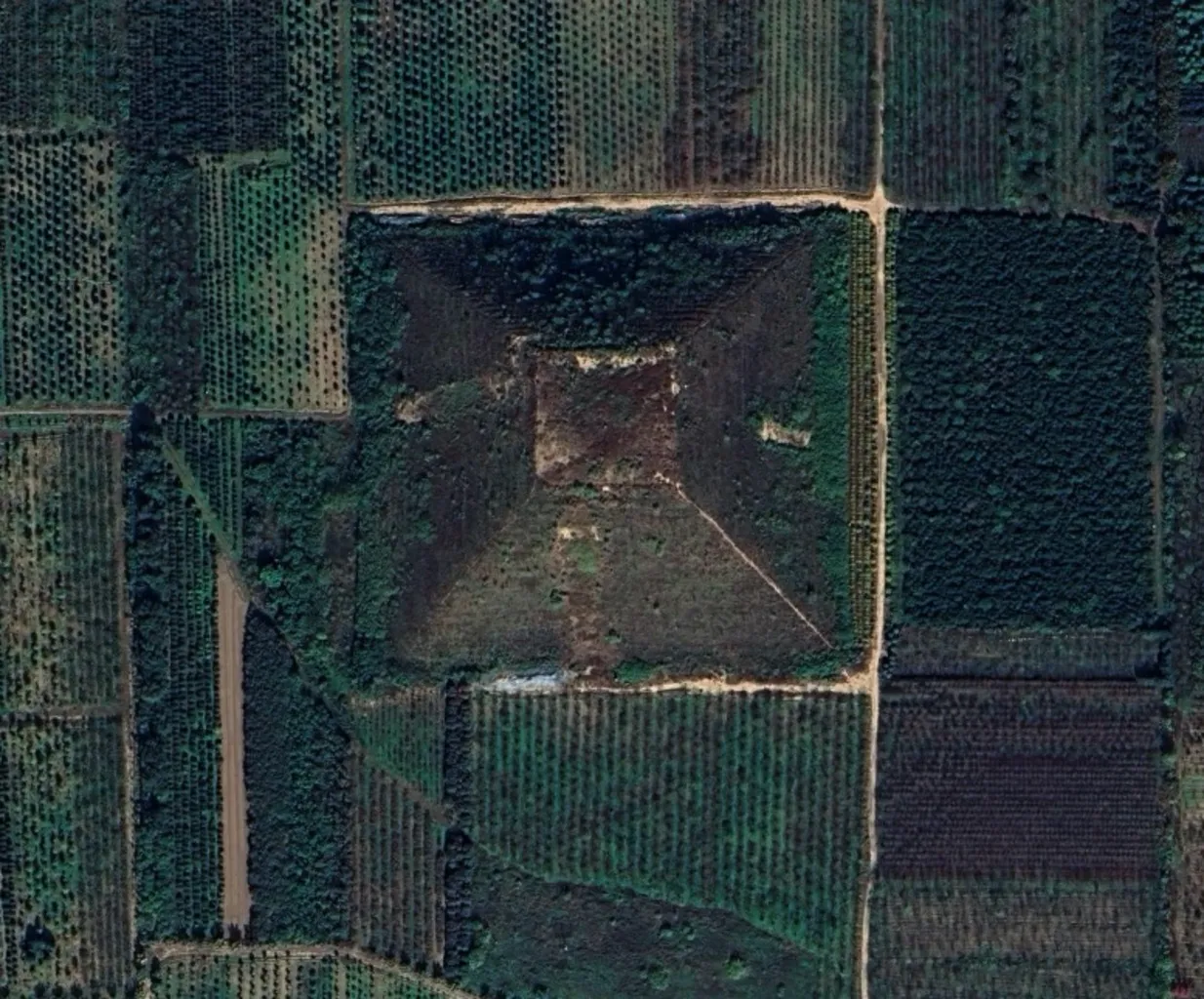
Yanling Mausoleum group
Liu Ao, known as Emperor Cheng of Han, was born around 51 BC to Crown Prince Liu Shi, later Emperor Yuan, and Consort Wang, later Grand Empress Dowager Wang Zhengjun. He became the crown prince in 47 BC. Despite family tensions over succession, Emperor Cheng ascended the throne in 33 BC after his father’s death.
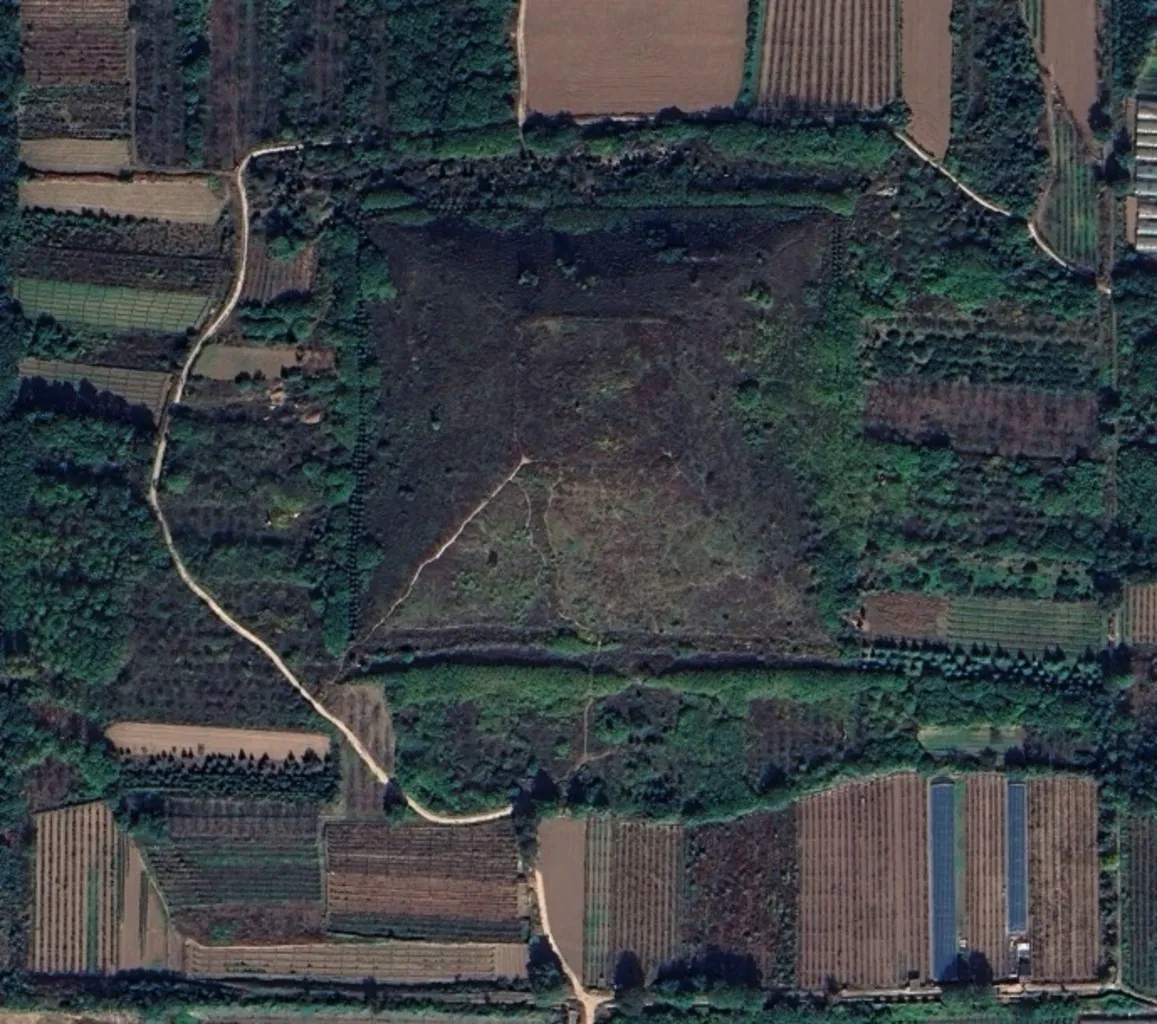
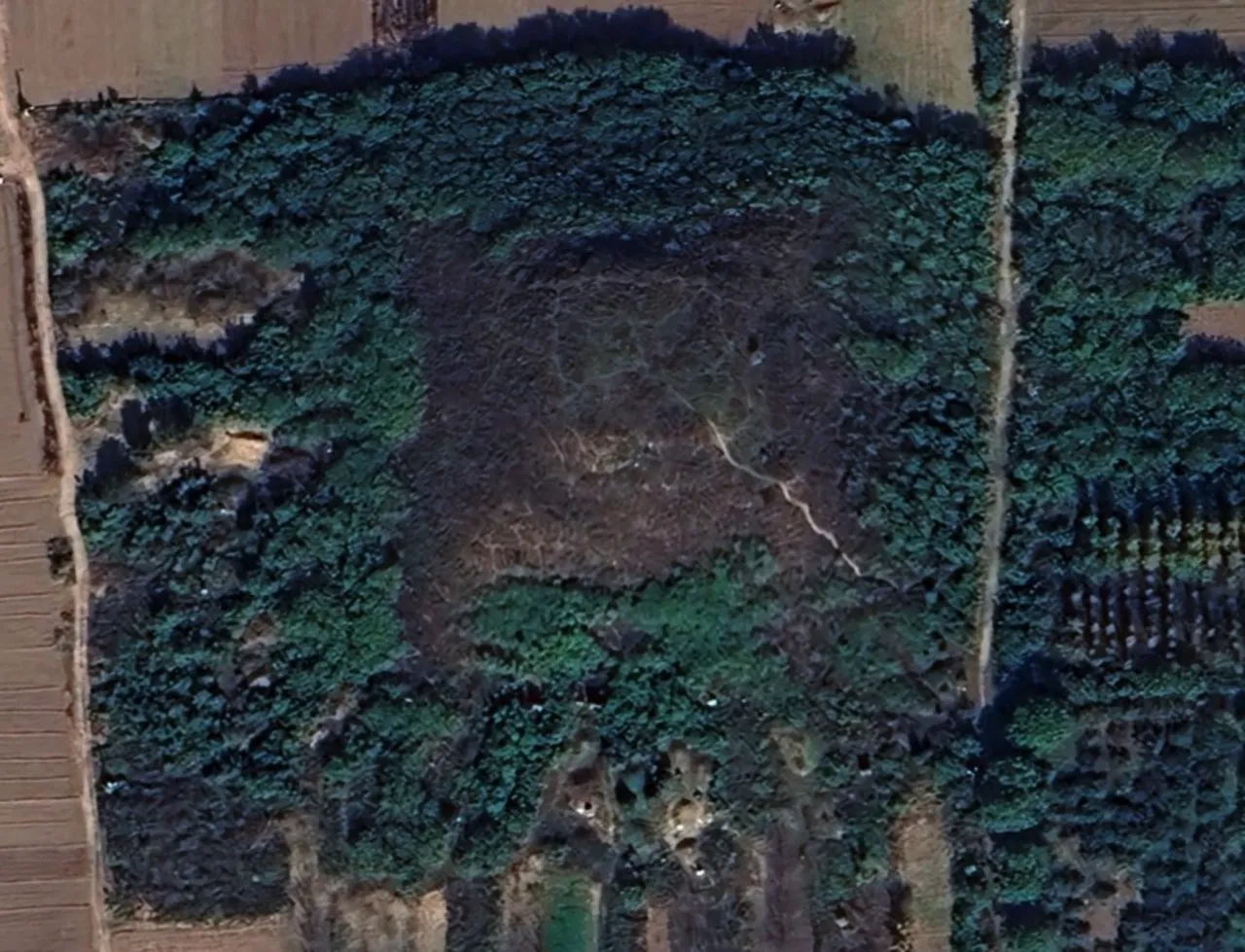
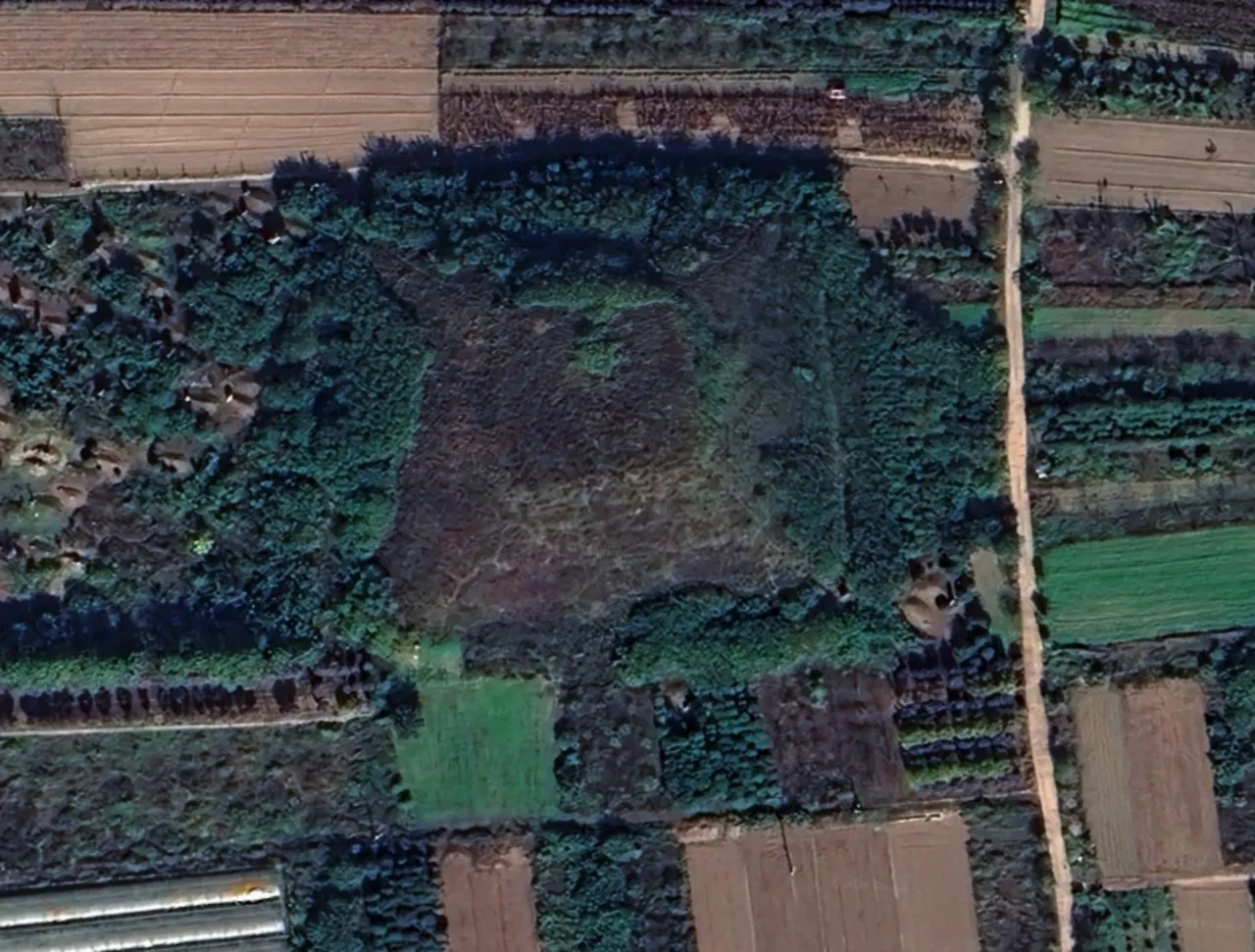
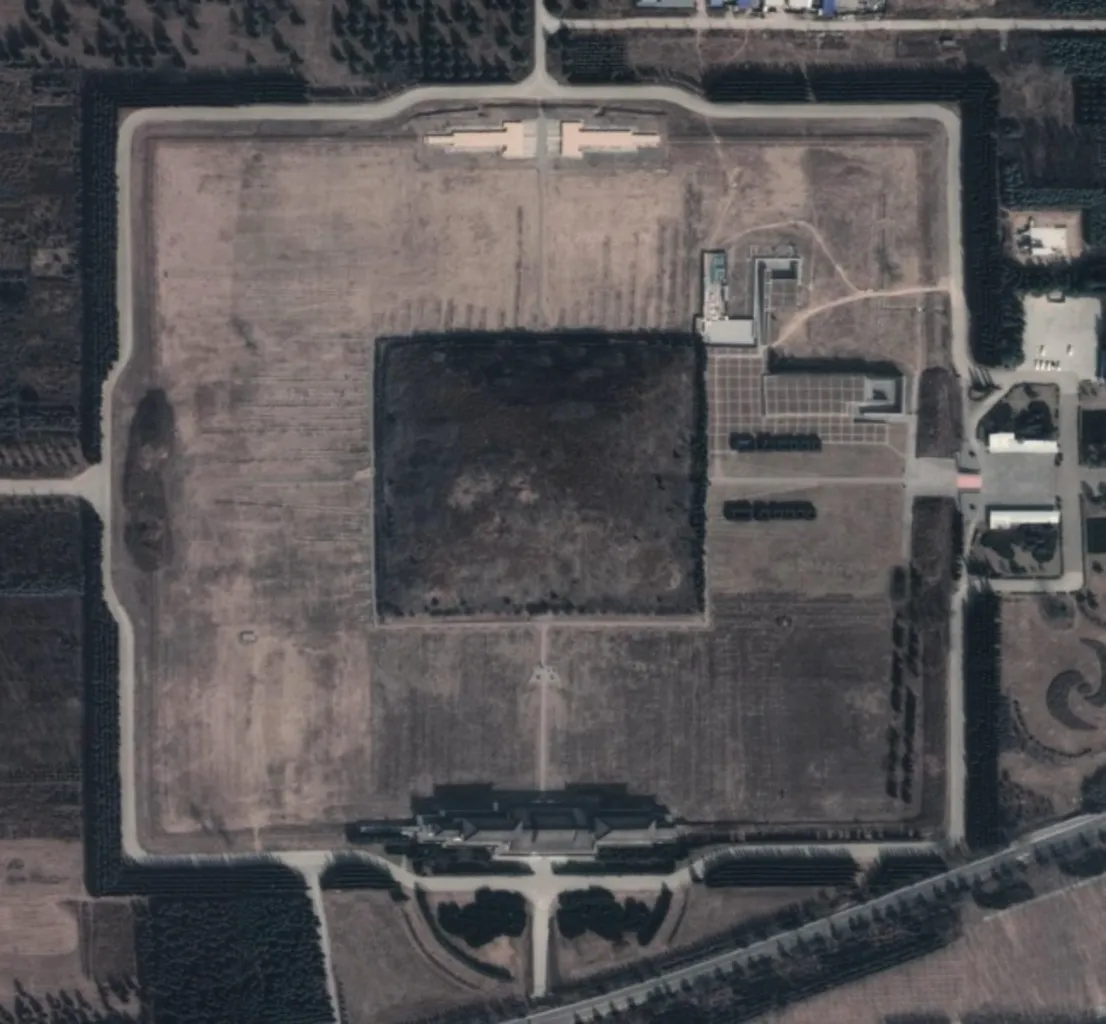
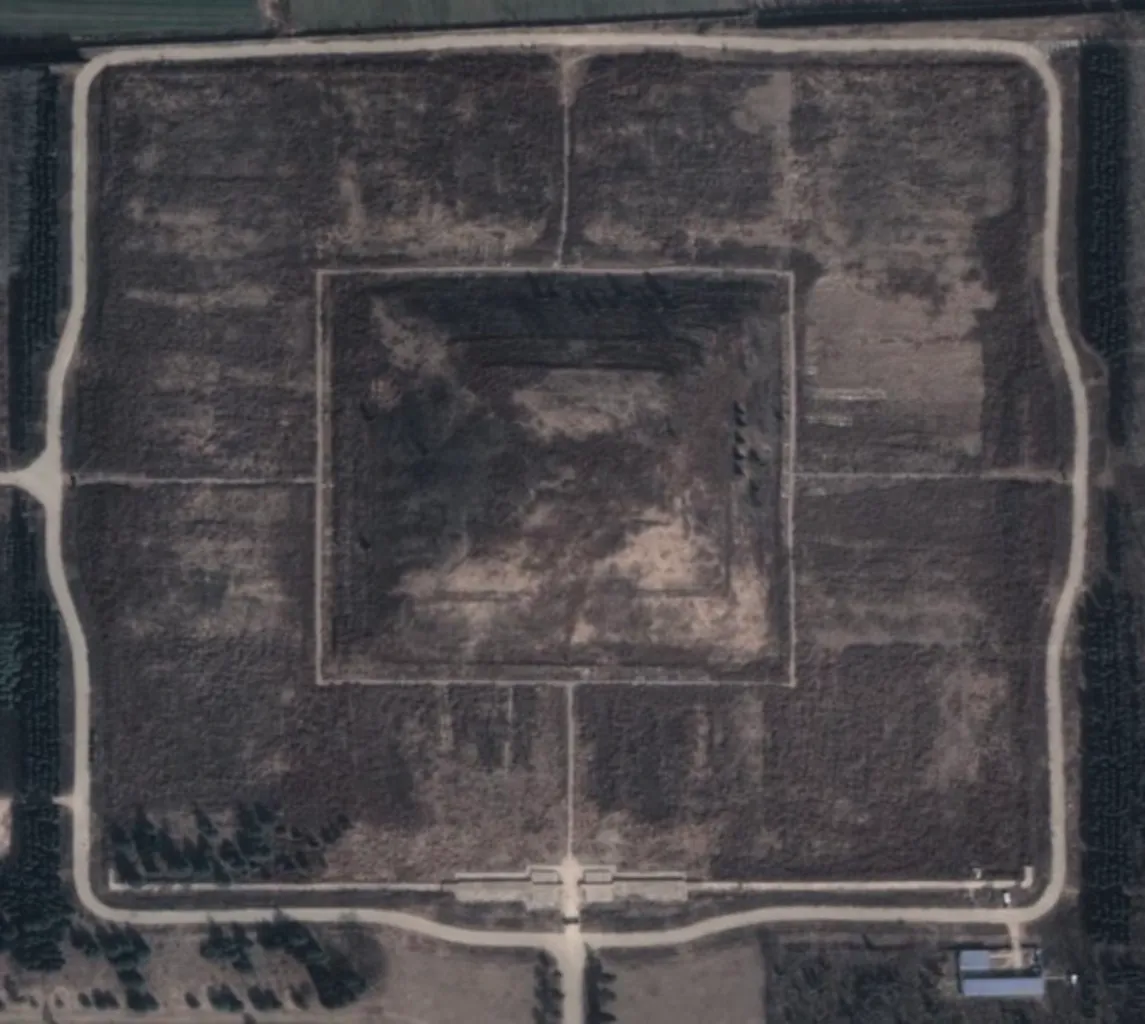
- Tomb of Empress Zhao Feiyan (missing coordinates)
Kangling Mausoleum group
Emperor Ping of Han, born Liu Jizi in 9 BC, later known as Liu Kan, was the eleventh emperor of the Han dynasty. He ascended the throne in 1 BC at the tender age of eight after his cousin, Emperor Ai, died childless. Grand Empress Dowager Wang Zhengjun appointed Wang Mang as regent, setting the stage for future turmoil.
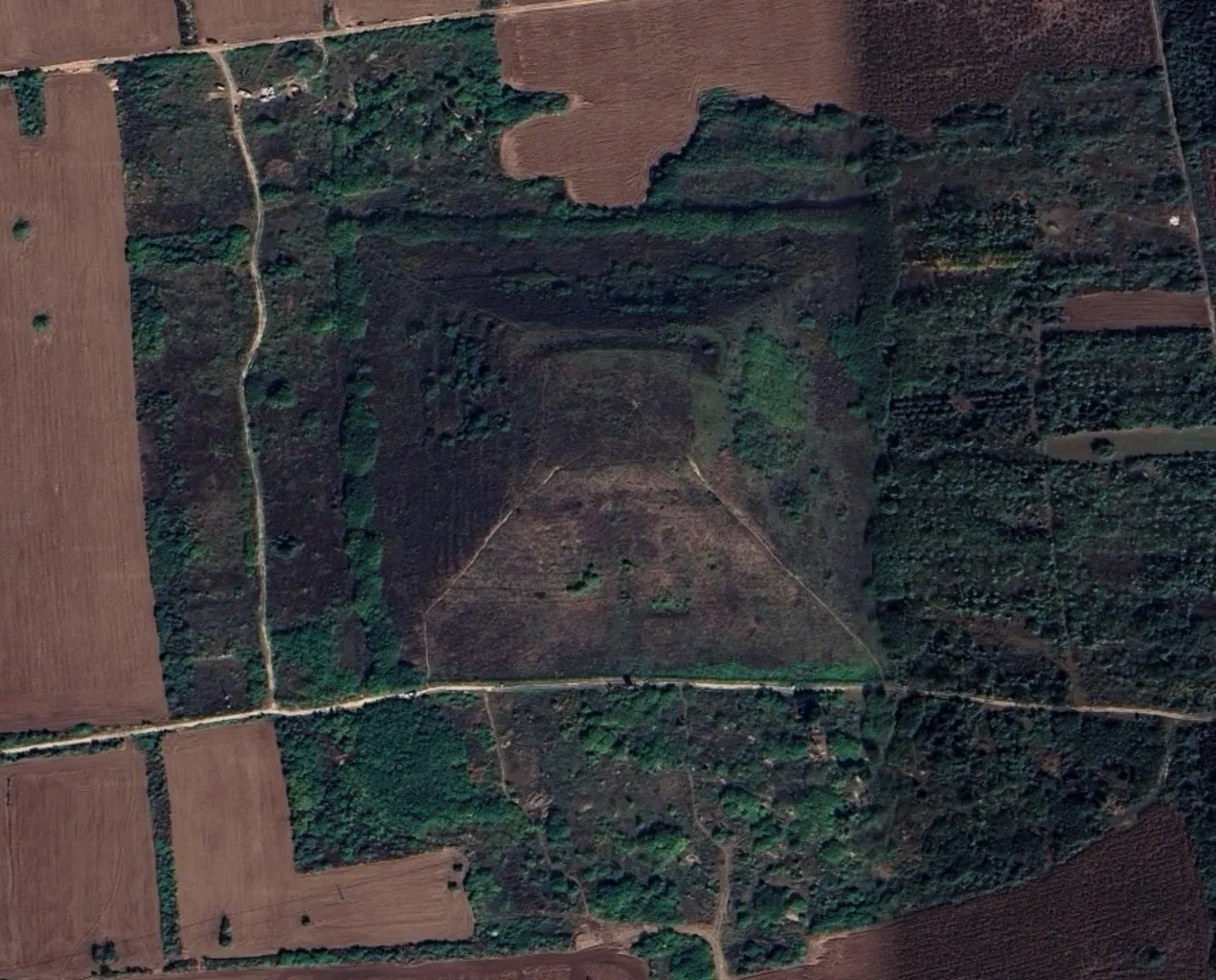
- Tomb of Empress Wang (missing coordinates)
Weiling Mausoleum group
Emperor Yuan of Han, born Liu Shi in 75 BC, came from a lineage marked by tragedy and resilience. His father, Liu Bingyi, survived a brutal purge that claimed his own father, Liu Ju, due to Emperor Wu’s paranoia. Despite these hardships, Liu Shi ascended from commoner status to royalty, thanks to the political maneuvers surrounding his family. His rise to power began under unusual circumstances when, in 74 BC, the regent Huo Guang deposed the current prince and offered the throne to Bingyi, who became Emperor Xuan. Liu Shi’s mother, Empress Xu Pingjun, suffered a tragic fate, being poisoned by a palace intrigue orchestrated by Huo Guang’s wife, Lady Xian, in 71 BC.
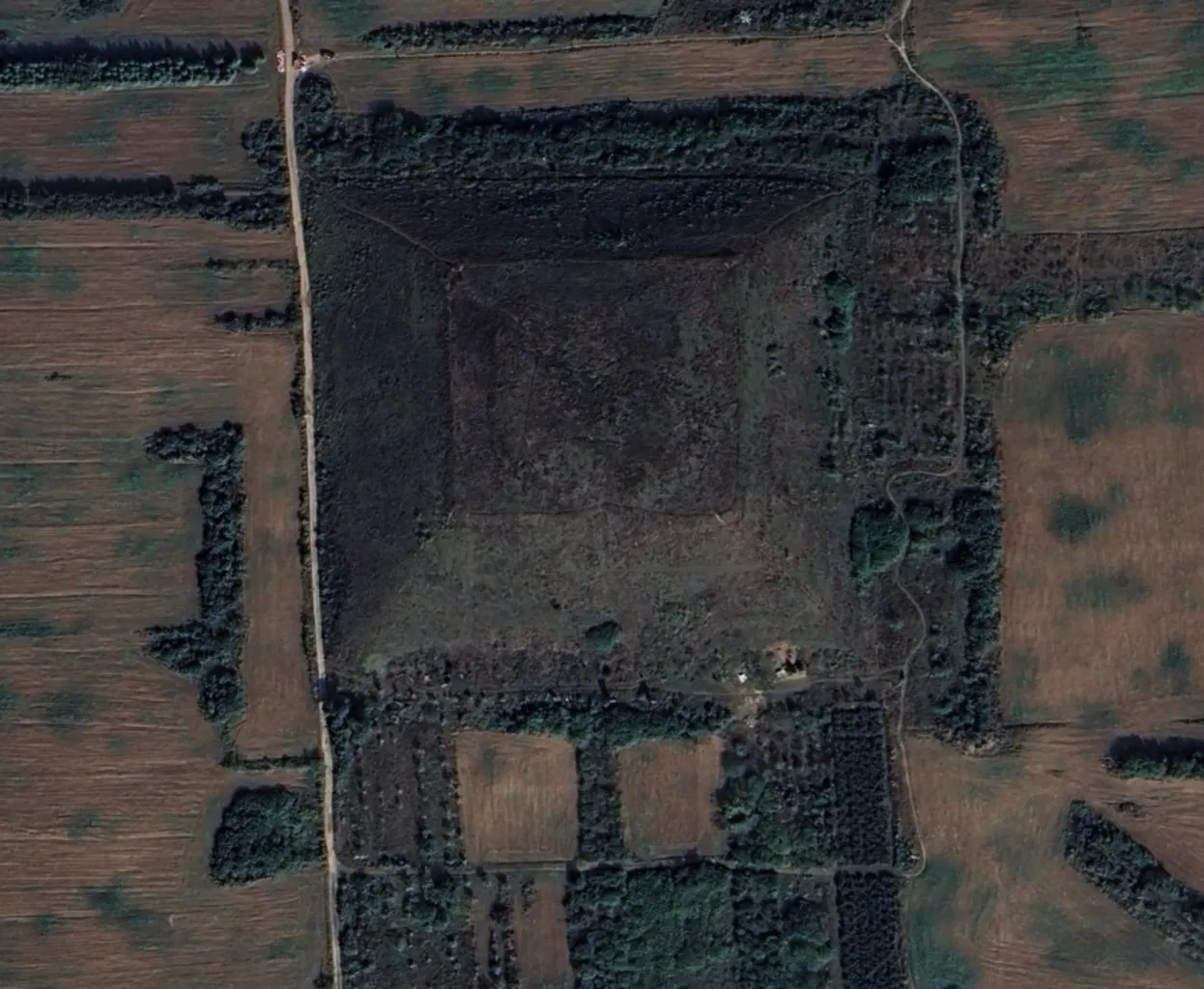

Group of two “tombs of Zhou Kings” (possibly from Han era)
- Tomb of King Wu of Zhou (missing coordinates)
- Tomb of King Wen of Zhou (missing coordinates)
Yiling mausoleum group
Emperor Ai of Han, born Liu Xin in 25 BC, ascended the throne at the age of 20. His uncle, Emperor Cheng, who was childless, named him heir. Emperor Ai reigned from 7 BC to 1 BC. His rise to power was marked by high hopes due to his intelligence and articulateness, as perceived by both the officials and his predecessor.
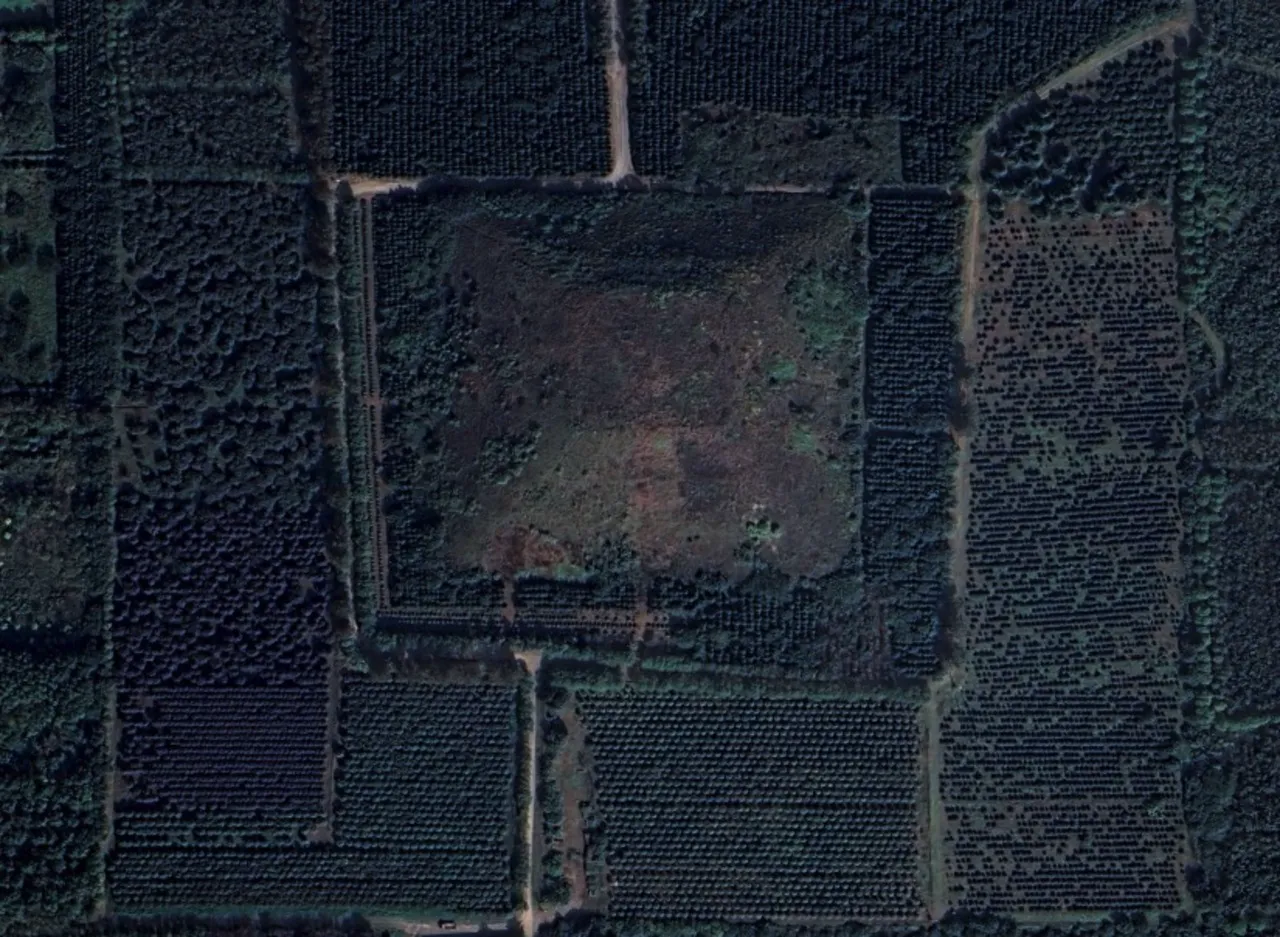
Empress Fu, formally known as Empress Xiao’ai, was born into a notable family closely linked to the Han Dynasty’s royal lineage. Her father, Fu Yan, was a cousin of Consort Fu, the grandmother of Emperor Ai of Han. Empress Fu married Emperor Ai when he was still the Prince of Dingtao and later the crown prince. Their union, however, remained childless and possibly unconsummated due to the Emperor’s sexual orientation.
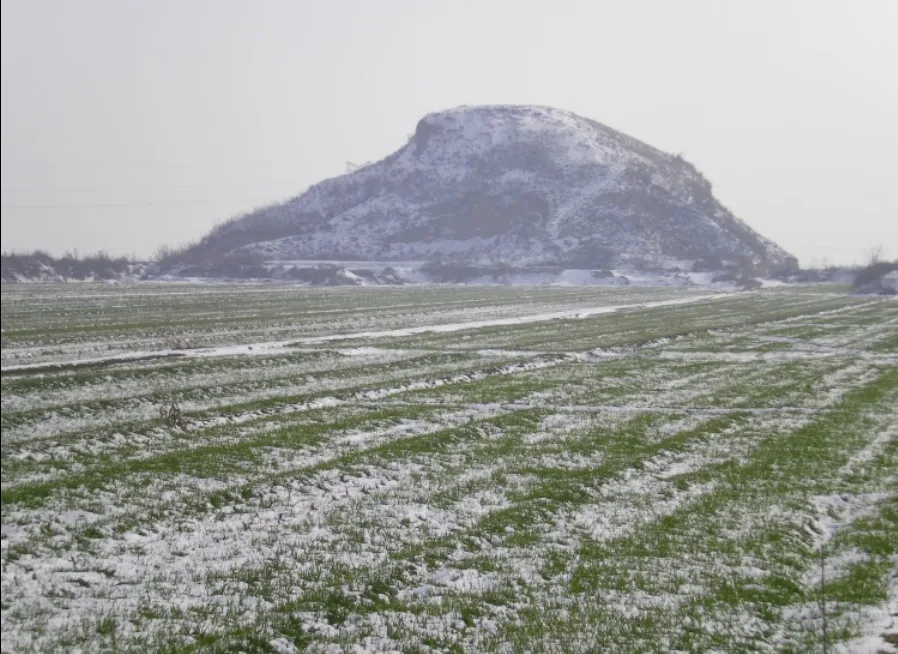
Following the death of Emperor Cheng in April 7 BC, Emperor Ai ascended the throne, and Empress Fu was crowned on June 16 of the same year. Her father received the title of Marquess of Kongxiang, enhancing the family’s prestige. Unfortunately, their time in power was short-lived, as Emperor Ai passed away in August 1 BC.
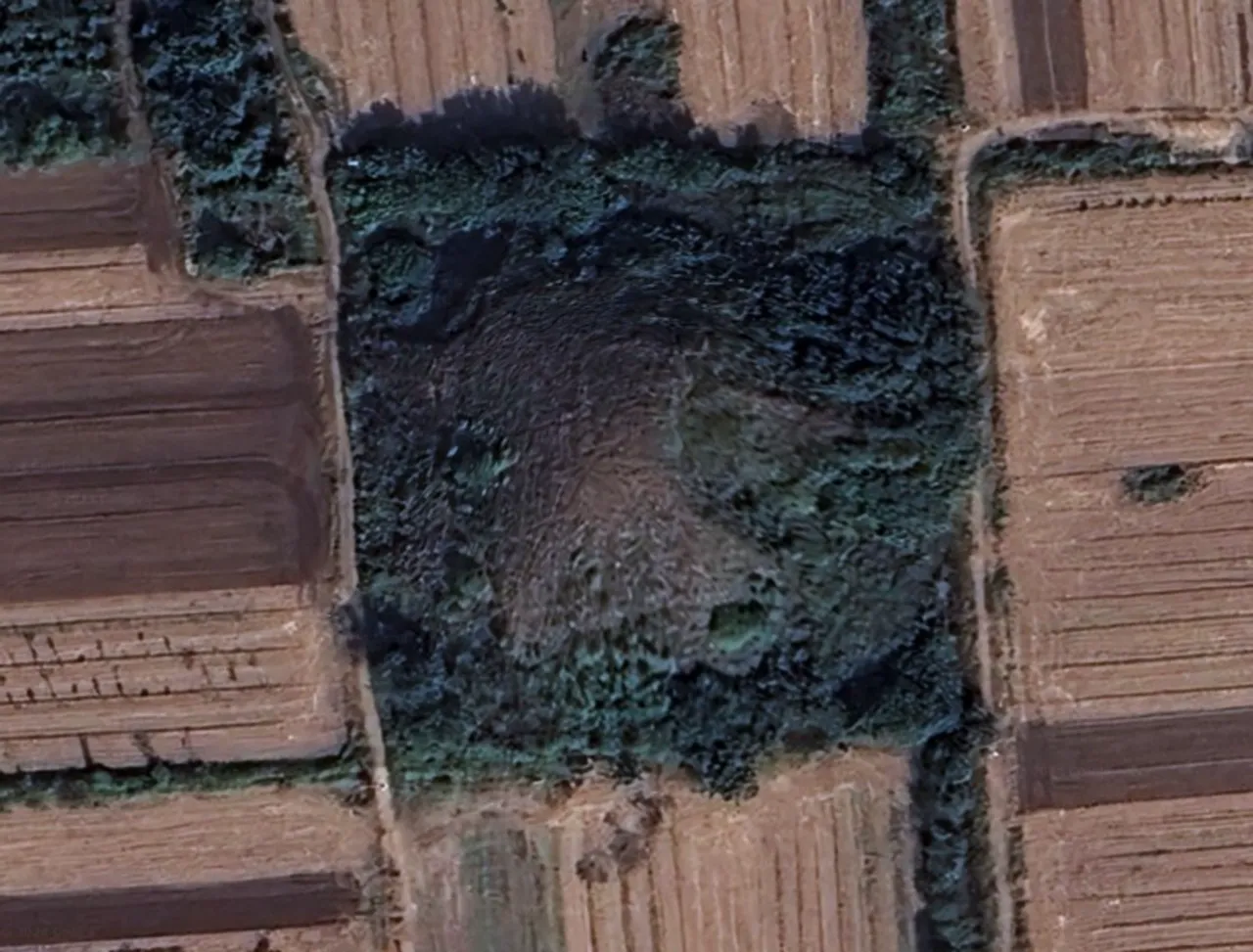
Anling mausoleum group
Liu Ying, born in 210 BC during the Qin dynasty, was the second son of Liu Bang, the founder of the Han dynasty, and Empress Lü. Despite not being the eldest son, Liu Ying was designated as the heir due to his mother being Liu Bang’s wife. His early years were marked by the turbulent times of the Chu–Han Contention, a period during which he stayed in his father’s hometown while his father battled for supremacy over China.
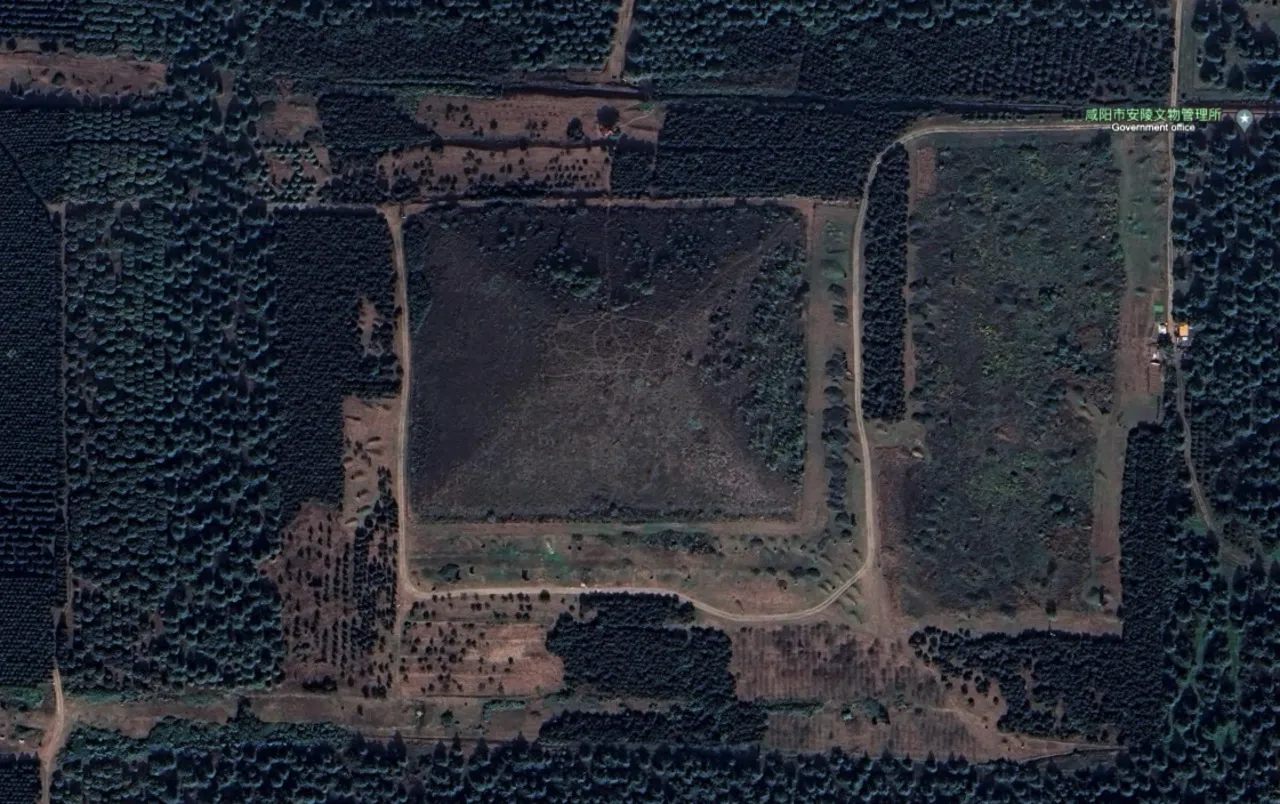
Zhang Yan, known formally as Empress Xiaohui, was born to Princess Yuan of Lu and Zhang Ao, the Prince of Zhao. Her lineage was notable, as her grandparents were Emperor Gao (Liu Bang) and Empress Lü. In November 192 BC, under Empress Dowager Lü’s insistence, Zhang Yan married her uncle, Emperor Hui. This union, however, did not produce any children. Following Empress Dowager Lü’s directives, Zhang Yan adopted several male children and eliminated their mothers, a decision shrouded in controversy regarding the children’s paternity.
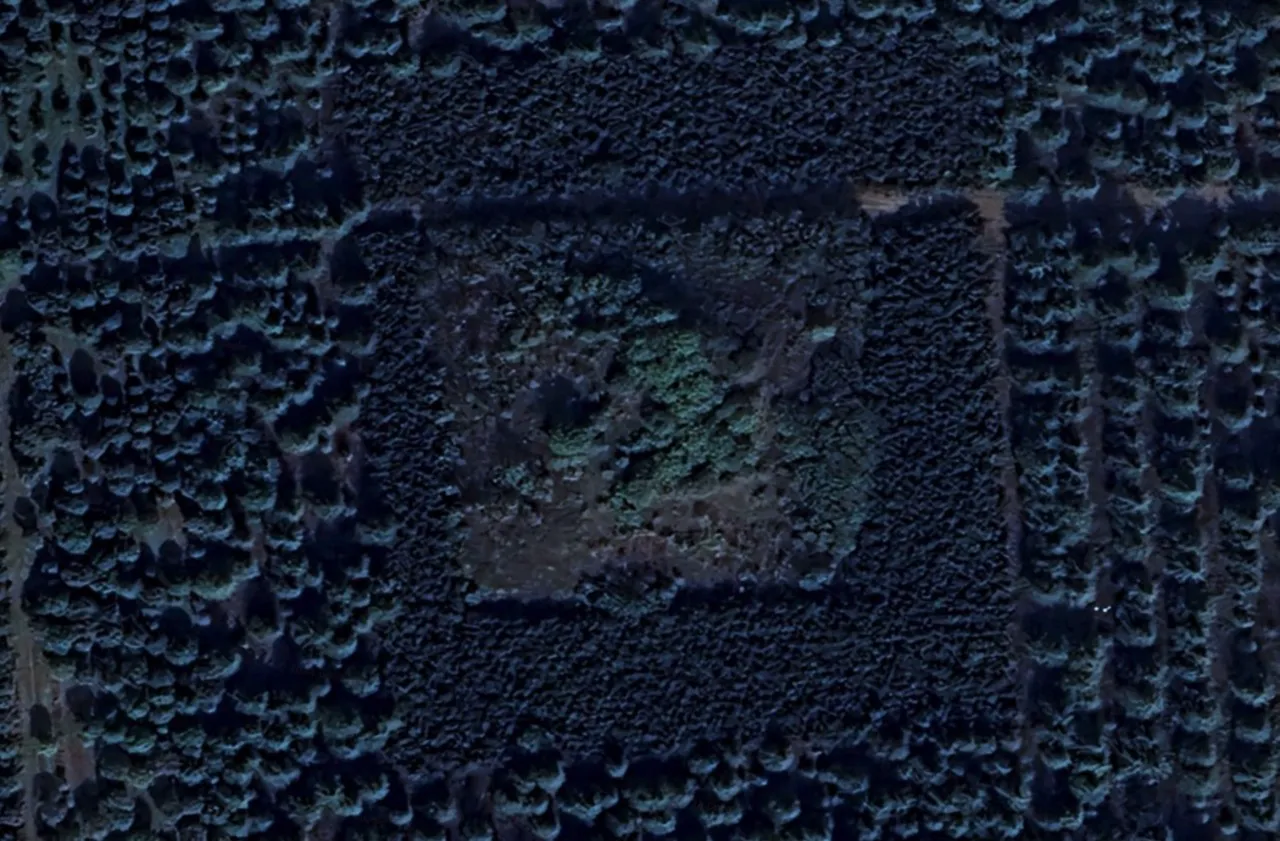

- Tomb of Princess Lu of Yuan (mother of Empress Zhang Yan) – (missing coordinates)
Changling mausoleum group
Liu Bang, born in 256 BC, hailed from a peasant family in Zhongyang, within the state of Chu. His early life was marked by charisma and a lack of interest in formal education. He initially worked as a minor law enforcement officer during the Qin dynasty. The political turmoil following Qin Shi Huang’s death in 210 BC saw Liu renounce his position and lead a rebellion against the Qin regime.
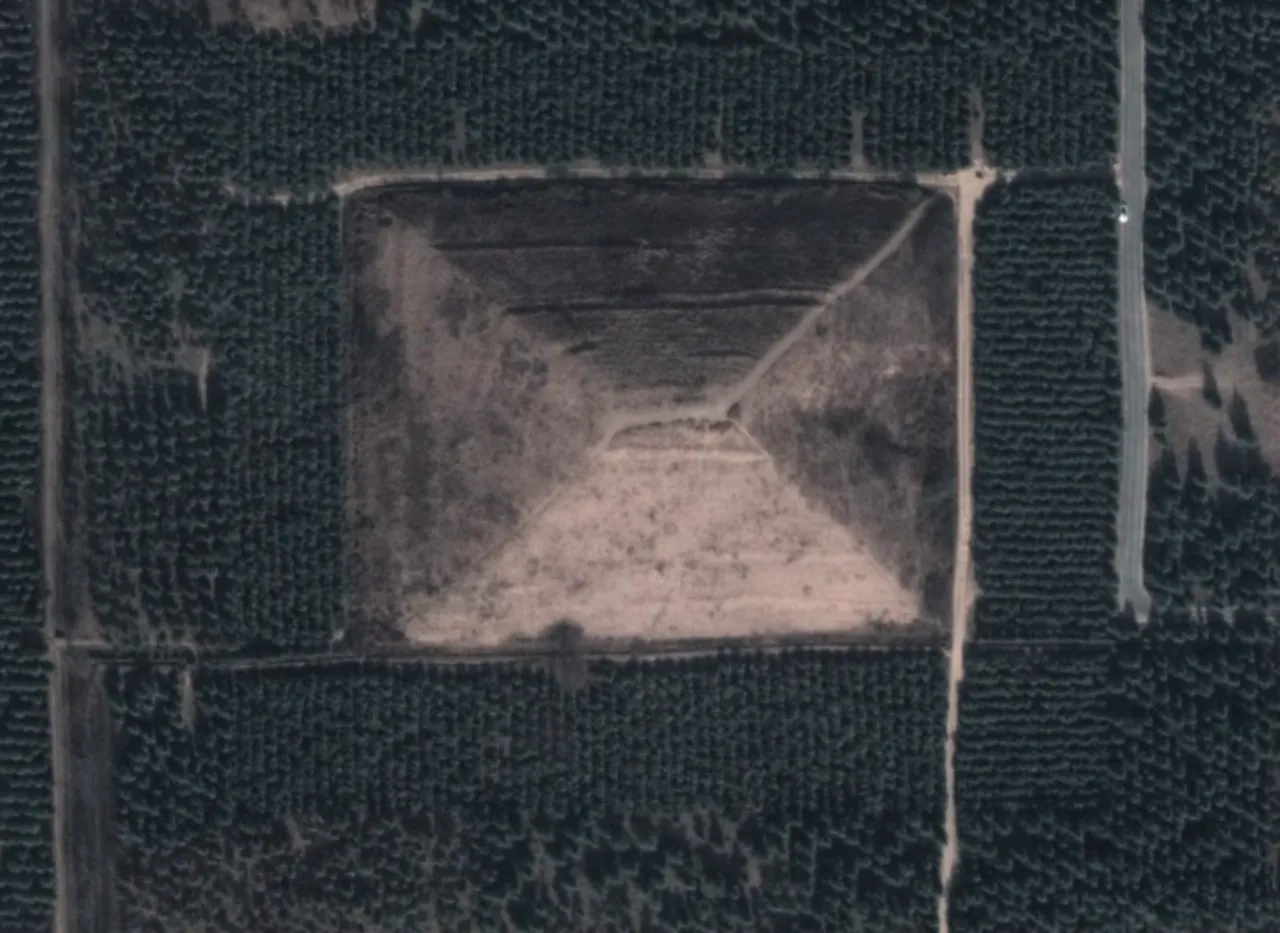
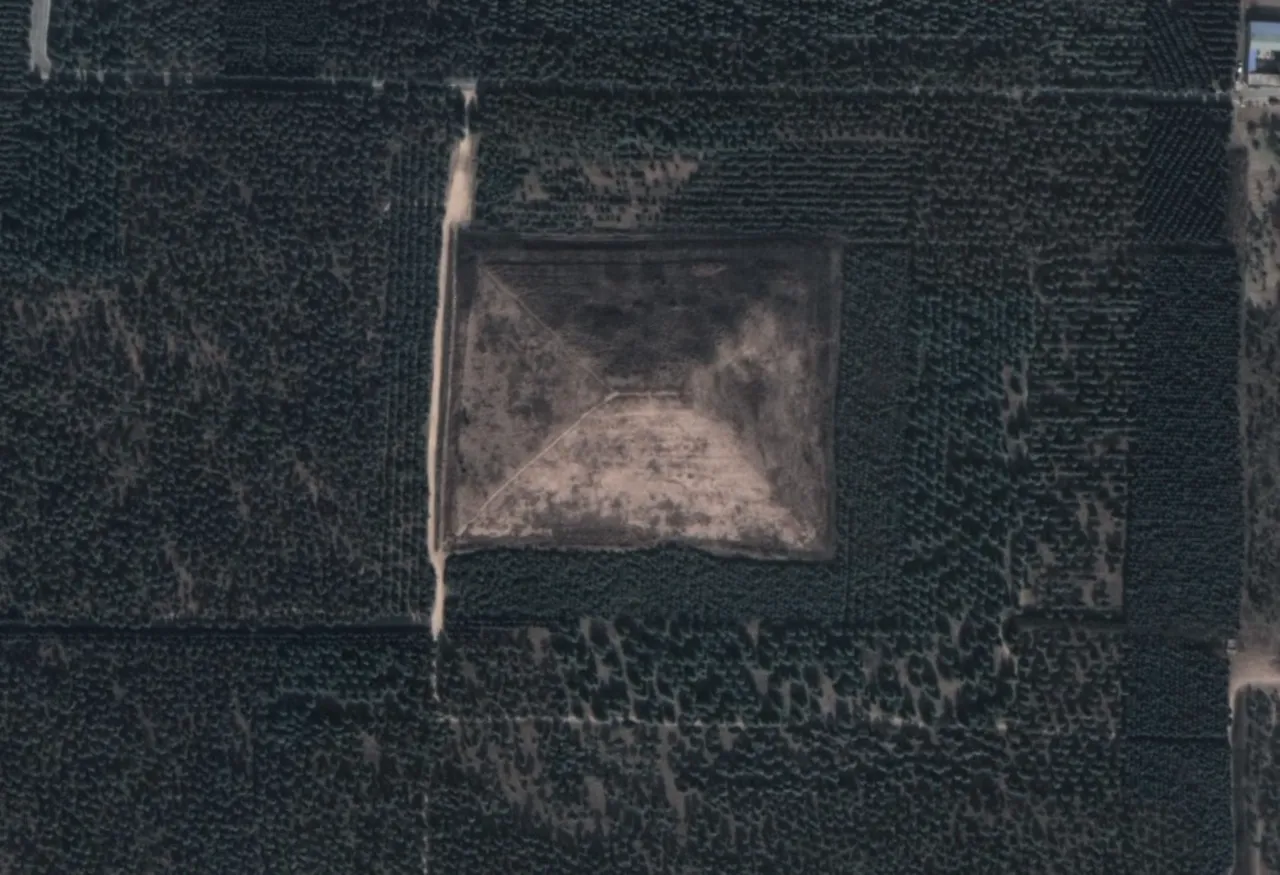
- Tomb of Consort Qi (missing coordinates)
Baling mausoleum group
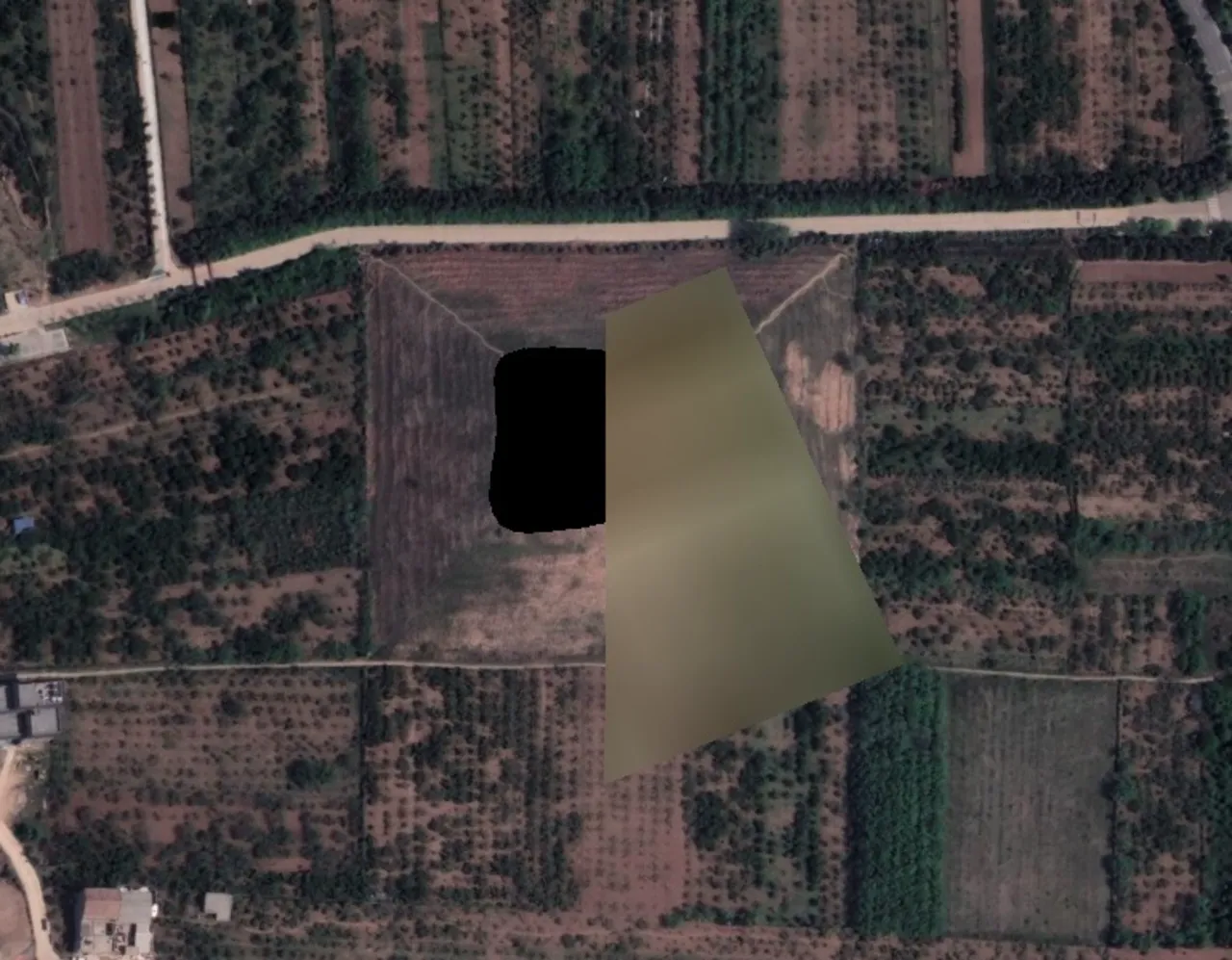
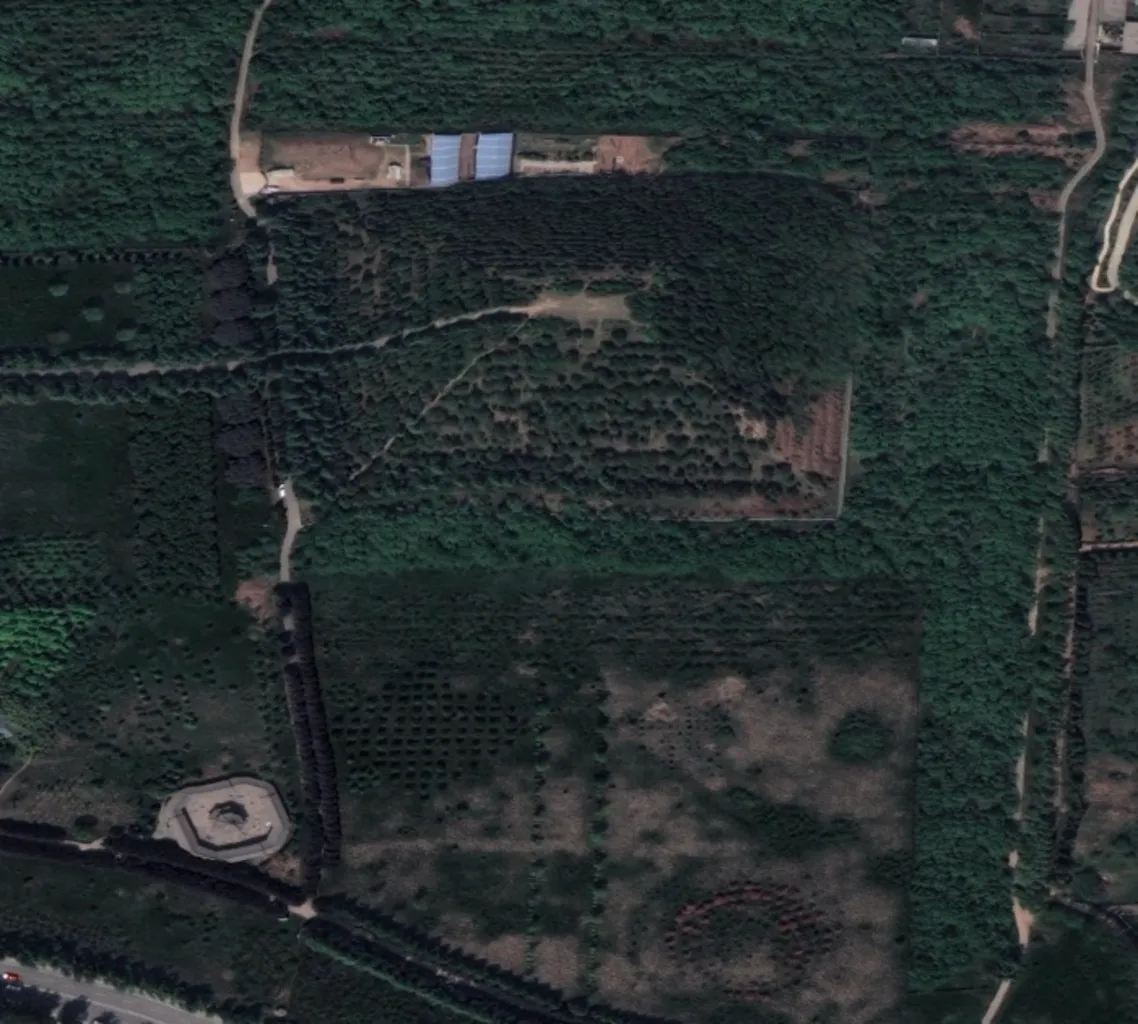
Duling mausoleum group
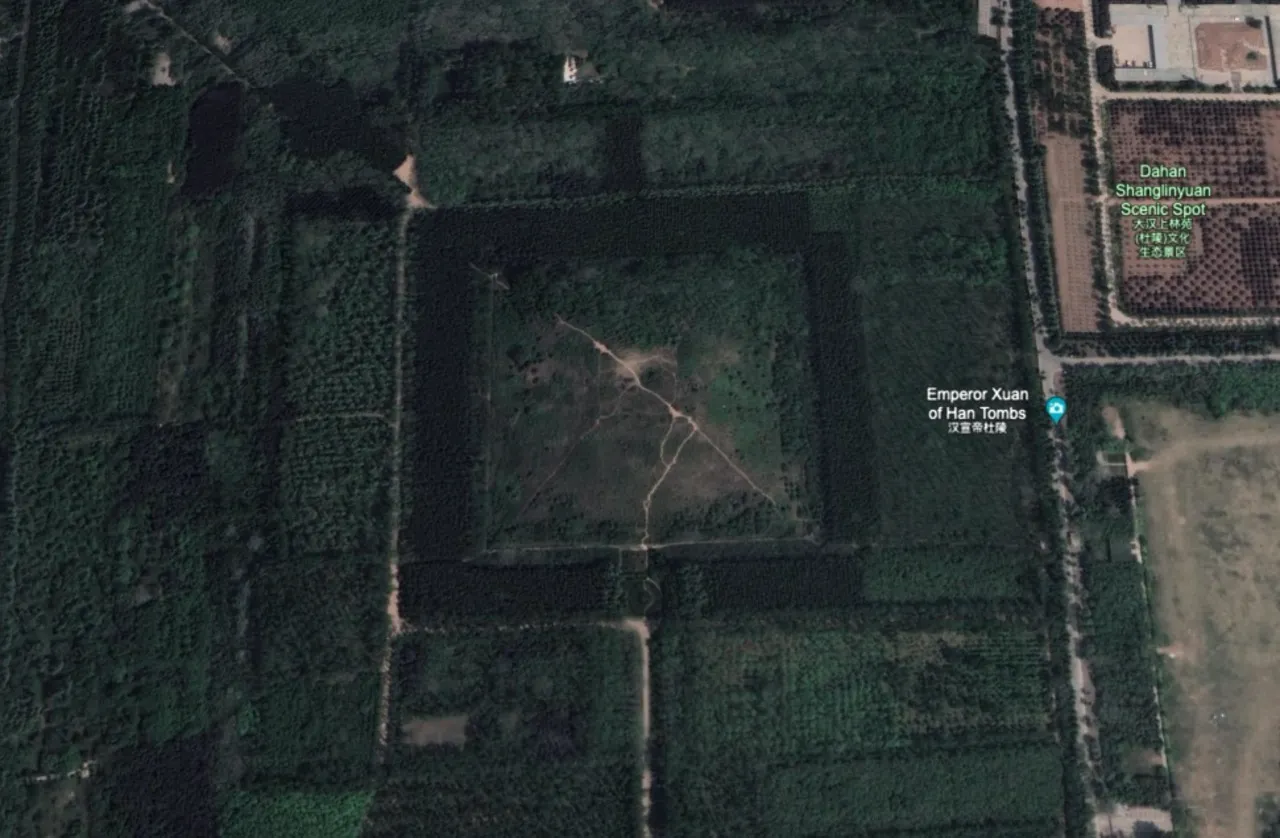
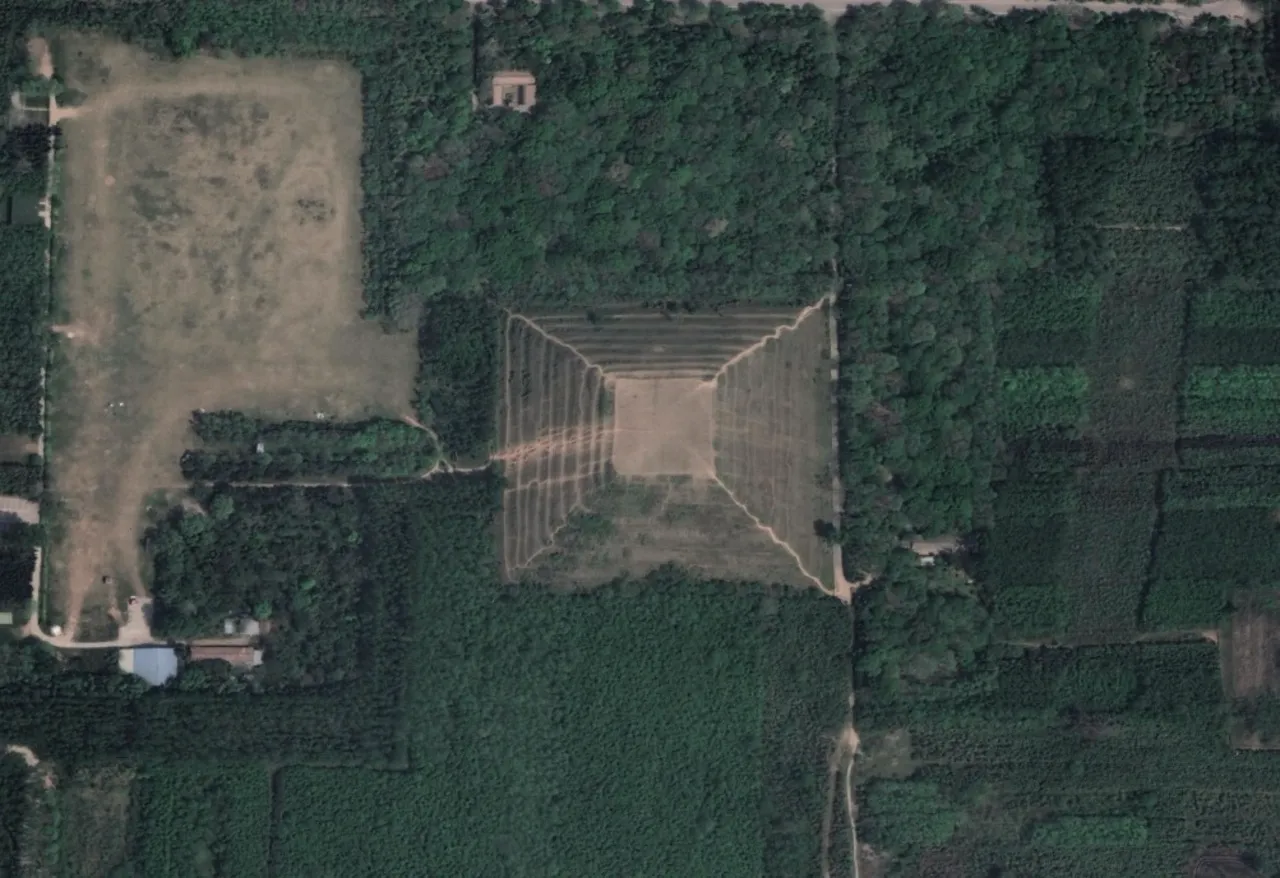
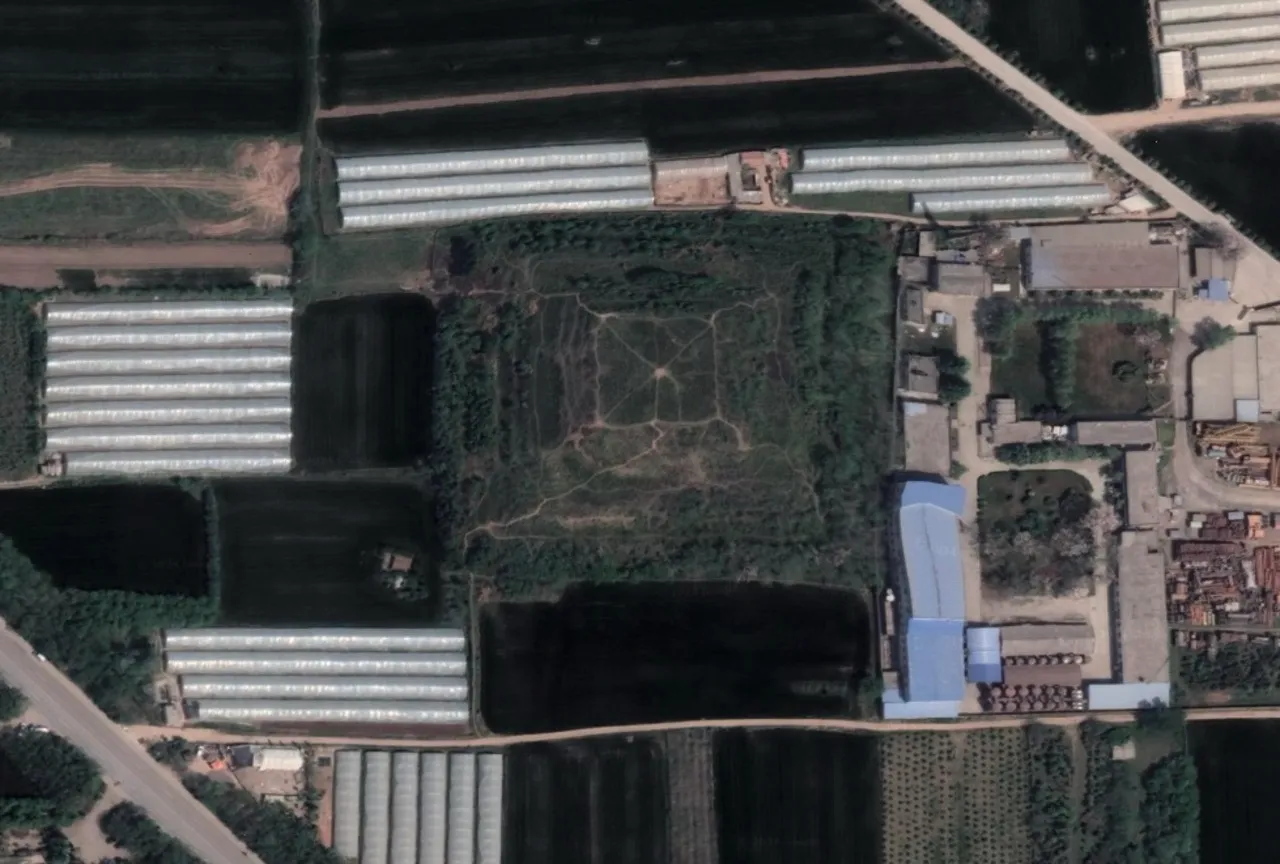
Eastern Han mausoleums near Luoyang, Henan
Yangling, Shaanxi
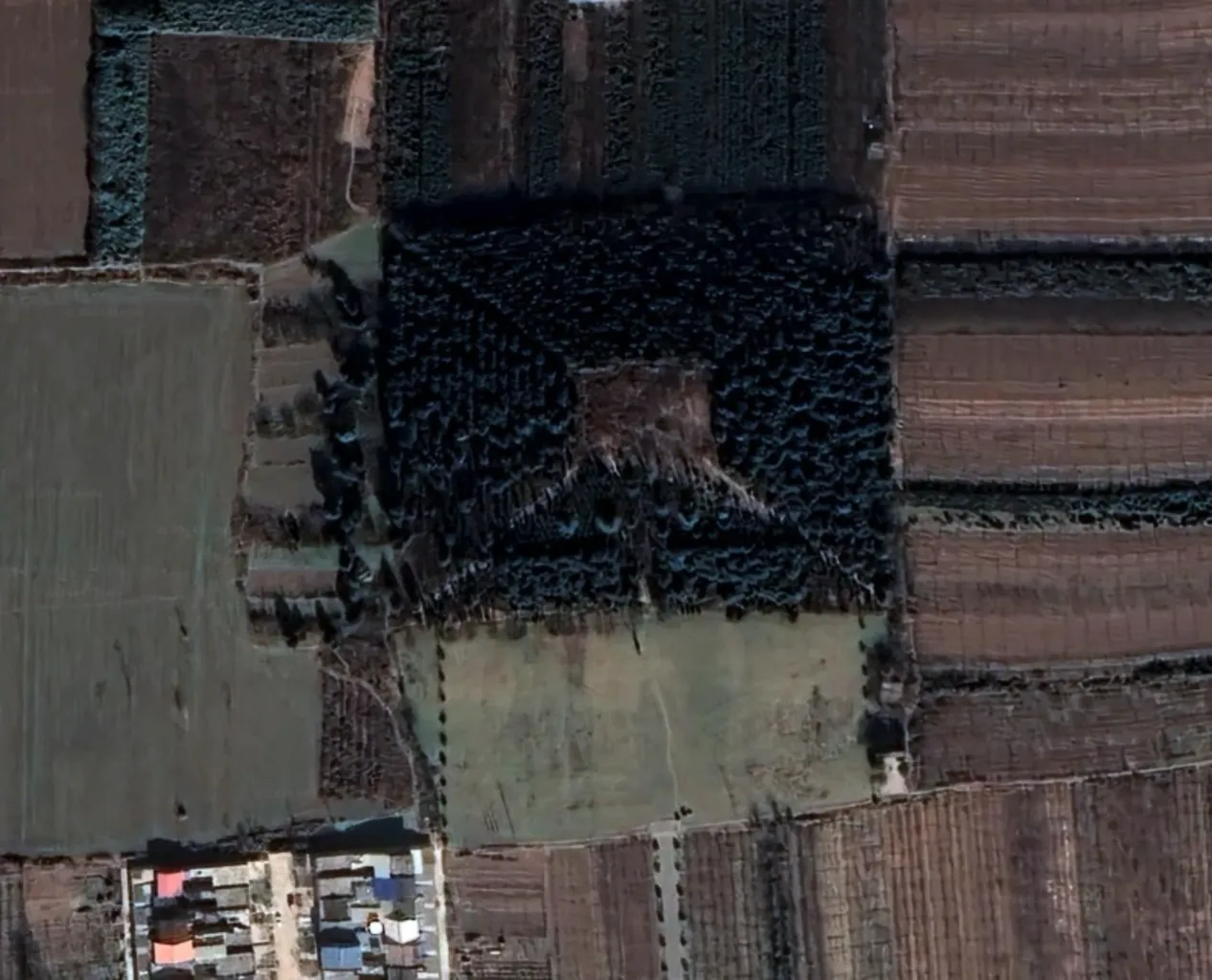
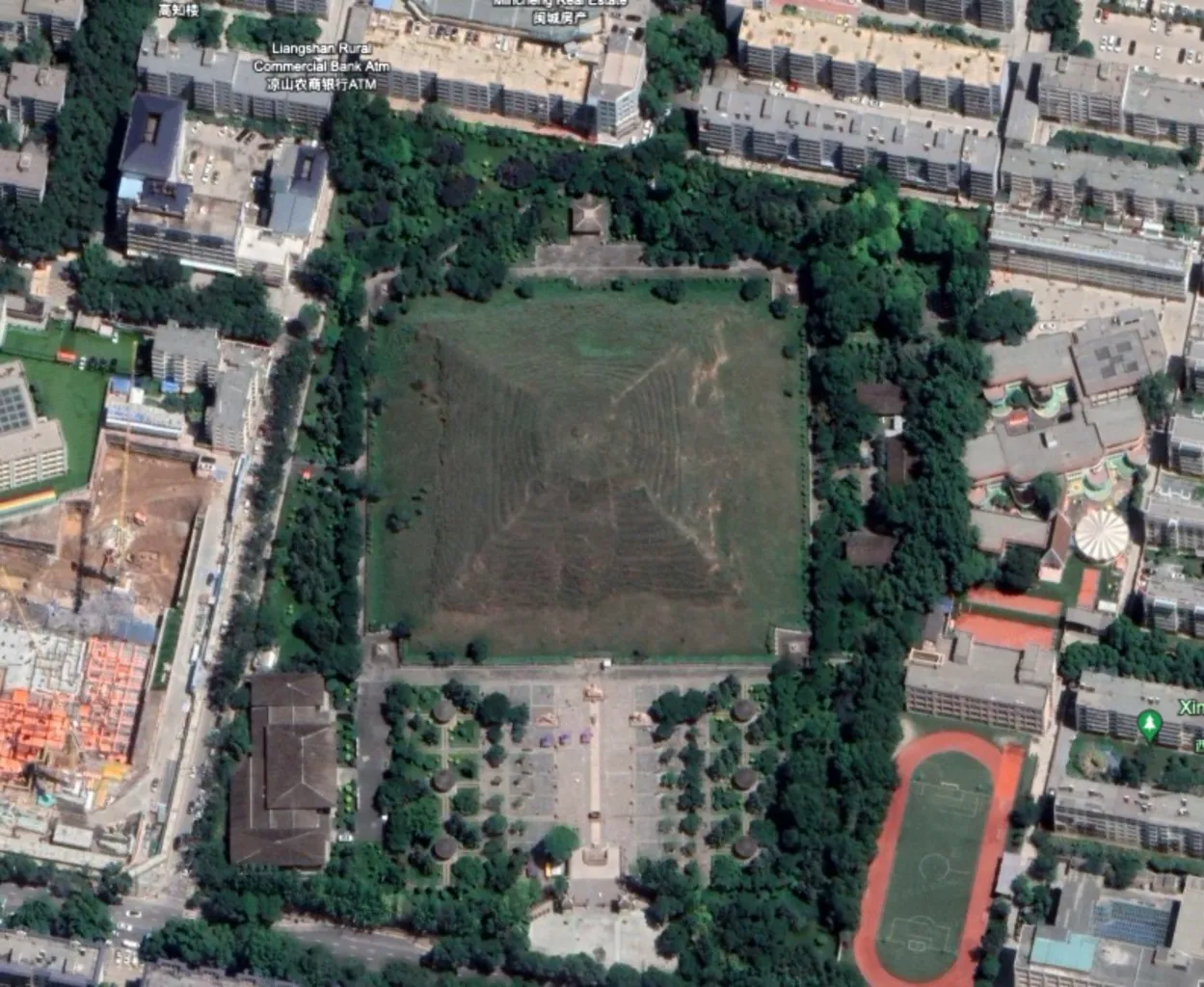
Tang dynasty mausoleums in Shaanxi
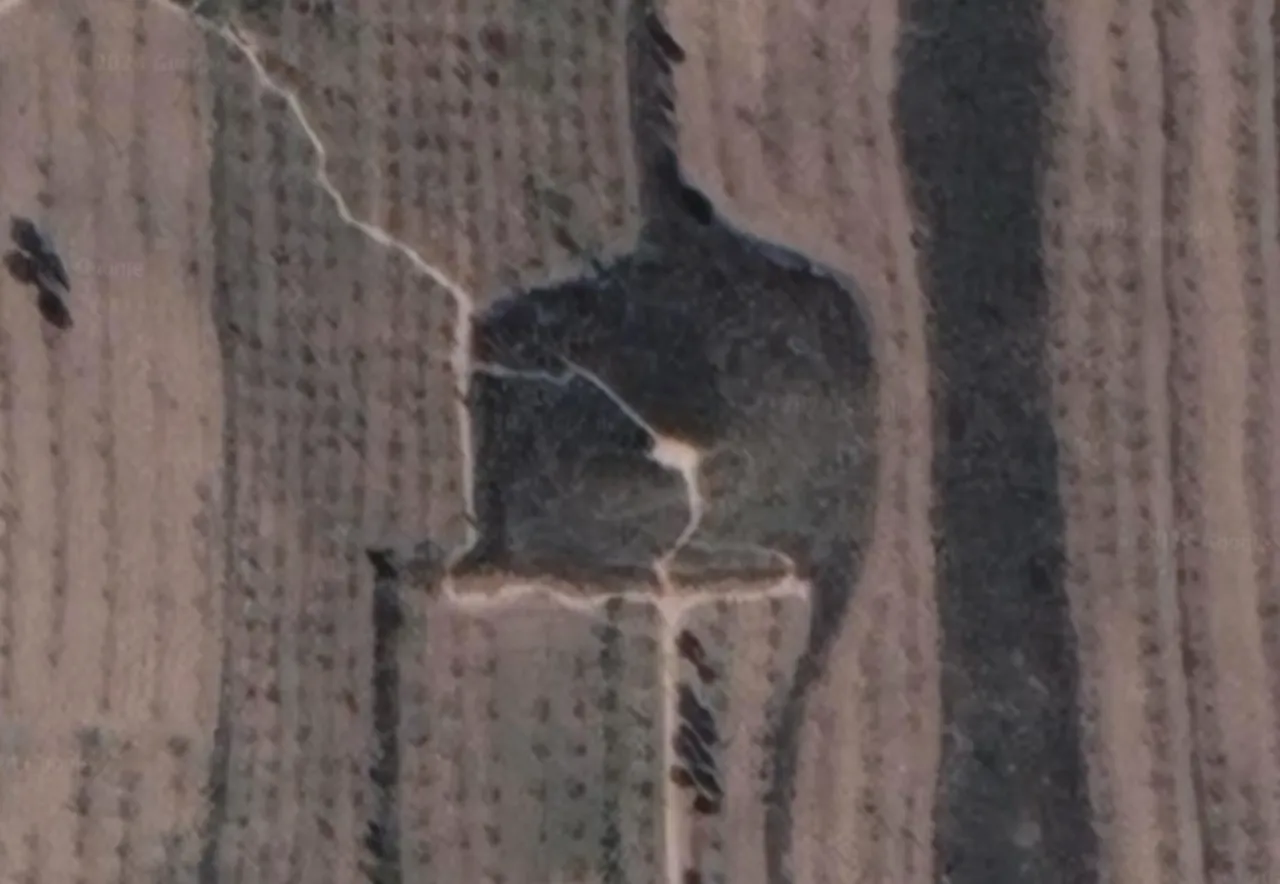
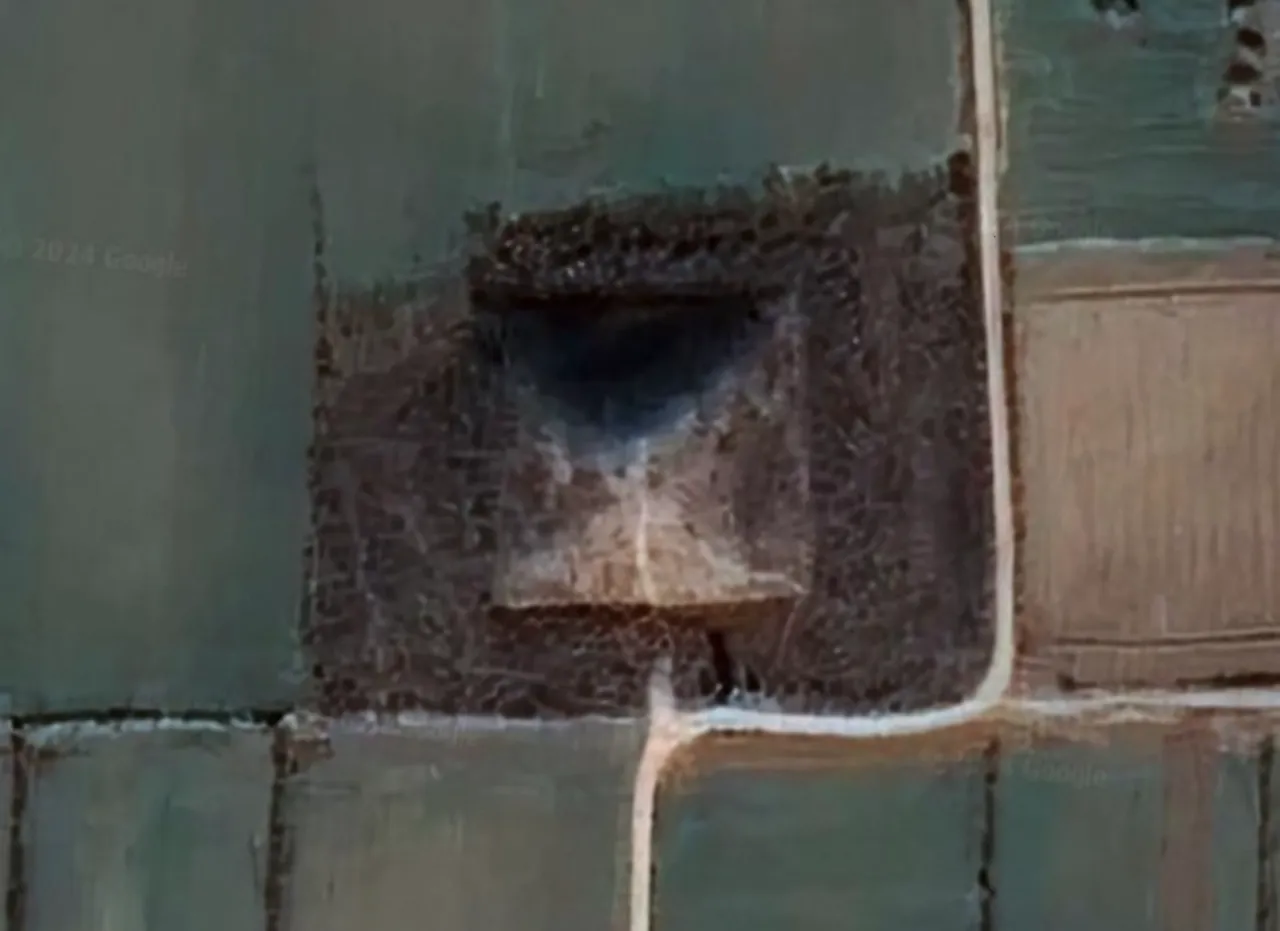
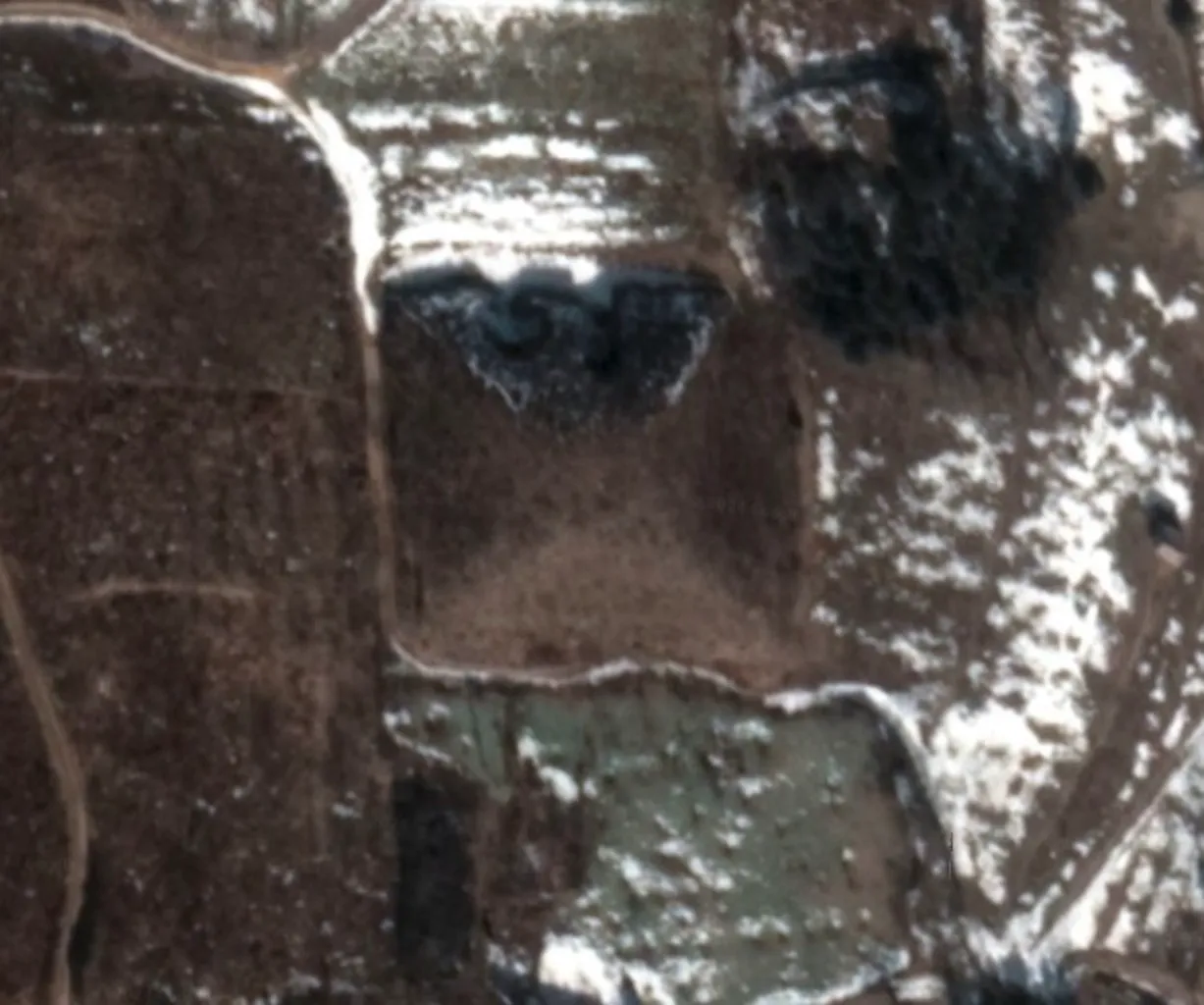
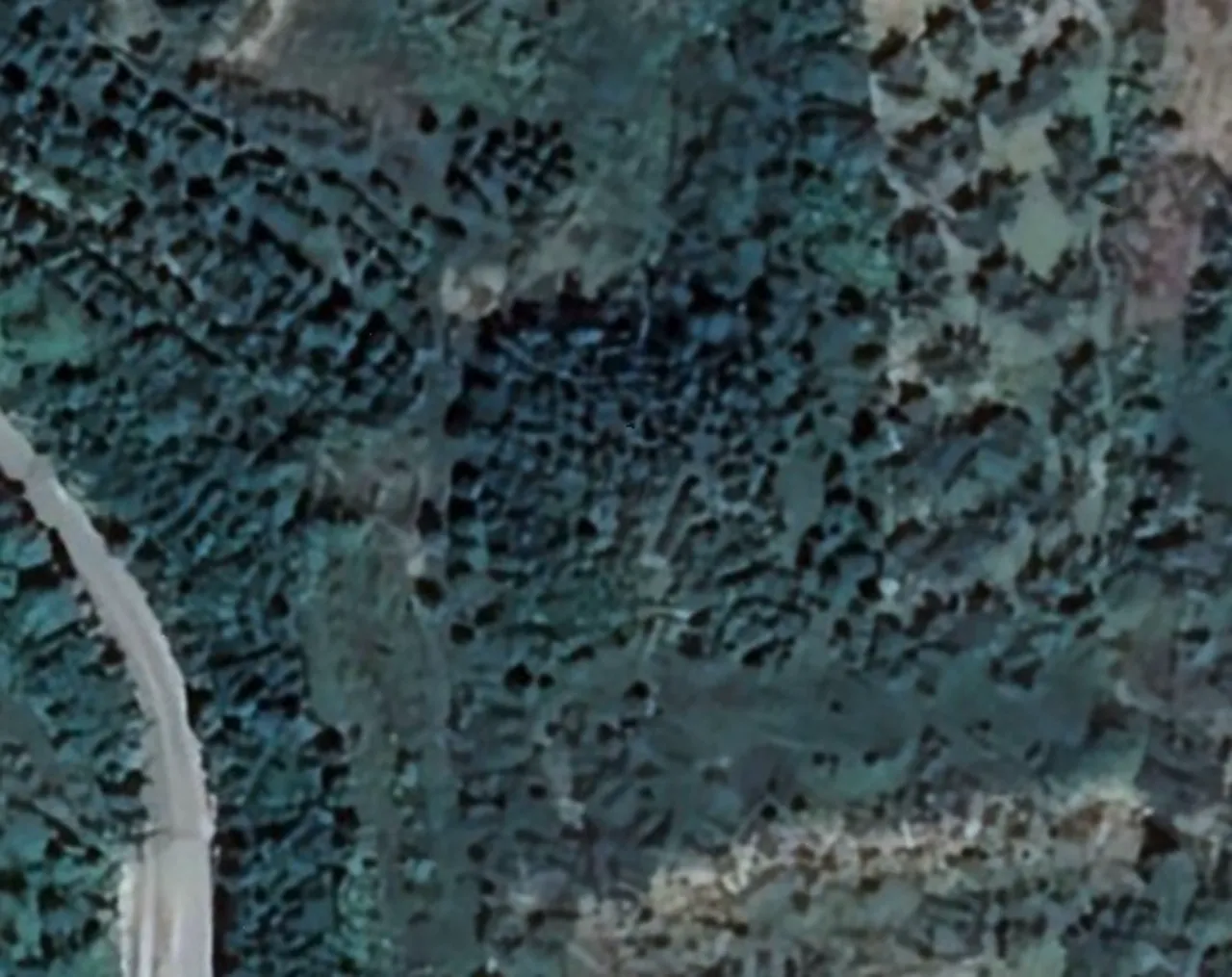
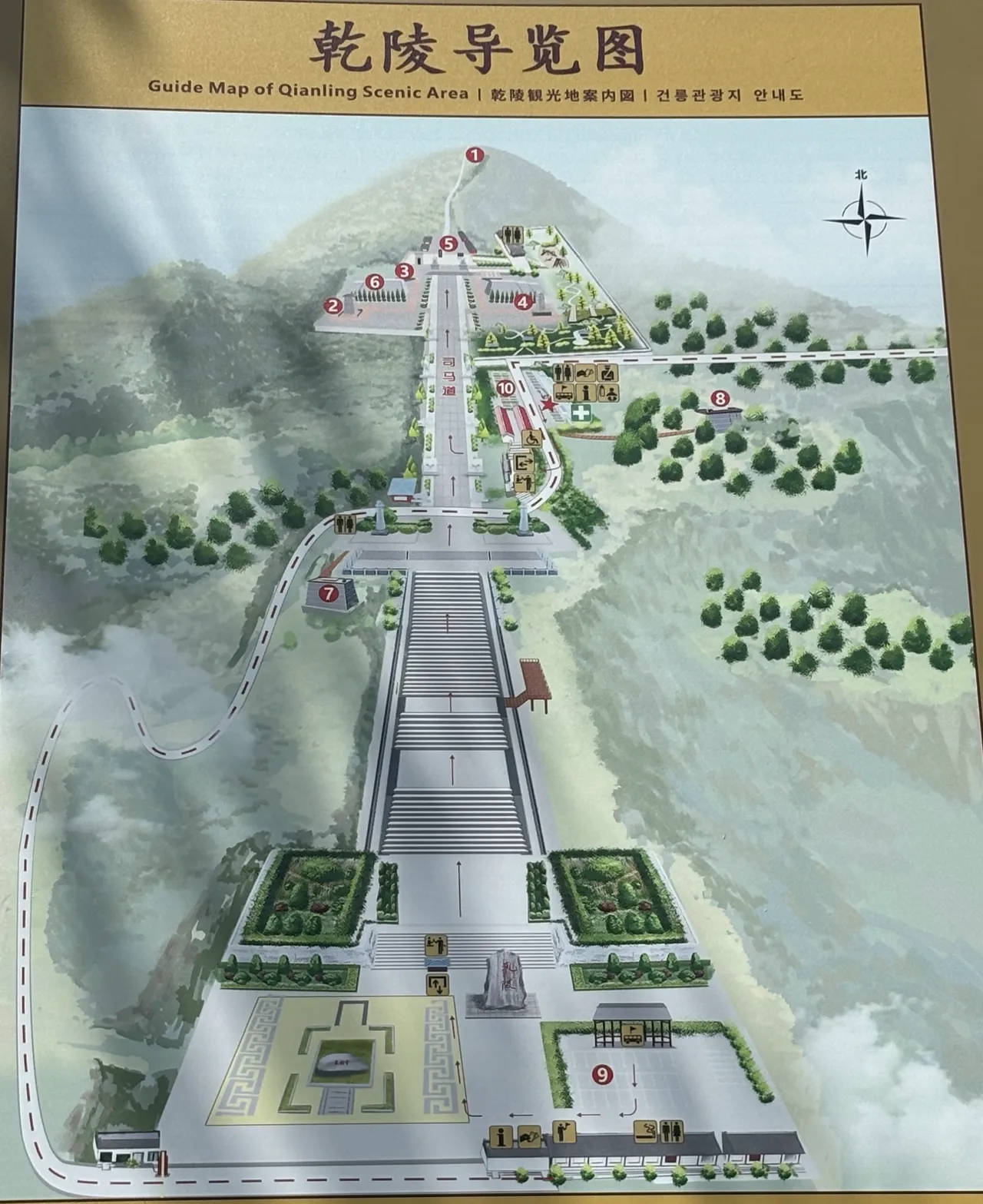
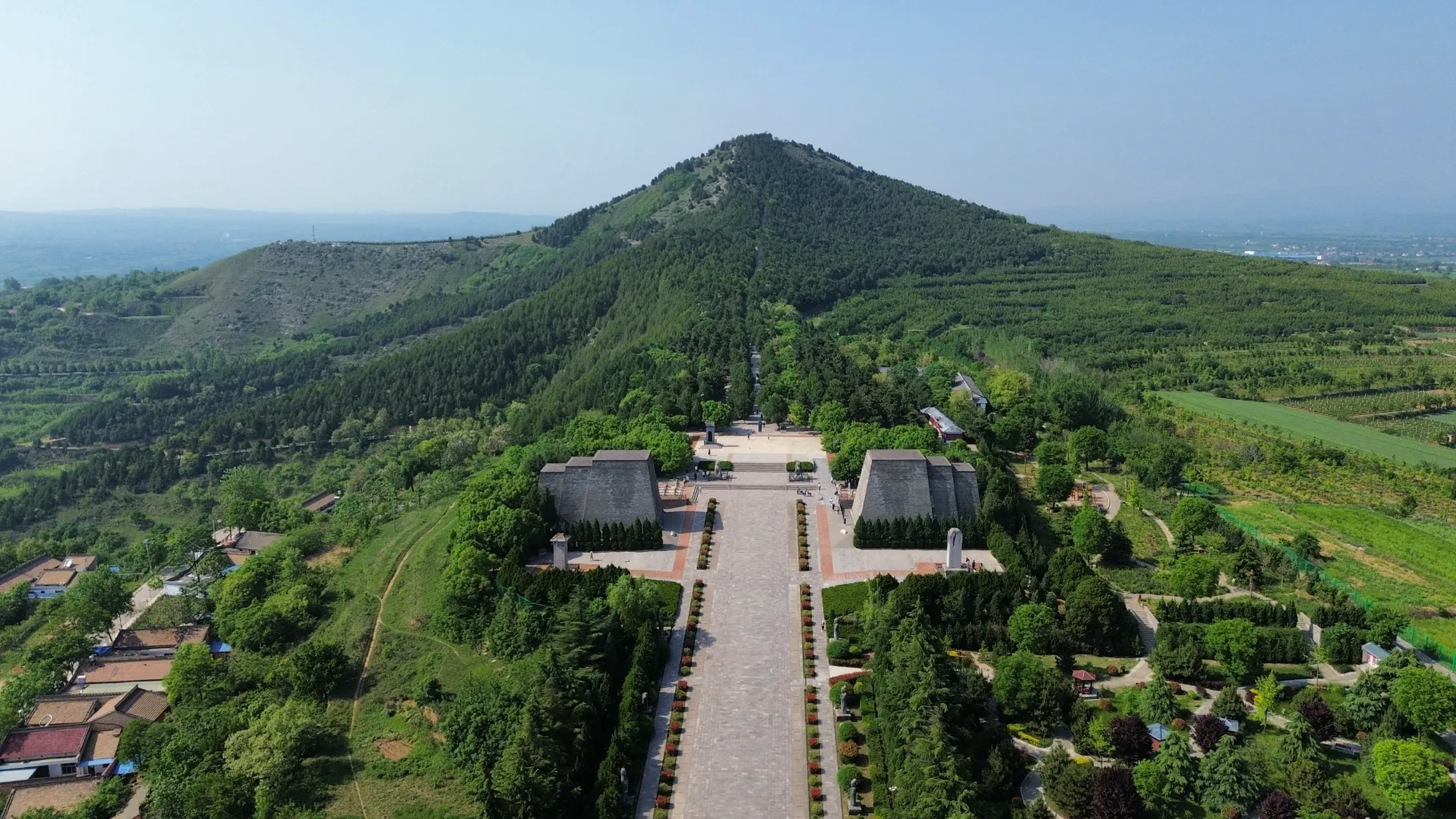
The Qianling Mausoleum, a significant historical site, serves as the joint tomb of Emperor Gaozong of Tang, Li Zhi (628-683 AD), and Empress Wu Zetian (624-705 AD). This mausoleum is situated approximately 6 km north of Qian County in Shaanxi Province, on Mount Liangshan.
Mausoleum of Emperor Xiaojing of Tang near Goushi, Henan
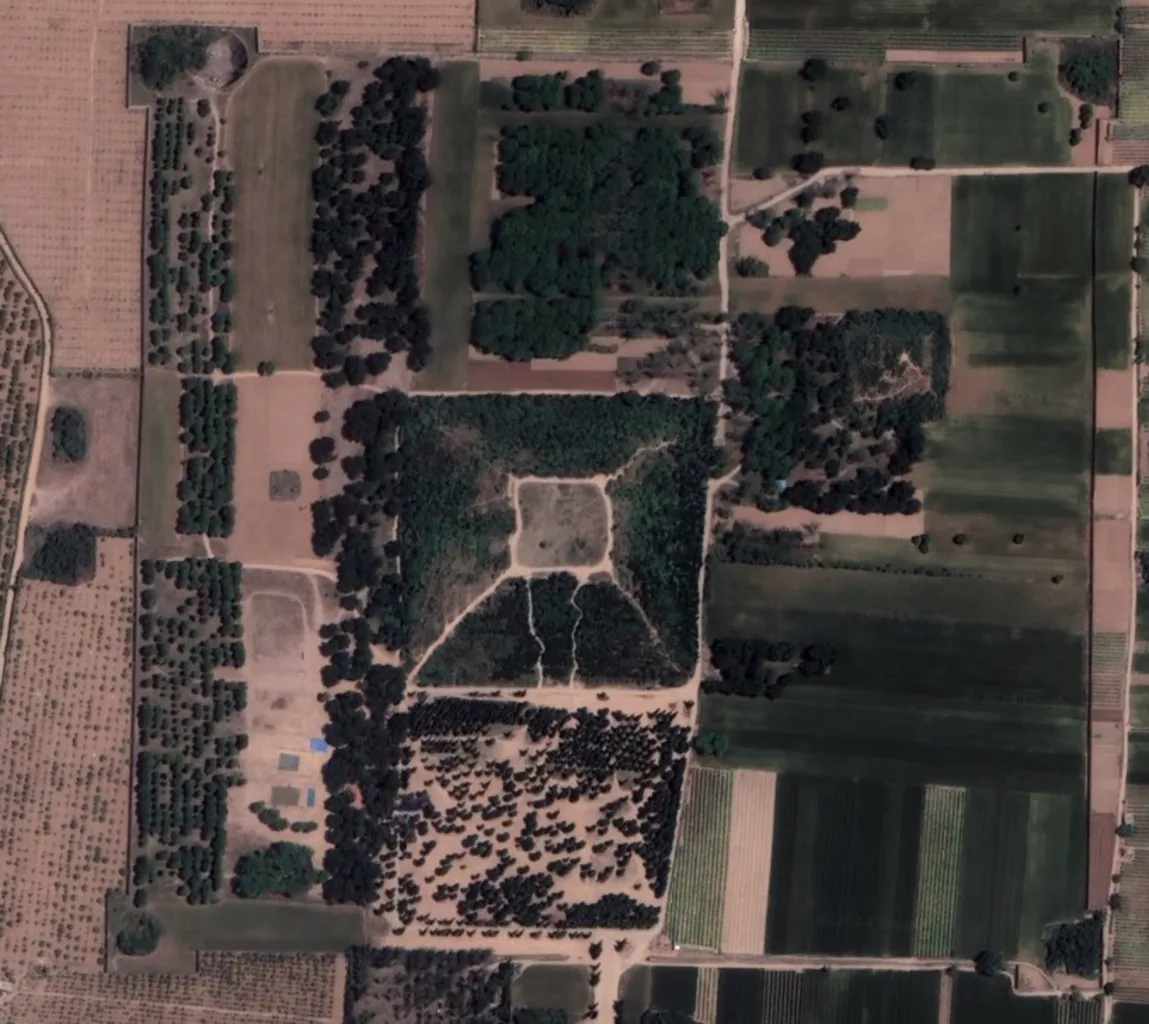
- Tomb of Empress Ai (missing coordinates)
The Chinese Pyramids span several dynasties of Chinese emperors, dating back thousands of years. Most of them remain not excavated, with several said to be booby trapped, but the treasures inside waiting to be found are also said to be priceless.
If you would like to see more Pyramids, I have a full list of Pyramids around the world here and you’ll be surprised just how many there are!
FAQ
How old are the Chinese pyramids?
The earliest is the site of Niuheliang in Liaoning, which features a pyramidal structure. It dates back to 4700 to 2900 BC. The Pyramids span several dynasties including the Zhou Dynasty, Han Dynasty and Tang Dynasty. The approximate range is from 1050 BC to 907 AD.
What are the Chinese Pyramids made of?
The Pyramids in China are said to be made from earth rather than stone blocks like you would find in Egypt. However, it’s important to note, most have not been excavated.
Why are the Chinese hiding their pyramids?
The short answer is – they’re not (well kind of). Most of the sites are covered in trees and vegetation and some have perimeter fences around them, so from that perspective, they are camouflaged (or hidden) to some degree. One of the Pyramids pictured above is blurred out on Google Earth – which requires Google to receive notification of a privacy concern. Why has this happened? Again I am not sure, perhaps there is a military base there or even houses/identifiable information such as license plates.
Did ancient China have pyramids?
Yes. These structures primarily functioned as mausoleums and burial mounds. They housed the remains of several early Chinese emperors and their imperial relatives.
Sources:
Wikipedia
Google Earth
Which Chinese pyramids should you know about?
The Mausoleum of Qin Shi Huang in the Lintong District of Xi’an is the most famous of all Chinese pyramid tombs. Built for China’s first emperor (died 210 BCE), the central mound was originally about 76 metres (249 ft) tall — soil erosion has reduced it to roughly 47 metres today. The complex contains the Terracotta Army, the ~7,000 life-sized clay figures of warriors, horses, officials, acrobats and musicians excavated since 1974. Surrounding it in the Wei River valley are the great Han imperial pyramids, the largest of which is the Maoling Mausoleum of Emperor Wu of Han, often described as “the Chinese pyramid” because of its enormous scale and the wealth of its grave goods. The Han Yang Ling Mausoleum is now an open-air museum displaying its excavated burial pits.
Beyond Shaanxi, the Western Xia Mausoleums near Yinchuan in Ningxia preserve nine massive earthen pyramid-tombs of the Tangut emperors who ruled north-west China between 1038 and 1227. And though largely a legend, the so-called “White Pyramid of Xi’an” — a flat-topped white mound photographed by American pilots in 1947 — has been identified in modern times as the Maoling complex itself; the giant secret pyramid of the earlier popular accounts does not exist.

Neural Pathways is a collective of seasoned experts and researchers with a profound passion for unraveling the enigmas of ancient history and artifacts. With a wealth of combined experience spanning decades, Neural Pathways has established itself as a leading voice in the realm of archaeological exploration and interpretation.