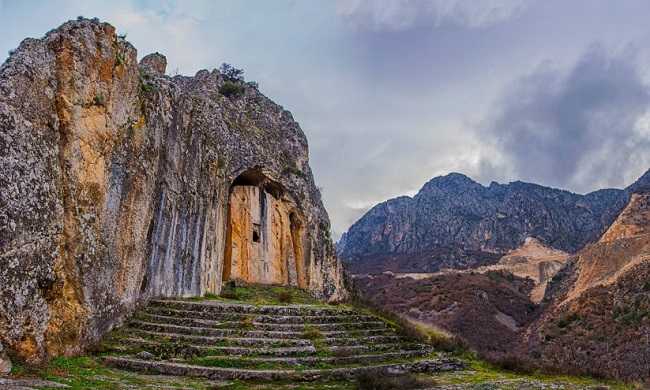
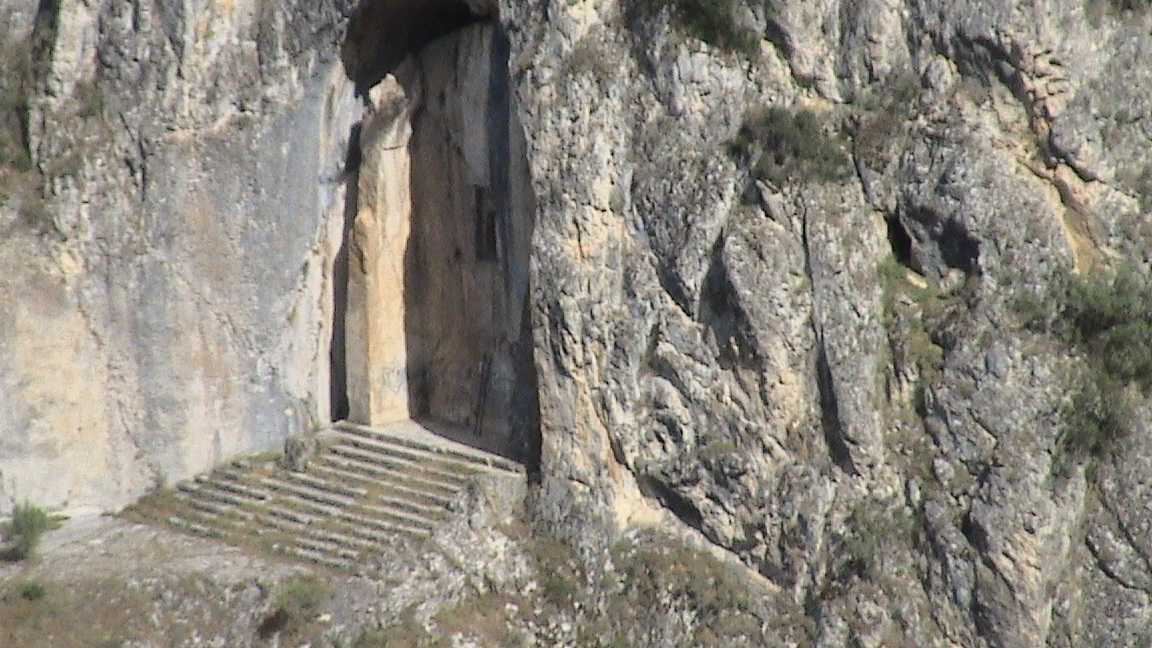
Located in the province of Çorum, Turkey, the Kapilikaya Rock Tomb is a fascinating historical site that dates back to the Hellenistic period. This ancient tomb, carved directly into a rock face, offers a unique glimpse into the burial practices and architectural prowess of the civilizations that once thrived in this region.
Historical Background
The Kapilikaya Rock Tomb is believed to have been constructed during the Hellenistic period, which spanned from the death of Alexander the Great in 323 BC to the emergence of the Roman Empire in 31 BC. The tomb is a testament to the influence of the Hellenistic culture in Anatolia, a region that was home to a myriad of civilizations over the centuries. The tomb is thought to have been built for a noble or a high-ranking official, given its intricate design and prominent location.
Architectural Highlights
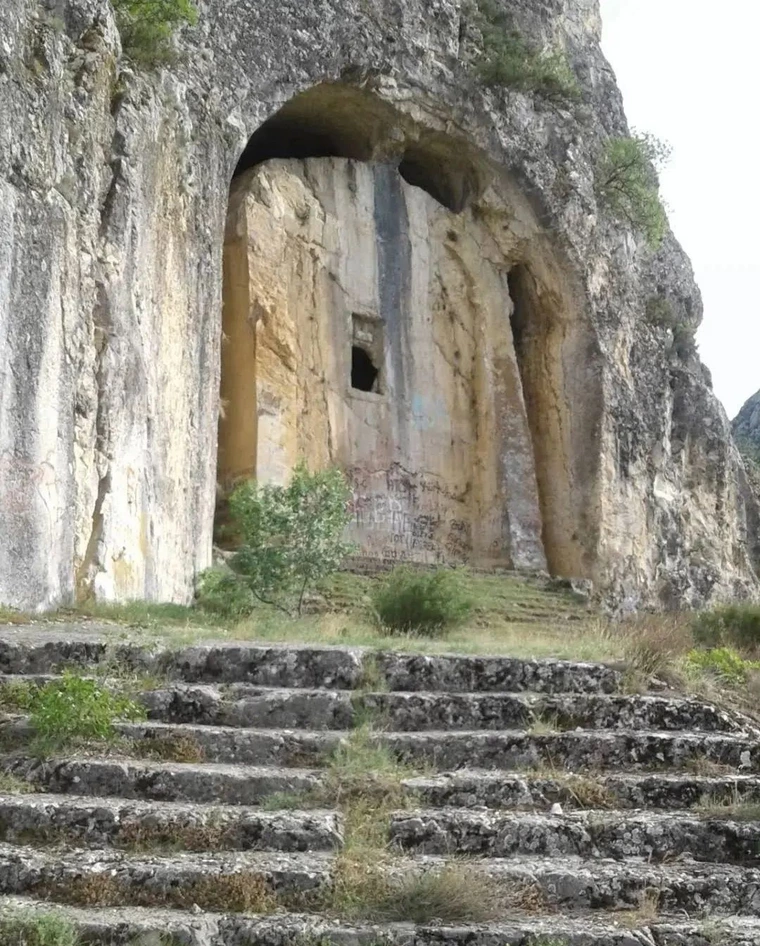
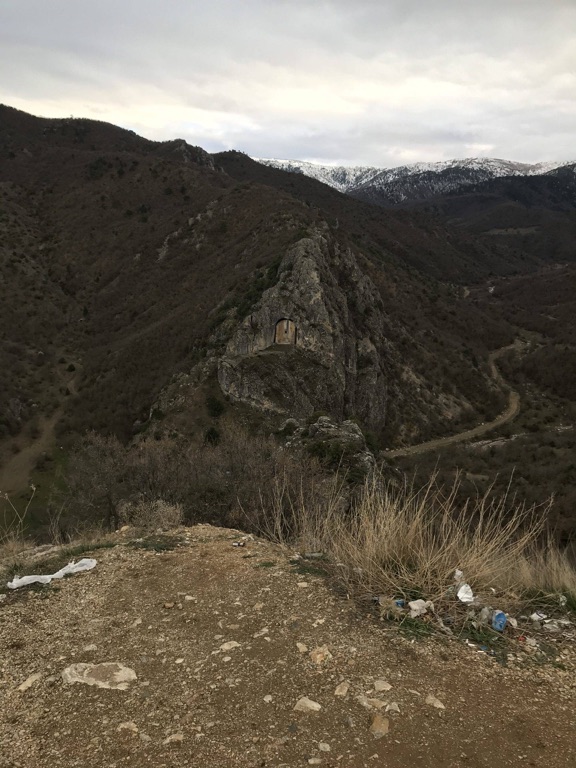
The Kapilikaya Rock Tomb is a marvel of ancient engineering and design. Carved directly into a vertical rock face, the tomb stands approximately 7 meters high and 4 meters wide. The façade of the tomb is adorned with a relief of a lion, a symbol of power and nobility in many ancient cultures. The tomb is accessed through a door that leads to a burial chamber, which is adorned with intricate carvings and inscriptions. The construction of the tomb required a high level of skill and precision, as any mistake could have led to the collapse of the entire structure. The rock from which the tomb was carved is thought to have been sourced locally, as the region is known for its abundant natural resources.
Theories and Interpretations
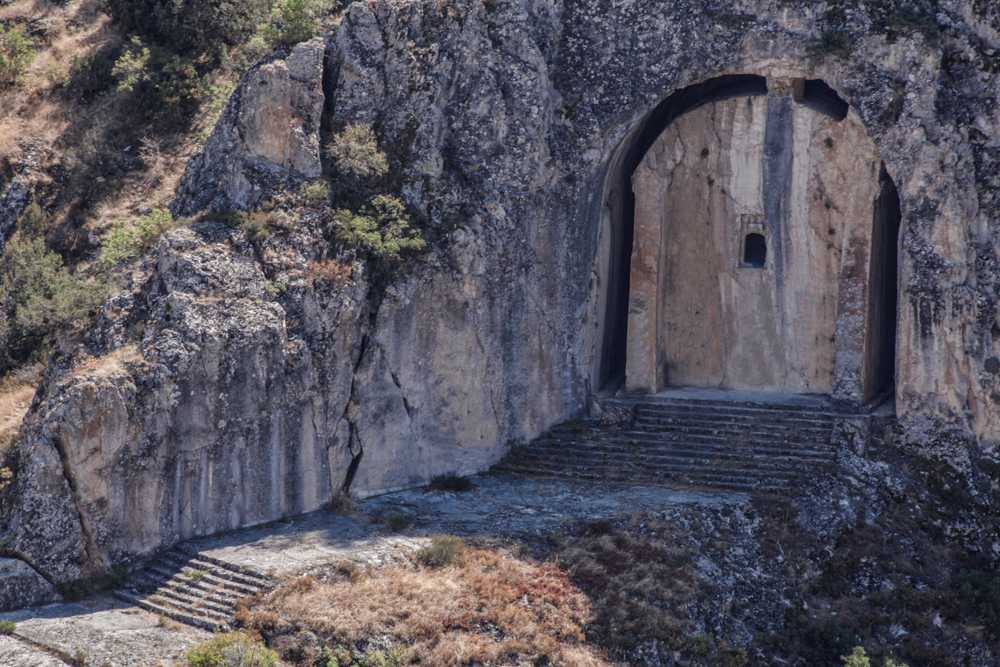
While the exact purpose of the Kapilikaya Rock Tomb is still a subject of debate among historians, it is generally agreed that it served as a burial site for a person of high status. The presence of the lion relief on the façade suggests that the occupant may have been a ruler or a military leader. The inscriptions found within the tomb, while heavily eroded, are believed to contain references to the occupant’s life and achievements. The dating of the tomb has been achieved through stylistic analysis of the carvings and inscriptions, as well as through comparison with other similar tombs in the region. The tomb’s alignment with the rising sun has led some to speculate that it may have also served an astronomical purpose, although this theory is yet to be conclusively proven.
Good to know/Additional Information
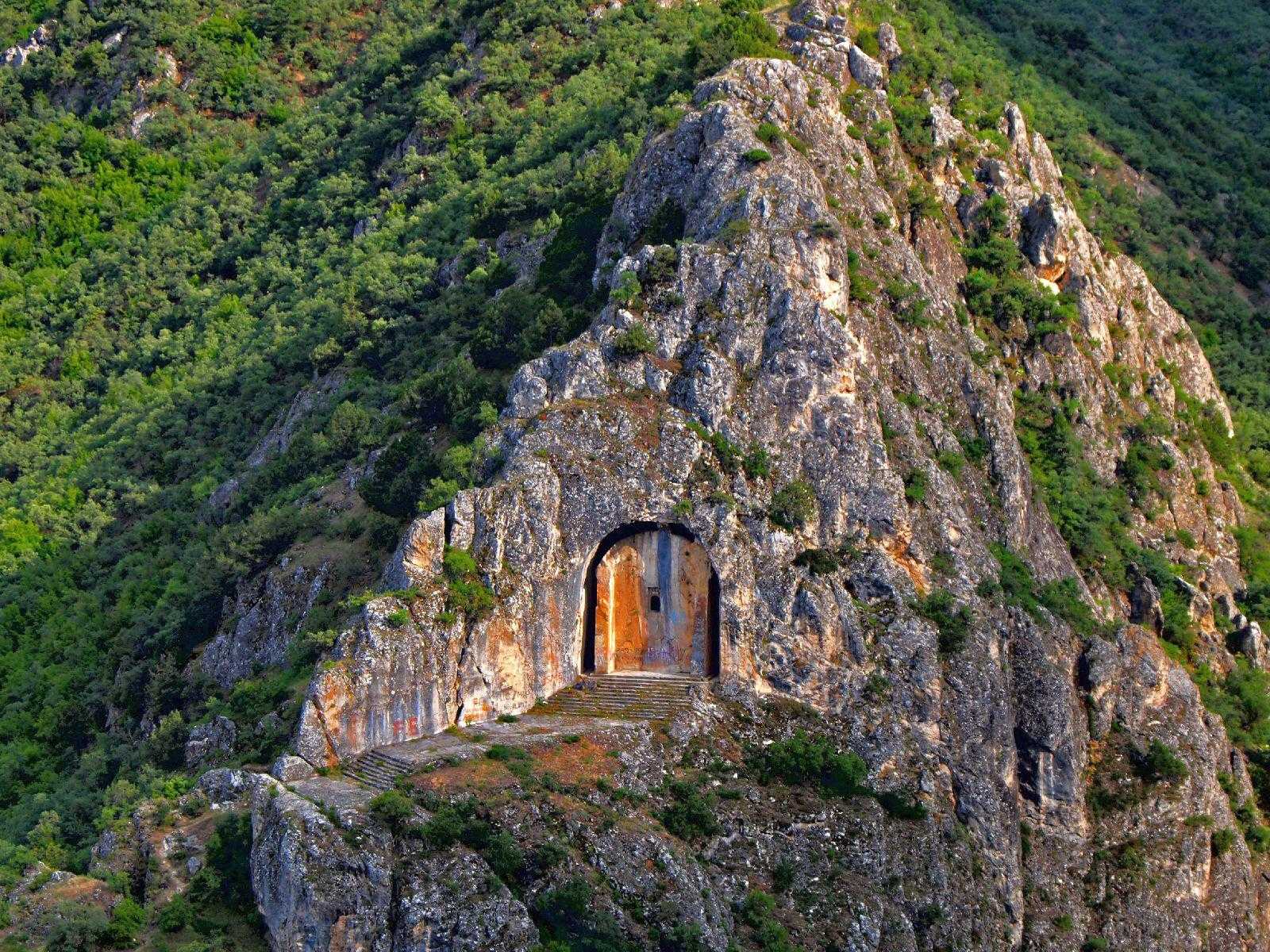
The Kapilikaya Rock Tomb is part of a larger archaeological site that includes several other rock tombs, as well as remnants of ancient settlements. The site is open to the public and offers a unique opportunity to explore the rich history and culture of Anatolia. Despite its age, the tomb has remained remarkably well-preserved, thanks in part to the efforts of local authorities and conservationists. However, the inscriptions within the tomb are at risk of further erosion, highlighting the need for ongoing preservation efforts.

Neural Pathways is a collective of seasoned experts and researchers with a profound passion for unraveling the enigmas of ancient history and artifacts. With a wealth of combined experience spanning decades, Neural Pathways has established itself as a leading voice in the realm of archaeological exploration and interpretation.