Gorsium-Herculia was a Roman town in the province of Pannonia, on the edge of the modern village of Tác in Fejér County, Hungary, roughly halfway between Budapest and Lake Balaton. Founded as a frontier fort in the middle of the 1st century AD, it grew into the religious heart of Lower Pannonia and the meeting place of the province’s assembly. Burned twice by steppe raiders and rebuilt under a new imperial name, the city today survives as one of central Europe’s largest open-air Roman excavations.
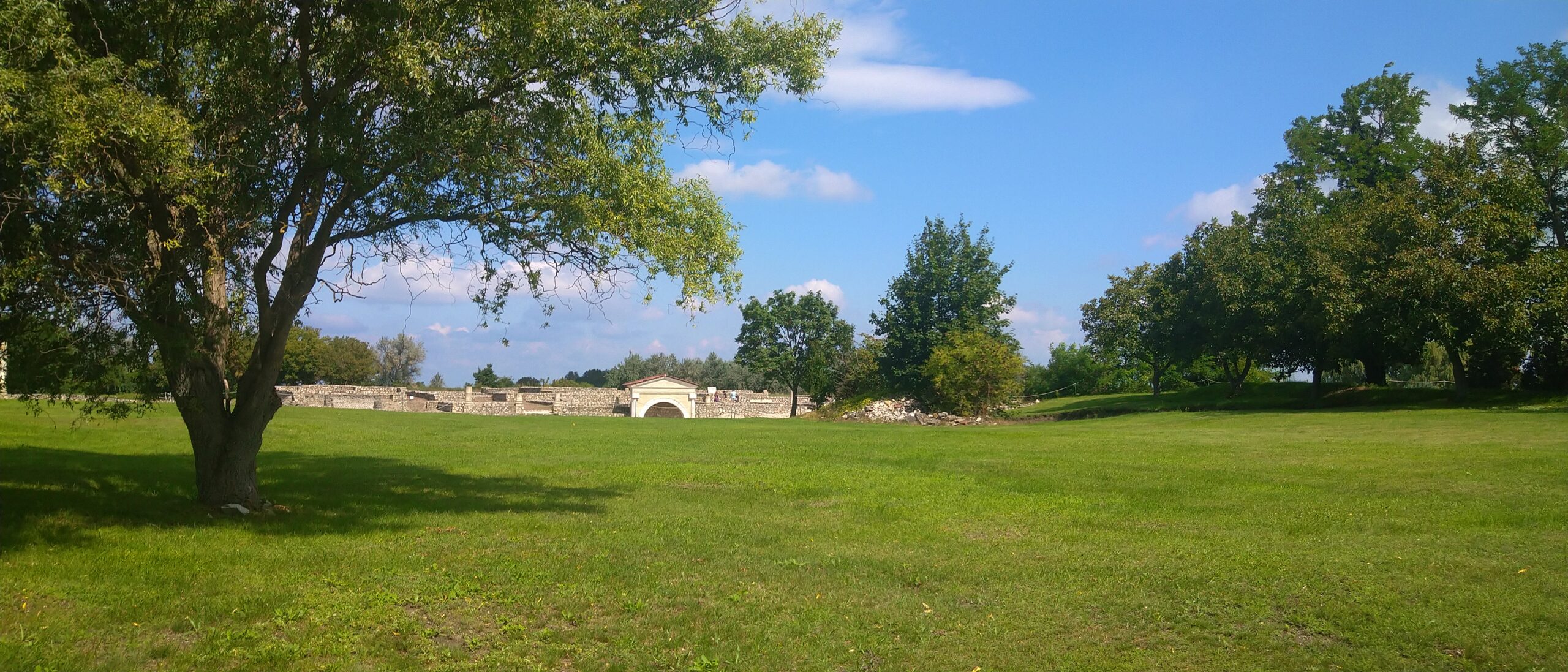
A Roman town between Budapest and Lake Balaton
The ruins sit about 74 kilometres south-west of Budapest, near the city of Székesfehérvár and only a few kilometres from the modern M7 motorway. In Roman times the site controlled a strategic road junction and a ford across the Sárvíz river, the kind of crossing that decided where armies marched and where trade halted overnight. That location made an obscure patch of the Pannonian plain worth fortifying, then worth governing, and finally worth rebuilding again and again across four centuries.
The name itself records that long life. To the soldiers and citizens of the early empire the town was Gorsium; after a catastrophic sack and a state-sponsored rebuild around AD 290 it was renamed Herculia, and modern scholarship simply joins the two as Gorsium-Herculia. Both names belong to the same place, and the layers of stone at Tác preserve the whole arc from a muddy fort to a Christian-era city.
Was Gorsium the capital of Pannonia Inferior?
No — and the distinction matters. Gorsium is often loosely called the capital of Pannonia Inferior, but the administrative, military and economic capital of the province was Aquincum, on the Danube at modern Budapest. What Gorsium held was something subtler: it was the religious centre of Lower Pannonia and the seat of the provincial assembly, the concilium provinciae, where delegates from across the province gathered to celebrate the imperial cult. In a Roman province, the place where loyalty to the emperor was ritually performed was not always the place where taxes were counted, and Gorsium was the former.
That role gave the town a monumental centre out of all proportion to its size: sanctuaries, halls and temples built for assembly delegates rather than for a large resident population. It is why excavators have recovered a dense cluster of cult buildings here, and why the site is so valuable for understanding how the empire bound its frontier provinces together through shared ceremony.
Founded under Claudius on the Pannonian frontier
A Roman auxiliary garrison was established at Gorsium around AD 46–50, during the reign of the emperor Claudius, to watch the road junction and the Sárvíz ford. The area was not empty before the legions arrived: finds point to occupation reaching back to the Neolithic and through the late Bronze and early Iron Ages. But it was the Roman military post that fixed a permanent settlement on the spot.
As the frontier pushed eastward and the Dacian wars of the emperor Trajan removed the immediate threat across the Danube, the fort lost its military purpose. Veterans, traders and craftsmen moved in, and continuous building from around AD 107 turned the camp into a civilian town. When Trajan divided the over-large province of Pannonia in two, Gorsium found its new vocation as the cult and assembly centre of the southern half, Pannonia Inferior. Travellers who want to see how the same frontier produced very different settlements can compare it with the legionary world of the fortress at Novae on the lower Danube, or the Rhine-side civilian colony of Augusta Raurica.
The provincial assembly and the imperial cult
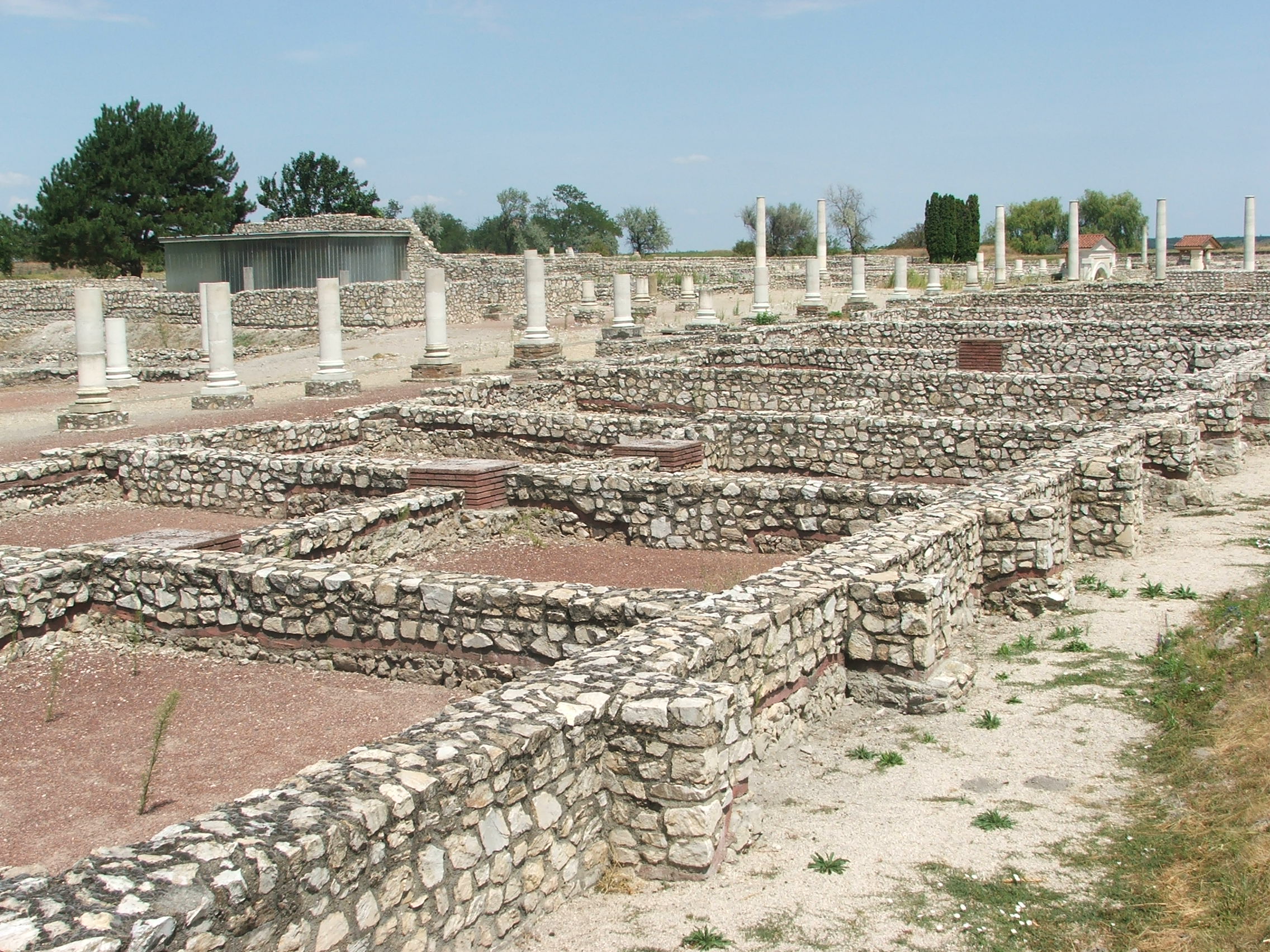
At the heart of Gorsium stood the precinct of the provincial assembly: a forum, a basilica, temples and the sanctuaries where the priests and delegates of Pannonia Inferior honoured Rome and the reigning emperor. This was the town’s reason to exist on a grand scale. The imperial cult was not private piety but provincial politics — a way for local elites to display loyalty and earn standing, and for the empire to knit a patchwork of frontier communities into a single allegiance. The annual festivals drew people from across the province to a town that, on ordinary days, was modest in size.
Emperors themselves are recorded passing through, a measure of how strategically the road network around Gorsium mattered. For a sense of the succession of rulers whose names and images were honoured in precincts like this one, see our overview of the full line of Roman emperors.
How was Gorsium destroyed and reborn as Herculia?
Gorsium’s prosperity was twice shattered by raiders out of the steppe. During the Marcomannic Wars (AD 160–180), the Sarmatians swept through Pannonia and burned the town in 178. It was rebuilt afterwards in cut stone rather than mud brick — an upgrade visible today in the masonry of the main street. Then, in 260, amid the wider crisis of the third-century empire, the Roxolani destroyed the city again.
The recovery was imperial policy. Around AD 290, in the age of the Tetrarchy founded by Diocletian, the town was rebuilt and given a new name, Herculia, echoing the title Herculius borne by the co-emperor Maximian. The new Herculia was larger and grander than the old Gorsium. Under Constantine the Great it reached its peak, with a population estimated near 8,000 and at least two early Christian basilicas, one finished within fifteen years of Constantine’s victory at the Milvian Bridge in 312. The same Tetrarchic taste for monumental rebuilding can be seen at the palace of Gamzigrad (Felix Romuliana) in modern Serbia.
Decline followed the empire’s. After the Roman defeat at Adrianople in 378 the province frayed, and over the following centuries Huns, Goths, Lombards and Avars passed through or settled, burying their dead inside the old walls. The city was finally ruined for good during the Ottoman wars of the 16th century, after which it lay forgotten beneath the fields of Tác.
What survives at the Gorsium Archaeological Park
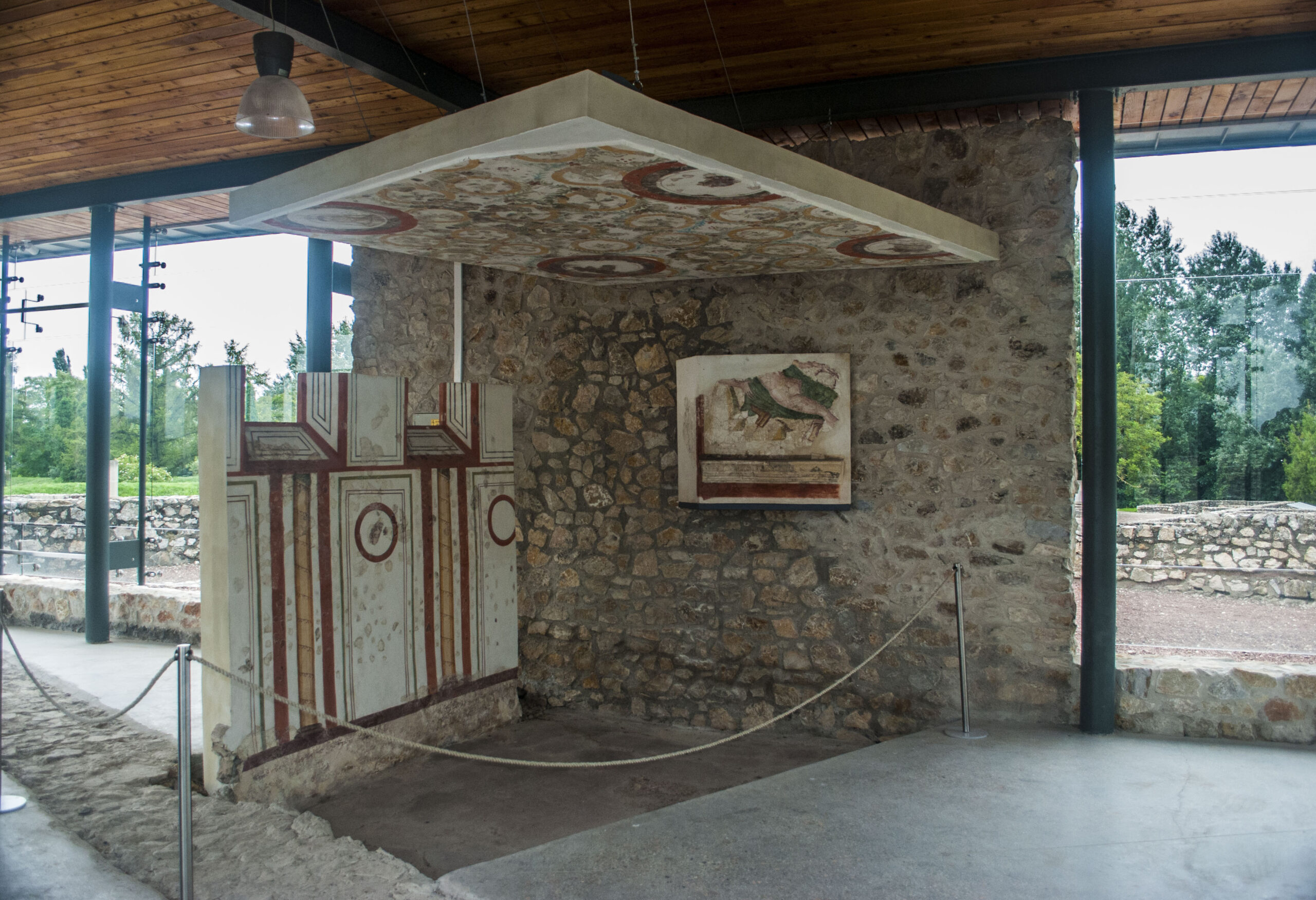
The excavated town is now an open-air museum, the Gorsium Archaeological Park, which opened in 1962 and spreads across roughly 80 hectares. Visitors walk the original colonnaded avenues — the main street, or decumanus maximus — past the foundations of the forum, temples, shrines, bath buildings, palatial houses and shops. The site also preserves a graveyard and a wealth of everyday objects: coins, pottery, tools and the painted plaster that once lined its walls.
The nymphaeum, the theatre and the frescoes
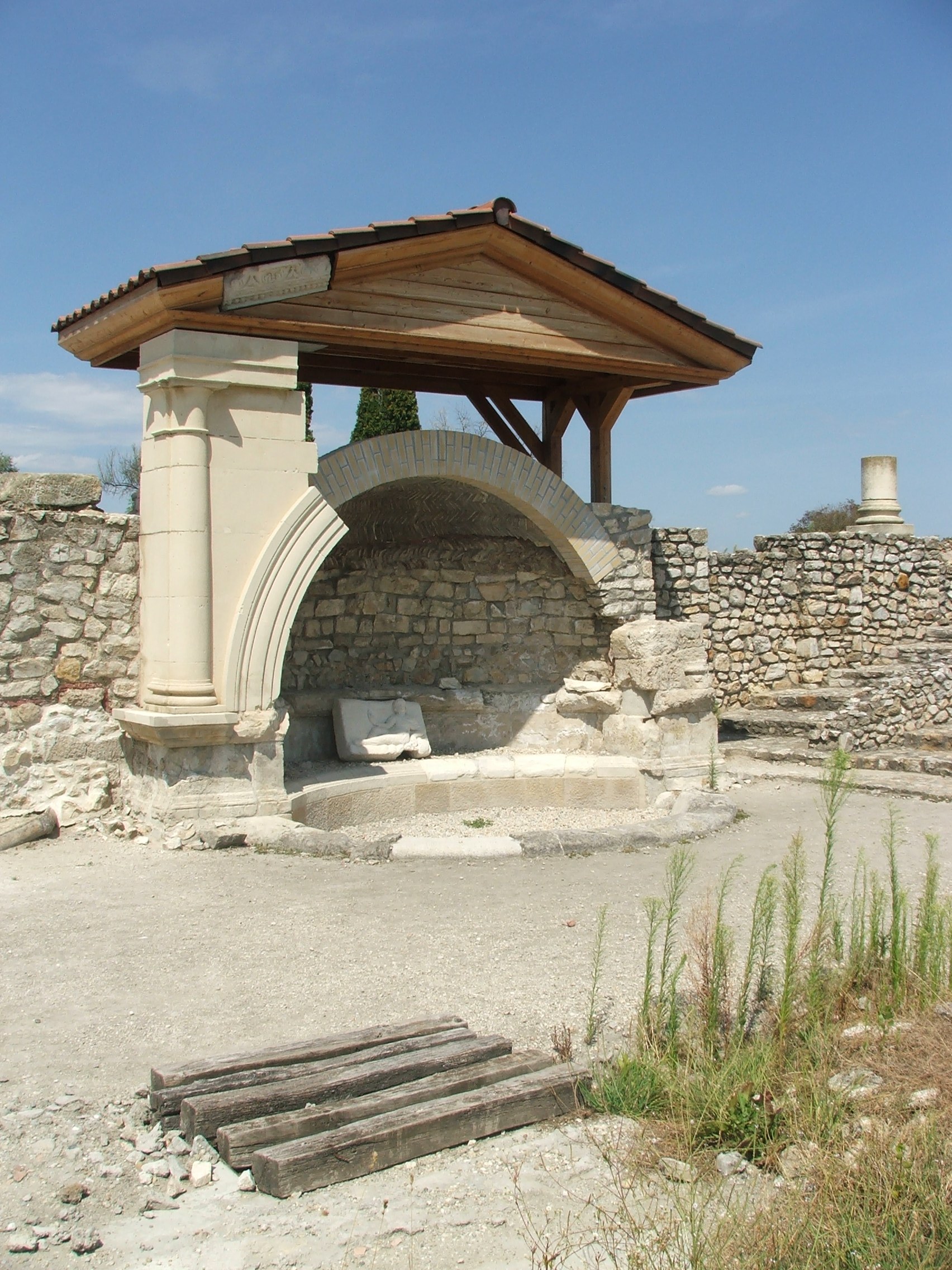
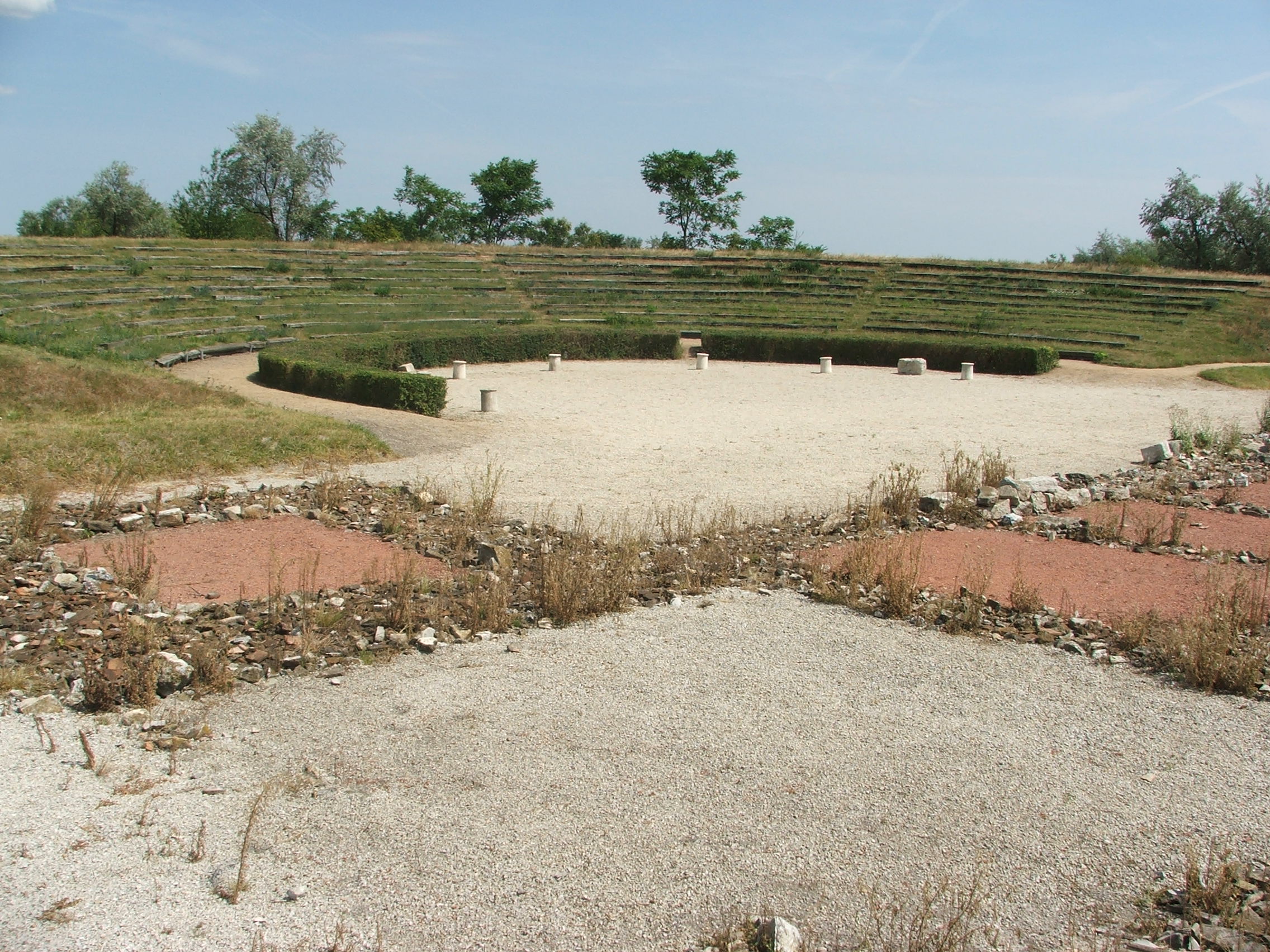
Among the highlights are a reconstructed nymphaeum, an ornamental fountain that displayed the town’s command of running water, and the remains of a Roman theatre with its stone seating set into the park. Indoors, the site museum shows the celebrated Gorsium frescoes — panels of red and ochre wall-painting recovered from the ruins — alongside the small finds that flesh out daily life in a Pannonian town. Each summer the park stages Roman re-enactment festivals on the ancient streets, a modern echo of the assembly crowds that once filled them.
Rediscovery and the excavations of Jenő Fitz
Gorsium was identified in 1866 by Flóris Rómer, the pioneering figure often called the father of Hungarian archaeology. Systematic excavation came much later. Digging began in 1934, but the decisive campaign started in 1958 under Dr. Jenő Fitz, who recognised that what looked at first like an early Christian basilica was in fact the precinct of the provincial assembly. Fitz’s decades of work uncovered the town walls and gates, the colonnaded streets, the forum and the cult buildings, and turned Tác into one of the most completely explored Roman towns in Hungary. Excavation and study of the late-antique phases at the site continue to this day.
Why Gorsium-Herculia matters
Few sites let you read the whole life of a Roman frontier town in one walk: the fort under Claudius, the assembly precinct of a divided province, two destructions by steppe peoples, a Tetrarchic rebuild under a new name, a Christian-era peak, and a slow medieval fade. Gorsium-Herculia is not the grandest Roman ruin in Europe, but it is one of the most legible — a place where the machinery of provincial loyalty, and the violence that repeatedly tested it, is still laid out on the ground. For more sites like it, browse our historical places archive, including Pannonia’s true capital at Aquincum and the Danube town of Singidunum.
Sources and Further Reading
- World History Encyclopedia — Pannonia
- Journal of Roman Archaeology — From Roman Gorsium to late-antique Herculia: recent work at Tác (NE Pannonia)
- Ancient Origins — Gorsium Archaeological Park: Once a Thriving Roman City Forgotten for Centuries
- Wikipedia — Gorsium-Herculia and the village of Tác
Further scholarly background appears in the Princeton Encyclopedia of Classical Sites entry “Gorsium later Herculia, Hungary” (Stillwell et al., 1976).