Saptaparni Cave is a Buddhist rock shelter set into the flank of Vaibhara Hill, about two kilometres southwest of Rajgir in Bihar, India. In the fifth century BCE, within a year of the Buddha’s death around 483 BCE, some five hundred senior monks are said to have gathered here for the First Buddhist Council, the assembly that first fixed his teachings into an ordered canon. That makes this plain opening in the rock one of the most consequential meeting places in the entire history of Buddhism.
A cave on Vaibhara Hill above ancient Rajagriha
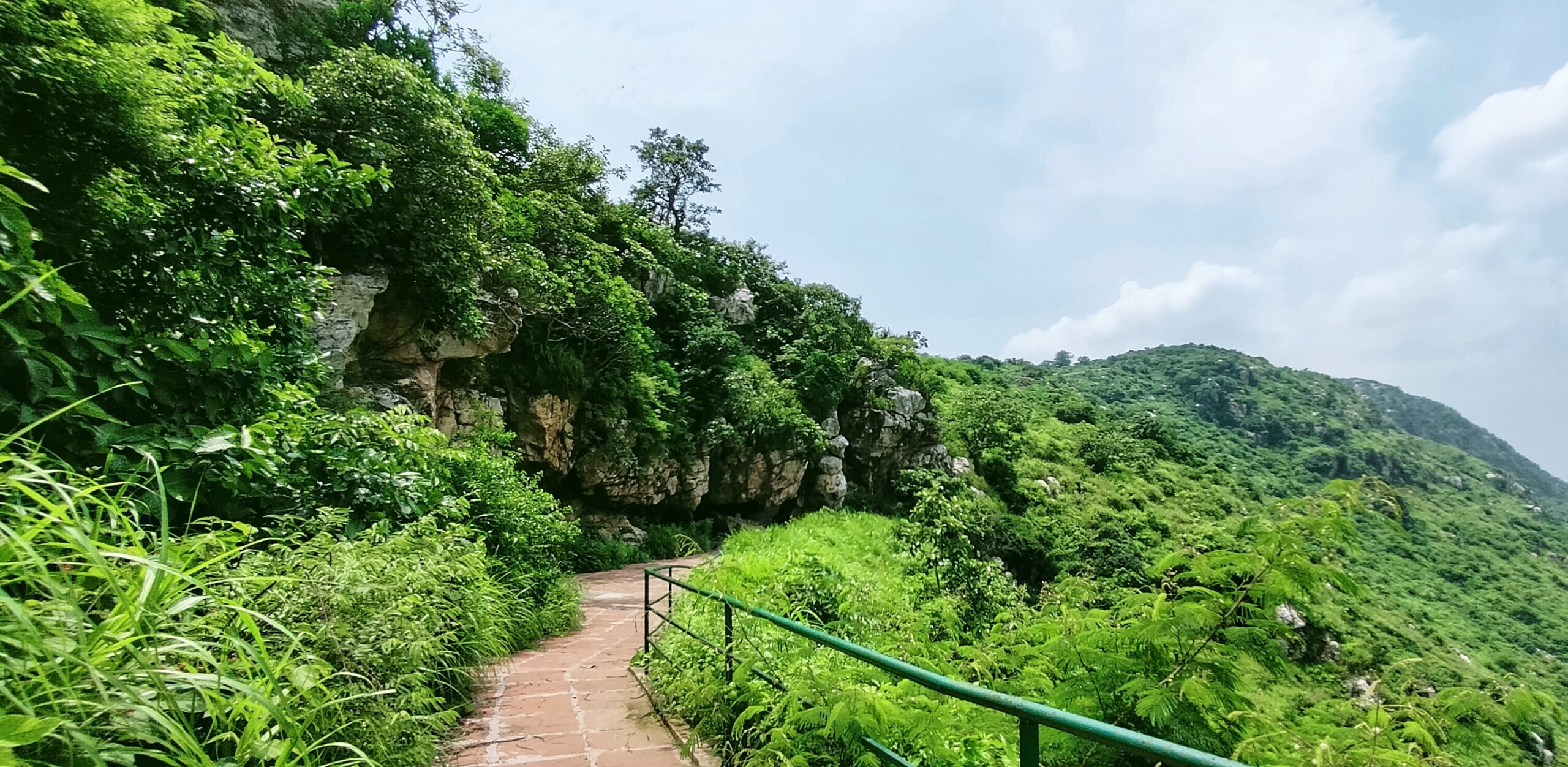
The cave lies on the northern of the five hills that ring Rajgir, the town that grew out of Rajagriha, the walled capital of the ancient kingdom of Magadha. It is a shallow, partly natural shelter cut into the limestone of Vaibhara Hill, reached today by a long flight of steps that climbs past the town’s famous hot springs. The site is protected as a monument of national importance under the Archaeological Survey of India, and its recorded coordinates place it at roughly 25.007°N, 85.411°E.
Rajagriha itself was one of the great cities of the Buddha’s world. He preached here for years, and nearby the hill of Griddhakuta, the “Vulture Peak”, is remembered as the setting of many of his sermons. When the Buddha died at Kushinagar, it was to Rajagriha and this cave that the community of monks turned to decide how his teaching would survive him.
The seven-leaved tree that gave the cave its name
The name Saptaparni means “seven leaves” in Sanskrit — sapta (seven, the same root as the Latin septem) and parni (leaves). In Pali the site is the sattapanni guha. It takes the name from the saptaparni tree, Alstonia scholaris, whose leaves grow in whorls of seven and which was said to shade the mouth of the cave. The tree is valued across South Asian religious tradition, and its presence helped mark the spot as a place set apart.
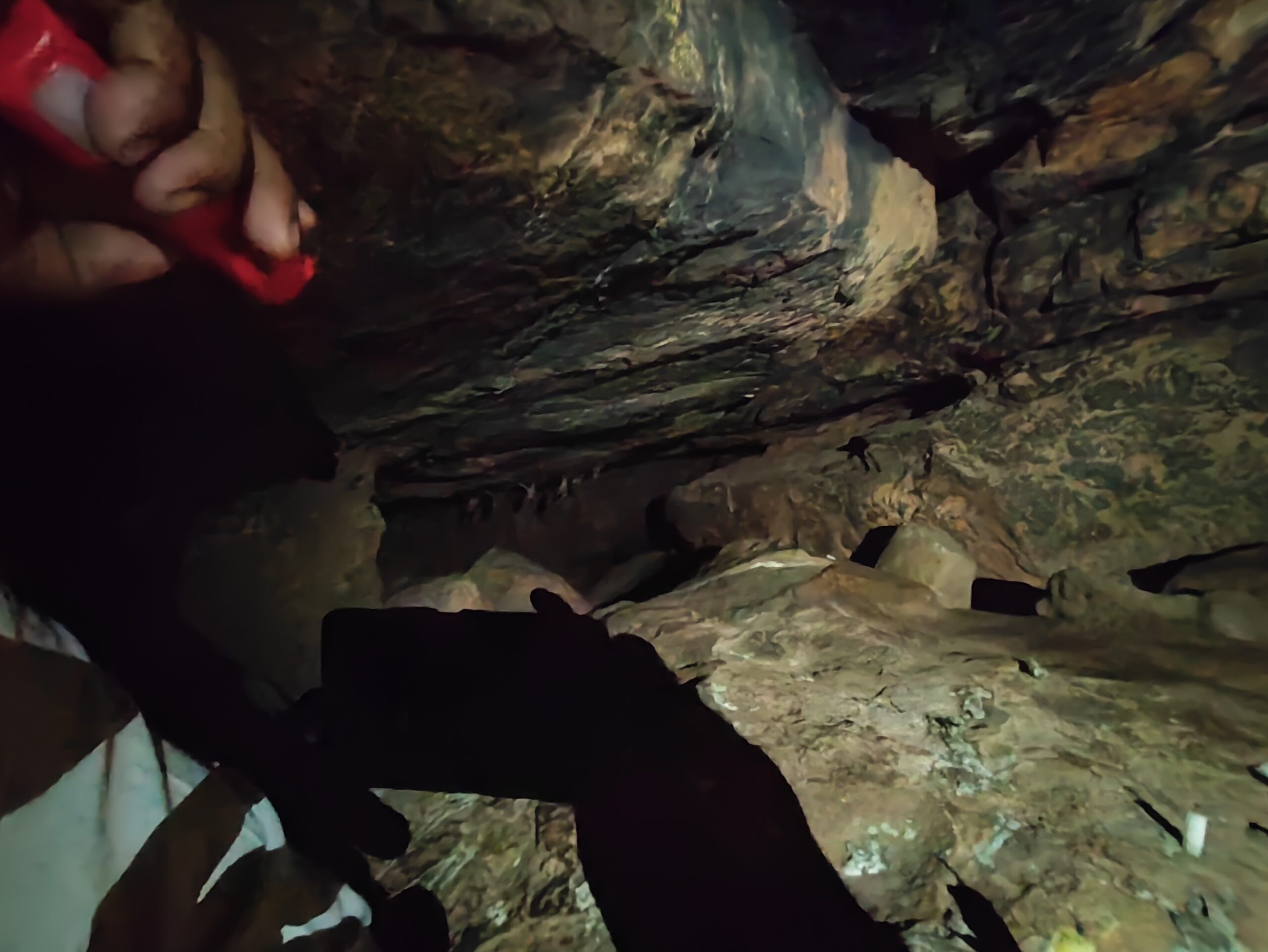
What happened at the First Buddhist Council?
Buddhist tradition holds that the council met during the first rainy-season retreat after the Buddha’s parinirvana, under the patronage of the Magadhan king Ajatashatru, and that the elder Mahakasyapa presided. Five hundred arhats — monks regarded as fully awakened — assembled to recite and agree the Buddha’s words before they could be forgotten or altered. The Buddha had never written his teaching down, so the council’s purpose was to establish an authoritative version that the whole community could hold in common.
The number five hundred is deliberately symbolic in Buddhist sources, and the historicity of the details is debated by modern scholars. What the tradition preserves, however, is a real and pressing problem: how a movement built entirely on a founder’s spoken word keeps that word intact once he is gone.
Ananda, Upali, and the making of the canon
Two monks did the heavy lifting. Ananda, the Buddha’s cousin and long-time personal attendant, had heard almost all of his discourses and was asked to recite them; the traditional preface to each Buddhist sutta, “Thus have I heard on one occasion”, is credited to this moment. Upali, who had accompanied the Buddha on his teaching journeys through northern India, was asked to recite the Vinaya, the rules of monastic discipline. Together they produced the two great bodies of early teaching — the Sutta (discourses) and the Vinaya (discipline). The Abhidhamma, the later analytical “higher teaching”, is attributed to the council by tradition but is generally regarded by historians as a subsequent development.
What emerged was not a written book but an ordered oral tradition, memorised and chanted by communities of monks and passed down for roughly four centuries before it was finally committed to writing in Sri Lanka. The recited canon set the pattern for everything that followed in Buddhist textual history.
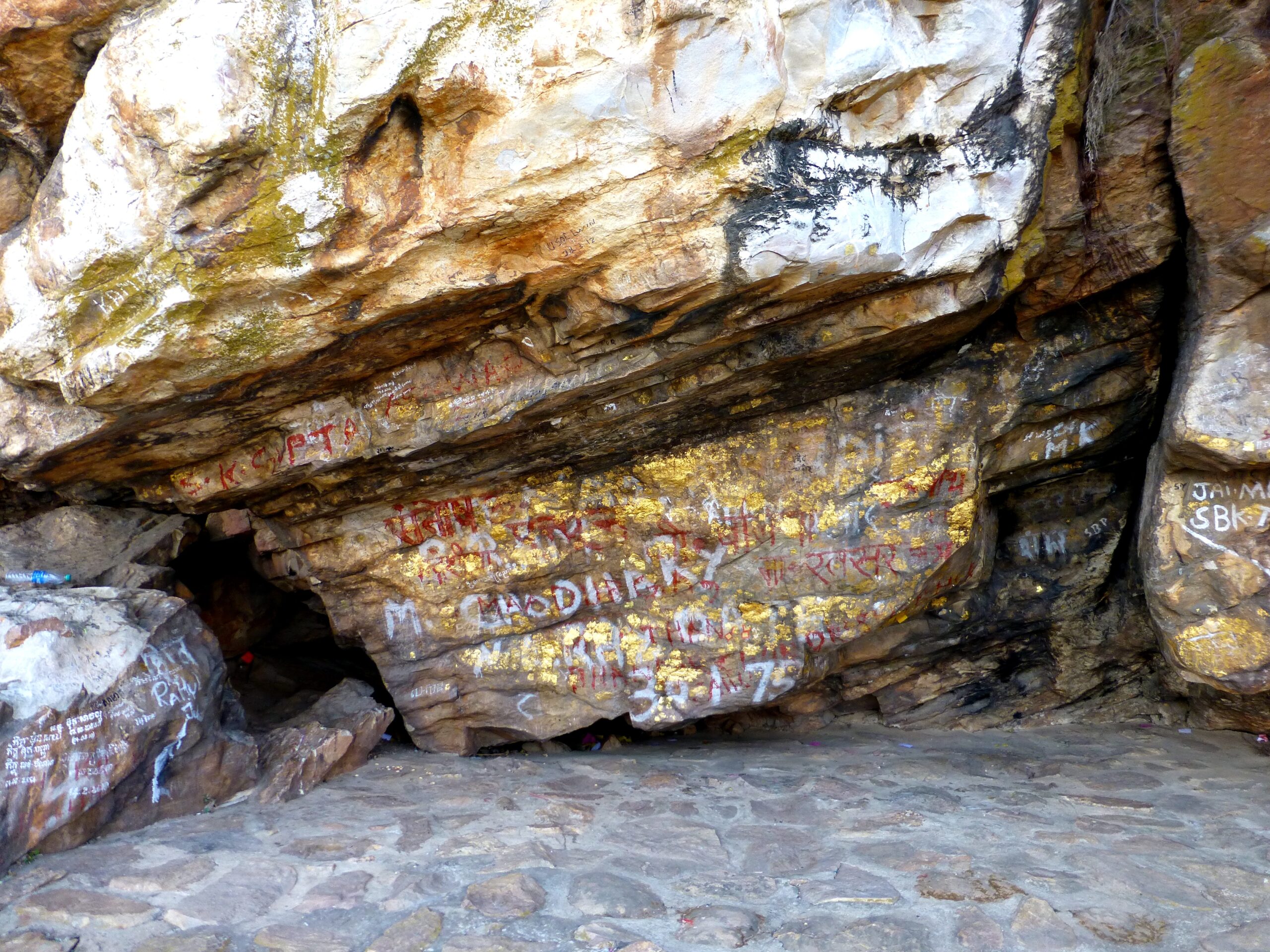
The evidence in the rock: sockets and chambers
The cave that survives is modest: a low, irregular opening leading into shallow chambers, with a broad rock terrace in front of it. The most telling physical clue is a series of socket holes cut into the rock, which would once have held wooden beams. Archaeologists read these as the fixings for a temporary timber hall or platform — exactly the kind of covered space that could have seated a large assembly of monks on the open terrace before the cave mouth. In other words, the setting fits the tradition: a sheltered high place, just outside the city, big enough to hold a crowd.
The same ridge carries other early Buddhist remains, including the so-called Pippala stone house, a squared rock structure lower on the hillside. Rajgir sits within a dense landscape of rock-cut and built monuments that runs across Bihar, from the Mauryan-era Barabar rock-cut caves — the oldest surviving rock-cut caves in India — to the polished interior of the neighbouring Lomas Rishi Cave.
How reliable is the traditional account?
No inscription or contemporary document confirms that the First Council took place in this exact cave, and the earliest surviving accounts were written down centuries after the event. Modern historians treat the council as a foundational memory rather than a minuted meeting: the core idea — that the early community gathered at Rajagriha to agree the teaching — is plausible, while the round numbers and set speeches belong to the way tradition remembers such turning points. The cave’s identification with the council is itself traditional, reinforced by centuries of pilgrimage. That does not make the place less important; it makes it a monument to how Buddhism has understood its own origins.
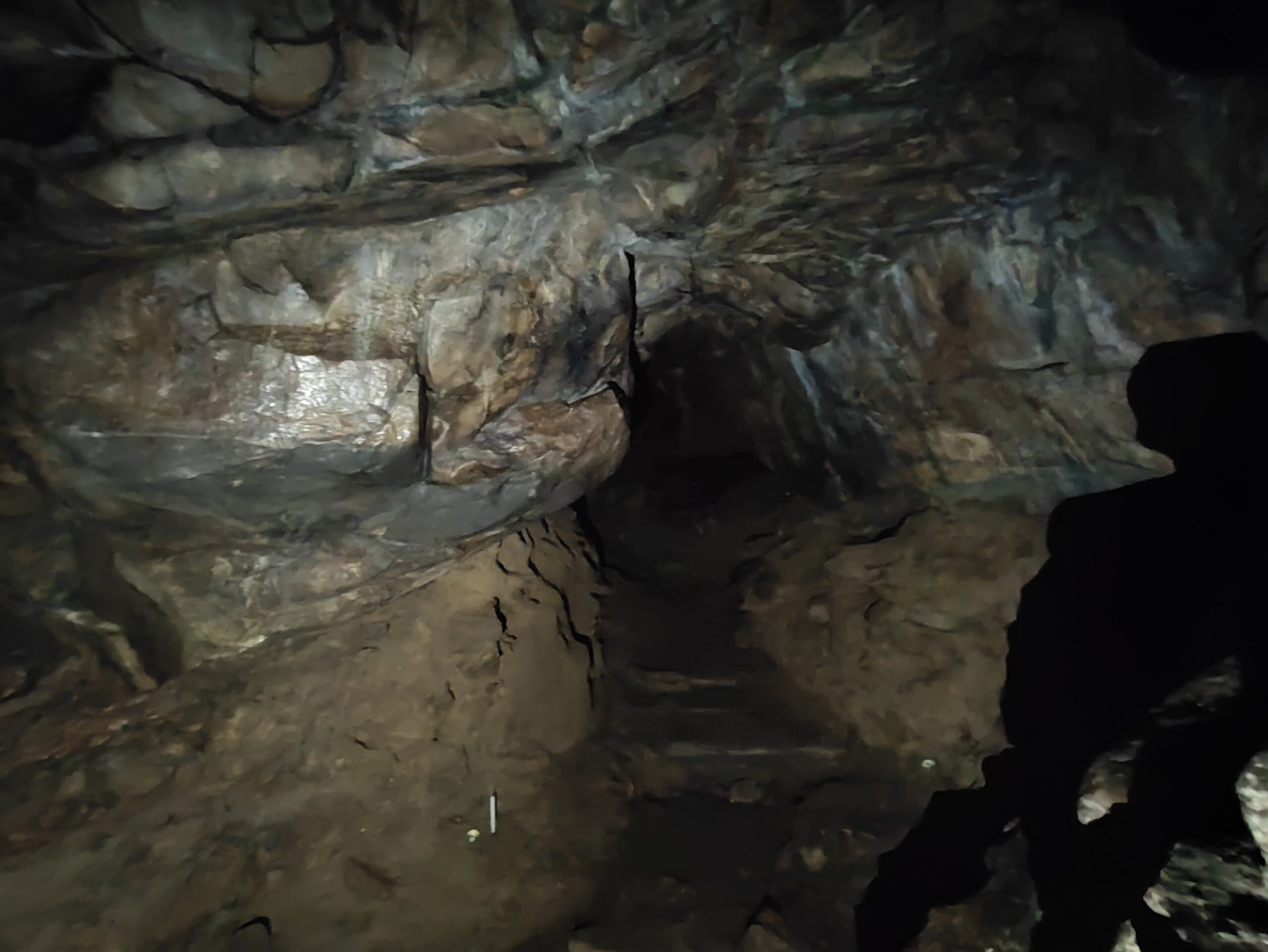
Saptaparni Cave in the wider Buddhist landscape of Bihar
Bihar holds the densest concentration of early Buddhist sites anywhere in the world, and Saptaparni Cave belongs to a network that pilgrims still walk. A short distance away is the Mahabodhi Temple at Bodh Gaya, marking the place of the Buddha’s enlightenment, while to the east the great monastic university of Vikramashila would later carry the same textual tradition into the medieval world. For the traveller, the cave is best understood as one node in this larger constellation of historical places — the point where the words first recited by Ananda and Upali began their long journey down the centuries.
Frequently asked questions
Where is Saptaparni Cave?
Saptaparni Cave is on Vaibhara Hill, about two kilometres southwest of Rajgir in the Nalanda district of Bihar, India. Rajgir grew out of Rajagriha, the ancient walled capital of the kingdom of Magadha. The cave is reached by a stepped path that climbs the hillside past Rajgir’s hot springs, and it is protected as a monument of national importance by the Archaeological Survey of India.
Why is Saptaparni Cave famous?
It is traditionally identified as the site of the First Buddhist Council, held around 483 BCE in the months after the Buddha’s death. There, some five hundred senior monks recited and agreed the Buddha’s teaching so that it could be preserved. Because the Buddha never wrote his teaching down, this gathering is regarded as the moment the Buddhist canon began to take an ordered, transmissible form.
Who convened the First Buddhist Council?
Buddhist tradition credits the Magadhan king Ajatashatru as the royal patron of the council, with the elder Mahakasyapa presiding over the assembly. The monk Ananda, the Buddha’s cousin and attendant, recited the discourses, and Upali recited the rules of monastic discipline. Modern scholars debate the exact details, but the account preserves the early community’s effort to safeguard the teaching immediately after the Buddha’s death.
Sources and Further Reading
- Saptaparni Cave — Wikipedia
- The First Buddhist Council — World History Encyclopedia
- First Buddhist council — Wikipedia
- Ajatashatru — World History Encyclopedia
- Buddhism — World History Encyclopedia