Early History
Local Fertility Goddess
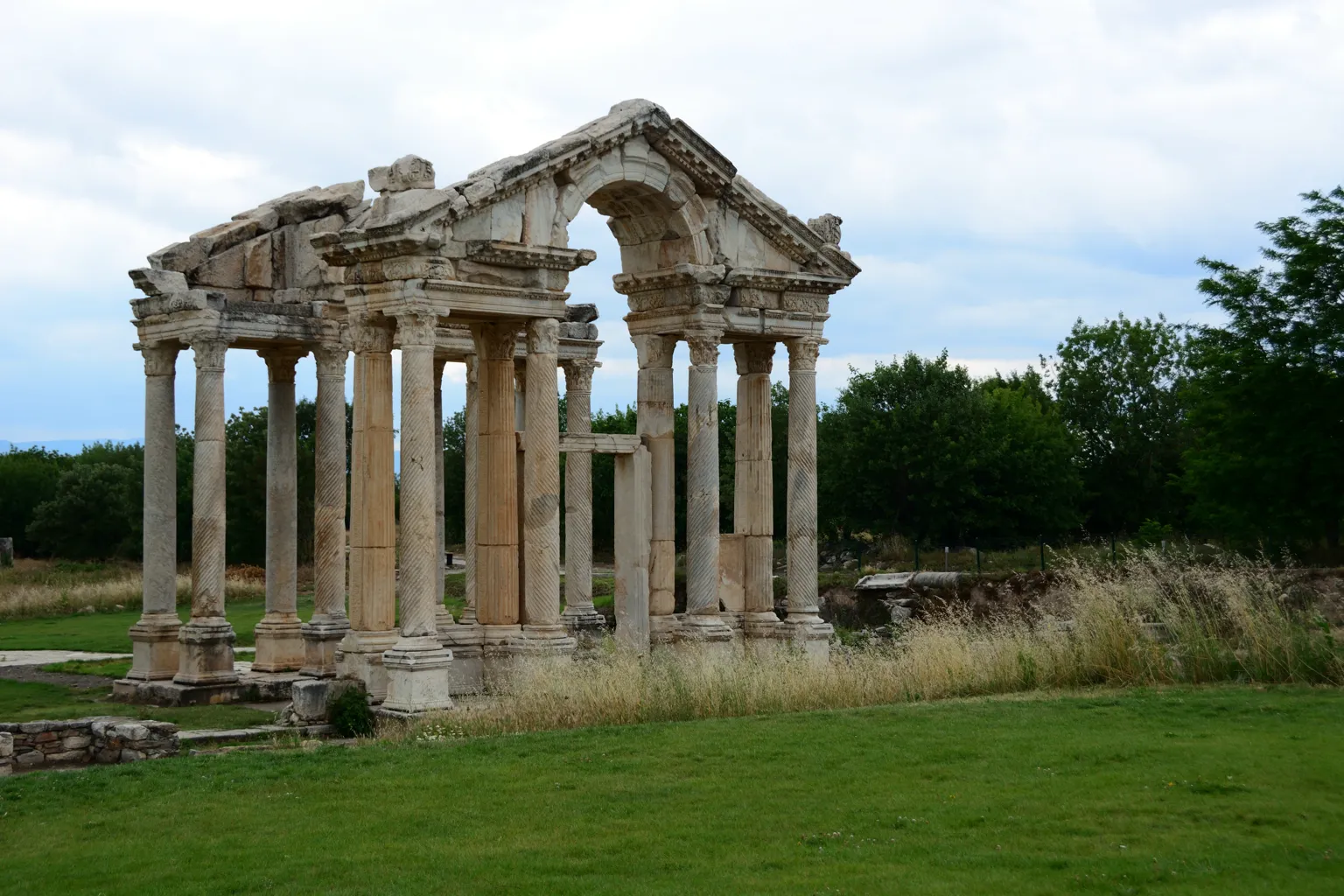
The origins of the sanctuary date back to the 7th century BC, when the site was a local cult center for a fertility goddess. This deity was deeply rooted in the local traditions and beliefs, serving as a protector of fertility and prosperity for its inhabitants. The Sanctuary is located in Aphrodisias, which was an ancient city in Anatolia, Turkey.
Hellenistic Period Transformation
During the Hellenistic period, the local fertility goddess began to be identified with Aphrodite, the Greek goddess of love and beauty. This syncretism was similar to the transformation seen in other regions, such as the Artemis of Ephesus. By adopting the more widely recognized identity of Aphrodite, the sanctuary in Aphrodisias attracted worshipers from across Anatolia and the Aegean Sea. This in turn transformed the city into a major pilgrimage destination.
The Sanctuary’s Structure
Early Sanctuary
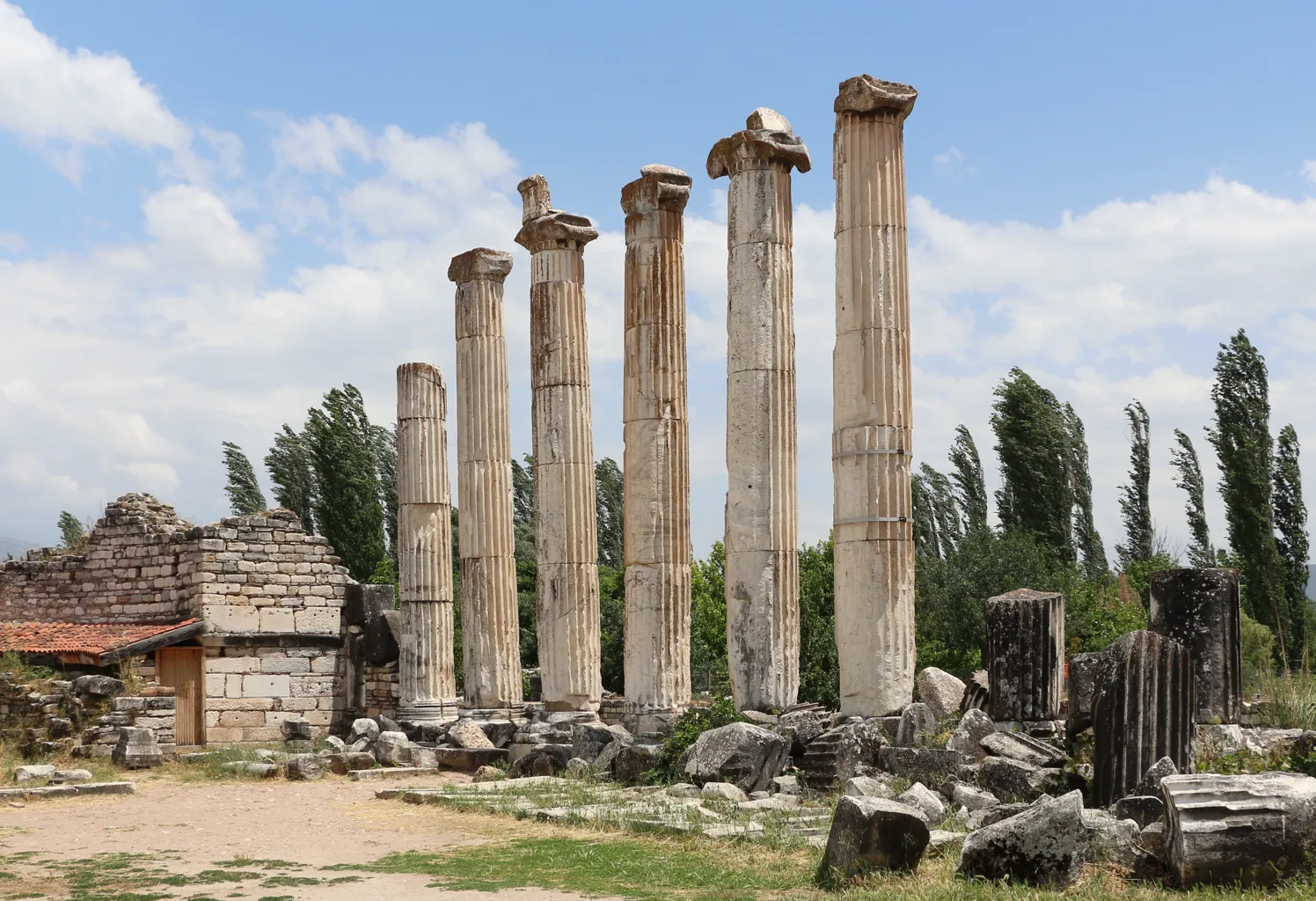
The sanctuary, dated to the late 7th century, was a modest structure that reflected the early religious practices of the region. Archaeological evidence suggests that this sanctuary underwent several modifications and expansions over the centuries as the city’s prosperity grew.
Monumental Temple
In the 1st century BC, a new and more monumental temple was erected during the Hellenistic period. This construction was financed by Zolios, a wealthy freedman whose generosity underscored the temple’s significance. The new temple was grand in scale and design, featuring columns and intricate carvings that highlighted the advanced architectural skills of the period.
Asylum Status
In 39 BC, the sanctuary was granted asylum status by the Roman Senate through the senatus consultum de Aphrodisiensibus. This decree recognized the temple as a place of refuge and protection, further enhancing its prestige and drawing more visitors to the site.
City Center
The Temple of Aphrodite became the focal point of Aphrodisias, both physically and socially. It was the center of the city’s layout, with streets and public spaces radiating from the sanctuary. The prosperity of Aphrodisias was closely linked to the temple, as it attracted pilgrims and boosted local commerce.
Aphrodisian Sculpture School
Renowned Sculptors
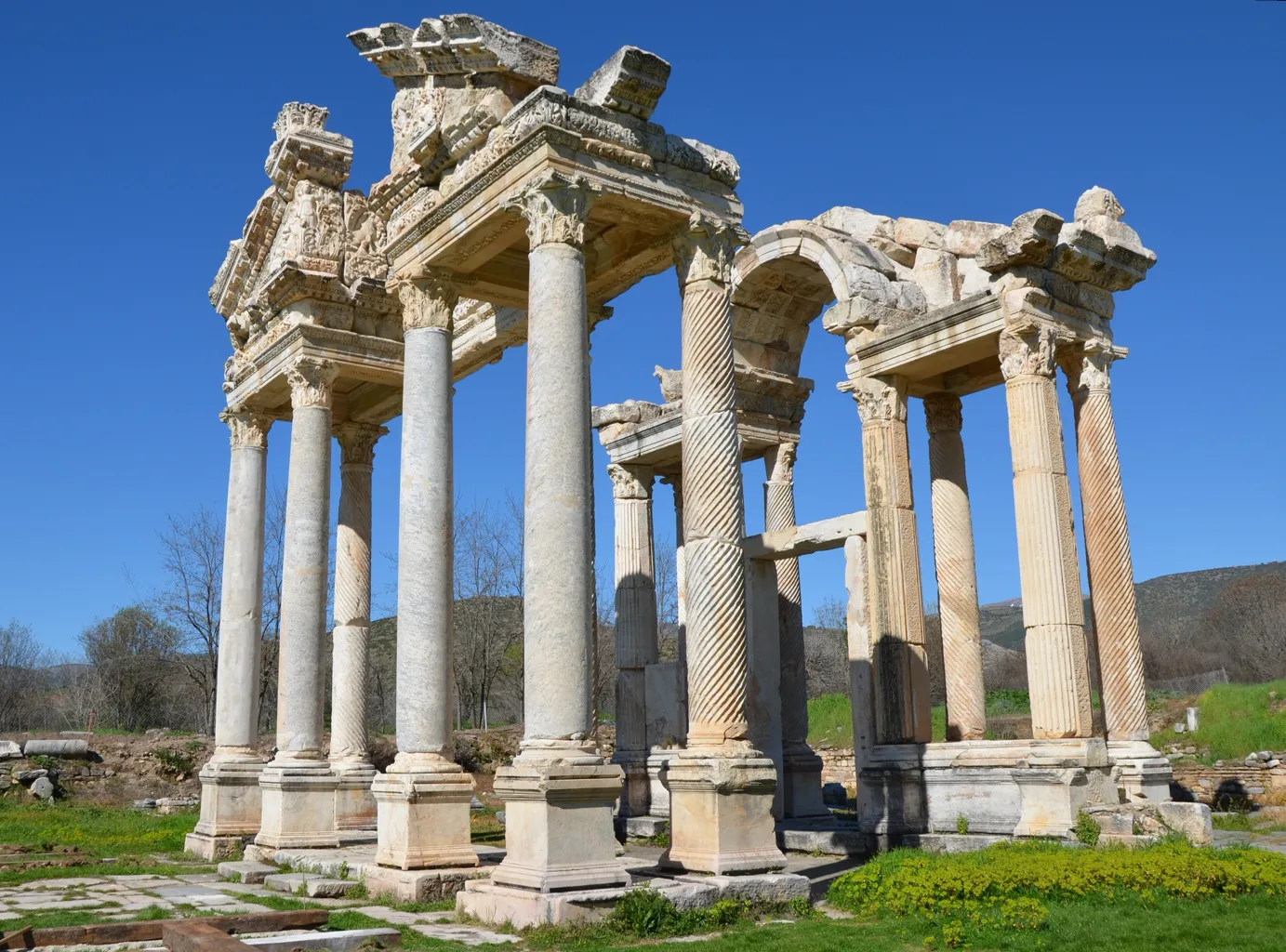
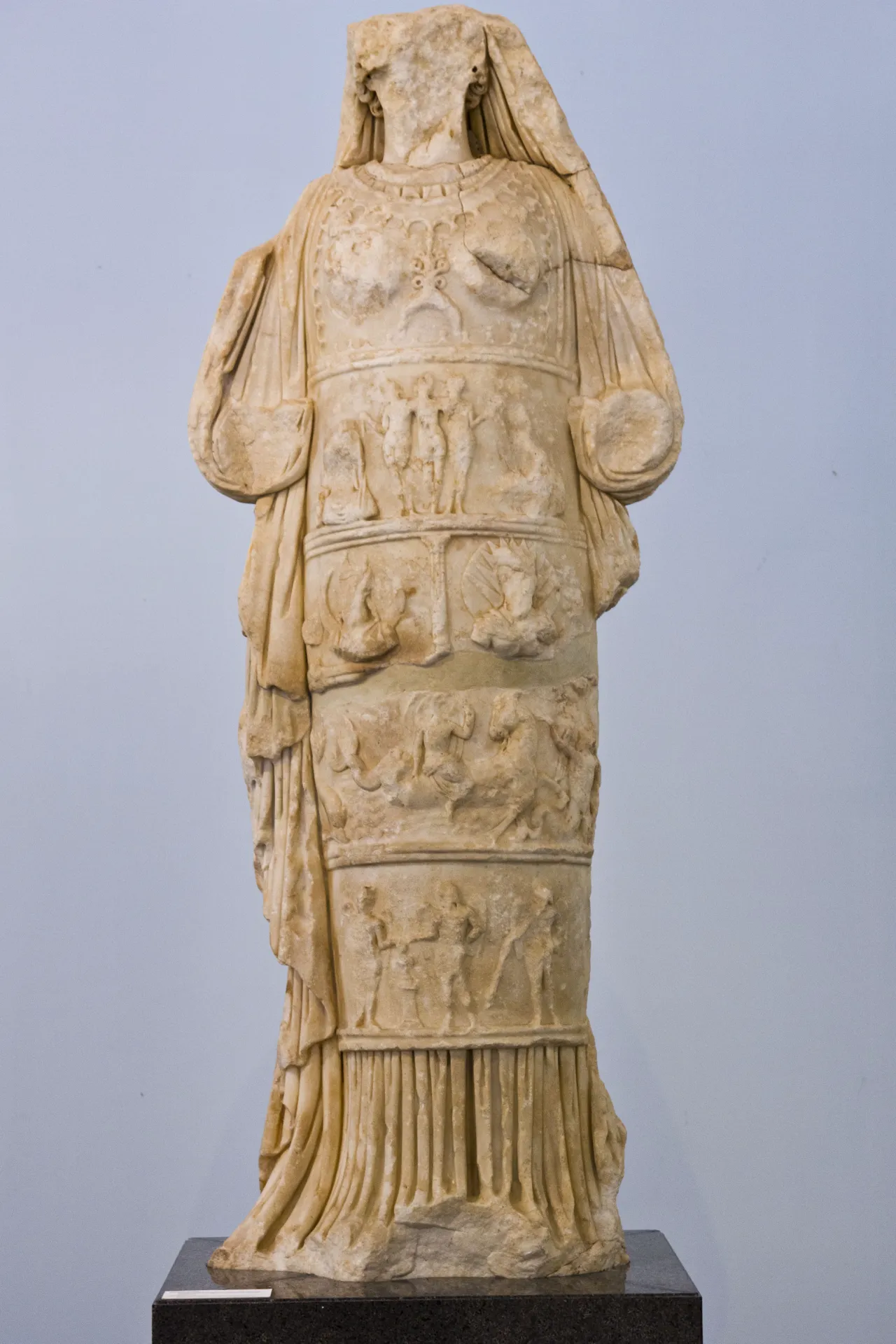
Aphrodisias was famous for its school of sculpture, which thrived due to the plentiful supply of high-quality marble from nearby quarries. The sculptors of Aphrodisias were renowned for their artistry, producing works that were in high demand across the ancient world.
Productivity and Influence
The sculpture school was highly productive, creating statues, reliefs, and architectural elements that adorned public buildings and private homes. Many of these works can still be seen around the site and in the local museum. These works provide valuable insights into the artistic achievements of the period.
Dissolution of the Sanctuary
Conversion to Christian Basilica
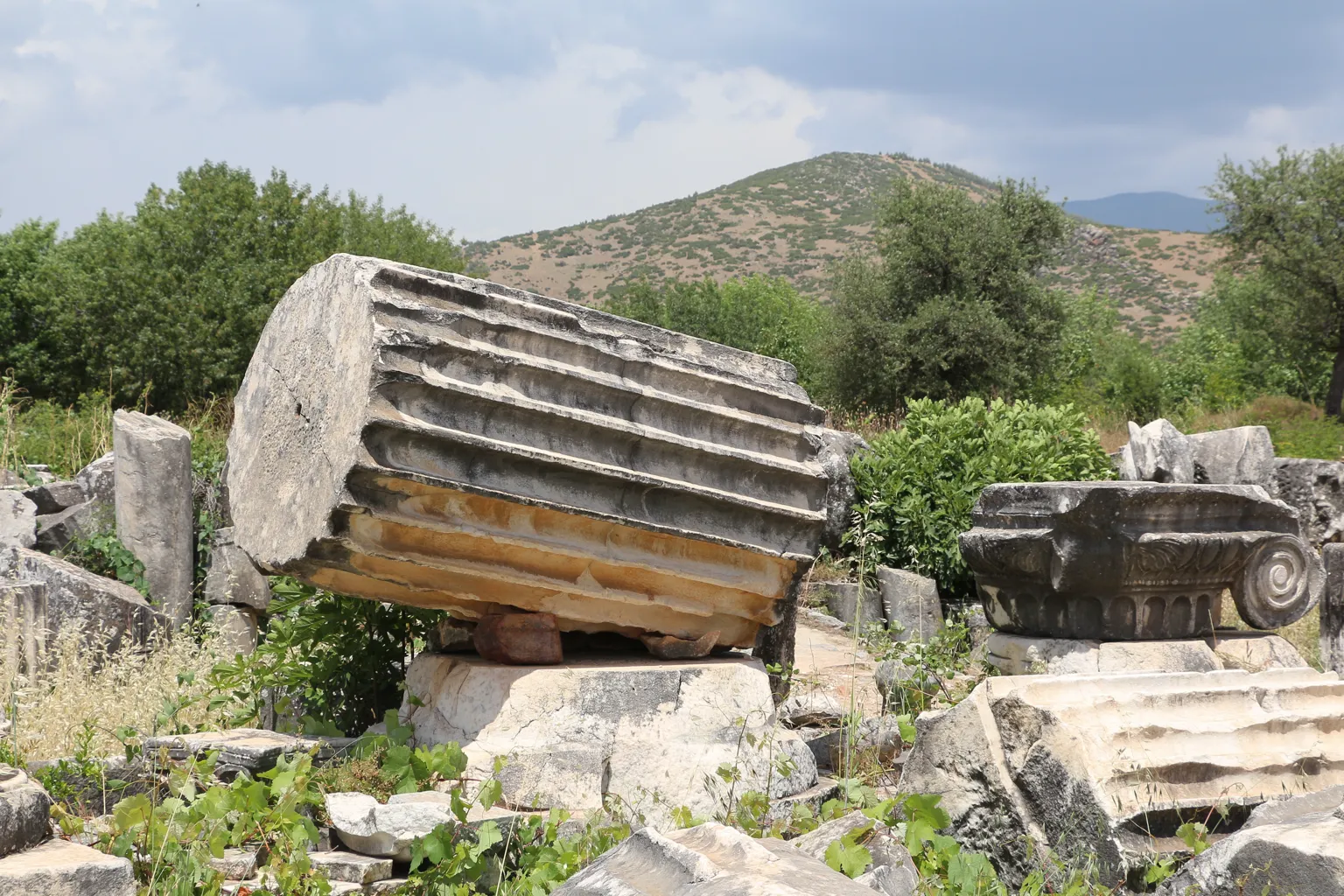
With the rise of Christianity, the role and structure of the Temple of Aphrodite underwent significant changes. The temple was converted into a Christian basilica, reflecting the broader religious transformations taking place across the empire.
Dismantling by Emperor Zeno
Around 481–484 AD, the temple was dismantled by order of Emperor Zeno. This action was likely driven by the temple’s association with Pagan Hellenic opposition against Zeno. The local supporters of Illus, who promised to restore Hellenic rites, used the temple as a focal point for their resistance.
Significance and Legacy
The Sanctuary of Aphrodite in Aphrodisias is a testament to the city’s rich religious and cultural heritage. It evolved from a local fertility cult center to a grand Hellenistic temple, and finally to a Christian basilica. This mirrors the broader historical and religious shifts in the region.
Archaeological Importance
The site of Aphrodisias has provided archaeologists with a wealth of information about ancient religious practices, art, and architecture. The remains of the sanctuary and the numerous sculptures found at the site continue to attract scholars and visitors.
Cultural Influence
The sanctuary’s influence extended beyond its immediate geographical region, contributing to the spread of Aphrodite’s worship and the artistic styles associated with Aphrodisias. The city’s sculptors left a lasting mark on the art and culture of the ancient Mediterranean world.
In conclusion, the Sanctuary of Aphrodite in ancient Aphrodisias stands as a remarkable example of ancient religious and cultural development. Its history reflects the dynamic interplay of local traditions, Hellenistic influences. It further reflects the transformative impact of Christianity, offering a unique window into the ancient world.
Sources: Wikipedia


Neural Pathways is a collective of seasoned experts and researchers with a profound passion for unraveling the enigmas of ancient history and artifacts. With a wealth of combined experience spanning decades, Neural Pathways has established itself as a leading voice in the realm of archaeological exploration and interpretation.