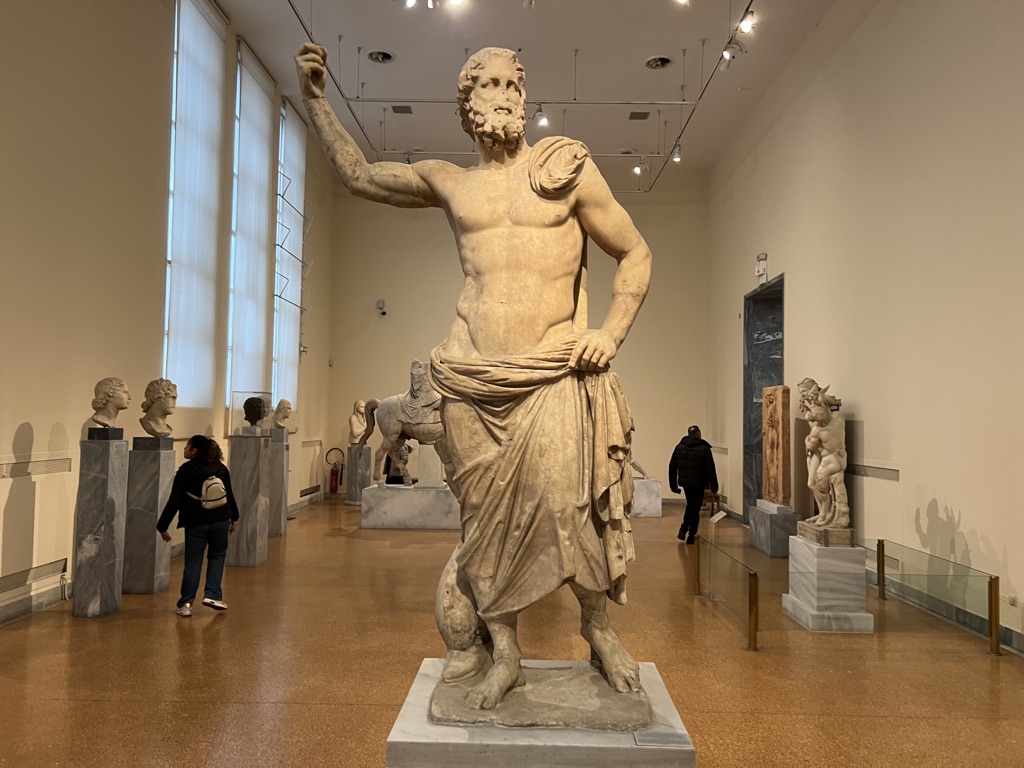
Overview of Poseidon
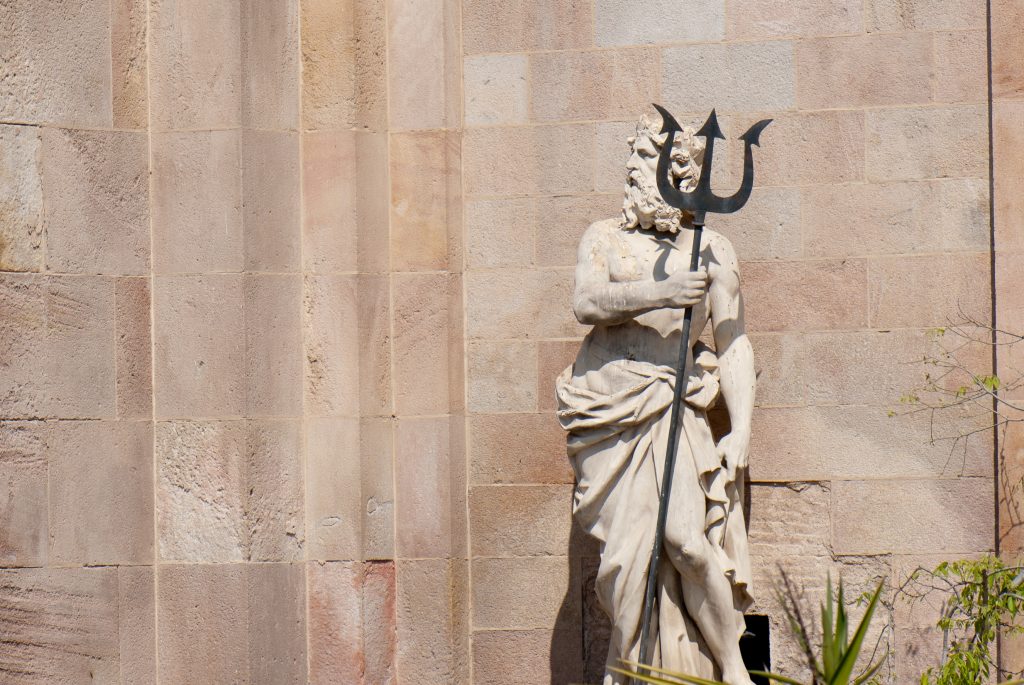
Poseidon, one of the twelve Olympian deities in ancient Greek mythology, reigns as the god of the sea, storms, earthquakes, and horses. He is a son of the Titans Cronus and Rhea, making him a sibling to notable gods such as Zeus and Hades. Poseidon’s dominion over the sea and its creatures is well-documented, with his powers allowing him to calm or incite the waters and storms at will. His symbols, most notably the trident, horses, and the dolphin, encapsulate his connection to the sea and its creatures, as well as his ability to cause earthquakes, known as “earth-shakers.”
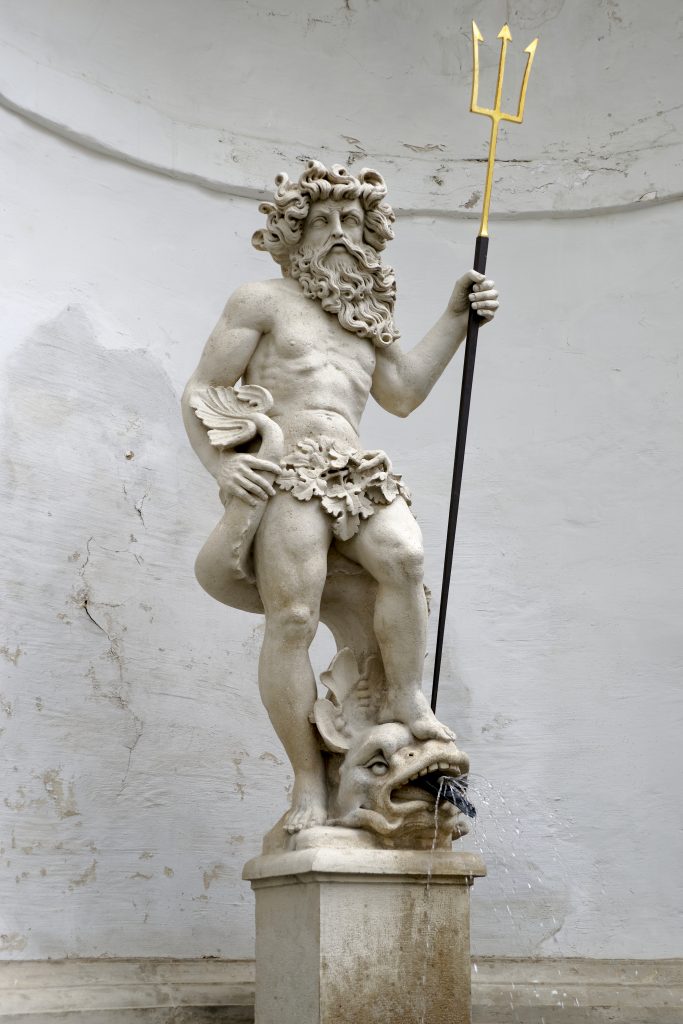
Mythological Stories Involving Poseidon
Poseidon features prominently in numerous mythological tales, showcasing his temperamental nature and immense power. His rivalry with Athena for the patronage of Athens is a well-known myth, culminating in the city’s naming in Athena’s honor. Poseidon’s role in Homer’s “Odyssey” as the antagonist to Odysseus highlights his vengeful side, punishing the hero for blinding his son, the Cyclops Polyphemus. Furthermore, Poseidon’s interactions with other gods and mortals often depict him as both benefactor and punisher, reflecting the dual nature of the sea.
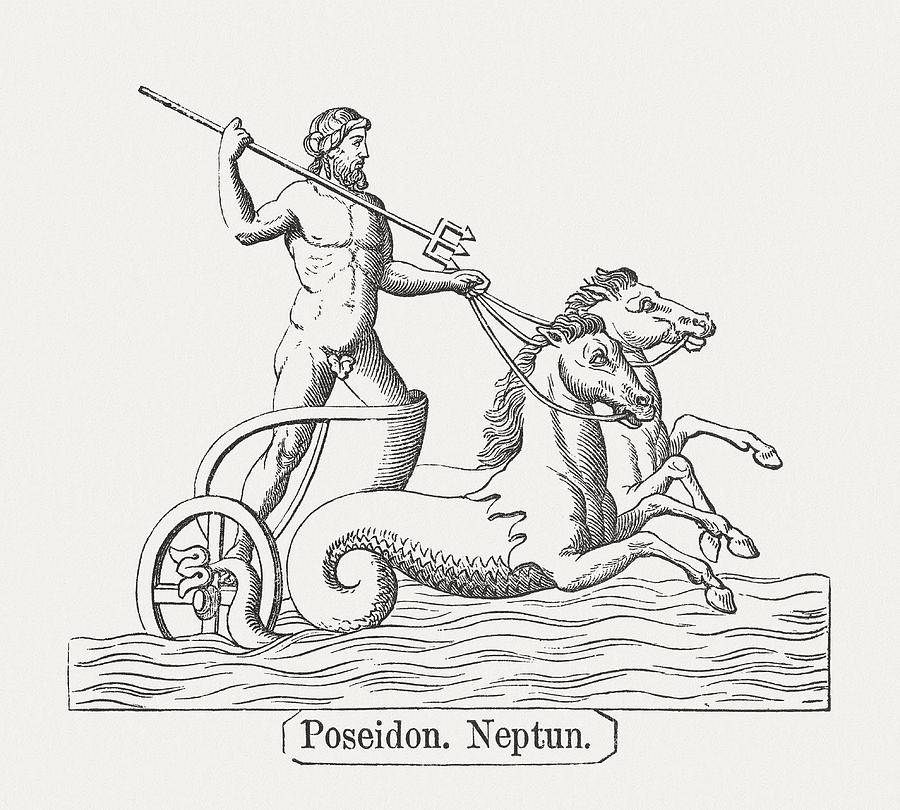
Symbols of Poseidon
The trident, a three-pronged spear, stands as Poseidon’s most iconic symbol, representing his power over the sea and his ability to cause earthquakes. Horses, another symbol associated with Poseidon, signify his creation of the first horse and his control over these creatures, as well as his connection to chariot races, a popular sport in ancient Greece. The sea itself, along with all its creatures, symbolizes Poseidon’s vast domain and influence.
Subtopics Related to Poseidon
Family and Relationships
Zeus, Hades, and Poseidon
The dynamic among Zeus, Hades, and Poseidon, the sons of Cronus and Rhea, revolves around the division of the cosmos post the Titanomachy. Zeus claimed the sky, Hades the underworld, and Poseidon the sea, establishing their respective domains and powers. Despite occasional conflicts, their relationship is characterized by a balance of power and mutual respect.
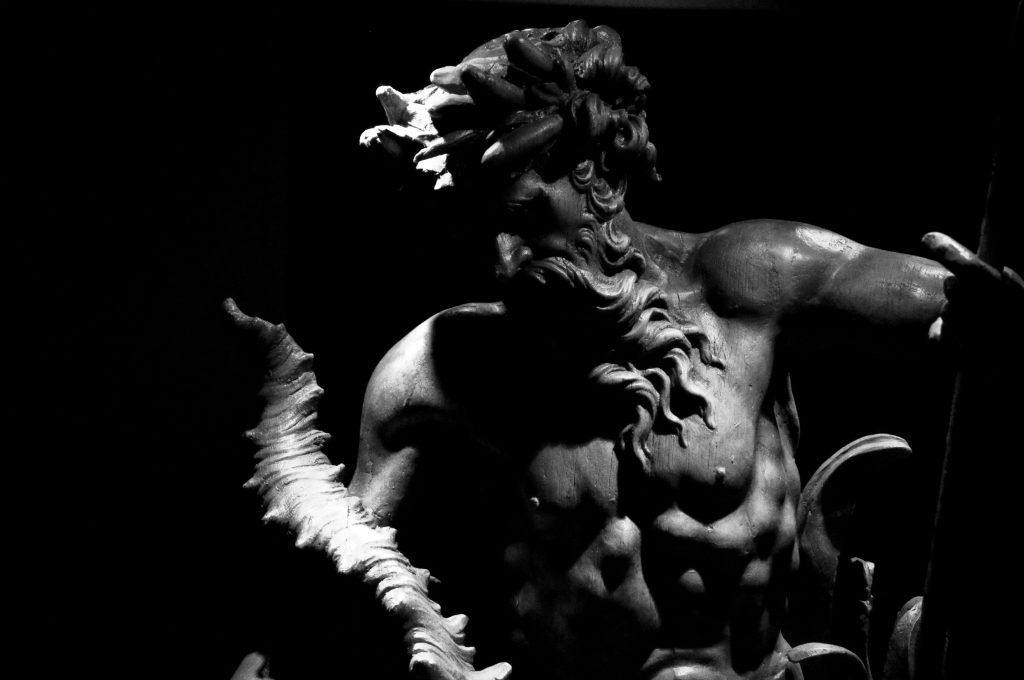
Poseidon’s Consorts and Children
Poseidon’s relationships with various goddesses and mortals led to numerous offspring, including Triton, a merman; Theseus, a hero; and Polyphemus, the Cyclops. His consort Amphitrite, a sea goddess, bore him Triton, further solidifying his connections to the sea. These relationships and progeny highlight Poseidon’s widespread influence across mythology.
Powers and Domains
The Powers of Poseidon
Poseidon wielded control over the sea, capable of creating storms, calm seas, and devastating earthquakes. His association with horses is also notable, credited with their creation. These powers not only demonstrate his dominion over his realms but also his role as a protector and a threat to sailors and coastal cities.
Poseidon’s Role as the God of the Sea
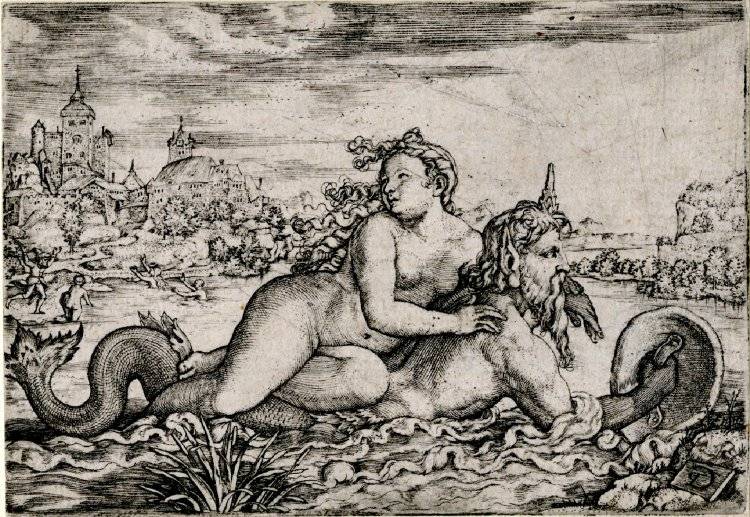
As the deity of the sea, Poseidon was central to the worship and rituals of coastal communities in ancient Greece. The Temple of Poseidon at Sounion, among others, stands as a testament to his worship. These temples served as places of sacrifice and worship, ensuring safe passage for sailors and favor from the temperamental god.
Cultural Impact
Poseidon in Ancient Greek Culture
In ancient Greek society, Poseidon was revered as a powerful and crucial deity. His temples, rituals, and festivals, such as the Isthmian Games, celebrated his might and sought his favor. This worship reflects the ancient Greeks’ understanding and respect for the sea’s power and its impact on their lives.
Poseidon in Modern Media
Poseidon’s legacy extends into modern media, where he is frequently depicted in movies, books, and art. These portrayals often emphasize his majestic and formidable nature, reflecting contemporary fascination with ancient mythology. Through these mediums, Poseidon’s mythological significance continues to captivate and influence modern culture.

Neural Pathways is a collective of seasoned experts and researchers with a profound passion for unraveling the enigmas of ancient history and artifacts. With a wealth of combined experience spanning decades, Neural Pathways has established itself as a leading voice in the realm of archaeological exploration and interpretation.