Origins of the Skiddaw Lithophones
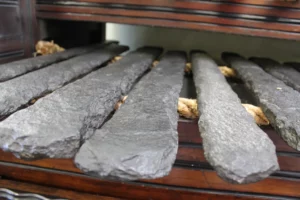
The Musical Stones of Skiddaw are a fascinating series of lithophones located near Keswick, northern England. Crafted from hornfels sourced from nearby Skiddaw mountain, these stones are known for their superior tone and extended resonance compared to common slate.
Early Innovations by Peter Crosthwaite
Peter Crosthwaite, an inventive figure from Keswick, created the first documented lithophone in 1785. His interest in the musical properties of local stones sparked a unique contribution to musical instruments.
Joseph Richardson’s Renowned Lithophone
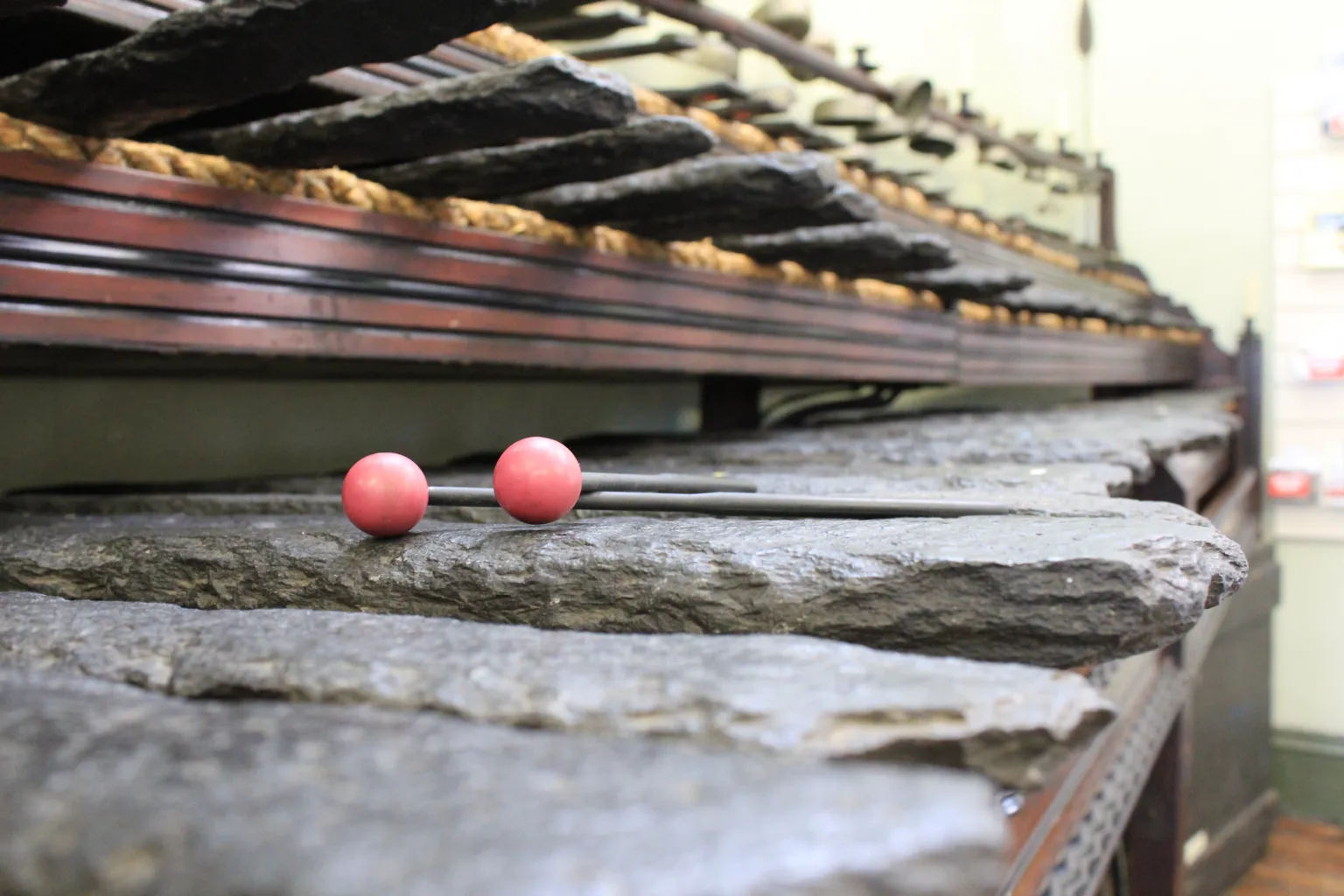
In 1840, Joseph Richardson, a stonemason and musician from the same region, constructed a more sophisticated eight-octave lithophone. With this instrument, he and his sons performed across the UK and Europe, even playing for Queen Victoria in London.
The Lithophone Today
The original lithophone, enhanced with additional musical elements like steel bars and Swiss bells, is preserved at the Keswick Museum and Art Gallery. This instrument stands as a testament to Richardson’s craftsmanship and musical innovation.
Researching the Stones’ Origins
Recent studies by Dr. Alan Smith and Professor Bruce Yardley have focused on identifying the precise source of the stones used by Richardson. Although the general area is known, pinpointing the exact location has been challenging due to vague historical references.
The Geology of Hornfels
Hornfels, the chosen material for these instruments, is only found in the inner aureole of Skiddaw granite. This geological detail has narrowed down the potential areas where the stones could have originated.
Sinen Gill: The Likely Source
Research indicates that Sinen Gill is the probable source of the stones. This area features granite slabs and hornfels that easily break into flat slabs, ideal for crafting musical stones. The material’s natural tendency to split into thin, resonant slabs aligns with the characteristics of the musical stones.
Accessibility of Sinen Gill
The area was accessible enough for Joseph Richardson, who reportedly searched the fells with his family for suitable stones. The well-graded mine tracks leading up to Sinen Gill from Threlkeld likely facilitated transportation of the stones.
Challenges of Remote Sourcing
Despite its accessibility, Sinen Gill stands at a remote 1,805 feet, over six miles from Keswick. This remoteness posed challenges but also preserved the integrity of the site, allowing Richardson to select the finest stones for his lithophones.
Conclusion
The Musical Stones of Skiddaw are not only a unique musical marvel but also a reflection of the rich geological and cultural tapestry of northern England. These instruments connect the natural acoustic properties of Skiddaw’s hornfels with centuries of musical tradition, continuing to enchant visitors and scholars alike.
Sources:
Wikipedia
Image Credit

Neural Pathways is a collective of seasoned experts and researchers with a profound passion for unraveling the enigmas of ancient history and artifacts. With a wealth of combined experience spanning decades, Neural Pathways has established itself as a leading voice in the realm of archaeological exploration and interpretation.