
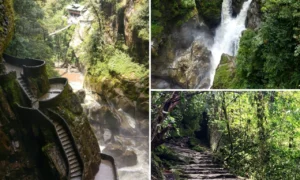
El Pailón del Diablo, or the Devil’s Cauldron, is a renowned waterfall located near the town of Baños de Agua Santa, commonly referred to as Baños, in Ecuador. This natural wonder is situated in the Río Verde area and forms part of the Ruta de las Cascadas, a popular tourist route that features multiple waterfalls along the Pastaza River. The waterfall itself plunges from a height of 80 meters (approximately 265 feet) into a 20-meter deep pool, surrounded by lush vegetation and rugged terrain.
Neural Pathways
Neural Pathways is a collective of seasoned experts and researchers with a profound passion for unraveling the enigmas of ancient history and artifacts. With a wealth of combined experience spanning decades, Neural Pathways has established itself as a leading voice in the realm of archaeological exploration and interpretation.
Our team of researchers and scholars provide unparalleled depth of knowledge in deciphering the intricate narratives embedded within ancient artifacts and deciphering the cultural nuances that shaped civilizations of the past. Through meticulous research, rigorous analysis, and a collaborative spirit, Neural Pathways has made and continues to make significant contributions to our understanding of the human past.
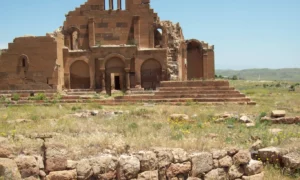
Basilica of Yereruyk
The Basilica of Yereruyk is a significant archaeological and architectural site located near the village of Anipemza in the Shirak Province of Armenia. Positioned on a plateau near the Akhurian River, which marks the border with Turkey, the basilica is approximately 5 km southeast of the ancient city of Ani. This site is a paramount example of early Christian architecture in Armenia, reflecting the historical and cultural developments of the region during the early medieval period.
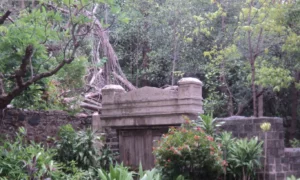
Mumbai’s tower of silence
The Tower of Silence, or dakhma, is a significant cultural and religious edifice located in Mumbai, specifically on the affluent Malabar Hill. This site is dedicated to the Zoroastrian practice of dokhmenashini, a funerary tradition that involves the exposure of deceased bodies to scavenger birds, primarily vultures. This practice, deeply rooted in the Zoroastrian belief system, aims to avoid contaminating the sacred elements of earth, fire, and water with decaying matter.
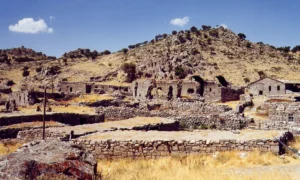
Binbirkilise
Binbirkilise, translating to “Thousand and One Churches,” is a notable district in the Karaman Province of Turkey, situated within the medieval region of Lycaonia. This area is distinguished by its approximately fifty ruins of Byzantine churches, offering a unique window into the architectural and cultural milieu of the era between the 3rd and 8th centuries AD.
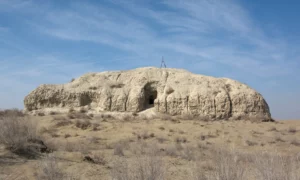
Vardanzi
Vardanzi, also known as Vardanze, represents a significant chapter in the ancient and medieval history of Central Asia. Located 40 kilometers northeast of Bukhara, Uzbekistan, this site has captivated historians and archaeologists with its rich past and the mysteries it holds. The area, now a reserve in the Shafirkan Bukhara region, was once a bustling town that played a crucial role in the region’s socio-political and economic landscape.
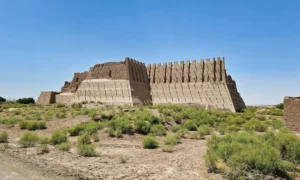
Kyzyl Kala Fortress
Kyzyl Kala Fortress, nestled in the Karakalpakstan region of Uzbekistan, is a remnant of ancient fortification. This red-brick structure dates back to the Kushan Empire, around the 2nd to 4th centuries AD. It stands as a testament to the architectural prowess and strategic importance of the region during the Silk Road era. The fort’s discovery and subsequent excavations have provided valuable insights into the Kushan civilization and their interactions with other cultures.