
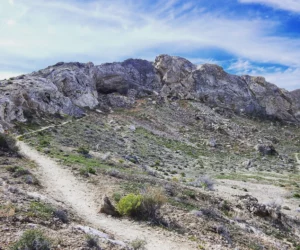
Introduction to Lovelock Cave Lovelock Cave, also known as Sunset Guano Cave or Horseshoe Cave, is a key site in North American archaeology. Located in the Great Basin region, this cave is famous for its preservation of organic and inorganic materials. It joined the National Register of Historic Places on May 24, 1984, due to…
Neural Pathways
Neural Pathways is a collective of seasoned experts and researchers with a profound passion for unraveling the enigmas of ancient history and artifacts. With a wealth of combined experience spanning decades, Neural Pathways has established itself as a leading voice in the realm of archaeological exploration and interpretation.
Our team of researchers and scholars provide unparalleled depth of knowledge in deciphering the intricate narratives embedded within ancient artifacts and deciphering the cultural nuances that shaped civilizations of the past. Through meticulous research, rigorous analysis, and a collaborative spirit, Neural Pathways has made and continues to make significant contributions to our understanding of the human past.
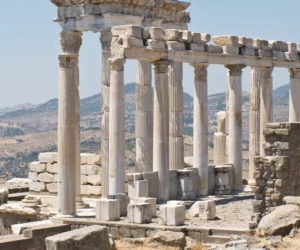
Pergamon
An Ancient Powerhouse Pergamon, once a flourishing Greek city, sat prominently 26 kilometers from today’s Aegean coast. Perched on a promontory north of the Caicus River, it commands views toward modern Bergama, Turkey. As the capital of the Kingdom of Pergamon during the Hellenistic era, it was a beacon of culture and intellect from 281…
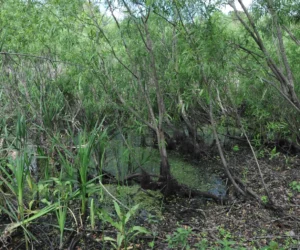
Windover Archeological Site
Overview of Windover Archaeological Site The Windover Archaeological Site is a Middle Archaic (6000 to 5000 BC) site in Brevard County near Titusville, Florida. It’s a National Historic Landmark known for its well-preserved human remains and artifacts. Discovery of Windover The site was discovered in 1982 during the development of Windover Farms. A backhoe operator…
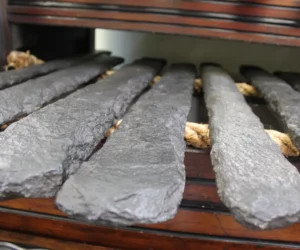
Musical Stones of Skiddaw
Origins of the Skiddaw Lithophones The Musical Stones of Skiddaw are a fascinating series of lithophones located near Keswick, northern England. Crafted from hornfels sourced from nearby Skiddaw mountain, these stones are known for their superior tone and extended resonance compared to common slate. Early Innovations by Peter Crosthwaite Peter Crosthwaite, an inventive figure from…
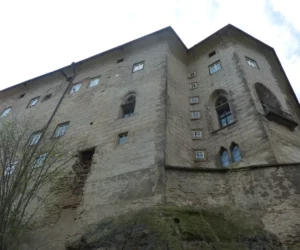
Houska Castle
Introduction to Houska Castle Houska Castle stands in the Liberec Region of the Czech Republic. About 47 km north of Prague, this well-preserved early Gothic castle boasts a Gothic chapel, a green chamber with late-Gothic paintings, and a knight’s drawing room. Historical Significance Constructed in the late 13th century during Ottokar II of Bohemia’s reign,…
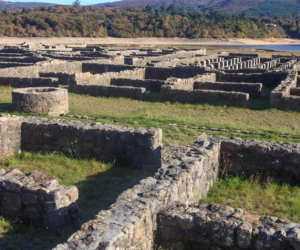
Aquis Querquennis
Historical Background of Aquis Querquennis Aquis Querquennis is a Roman fort located in Ourense Province, Galicia, Spain. It was constructed between 69-79 AD to accommodate soldiers tasked with building the Via XVIII, also known as Via Nova. This fort played a pivotal role until 120 AD, housing the Legio VII Gemina before their deployment to…