
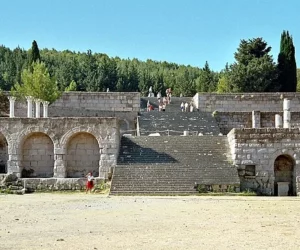
The Asclepieion was a healing temple dedicated to Asclepius, the Greek god of medicine. These temples were built across ancient Greece and its colonies, serving as centers for medical treatment. Their importance grew during the 5th century BC, with famous Asclepieia in Epidaurus, Kos, and Pergamum. Origins and Spread The cult of Asclepius originated in…
Neural Pathways
Neural Pathways is a collective of seasoned experts and researchers with a profound passion for unraveling the enigmas of ancient history and artifacts. With a wealth of combined experience spanning decades, Neural Pathways has established itself as a leading voice in the realm of archaeological exploration and interpretation.
Our team of researchers and scholars provide unparalleled depth of knowledge in deciphering the intricate narratives embedded within ancient artifacts and deciphering the cultural nuances that shaped civilizations of the past. Through meticulous research, rigorous analysis, and a collaborative spirit, Neural Pathways has made and continues to make significant contributions to our understanding of the human past.
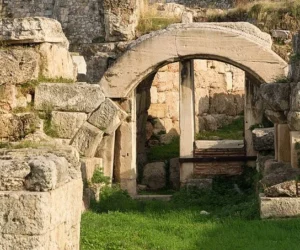
Kerameikos
Kerameikos is an important archaeological site located in Athens, Greece. It served as a potters’ quarter and a burial ground. The area holds significant historical and cultural value, providing insight into ancient Athenian life. Historical Background The name “Kerameikos” derives from the Greek word for pottery, “keramos.” Pottery production thrived in this district during the…

Panathenaic Stadium
The Panathenaic Stadium, located in Athens, Greece, is a significant historical site. It originally hosted the Panathenaic Games in 566 BC. These games were a major religious and athletic festival in honor of the goddess Athena. The stadium’s design reflects the ancient Greek ideals of athletic competition and civic pride. Historical Background The original stadium,…

Pnyx
Pnyx is a significant archaeological site located in Athens, Greece. It served as the primary assembly area for the Athenian democratic process. The site lies southwest of the Acropolis and overlooks the Agora. Historical Context Pnyx emerged as a gathering place in the 5th century BC. It facilitated the assembly of citizens to discuss and…
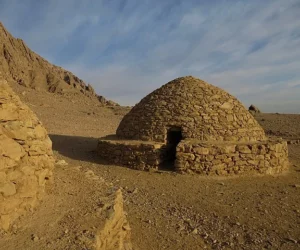
Jebel Hafeet Beehive Tombs
The Jebel Hafeet Beehive Tombs are an important archaeological site located in the United Arab Emirates. These tombs date back to the Bronze Age, specifically between 3000 BC and 2500 BC. They provide valuable insights into the burial practices of ancient communities in the Arabian Peninsula. Location and Structure Jebel Hafeet is a prominent mountain…

Ale’s Stones
Ale’s Stones (Ales stenar) is one of Sweden’s most famous ancient monuments. Located near the village of Kåseberga in southern Sweden, this megalithic structure consists of 59 large stones arranged in the shape of a ship. The stones form a 67-meter-long outline, and the site is perched on a hill overlooking the Baltic Sea. The…