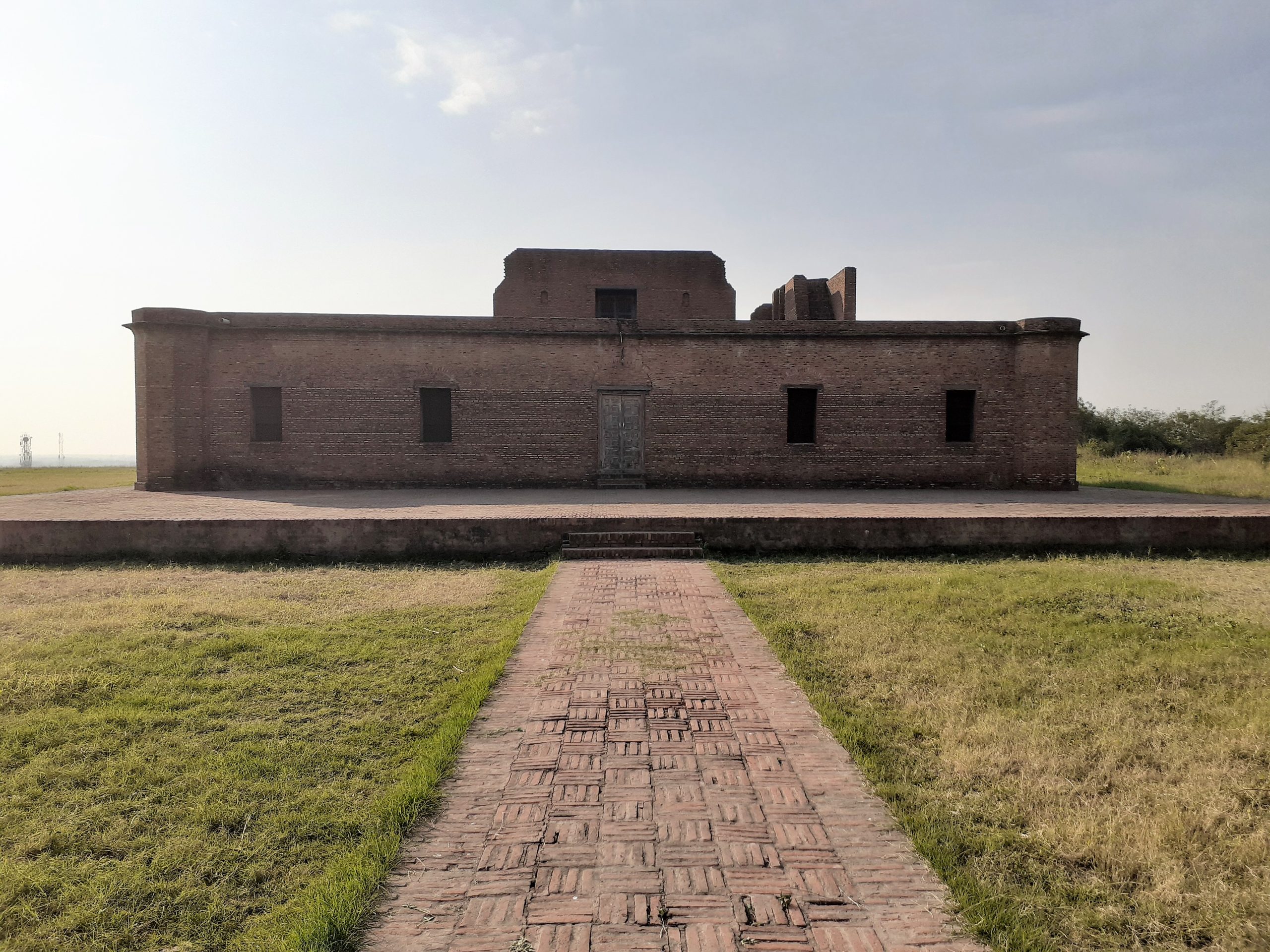
Rupnagar — known historically as Ropar — is an Indus Valley Civilization archaeological site on the left bank of the River Sutlej, in the modern Indian state of Punjab. First excavated in 1953–1955 by Yajna Datta Sharma of the Archaeological Survey of India, Rupnagar is one of the very few Indus sites located east of the river system, and the first major Harappan site identified in India after Partition. Its discovery extended the known eastern boundary of the Indus Valley Civilization by several hundred kilometres.


Six Layers of Occupation
Rupnagar’s significance lies in the rare archaeological completeness of its occupation sequence. Excavators identified six distinct cultural layers stacked atop one another: Harappan (c. 2100–1900 BCE), Painted Grey Ware (c. 1100–800 BCE), Northern Black Polished Ware (c. 800–200 BCE), Mauryan-Sunga (c. 320 BCE–CE 100), Kushan-Gupta (CE 100–600), and Medieval (CE 600 onwards). Few South Asian sites preserve such a continuous record of human occupation across nearly four thousand years.
Harappan Finds
The earliest layer yielded distinctive Harappan material: red ware pottery, terracotta figurines, beads of carnelian and lapis lazuli, copper bangles, faience bangles, shell ornaments, and the steatite seals with the undeciphered Indus script that are the signature of the civilization. One of the most striking finds is a Harappan burial in which a dog was interred beneath the body of a human — a practice without close parallel at other Indus sites. Building remains show the characteristic Harappan brick-laying tradition, with bricks fired at standardised proportions (typically 1:2:4). Unlike larger Indus cities such as Mohenjo-Daro within the wider historical places of South Asia and Harappa, Rupnagar was a smaller regional settlement — a frontier town on the Indus civilization’s eastern edge — but it shared the same urban material culture.
What was found at Rupnagar?
Beyond the Harappan layer, later occupations produced their own important finds. The Painted Grey Ware layer is associated with the early Iron Age culture of north India and contained iron implements, a sign of the technological transition that swept the subcontinent after 1000 BCE. The Northern Black Polished Ware layer yielded fine luxury pottery, glass beads and coins, marking Rupnagar’s continued presence as a trade and craft centre into the Mauryan period. A small but significant find from the Mauryan layer was a fragment of a stone pillar that resembles the polished sandstone columns of Emperor Ashoka — pointing to imperial reach as far as Punjab in the third century BCE.
Why Rupnagar matters
Rupnagar is one of the most important Indus Valley sites in India for two reasons. Geographically it sits between two great Indian river systems — the Sutlej and the long-dry Ghaggar-Hakra, the latter often identified with the Saraswati of the Vedic texts. First, its eastward position helped reshape understanding of the geographic extent of the civilization — before its discovery, the Harappan world was thought to end at the Indus and Beas river systems. Second, its uninterrupted six-layer sequence provides one of the longest single-site records of cultural change in northern India, making it a reference site for chronologies that link the Bronze Age to the medieval period.

The Rupnagar Museum
The Rupnagar Archaeological Museum, opened to the public in 1998 and maintained by the Archaeological Survey of India, displays the most significant finds: Harappan seals and pottery, the Mauryan-era stone fragment, a famous terracotta figure known as Vina Vadini (a lady playing the vina from the Gupta period), copper and bronze implements, ring-stones, a yakshi image, and a small hoard of gold coins of Chandragupta II from the late fourth century CE. The Saka, Kushana, and Gupta layers all contributed material on display. The museum is open to the public and is one of the most accessible places in India to see Indus Valley material in the region where it was found, alongside the Indus Valley material on display elsewhere in the country.
Sources and Further Reading

Neural Pathways is a collective of seasoned experts and researchers with a profound passion for unraveling the enigmas of ancient history and artifacts. With a wealth of combined experience spanning decades, Neural Pathways has established itself as a leading voice in the realm of archaeological exploration and interpretation.