Overview of the Flavian Amphitheater in Pozzuoli
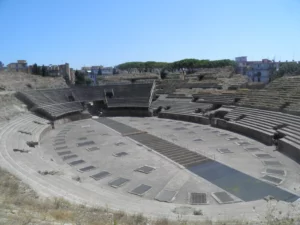
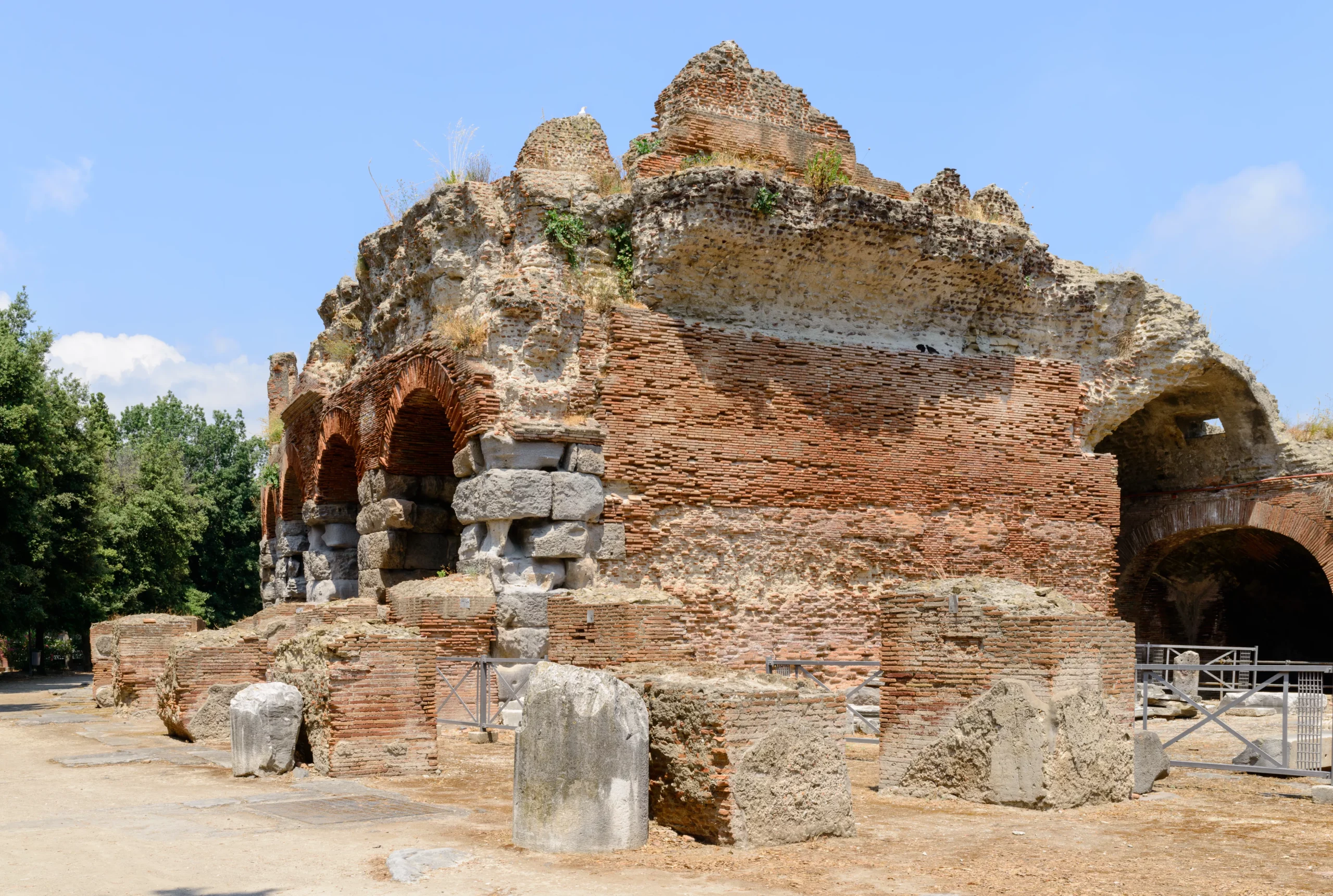
The Flavian Amphitheater, located in Pozzuoli, Italy, ranks as the third-largest Roman amphitheater in the country. It is surpassed only by the Roman Colosseum and the Amphitheatre of Capua. Architects who constructed the Roman Colosseum likely built this amphitheater as well. The name “Flavian Amphitheater” commonly refers to the Roman Colosseum.
Historical Significance
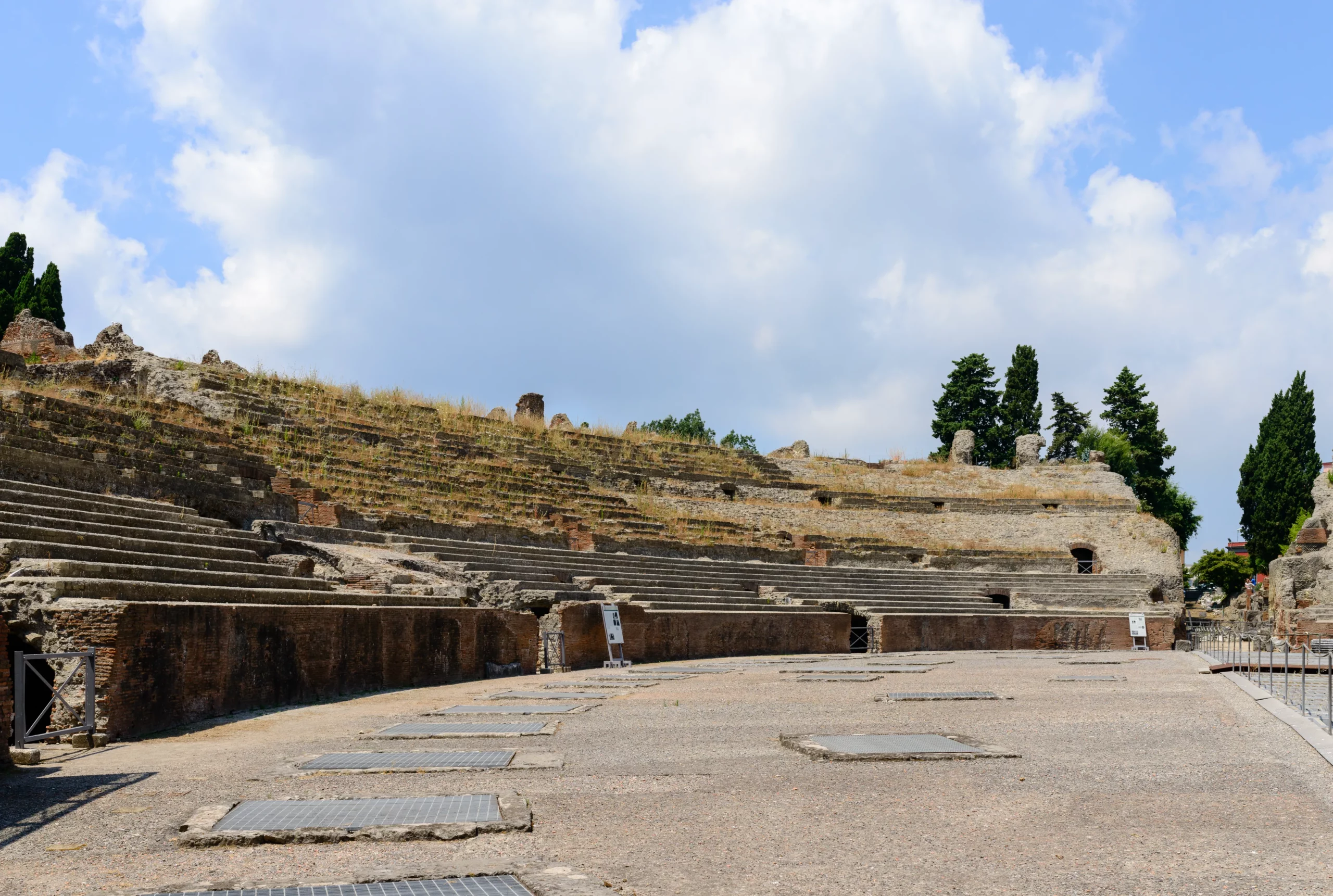
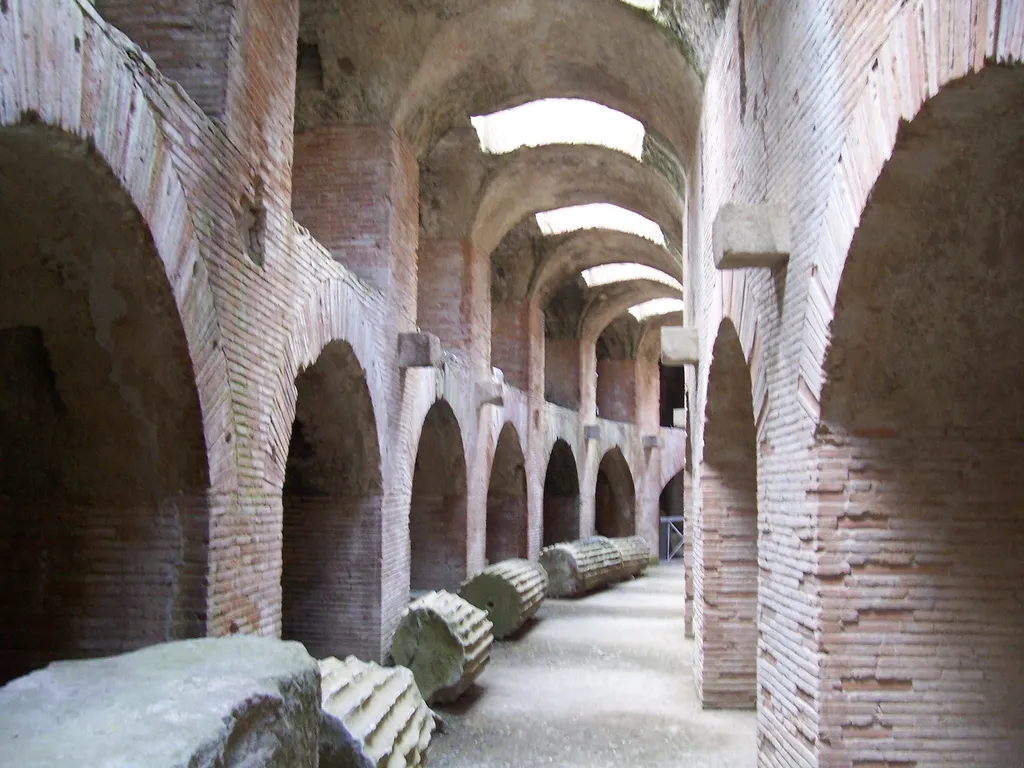
Construction of the amphitheater began under Emperor Vespasian and was probably completed by his son Titus. The elliptical structure measures 147 x 117 meters, with an arena floor of 72.22 x 42.33 meters. It could accommodate up to 50,000 spectators. The interior remains mostly intact, displaying parts of the ancient gear systems used for lifting cages to the arena floor.
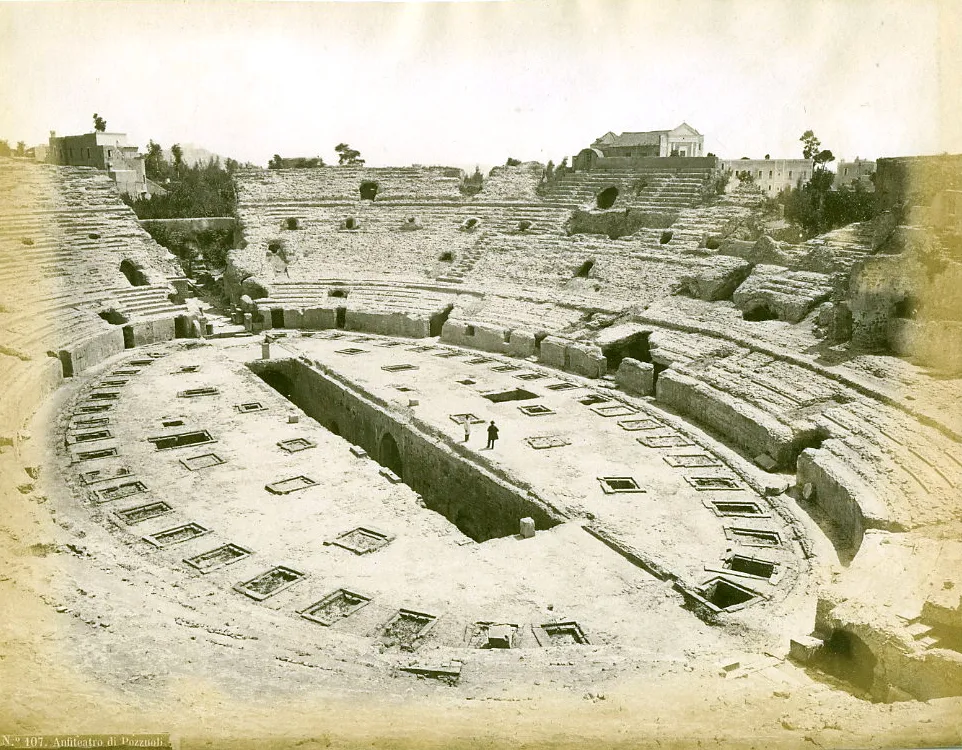
In AD 305, the arena was a site for the persecution of Saint Proculus, the patron saint of Pozzuoli, and Saint Januarius, the patron saint of Naples. After surviving an ordeal with wild beasts in the arena, both saints were beheaded at the nearby Solfatara.
Architectural Details and Preservation
The Flavian Amphitheater is the second Roman amphitheater in Pozzuoli, following a smaller, older structure that has been largely destroyed. This lesser amphitheater measured 130 x 95 meters. The site for the Flavian Amphitheater was strategically chosen near roads leading from Naples, Capua, and Cumae. It was abandoned after being partially buried by eruptions from the Solfatara volcano.
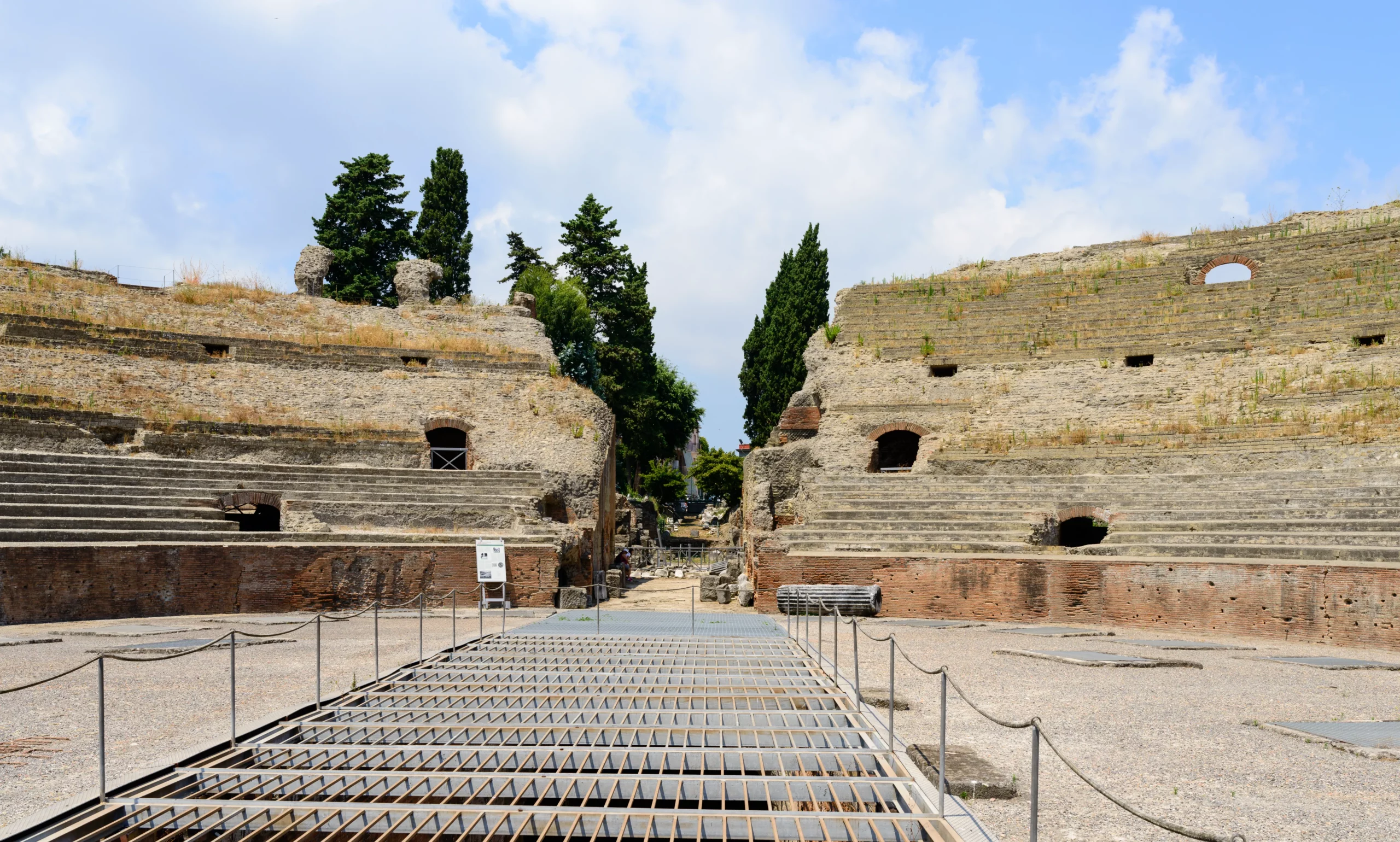
During the Middle Ages, the exterior marble was stripped, but the interior was preserved. Excavations of the site occurred from 1839 to 1845, 1880 to 1882, and finally in 1947, revealing much about its history and structure.
Further Reading and Resources
For more detailed studies on the Flavian Amphitheater, works by Luigi Crimaco and Amedeo Maiuri provide extensive research and insights. These resources delve into the historical and architectural significance of this ancient structure.
Sources: Wikipedia


Neural Pathways is a collective of seasoned experts and researchers with a profound passion for unraveling the enigmas of ancient history and artifacts. With a wealth of combined experience spanning decades, Neural Pathways has established itself as a leading voice in the realm of archaeological exploration and interpretation.