
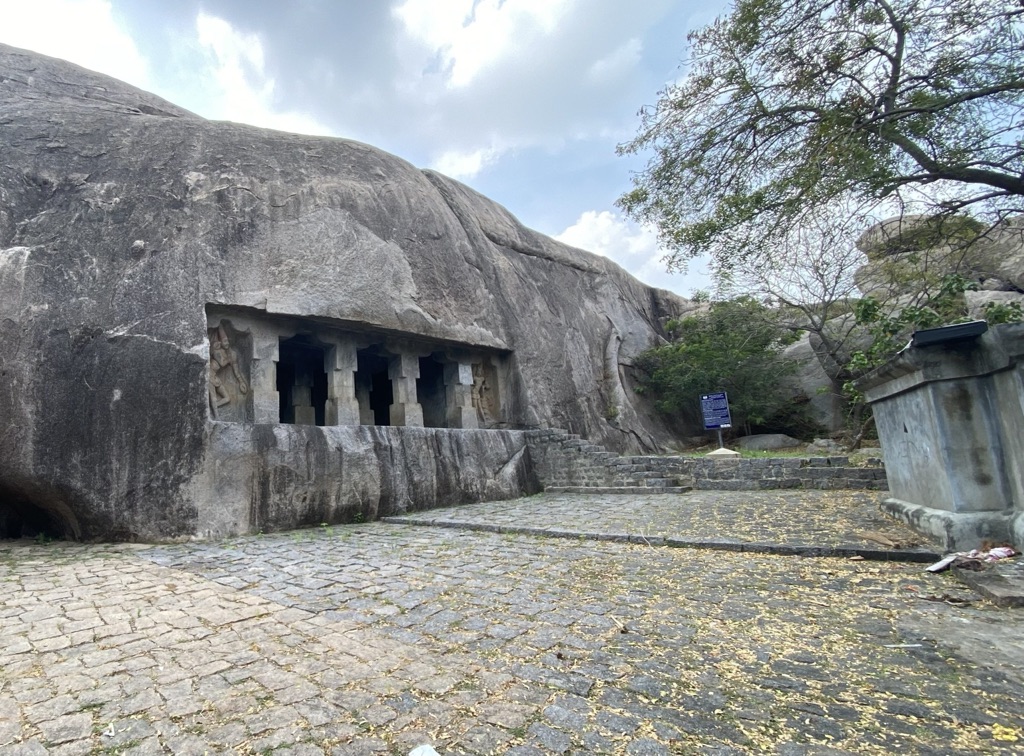
The Mandagapattu Temple is a celebrated historical site that marks an important evolution in South Indian temple architecture. Carved out of a rock face, this Hindu temple is a fine example of early Pallava art and showcases a unique blend of religious and cultural influences. Unlike the later Dravidian temples with towering gopurams, the Mandagapattu temple’s charm lies in its simplistic yet intricate carvings and the absence of deities in its sanctum at its time of conception. This landmark is believed to be the brainchild of King Mahendravarman I, who initiated the practice of rock-cut architecture in the region.
Neural Pathways
Neural Pathways is a collective of seasoned experts and researchers with a profound passion for unraveling the enigmas of ancient history and artifacts. With a wealth of combined experience spanning decades, Neural Pathways has established itself as a leading voice in the realm of archaeological exploration and interpretation.
Our team of researchers and scholars provide unparalleled depth of knowledge in deciphering the intricate narratives embedded within ancient artifacts and deciphering the cultural nuances that shaped civilizations of the past. Through meticulous research, rigorous analysis, and a collaborative spirit, Neural Pathways has made and continues to make significant contributions to our understanding of the human past.
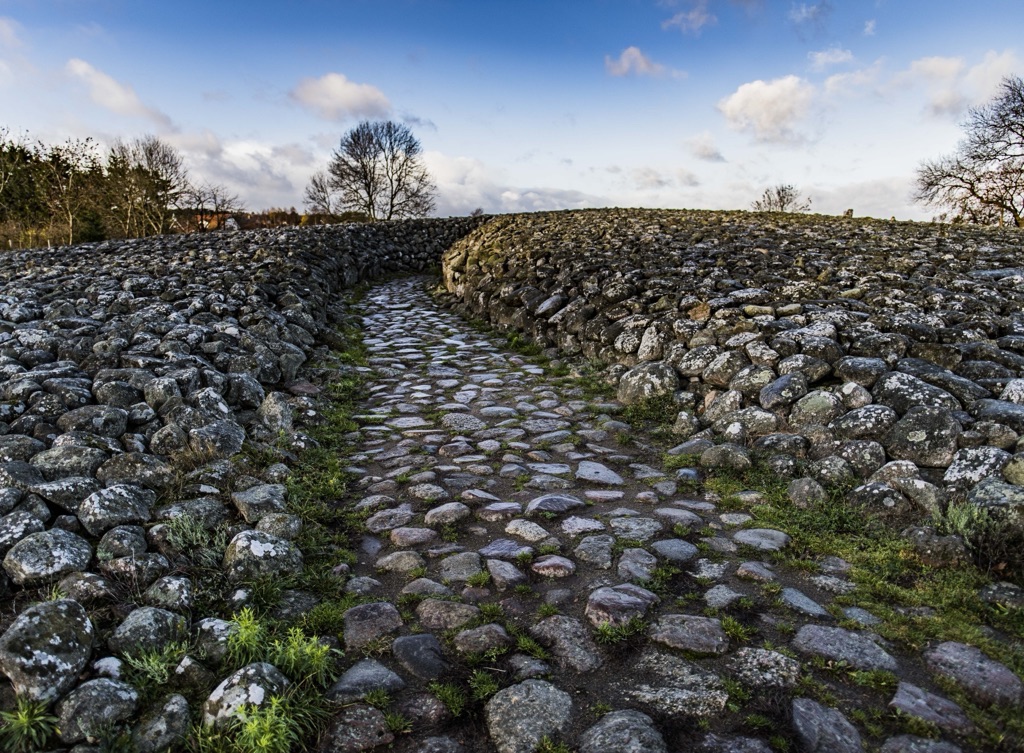
Kiviksgraven
Delve into the past with a visit to Kiviksgraven, also known as the King’s Grave. This splendid archaeological site in Sweden dates back to the early Bronze Age. It’s hailed for its substantial circular stone setting and elaborate interior decorations. Visitors marvel at the ancient carvings depicting suns, ships, and people. Kiviksgraven stands out not only for its historical significance but also for the way it connects visitors to the past. As one of the most impressive Nordic Bronze Age attractions, it stirs the imagination about the region’s early inhabitants.
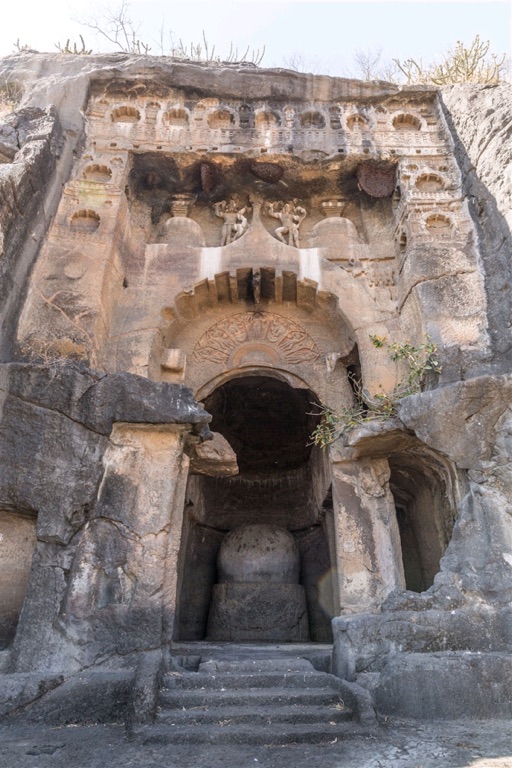
Manmodi Caves
The Manmodi Caves are a remarkable assemblage of rock-cut wonders, etching the cultural and religious history of ancient India into stone. Nestled in the Sahyadri hills near Junnar, Maharashtra, these caves represent a monastic complex that has withstood the test of time. They offer significant insights into the practices of early Buddhist monks and highlight the architectural prowess of a bygone era. The caves, with their viharas and chaityas, meticulously carved inscriptions, and rock pillars offer a powerful reflection of the ascetic life and spiritual endeavors of their creators.
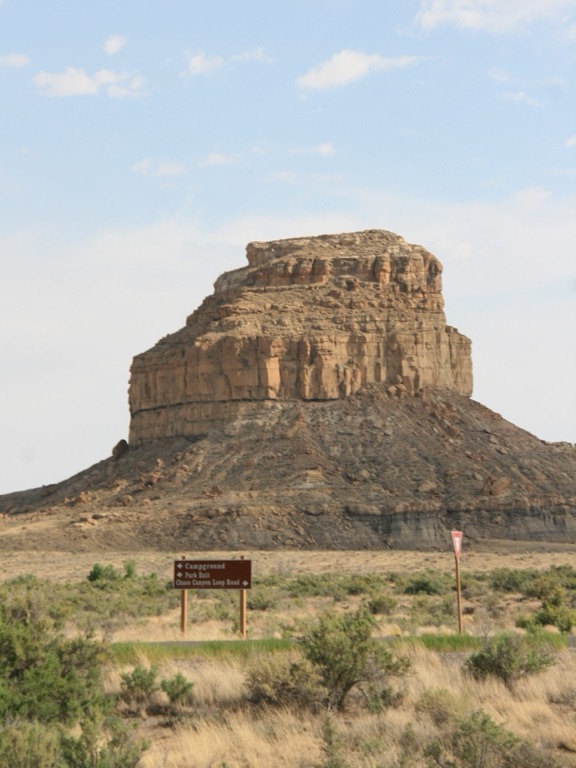
Fajada Butte Sun Dagger
Fajada Butte in Chaco Culture National Historical Park stands as a monument to the sophisticated celestial knowledge of the ancestral Puebloans. These native people inhabited what is now the American Southwest over a thousand years ago. Their understanding of solar and lunar cycles is evident at the butte. Carefully arranged stones on the cliffs cast shadows, or ‘sun daggers’, over spiral petroglyphs. These mark the passing of solstices and equinoxes, reflecting a complex timekeeping system. The Sun Dagger is more than a unique rock formation. It is a sophisticated astronomical marker. Its discovery in the 1970s opened a window into the lives of the Chacoans.
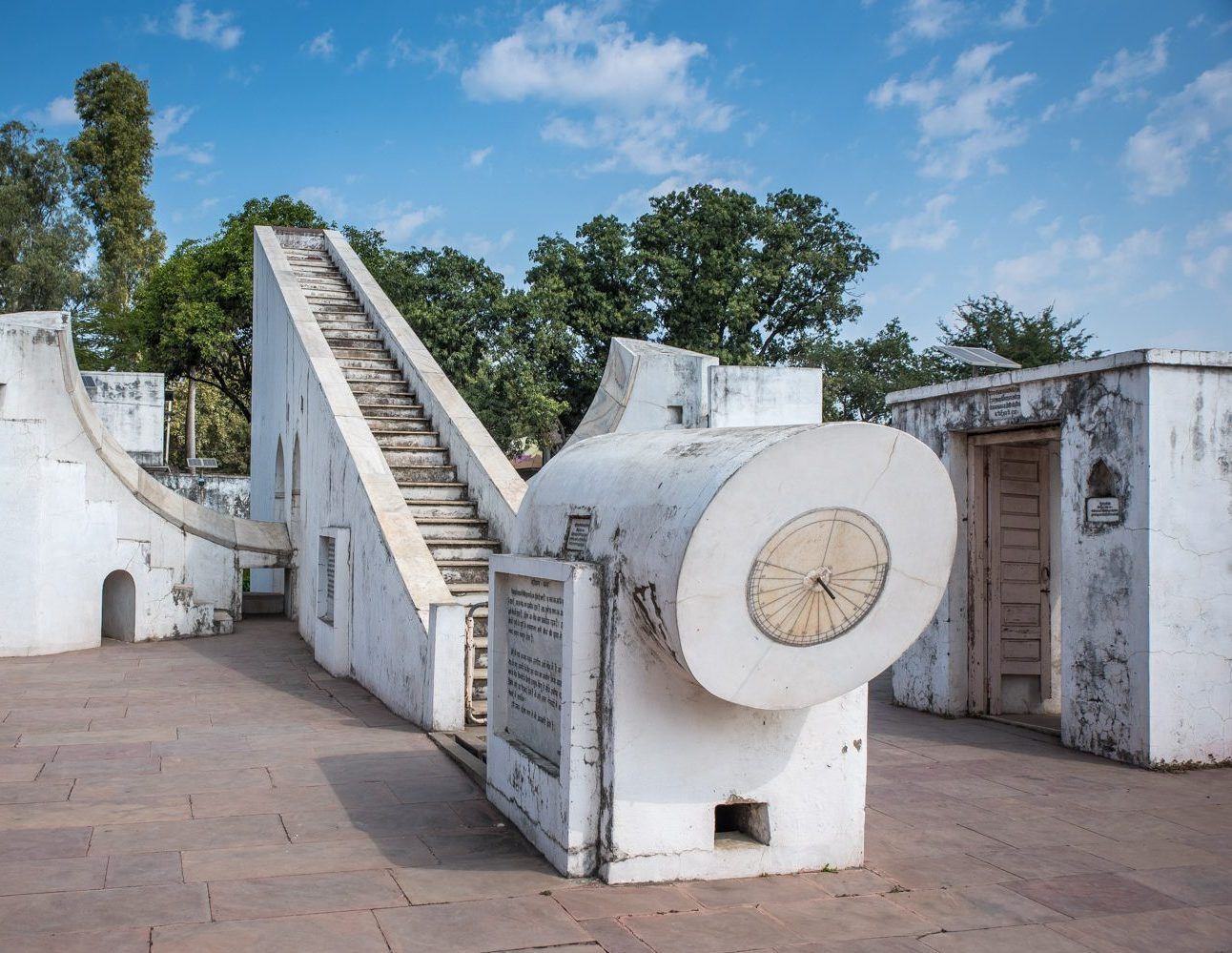
Ujjain Observatory (Vedh Shala)
Ujjain Observatory, known as the Vedh Shala, is an ancient astronomical center in India. Established by Maharaja Jai Singh II in the early 18th century, it stands as a testament to India’s rich scientific heritage. The observatory is one of the five such institutions built by the Maharaja, aimed at revising astronomical tables and improving the calendar. Today, it serves as a significant historical site, attracting scholars and tourists alike. It holds a collection of architectural astronomical instruments that have piqued the interest of modern astronomers and historians.
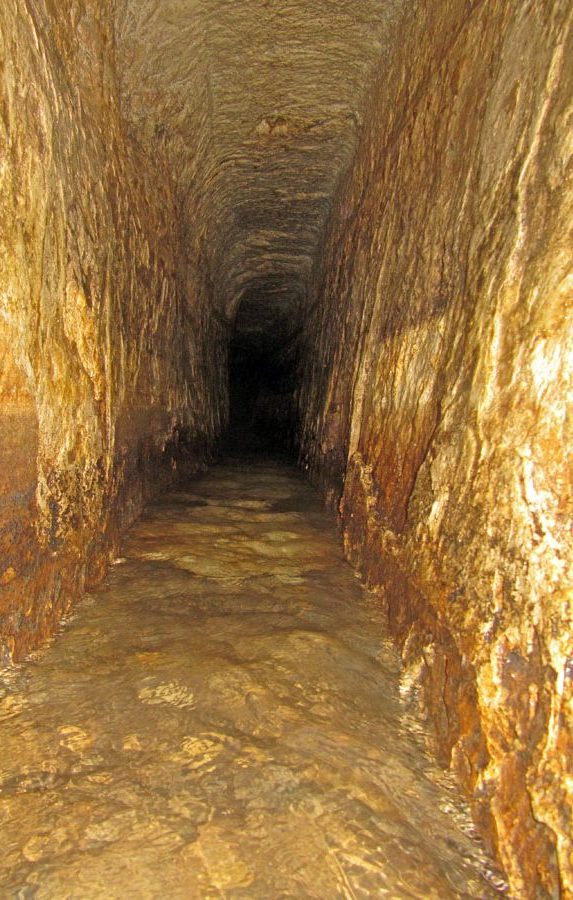
Hezekiah’s Tunnel (Siloam Tunnel)
Hezekiah’s Tunnel is a remarkable feat of ancient engineering located in the city of Jerusalem. This subterranean passage, carved over 2,700 years ago during the reign of King Hezekiah, served to protect Jerusalem’s water supply from Assyrian invaders. Stretching for approximately 533 meters, the tunnel channels water from the Gihon Spring to the Pool of Siloam. It stands today as a testament to the innovative and forward-thinking nature of the period, showcasing bold defensive strategies and a high level of technical skill.