
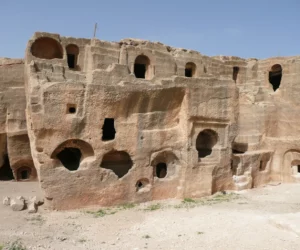
The Rise and Fall of a Strategic Roman City Dara, also known as Daras, was once a vital fortress city on the border of the East Roman Empire and the Sassanid Persian Empire. Located in what is now the Mardin Province of Turkey, this city played a key role in the Roman-Persian conflicts of late…
Neural Pathways
Neural Pathways is a collective of seasoned experts and researchers with a profound passion for unraveling the enigmas of ancient history and artifacts. With a wealth of combined experience spanning decades, Neural Pathways has established itself as a leading voice in the realm of archaeological exploration and interpretation.
Our team of researchers and scholars provide unparalleled depth of knowledge in deciphering the intricate narratives embedded within ancient artifacts and deciphering the cultural nuances that shaped civilizations of the past. Through meticulous research, rigorous analysis, and a collaborative spirit, Neural Pathways has made and continues to make significant contributions to our understanding of the human past.
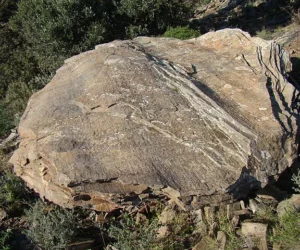
Coma Enestapera Dolmen
The Coma Enestapera Dolmen, located in Catalonia, Spain, is a significant megalithic structure dating back to the late Neolithic period, around 2500 BC. It belongs to a group of burial sites commonly called dolmens, found throughout Western Europe, and is particularly representative of the megalithic architecture that spread across the Iberian Peninsula in ancient times….
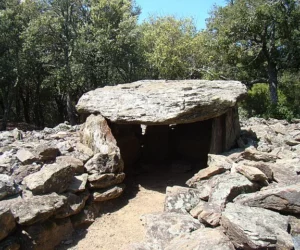
Coll de la Llosa Dolmen
The Coll de la Llosa Dolmen is a prehistoric burial site located in the region of Catalonia, Spain. It belongs to the megalithic traditions of the Late Neolithic or Early Bronze Age, dating to approximately 2,500 BC to 2,000 BC. This site is one of several dolmens in the Iberian Peninsula, reflecting the broader megalithic…
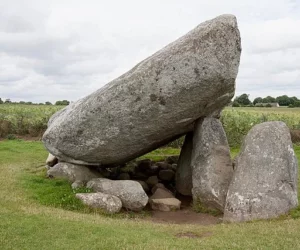
Brownshill Dolmen
The Brownshill Dolmen, located in County Carlow, Ireland, is one of the most significant and largest megalithic structures in the country. This ancient tomb, dating back to the Neolithic period, offers insights into early Irish burial practices and the skills of prehistoric builders. Structure and Dimensions The Brownshill Dolmen consists of a large capstone resting…
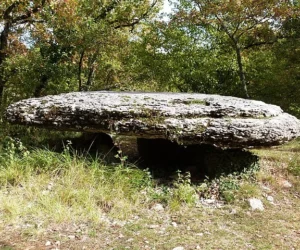
Dolmen de Peyco Levado
The Dolmen de Peyco Levado is a megalithic structure located in the region of Galicia, Spain. It belongs to the group of dolmens found in the Iberian Peninsula, which are important examples of prehistoric burial practices. These dolmens date back to the Late Neolithic or Early Bronze Age, approximately 2500 BC to 1500 BC. Structure…
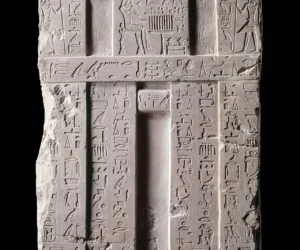
Tomb of the False Door
The “Tomb of the False Door” represents an iconic type of Egyptian funerary architecture. This architectural element, common in ancient Egyptian tombs, served a specific religious and cultural function. Designed to resemble a door, it was not a passage but rather a symbolic gateway between the living and the deceased. Origins and Function The concept…